INTRODUCTION
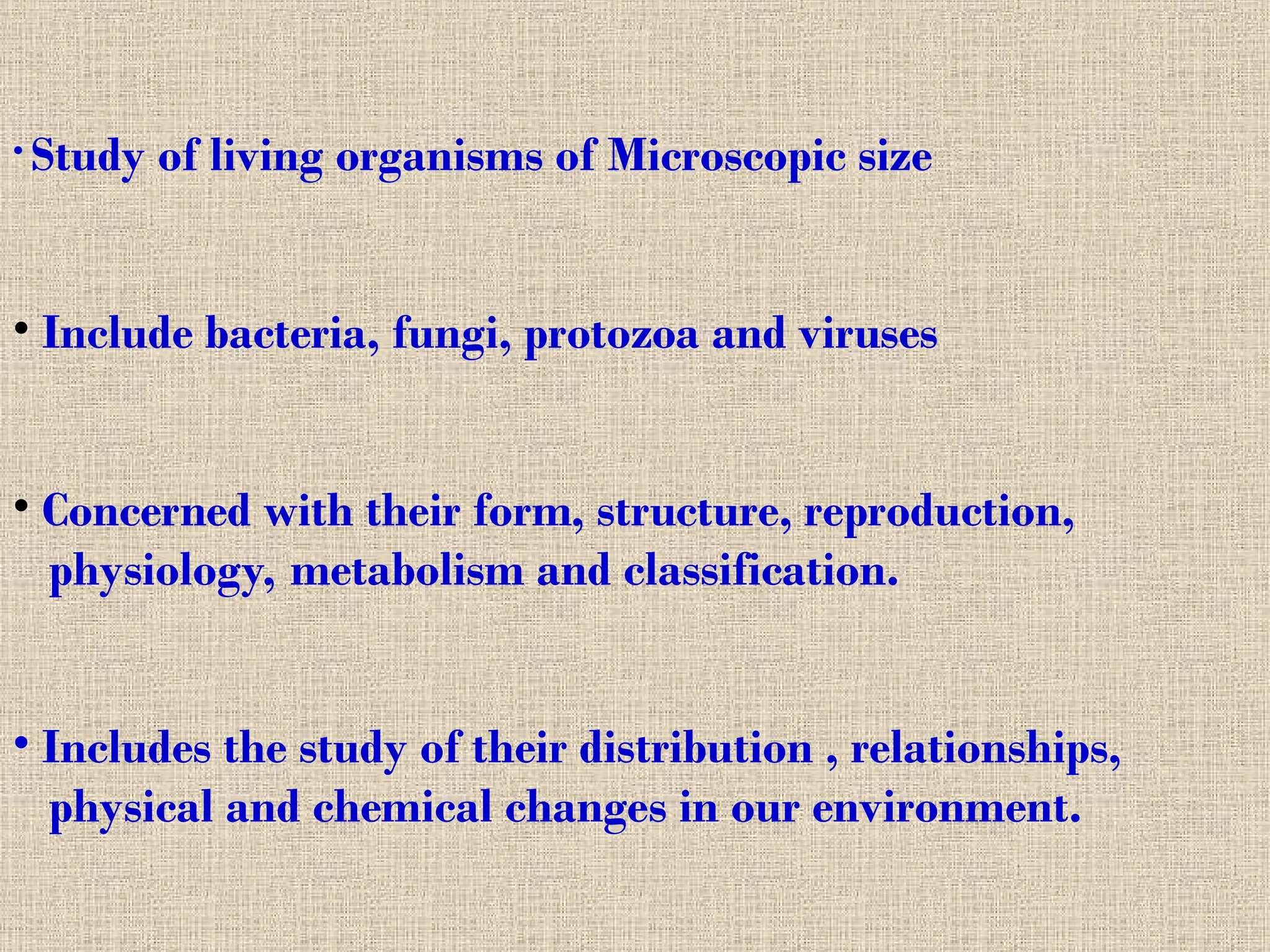
• Study of living organisms of Microscopic size
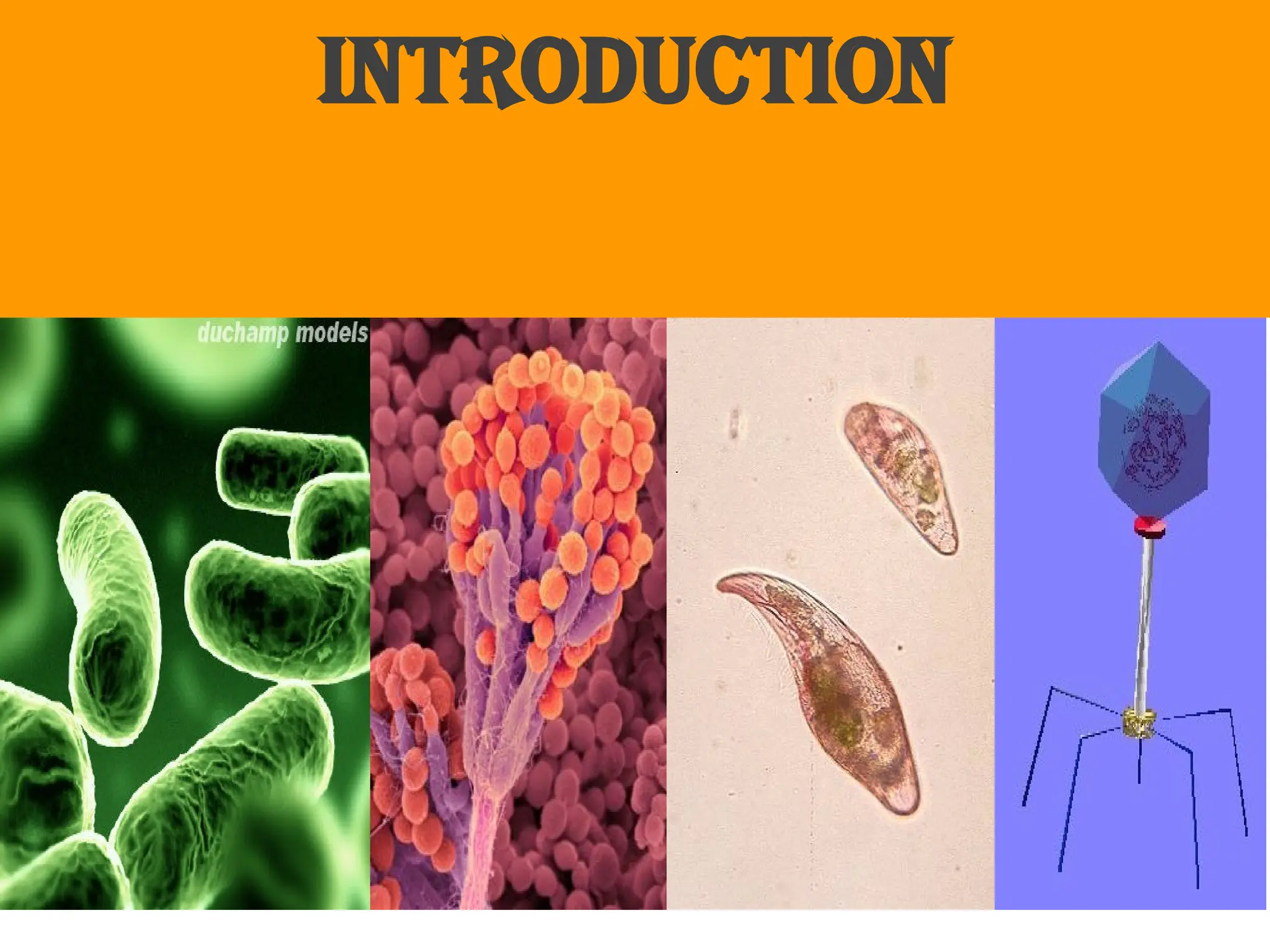
• Include bacteria, fungi, protozoa and viruses
• Concerned with their form, structure, reproduction,
physiology, metabolism and classification.
• Includes the study of their distribution , relationships,
physical and chemical changes in our environment.
DIFFERENT MICROBIAL GROUPS
(A) Prokaryotic Protists :
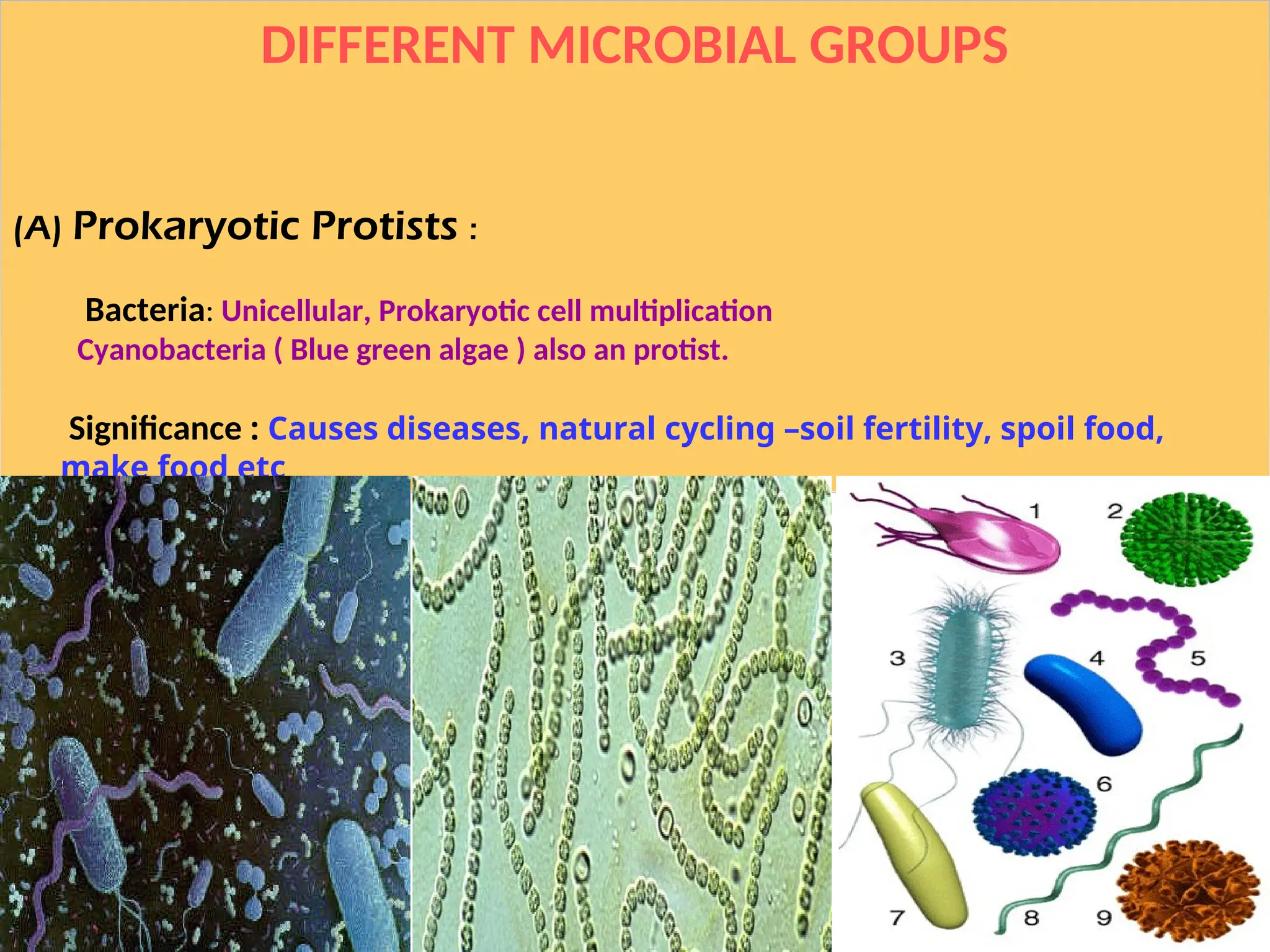
Bacteria: Unicellular, Prokaryotic cell multiplication
Cyanobacteria ( Blue green algae ) also an protist.
Significance : Causes diseases, natural cycling –soil fertility, spoil food,
make food etc
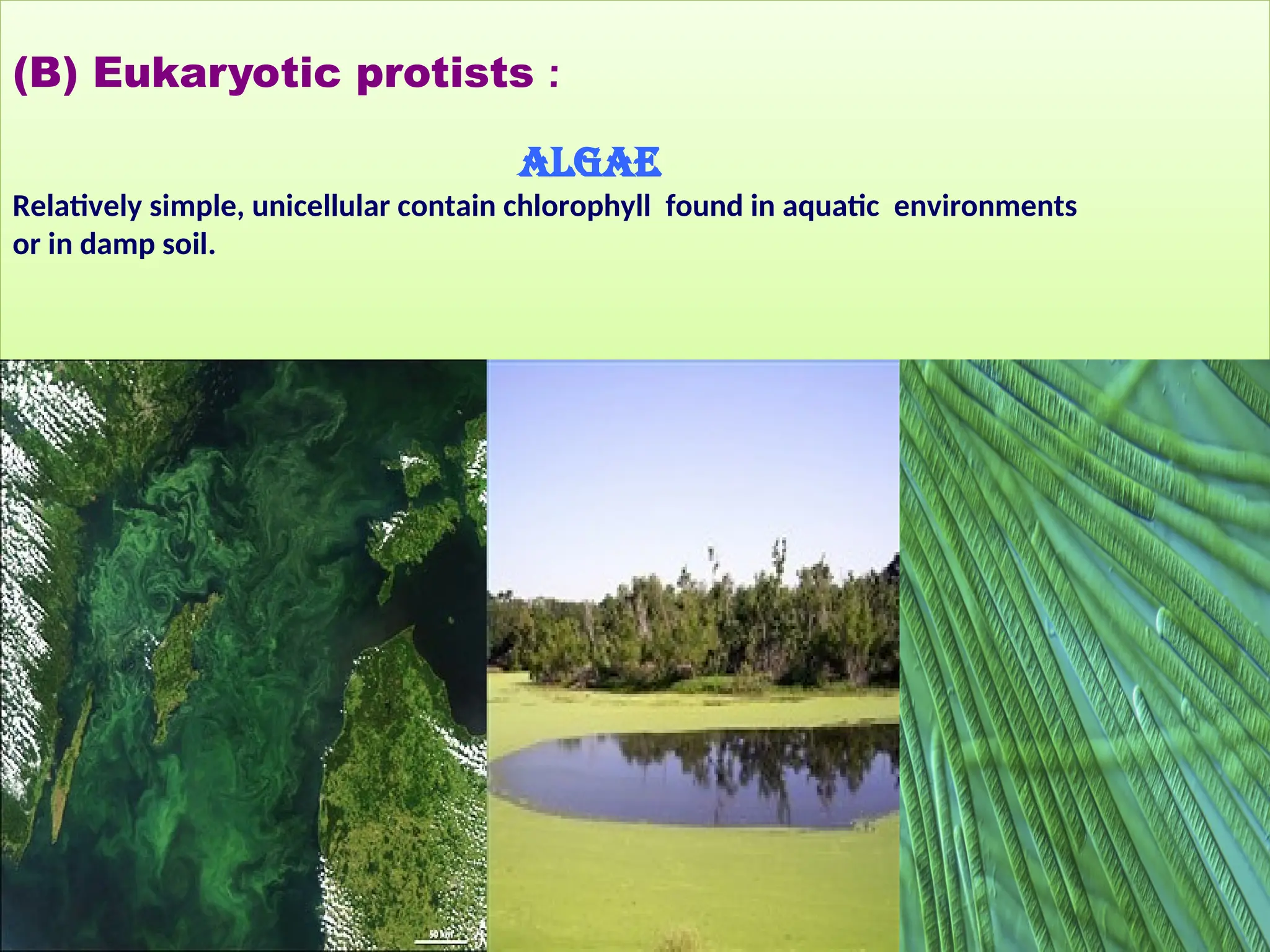
(B) Eukaryotic protists :
Algae
Relatively simple, unicellular contain chlorophyll found in aquatic environments
or in damp soil.
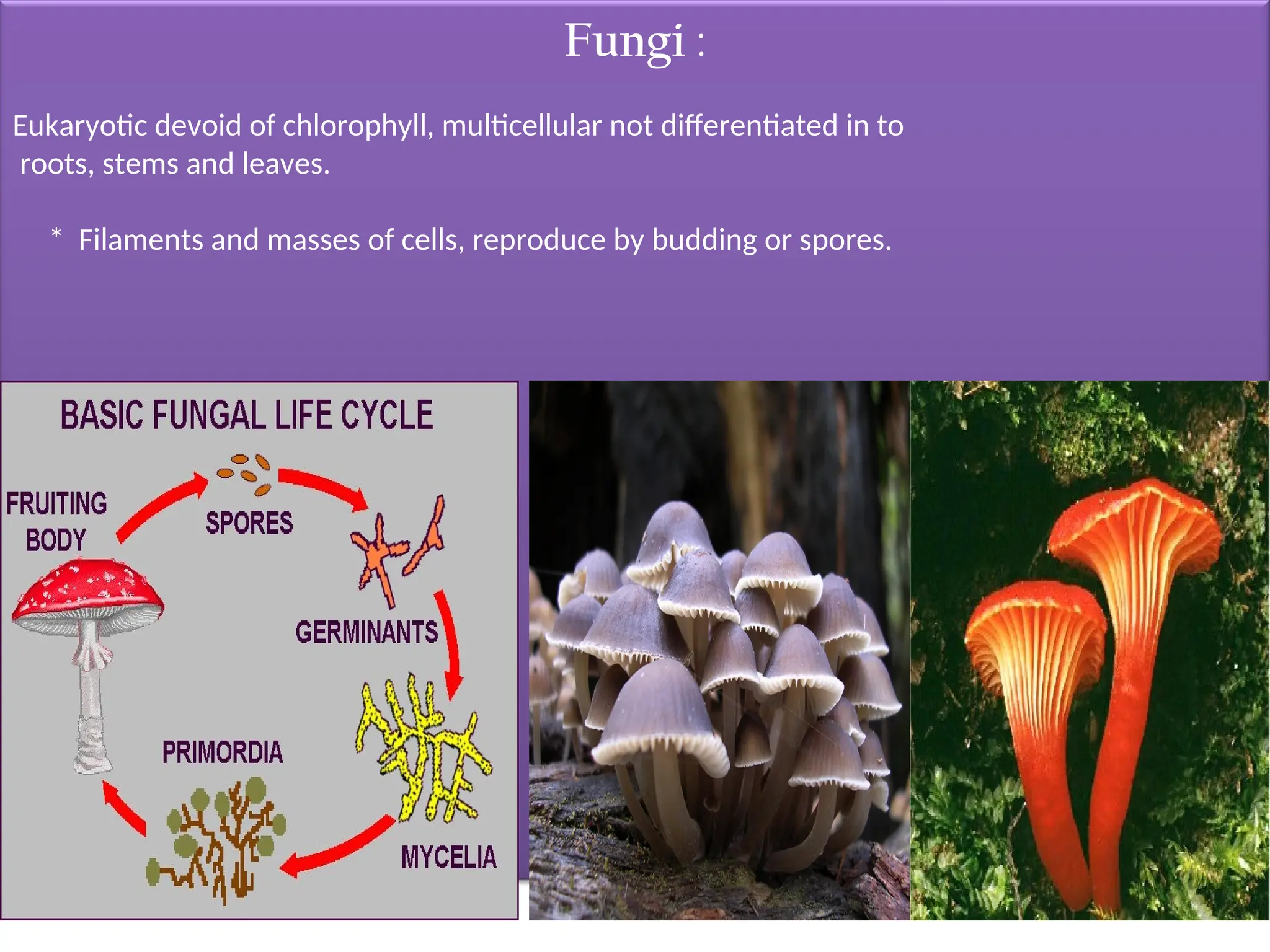
Fungi :
Eukaryotic devoid of chlorophyll, multicellular not differentiated in to
roots, stems and leaves.
* Filaments and masses of cells, reproduce by budding or spores.
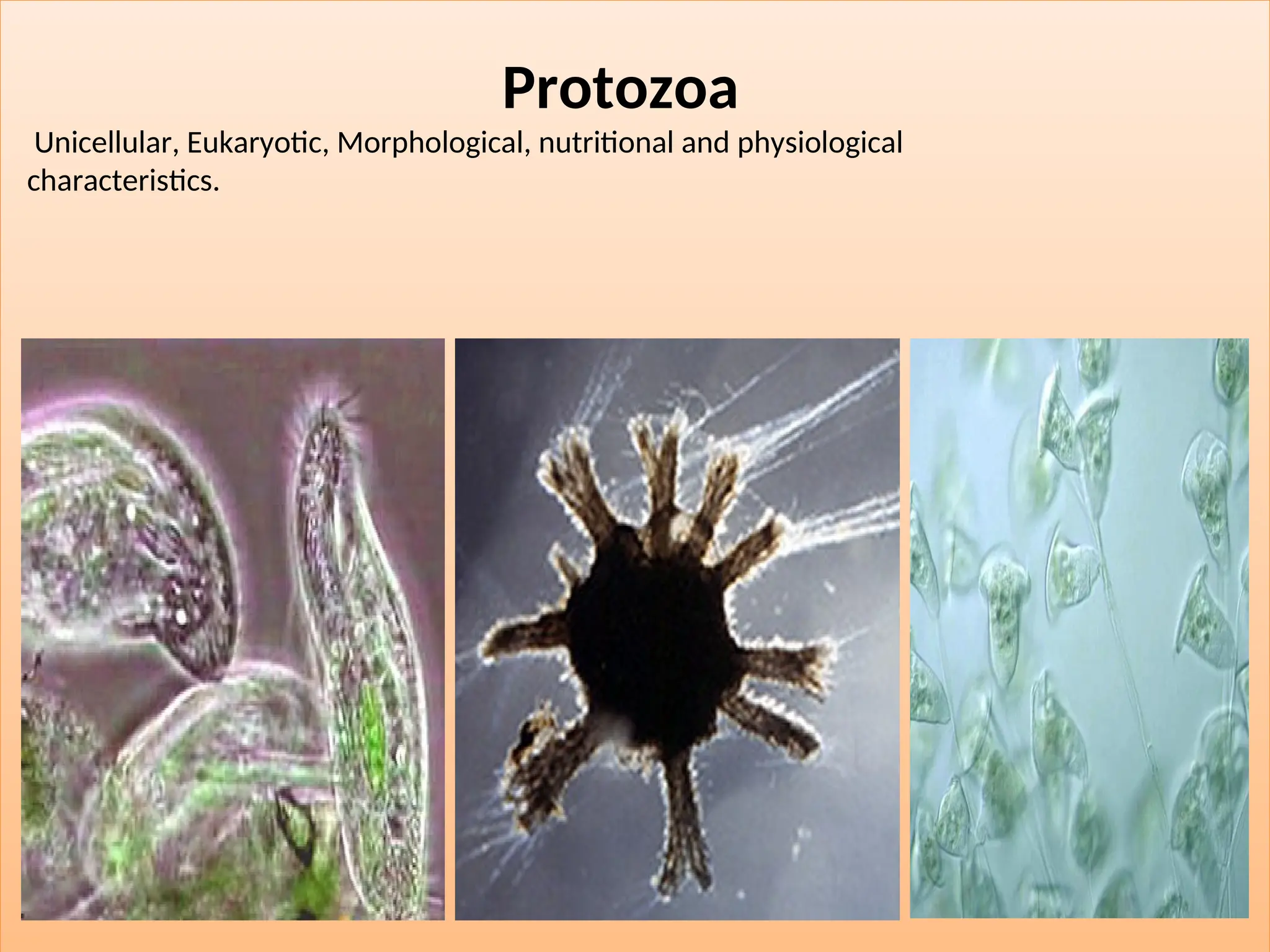
Protozoa
Unicellular, Eukaryotic, Morphological, nutritional and physiological
characteristics.
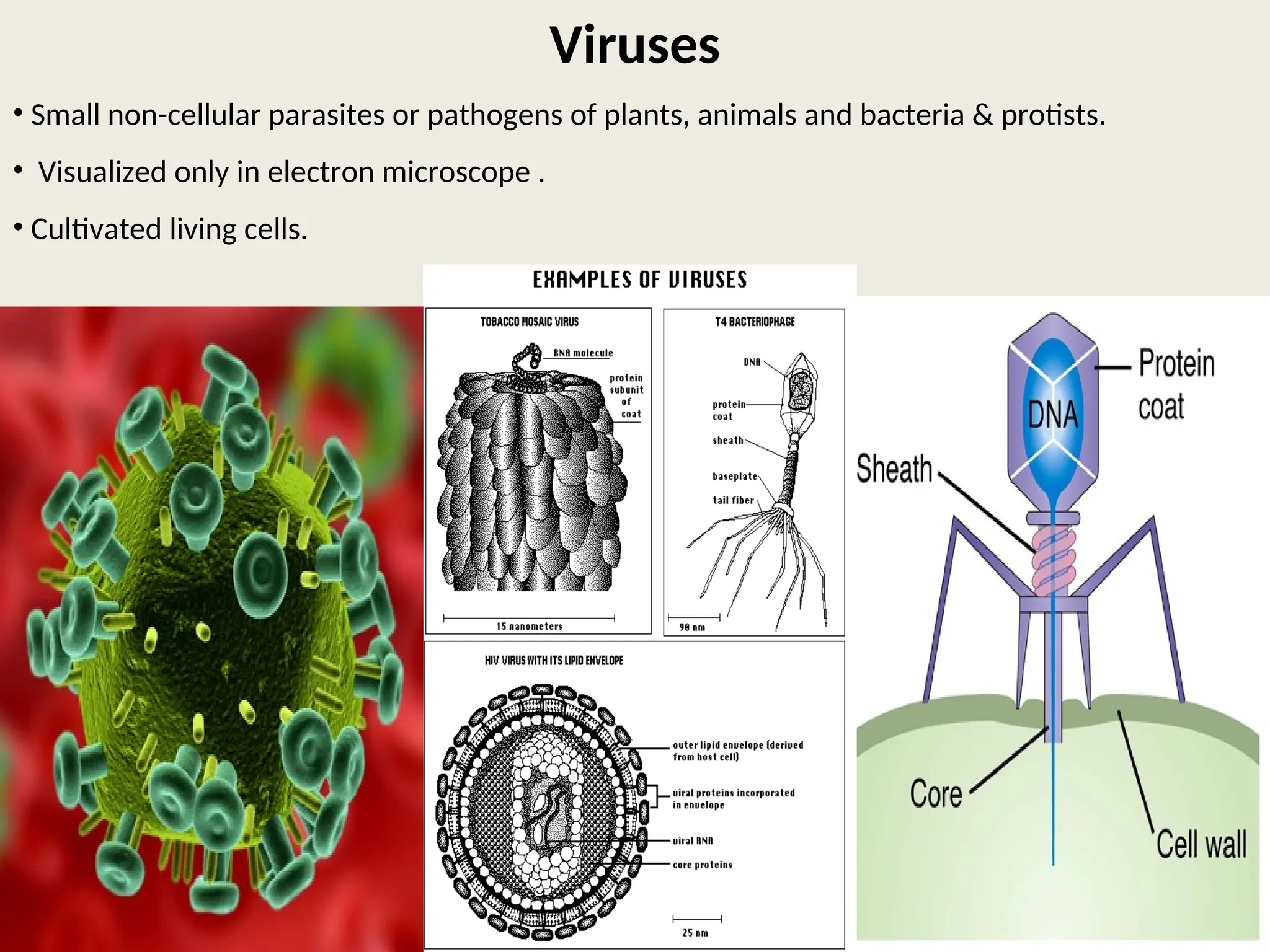
Viruses
• Small non-cellular parasites or pathogens of plants, animals and bacteria & protists.
• Visualized only in electron microscope .
• Cultivated living cells.
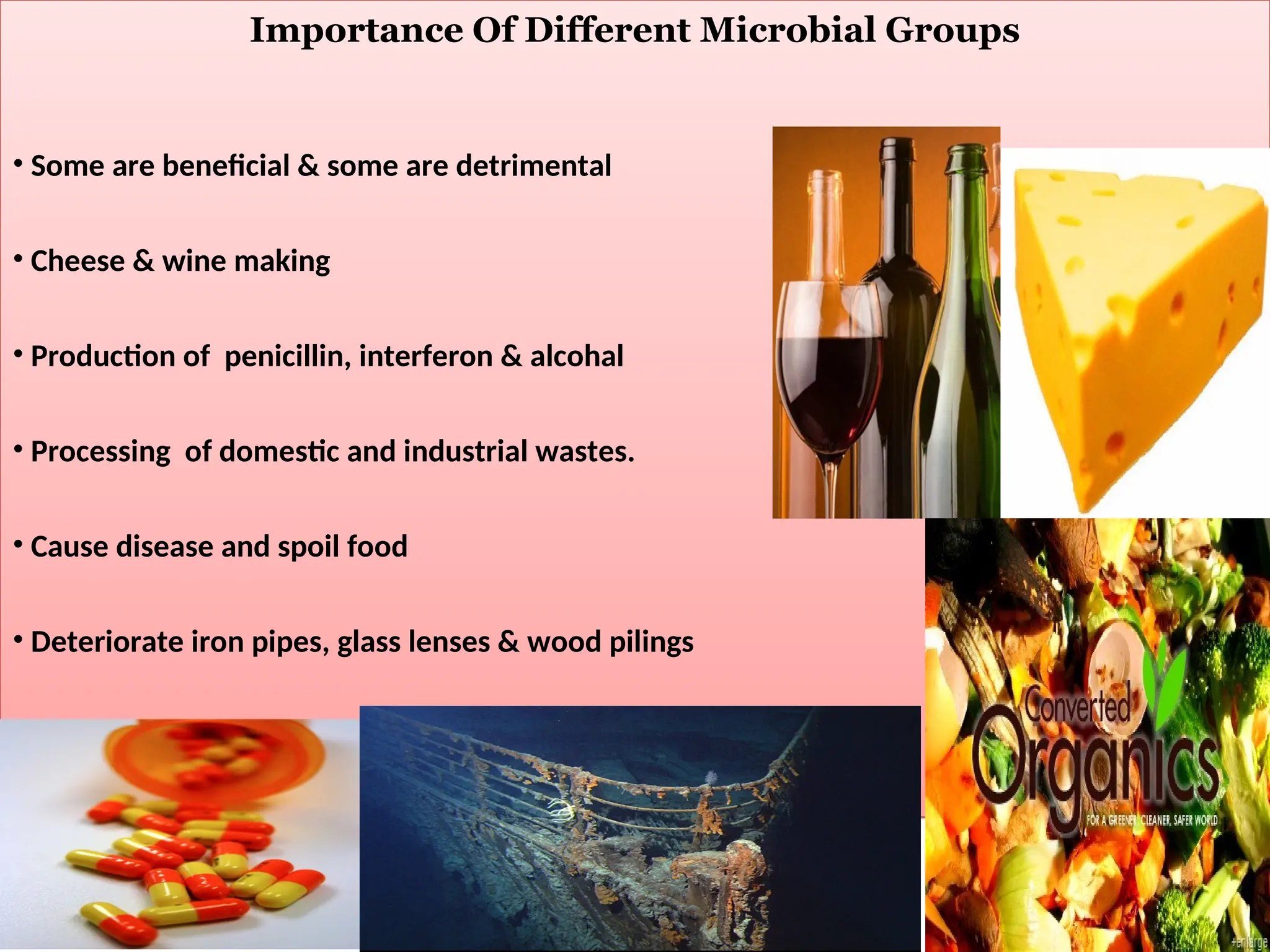
Importance Of Different Microbial Groups
• Some are beneficial & some are detrimental
• Cheese & wine making
• Production of penicillin, interferon & alcohal
• Processing of domestic and industrial wastes.
• Cause disease and spoil food
• Deteriorate iron pipes, glass lenses & wood pilings
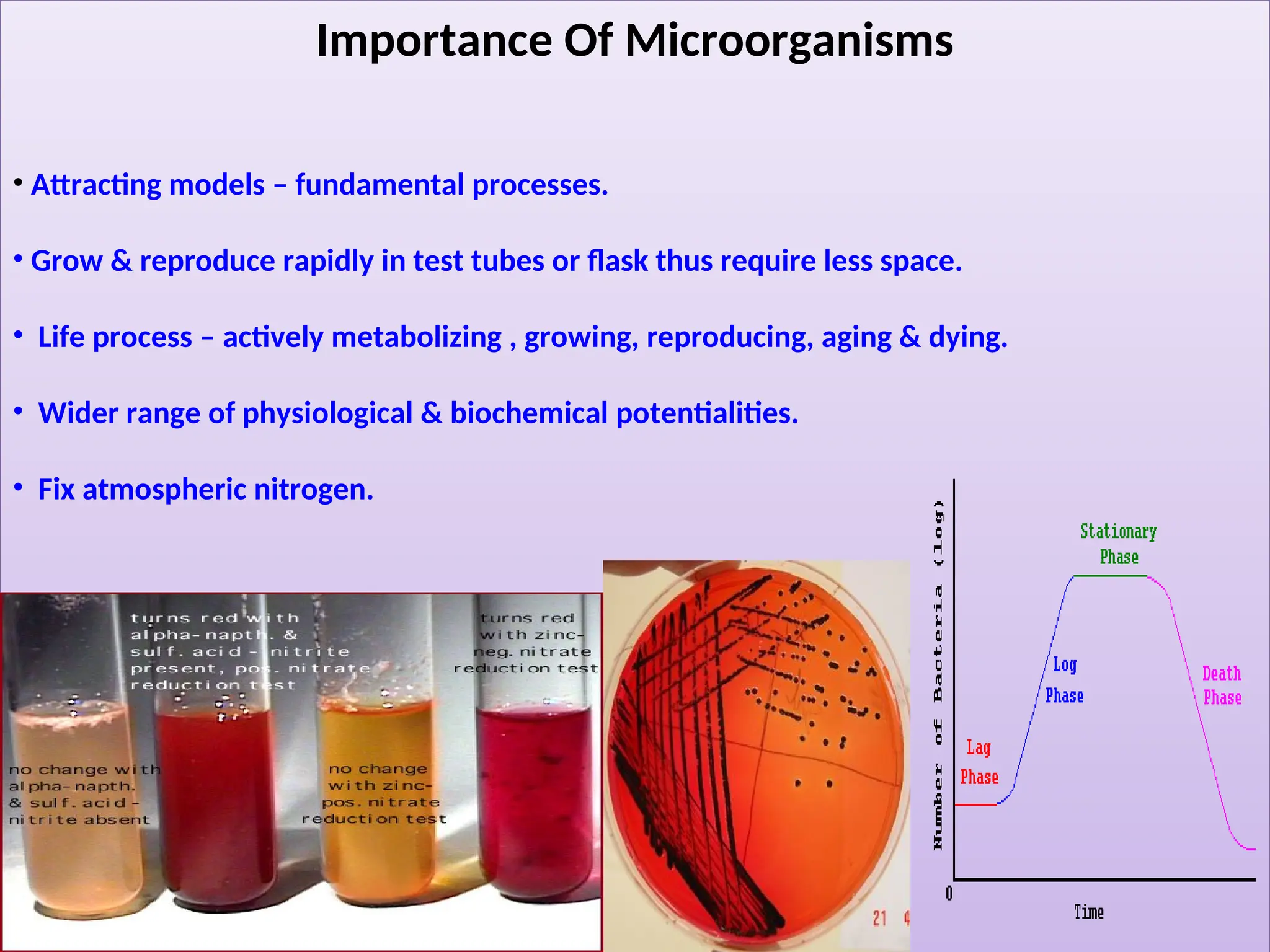
Importance Of Microorganisms
• Attracting models – fundamental processes.
• Grow & reproduce rapidly in test tubes or flask thus require less space.
• Life process – actively metabolizing , growing, reproducing, aging & dying.
• Wider range of physiological & biochemical potentialities.
• Fix atmospheric nitrogen.
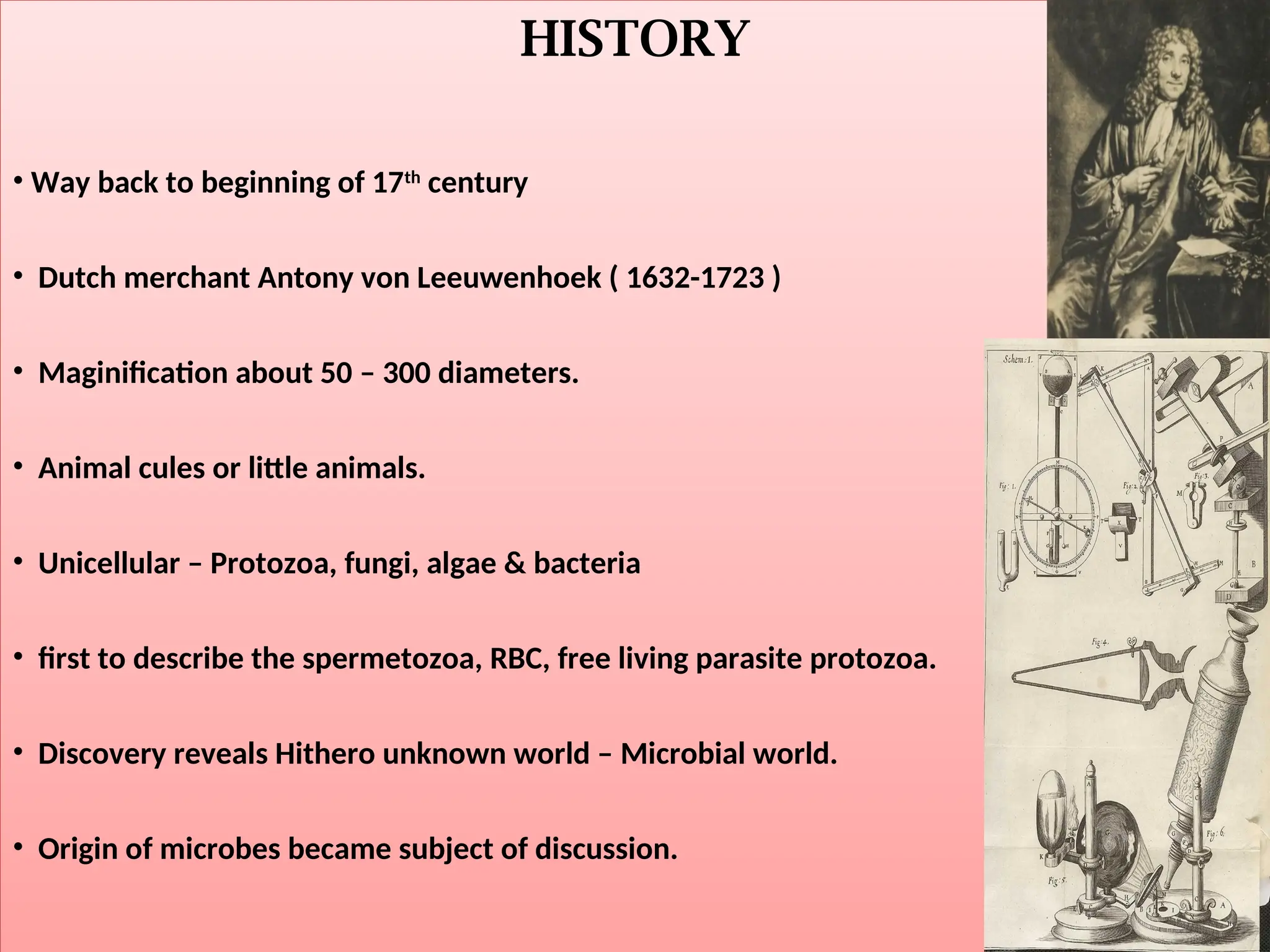
HISTORY
• Way back to beginning of 17th
century
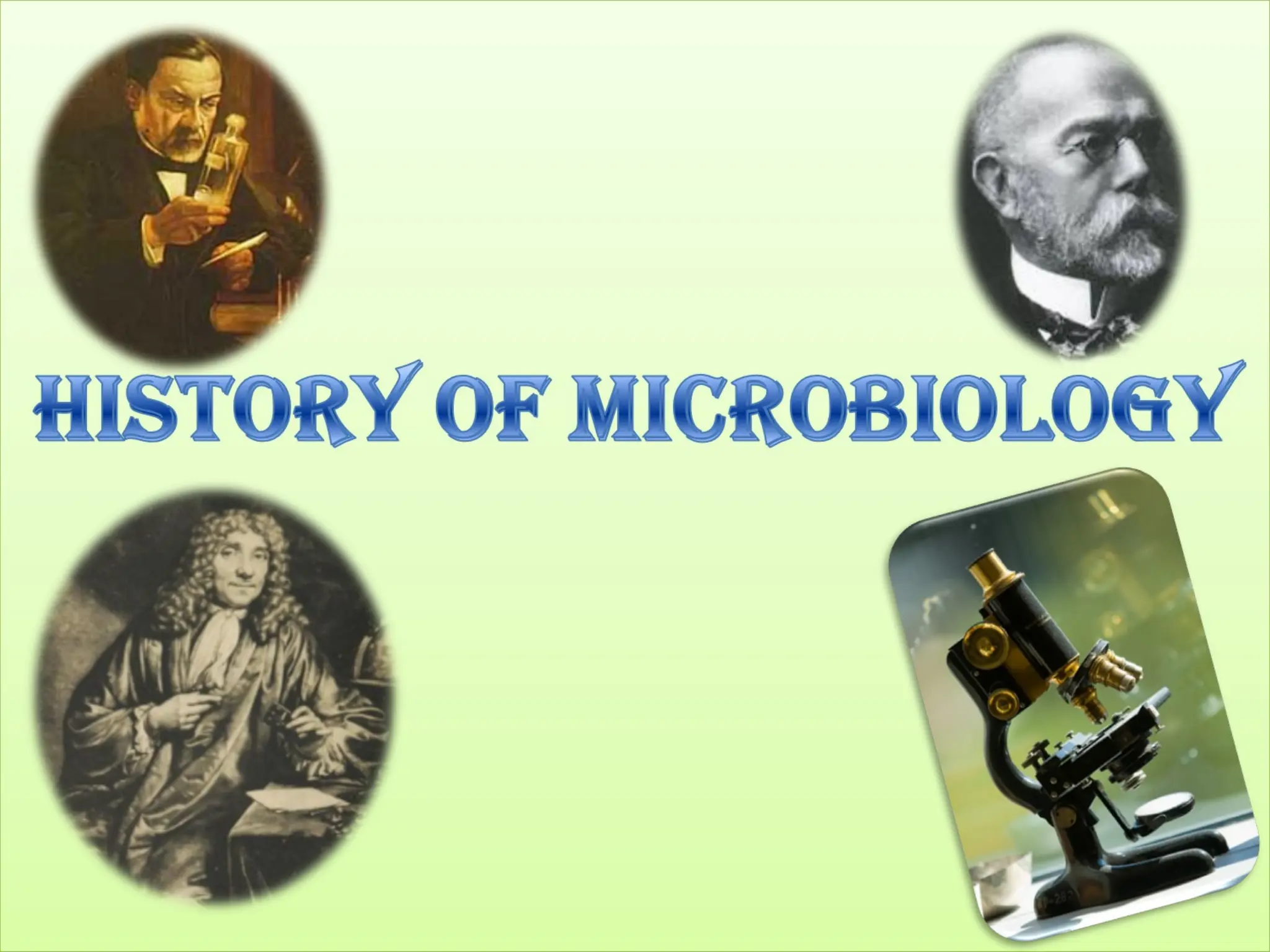
• Dutch merchant Antony von Leeuwenhoek ( 1632-1723 )
• Maginification about 50 – 300 diameters.
• Animal cules or little animals.
• Unicellular – Protozoa, fungi, algae & bacteria
• first to describe the spermetozoa, RBC, free living parasite protozoa.
• Discovery reveals Hithero unknown world – Microbial world.
• Origin of microbes became subject of discussion.
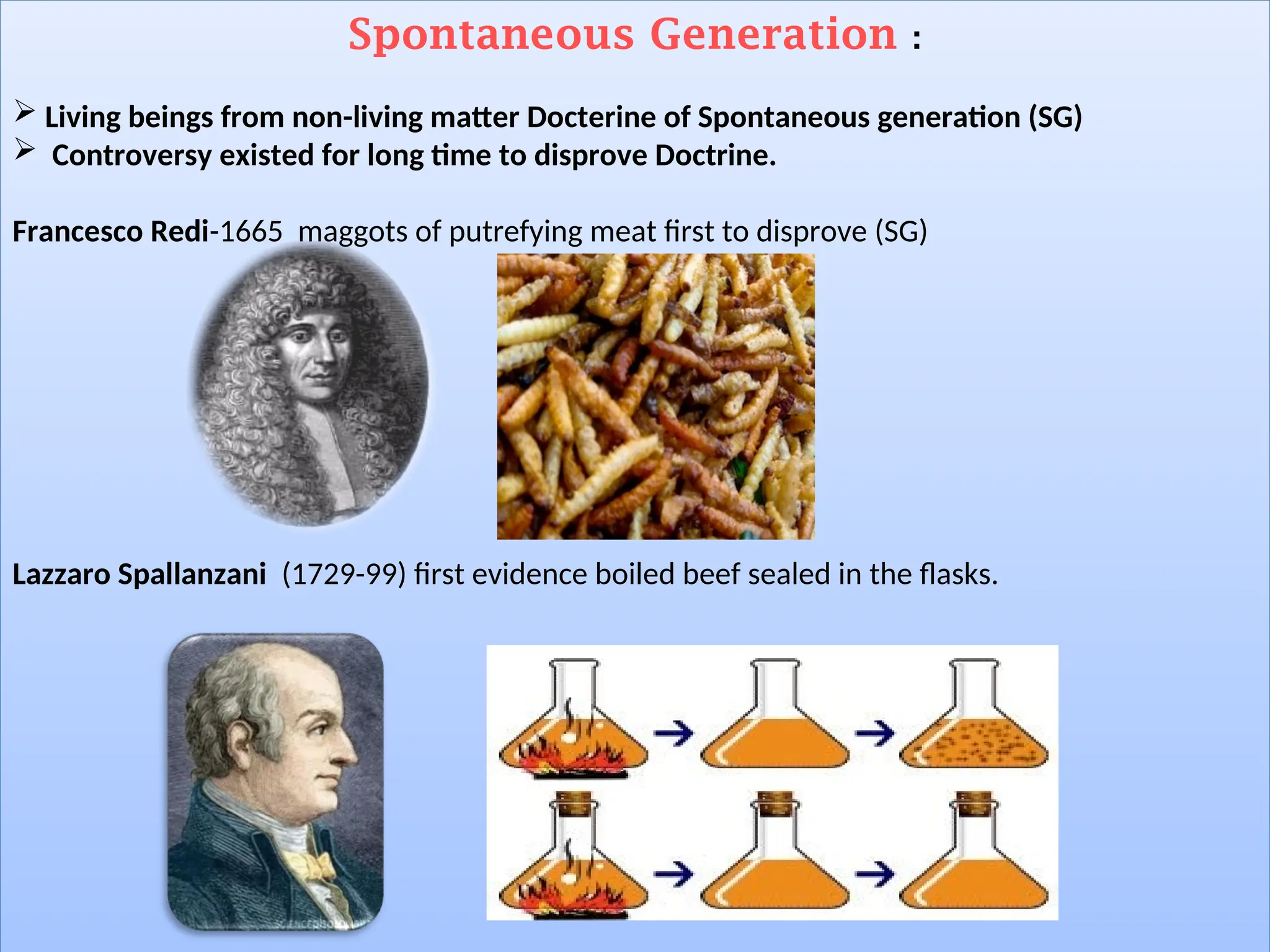
Spontaneous Generation :
 Living beings from non-living matter Docterine of Spontaneous generation (SG)
 Controversy existed for long time to disprove Doctrine.
Francesco Redi-1665 maggots of putrefying meat first to disprove (SG)
Lazzaro Spallanzani (1729-99) first evidence boiled beef sealed in the flasks.
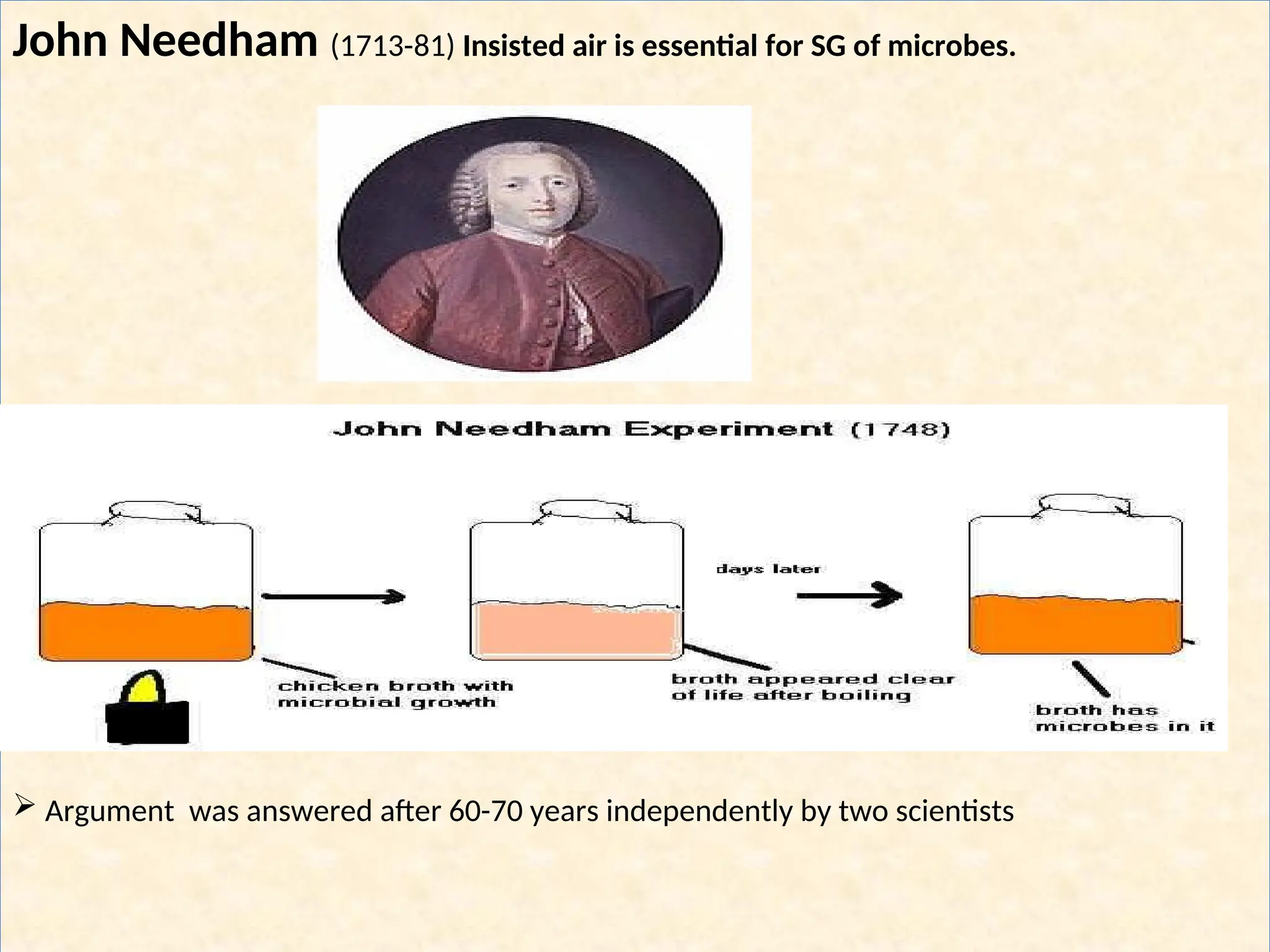
John Needham (1713-81) Insisted air is essential for SG of microbes.
 Argument was answered after 60-70 years independently by two scientists
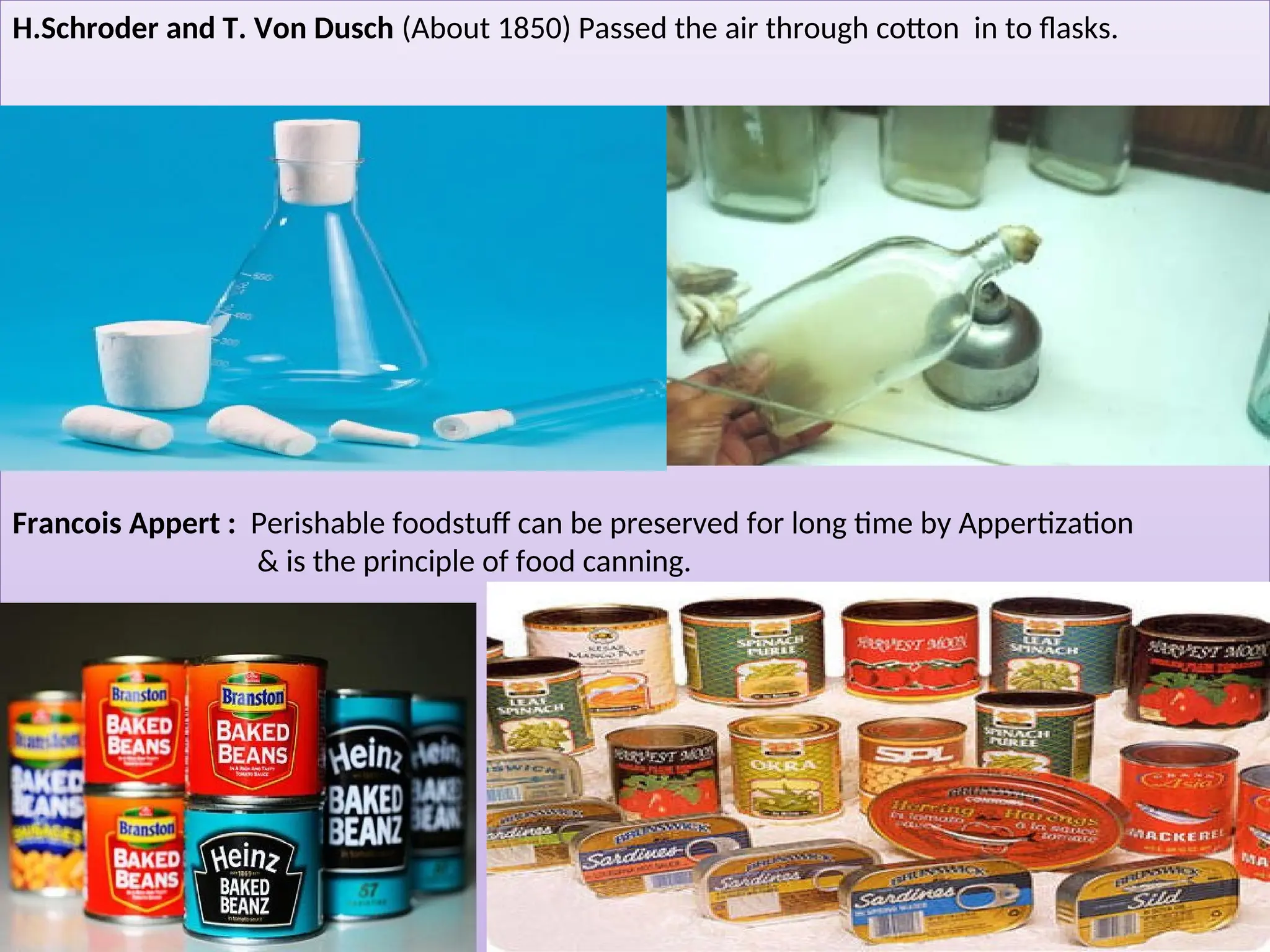
H.Schroder and T. Von Dusch (About 1850) Passed the air through cotton in to flasks.
Francois Appert : Perishable foodstuff can be preserved for long time by Appertization
& is the principle of food canning.
Archimede Pouche (1859) Published an extensive report favoring SG
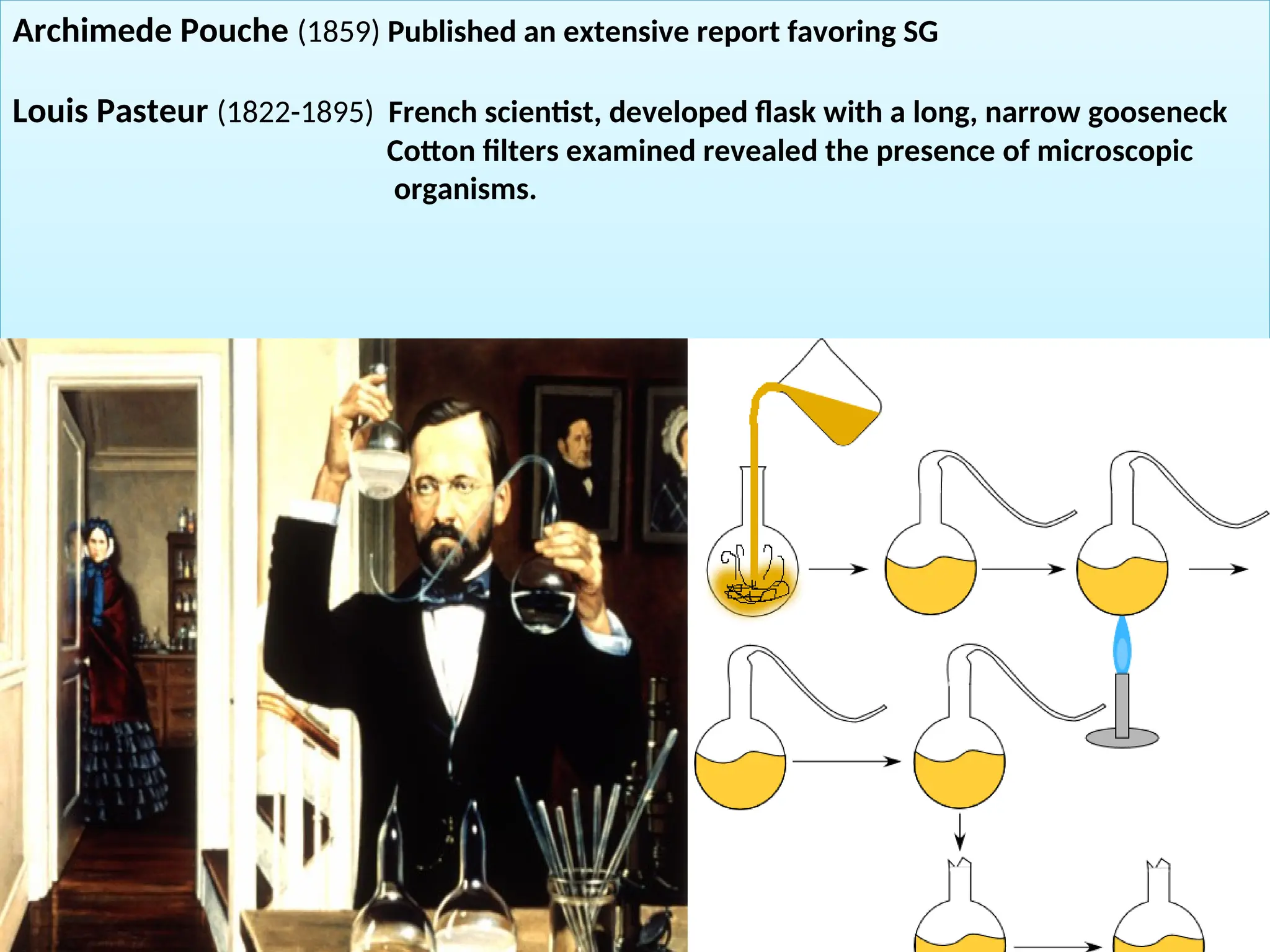
Louis Pasteur (1822-1895) French scientist, developed flask with a long, narrow gooseneck
Cotton filters examined revealed the presence of microscopic
organisms.
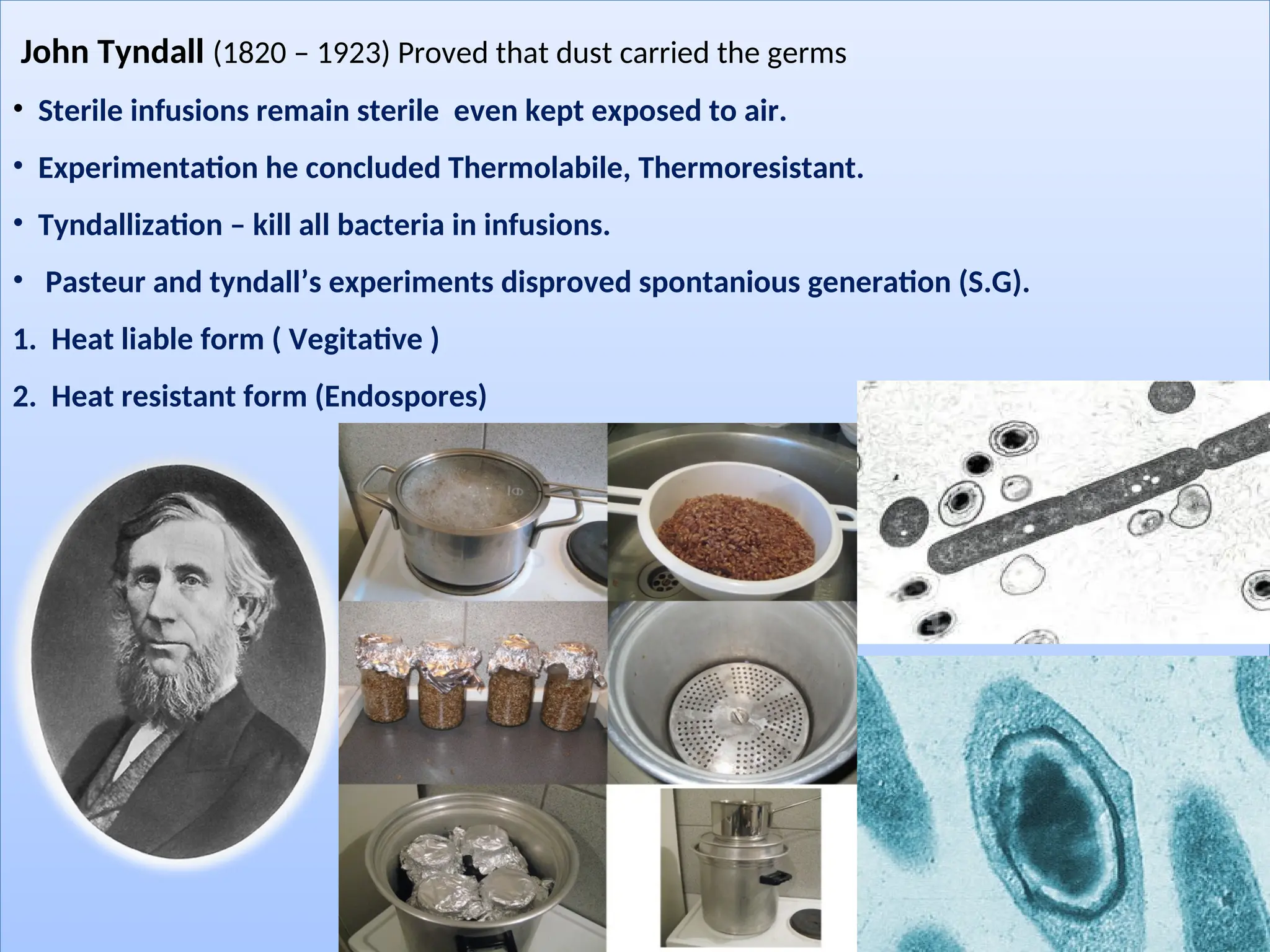
John Tyndall (1820 – 1923) Proved that dust carried the germs
• Sterile infusions remain sterile even kept exposed to air.
• Experimentation he concluded Thermolabile, Thermoresistant.
• Tyndallization – kill all bacteria in infusions.
• Pasteur and tyndall’s experiments disproved spontanious generation (S.G).
1. Heat liable form ( Vegitative )
2. Heat resistant form (Endospores)
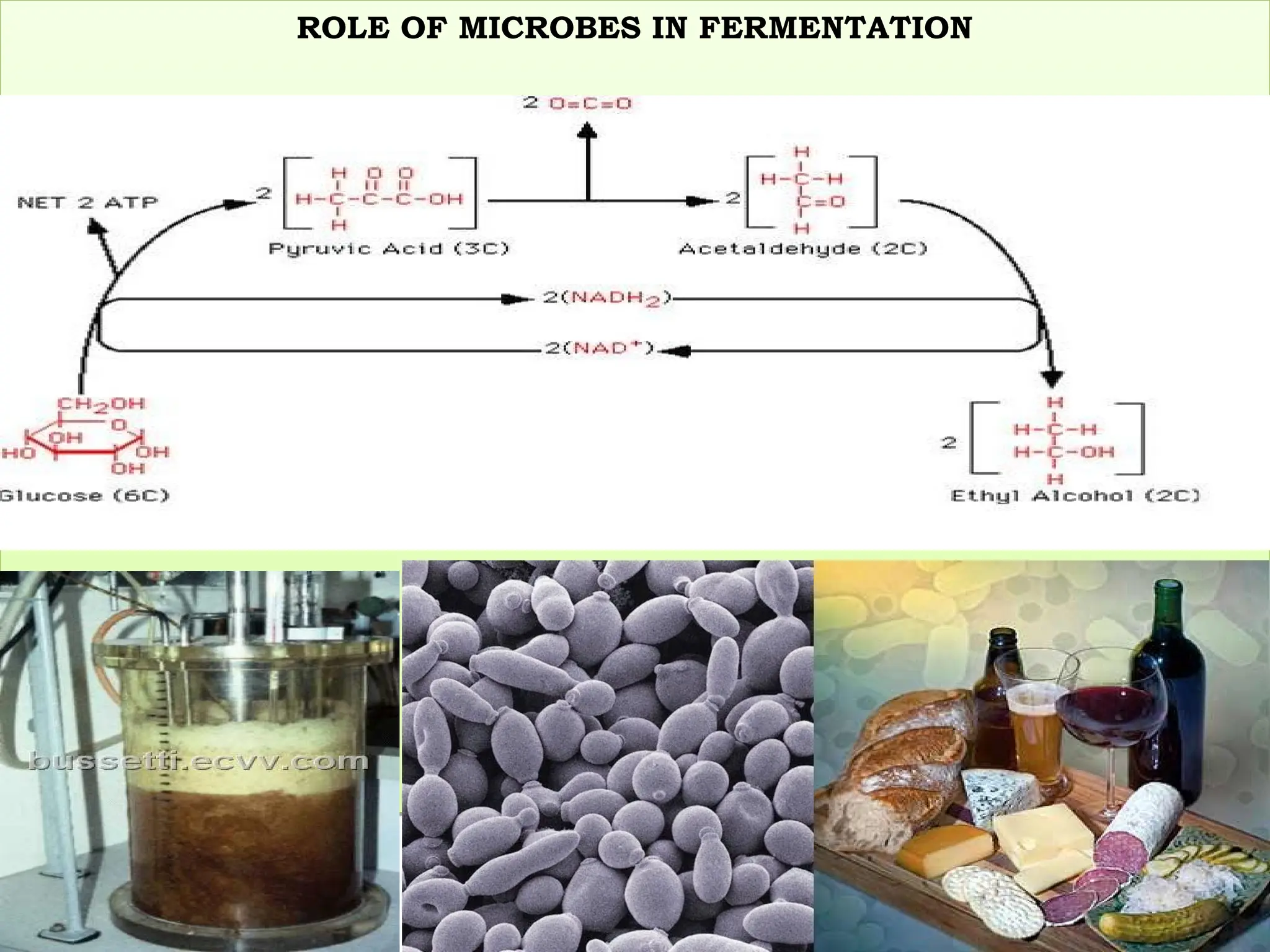
ROLE OF MICROBES IN FERMENTATION
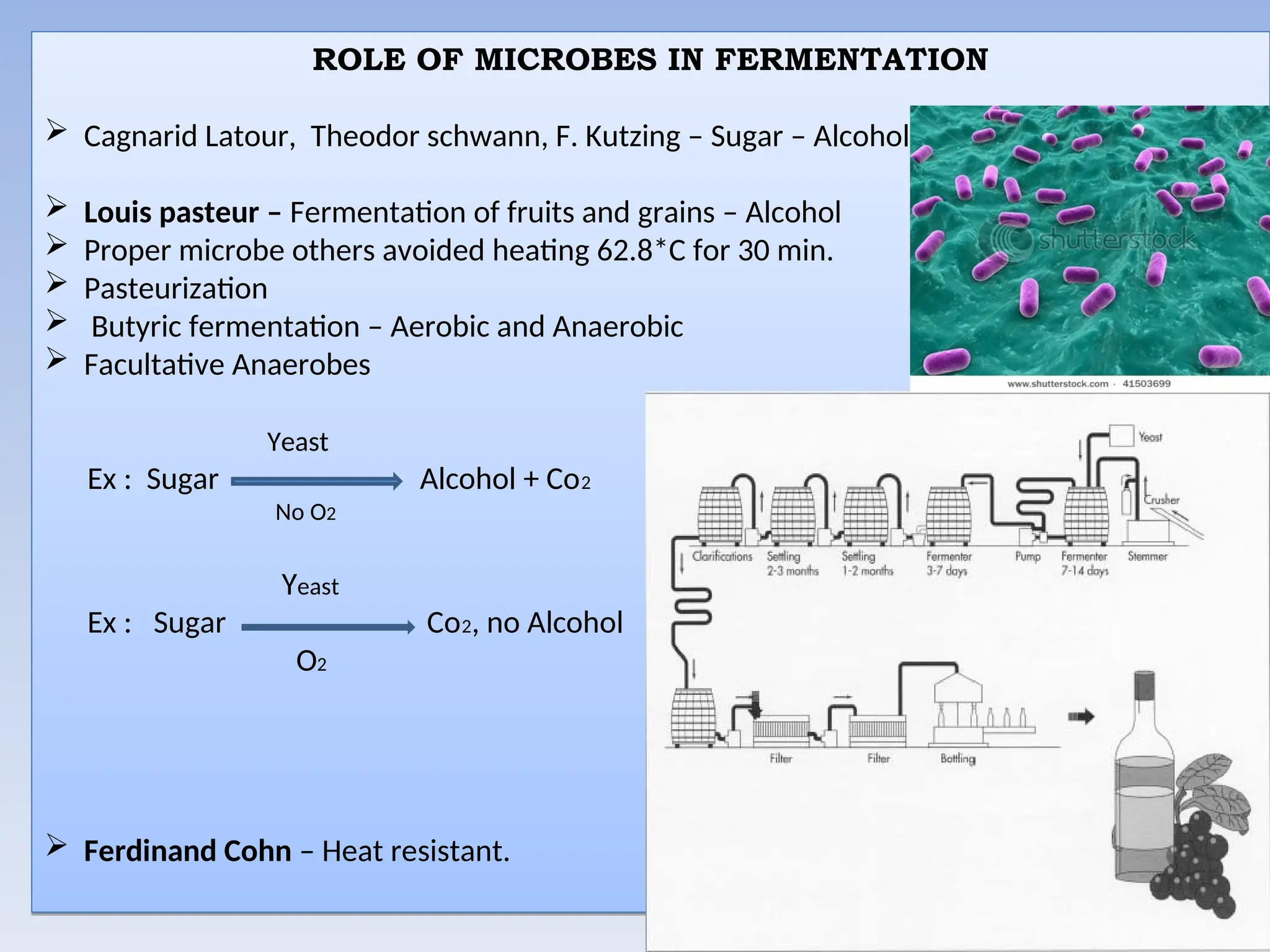
 Cagnarid Latour, Theodor schwann, F. Kutzing – Sugar – Alcohol.
 Louis pasteur – Fermentation of fruits and grains – Alcohol
 Proper microbe others avoided heating 62.8*C for 30 min.
 Pasteurization
 Butyric fermentation – Aerobic and Anaerobic
 Facultative Anaerobes
Yeast
Ex : Sugar Alcohol + Co2
No O2
Yeast
Ex : Sugar Co2, no Alcohol
O2
 Ferdinand Cohn – Heat resistant.
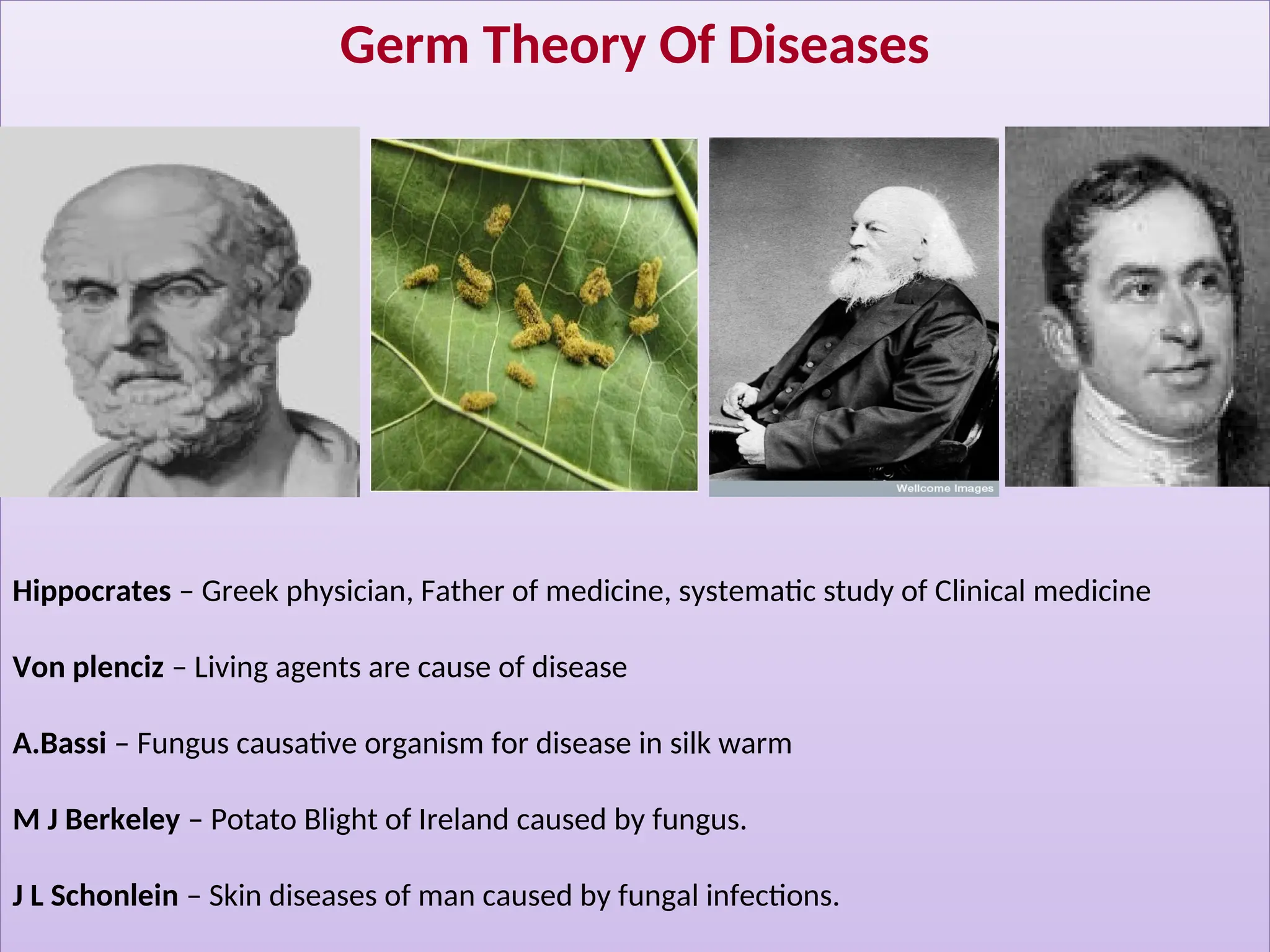
Germ Theory Of Diseases
Hippocrates – Greek physician, Father of medicine, systematic study of Clinical medicine
Von plenciz – Living agents are cause of disease
A.Bassi – Fungus causative organism for disease in silk warm
M J Berkeley – Potato Blight of Ireland caused by fungus.
J L Schonlein – Skin diseases of man caused by fungal infections.
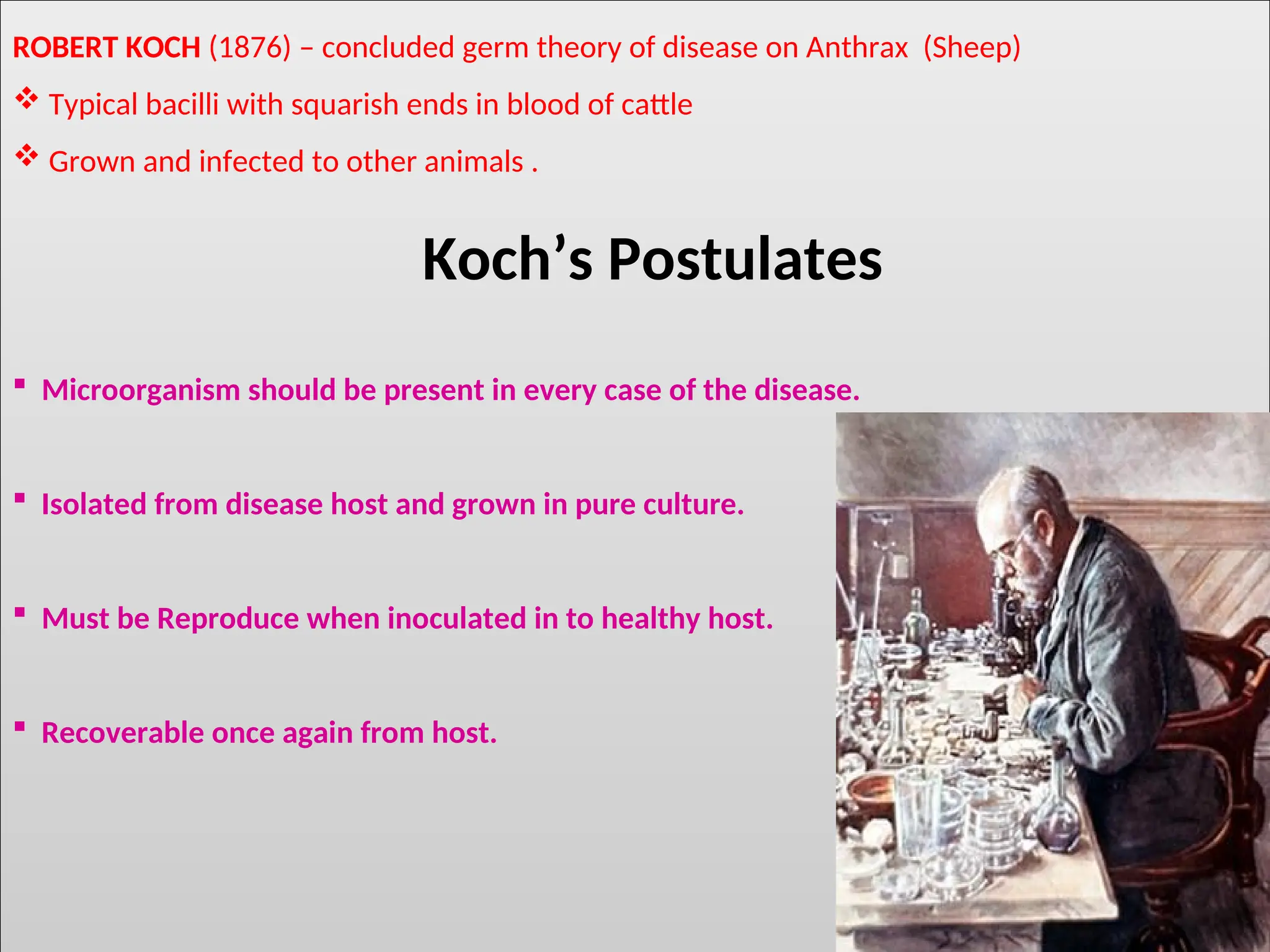
ROBERT KOCH (1876) – concluded germ theory of disease on Anthrax (Sheep)
 Typical bacilli with squarish ends in blood of cattle
 Grown and infected to other animals .
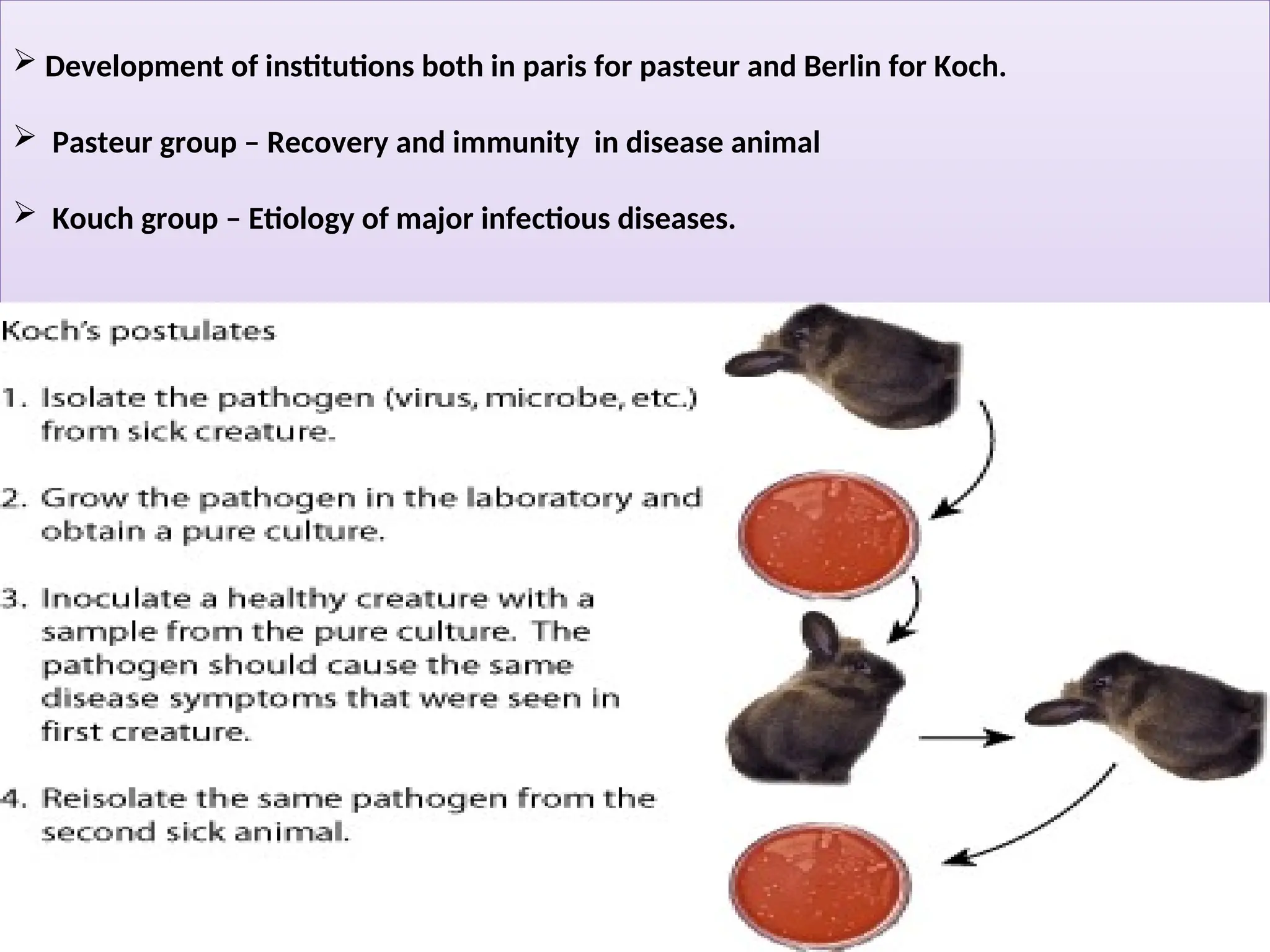
Koch’s Postulates
 Microorganism should be present in every case of the disease.
 Isolated from disease host and grown in pure culture.
 Must be Reproduce when inoculated in to healthy host.
 Recoverable once again from host.
 Development of institutions both in paris for pasteur and Berlin for Koch.
 Pasteur group – Recovery and immunity in disease animal
 Kouch group – Etiology of major infectious diseases.
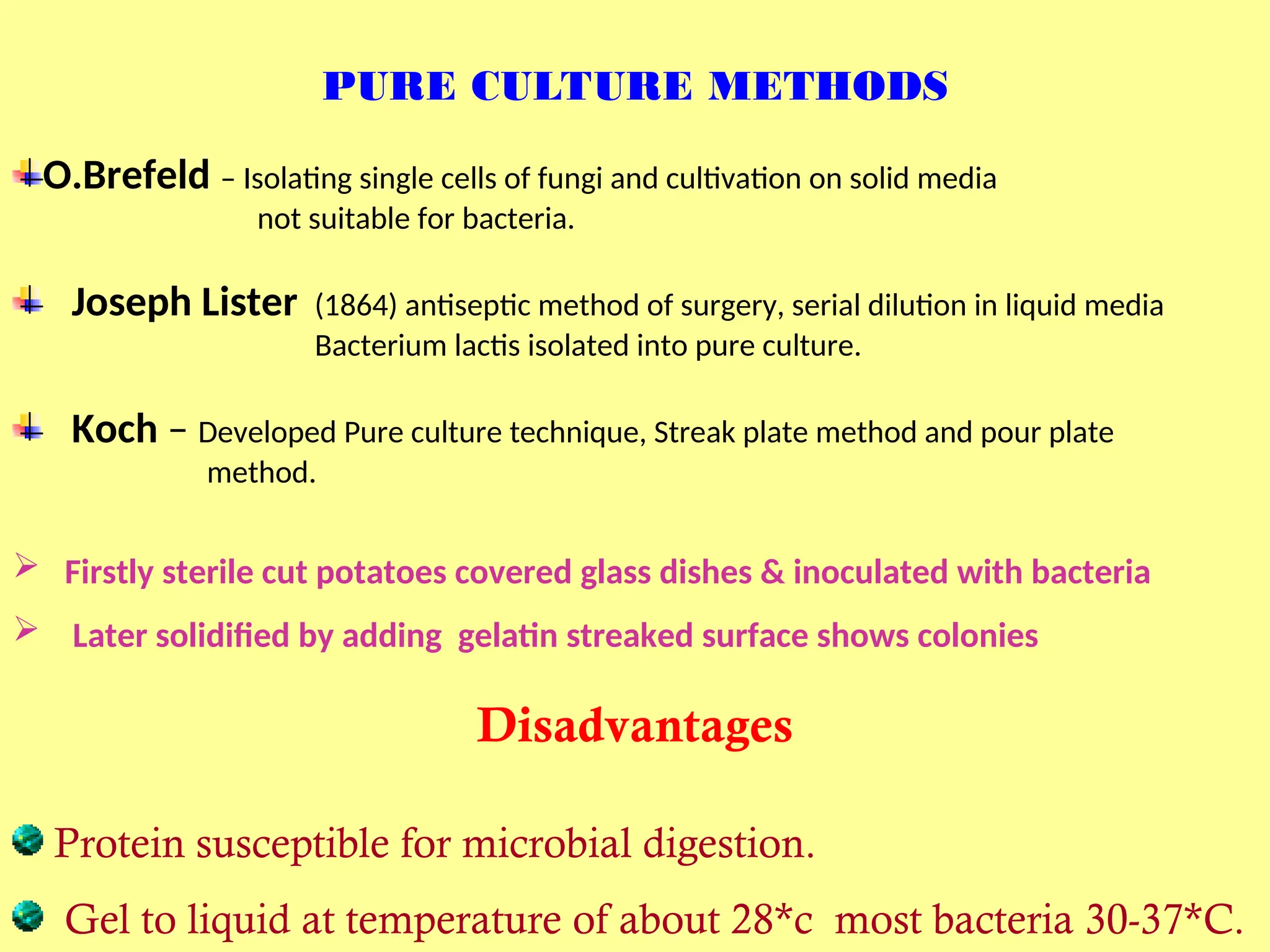
PURE CULTURE METHODS
O.Brefeld – Isolating single cells of fungi and cultivation on solid media
not suitable for bacteria.
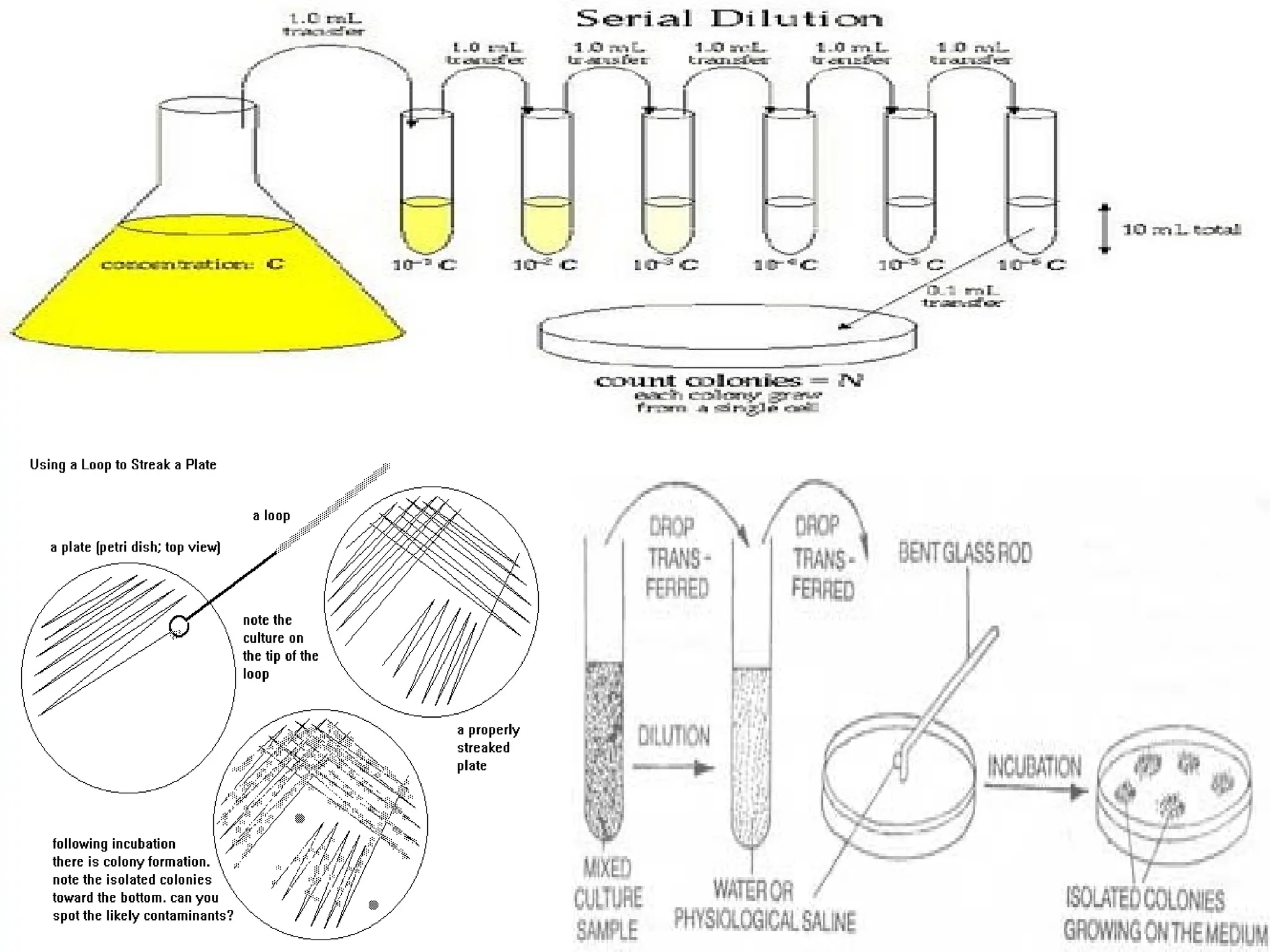
Joseph Lister (1864) antiseptic method of surgery, serial dilution in liquid media
Bacterium lactis isolated into pure culture.
Koch – Developed Pure culture technique, Streak plate method and pour plate
method.
 Firstly sterile cut potatoes covered glass dishes & inoculated with bacteria
 Later solidified by adding gelatin streaked surface shows colonies
Disadvantages
Protein susceptible for microbial digestion.
Gel to liquid at temperature of about 28*c most bacteria 30-37*C.
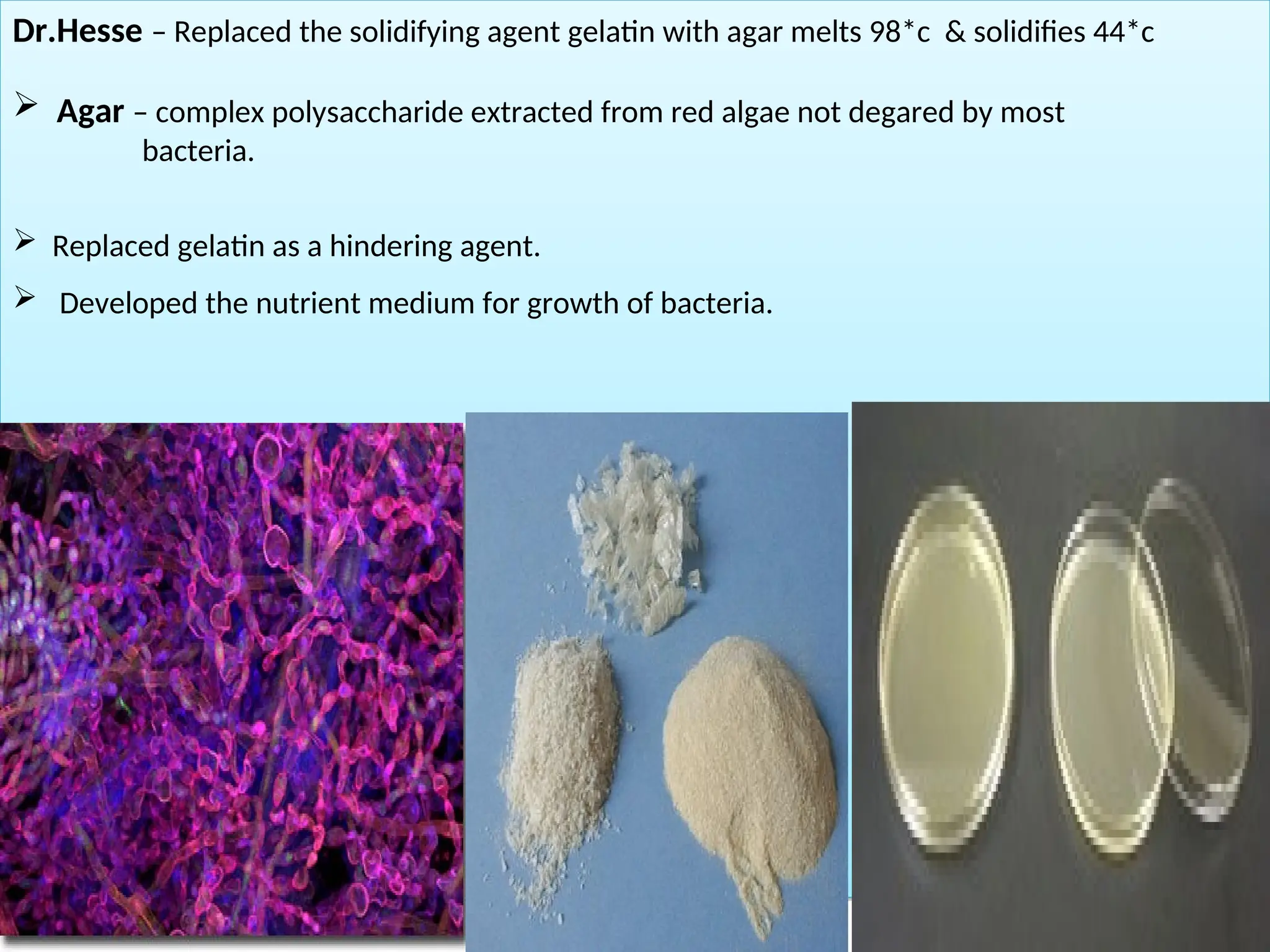
Dr.Hesse – Replaced the solidifying agent gelatin with agar melts 98*c & solidifies 44*c
 Agar – complex polysaccharide extracted from red algae not degared by most
bacteria.
 Replaced gelatin as a hindering agent.
 Developed the nutrient medium for growth of bacteria.
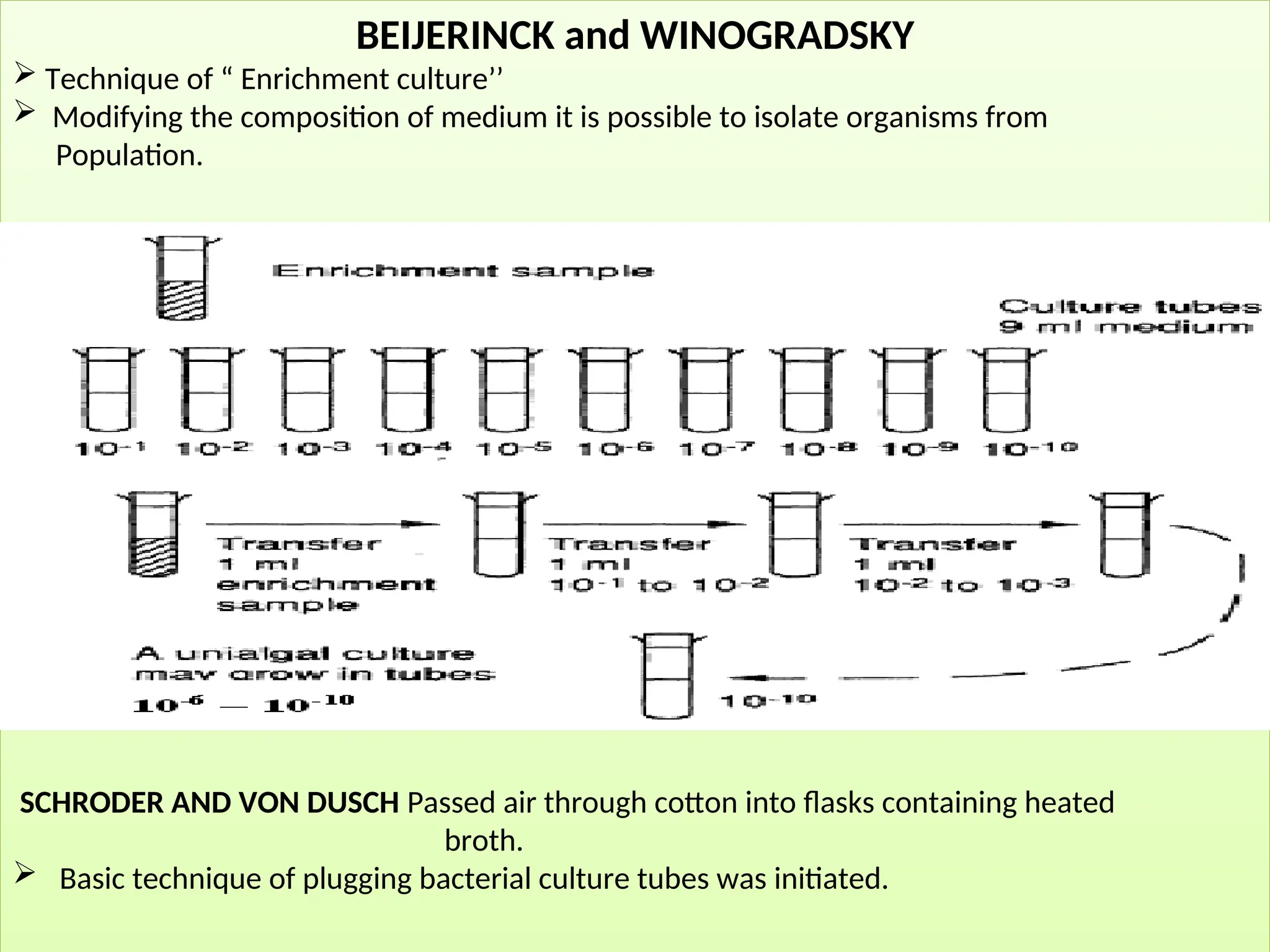
BEIJERINCK and WINOGRADSKY
 Technique of “ Enrichment culture’’
 Modifying the composition of medium it is possible to isolate organisms from
Population.
SCHRODER AND VON DUSCH Passed air through cotton into flasks containing heated
broth.
 Basic technique of plugging bacterial culture tubes was initiated.
PROTECTION AGAINST INFECTION
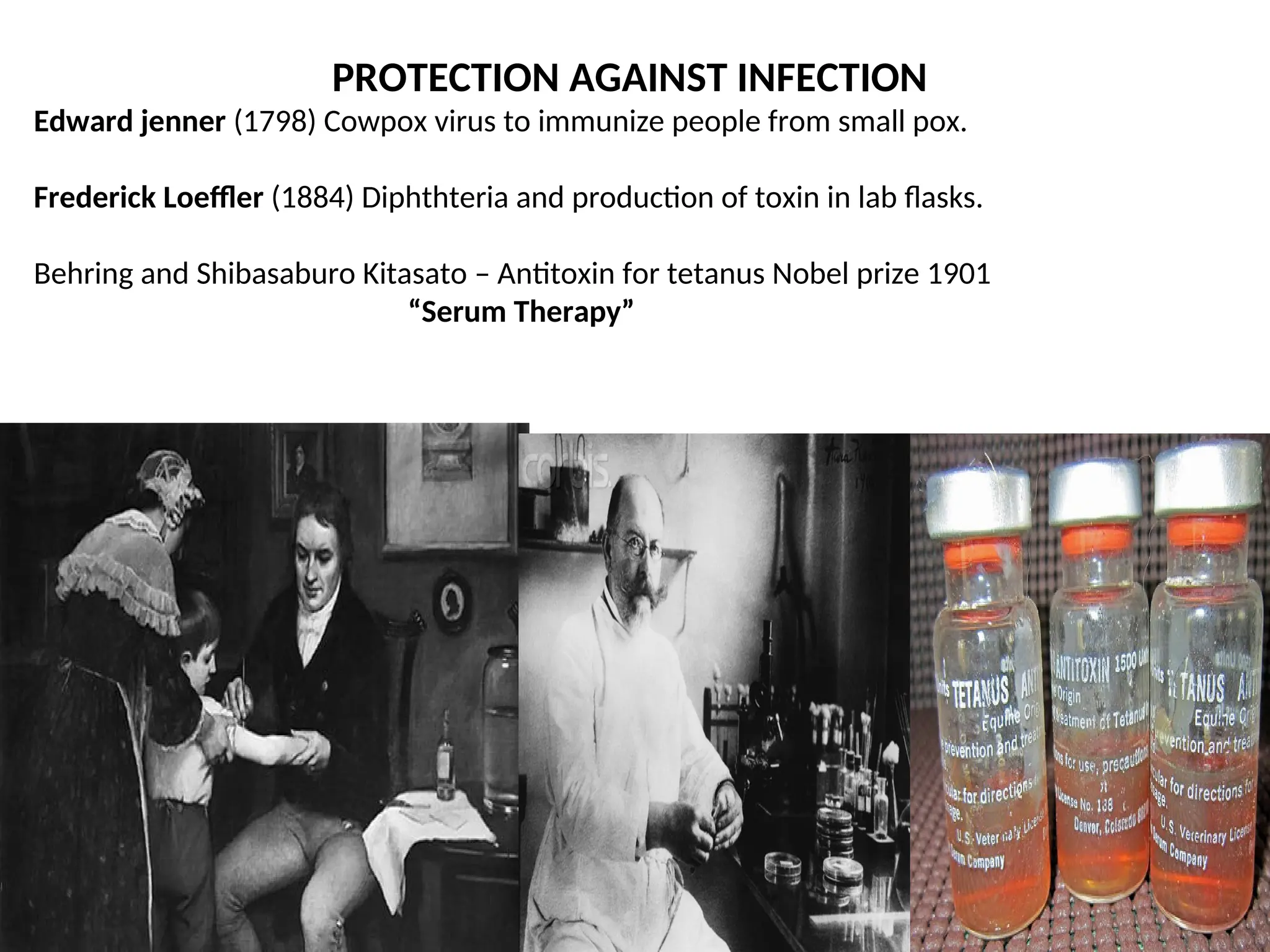
Edward jenner (1798) Cowpox virus to immunize people from small pox.
Frederick Loeffler (1884) Diphthteria and production of toxin in lab flasks.
Behring and Shibasaburo Kitasato – Antitoxin for tetanus Nobel prize 1901
“Serum Therapy”
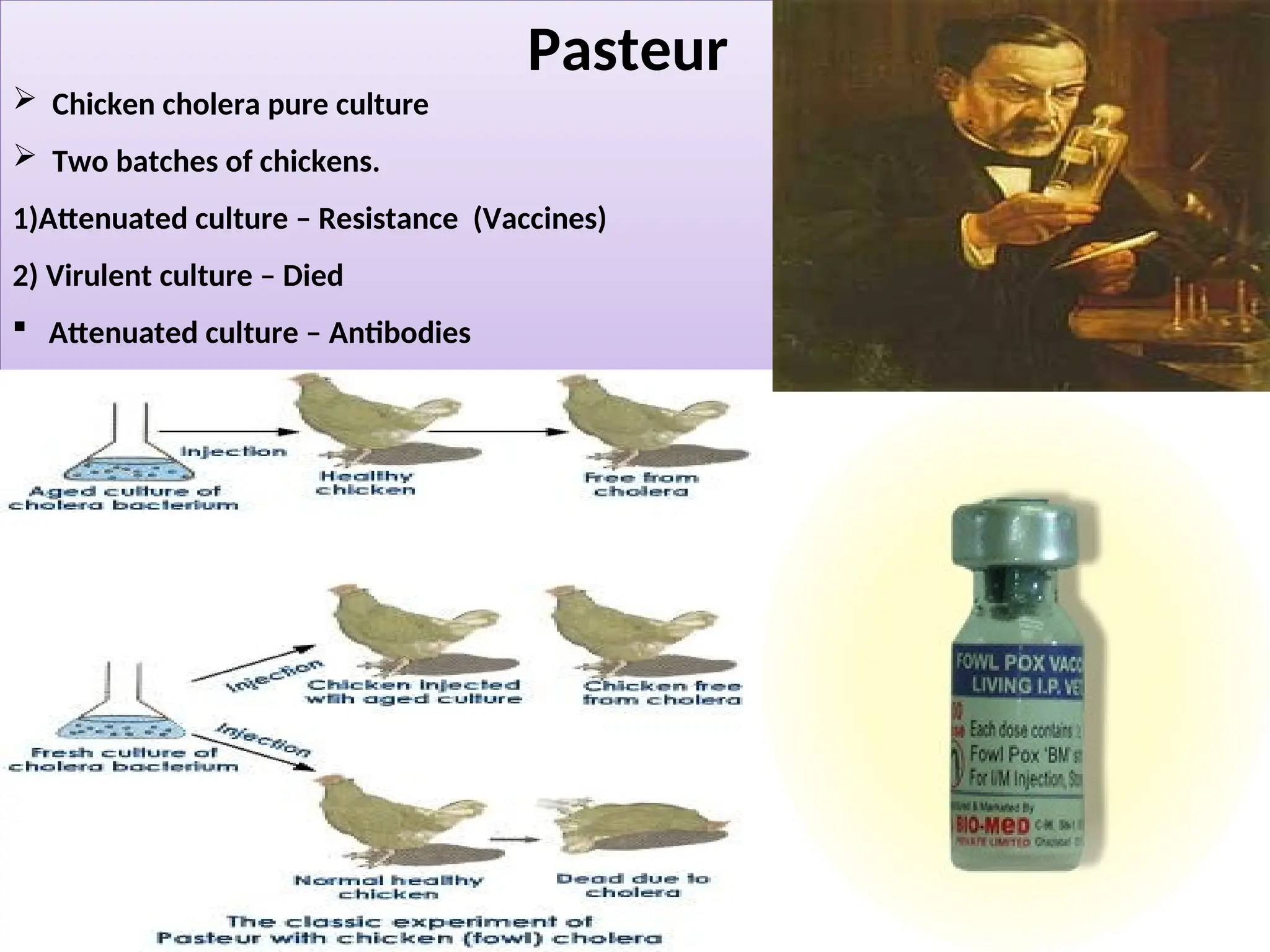
Pasteur
 Chicken cholera pure culture
 Two batches of chickens.
1)Attenuated culture – Resistance (Vaccines)
2) Virulent culture – Died
 Attenuated culture – Antibodies
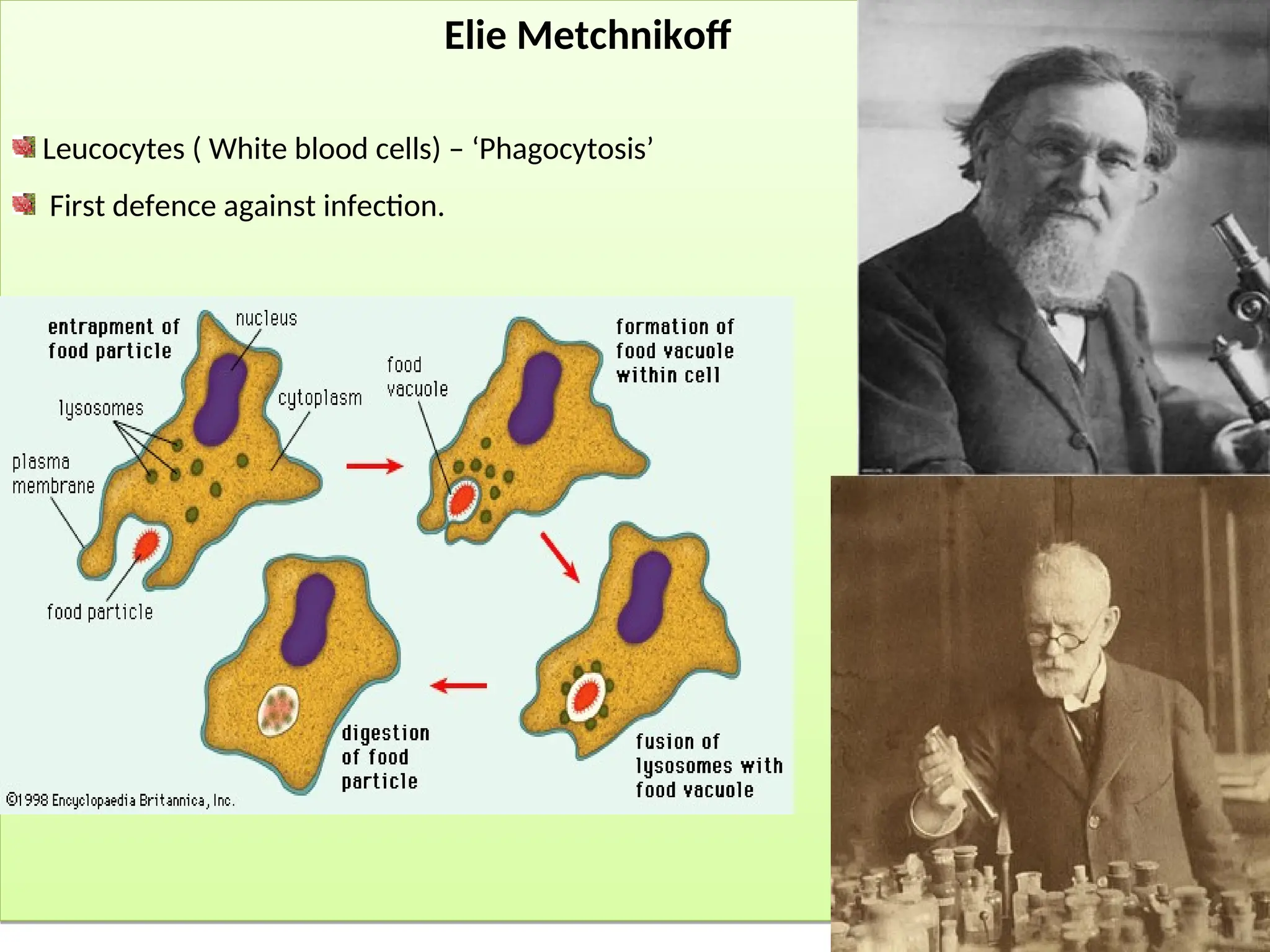
Elie Metchnikoff
Leucocytes ( White blood cells) – ‘Phagocytosis’
First defence against infection.
Paul Ehrlich – Chemotherapeutic substance.
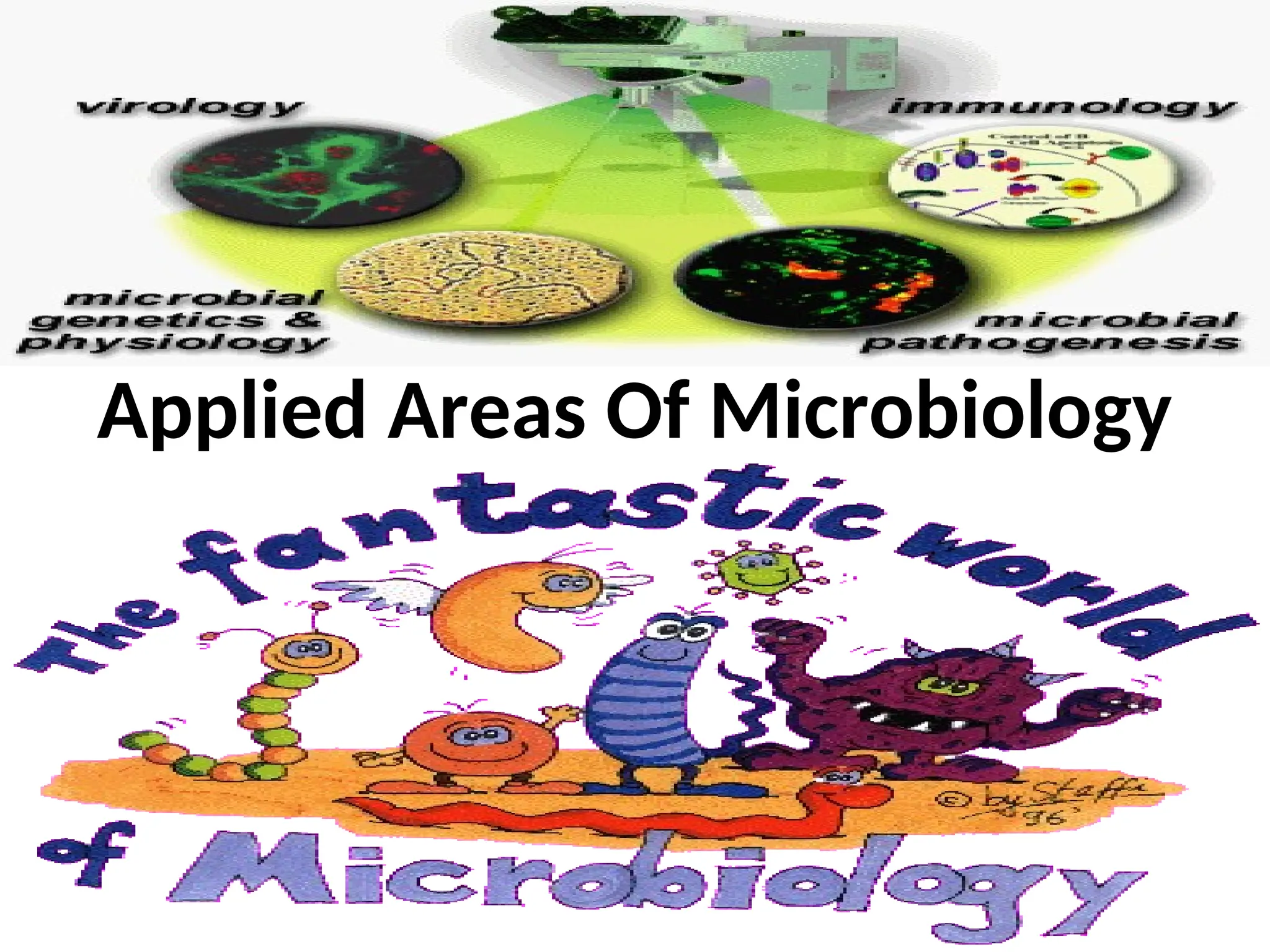
Applied Areas Of Microbiology
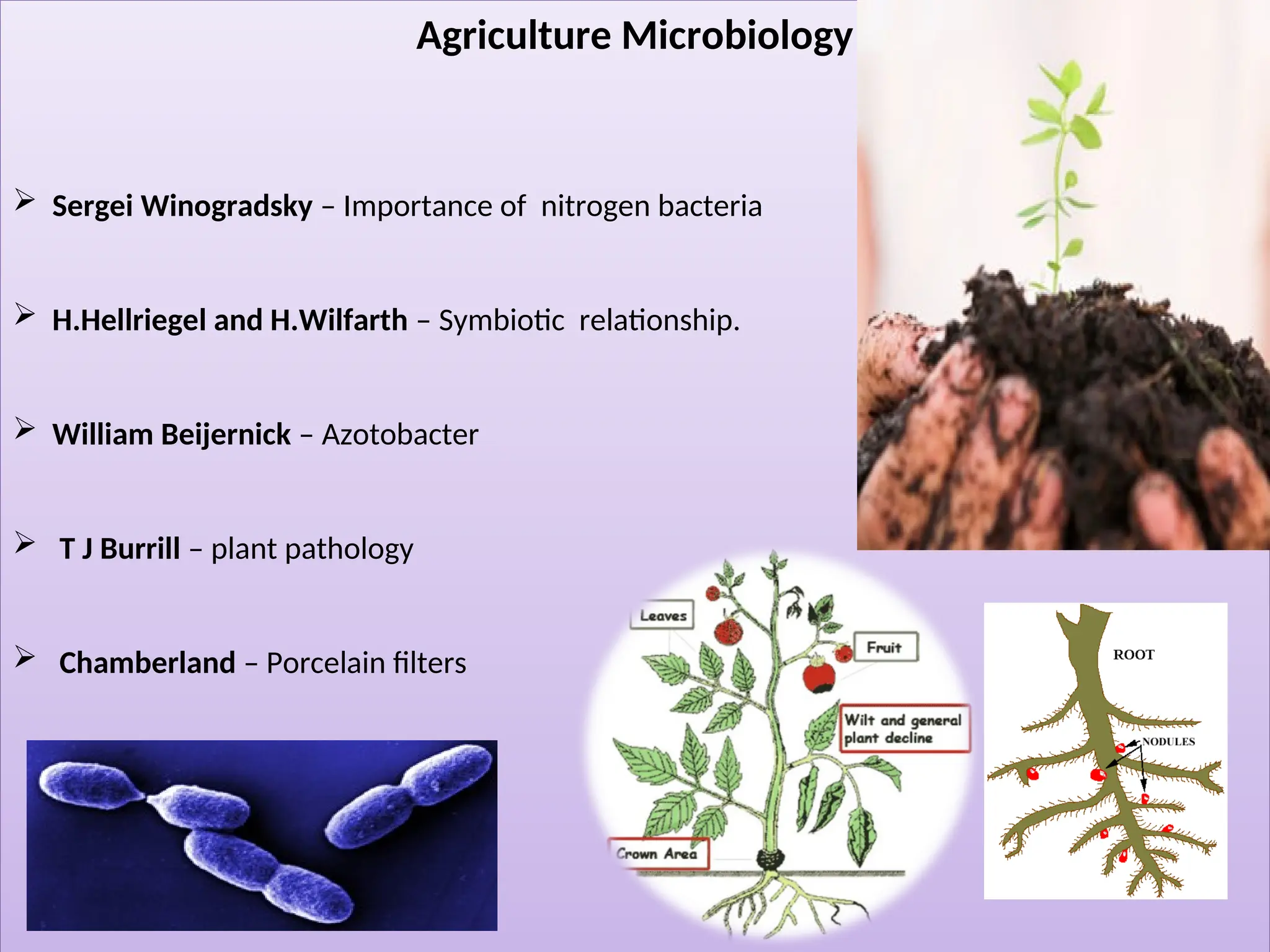
Agriculture Microbiology
 Sergei Winogradsky – Importance of nitrogen bacteria
 H.Hellriegel and H.Wilfarth – Symbiotic relationship.
 William Beijernick – Azotobacter
 T J Burrill – plant pathology
 Chamberland – Porcelain filters
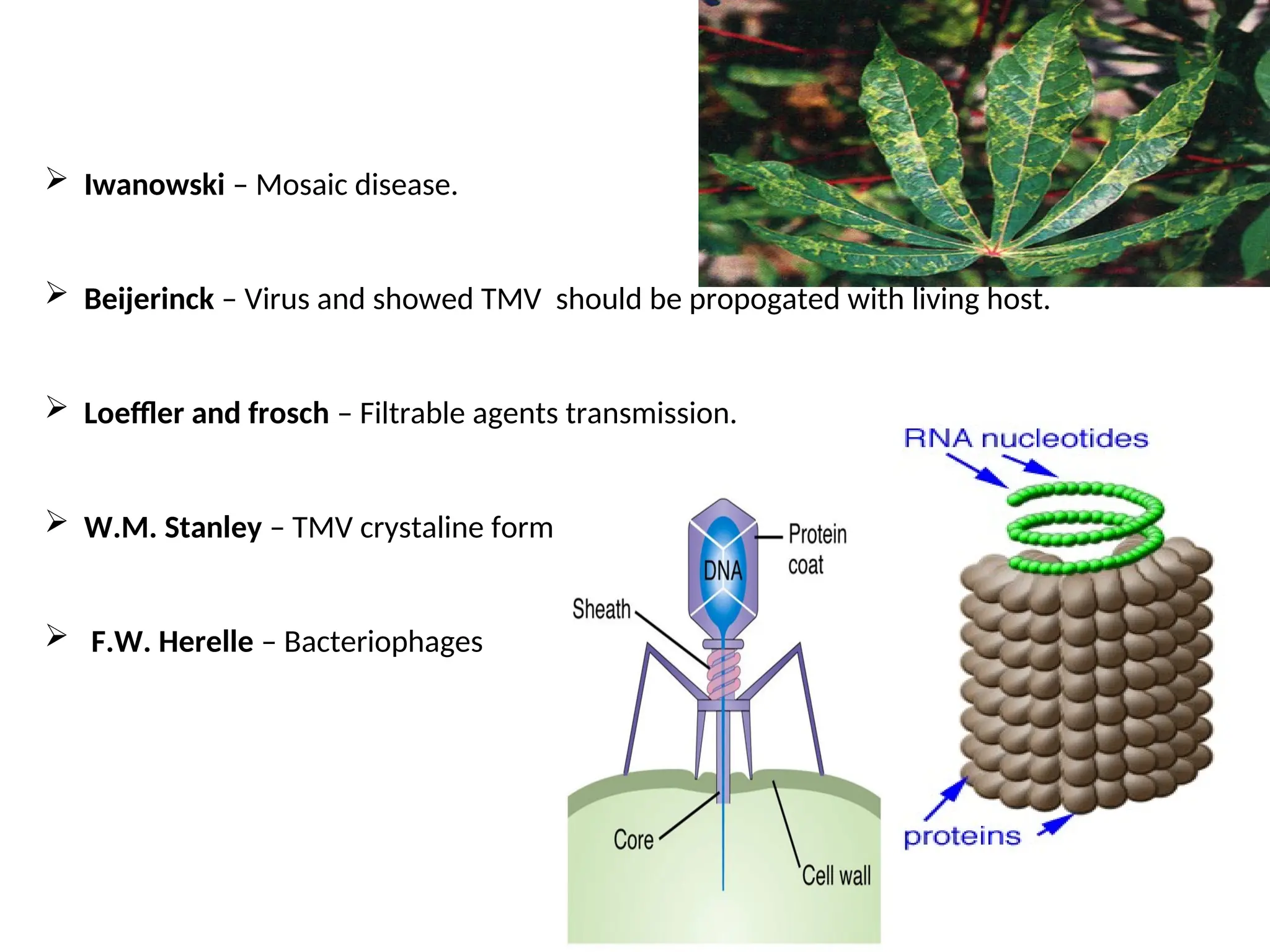
 Iwanowski – Mosaic disease.
 Beijerinck – Virus and showed TMV should be propogated with living host.
 Loeffler and frosch – Filtrable agents transmission.
 W.M. Stanley – TMV crystaline form
 F.W. Herelle – Bacteriophages
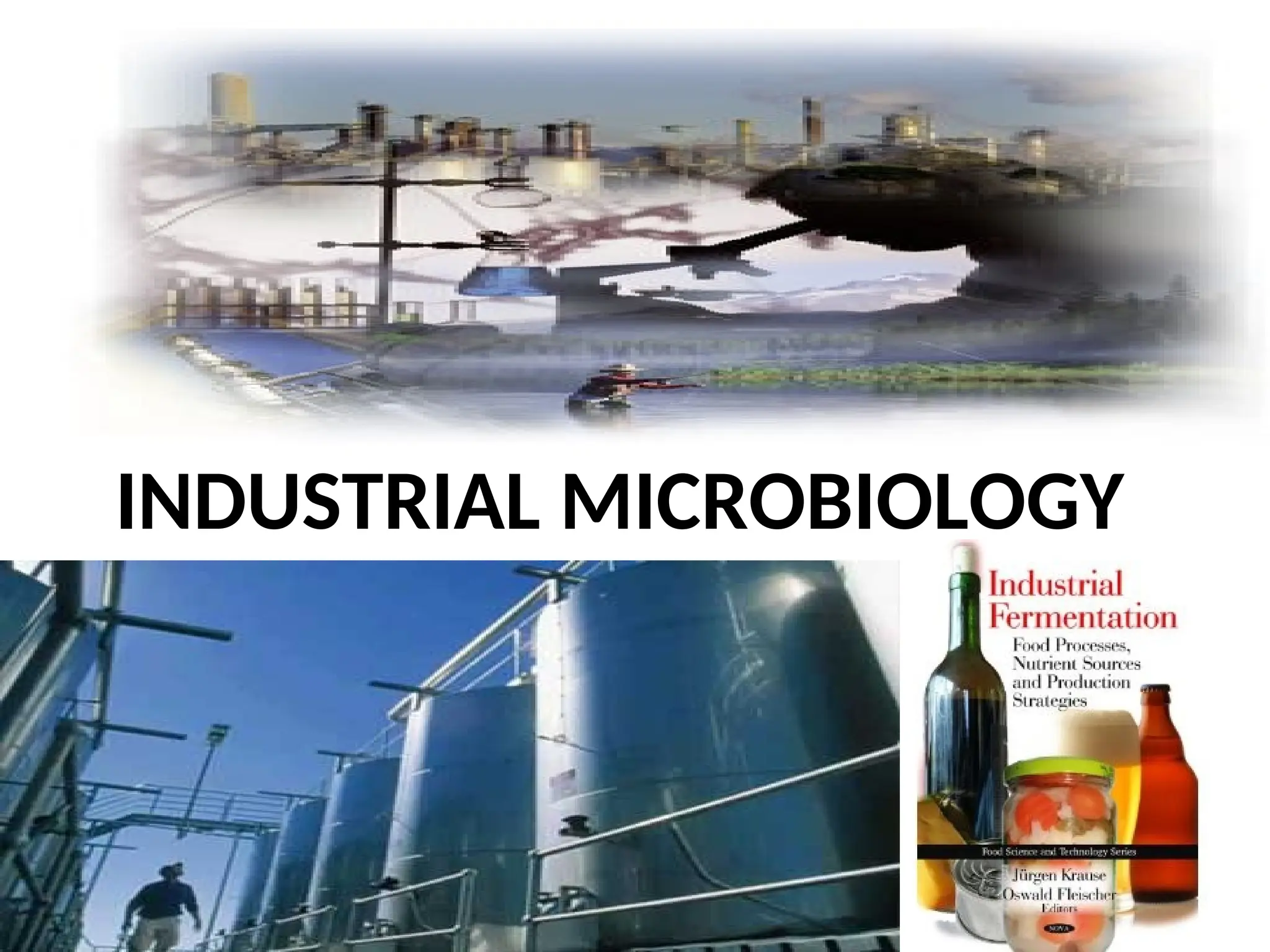
INDUSTRIAL MICROBIOLOGY
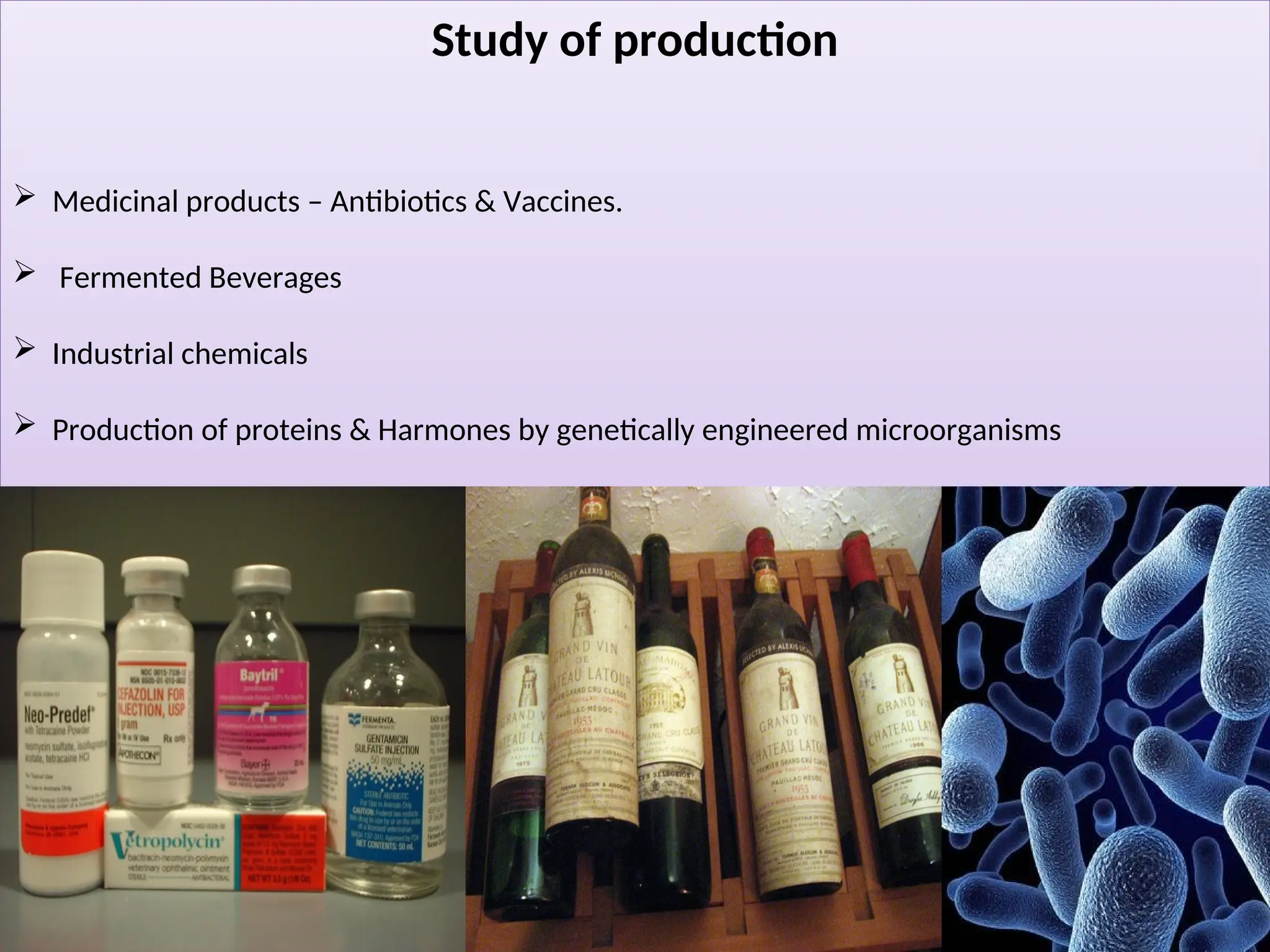
Study of production
 Medicinal products – Antibiotics & Vaccines.
 Fermented Beverages
 Industrial chemicals
 Production of proteins & Harmones by genetically engineered microorganisms
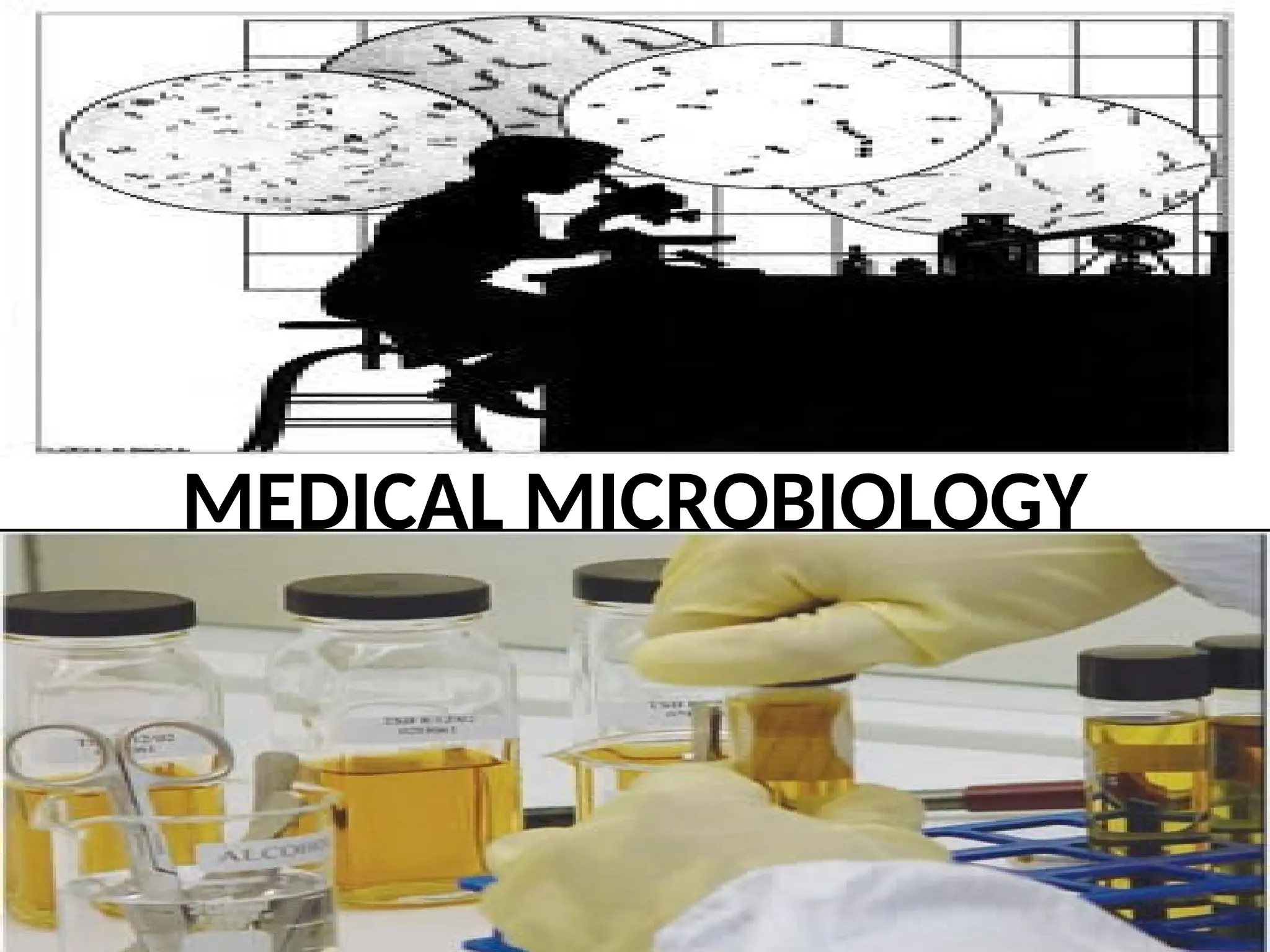
MEDICAL MICROBIOLOGY
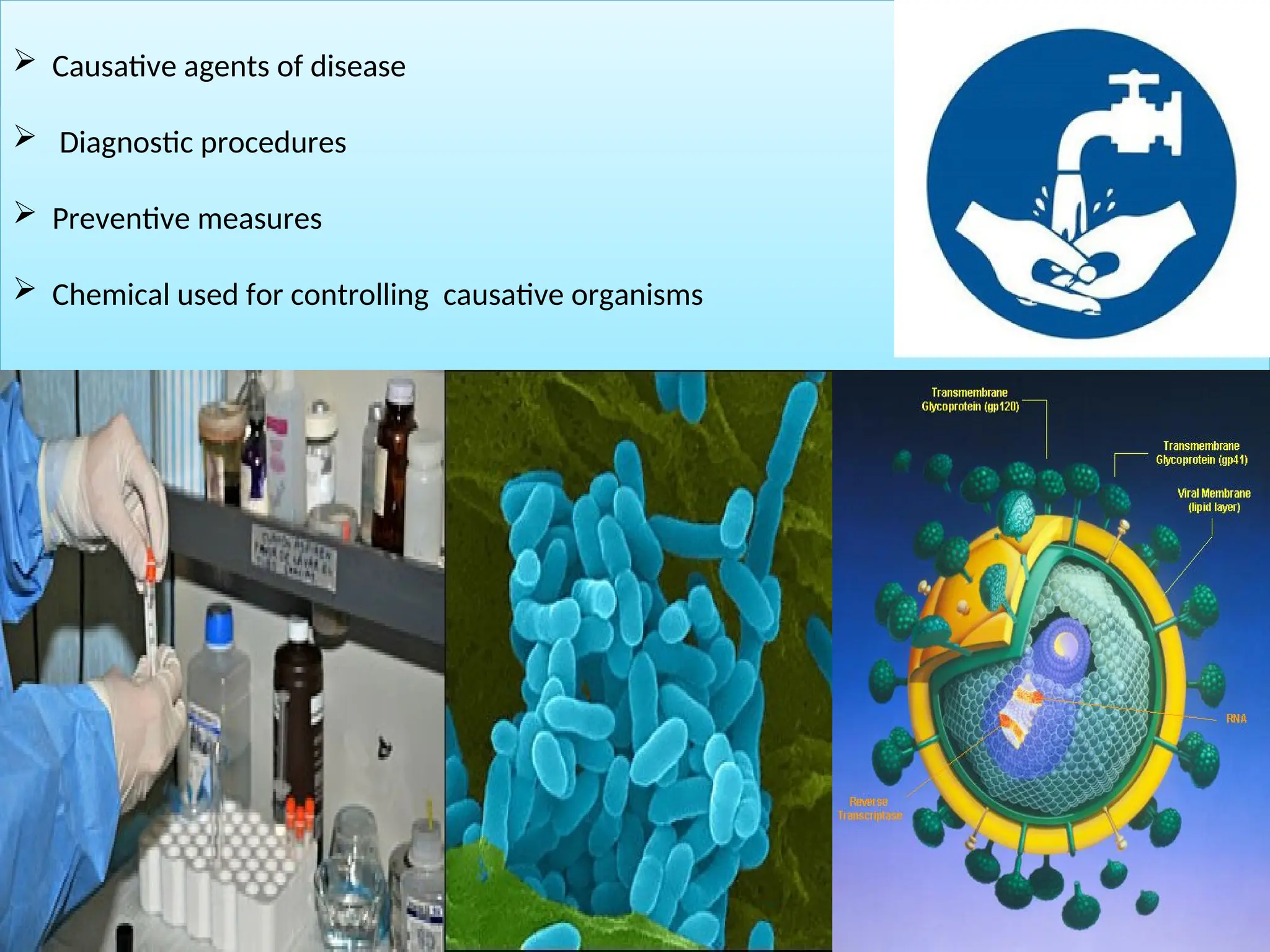
 Causative agents of disease
 Diagnostic procedures
 Preventive measures
 Chemical used for controlling causative organisms
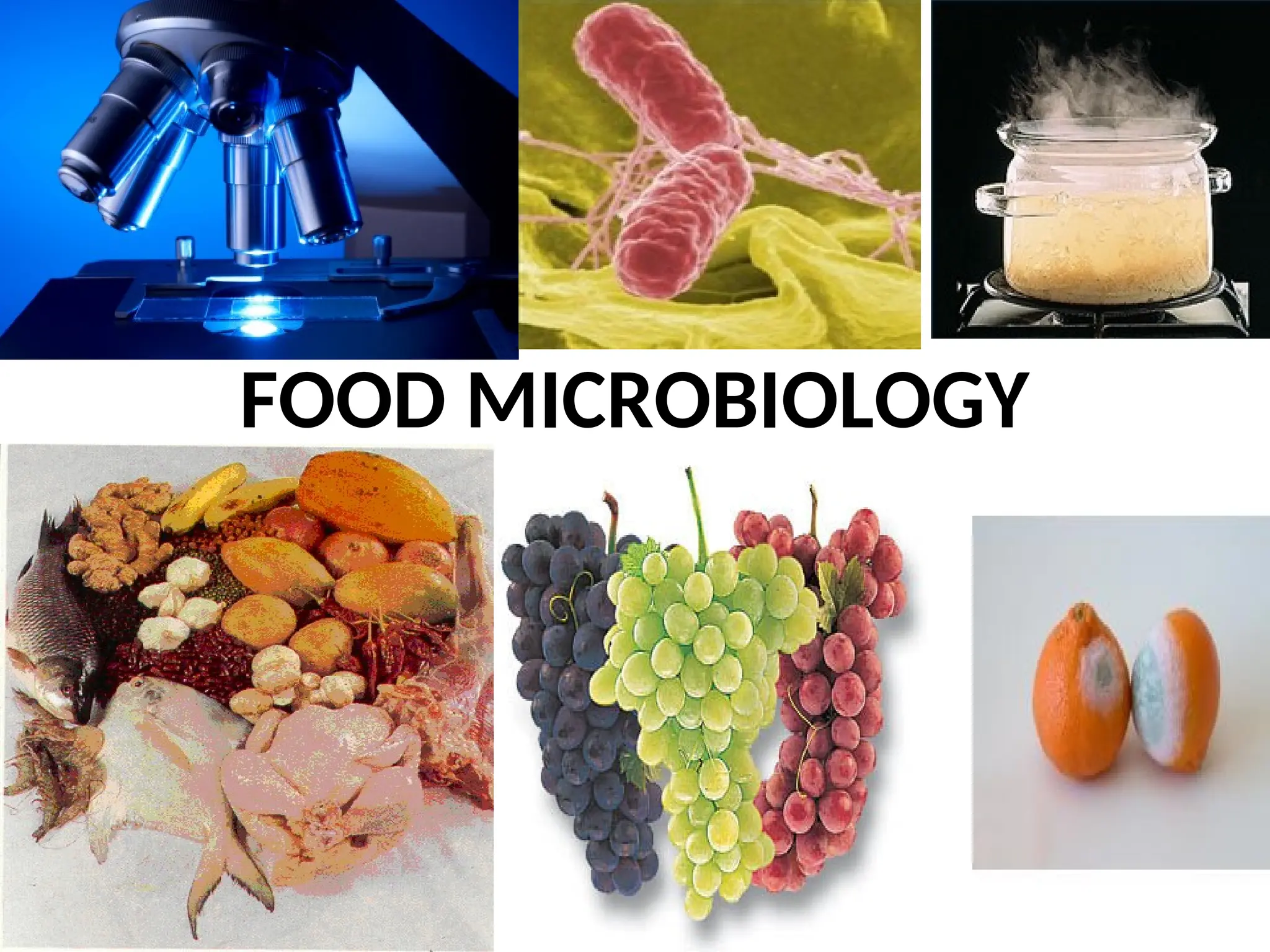
FOOD MICROBIOLOGY
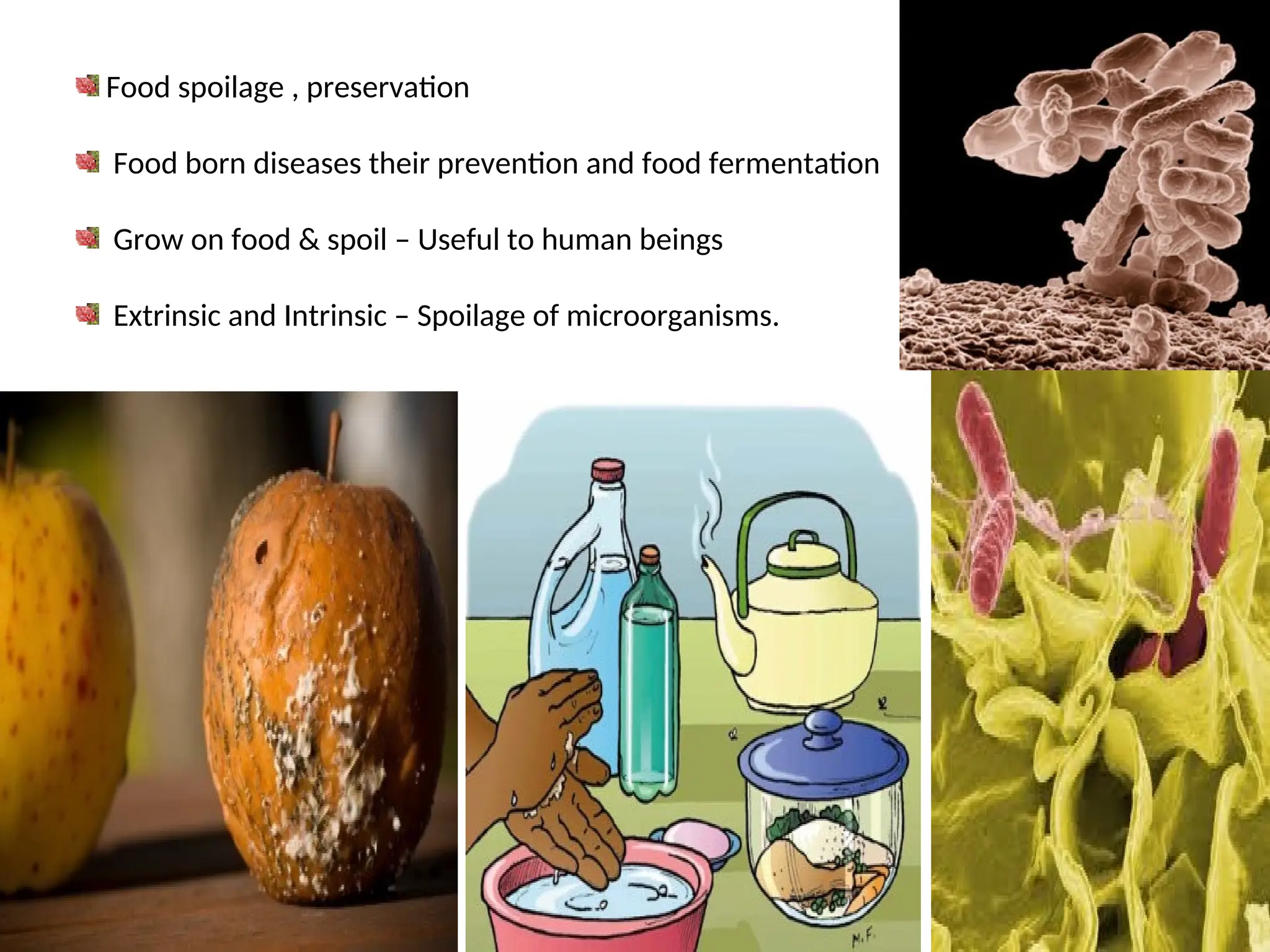
Food spoilage , preservation
Food born diseases their prevention and food fermentation
Grow on food & spoil – Useful to human beings
Extrinsic and Intrinsic – Spoilage of microorganisms.
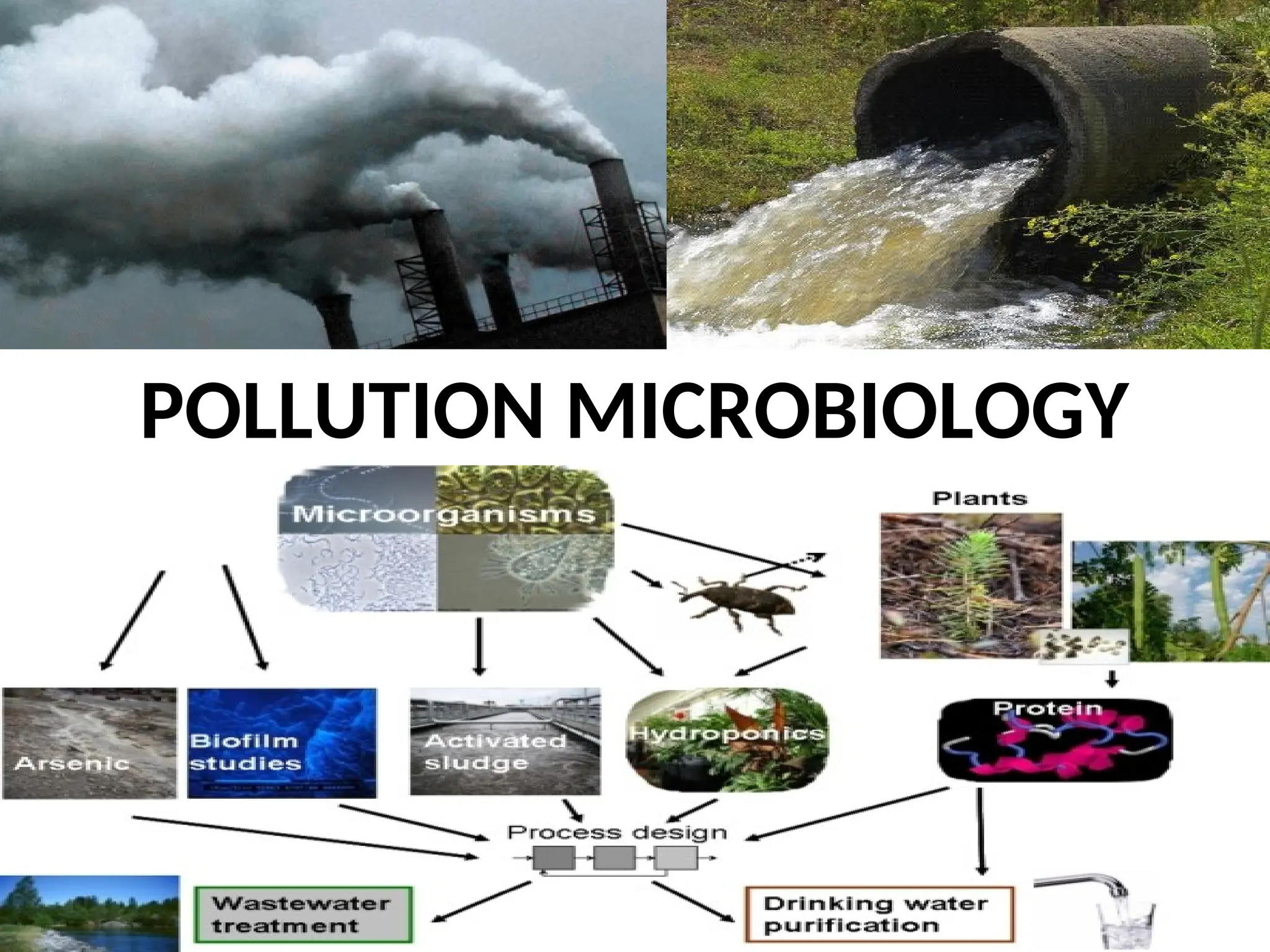
POLLUTION MICROBIOLOGY
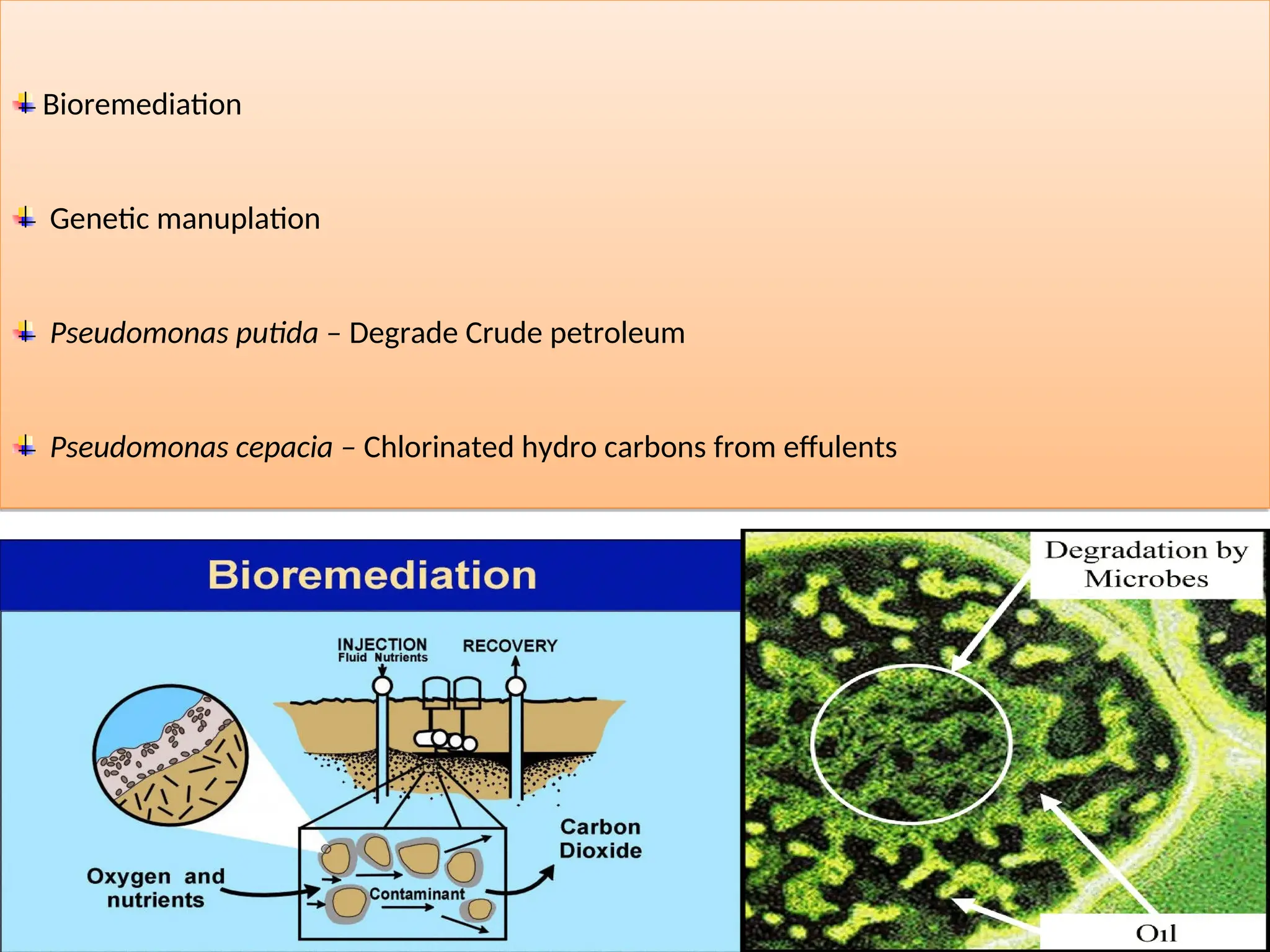
Bioremediation
Genetic manuplation
Pseudomonas putida – Degrade Crude petroleum
Pseudomonas cepacia – Chlorinated hydro carbons from effulents
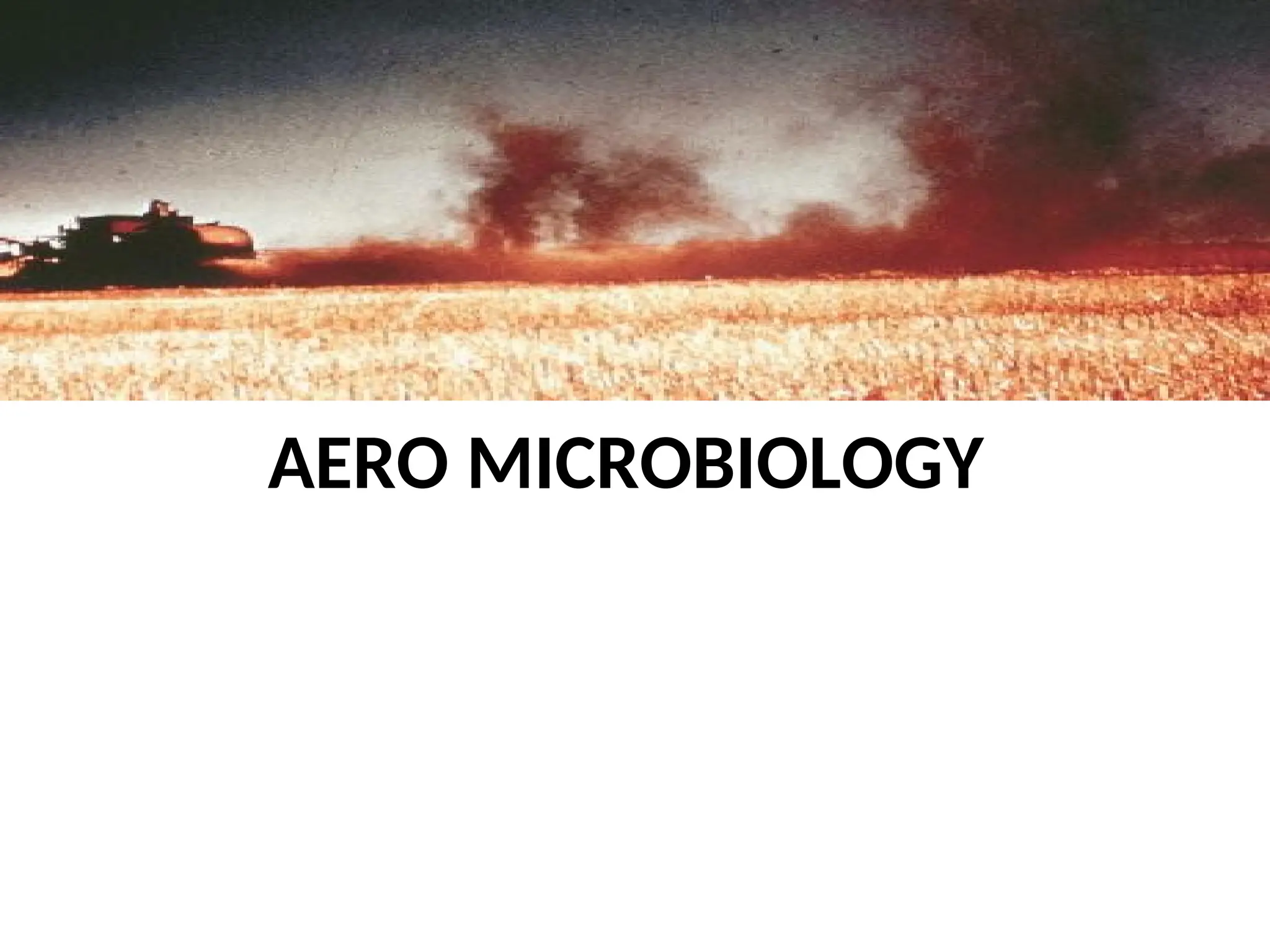
AERO MICROBIOLOGY
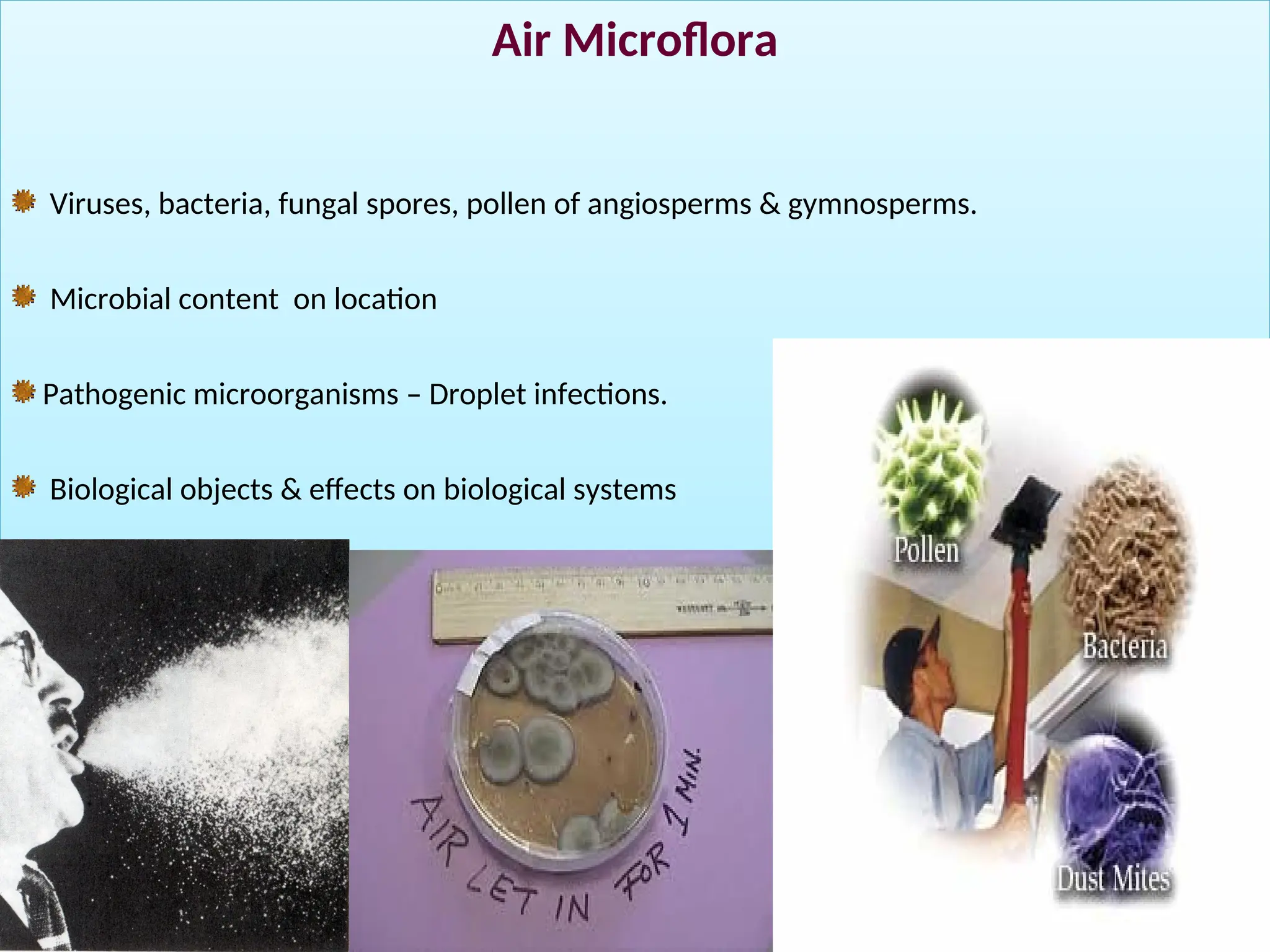
Air Microflora
Viruses, bacteria, fungal spores, pollen of angiosperms & gymnosperms.
Microbial content on location
Pathogenic microorganisms – Droplet infections.
Biological objects & effects on biological systems
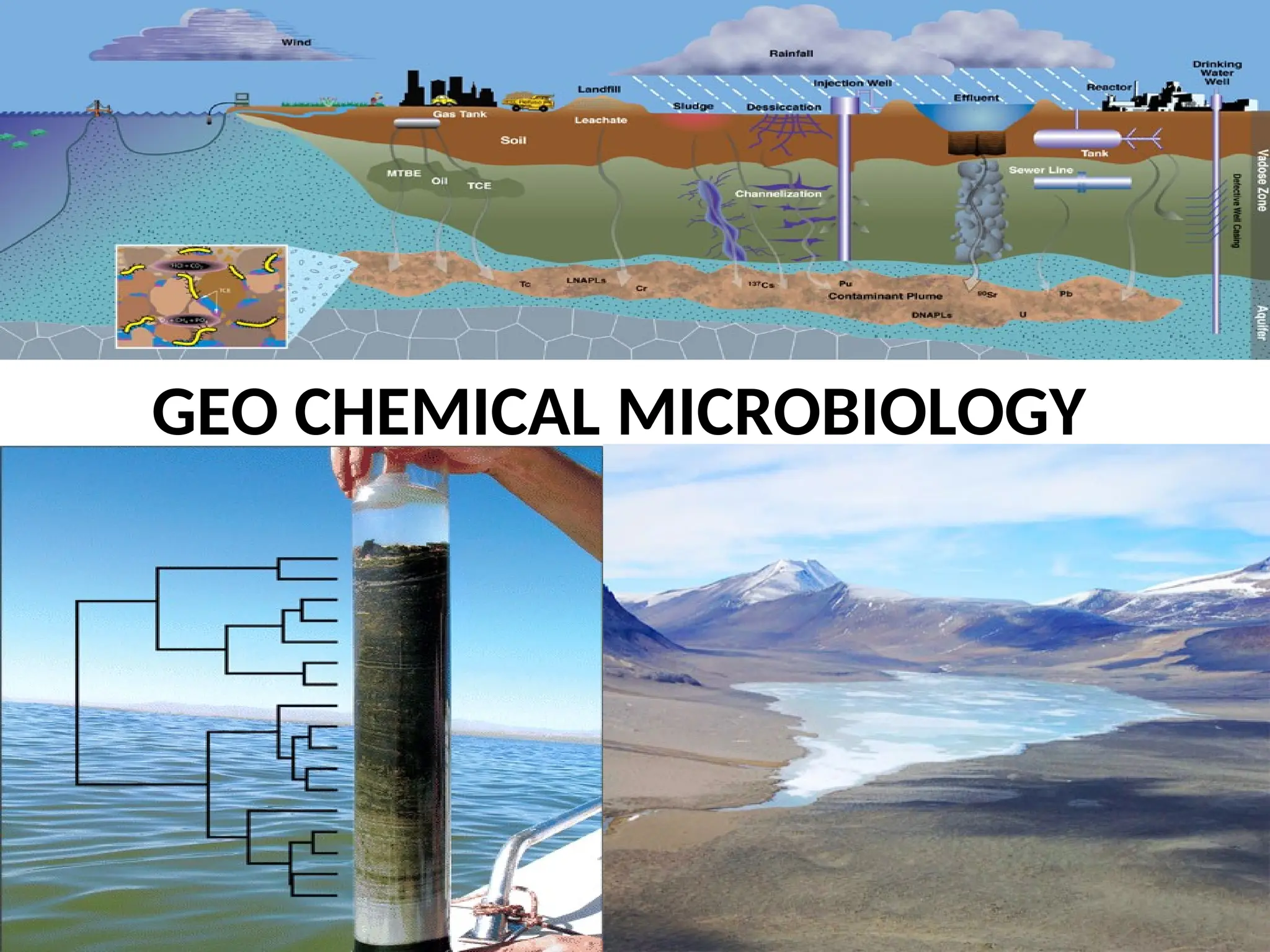
GEO CHEMICAL MICROBIOLOGY
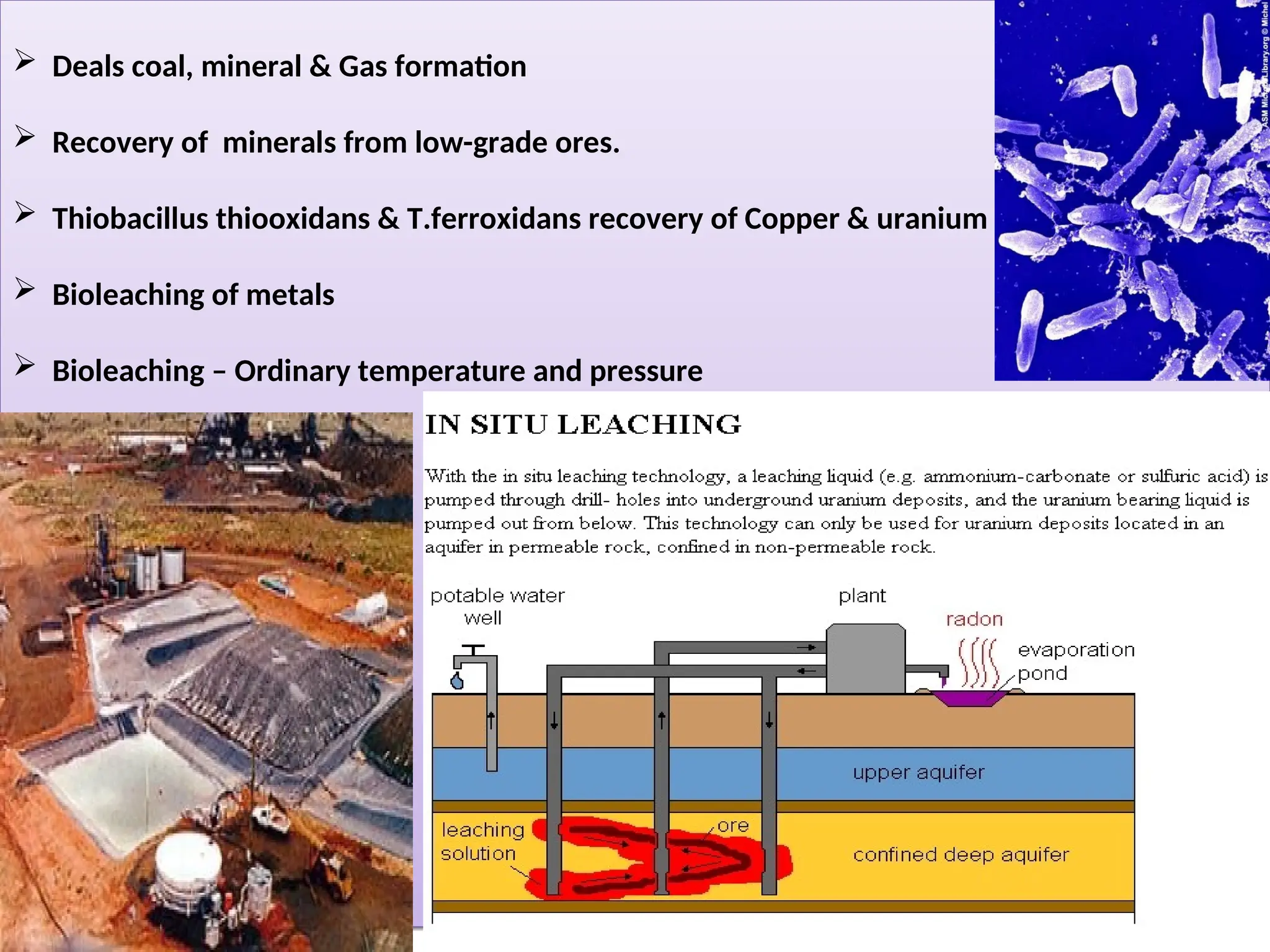
 Deals coal, mineral & Gas formation
 Recovery of minerals from low-grade ores.
 Thiobacillus thiooxidans & T.ferroxidans recovery of Copper & uranium
 Bioleaching of metals
 Bioleaching – Ordinary temperature and pressure
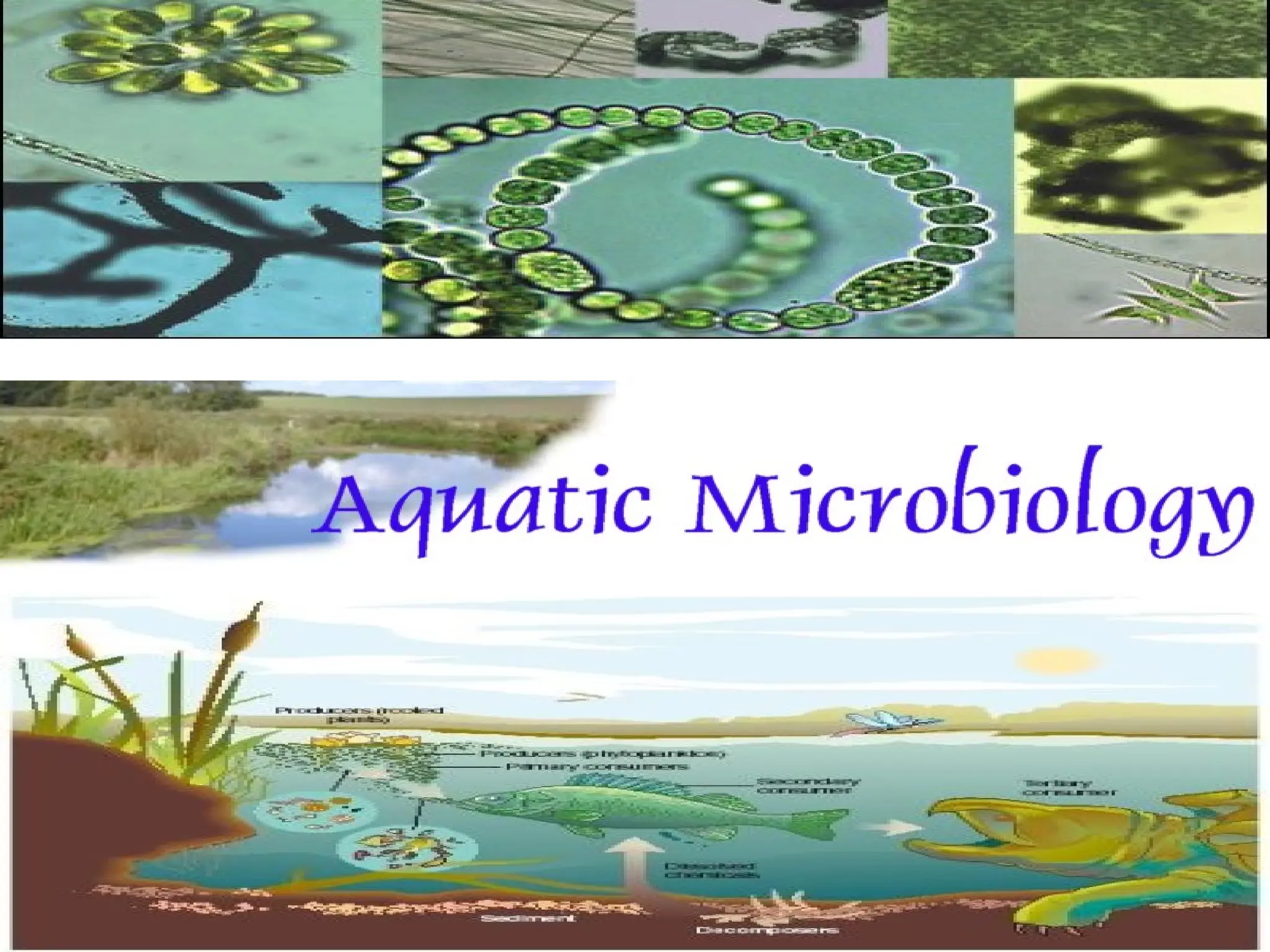
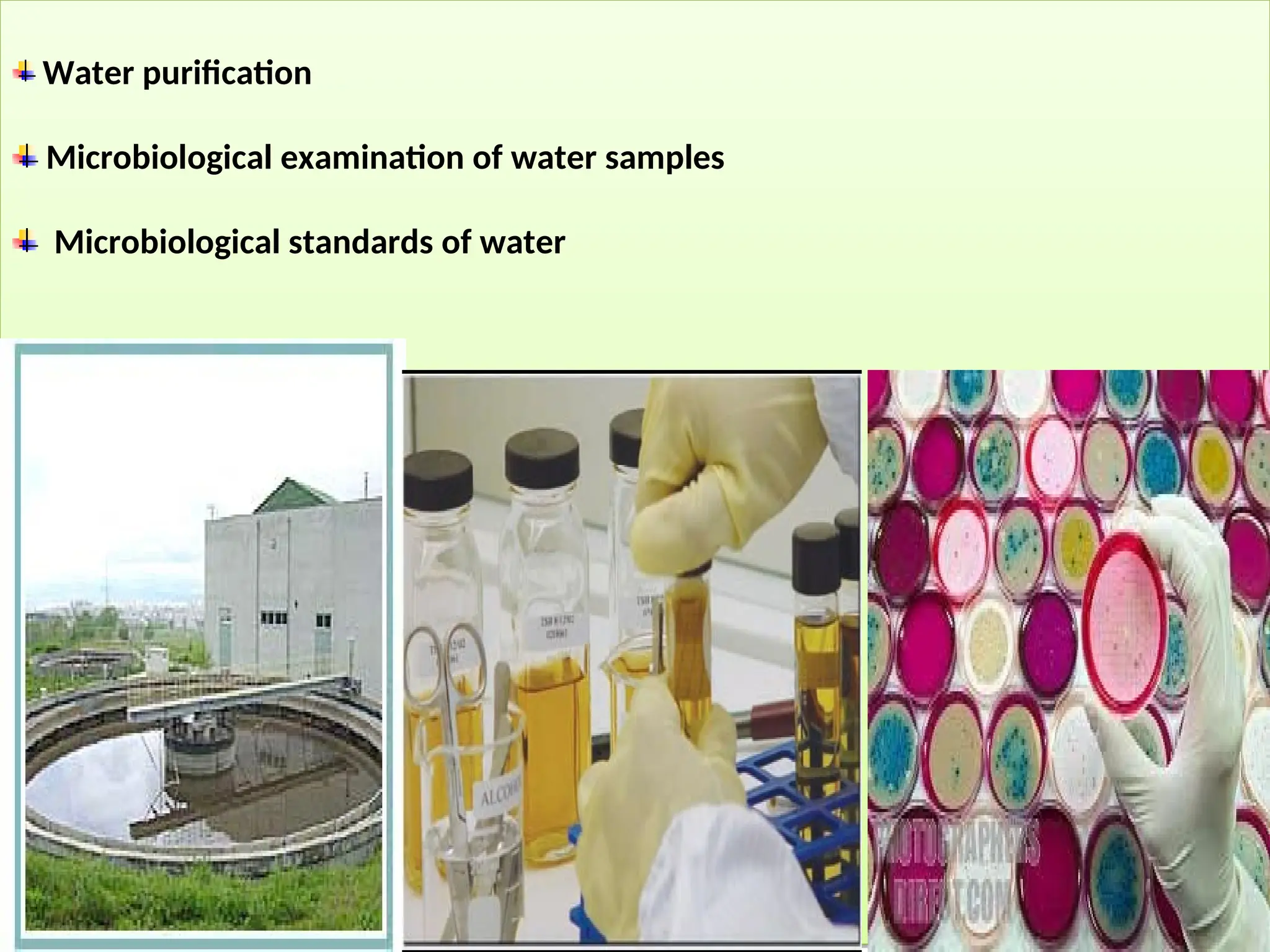
Water purification
Microbiological examination of water samples
Microbiological standards of water
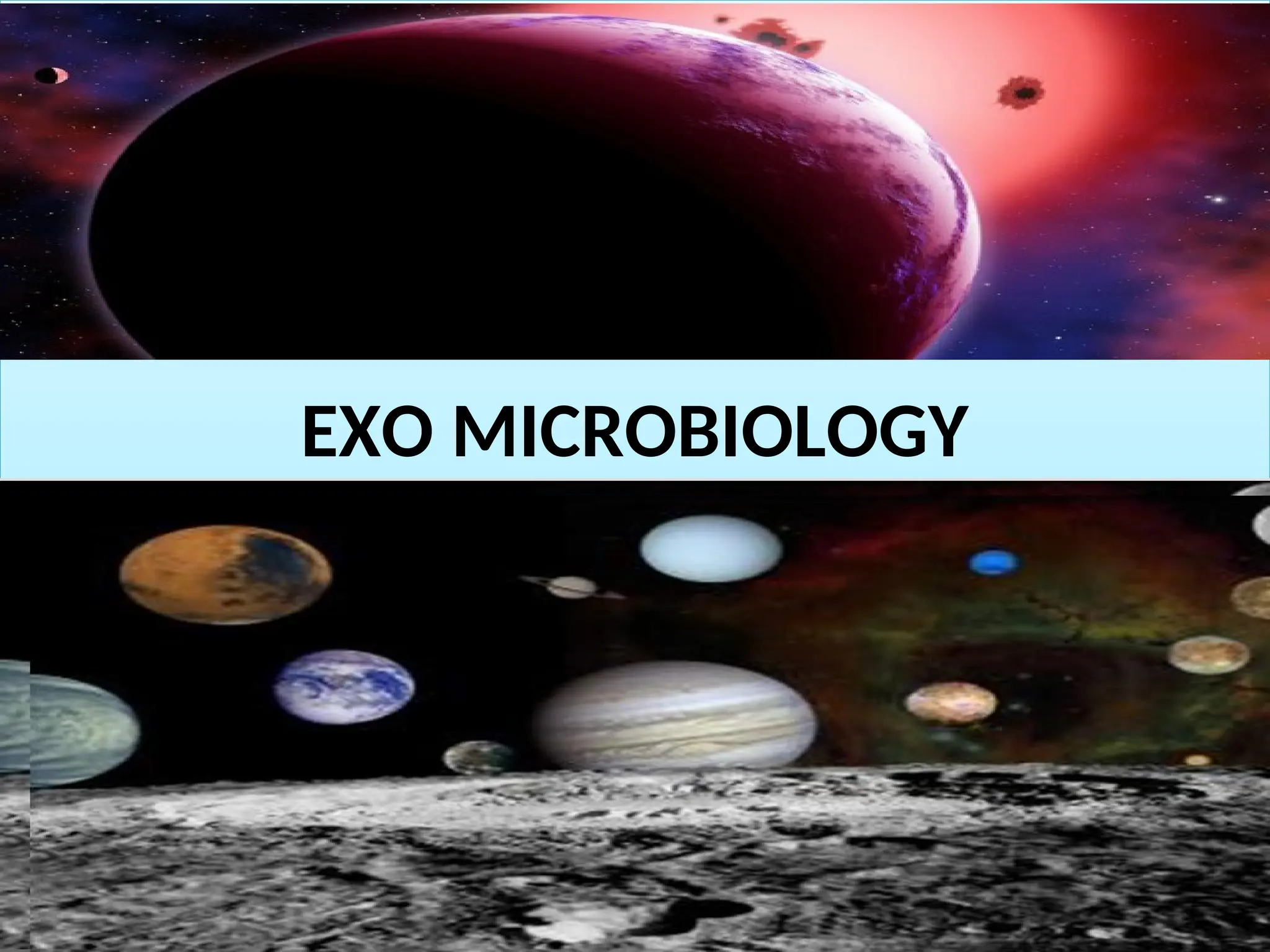
EXO MICROBIOLOGY
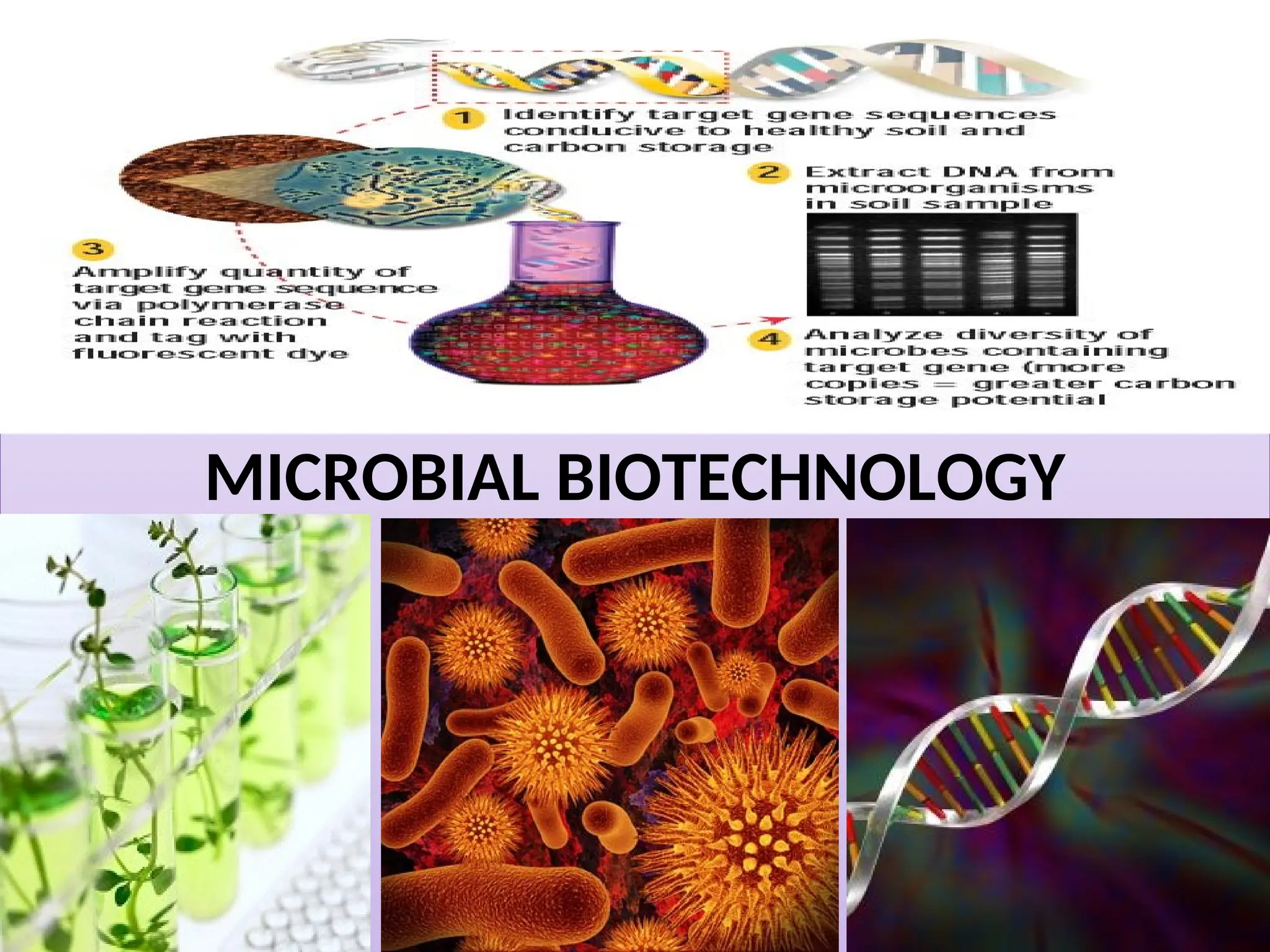
MICROBIAL BIOTECHNOLOGY
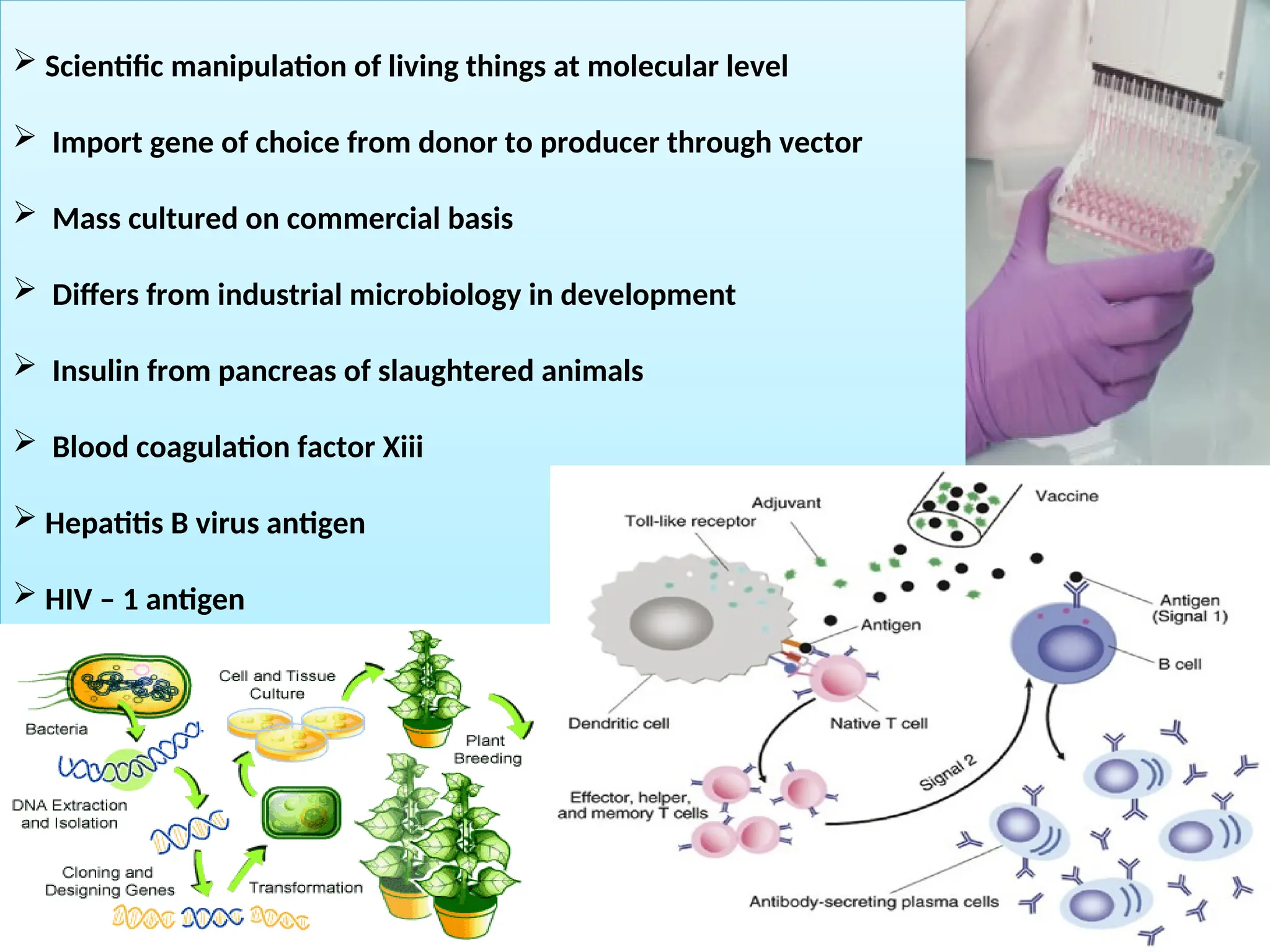
 Scientific manipulation of living things at molecular level
 Import gene of choice from donor to producer through vector
 Mass cultured on commercial basis
 Differs from industrial microbiology in development
 Insulin from pancreas of slaughtered animals
 Blood coagulation factor Xiii
 Hepatitis B virus antigen
 HIV – 1 antigen
History microbiology introduction and different microbial group

  • 3.
  • 4.
    • Study ofliving organisms of Microscopic size • Include bacteria, fungi, protozoa and viruses • Concerned with their form, structure, reproduction, physiology, metabolism and classification. • Includes the study of their distribution , relationships, physical and chemical changes in our environment.
  • 5.
    DIFFERENT MICROBIAL GROUPS (A)Prokaryotic Protists : Bacteria: Unicellular, Prokaryotic cell multiplication Cyanobacteria ( Blue green algae ) also an protist. Significance : Causes diseases, natural cycling –soil fertility, spoil food, make food etc
  • 6.
    (B) Eukaryotic protists: Algae Relatively simple, unicellular contain chlorophyll found in aquatic environments or in damp soil.
  • 7.
    Fungi : Eukaryotic devoidof chlorophyll, multicellular not differentiated in to roots, stems and leaves. * Filaments and masses of cells, reproduce by budding or spores.
  • 8.
    Protozoa Unicellular, Eukaryotic, Morphological,nutritional and physiological characteristics.
  • 9.
    Viruses • Small non-cellularparasites or pathogens of plants, animals and bacteria & protists. • Visualized only in electron microscope . • Cultivated living cells.
  • 10.
    Importance Of DifferentMicrobial Groups • Some are beneficial & some are detrimental • Cheese & wine making • Production of penicillin, interferon & alcohal • Processing of domestic and industrial wastes. • Cause disease and spoil food • Deteriorate iron pipes, glass lenses & wood pilings
  • 11.
    Importance Of Microorganisms •Attracting models – fundamental processes. • Grow & reproduce rapidly in test tubes or flask thus require less space. • Life process – actively metabolizing , growing, reproducing, aging & dying. • Wider range of physiological & biochemical potentialities. • Fix atmospheric nitrogen.
  • 12.
    HISTORY • Way backto beginning of 17th century • Dutch merchant Antony von Leeuwenhoek ( 1632-1723 ) • Maginification about 50 – 300 diameters. • Animal cules or little animals. • Unicellular – Protozoa, fungi, algae & bacteria • first to describe the spermetozoa, RBC, free living parasite protozoa. • Discovery reveals Hithero unknown world – Microbial world. • Origin of microbes became subject of discussion.
  • 13.
    Spontaneous Generation : Living beings from non-living matter Docterine of Spontaneous generation (SG)  Controversy existed for long time to disprove Doctrine. Francesco Redi-1665 maggots of putrefying meat first to disprove (SG) Lazzaro Spallanzani (1729-99) first evidence boiled beef sealed in the flasks.
  • 14.
    John Needham (1713-81)Insisted air is essential for SG of microbes.  Argument was answered after 60-70 years independently by two scientists
  • 15.
    H.Schroder and T.Von Dusch (About 1850) Passed the air through cotton in to flasks. Francois Appert : Perishable foodstuff can be preserved for long time by Appertization & is the principle of food canning.
  • 16.
    Archimede Pouche (1859)Published an extensive report favoring SG Louis Pasteur (1822-1895) French scientist, developed flask with a long, narrow gooseneck Cotton filters examined revealed the presence of microscopic organisms.
  • 17.
    John Tyndall (1820– 1923) Proved that dust carried the germs • Sterile infusions remain sterile even kept exposed to air. • Experimentation he concluded Thermolabile, Thermoresistant. • Tyndallization – kill all bacteria in infusions. • Pasteur and tyndall’s experiments disproved spontanious generation (S.G). 1. Heat liable form ( Vegitative ) 2. Heat resistant form (Endospores)
  • 18.
    ROLE OF MICROBESIN FERMENTATION
  • 19.
    ROLE OF MICROBESIN FERMENTATION  Cagnarid Latour, Theodor schwann, F. Kutzing – Sugar – Alcohol.  Louis pasteur – Fermentation of fruits and grains – Alcohol  Proper microbe others avoided heating 62.8*C for 30 min.  Pasteurization  Butyric fermentation – Aerobic and Anaerobic  Facultative Anaerobes Yeast Ex : Sugar Alcohol + Co2 No O2 Yeast Ex : Sugar Co2, no Alcohol O2  Ferdinand Cohn – Heat resistant.
  • 20.
    Germ Theory OfDiseases Hippocrates – Greek physician, Father of medicine, systematic study of Clinical medicine Von plenciz – Living agents are cause of disease A.Bassi – Fungus causative organism for disease in silk warm M J Berkeley – Potato Blight of Ireland caused by fungus. J L Schonlein – Skin diseases of man caused by fungal infections.
  • 21.
    ROBERT KOCH (1876)– concluded germ theory of disease on Anthrax (Sheep)  Typical bacilli with squarish ends in blood of cattle  Grown and infected to other animals . Koch’s Postulates  Microorganism should be present in every case of the disease.  Isolated from disease host and grown in pure culture.  Must be Reproduce when inoculated in to healthy host.  Recoverable once again from host.
  • 22.
     Development ofinstitutions both in paris for pasteur and Berlin for Koch.  Pasteur group – Recovery and immunity in disease animal  Kouch group – Etiology of major infectious diseases.
  • 23.
    PURE CULTURE METHODS O.Brefeld– Isolating single cells of fungi and cultivation on solid media not suitable for bacteria. Joseph Lister (1864) antiseptic method of surgery, serial dilution in liquid media Bacterium lactis isolated into pure culture. Koch – Developed Pure culture technique, Streak plate method and pour plate method.  Firstly sterile cut potatoes covered glass dishes & inoculated with bacteria  Later solidified by adding gelatin streaked surface shows colonies Disadvantages Protein susceptible for microbial digestion. Gel to liquid at temperature of about 28*c most bacteria 30-37*C.
  • 25.
    Dr.Hesse – Replacedthe solidifying agent gelatin with agar melts 98*c & solidifies 44*c  Agar – complex polysaccharide extracted from red algae not degared by most bacteria.  Replaced gelatin as a hindering agent.  Developed the nutrient medium for growth of bacteria.
  • 26.
    BEIJERINCK and WINOGRADSKY Technique of “ Enrichment culture’’  Modifying the composition of medium it is possible to isolate organisms from Population. SCHRODER AND VON DUSCH Passed air through cotton into flasks containing heated broth.  Basic technique of plugging bacterial culture tubes was initiated.
  • 27.
    PROTECTION AGAINST INFECTION Edwardjenner (1798) Cowpox virus to immunize people from small pox. Frederick Loeffler (1884) Diphthteria and production of toxin in lab flasks. Behring and Shibasaburo Kitasato – Antitoxin for tetanus Nobel prize 1901 “Serum Therapy”
  • 28.
    Pasteur  Chicken cholerapure culture  Two batches of chickens. 1)Attenuated culture – Resistance (Vaccines) 2) Virulent culture – Died  Attenuated culture – Antibodies
  • 29.
    Elie Metchnikoff Leucocytes (White blood cells) – ‘Phagocytosis’ First defence against infection. Paul Ehrlich – Chemotherapeutic substance.
  • 30.
    Applied Areas OfMicrobiology
  • 31.
    Agriculture Microbiology  SergeiWinogradsky – Importance of nitrogen bacteria  H.Hellriegel and H.Wilfarth – Symbiotic relationship.  William Beijernick – Azotobacter  T J Burrill – plant pathology  Chamberland – Porcelain filters
  • 32.
     Iwanowski –Mosaic disease.  Beijerinck – Virus and showed TMV should be propogated with living host.  Loeffler and frosch – Filtrable agents transmission.  W.M. Stanley – TMV crystaline form  F.W. Herelle – Bacteriophages
  • 33.
  • 34.
    Study of production Medicinal products – Antibiotics & Vaccines.  Fermented Beverages  Industrial chemicals  Production of proteins & Harmones by genetically engineered microorganisms
  • 35.
  • 36.
     Causative agentsof disease  Diagnostic procedures  Preventive measures  Chemical used for controlling causative organisms
  • 37.
  • 38.
    Food spoilage ,preservation Food born diseases their prevention and food fermentation Grow on food & spoil – Useful to human beings Extrinsic and Intrinsic – Spoilage of microorganisms.
  • 39.
  • 40.
    Bioremediation Genetic manuplation Pseudomonas putida– Degrade Crude petroleum Pseudomonas cepacia – Chlorinated hydro carbons from effulents
  • 41.
  • 42.
    Air Microflora Viruses, bacteria,fungal spores, pollen of angiosperms & gymnosperms. Microbial content on location Pathogenic microorganisms – Droplet infections. Biological objects & effects on biological systems
  • 43.
  • 44.
     Deals coal,mineral & Gas formation  Recovery of minerals from low-grade ores.  Thiobacillus thiooxidans & T.ferroxidans recovery of Copper & uranium  Bioleaching of metals  Bioleaching – Ordinary temperature and pressure
  • 46.
    Water purification Microbiological examinationof water samples Microbiological standards of water
  • 47.
  • 48.
  • 49.
     Scientific manipulationof living things at molecular level  Import gene of choice from donor to producer through vector  Mass cultured on commercial basis  Differs from industrial microbiology in development  Insulin from pancreas of slaughtered animals  Blood coagulation factor Xiii  Hepatitis B virus antigen  HIV – 1 antigen