Introduction to microbiology.
Morphology of microorganisms
Vinnitsa National Pirogov Memorial Medical
University/ Department of microbiology
Microbiology is a great complex of biological
sciences about microorganisms
Branches of microbiology
 Basic or general microbiology
 Industrial microbiology and biotechnology
 Pharmaceutical microbiology
 Agricultural microbiology
 Veterinary microbiology
 Sanitary microbiology (microbiology of food,
water, soil and air)
 Medical microbiology
Medical microbiology
Taxonomy of microorganisms
Classification
Nomenclature (binominal
system )
Systematic
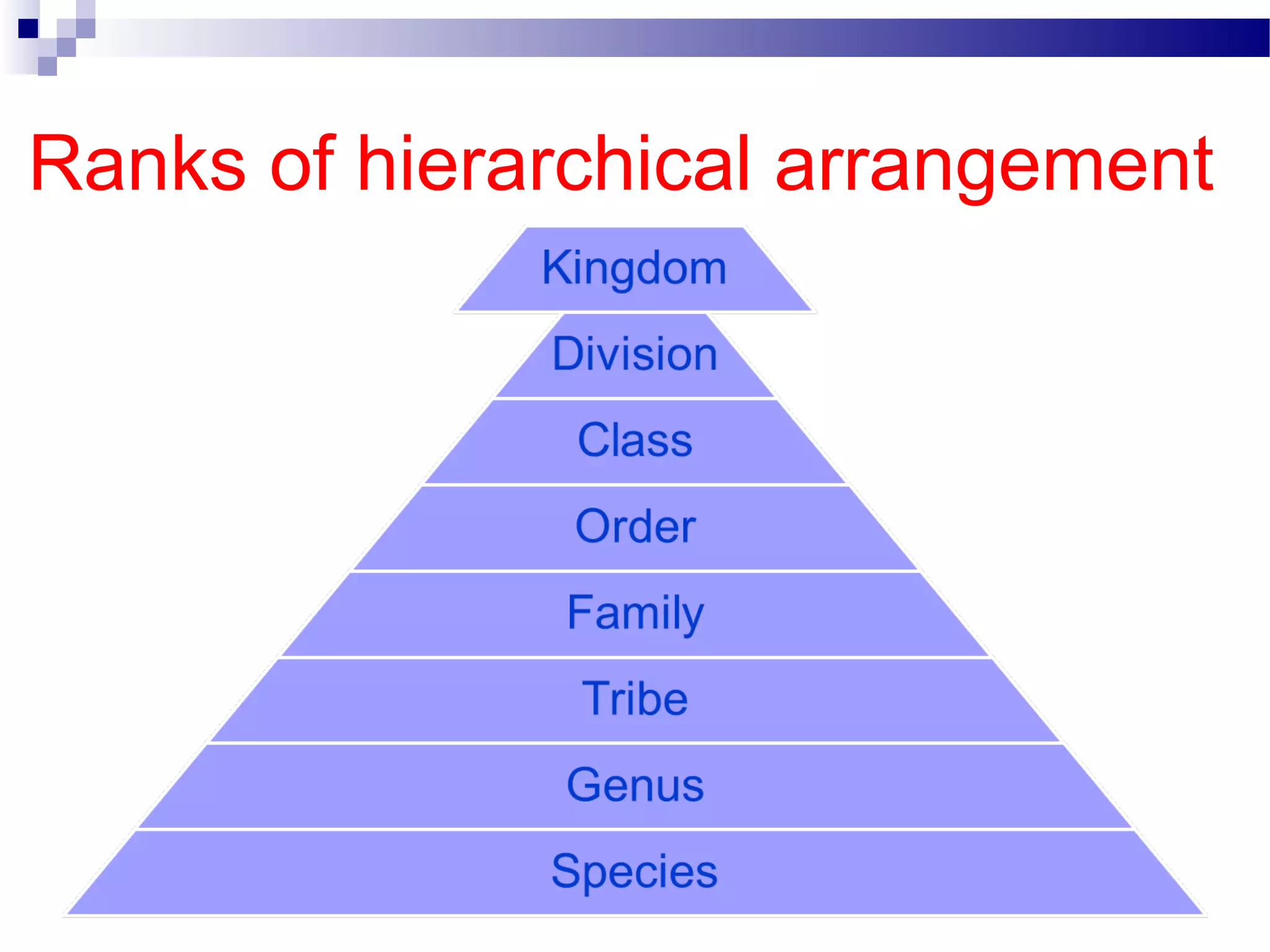
Ranks of hierarchical arrangement
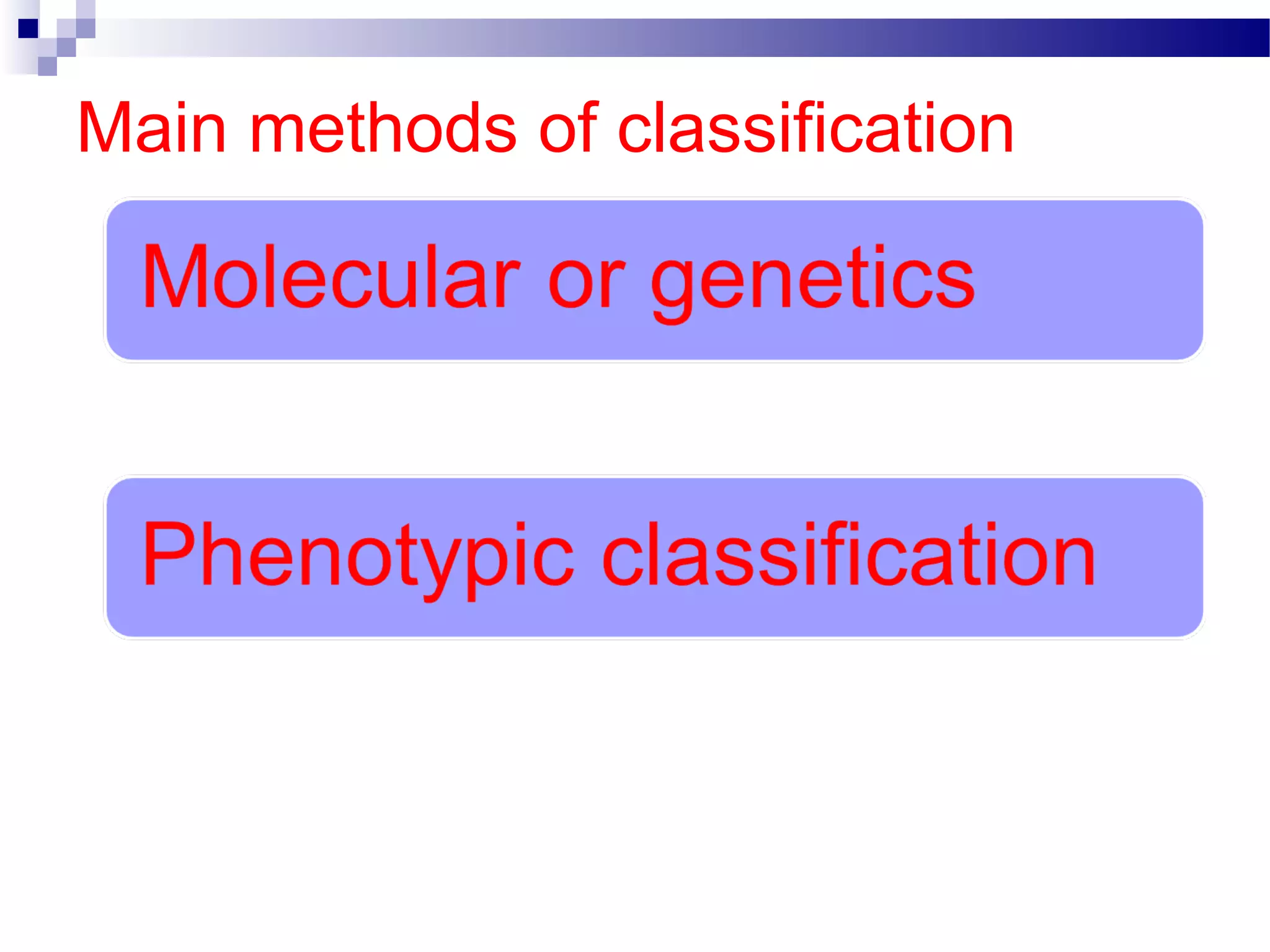
Main methods of classification
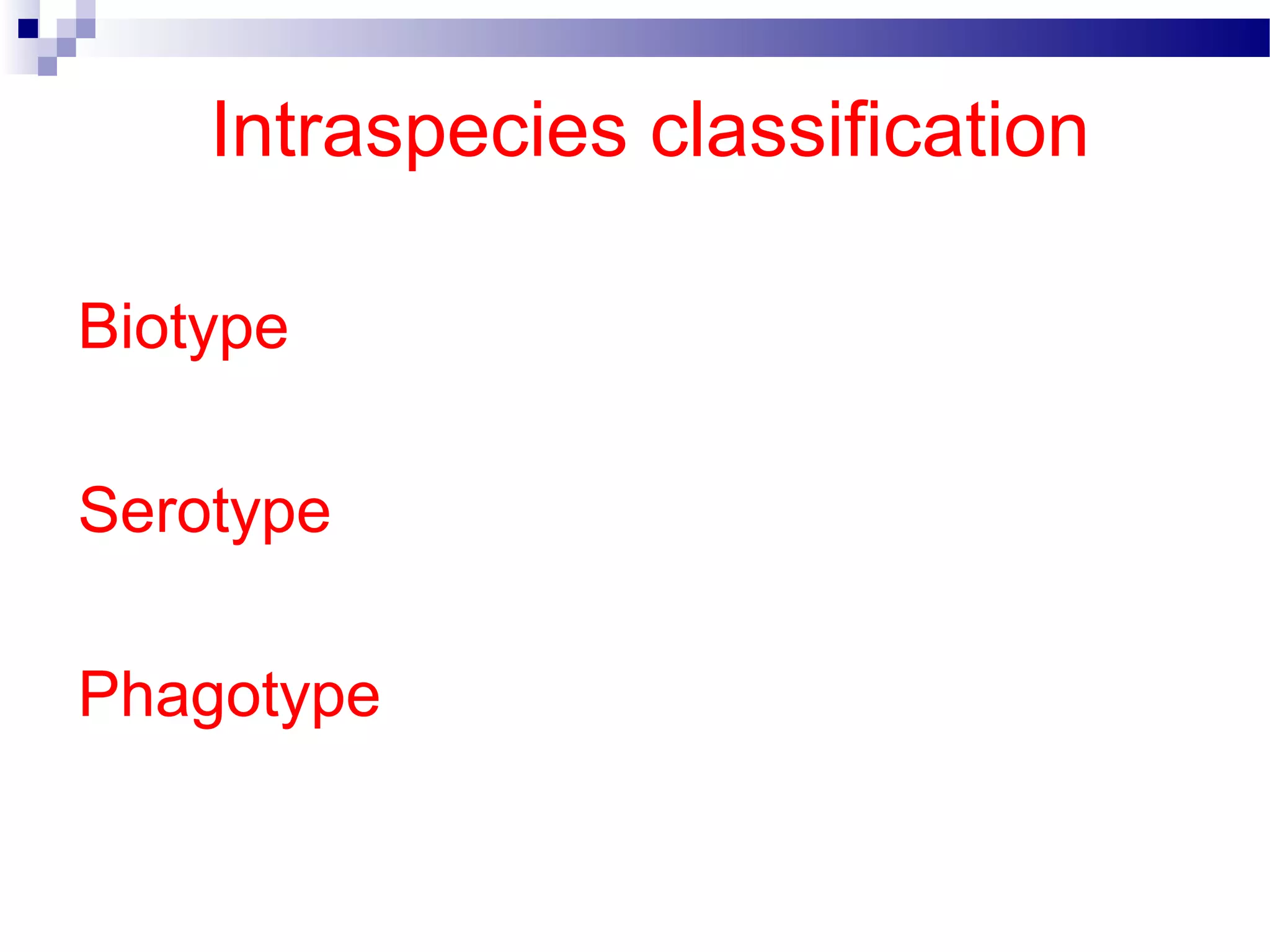
Intraspecies classification
Biotype
Serotype
Phagotype
Present classification of microorganisms
Cellular microorganisms non-cellular
microorganisms
Superkingdom
Eucaryotae Procaryotae
Kingdom
Animalia Fungi Eubacteriae
Protozoa
Kingdom
Vira
Canonical viruses
Non-canonical viruses
Methods of morphology investigation
Light microscopy :
Immersion microscopy
Dark-field microscopy
Phase-contrast microscopy
Electron microscopy
Luminescent microscopy
Main morphological signs of micro-
organisms
 Shape
 Size
 Cell arrangement
 Tinctorial properties
 Structure:
Capsule
Structure of cell wall
Flagella
Endospores
Cocci.
Micrococci
Diplococci
Tetracocci
Streptococci
Sarcinae
Staphylococci
Rod-shaped forms
Bacteria
Bacilli
Clostridia
Spiral-shaped bacteria.
 Vibrio
 Spirilla
 Spirochaetes
Thread-shaped bacteria
Main differences of the cell structure
Type of cell procaryotes eucaryotes
size 1-10 µm 10-100 µm
genom
exhibited
Nucleoid is not
separeted from
cytoplasm
1 chromosome (circular)
Nucleus
Have a nuclear membrane
A few chromosomes
(linear)
Mitochondria absent present
Apparatus Golgi absent present
Endoplasmatic
reticulum
absent present
ribosome Within cytoplasm 70S
(50S+30S)
into ЕPR 80S
(60S+40S)
Cell wall peptidoglycane cellulose
endospores + —
Structure of the bacteria
Cell envelope:
- capsule
- Cell wall
- Cytoplasmic membrane
Outside appendages:
- flagella
- Pili or fimbria
Inside structure:
- cytoplasm
- nucleoid
- ribosomes
- mesosomes
- Intracellular inclusion
Features of the structure Gram-
positive cell wall
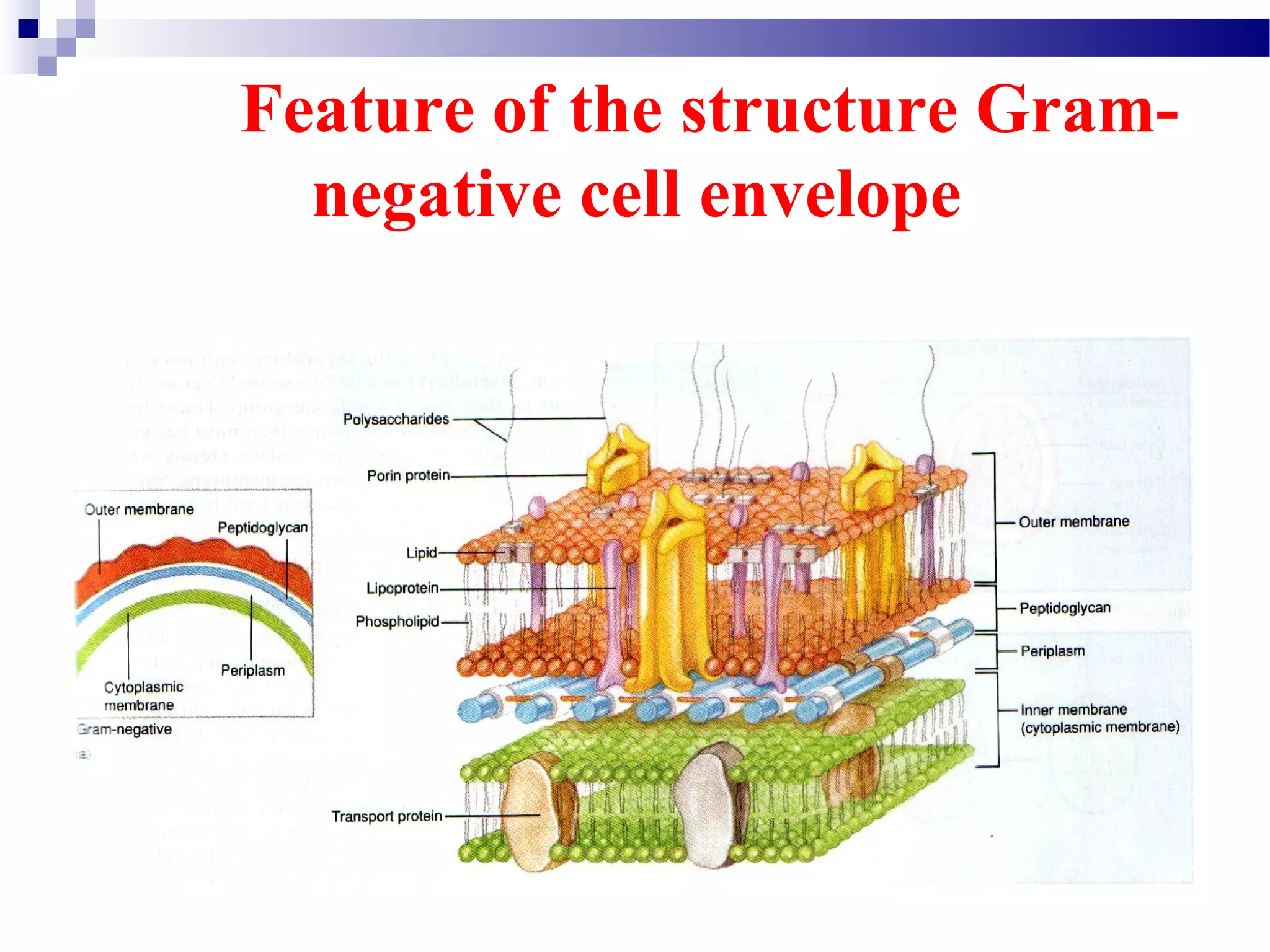
Feature of the structure Gram-
negative cell envelope
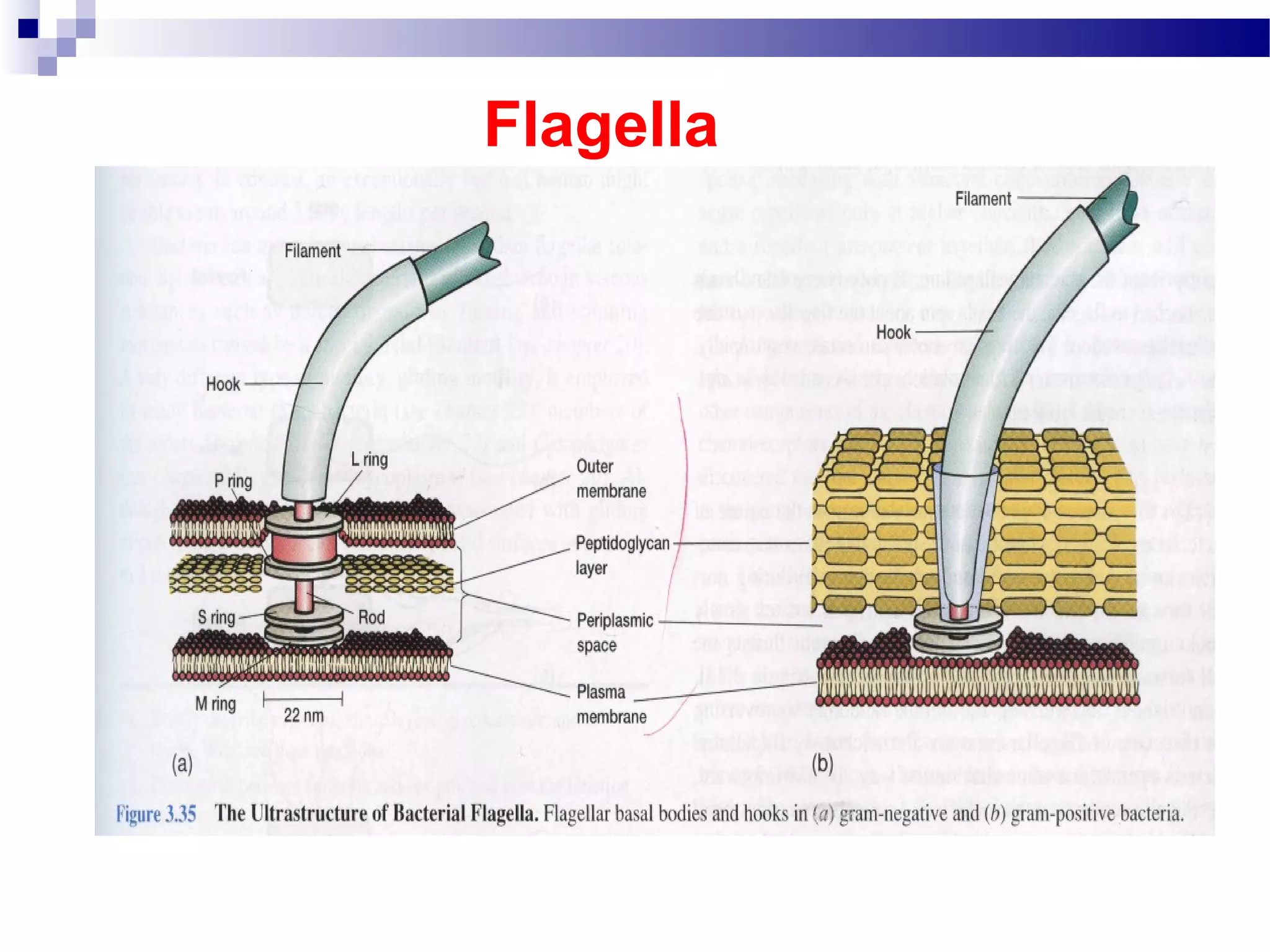
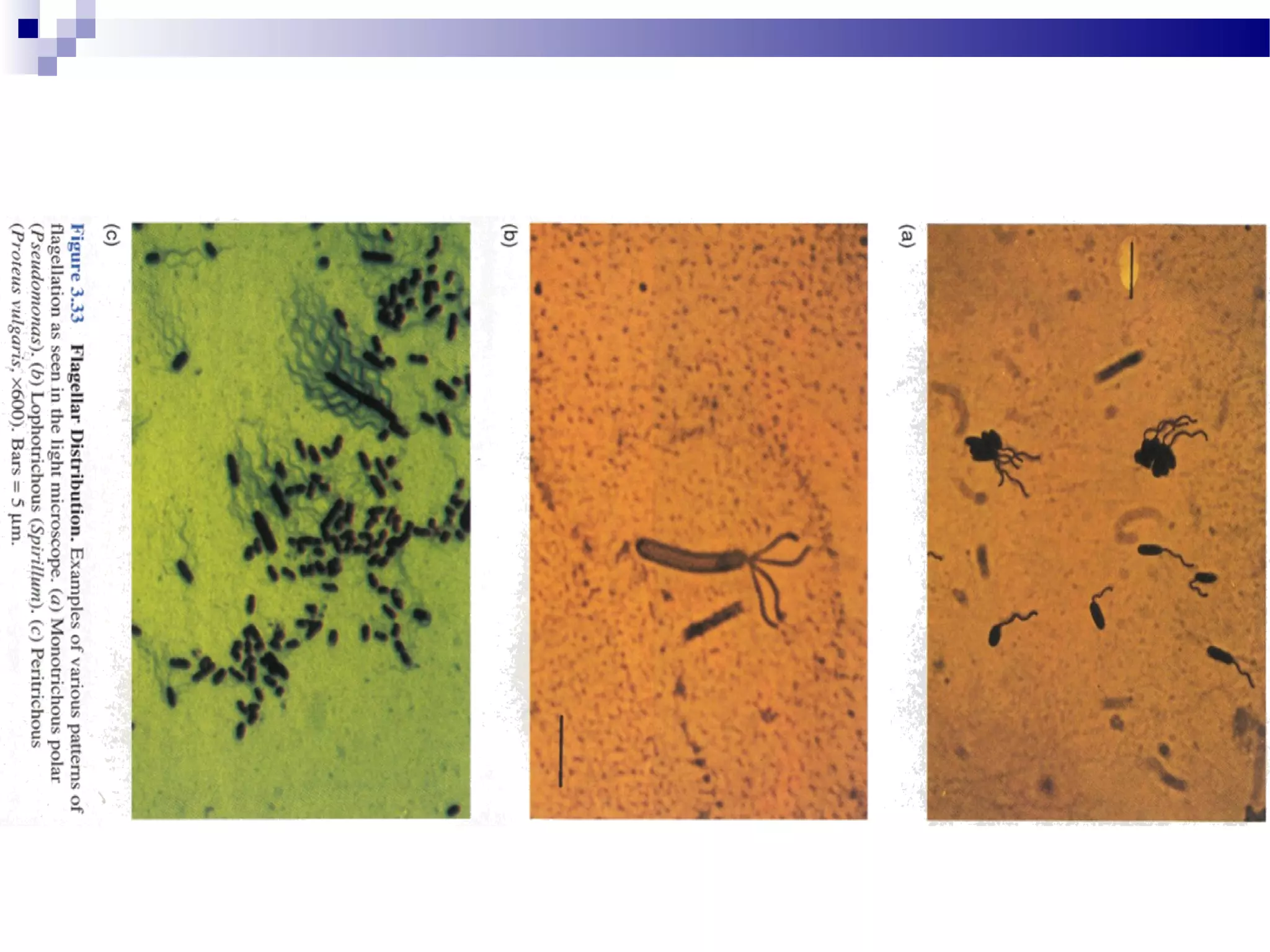
Flagella
Motile bacteria may be divided into:
1.Creeping
2.Swimming
• (1) monotrichous,
• (2) amphitrichous,
• (3) lophotrichous,
• (4) peritrichous
Pili or fimbriae
1. Common-pili
2. F – pili or sex-pili
Methods for flagella revealing
Direct methods (microscopy)
Indirect methods
wet-mount
hanging-drop techniques
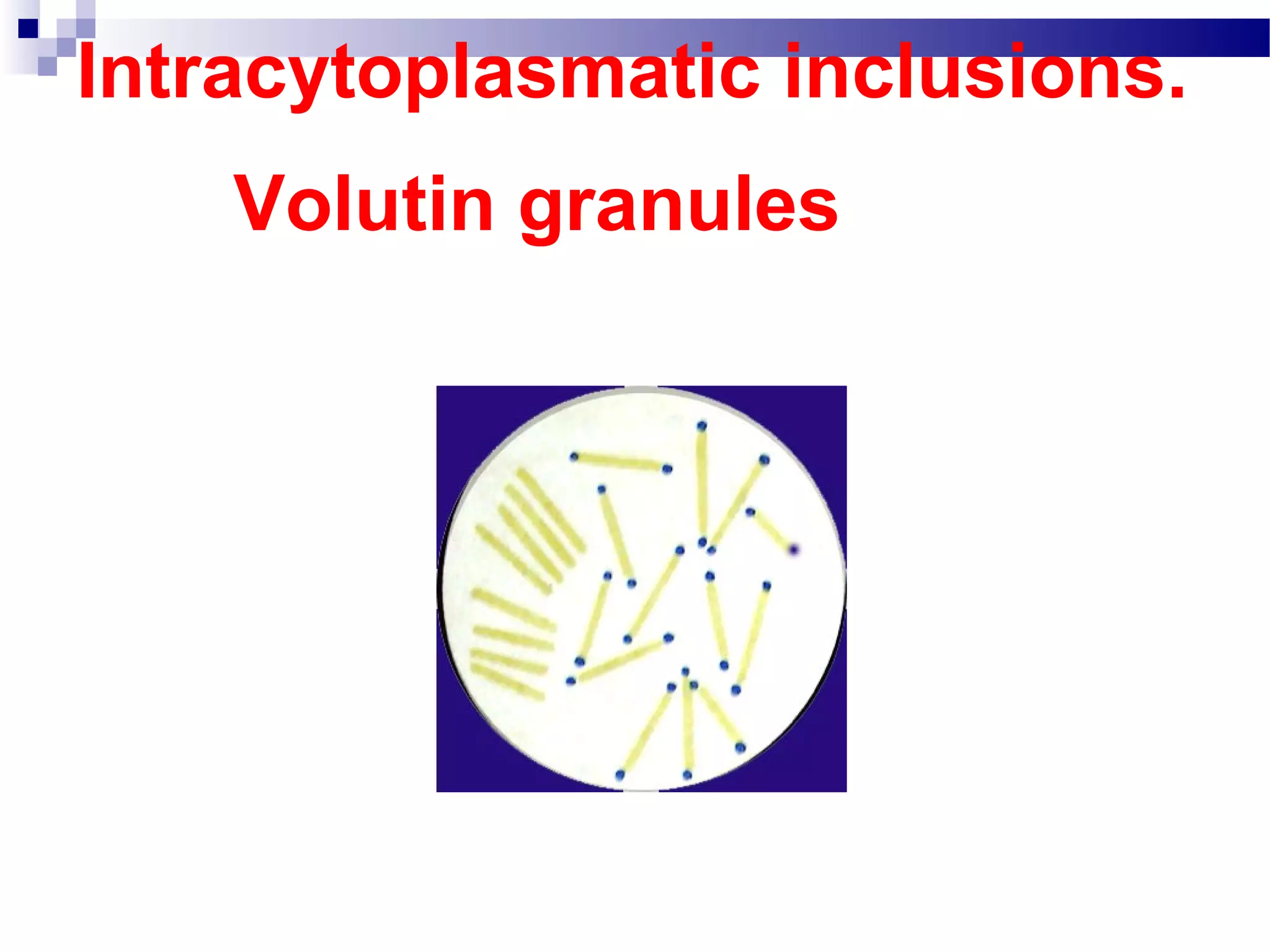
Intracytoplasmatic inclusions.
Volutin granules
EndosporesEndospores
Historical development of microbiology
 Period before microorganisms were seen
 Micrographic period (from the middle of 17th century
to the middle of 18th century ; A.van Leeuwenhoek )
 Physiological period (19th century: L. Pasteur, R.
Koch)
 Immunological period (first part of 20th century:
G.Bordet, I.I.Metchnikoff, P.Ehrlich, D.I.Ivanowsky):
development of immunology and the start of
development of the virology)
 Modern (now-day) period (development of molecular
immunology, genetic engineering, immunochemistry,
microbial genetics and other parts of microbiology)
Antony van Leeuwenhoek
(1632-1723)
 He was the first person who observed and
described microorganisms (he named
their as “animalcules”)
 He constructed first microscope with
magnification about 50 to 300 times
Louis Pasteur (1822-1895)
 He established that fermentation was the result
of microbial activity
 He introduced techniques of sterilization and
made steam sterilizer, hot air oven, and
autoclave
 He showed that microorganisms do not arise by
spontaneous generation
 He elaborated methods of pathogenic
microorganisms attenuation
 He developed rabies vaccine and anthrax one
Robert Koch (1843-1910)
 He elaborated methods of staining and cultivation of
microorganisms
 He discovered causative agents of anthrax (1877),
cholera (1883) and tubercle bacillus (1882)
 He proposed techniques for pure culture isolation
 He elaborated criteria for proving relationship between a
microorganism and a specific diseases (Koch's
postulates)
 The microorganism must be present in every case of the disease
but absent in healthy organism
 The suspected microorganism must be isolated and grown in a
pure culture
 The same disease must result when the isolated microorganism
is inoculated into a healthy host
 The same microorganism must be isolated again from the
diseased host

morphology of micro-organisms

  • 1.
    Introduction to microbiology. Morphologyof microorganisms Vinnitsa National Pirogov Memorial Medical University/ Department of microbiology
  • 2.
    Microbiology is agreat complex of biological sciences about microorganisms Branches of microbiology  Basic or general microbiology  Industrial microbiology and biotechnology  Pharmaceutical microbiology  Agricultural microbiology  Veterinary microbiology  Sanitary microbiology (microbiology of food, water, soil and air)  Medical microbiology
  • 4.
  • 5.
  • 6.
  • 7.
    Main methods ofclassification
  • 8.
  • 9.
    Present classification ofmicroorganisms Cellular microorganisms non-cellular microorganisms Superkingdom Eucaryotae Procaryotae Kingdom Animalia Fungi Eubacteriae Protozoa Kingdom Vira Canonical viruses Non-canonical viruses
  • 10.
    Methods of morphologyinvestigation Light microscopy : Immersion microscopy Dark-field microscopy Phase-contrast microscopy Electron microscopy Luminescent microscopy
  • 11.
    Main morphological signsof micro- organisms  Shape  Size  Cell arrangement  Tinctorial properties  Structure: Capsule Structure of cell wall Flagella Endospores
  • 12.
  • 13.
  • 14.
    Spiral-shaped bacteria.  Vibrio Spirilla  Spirochaetes Thread-shaped bacteria
  • 15.
    Main differences ofthe cell structure Type of cell procaryotes eucaryotes size 1-10 µm 10-100 µm genom exhibited Nucleoid is not separeted from cytoplasm 1 chromosome (circular) Nucleus Have a nuclear membrane A few chromosomes (linear) Mitochondria absent present Apparatus Golgi absent present Endoplasmatic reticulum absent present ribosome Within cytoplasm 70S (50S+30S) into ЕPR 80S (60S+40S) Cell wall peptidoglycane cellulose endospores + —
  • 16.
    Structure of thebacteria Cell envelope: - capsule - Cell wall - Cytoplasmic membrane Outside appendages: - flagella - Pili or fimbria Inside structure: - cytoplasm - nucleoid - ribosomes - mesosomes - Intracellular inclusion
  • 17.
    Features of thestructure Gram- positive cell wall
  • 18.
    Feature of thestructure Gram- negative cell envelope
  • 19.
  • 20.
    Motile bacteria maybe divided into: 1.Creeping 2.Swimming • (1) monotrichous, • (2) amphitrichous, • (3) lophotrichous, • (4) peritrichous
  • 22.
    Pili or fimbriae 1.Common-pili 2. F – pili or sex-pili
  • 23.
    Methods for flagellarevealing Direct methods (microscopy) Indirect methods wet-mount hanging-drop techniques
  • 24.
  • 25.
  • 27.
    Historical development ofmicrobiology  Period before microorganisms were seen  Micrographic period (from the middle of 17th century to the middle of 18th century ; A.van Leeuwenhoek )  Physiological period (19th century: L. Pasteur, R. Koch)  Immunological period (first part of 20th century: G.Bordet, I.I.Metchnikoff, P.Ehrlich, D.I.Ivanowsky): development of immunology and the start of development of the virology)  Modern (now-day) period (development of molecular immunology, genetic engineering, immunochemistry, microbial genetics and other parts of microbiology)
  • 28.
    Antony van Leeuwenhoek (1632-1723) He was the first person who observed and described microorganisms (he named their as “animalcules”)  He constructed first microscope with magnification about 50 to 300 times
  • 29.
    Louis Pasteur (1822-1895) He established that fermentation was the result of microbial activity  He introduced techniques of sterilization and made steam sterilizer, hot air oven, and autoclave  He showed that microorganisms do not arise by spontaneous generation  He elaborated methods of pathogenic microorganisms attenuation  He developed rabies vaccine and anthrax one
  • 30.
    Robert Koch (1843-1910) He elaborated methods of staining and cultivation of microorganisms  He discovered causative agents of anthrax (1877), cholera (1883) and tubercle bacillus (1882)  He proposed techniques for pure culture isolation  He elaborated criteria for proving relationship between a microorganism and a specific diseases (Koch's postulates)  The microorganism must be present in every case of the disease but absent in healthy organism  The suspected microorganism must be isolated and grown in a pure culture  The same disease must result when the isolated microorganism is inoculated into a healthy host  The same microorganism must be isolated again from the diseased host