FRUITS & THEIR STRUCTURES
Dr. K. Vanangamudi
Formerly Dean (Agriculture), AC & RI, Coimbatore
Dean, Adhiparasakthi Agricultural College, Kalavai
Professor & Head (Seed Science & Technology)
Tamil Nadu Agricultural University,
Coimbatore 641 003
Contact: 9894904745
Mail: vanangamudi.tnau@gmail.com
Website: https://trinityculturalacademy.com/
YouTube: https://youtube.com/channel/UCWGv08j5jaZ-nkvz46HrBVw
1. FRUITS
Fruit is a part of a flowering plant that derives from specific tissues of the flower, mainly
one or more ovaries.
1.1. Types
1.1.1. Fleshy
1.1.1.1. Simple fleshy fruits
Develop from a flower with a single pistil.
Drupe: Simple fleshy fruit with a single seed enclosed by a hard, stony endocarp, or pit
(Fig. 1). E.g. Mango, peach, plume, cherry, cocoa, coconut and coffee.
FIG. 1: Drupe
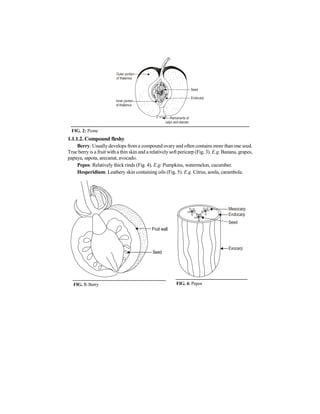
Pomes: Bulk of flesh comes from enlarged floral tube or receptacle that grows around
the ovary (Fig. 2). E.g. Apple, Pear, Quince, Loquat.
FIG. 2: Pome
1.1.1.2. Compound fleshy
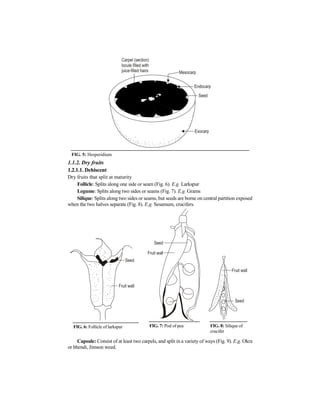
Berry: Usually develops from a compound ovary and often contains more than one seed.
True berry is a fruit with a thin skin and a relatively soft pericarp (Fig. 3). E.g. Banana, grapes,
papaya, sapota, arecanut, avocado.
Pepos: Relatively thick rinds (Fig. 4). E.g. Pumpkins, watermelon, cucumber.
Hesperidium: Leathery skin containing oils (Fig. 5). E.g. Citrus, aonla, carambola.
FIG. 3: Berry FIG. 4: Pepos
FIG. 5: Hesperidium
1.1.2. Dry fruits
1.2.1.1. Dehiscent
Dry fruits that split at maturity
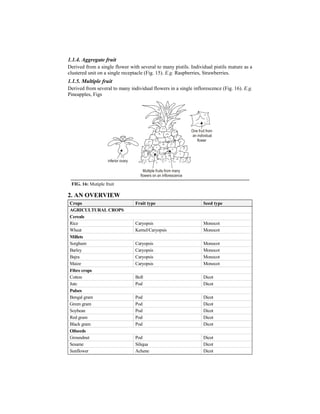
Follicle: Splits along one side or seam (Fig. 6). E.g. Larkspur
Legume: Splits along two sides or seams (Fig. 7). E.g. Grams
Silique: Splits along two sides or seams, but seeds are borne on central partition exposed
when the two halves separate (Fig. 8). E.g. Sesamum, crucifers.
FIG. 6: Follicle of larkspur FIG. 7: Pod of pea FIG. 8: Silique of
crucifer
Capsule: Consist of at least two carpels, and split in a variety of ways (Fig. 9). E.g. Okra
or bhendi, Jimson weed.
FIG. 9: Capsule of jimson weed
1.1.3. Indehiscent
Dry fruits that do not split at maturity
Achene (Fig. 10): E.g. Sunflower
Nut: A large, indehiscent achene, commonly one-seeded (Fig. 11). E.g. Almond
FIG. 10: Achene of
sunflower
FIG. 11: Nut of oak FIG. 12: Caryopsis of corn
Grain/caryopsis: An achene in which the ovary wall and seed coat are inseparable (Fig.
12). E.g. Wheat, corn, rice, sorghum, pearl millet etc.
Samara: A winged achene or nut (Fig. 13). E.g. Maple
Schizocarp: (Fig. 14) –E.g. carrot
FIG. 13: Samara of maple FIG. 14: Schizocarp of
carrot
FIG. 15: Aggregate fruit
1.1.4. Aggregate fruit
Derived from a single flower with several to many pistils. Individual pistils mature as a
clustered unit on a single receptacle (Fig. 15). E.g. Raspberries, Strawberries.
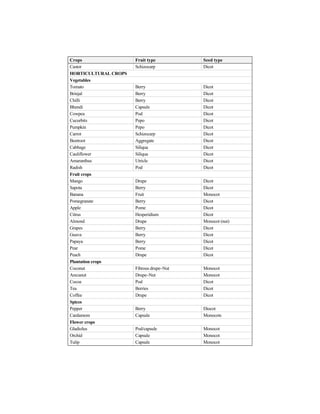
1.1.5. Multiple fruit
Derived from several to many individual flowers in a single inflorescence (Fig. 16). E.g.
Pineapples, Figs
FIG. 16: Mutiple fruit
2. AN OVERVIEW
Crops Fruit type Seed type
AGRICULTURAL CROPS
Cereals
Rice Caryopsis Monocot
Wheat Kernel/Caryopsis Monocot
Millets
Sorghum Caryopsis Monocot
Barley Caryopsis Monocot
Bajra Caryopsis Monocot
Maize Caryopsis Monocot
Fibre crops
Cotton Boll Dicot
Jute Pod Dicot
Pulses
Bengal gram Pod Dicot
Green gram Pod Dicot
Soybean Pod Dicot
Red gram Pod Dicot
Black gram Pod Dicot
Oilseeds
Groundnut Pod Dicot
Sesame Siliqua Dicot
Sunflower Achene Dicot
Crops Fruit type Seed type
Castor Schizocarp Dicot
HORTICULTURAL CROPS
Vegetables
Tomato Berry Dicot
Brinjal Berry Dicot
Chilli Berry Dicot
Bhendi Capsule Dicot
Cowpea Pod Dicot
Cucurbits Pepo Dicot
Pumpkin Pepo Dicot
Carrot Schizocarp Dicot
Beetroot Aggregate Dicot
Cabbage Siliqua Dicot
Cauliflower Siliqua Dicot
Amaranthus Utricle Dicot
Radish Pod Dicot
Fruit crops
Mango Drupe Dicot
Sapota Berry Dicot
Banana Fruit Monocot
Pomegranate Berry Dicot
Apple Pome Dicot
Citrus Hesperidium Dicot
Almond Drupe Monocot (nut)
Grapes Berry Dicot
Guava Berry Dicot
Papaya Berry Dicot
Pear Pome Dicot
Peach Drupe Dicot
Plantation crops
Coconut Fibrous drupe–Nut Monocot
Arecanut Drupe–Nut Monocot
Cocoa Pod Dicot
Tea Berries Dicot
Coffee Drupe Dicot
Spices
Pepper Berry Diocot
Cardamom Capsule Monocots
Flower crops
Gladiolus Pod/capsule Monocot
Orchid Capsule Monocot
Tulip Capsule Monocot
Fruits and their Structures - An overview .pdf

Fruits and their Structures - An overview .pdf

  • 1.
    FRUITS & THEIRSTRUCTURES Dr. K. Vanangamudi Formerly Dean (Agriculture), AC & RI, Coimbatore Dean, Adhiparasakthi Agricultural College, Kalavai Professor & Head (Seed Science & Technology) Tamil Nadu Agricultural University, Coimbatore 641 003 Contact: 9894904745 Mail: vanangamudi.tnau@gmail.com Website: https://trinityculturalacademy.com/ YouTube: https://youtube.com/channel/UCWGv08j5jaZ-nkvz46HrBVw 1. FRUITS Fruit is a part of a flowering plant that derives from specific tissues of the flower, mainly one or more ovaries. 1.1. Types 1.1.1. Fleshy 1.1.1.1. Simple fleshy fruits Develop from a flower with a single pistil. Drupe: Simple fleshy fruit with a single seed enclosed by a hard, stony endocarp, or pit (Fig. 1). E.g. Mango, peach, plume, cherry, cocoa, coconut and coffee. FIG. 1: Drupe Pomes: Bulk of flesh comes from enlarged floral tube or receptacle that grows around the ovary (Fig. 2). E.g. Apple, Pear, Quince, Loquat.
  • 2.
    FIG. 2: Pome 1.1.1.2.Compound fleshy Berry: Usually develops from a compound ovary and often contains more than one seed. True berry is a fruit with a thin skin and a relatively soft pericarp (Fig. 3). E.g. Banana, grapes, papaya, sapota, arecanut, avocado. Pepos: Relatively thick rinds (Fig. 4). E.g. Pumpkins, watermelon, cucumber. Hesperidium: Leathery skin containing oils (Fig. 5). E.g. Citrus, aonla, carambola. FIG. 3: Berry FIG. 4: Pepos
  • 3.
    FIG. 5: Hesperidium 1.1.2.Dry fruits 1.2.1.1. Dehiscent Dry fruits that split at maturity Follicle: Splits along one side or seam (Fig. 6). E.g. Larkspur Legume: Splits along two sides or seams (Fig. 7). E.g. Grams Silique: Splits along two sides or seams, but seeds are borne on central partition exposed when the two halves separate (Fig. 8). E.g. Sesamum, crucifers. FIG. 6: Follicle of larkspur FIG. 7: Pod of pea FIG. 8: Silique of crucifer Capsule: Consist of at least two carpels, and split in a variety of ways (Fig. 9). E.g. Okra or bhendi, Jimson weed.
  • 4.
    FIG. 9: Capsuleof jimson weed 1.1.3. Indehiscent Dry fruits that do not split at maturity Achene (Fig. 10): E.g. Sunflower Nut: A large, indehiscent achene, commonly one-seeded (Fig. 11). E.g. Almond FIG. 10: Achene of sunflower FIG. 11: Nut of oak FIG. 12: Caryopsis of corn Grain/caryopsis: An achene in which the ovary wall and seed coat are inseparable (Fig. 12). E.g. Wheat, corn, rice, sorghum, pearl millet etc. Samara: A winged achene or nut (Fig. 13). E.g. Maple Schizocarp: (Fig. 14) –E.g. carrot FIG. 13: Samara of maple FIG. 14: Schizocarp of carrot FIG. 15: Aggregate fruit
  • 5.
    1.1.4. Aggregate fruit Derivedfrom a single flower with several to many pistils. Individual pistils mature as a clustered unit on a single receptacle (Fig. 15). E.g. Raspberries, Strawberries. 1.1.5. Multiple fruit Derived from several to many individual flowers in a single inflorescence (Fig. 16). E.g. Pineapples, Figs FIG. 16: Mutiple fruit 2. AN OVERVIEW Crops Fruit type Seed type AGRICULTURAL CROPS Cereals Rice Caryopsis Monocot Wheat Kernel/Caryopsis Monocot Millets Sorghum Caryopsis Monocot Barley Caryopsis Monocot Bajra Caryopsis Monocot Maize Caryopsis Monocot Fibre crops Cotton Boll Dicot Jute Pod Dicot Pulses Bengal gram Pod Dicot Green gram Pod Dicot Soybean Pod Dicot Red gram Pod Dicot Black gram Pod Dicot Oilseeds Groundnut Pod Dicot Sesame Siliqua Dicot Sunflower Achene Dicot
  • 6.
    Crops Fruit typeSeed type Castor Schizocarp Dicot HORTICULTURAL CROPS Vegetables Tomato Berry Dicot Brinjal Berry Dicot Chilli Berry Dicot Bhendi Capsule Dicot Cowpea Pod Dicot Cucurbits Pepo Dicot Pumpkin Pepo Dicot Carrot Schizocarp Dicot Beetroot Aggregate Dicot Cabbage Siliqua Dicot Cauliflower Siliqua Dicot Amaranthus Utricle Dicot Radish Pod Dicot Fruit crops Mango Drupe Dicot Sapota Berry Dicot Banana Fruit Monocot Pomegranate Berry Dicot Apple Pome Dicot Citrus Hesperidium Dicot Almond Drupe Monocot (nut) Grapes Berry Dicot Guava Berry Dicot Papaya Berry Dicot Pear Pome Dicot Peach Drupe Dicot Plantation crops Coconut Fibrous drupe–Nut Monocot Arecanut Drupe–Nut Monocot Cocoa Pod Dicot Tea Berries Dicot Coffee Drupe Dicot Spices Pepper Berry Diocot Cardamom Capsule Monocots Flower crops Gladiolus Pod/capsule Monocot Orchid Capsule Monocot Tulip Capsule Monocot