Presentation Topic: Classification
Of Fruits
Presented By: Ghulam Fatima Tunio
Fruit:
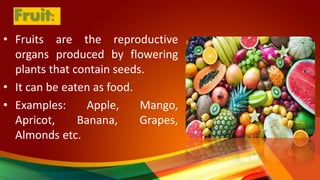
• Fruits are the reproductive
organs produced by flowering
plants that contain seeds.
• It can be eaten as food.
• Examples: Apple, Mango,
Apricot, Banana, Grapes,
Almonds etc.
Classification of fruits
 Fruits are classified according to the
composition into 2 groups:
1) True Fruit
2) Accessory fruits
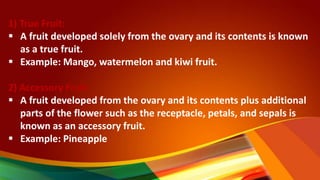
1) True Fruit:
 A fruit developed solely from the ovary and its contents is known
as a true fruit.
 Example: Mango, watermelon and kiwi fruit.
2) Accessory Fruit:
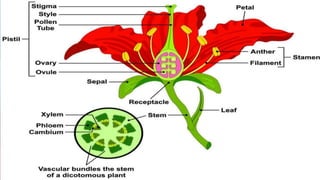
 A fruit developed from the ovary and its contents plus additional
parts of the flower such as the receptacle, petals, and sepals is
known as an accessory fruit.
 Example: Pineapple
 Fruits are classified according to the
arrangement from which they derive. There
are three types.
1. Simple fruits
2. Aggregate fruits
3. Multiple fruits
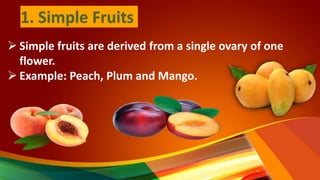
1. Simple Fruits
 Simple fruits are derived from a single ovary of one
flower.
 Example: Peach, Plum and Mango.
 Simple fruits are further divided into 2
groups:
i. Fleshy fruit
ii. Dry fruit
i. Fleshy Fruits: In fleshy fruits, the fruit wall
is differentiated into epicarp, mesocarp,
and endocarp.
• Fleshy fruits are further divided into
following categories.
•Drupes : A drupe is a fleshy fruit that has
one seed surrounded by a bony endocarp, or
the inner wall of the pericarp, which is sweet
and juicy.
•Drupe fruit include plum, peach, almond,
cherry etc.
•Berries: Berries on the other hand have
several seeds with a fleshy pericarp.
•These include tomatoes and grapes
•Pomes : A pome has many seeds with fleshy
tissue surrounding the pericarp that is sweet
and juicy.
• Pomes include apples and pears.
•Hesperidia and Pepos: Both the hesperidium
and pepo fleshy fruits have a leathery rind.
• Hesperidium includes citrus fruits like lemon
and orange, while the pepo fruits include
cucumbers and squash.
ii. Dry Fruits: The pericarp of simple dry fruits is usually
quite dry and hard. It is not differentiated into the
three layers of epicarp, mesocarp and endocarp.
 Dry fruits are further divided into two categories.
i. Dehiscent fruits
ii. Indehiscent fruits
1. Dehiscent Fruits - Dry fruits which at maturity
open by definite natural means to shed the
contained seeds.
i. Legume: A dry dehiscent fruit developed from 1
carpel and at maturity splitting along both the
dorsal and ventral sutures. (beans, peas).
ii. Follicle: A dry dehiscent fruit developed from 1
carpel and at maturity splitting along only one
suture. (larkspur, columbine)
iii. Capsule: A dry dehiscent fruit developed from
several carpels.
2. Indehiscent fruits - Dry fruits which do not open
when mature to shed their seeds. Many of this group
are one seeded fruits.
i. Achene: A one-seeded, dry, indehiscent fruit; the
one seed is attached to the fruit wall at a single point.
(buttercups, dandelion, sunflower).
ii. Nut: A dry, indehiscent, one seeded fruit similar to
an achene but with the wall greatly thickened and
hardened. (beech, chestnut, oak, hazel; walnut and
hickory - note: because of extrafloral bracts, or
"husk", the latter two fruits are sometimes called
"drupes").
iii. Samara: A one- or two-seeded dry, indehiscent
fruit in which part of the fruit wall grows out into a
wing. (elm, maple, ash).
iv. Grain: A one-seeded dry, indehiscent fruit in
which the fruit wall and the seed coat are fused.
(wheat, corn, grasses).
v. Schizocarp : A fruit formed from several carpels,
each carpel of this pistil enclosing a single ovule, at
maturity the carpels separate as separate
indehiscent fruits. (mallow, wild carrot, dill).
2. Aggregate Fruits
 An aggregate fruits are develops from many separate
carpels of one flower.
 Example: Black berry, Strawberry etc.
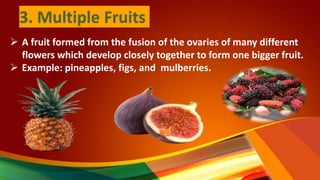
3. Multiple Fruits
 A fruit formed from the fusion of the ovaries of many different
flowers which develop closely together to form one bigger fruit.
 Example: pineapples, figs, and mulberries.

Classification of Fruit

  • 1.
    Presentation Topic: Classification OfFruits Presented By: Ghulam Fatima Tunio
  • 2.
    Fruit: • Fruits arethe reproductive organs produced by flowering plants that contain seeds. • It can be eaten as food. • Examples: Apple, Mango, Apricot, Banana, Grapes, Almonds etc.
  • 3.
    Classification of fruits Fruits are classified according to the composition into 2 groups: 1) True Fruit 2) Accessory fruits
  • 4.
    1) True Fruit: A fruit developed solely from the ovary and its contents is known as a true fruit.  Example: Mango, watermelon and kiwi fruit. 2) Accessory Fruit:  A fruit developed from the ovary and its contents plus additional parts of the flower such as the receptacle, petals, and sepals is known as an accessory fruit.  Example: Pineapple
  • 6.
     Fruits areclassified according to the arrangement from which they derive. There are three types. 1. Simple fruits 2. Aggregate fruits 3. Multiple fruits
  • 7.
    1. Simple Fruits Simple fruits are derived from a single ovary of one flower.  Example: Peach, Plum and Mango.
  • 8.
     Simple fruitsare further divided into 2 groups: i. Fleshy fruit ii. Dry fruit i. Fleshy Fruits: In fleshy fruits, the fruit wall is differentiated into epicarp, mesocarp, and endocarp. • Fleshy fruits are further divided into following categories.
  • 9.
    •Drupes : Adrupe is a fleshy fruit that has one seed surrounded by a bony endocarp, or the inner wall of the pericarp, which is sweet and juicy. •Drupe fruit include plum, peach, almond, cherry etc. •Berries: Berries on the other hand have several seeds with a fleshy pericarp. •These include tomatoes and grapes
  • 10.
    •Pomes : Apome has many seeds with fleshy tissue surrounding the pericarp that is sweet and juicy. • Pomes include apples and pears. •Hesperidia and Pepos: Both the hesperidium and pepo fleshy fruits have a leathery rind. • Hesperidium includes citrus fruits like lemon and orange, while the pepo fruits include cucumbers and squash.
  • 11.
    ii. Dry Fruits:The pericarp of simple dry fruits is usually quite dry and hard. It is not differentiated into the three layers of epicarp, mesocarp and endocarp.  Dry fruits are further divided into two categories. i. Dehiscent fruits ii. Indehiscent fruits
  • 12.
    1. Dehiscent Fruits- Dry fruits which at maturity open by definite natural means to shed the contained seeds. i. Legume: A dry dehiscent fruit developed from 1 carpel and at maturity splitting along both the dorsal and ventral sutures. (beans, peas). ii. Follicle: A dry dehiscent fruit developed from 1 carpel and at maturity splitting along only one suture. (larkspur, columbine) iii. Capsule: A dry dehiscent fruit developed from several carpels.
  • 13.
    2. Indehiscent fruits- Dry fruits which do not open when mature to shed their seeds. Many of this group are one seeded fruits. i. Achene: A one-seeded, dry, indehiscent fruit; the one seed is attached to the fruit wall at a single point. (buttercups, dandelion, sunflower). ii. Nut: A dry, indehiscent, one seeded fruit similar to an achene but with the wall greatly thickened and hardened. (beech, chestnut, oak, hazel; walnut and hickory - note: because of extrafloral bracts, or "husk", the latter two fruits are sometimes called "drupes").
  • 14.
    iii. Samara: Aone- or two-seeded dry, indehiscent fruit in which part of the fruit wall grows out into a wing. (elm, maple, ash). iv. Grain: A one-seeded dry, indehiscent fruit in which the fruit wall and the seed coat are fused. (wheat, corn, grasses). v. Schizocarp : A fruit formed from several carpels, each carpel of this pistil enclosing a single ovule, at maturity the carpels separate as separate indehiscent fruits. (mallow, wild carrot, dill).
  • 15.
    2. Aggregate Fruits An aggregate fruits are develops from many separate carpels of one flower.  Example: Black berry, Strawberry etc.
  • 16.
    3. Multiple Fruits A fruit formed from the fusion of the ovaries of many different flowers which develop closely together to form one bigger fruit.  Example: pineapples, figs, and mulberries.