Prepared by : Rabia Khan Baber
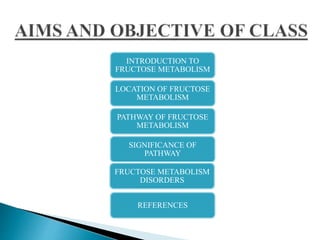
INTRODUCTION TO
FRUCTOSE METABOLISM
LOCATION OF FRUCTOSE
METABOLISM
PATHWAY OF FRUCTOSE
METABOLISM
SIGNIFICANCE OF
PATHWAY
FRUCTOSE METABOLISM
DISORDERS
REFERENCES
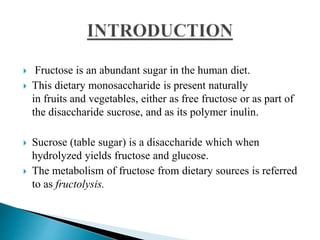
 Fructose is an abundant sugar in the human diet.
 This dietary monosaccharide is present naturally
in fruits and vegetables, either as free fructose or as part of
the disaccharide sucrose, and as its polymer inulin.
 Sucrose (table sugar) is a disaccharide which when
hydrolyzed yields fructose and glucose.
 The metabolism of fructose from dietary sources is referred
to as fructolysis.
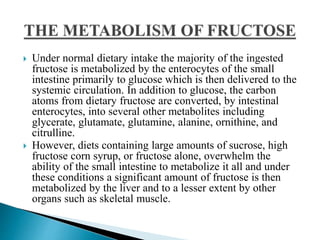
 Under normal dietary intake the majority of the ingested
fructose is metabolized by the enterocytes of the small
intestine primarily to glucose which is then delivered to the
systemic circulation. In addition to glucose, the carbon
atoms from dietary fructose are converted, by intestinal
enterocytes, into several other metabolites including
glycerate, glutamate, glutamine, alanine, ornithine, and
citrulline.
 However, diets containing large amounts of sucrose, high
fructose corn syrup, or fructose alone, overwhelm the
ability of the small intestine to metabolize it all and under
these conditions a significant amount of fructose is then
metabolized by the liver and to a lesser extent by other
organs such as skeletal muscle.
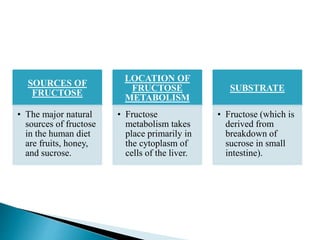
SOURCES OF
FRUCTOSE
• The major natural
sources of fructose
in the human diet
are fruits, honey,
and sucrose.
LOCATION OF
FRUCTOSE
METABOLISM
• Fructose
metabolism takes
place primarily in
the cytoplasm of
cells of the liver.
SUBSTRATE
• Fructose (which is
derived from
breakdown of
sucrose in small
intestine).
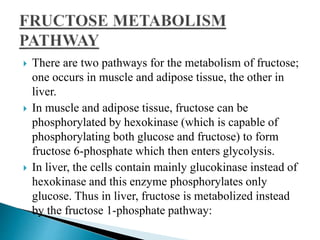
 There are two pathways for the metabolism of fructose;
one occurs in muscle and adipose tissue, the other in
liver.
 In muscle and adipose tissue, fructose can be
phosphorylated by hexokinase (which is capable of
phosphorylating both glucose and fructose) to form
fructose 6-phosphate which then enters glycolysis.
 In liver, the cells contain mainly glucokinase instead of
hexokinase and this enzyme phosphorylates only
glucose. Thus in liver, fructose is metabolized instead
by the fructose 1-phosphate pathway:
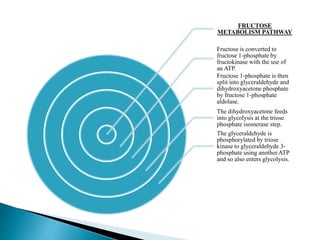
FRUCTOSE
METABOLISM PATHWAY
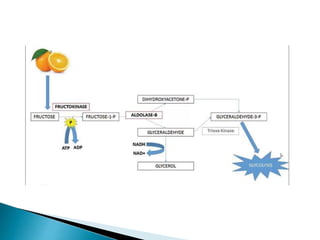
Fructose is converted to
fructose 1-phosphate by
fructokinase with the use of
an ATP.
Fructose 1-phosphate is then
split into glyceraldehyde and
dihydroxyacetone phosphate
by fructose 1-phosphate
aldolase.
The dihydroxyacetone feeds
into glycolysis at the triose
phosphate isomerase step.
The glyceraldehyde is
phosphorylated by triose
kinase to glyceraldehyde 3-
phosphate using another ATP
and so also enters glycolysis.
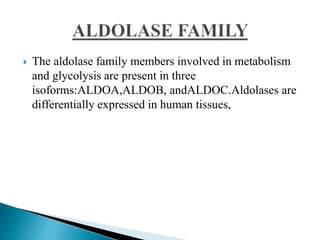
 The aldolase family members involved in metabolism
and glycolysis are present in three
isoforms:ALDOA,ALDOB, andALDOC.Aldolases are
differentially expressed in human tissues,
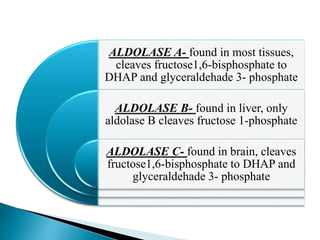
ALDOLASE A- found in most tissues,
cleaves fructose1,6-bisphosphate to
DHAP and glyceraldehade 3- phosphate
ALDOLASE B- found in liver, only
aldolase B cleaves fructose 1-phosphate
ALDOLASE C- found in brain, cleaves
fructose1,6-bisphosphate to DHAP and
glyceraldehade 3- phosphate
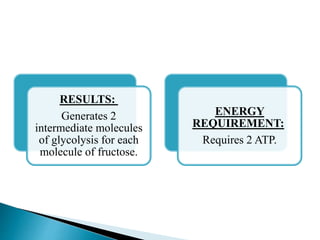
RESULTS:
Generates 2
intermediate molecules
of glycolysis for each
molecule of fructose.
ENERGY
REQUIREMENT:
Requires 2 ATP.
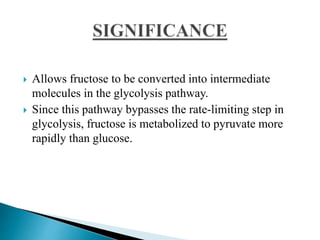
 Allows fructose to be converted into intermediate
molecules in the glycolysis pathway.
 Since this pathway bypasses the rate-limiting step in
glycolysis, fructose is metabolized to pyruvate more
rapidly than glucose.
ESSENTIAL FRUCTOSURIA
 Essential fructosuria is a benign metabolic disorder
caused by the lack of fructokinase which is normally
present in the liver, pancreatic islets and kidney cortex.
The fructosuria of this disease depends on the time and
amount of fructose and sucrose intake. Since the
disorder is asymptomatic and harmless it may go
undiagnosed.
HEREDITARY FRUCTOSE INTOLERACNE
 Hereditary fructose intolerance (HFI) is a potentially
lethal autosomal recessive disorder resulting from a
lack of aldolase B which is normally expressed in the
liver, small intestine and kidney cortex. The incidence
of HFI is on the order of 1 in 20,000 live births. The
disorder is characterized by severe hypoglycemia and
vomiting following fructose intake. Prolonged intake of
fructose by infants with this defect leads to vomiting,
poor feeding, jaundice, hepatomegaly, hemorrhage and
eventually hepatic failure and death. Patients will
remain symptom free on a diet devoid of fructose and
sucrose.
FRUCTOSE-1,6-BISPHOSPHATASE DEFICIENCY
 Hereditary fructose-1,6-bisphosphatase (F1,6BPase)
deficiency is a very rare autosomal recessive disease.
 Loss of fully functional FBP1 results in severely
impaired hepatic gluconeogenesis and leads to episodes
of hypoglycemia, apnea, hyperventilation, ketosis and
lactic acidosis. These symptoms can take on a lethal
course in neonates. Later in life episodes are triggered
by fasting and febrile infections.
 Textbook of Biochemistry-U Satyanarayana
 Textbook of Biochemistry-DM Vasudevan
 Smith, C. M., Marks, A. D., Lieberman, M. A., Marks,
D. B., & Marks, D. B. (2005). Marks’ basic medical
biochemistry: A clinical approach. Philadelphia:
Lippincott Williams & Wilkins.
 John W. Pelley, Edward F. Goljan (2011).
Biochemistry. Third edition. Philadelphia: USA.

FRUCTOSE METABOLISM

  • 1.
    Prepared by :Rabia Khan Baber
  • 2.
    INTRODUCTION TO FRUCTOSE METABOLISM LOCATIONOF FRUCTOSE METABOLISM PATHWAY OF FRUCTOSE METABOLISM SIGNIFICANCE OF PATHWAY FRUCTOSE METABOLISM DISORDERS REFERENCES
  • 3.
     Fructose isan abundant sugar in the human diet.  This dietary monosaccharide is present naturally in fruits and vegetables, either as free fructose or as part of the disaccharide sucrose, and as its polymer inulin.  Sucrose (table sugar) is a disaccharide which when hydrolyzed yields fructose and glucose.  The metabolism of fructose from dietary sources is referred to as fructolysis.
  • 4.
     Under normaldietary intake the majority of the ingested fructose is metabolized by the enterocytes of the small intestine primarily to glucose which is then delivered to the systemic circulation. In addition to glucose, the carbon atoms from dietary fructose are converted, by intestinal enterocytes, into several other metabolites including glycerate, glutamate, glutamine, alanine, ornithine, and citrulline.  However, diets containing large amounts of sucrose, high fructose corn syrup, or fructose alone, overwhelm the ability of the small intestine to metabolize it all and under these conditions a significant amount of fructose is then metabolized by the liver and to a lesser extent by other organs such as skeletal muscle.
  • 5.
    SOURCES OF FRUCTOSE • Themajor natural sources of fructose in the human diet are fruits, honey, and sucrose. LOCATION OF FRUCTOSE METABOLISM • Fructose metabolism takes place primarily in the cytoplasm of cells of the liver. SUBSTRATE • Fructose (which is derived from breakdown of sucrose in small intestine).
  • 6.
     There aretwo pathways for the metabolism of fructose; one occurs in muscle and adipose tissue, the other in liver.  In muscle and adipose tissue, fructose can be phosphorylated by hexokinase (which is capable of phosphorylating both glucose and fructose) to form fructose 6-phosphate which then enters glycolysis.  In liver, the cells contain mainly glucokinase instead of hexokinase and this enzyme phosphorylates only glucose. Thus in liver, fructose is metabolized instead by the fructose 1-phosphate pathway:
  • 8.
    FRUCTOSE METABOLISM PATHWAY Fructose isconverted to fructose 1-phosphate by fructokinase with the use of an ATP. Fructose 1-phosphate is then split into glyceraldehyde and dihydroxyacetone phosphate by fructose 1-phosphate aldolase. The dihydroxyacetone feeds into glycolysis at the triose phosphate isomerase step. The glyceraldehyde is phosphorylated by triose kinase to glyceraldehyde 3- phosphate using another ATP and so also enters glycolysis.
  • 9.
     The aldolasefamily members involved in metabolism and glycolysis are present in three isoforms:ALDOA,ALDOB, andALDOC.Aldolases are differentially expressed in human tissues,
  • 10.
    ALDOLASE A- foundin most tissues, cleaves fructose1,6-bisphosphate to DHAP and glyceraldehade 3- phosphate ALDOLASE B- found in liver, only aldolase B cleaves fructose 1-phosphate ALDOLASE C- found in brain, cleaves fructose1,6-bisphosphate to DHAP and glyceraldehade 3- phosphate
  • 11.
    RESULTS: Generates 2 intermediate molecules ofglycolysis for each molecule of fructose. ENERGY REQUIREMENT: Requires 2 ATP.
  • 12.
     Allows fructoseto be converted into intermediate molecules in the glycolysis pathway.  Since this pathway bypasses the rate-limiting step in glycolysis, fructose is metabolized to pyruvate more rapidly than glucose.
  • 13.
    ESSENTIAL FRUCTOSURIA  Essentialfructosuria is a benign metabolic disorder caused by the lack of fructokinase which is normally present in the liver, pancreatic islets and kidney cortex. The fructosuria of this disease depends on the time and amount of fructose and sucrose intake. Since the disorder is asymptomatic and harmless it may go undiagnosed.
  • 14.
    HEREDITARY FRUCTOSE INTOLERACNE Hereditary fructose intolerance (HFI) is a potentially lethal autosomal recessive disorder resulting from a lack of aldolase B which is normally expressed in the liver, small intestine and kidney cortex. The incidence of HFI is on the order of 1 in 20,000 live births. The disorder is characterized by severe hypoglycemia and vomiting following fructose intake. Prolonged intake of fructose by infants with this defect leads to vomiting, poor feeding, jaundice, hepatomegaly, hemorrhage and eventually hepatic failure and death. Patients will remain symptom free on a diet devoid of fructose and sucrose.
  • 15.
    FRUCTOSE-1,6-BISPHOSPHATASE DEFICIENCY  Hereditaryfructose-1,6-bisphosphatase (F1,6BPase) deficiency is a very rare autosomal recessive disease.  Loss of fully functional FBP1 results in severely impaired hepatic gluconeogenesis and leads to episodes of hypoglycemia, apnea, hyperventilation, ketosis and lactic acidosis. These symptoms can take on a lethal course in neonates. Later in life episodes are triggered by fasting and febrile infections.
  • 16.
     Textbook ofBiochemistry-U Satyanarayana  Textbook of Biochemistry-DM Vasudevan  Smith, C. M., Marks, A. D., Lieberman, M. A., Marks, D. B., & Marks, D. B. (2005). Marks’ basic medical biochemistry: A clinical approach. Philadelphia: Lippincott Williams & Wilkins.  John W. Pelley, Edward F. Goljan (2011). Biochemistry. Third edition. Philadelphia: USA.