AMINO ACID
METABOLISM DISORDERS
Prepared by : Rabia Khan Baber
Subject : Biochemistry
AIMS AND OBJECTIVES OF PPT
 To study and understand the disorders of amino acid metabolism.
AMINO ACID METABOLISM
DISORDERS
Twenty amino acids, including nine that cannot be synthesized in
humans and must be obtained through food, are involved in metabolism.
Amino acids are the building blocks of proteins; some also function as
or are synthesized into important molecules in the body such as
neurotransmitters, hormones, pigments and oxygen-carrying molecules.
Each amino acid is further broken down into ammonia, carbon dioxide,
and water. Disorders that affect the metabolism of amino acids include
phenylketonuria, tyrosinemia, homocystinuria, non-ketotic
hyperglycinemia, and maple syrup urine disease. These disorders are
autosomal recessive, and all may be diagnosed by analyzing amino acid
concentrations in body fluids
WHAT ARE AUTOSOMAL RECESSIVE
DISORDERS ?
Autosomal inheritance of a gene means that the gene is located on one
of the 22 other pairs of chromosomes. This means that boys and girls (or
men and women) are equally likely to have the gene. Recessive means
that you must inherit both copies of the gene in order for you to have the
trait. If you have only one copy of the recessive gene, you won’t have
the trait or the disease. Instead you will be a carrier for the trait or
disease. But you won’t be able to tell that you are a carrier without a
genetic test.
HOW DOES AN AUTOSOMAL
RECESSIVE CONDITION LOOK IN A
FAMILY?
It is rare to see any history of autosomal recessive conditions within a
family because if someone is a carrier for one of these conditions, they
would have to have a child with someone who is also a carrier for the
same condition. Most autosomal recessive conditions are individually
rare, so the chance that both people are carriers for the same recessive
genetic condition are likely low.
PHENYLKETONURIA (PKU)
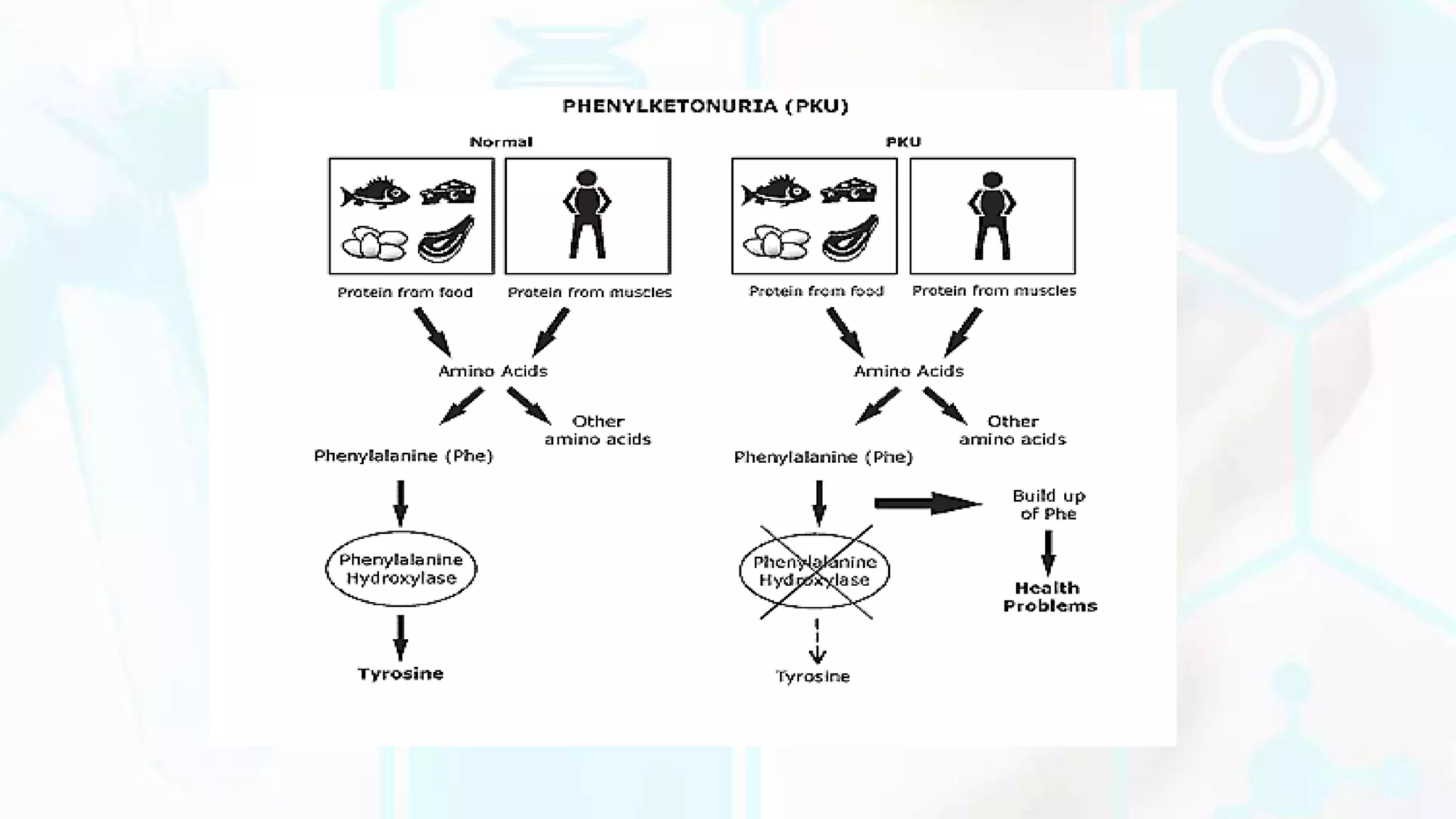
 PKU is caused by decreased activity of phenylalanine hydroxylase (PAH), an
enzyme that converts the amino acid phenylalanine to tyrosine, a precursor of
several important hormones and skin, hair and eye pigments. Decreased PAH
activity results in accumulation of phenylalanine and a decreased amount of
tyrosine and other metabolites.
 FEATURES OF PKU: Persistent high levels of phenylalanine in the blood in
turn result in progressive developmental delay, a small head circumference,
behaviour disturbances, and seizures. Due to a decreased amount of the pigment
melanin, persons with PKU tend to have lighter features, such as blond hair and
blue eyes, than other family members who do not have the disease.
 TREATMENT: Follow special formulas and with foods low in phenylalanine
and protein can reduce phenylalanine levels to normal and maintain normal
intelligence
TYROSINEMIA
 Tyrosinemia is caused by a deficiency of fumarylacetoacetate
hydrolase (FAH), the last enzyme in tyrosine catabolism.
 FEATURES: Features of classic tyrosinemia include severe liver
disease, unsatisfactory weight gain, peripheral nerve disease and
kidney defects. Approximately 40 percent of persons with the disorder
develop liver cancer by the age of 5 if untreated.
 TREATMENT: Treatment includes a potent inhibitor of the tyrosine
catabolic pathway, prevents the production of toxic metabolites.
Although this leads to improvement of liver, kidney and neurological
symptoms, the occurrence of liver cancer may not be prevented. Liver
transplantation may be required for severe liver disease or if cancer
develops.
HOMOCYSTINURIA
 Homocystinuria is caused by a defect in β-synthase, an enzyme that
participates in the metabolism of methionine, which leads to an
accumulation of homocysteine.
 FEATURES: Features include a pronounced flush of the cheeks, a
tall, thin frame, lens dislocation and osteoporosis. Intellectual
disability and psychiatric disorders also may be present.
 TREATMENT: Approximately 50 percent of persons with
homocystinuria are responsive to treatment with vitamin B6
(pyridoxine), and these individuals tend to have a better intellectual
prognosis. Therapy with folic acid, betaine (a medication that removes
extra homocysteine from the body), aspirin, and dietary restriction of
protein and methionine also may be of benefit.
NON-KETOTIC HYPERGLYCINEMIA
 Non-ketotic hyperglycinemia is caused by elevated levels of the
neurotransmitter glycine in the central nervous system, which in turn
are caused by a defect in the enzyme system responsible for cleaving
the amino acid glycine.
 FEATURES: is characterized by seizures, low muscle tone, hiccups,
breath holding and severe developmental impairment.
 TREATMENT: Drugs that block the action of glycine (e.g.,
dextromethorphan), a low-protein diet and glycine-scavenging
medications (e.g., sodium benzoate) may ease symptoms, but there is
no cure for this severe condition.
MAPLE SYRUP URINE DISEASE(MSUD)
 MSUD is a disorder of branched-chain amino acid metabolism that leads to
the accumulation of leucine, isoleucine, valine and their corresponding
oxoacids in body fluids, one result being a characteristic maple syrup smell to
the urine of some patients.
 FEATURES: The classic form of MSUD presents in infancy with lethargy
and progressive neurological deterioration characterized by seizures and
coma. Unlike most organic acidemias is rare.
 TREATMENT: Treatment involves restricting proteins and feeding with
formulas deficient in the branched-chain amino acids. Persons with MSUD
may have intellectual disability despite therapy, but early and careful
treatment can result in normal intellectual development. Milder forms of
MSUD may be treated with simple protein restriction or administration of
thiamin (vitamin B1).
REFERENCES
 Text book of medical biochemistry, MN Chatterjee
 Fundamentals of Biochemistry
 Britanicca

AMINO ACID METABOLISM DISORDERS

  • 1.
    AMINO ACID METABOLISM DISORDERS Preparedby : Rabia Khan Baber Subject : Biochemistry
  • 2.
    AIMS AND OBJECTIVESOF PPT  To study and understand the disorders of amino acid metabolism.
  • 3.
    AMINO ACID METABOLISM DISORDERS Twentyamino acids, including nine that cannot be synthesized in humans and must be obtained through food, are involved in metabolism. Amino acids are the building blocks of proteins; some also function as or are synthesized into important molecules in the body such as neurotransmitters, hormones, pigments and oxygen-carrying molecules. Each amino acid is further broken down into ammonia, carbon dioxide, and water. Disorders that affect the metabolism of amino acids include phenylketonuria, tyrosinemia, homocystinuria, non-ketotic hyperglycinemia, and maple syrup urine disease. These disorders are autosomal recessive, and all may be diagnosed by analyzing amino acid concentrations in body fluids
  • 4.
    WHAT ARE AUTOSOMALRECESSIVE DISORDERS ? Autosomal inheritance of a gene means that the gene is located on one of the 22 other pairs of chromosomes. This means that boys and girls (or men and women) are equally likely to have the gene. Recessive means that you must inherit both copies of the gene in order for you to have the trait. If you have only one copy of the recessive gene, you won’t have the trait or the disease. Instead you will be a carrier for the trait or disease. But you won’t be able to tell that you are a carrier without a genetic test.
  • 5.
    HOW DOES ANAUTOSOMAL RECESSIVE CONDITION LOOK IN A FAMILY? It is rare to see any history of autosomal recessive conditions within a family because if someone is a carrier for one of these conditions, they would have to have a child with someone who is also a carrier for the same condition. Most autosomal recessive conditions are individually rare, so the chance that both people are carriers for the same recessive genetic condition are likely low.
  • 7.
    PHENYLKETONURIA (PKU)  PKUis caused by decreased activity of phenylalanine hydroxylase (PAH), an enzyme that converts the amino acid phenylalanine to tyrosine, a precursor of several important hormones and skin, hair and eye pigments. Decreased PAH activity results in accumulation of phenylalanine and a decreased amount of tyrosine and other metabolites.  FEATURES OF PKU: Persistent high levels of phenylalanine in the blood in turn result in progressive developmental delay, a small head circumference, behaviour disturbances, and seizures. Due to a decreased amount of the pigment melanin, persons with PKU tend to have lighter features, such as blond hair and blue eyes, than other family members who do not have the disease.  TREATMENT: Follow special formulas and with foods low in phenylalanine and protein can reduce phenylalanine levels to normal and maintain normal intelligence
  • 9.
    TYROSINEMIA  Tyrosinemia iscaused by a deficiency of fumarylacetoacetate hydrolase (FAH), the last enzyme in tyrosine catabolism.  FEATURES: Features of classic tyrosinemia include severe liver disease, unsatisfactory weight gain, peripheral nerve disease and kidney defects. Approximately 40 percent of persons with the disorder develop liver cancer by the age of 5 if untreated.  TREATMENT: Treatment includes a potent inhibitor of the tyrosine catabolic pathway, prevents the production of toxic metabolites. Although this leads to improvement of liver, kidney and neurological symptoms, the occurrence of liver cancer may not be prevented. Liver transplantation may be required for severe liver disease or if cancer develops.
  • 11.
    HOMOCYSTINURIA  Homocystinuria iscaused by a defect in β-synthase, an enzyme that participates in the metabolism of methionine, which leads to an accumulation of homocysteine.  FEATURES: Features include a pronounced flush of the cheeks, a tall, thin frame, lens dislocation and osteoporosis. Intellectual disability and psychiatric disorders also may be present.  TREATMENT: Approximately 50 percent of persons with homocystinuria are responsive to treatment with vitamin B6 (pyridoxine), and these individuals tend to have a better intellectual prognosis. Therapy with folic acid, betaine (a medication that removes extra homocysteine from the body), aspirin, and dietary restriction of protein and methionine also may be of benefit.
  • 13.
    NON-KETOTIC HYPERGLYCINEMIA  Non-ketotichyperglycinemia is caused by elevated levels of the neurotransmitter glycine in the central nervous system, which in turn are caused by a defect in the enzyme system responsible for cleaving the amino acid glycine.  FEATURES: is characterized by seizures, low muscle tone, hiccups, breath holding and severe developmental impairment.  TREATMENT: Drugs that block the action of glycine (e.g., dextromethorphan), a low-protein diet and glycine-scavenging medications (e.g., sodium benzoate) may ease symptoms, but there is no cure for this severe condition.
  • 14.
    MAPLE SYRUP URINEDISEASE(MSUD)  MSUD is a disorder of branched-chain amino acid metabolism that leads to the accumulation of leucine, isoleucine, valine and their corresponding oxoacids in body fluids, one result being a characteristic maple syrup smell to the urine of some patients.  FEATURES: The classic form of MSUD presents in infancy with lethargy and progressive neurological deterioration characterized by seizures and coma. Unlike most organic acidemias is rare.  TREATMENT: Treatment involves restricting proteins and feeding with formulas deficient in the branched-chain amino acids. Persons with MSUD may have intellectual disability despite therapy, but early and careful treatment can result in normal intellectual development. Milder forms of MSUD may be treated with simple protein restriction or administration of thiamin (vitamin B1).
  • 15.
    REFERENCES  Text bookof medical biochemistry, MN Chatterjee  Fundamentals of Biochemistry  Britanicca