FRUCTOSE
INTOLERANCE
AZEEM ASLAM
BS BIOCHEMISTRY
LAHORE GARRISON UNIVERSITY
INTRODUCTION
O Fructose intolerance, occurs when cells on
the surface of the intestines aren’t able to
break down fructose efficiently.
O Fructose is a simple sugar, known as a
monosaccharide, that comes mostly from fruit
and some vegetables.
O Fructose intolerance is a rare genetic
condition occurs because the body doesn’t
make the enzyme needed to break down
fructose.
O This can lead to serious health issues such as
liver failure if a strict fructose-free diet isn’t
followed.
Genetic Condition of
Fructose Intolerance
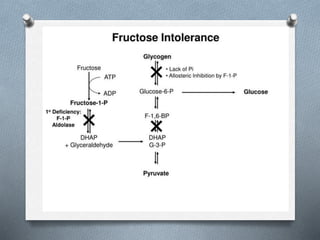
O Mutations in the ALDOB gene (generally
found in liver ) cause hereditary fructose
intolerance. The ALDOB gene provides
instructions for making the aldolase B
enzyme. This enzyme is found primarily in
the liver and is involved in the breakdown
(metabolism) of fructose so this sugar can
be used as energy.
Causes
Fructose intolerance is fairly common, affecting
up to 1 in 3 people.
Fructose Intolerance can be due to many
causes that include:
O imbalance of good and bad bacteria in the
gut.
O high intake of refined and processed foods.
O preexisting gut issues such as irritable bowel
syndrome (IBS).
O Stress.
Symptoms
Symptoms for fructose Intolerance include:
O Nausea.
O Bloating.
O Gas.
O Abdominal pain.
O Diarrhea.
O Vomiting.
Diagnosis
 The only definitive way to diagnose if one is
suffering from HFI is to have one of two test.
 An enzymatic assay to determine aldolase
activity.
O - The aldolase is obtained from patient liver tissue
in an invasive surgical procedure called liver biopsy.
 A fructose tolerance test, fructose is injected
introvenously under controlled condition where acute
glucose, fructose & phosphate levels are monitered.
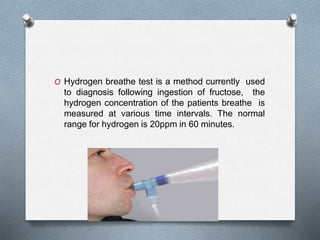
O Hydrogen breathe test is a method currently used
to diagnosis following ingestion of fructose, the
hydrogen concentration of the patients breathe is
measured at various time intervals. The normal
range for hydrogen is 20ppm in 60 minutes.
Clinical Diagnosis
The aldolase test was used to look for liver or
muscle damage. Doctors use more specific blood
tests, including:
O creatine kinase (CK) [normal range is 22 to 198
U/L (units per liter)].
O alanine aminotransferase (ALT) [The normal
value for ALT in blood ranges from 29 to 33 units
per liter (IU/L) for males and 19 to 25 IU/L for
females]
O aspartate aminotransferase (AST) [The normal
range of values for AST is about 5 to 40 units per
liter of serum.
Treatment
O Treatment of HFI is currently done
through a strict fructose free diet.
O Read nutrition labels and ingredients
lists carefully to determine what foods
are safe and which ones you want to
avoid.
Foods To Avoid :
Fruit
O Although you can safely consume fruit on a
low fructose diet, it is important to know
which ones are high in fructose.
O High fructose fruits include watermelon,
pineapple, oranges, apples, pears, peaches
and mangoes.
O However, some people can tolerate eating
some of these fruits in small amounts and in
combination with other foods.
Sweeteners
O Sweet foods are likely to contain some form of
fructose.
O High fructose corn syrup is one that you
should limit or avoid if you are maintaining a
low fructose diet.
O Soda, candy, yogurt, jam and some sports
drinks contain this sweetener.
O Any food sweetened with sorbitol, fruit juice or
honey should also be limited.
What to Eat
O There are plenty of foods you can eat on a low fructose
diet so that you are covering your nutrient needs and
staying healthy.
O Recommended diet are meat, dairy, eggs, beans and
vegetables.
Meat :-
O Fresh meat contain no fructose. They are also high in
protein and iron, and low in carbs. Chicken are lean and
contain no fructose.
Vegetables :-
The majority of vegetables are low
in fructose. Such as peppers, Cabbage ,
Radishes etc.
CONT.
Dairy
O Dairy products, such as cheese, milk and buttermilk are
low in fructose. These items are high in calcium, protein
and fat.
Eggs
O Eggs contain no fructose, are low in carbs and are high
in protein and fat.
Beans
Beans in their natural state are free of fructose. They are
also high in fiber, protein and complex carbohydrates.
CONT.
 Treatment with dietary supplements
of xylose isomerase reduce the
symptoms of FI.
 Xylose isomerase acts to convert fructose
sugar to glucose.

Fructose intolerance and Clinical diagnosis

  • 1.
  • 2.
    INTRODUCTION O Fructose intolerance,occurs when cells on the surface of the intestines aren’t able to break down fructose efficiently. O Fructose is a simple sugar, known as a monosaccharide, that comes mostly from fruit and some vegetables. O Fructose intolerance is a rare genetic condition occurs because the body doesn’t make the enzyme needed to break down fructose. O This can lead to serious health issues such as liver failure if a strict fructose-free diet isn’t followed.
  • 4.
    Genetic Condition of FructoseIntolerance O Mutations in the ALDOB gene (generally found in liver ) cause hereditary fructose intolerance. The ALDOB gene provides instructions for making the aldolase B enzyme. This enzyme is found primarily in the liver and is involved in the breakdown (metabolism) of fructose so this sugar can be used as energy.
  • 5.
    Causes Fructose intolerance isfairly common, affecting up to 1 in 3 people. Fructose Intolerance can be due to many causes that include: O imbalance of good and bad bacteria in the gut. O high intake of refined and processed foods. O preexisting gut issues such as irritable bowel syndrome (IBS). O Stress.
  • 6.
    Symptoms Symptoms for fructoseIntolerance include: O Nausea. O Bloating. O Gas. O Abdominal pain. O Diarrhea. O Vomiting.
  • 7.
    Diagnosis  The onlydefinitive way to diagnose if one is suffering from HFI is to have one of two test.  An enzymatic assay to determine aldolase activity. O - The aldolase is obtained from patient liver tissue in an invasive surgical procedure called liver biopsy.  A fructose tolerance test, fructose is injected introvenously under controlled condition where acute glucose, fructose & phosphate levels are monitered.
  • 8.
    O Hydrogen breathetest is a method currently used to diagnosis following ingestion of fructose, the hydrogen concentration of the patients breathe is measured at various time intervals. The normal range for hydrogen is 20ppm in 60 minutes.
  • 9.
    Clinical Diagnosis The aldolasetest was used to look for liver or muscle damage. Doctors use more specific blood tests, including: O creatine kinase (CK) [normal range is 22 to 198 U/L (units per liter)]. O alanine aminotransferase (ALT) [The normal value for ALT in blood ranges from 29 to 33 units per liter (IU/L) for males and 19 to 25 IU/L for females] O aspartate aminotransferase (AST) [The normal range of values for AST is about 5 to 40 units per liter of serum.
  • 10.
    Treatment O Treatment ofHFI is currently done through a strict fructose free diet. O Read nutrition labels and ingredients lists carefully to determine what foods are safe and which ones you want to avoid.
  • 11.
    Foods To Avoid: Fruit O Although you can safely consume fruit on a low fructose diet, it is important to know which ones are high in fructose. O High fructose fruits include watermelon, pineapple, oranges, apples, pears, peaches and mangoes. O However, some people can tolerate eating some of these fruits in small amounts and in combination with other foods.
  • 12.
    Sweeteners O Sweet foodsare likely to contain some form of fructose. O High fructose corn syrup is one that you should limit or avoid if you are maintaining a low fructose diet. O Soda, candy, yogurt, jam and some sports drinks contain this sweetener. O Any food sweetened with sorbitol, fruit juice or honey should also be limited.
  • 13.
    What to Eat OThere are plenty of foods you can eat on a low fructose diet so that you are covering your nutrient needs and staying healthy. O Recommended diet are meat, dairy, eggs, beans and vegetables. Meat :- O Fresh meat contain no fructose. They are also high in protein and iron, and low in carbs. Chicken are lean and contain no fructose. Vegetables :- The majority of vegetables are low in fructose. Such as peppers, Cabbage , Radishes etc.
  • 14.
    CONT. Dairy O Dairy products,such as cheese, milk and buttermilk are low in fructose. These items are high in calcium, protein and fat. Eggs O Eggs contain no fructose, are low in carbs and are high in protein and fat. Beans Beans in their natural state are free of fructose. They are also high in fiber, protein and complex carbohydrates.
  • 15.
    CONT.  Treatment withdietary supplements of xylose isomerase reduce the symptoms of FI.  Xylose isomerase acts to convert fructose sugar to glucose.