May the Force be with you


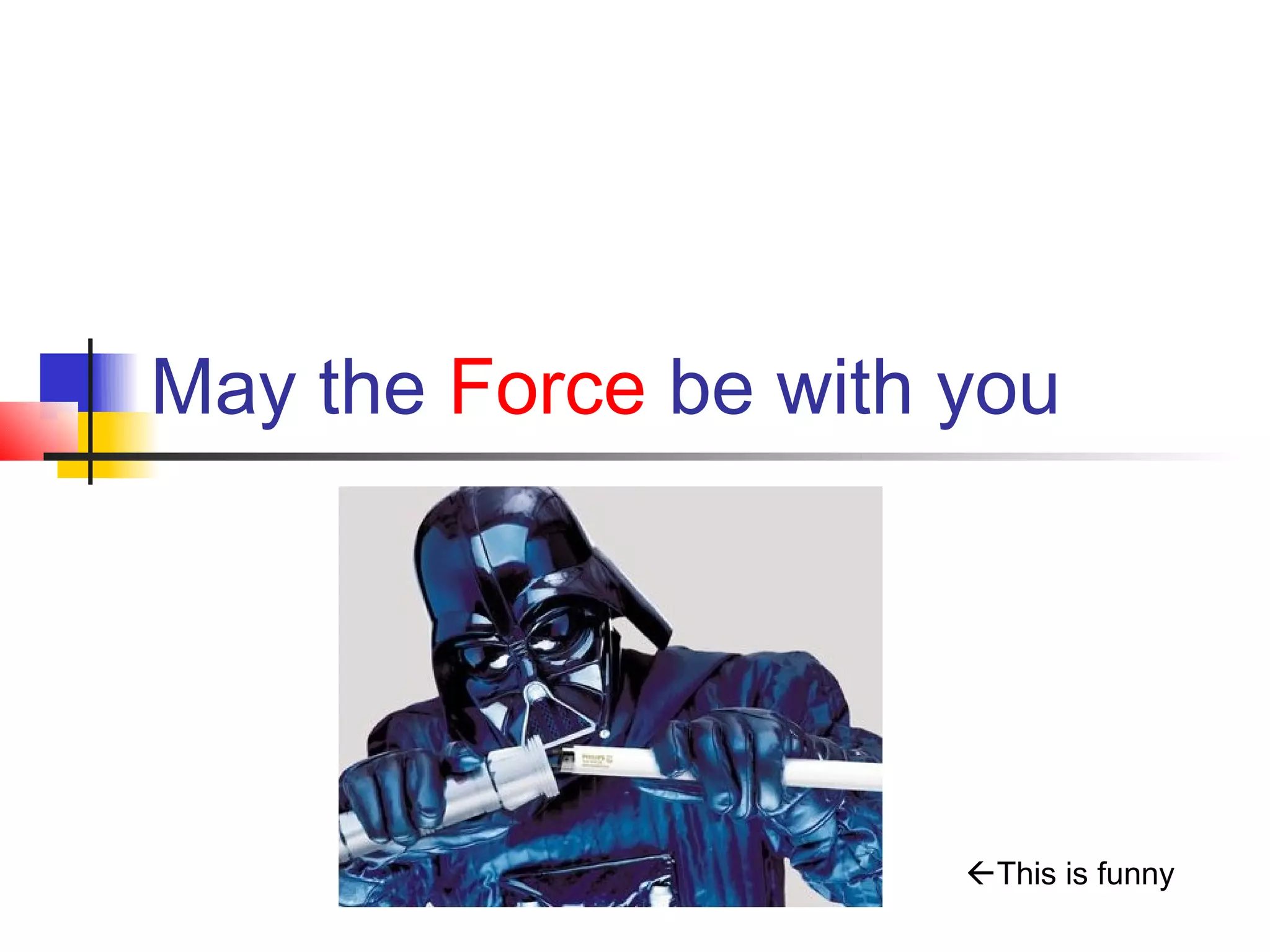
                      This is funny
Definition
   Force:  any push or pull on an object
    (it's that simple)
   ….But be careful!
   Commonly students will think forces
    have to come from living or moving
    things.  Not true.  Gravity pulls a chair to
    the floor and the floor pushes back.
Forces can cause:  
   1) speeding up
   2) slowing down
    3) change in direction     
   IN OTHER WORDS FORCES CAN*
   CAUSE: ACCELERATION
*(but they don’t always cause
   acceleration!)
Balanced forces:
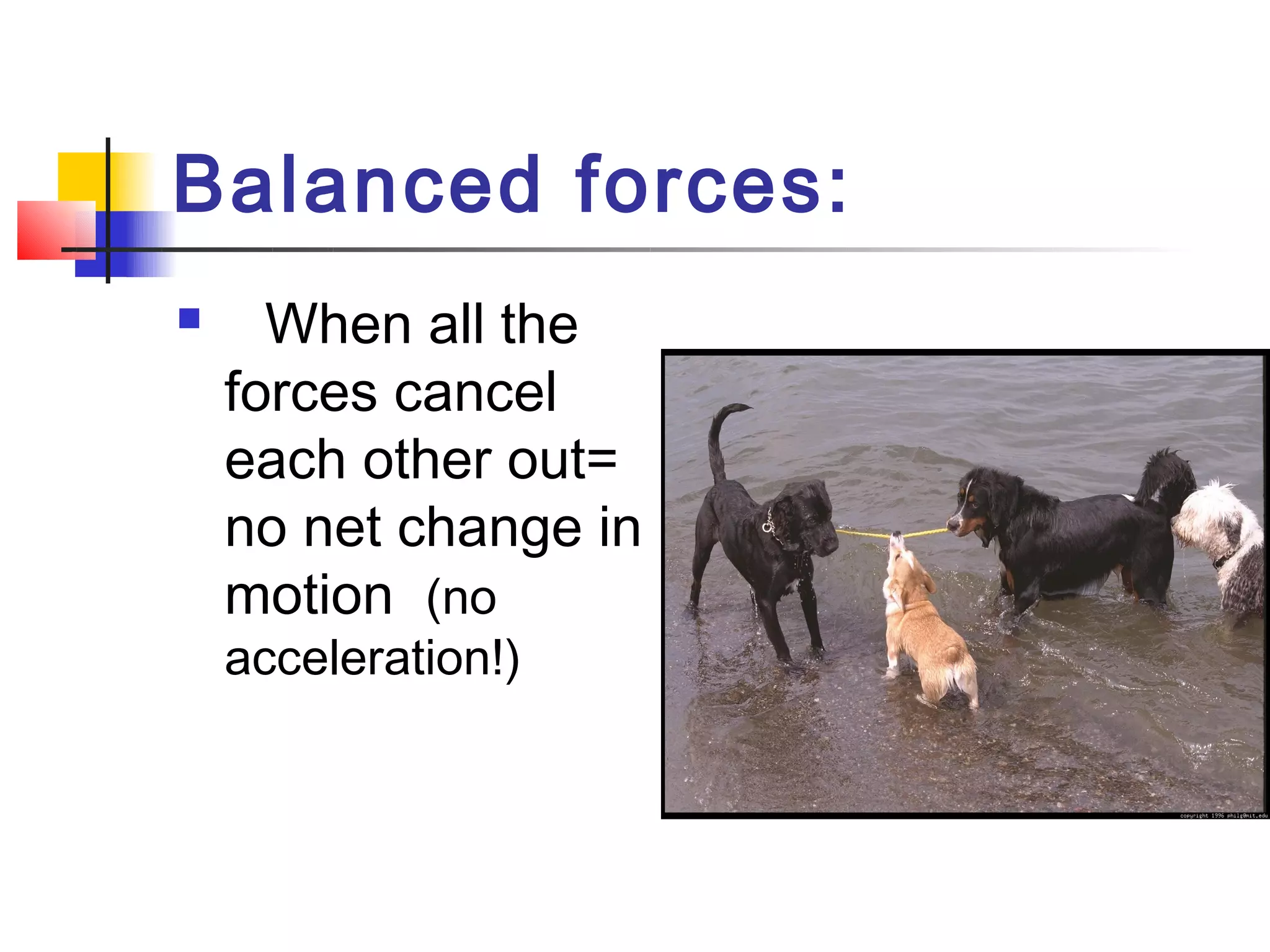
     When all the
    forces cancel
    each other out=
    no net change in
    motion  (no
    acceleration!)
Unbalanced forces: 
   Two or more forces that work and
    add together to change motion 
    (cause acceleration)
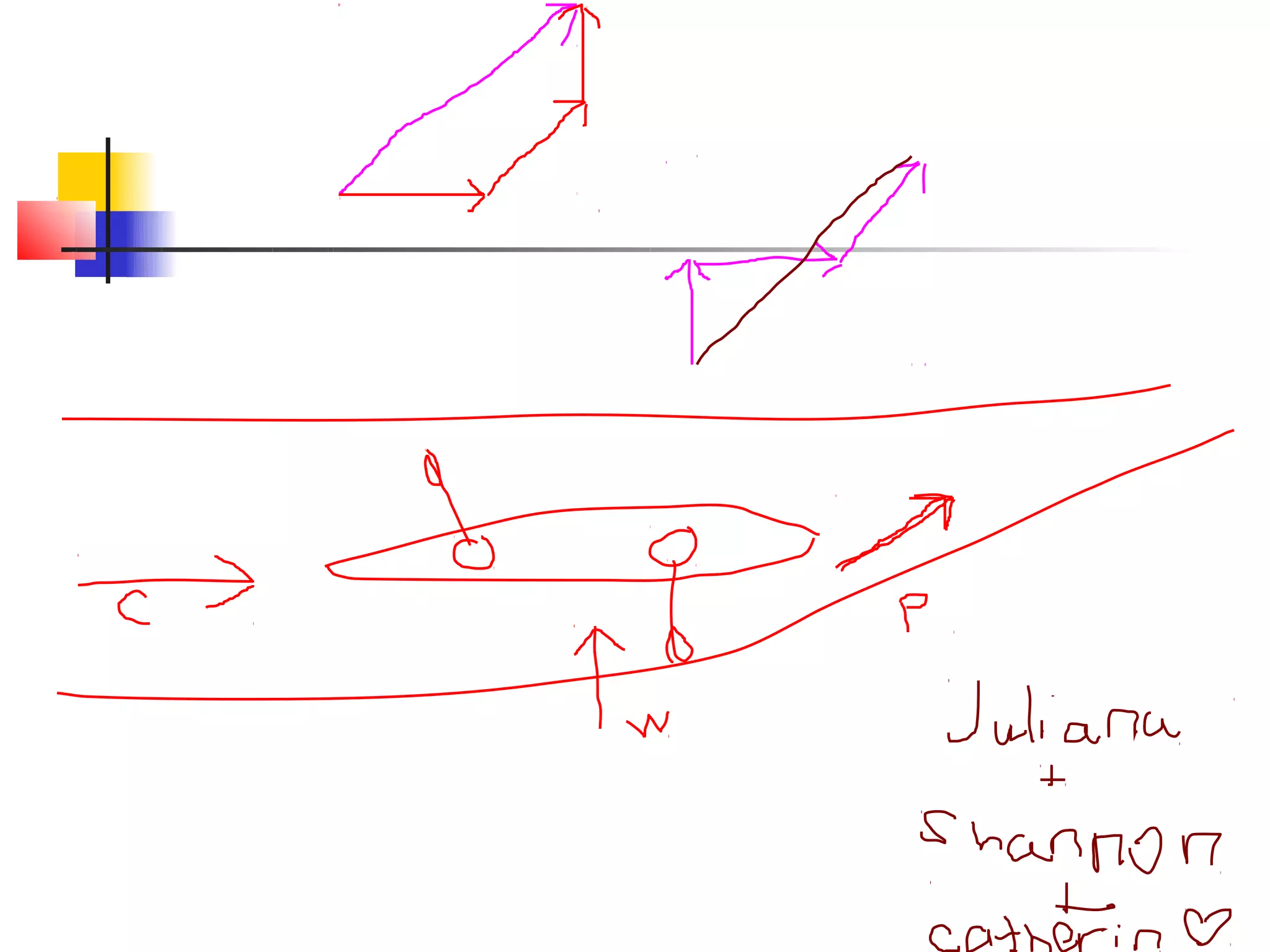
   Example of a canoe being rowed on a
    river on a windy day

   http://rt210.sl.psu.edu/simulations/physlets/force_table.html
Vectors
 Forces are vectors
 Vectors are ____________with

  ______________
 Which one is a vector: Speed or

  Velocity?
Newtons
   In the metric system, the unit of force is
    the Newton.
   It can be used to quantify the pull or
    push of ANYTHING!
   What is correct: To weigh something in
    pounds, Newtons, or Kilograms?
 balanced forces
example: 
   You on a chair 
   you are pulled down by gravity and the
    chair pushes back on your butt.  Think
    about it....If you sat on the hard chair for
    three hours without moving, wouldn't
    you feel the chair's push?
unbalanced forces
example: 
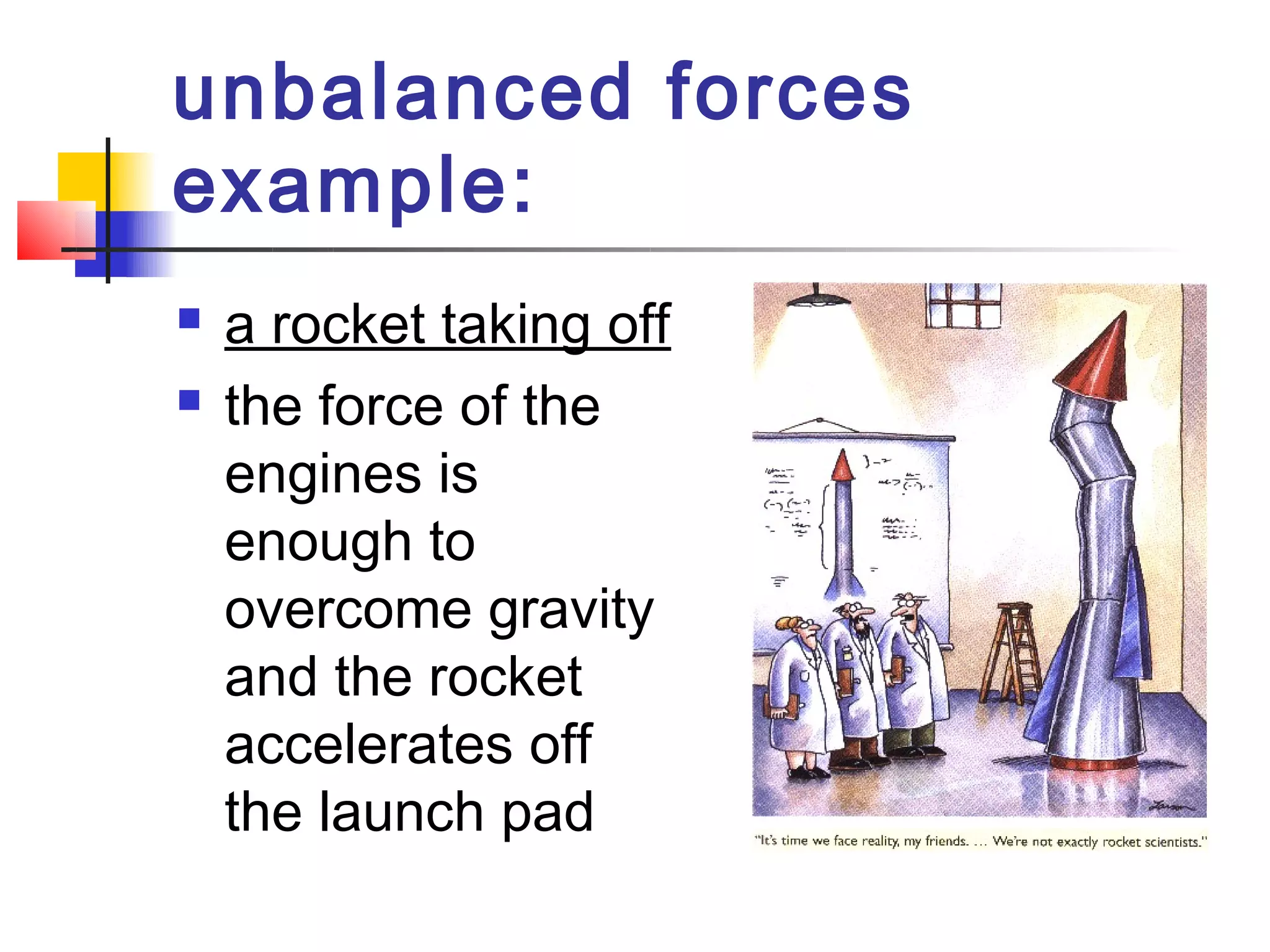
   a rocket taking off
   the force of the
    engines is
    enough to
    overcome gravity
    and the rocket
    accelerates off
    the launch pad
Questions
   Is it possible to have one balanced
    force? If so, draw as a vector diagram.
   Is it possible to have 2 balanced
    forces? If so, draw as a vector diagram.
   Is it possible to have 3 balanced
    forces? If so, draw as a vector diagram.
More questions
   Can an object be in motion with
    balanced forces acting on it? Defend
    your answer.
   Can an object be stationary with
    unbalanced forces acting on it? Defend
    your answer.
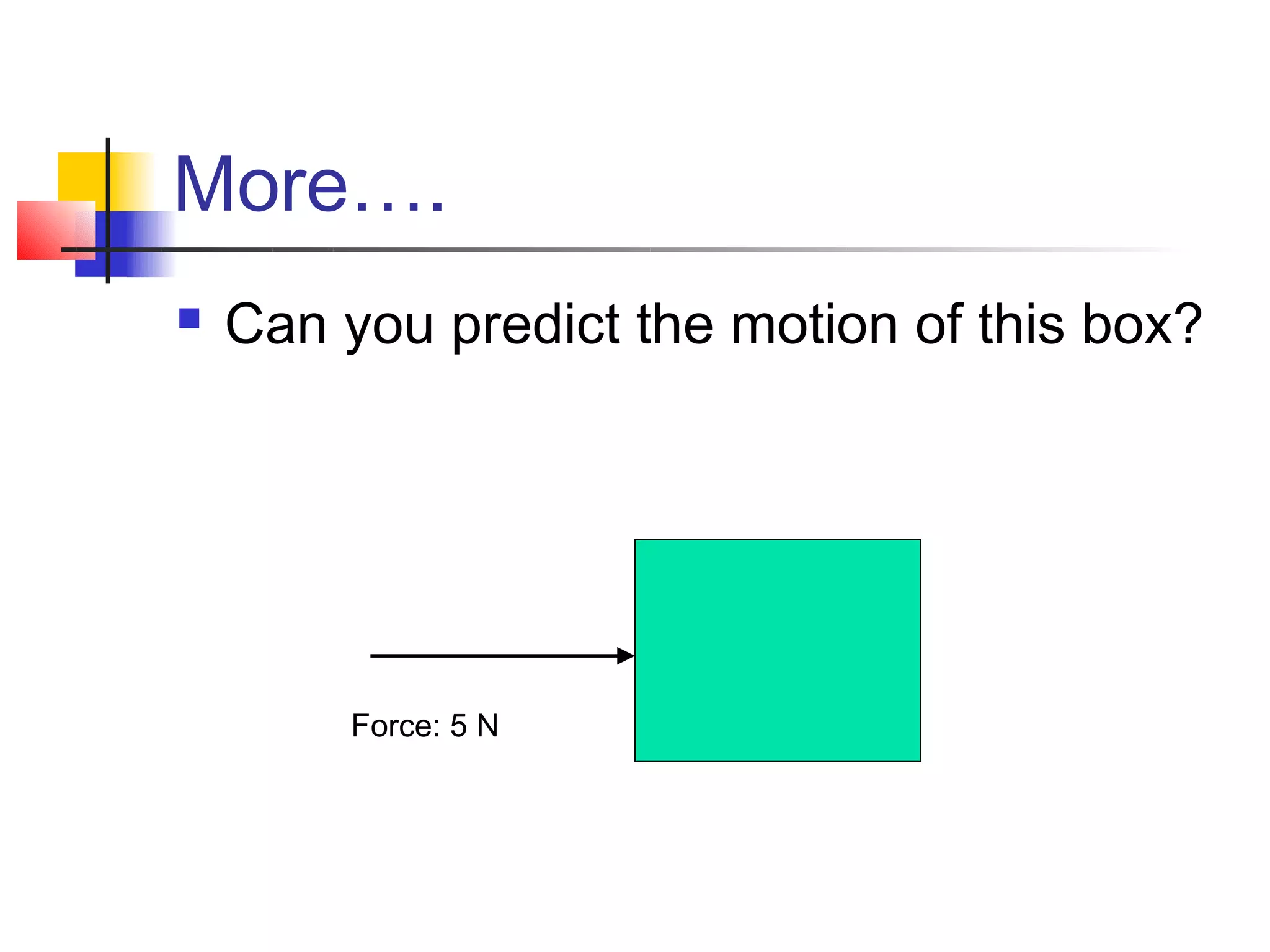
More….
   Can you predict the motion of this box?


         Force: 5 N
Friction:
    a force; it causes negative acceleration
    (slows things down and makes them
    stop) (Can it also aid positive
    acceleration?)
   it's mostly caused by: interaction of the
    matter that is in contact
   Also caused by differences in materials
    that are in contact.
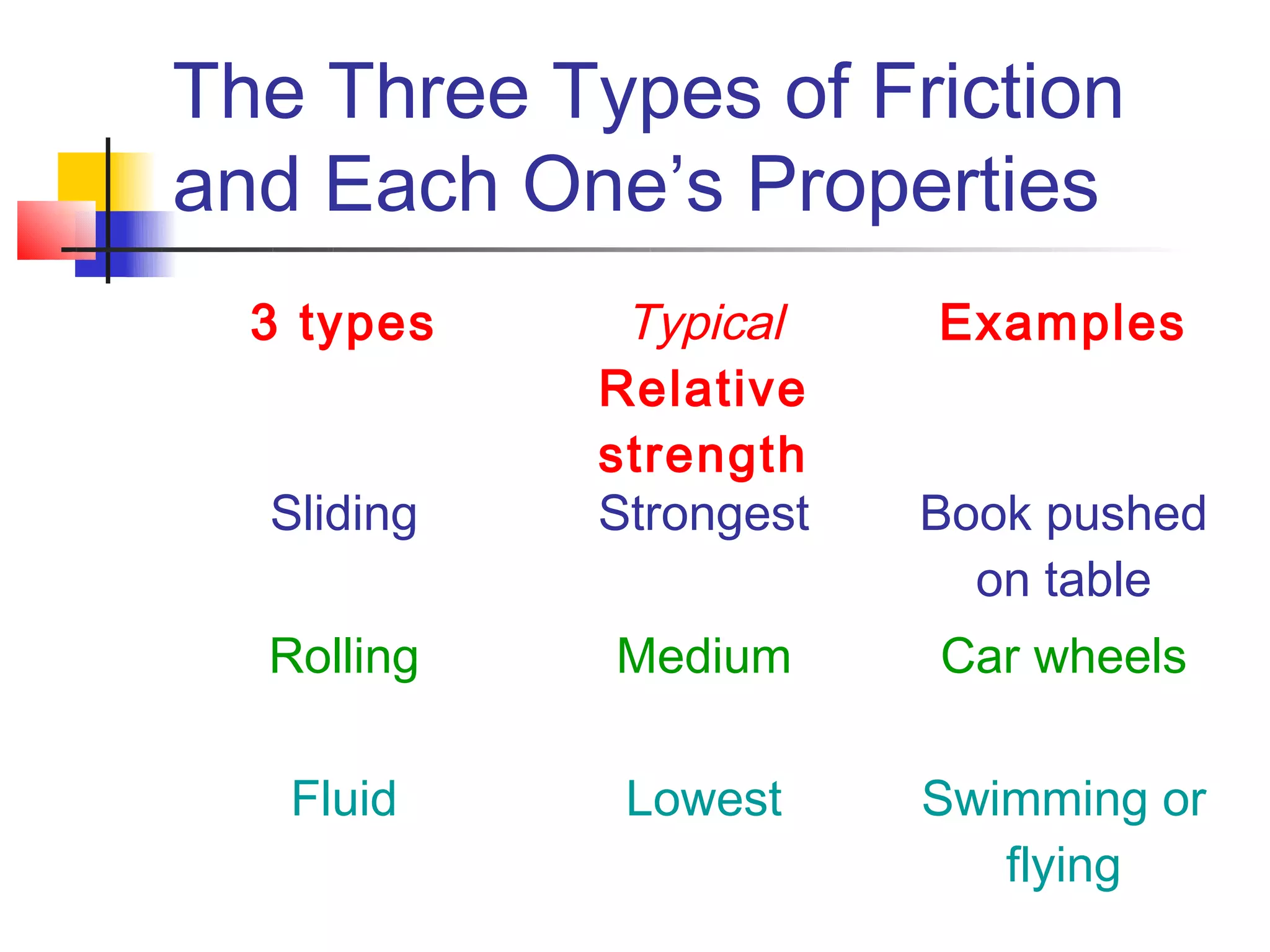
The Three Types of Friction
and Each One’s Properties
  3 types    Typical    Examples
            Relative
            strength
  Sliding   Strongest   Book pushed
                          on table
  Rolling   Medium      Car wheels

   Fluid     Lowest     Swimming or
                           flying
From mass to Force (Part II)
   Mass:
     Amount of Matter in an object
     Something is hard to move if it

      has more mass
     Basically the “amount of stuff”

      found in something
Inertia

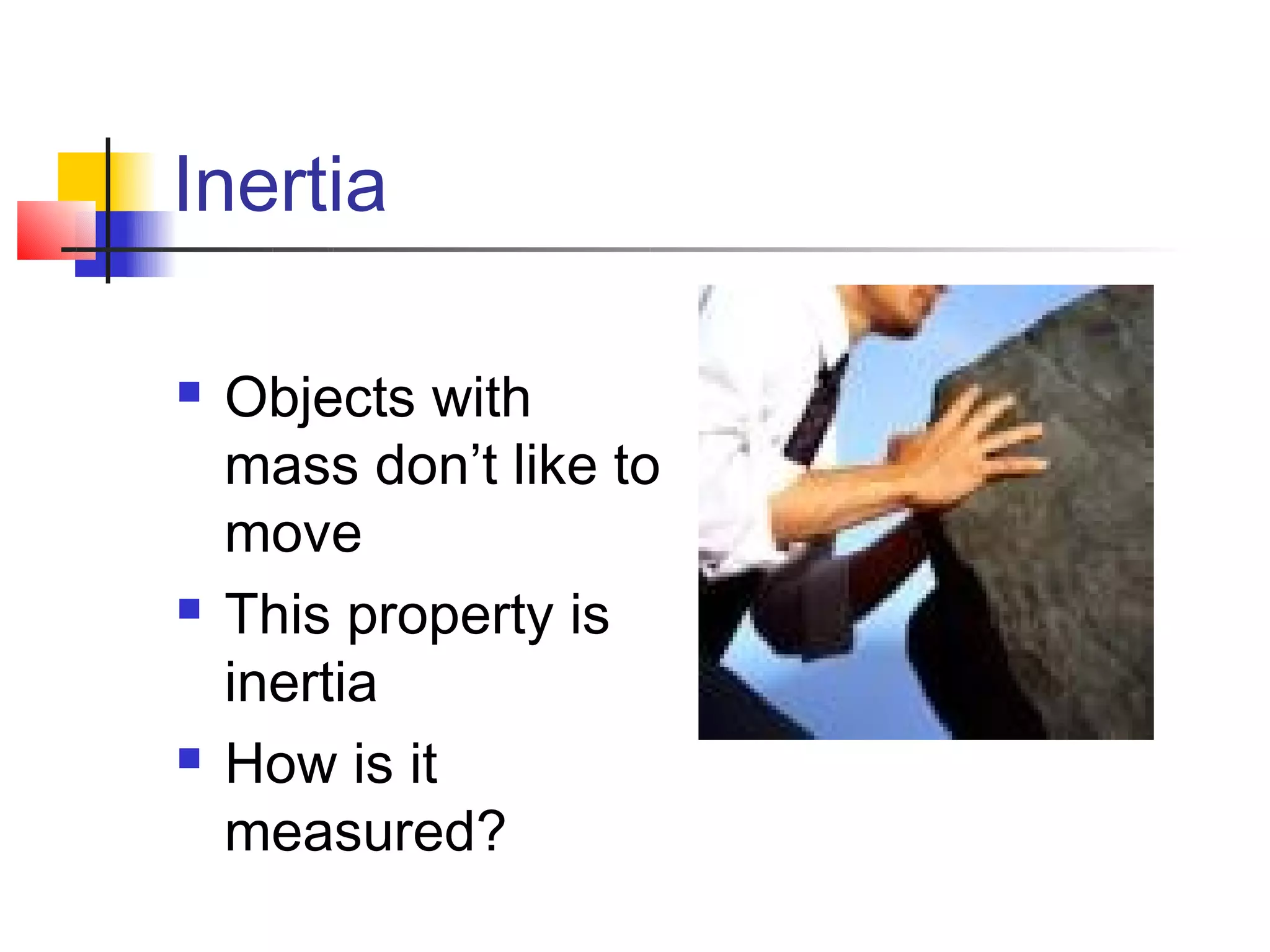
   Objects with
    mass don’t like to
    move
   This property is
    inertia
   How is it
    measured?
Weight
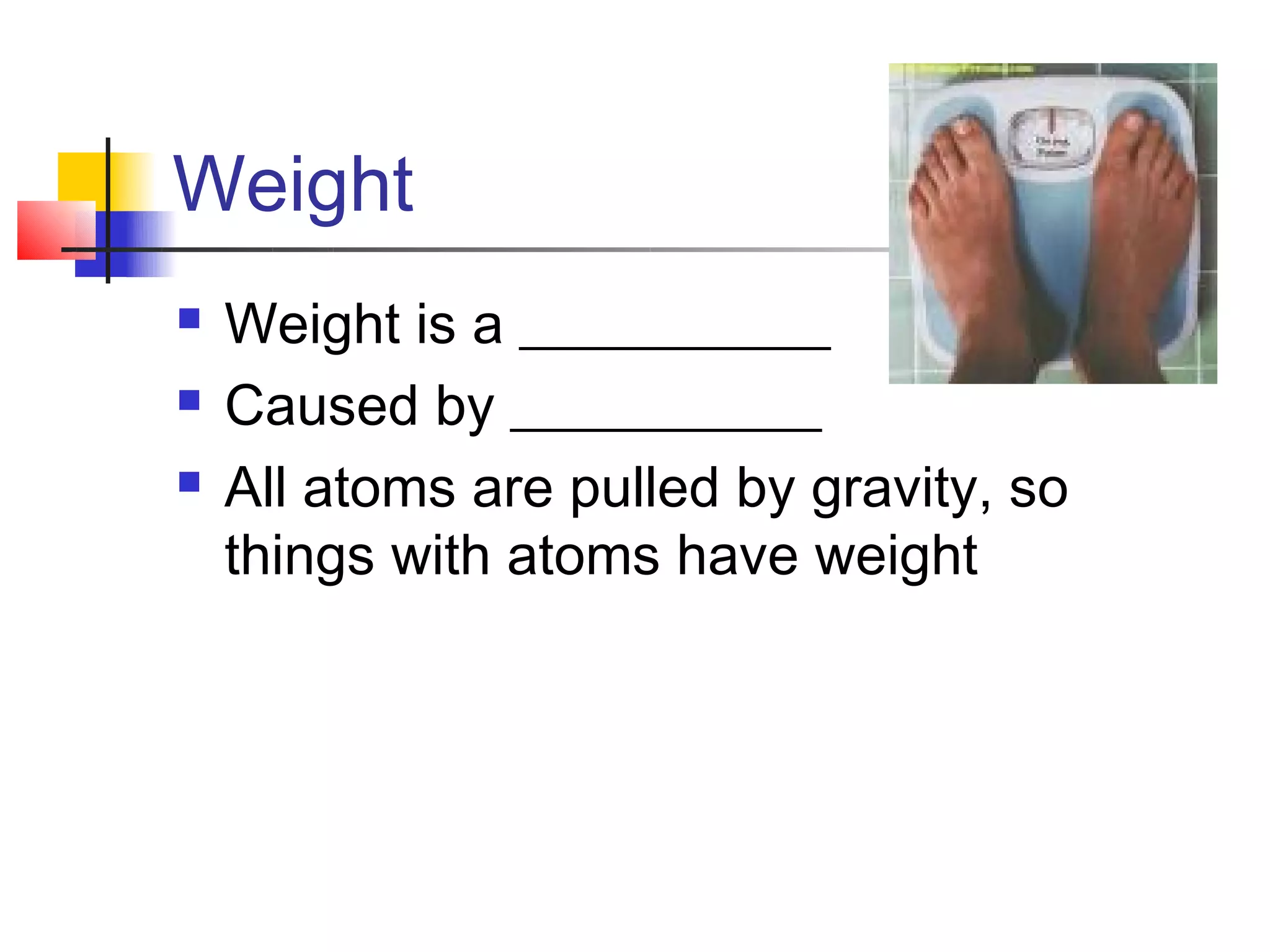
   Weight is a ___________
   Caused by ___________
   All atoms are pulled by gravity, so
    things with atoms have weight
Speed and Velocity
 Rate of motion
 Velocity includes direction

 V= D/T (with direction)

   Units: Meters per second
Momentum
   When things move faster, they become
    harder to stop
   And when they are more massive they are
    also harder to stop
   Momentum is like “inertia in motion”
   ρ=Mass times velocity
   Momentum is not a force, but it takes a force
    to stop momentum………
   Units: Kilogram Meters per second
Acceleration
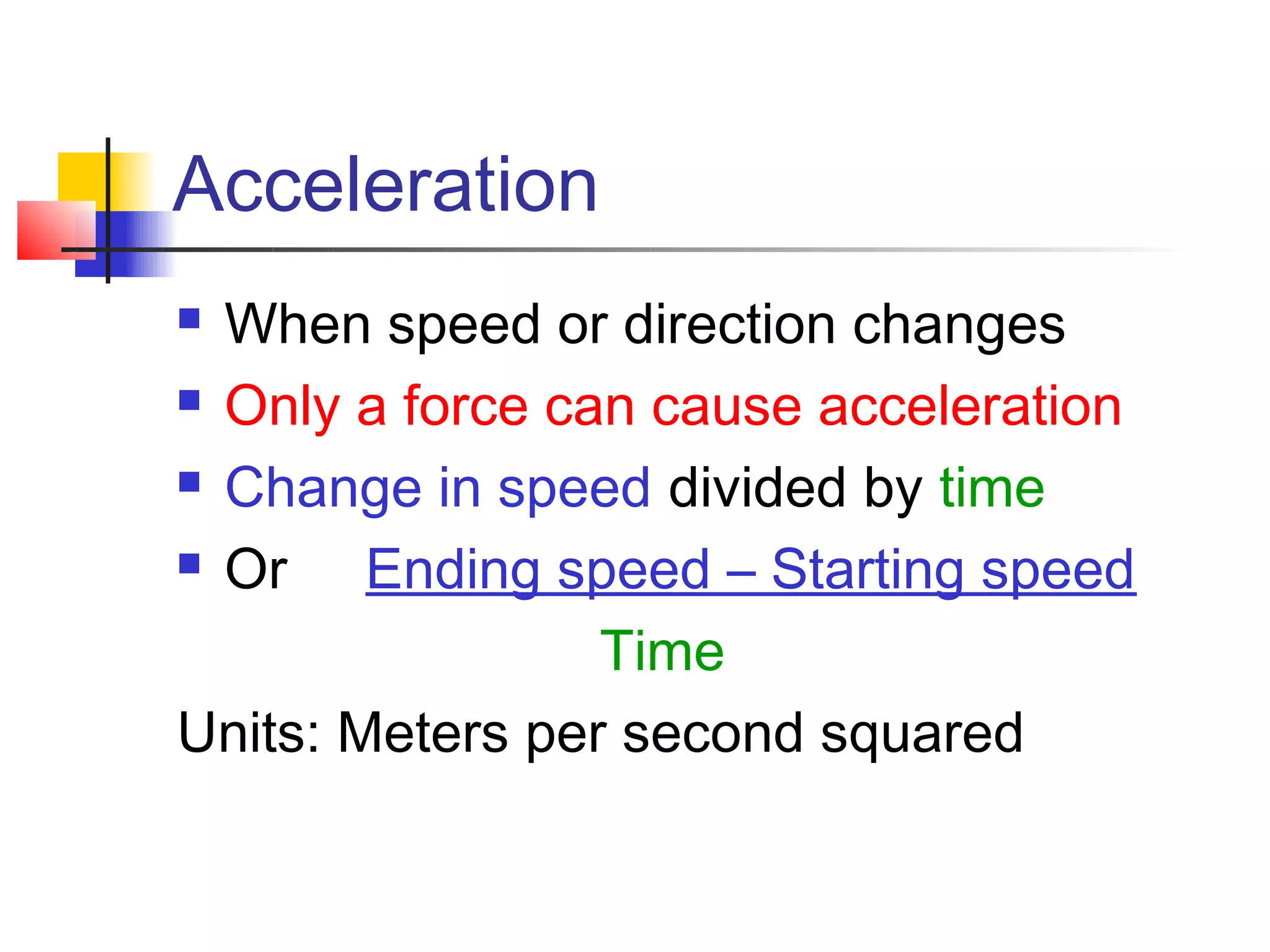
 When speed or direction changes
 Only a force can cause acceleration

 Change in speed divided by time

 Or    Ending speed – Starting speed
                 Time
Units: Meters per second squared
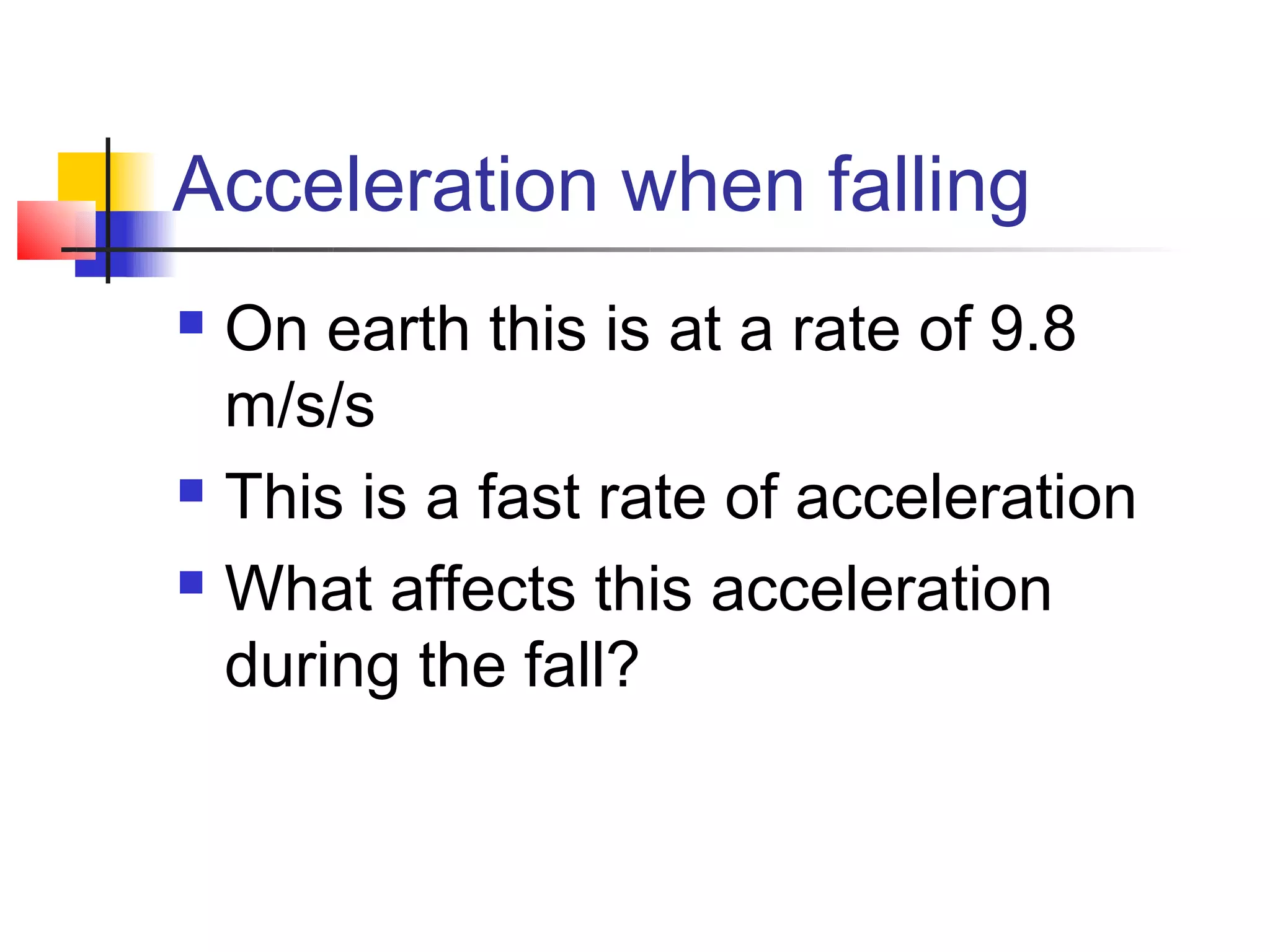
Acceleration when falling
 On earth this is at a rate of 9.8
  m/s/s
 This is a fast rate of acceleration

 What affects this acceleration

  during the fall?
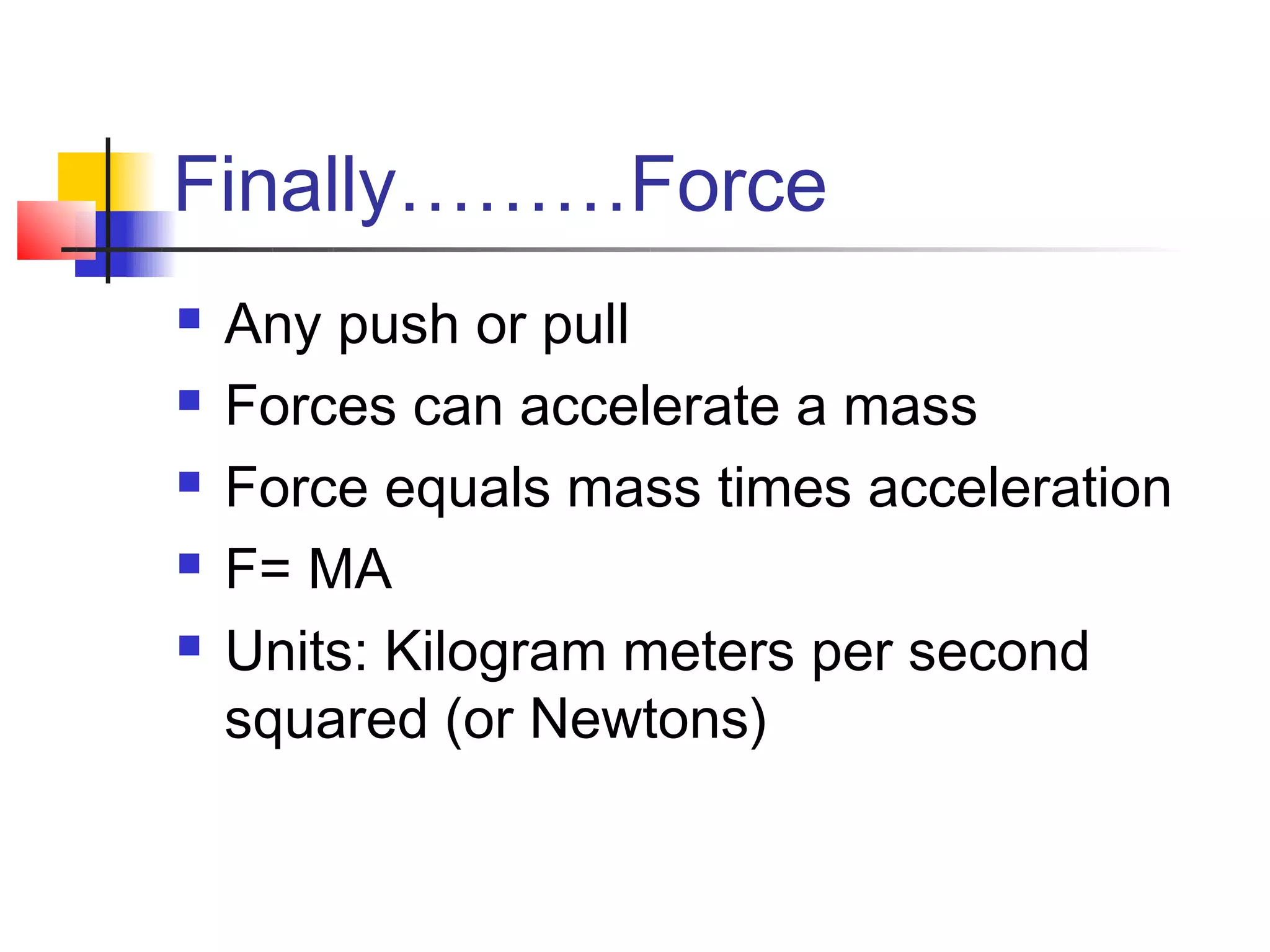
Finally………Force
   Any push or pull
   Forces can accelerate a mass
   Force equals mass times acceleration
   F= MA
   Units: Kilogram meters per second
    squared (or Newtons)
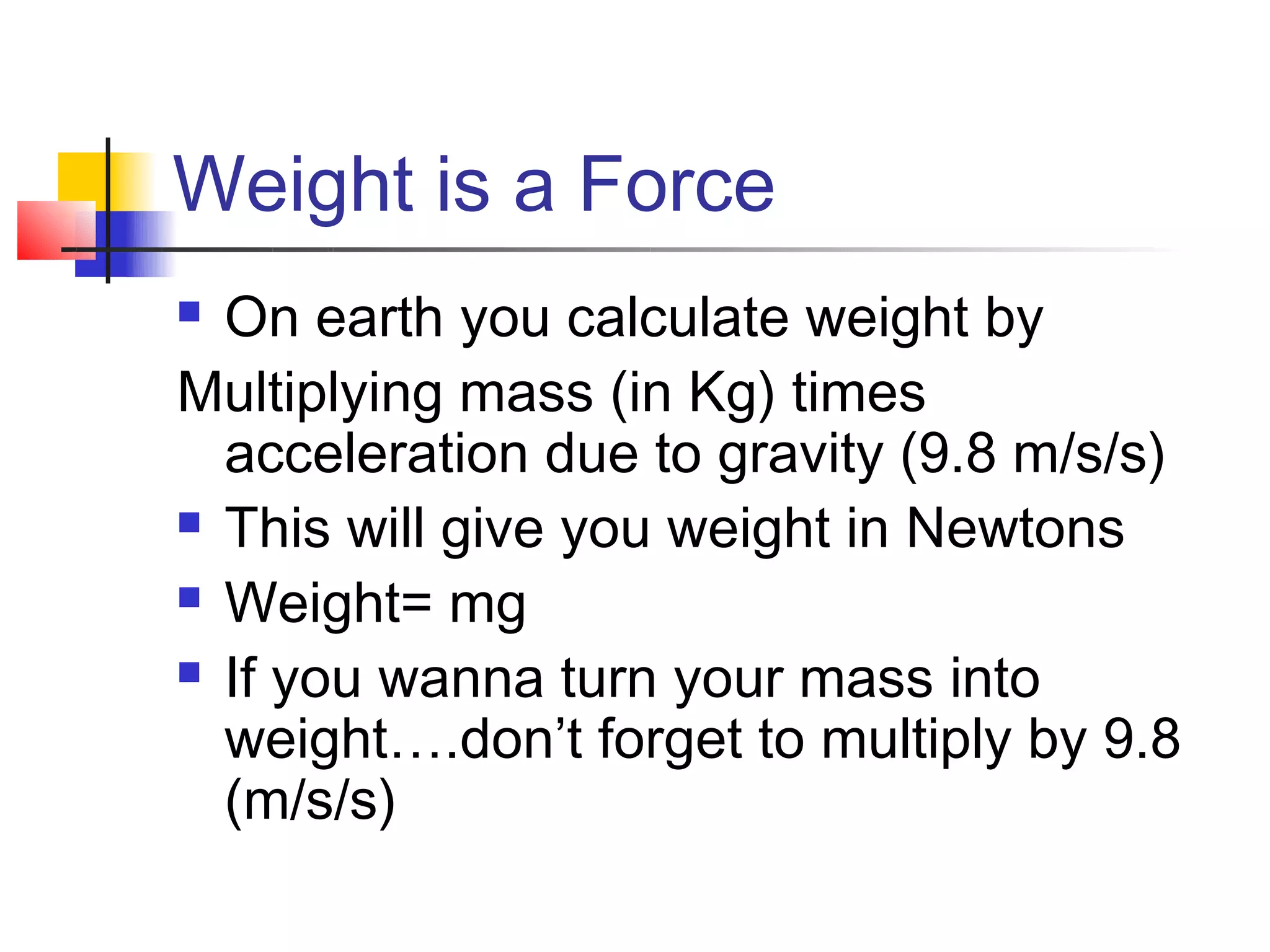
Weight is a Force
 On earth you calculate weight by
Multiplying mass (in Kg) times
  acceleration due to gravity (9.8 m/s/s)
 This will give you weight in Newtons

 Weight= mg

 If you wanna turn your mass into

  weight….don’t forget to multiply by 9.8
  (m/s/s)

Forces

  • 1.
    May the Forcebe with you This is funny
  • 2.
    Definition  Force:  any push or pull on an object (it's that simple)  ….But be careful!  Commonly students will think forces have to come from living or moving things.  Not true.  Gravity pulls a chair to the floor and the floor pushes back.
  • 3.
    Forces can cause:   1) speeding up 2) slowing down 3) change in direction         IN OTHER WORDS FORCES CAN* CAUSE: ACCELERATION *(but they don’t always cause acceleration!)
  • 4.
    Balanced forces:    When all the forces cancel each other out= no net change in motion  (no acceleration!)
  • 5.
    Unbalanced forces:   Two or more forces that work and add together to change motion  (cause acceleration)  Example of a canoe being rowed on a river on a windy day  http://rt210.sl.psu.edu/simulations/physlets/force_table.html
  • 6.
    Vectors  Forces arevectors  Vectors are ____________with ______________  Which one is a vector: Speed or Velocity?
  • 7.
    Newtons  In the metric system, the unit of force is the Newton.  It can be used to quantify the pull or push of ANYTHING!  What is correct: To weigh something in pounds, Newtons, or Kilograms?
  • 9.
     balanced forces example:   You on a chair   you are pulled down by gravity and the chair pushes back on your butt.  Think about it....If you sat on the hard chair for three hours without moving, wouldn't you feel the chair's push?
  • 10.
    unbalanced forces example:   a rocket taking off  the force of the engines is enough to overcome gravity and the rocket accelerates off the launch pad
  • 11.
    Questions  Is it possible to have one balanced force? If so, draw as a vector diagram.  Is it possible to have 2 balanced forces? If so, draw as a vector diagram.  Is it possible to have 3 balanced forces? If so, draw as a vector diagram.
  • 12.
    More questions  Can an object be in motion with balanced forces acting on it? Defend your answer.  Can an object be stationary with unbalanced forces acting on it? Defend your answer.
  • 13.
    More….  Can you predict the motion of this box? Force: 5 N
  • 14.
    Friction:   a force; it causes negative acceleration (slows things down and makes them stop) (Can it also aid positive acceleration?)  it's mostly caused by: interaction of the matter that is in contact  Also caused by differences in materials that are in contact.
  • 15.
    The Three Typesof Friction and Each One’s Properties 3 types Typical Examples Relative strength Sliding Strongest Book pushed on table Rolling Medium Car wheels Fluid Lowest Swimming or flying
  • 16.
    From mass toForce (Part II)  Mass:  Amount of Matter in an object  Something is hard to move if it has more mass  Basically the “amount of stuff” found in something
  • 17.
    Inertia  Objects with mass don’t like to move  This property is inertia  How is it measured?
  • 18.
    Weight  Weight is a ___________  Caused by ___________  All atoms are pulled by gravity, so things with atoms have weight
  • 19.
    Speed and Velocity Rate of motion  Velocity includes direction  V= D/T (with direction)  Units: Meters per second
  • 20.
    Momentum  When things move faster, they become harder to stop  And when they are more massive they are also harder to stop  Momentum is like “inertia in motion”  ρ=Mass times velocity  Momentum is not a force, but it takes a force to stop momentum………  Units: Kilogram Meters per second
  • 21.
    Acceleration  When speedor direction changes  Only a force can cause acceleration  Change in speed divided by time  Or Ending speed – Starting speed Time Units: Meters per second squared
  • 22.
    Acceleration when falling On earth this is at a rate of 9.8 m/s/s  This is a fast rate of acceleration  What affects this acceleration during the fall?
  • 23.
    Finally………Force  Any push or pull  Forces can accelerate a mass  Force equals mass times acceleration  F= MA  Units: Kilogram meters per second squared (or Newtons)
  • 24.
    Weight is aForce  On earth you calculate weight by Multiplying mass (in Kg) times acceleration due to gravity (9.8 m/s/s)  This will give you weight in Newtons  Weight= mg  If you wanna turn your mass into weight….don’t forget to multiply by 9.8 (m/s/s)