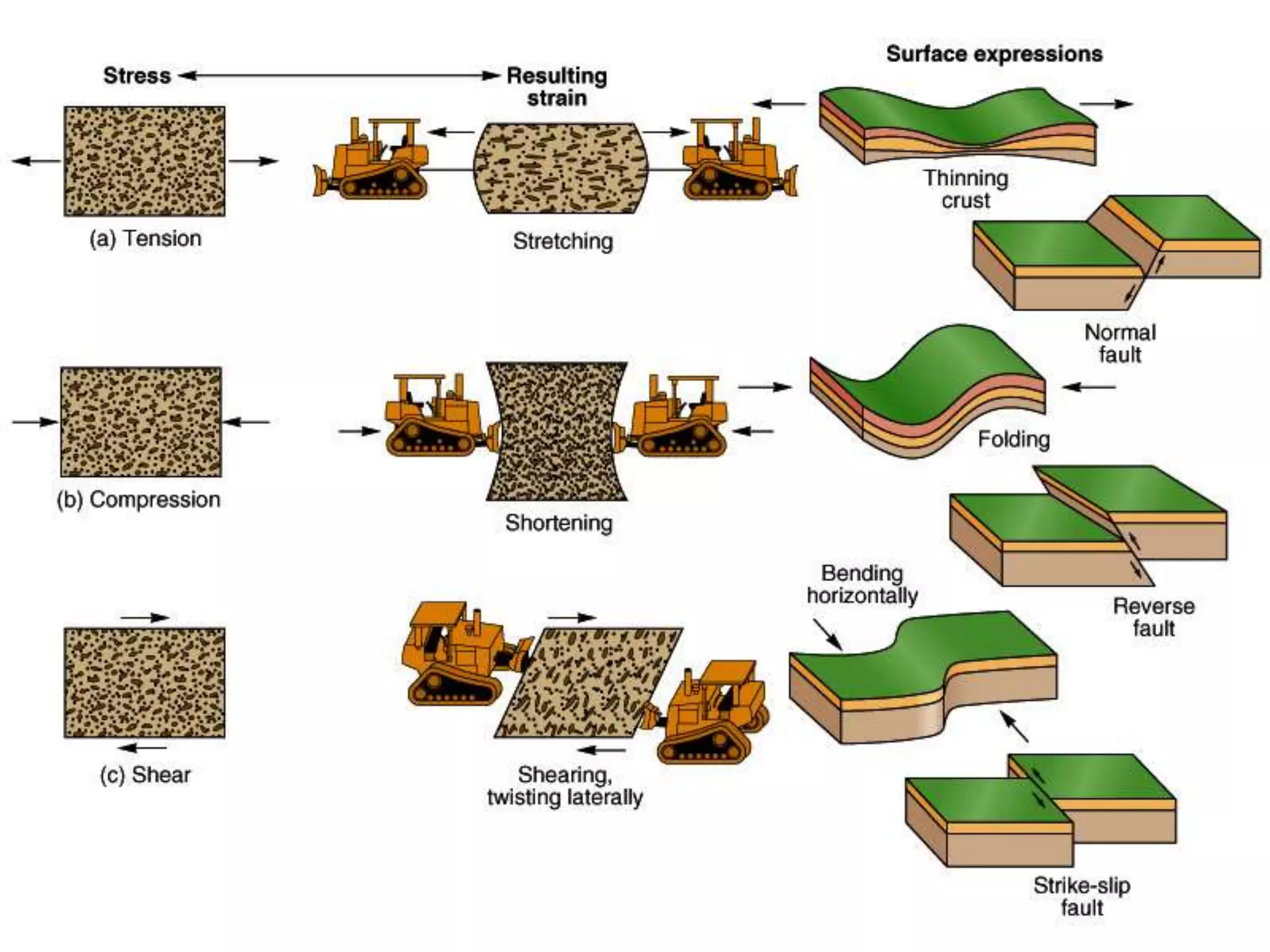
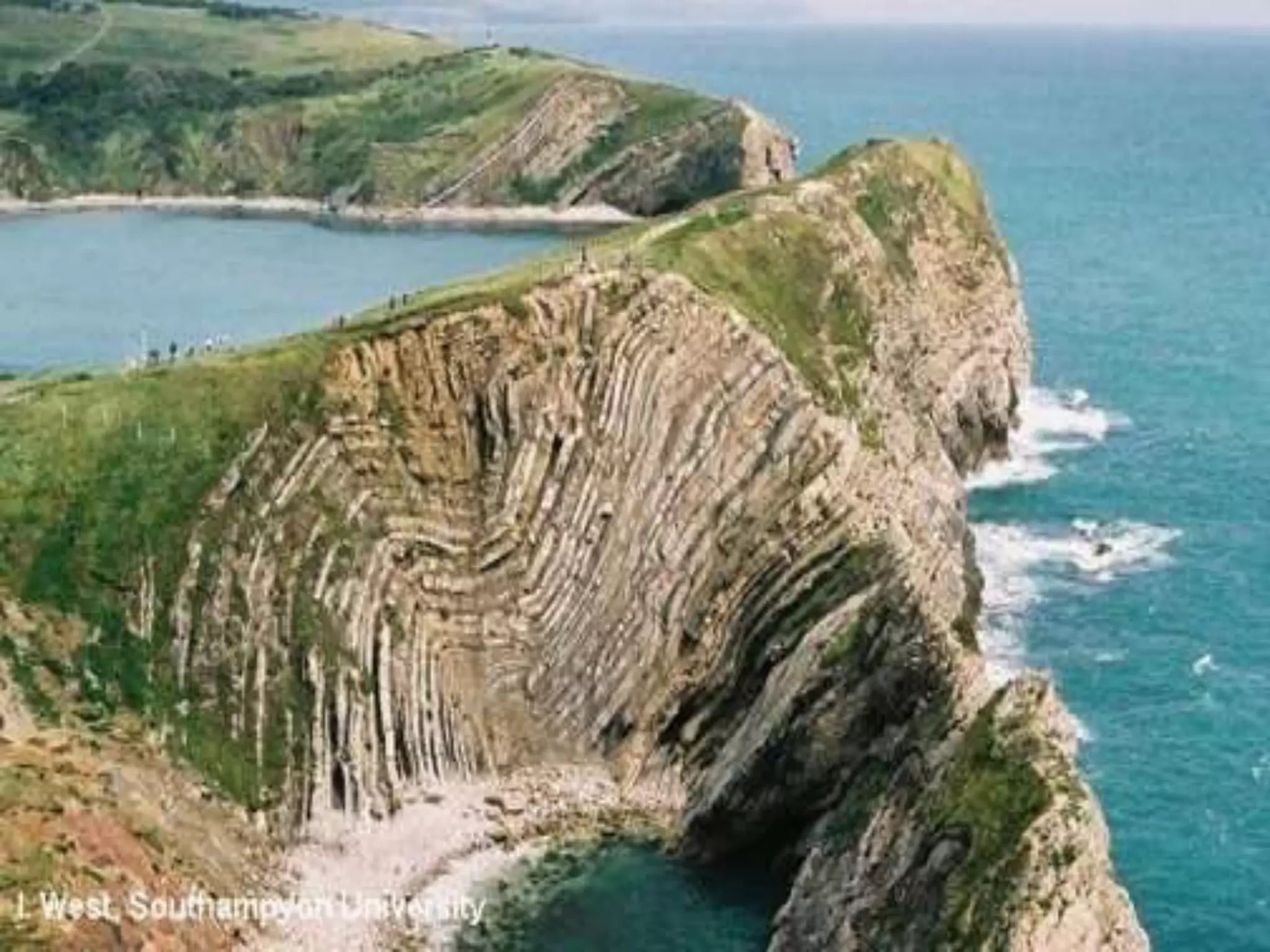
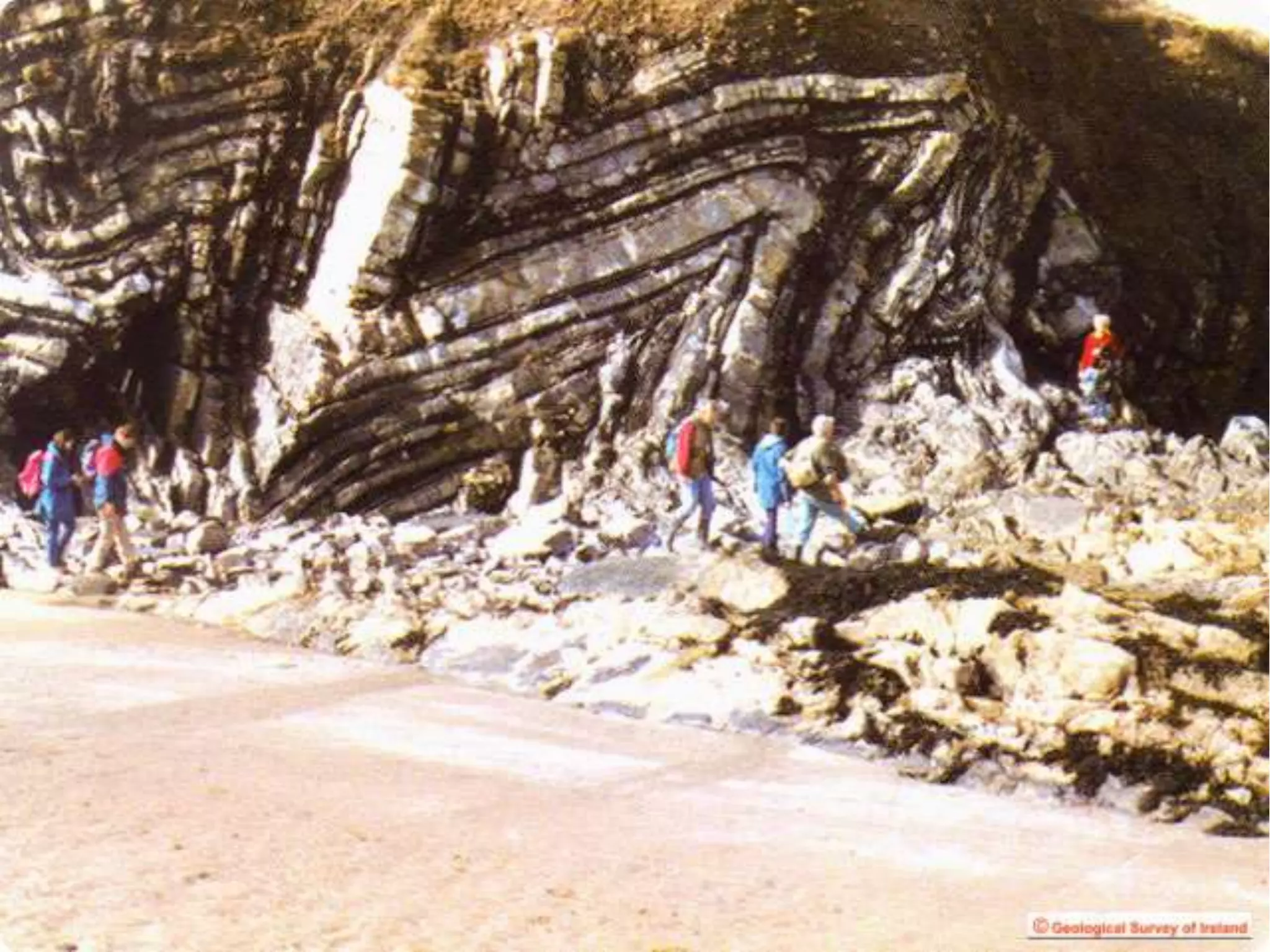
 Folding is ALWAYS the result of compression
(squashing together)
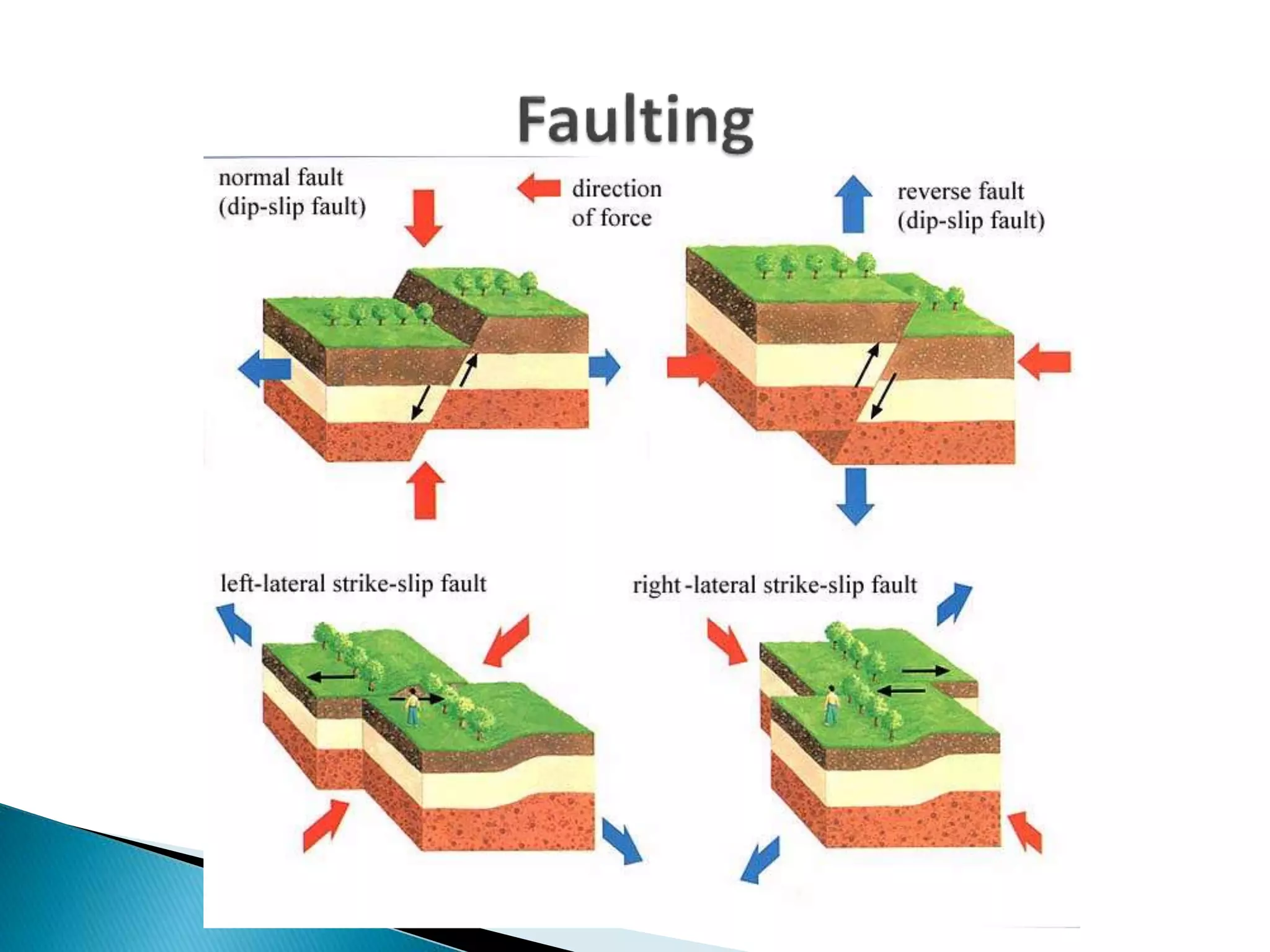
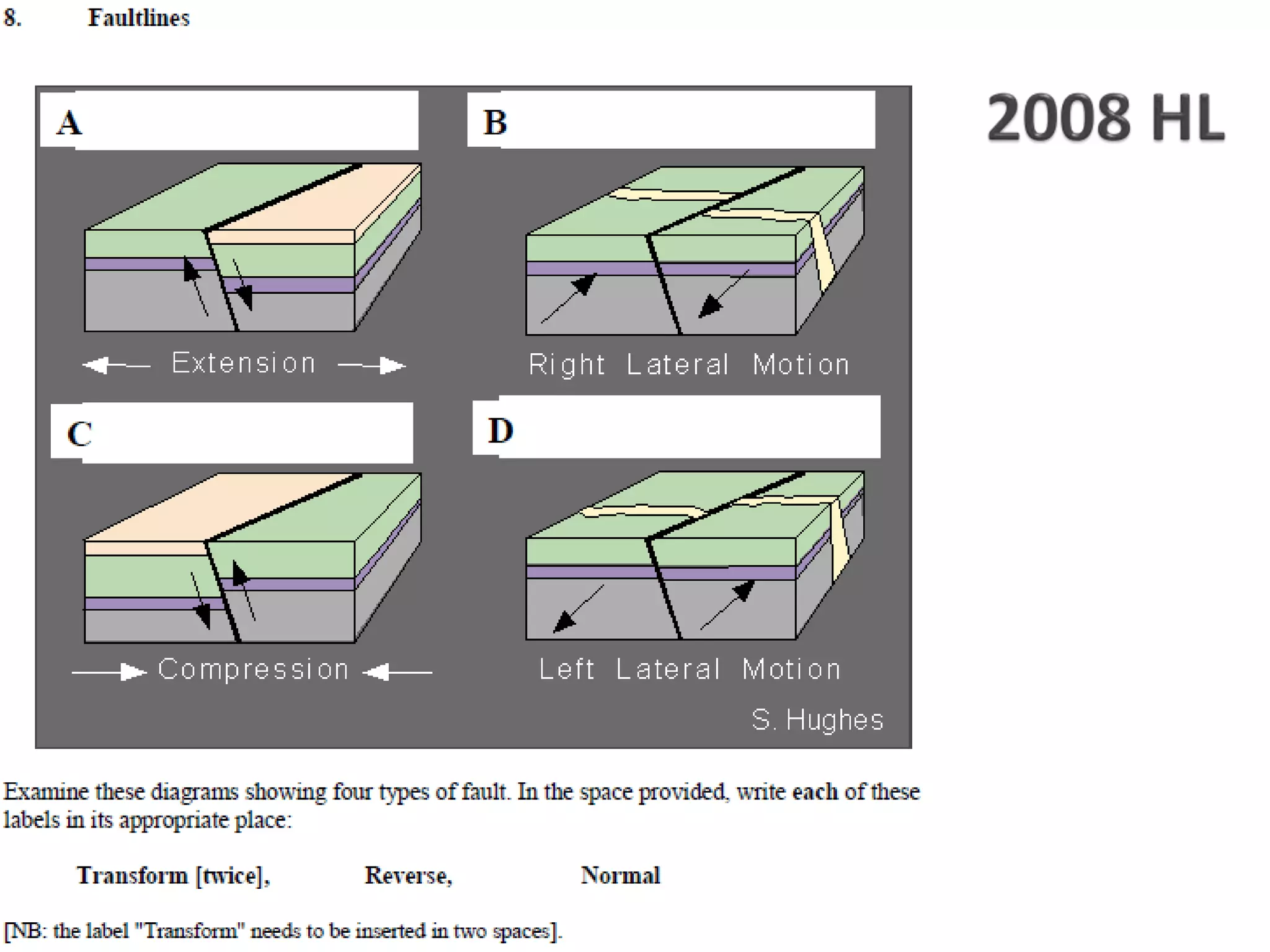
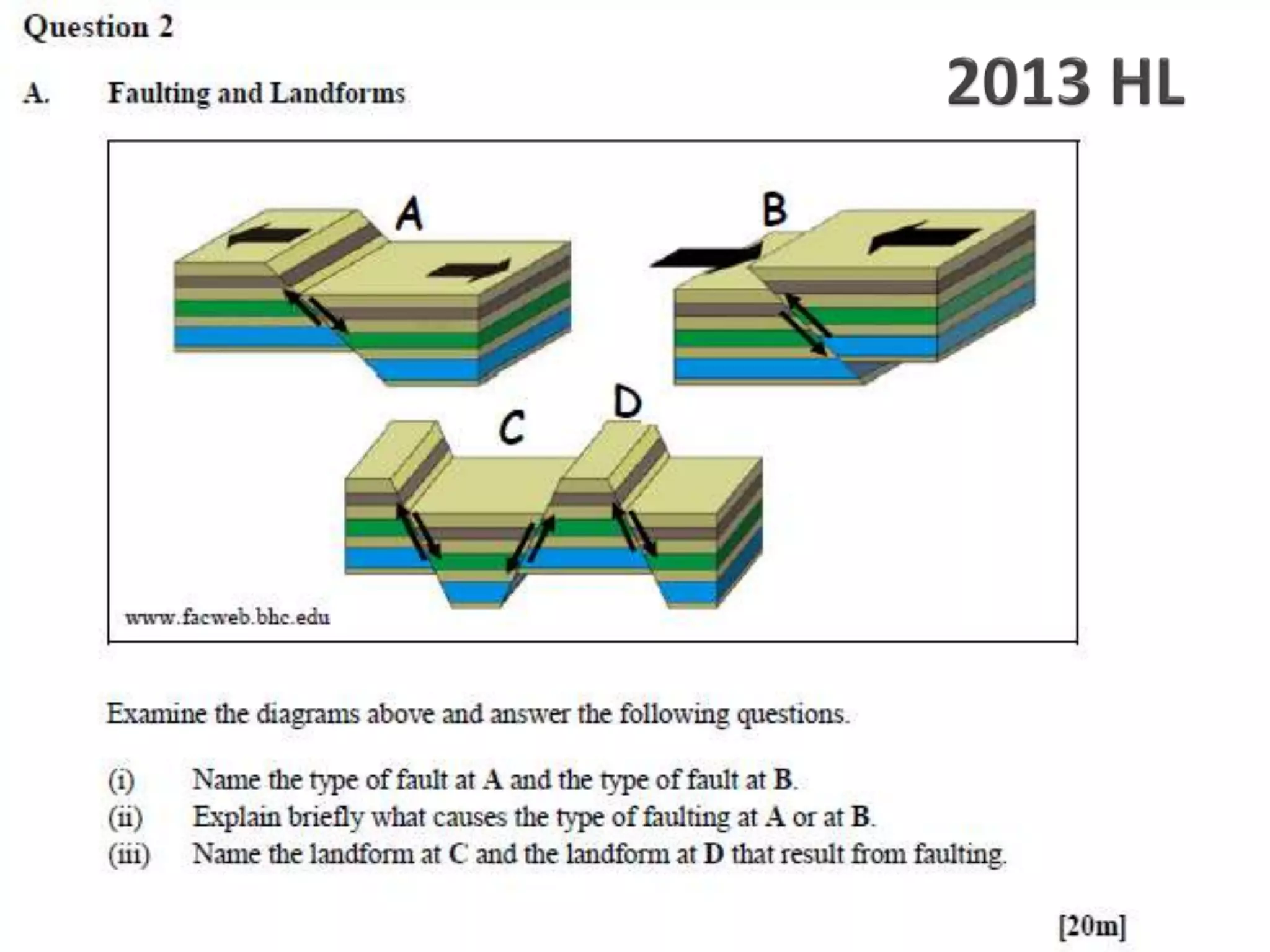
 Faulting can be caused by either compression, tension
(pulling apart) or shearing (sliding past one another)
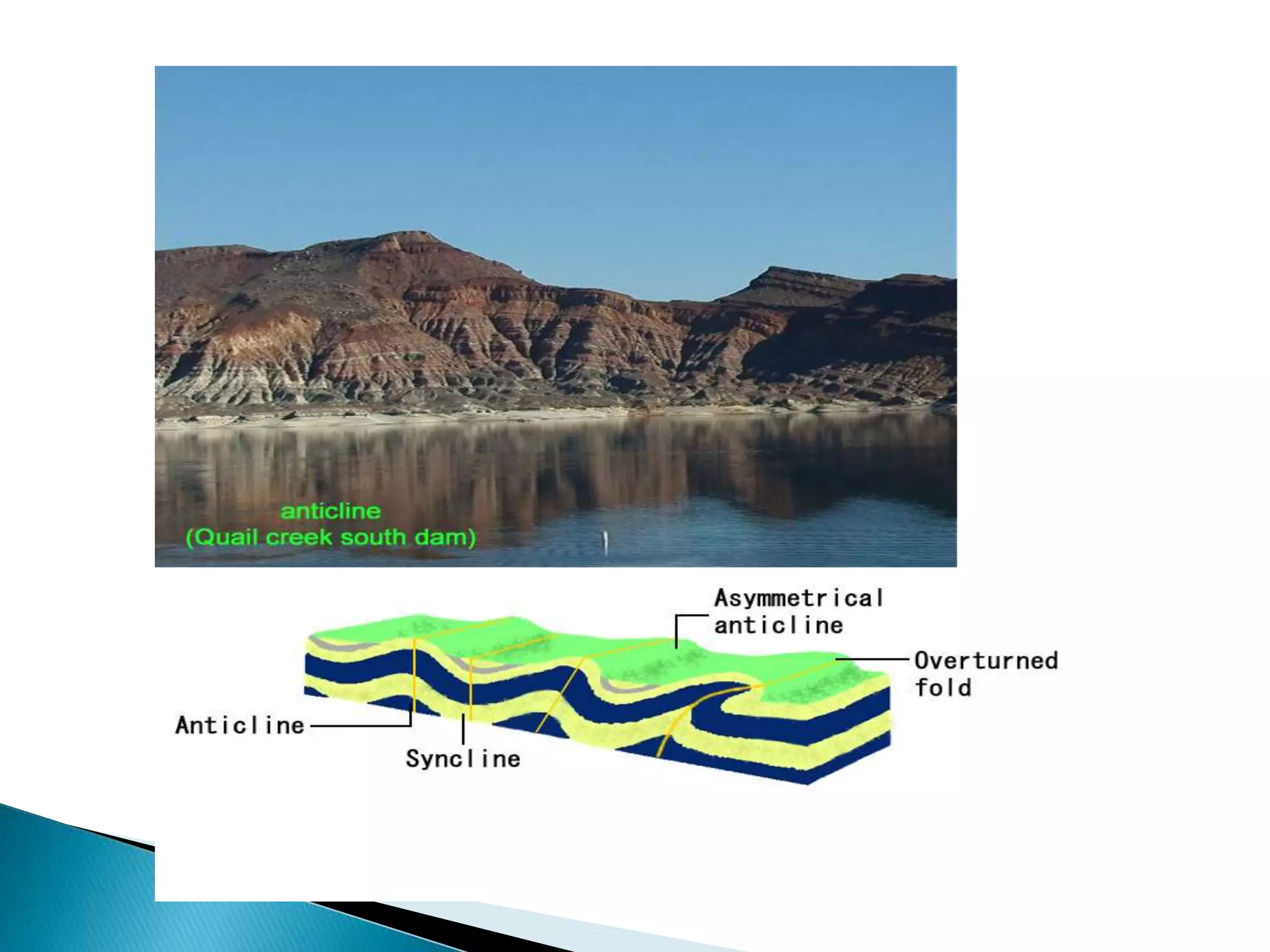
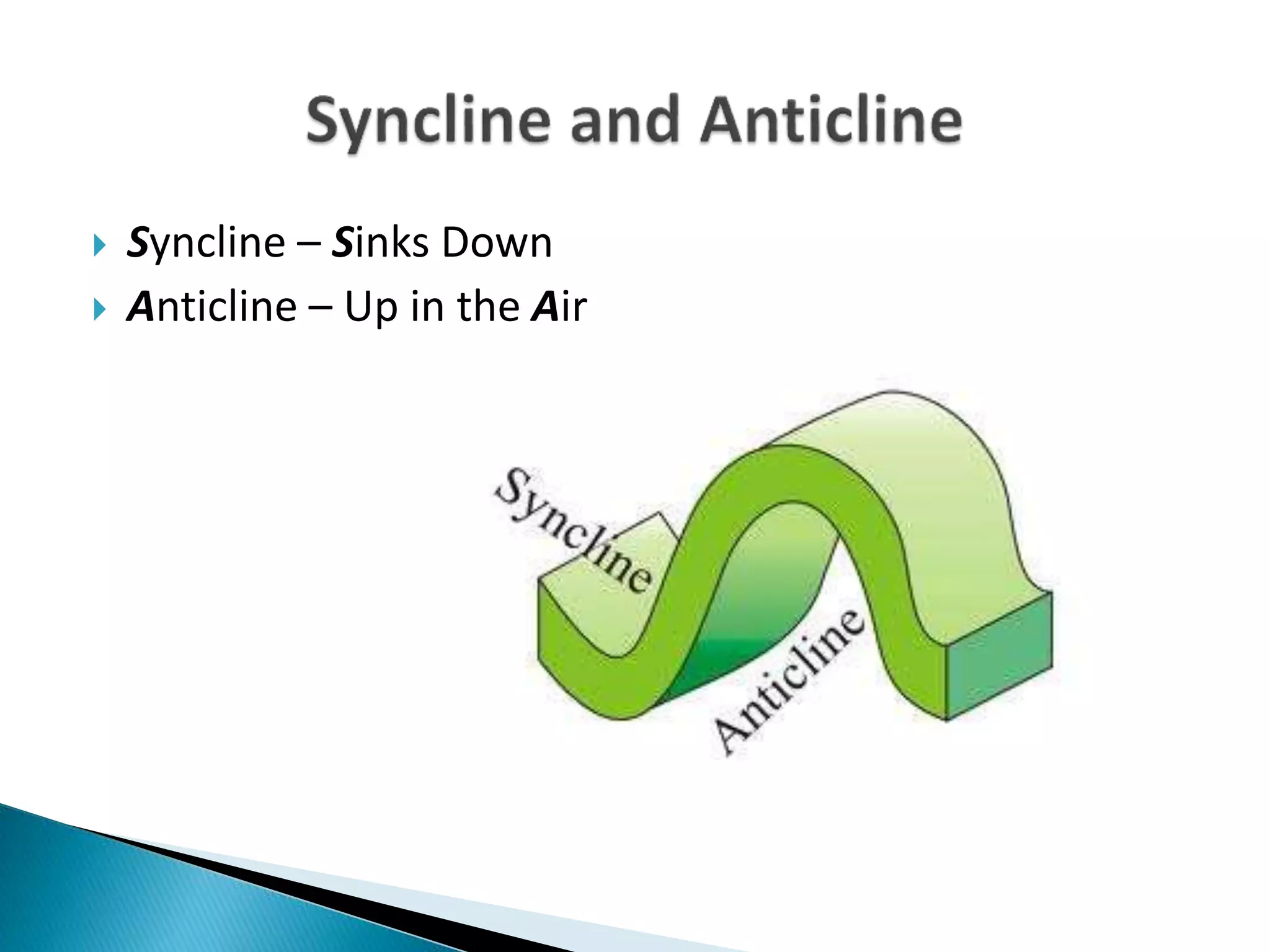
 Syncline – Sinks Down
 Anticline – Up in the Air
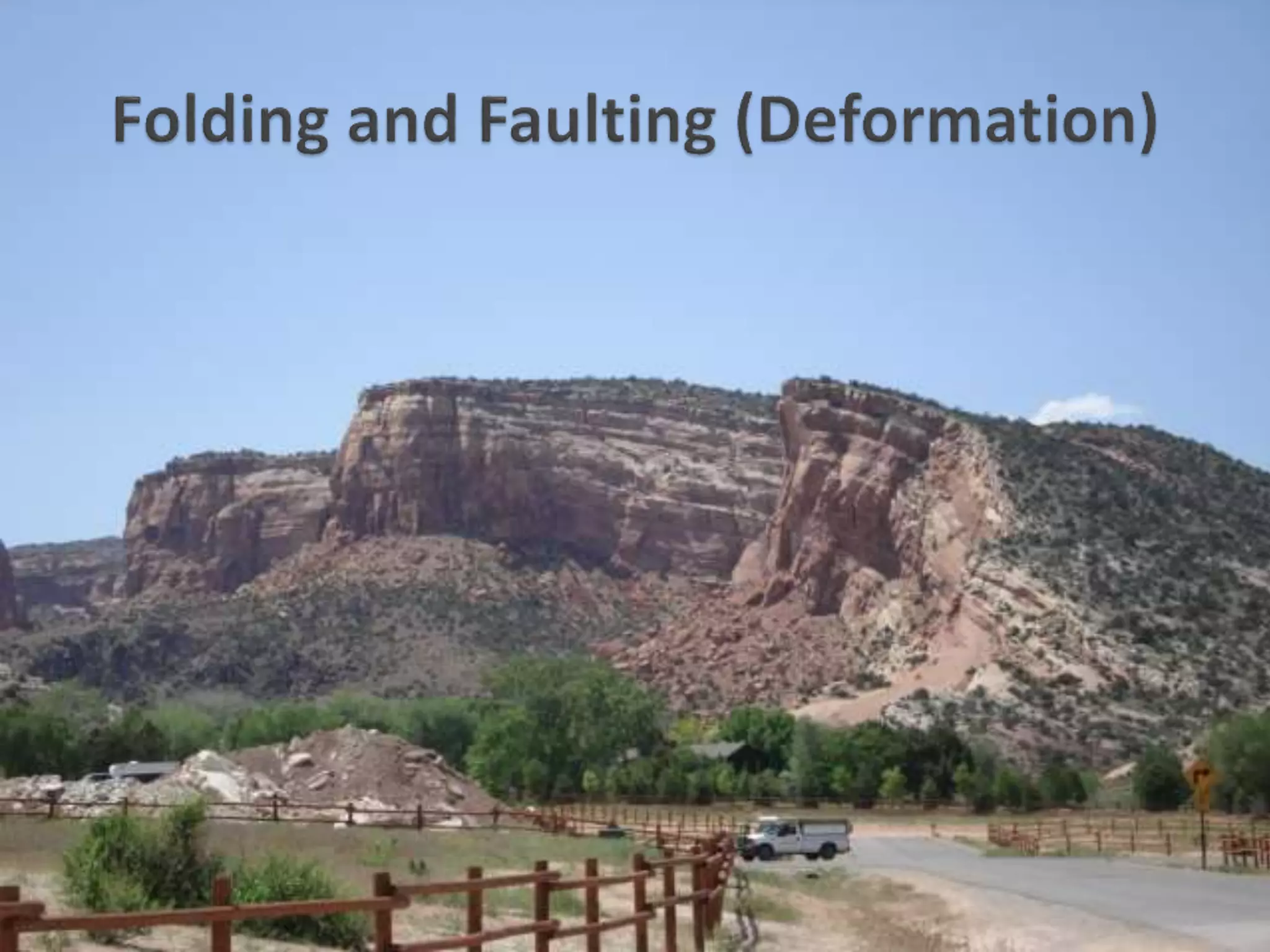
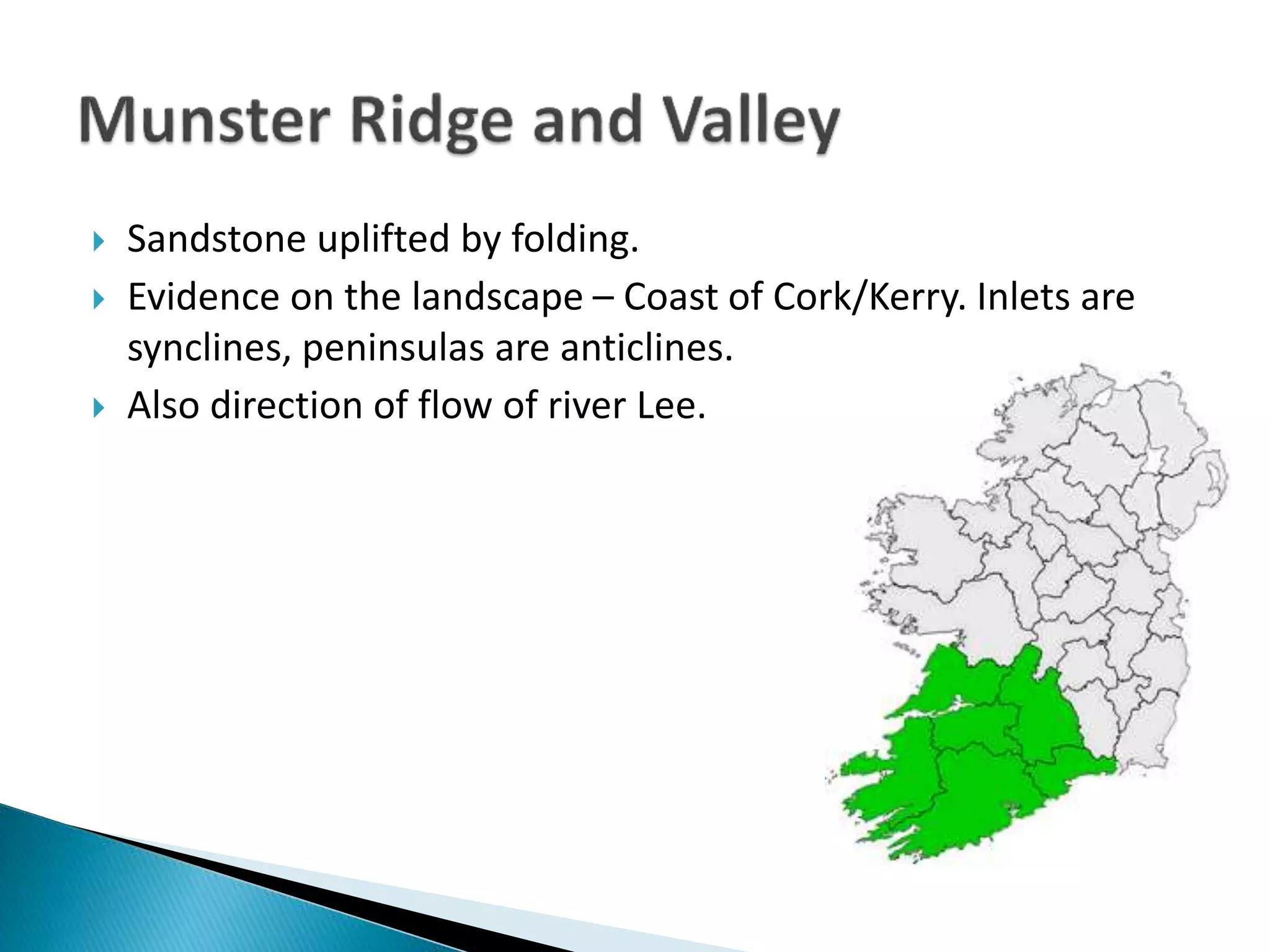
 Sandstone uplifted by folding.
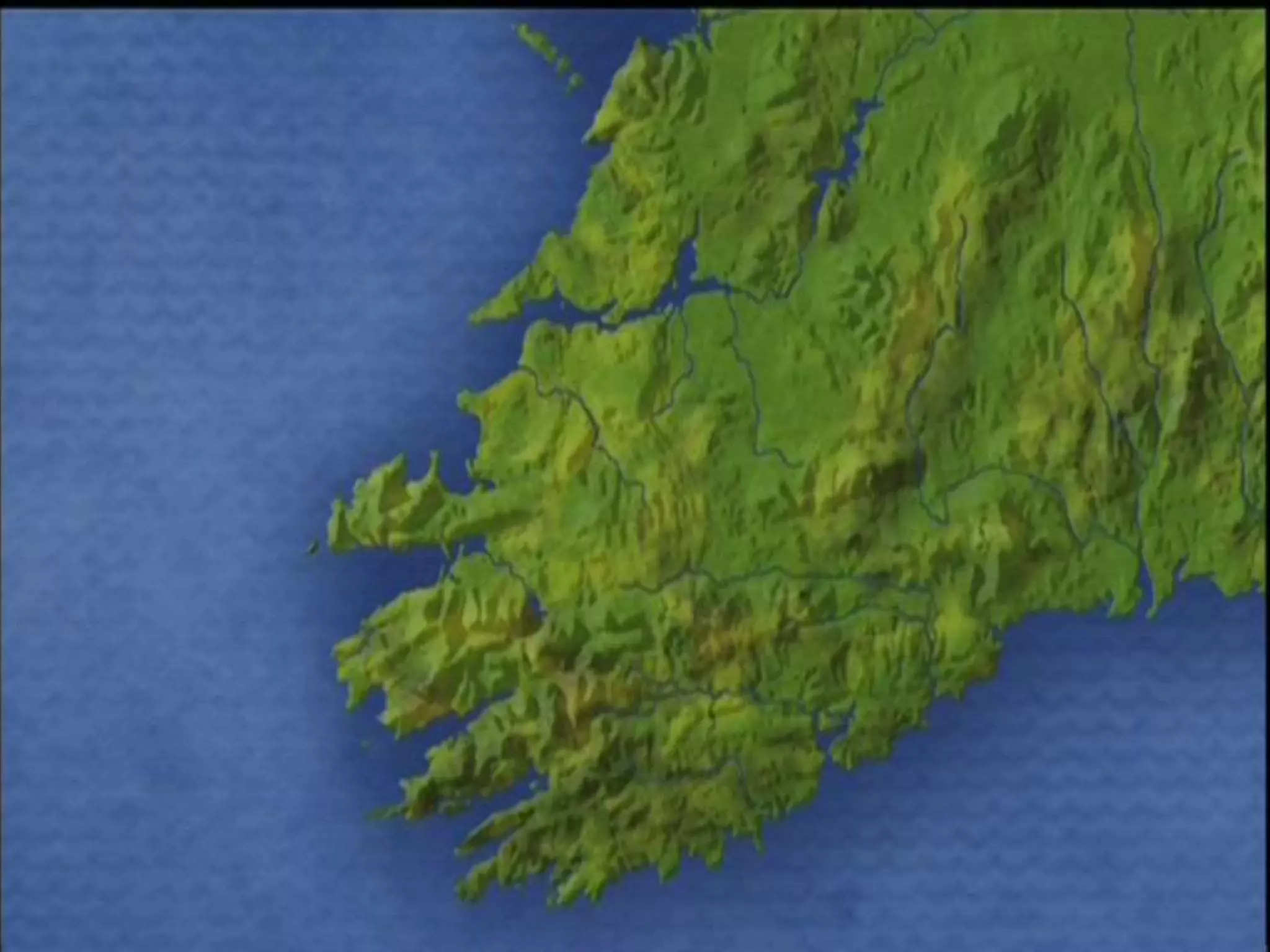
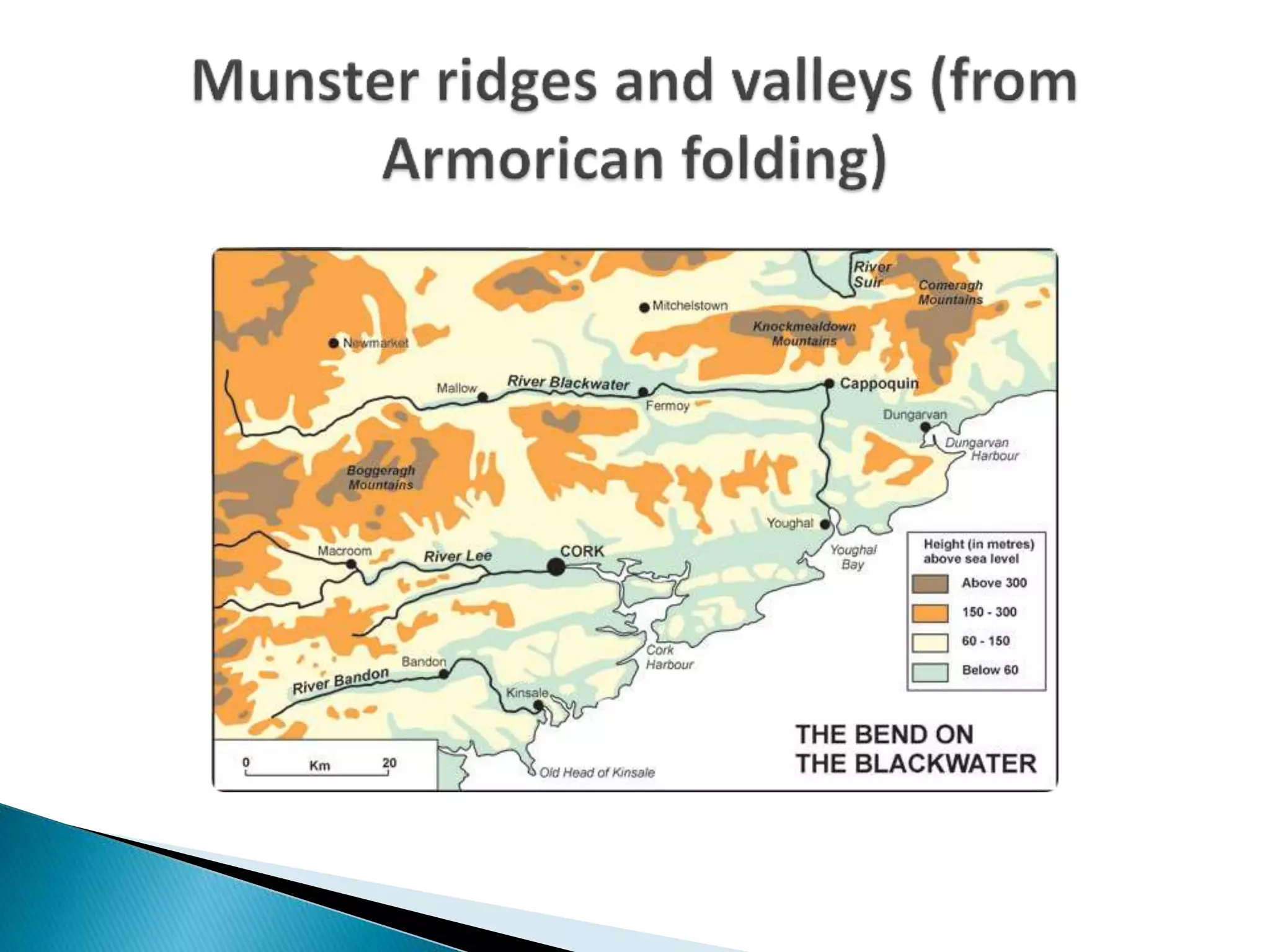
 Evidence on the landscape – Coast of Cork/Kerry. Inlets are
synclines, peninsulas are anticlines.
 Also direction of flow of river Lee.
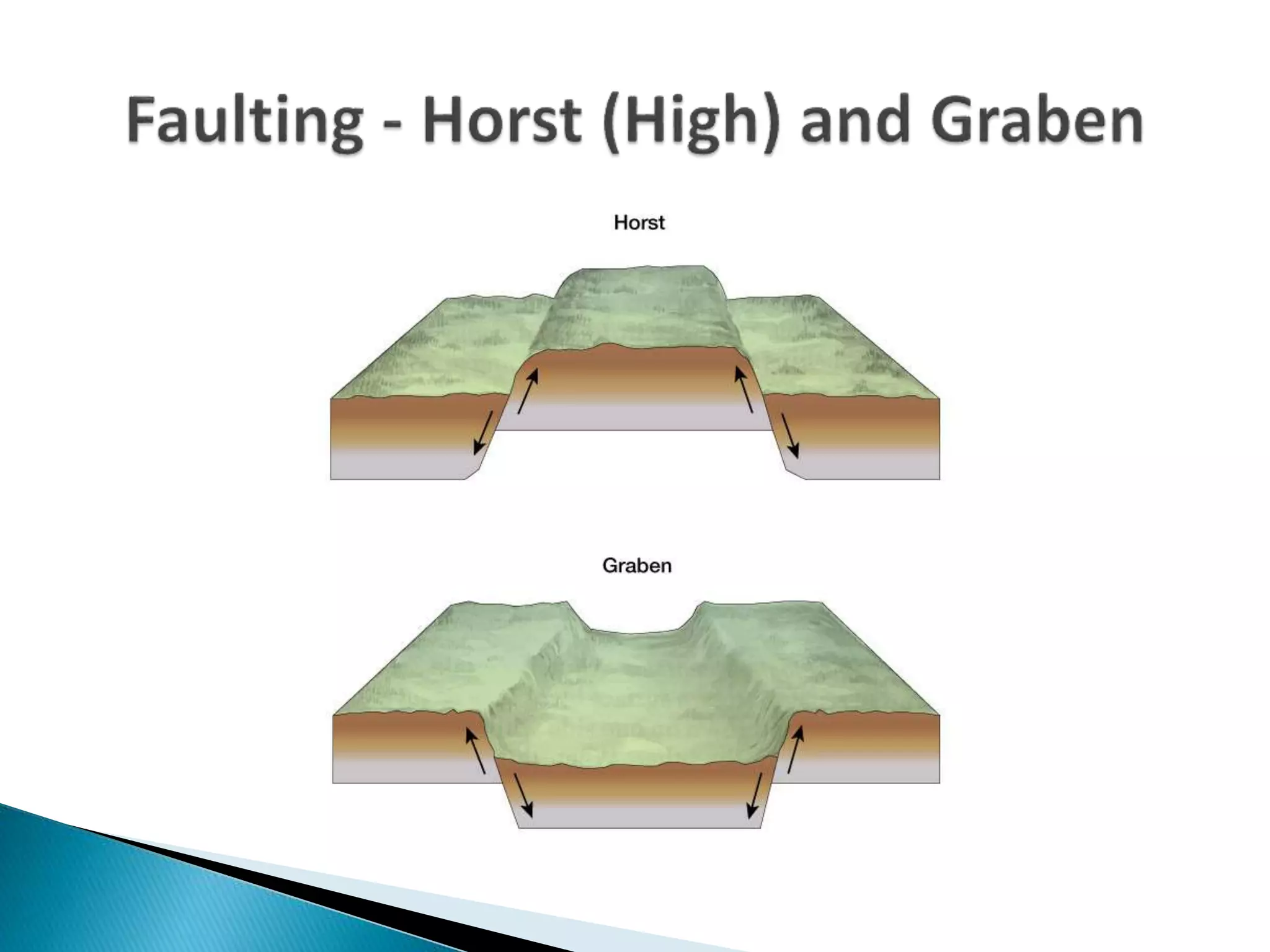
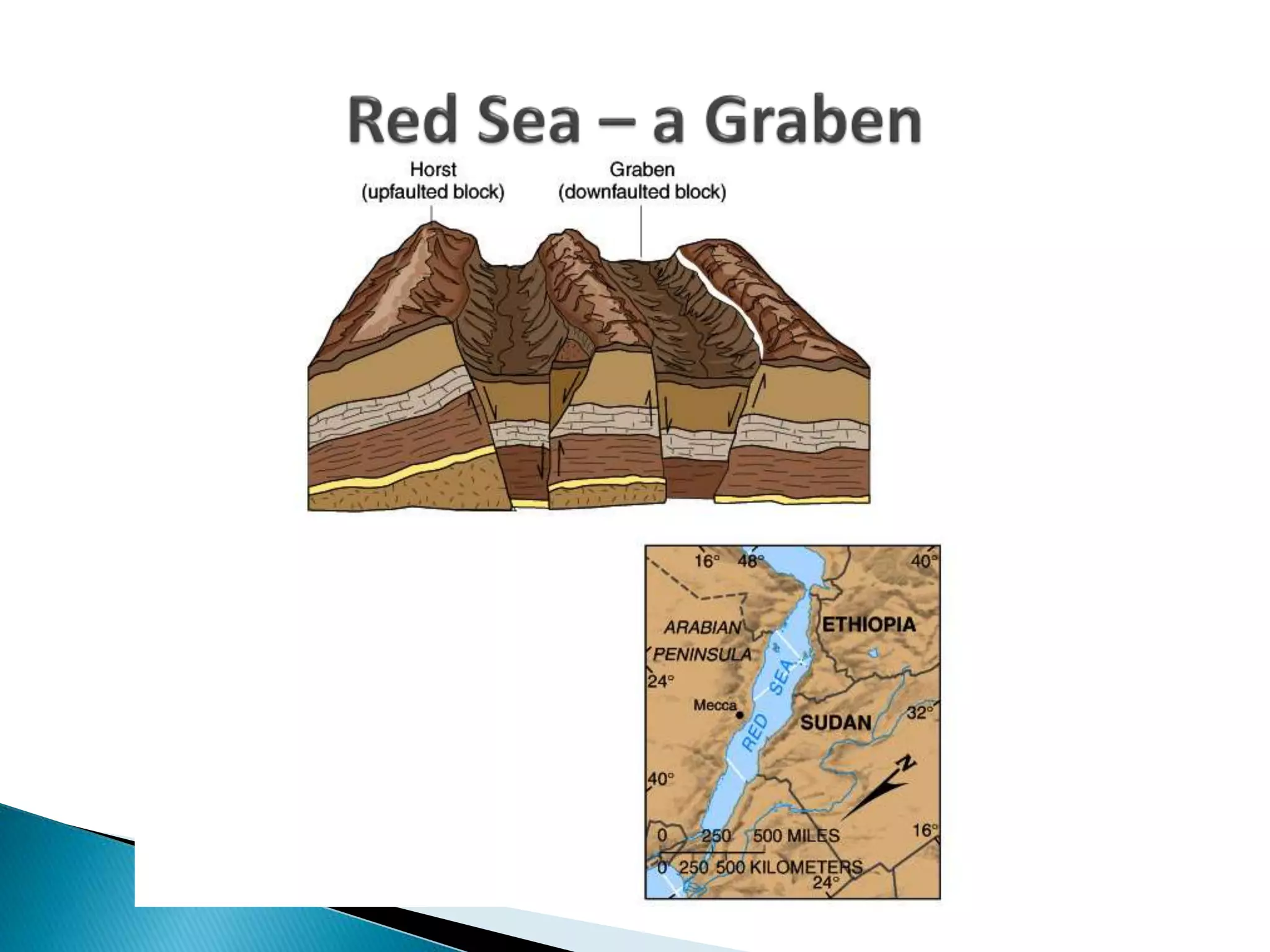
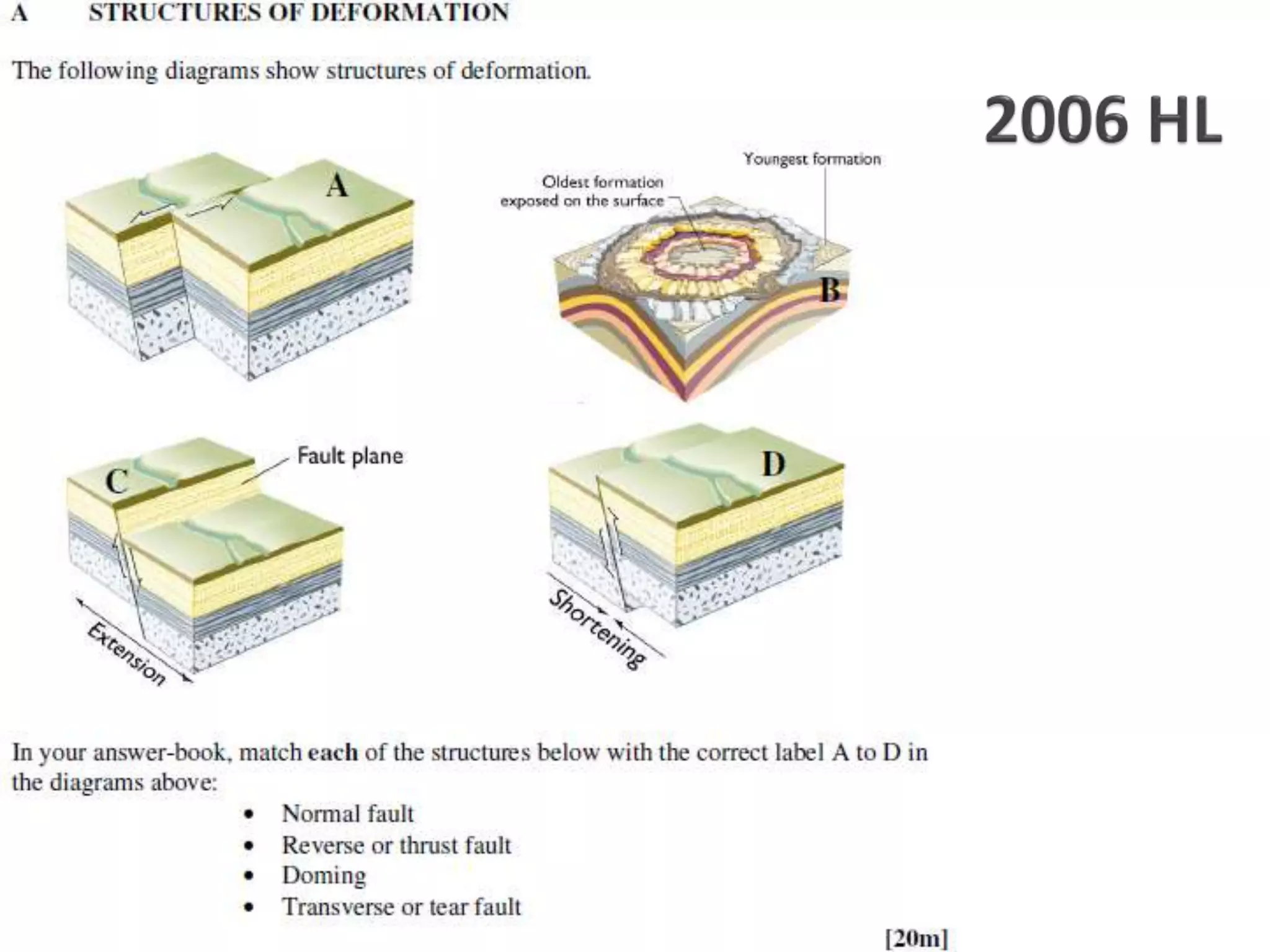
 Normal Fault – Caused by Tension
 Reverse Fault – Caused by Compression
 Thrust Fault – Low angle reverse (compression) fault
 Tear Fault – Shear Force (Horizontal movement)
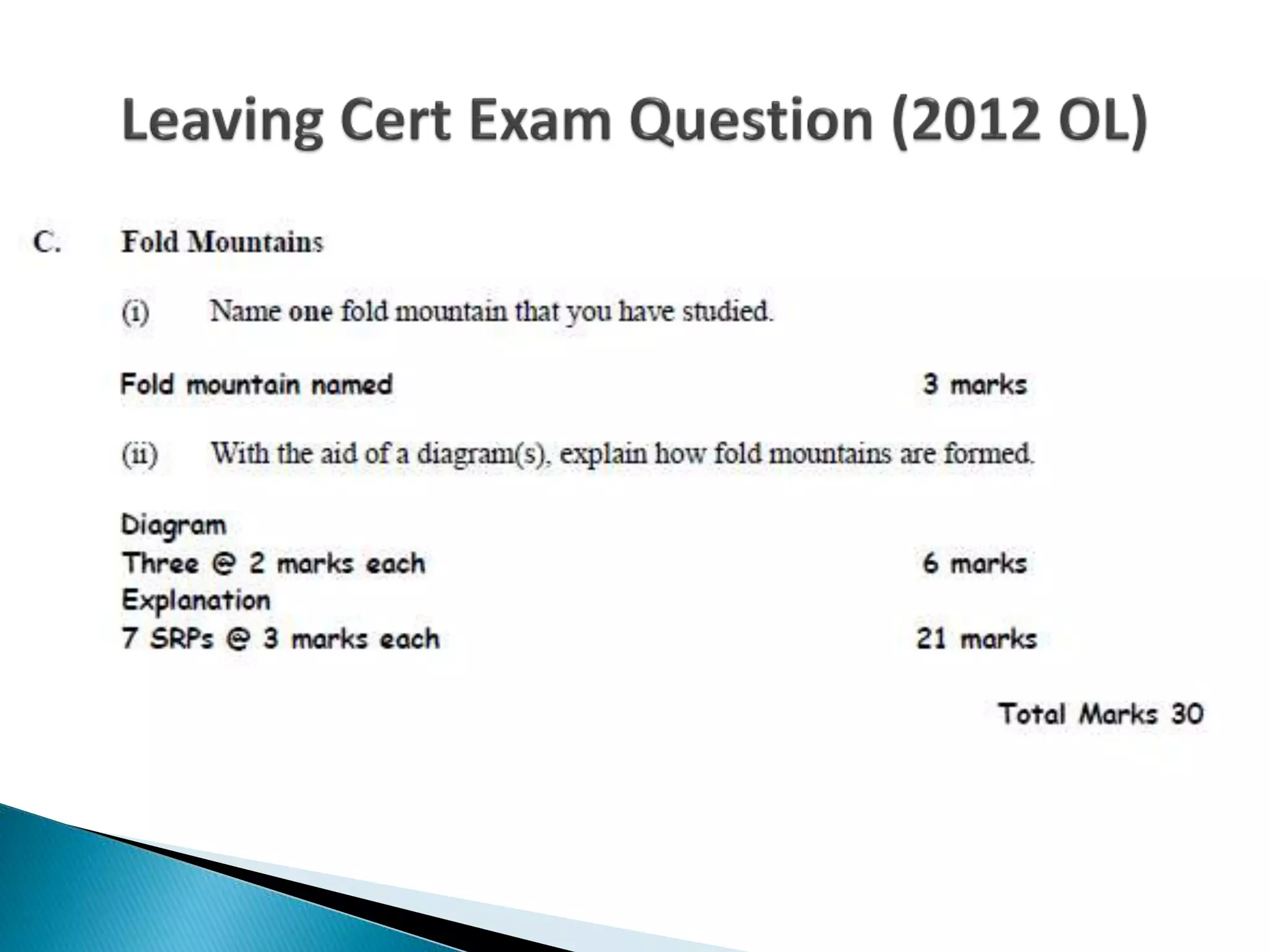
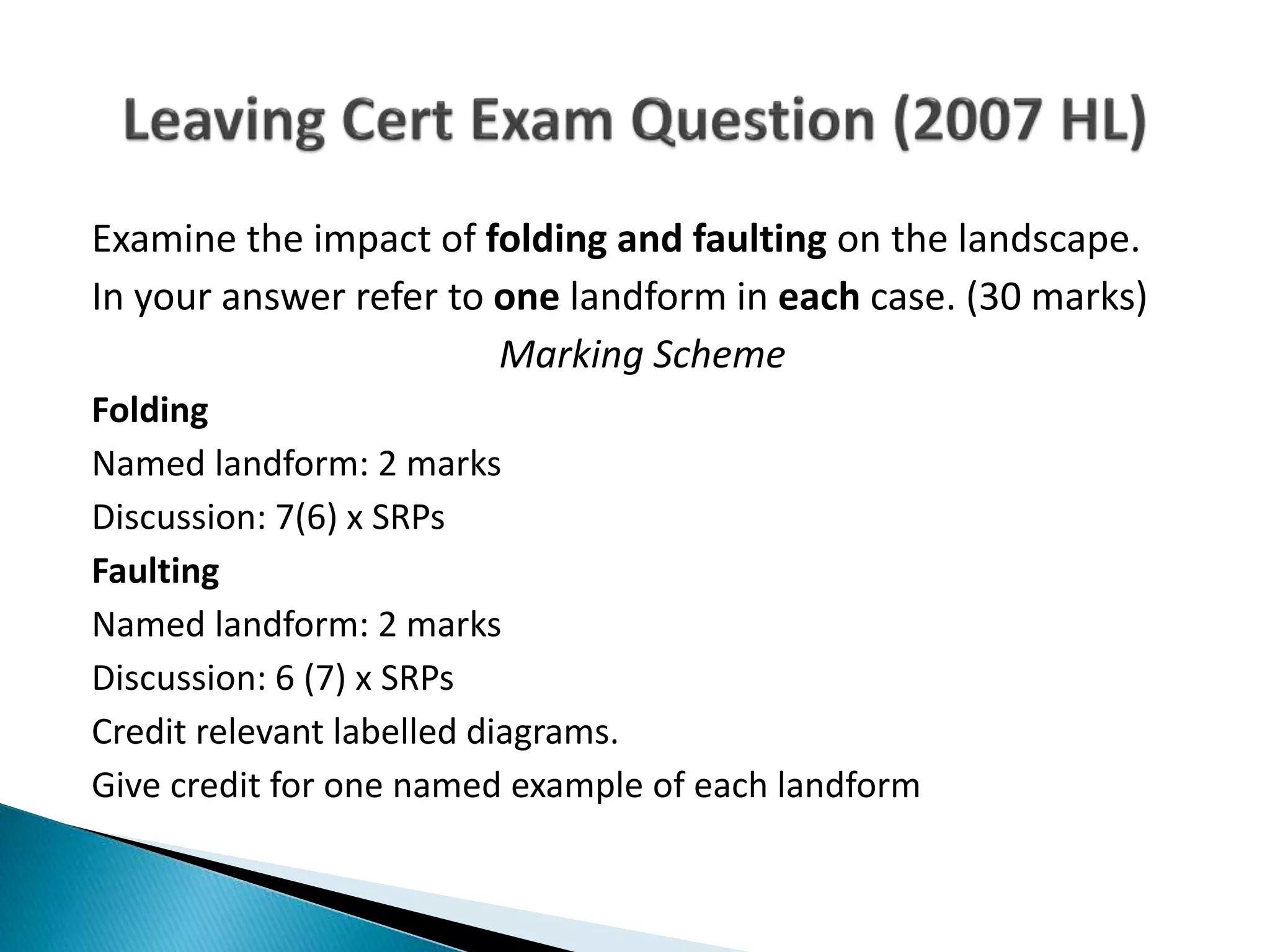
Examine the impact of folding and faulting on the landscape.
In your answer refer to one landform in each case. (30 marks)
Marking Scheme
Folding
Named landform: 2 marks
Discussion: 7(6) x SRPs
Faulting
Named landform: 2 marks
Discussion: 6 (7) x SRPs
Credit relevant labelled diagrams.
Give credit for one named example of each landform

Folding and faulting

  • 3.
     Folding isALWAYS the result of compression (squashing together)  Faulting can be caused by either compression, tension (pulling apart) or shearing (sliding past one another)
  • 7.
     Syncline –Sinks Down  Anticline – Up in the Air
  • 10.
     Sandstone upliftedby folding.  Evidence on the landscape – Coast of Cork/Kerry. Inlets are synclines, peninsulas are anticlines.  Also direction of flow of river Lee.
  • 13.
     Normal Fault– Caused by Tension  Reverse Fault – Caused by Compression  Thrust Fault – Low angle reverse (compression) fault  Tear Fault – Shear Force (Horizontal movement)
  • 27.
    Examine the impactof folding and faulting on the landscape. In your answer refer to one landform in each case. (30 marks) Marking Scheme Folding Named landform: 2 marks Discussion: 7(6) x SRPs Faulting Named landform: 2 marks Discussion: 6 (7) x SRPs Credit relevant labelled diagrams. Give credit for one named example of each landform