Fold Mountain Mystery

        By Jack lee
How did Alfred find
fossilised sea creatures
high up in the Alps???
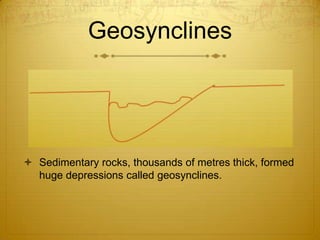
Geosynclines


 Sedimentary rocks, thousands of metres thick, formed
  huge depressions called geosynclines.
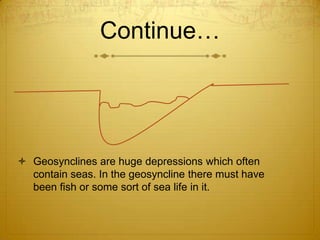
Continue…


 Geosynclines are huge depressions which often
  contain seas. In the geosyncline there must have
  been fish or some sort of sea life in it.
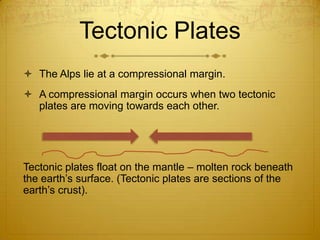
Tectonic Plates
 The Alps lie at a compressional margin.
 A compressional margin occurs when two tectonic
  plates are moving towards each other.


Tectonic plates float on the mantle – molten rock beneath
the earth’s surface. (Tectonic plates are sections of the
earth’s crust).
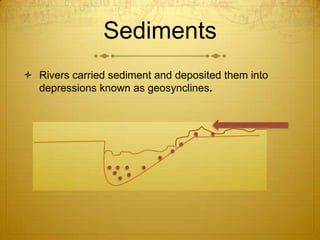
Sediments
 Rivers carried sediment and deposited them into
  depressions known as geosynclines.
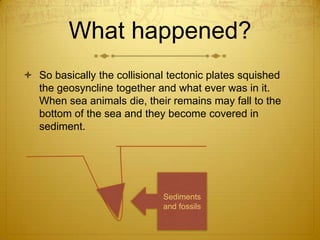
What happened?
 So basically the collisional tectonic plates squished
  the geosyncline together and what ever was in it.
  When sea animals die, their remains may fall to the
  bottom of the sea and they become covered in
  sediment.


                             Sediments
                             and fossils
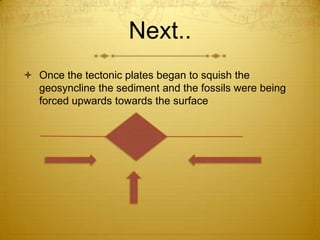
Next..
 Once the tectonic plates began to squish the
  geosyncline the sediment and the fossils were being
  forced upwards towards the surface
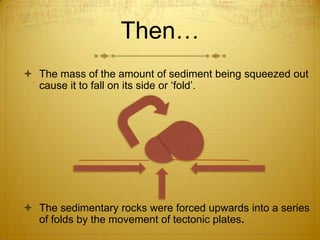
Then…
 The mass of the amount of sediment being squeezed out
  cause it to fall on its side or ‘fold’.


 The sedimentary rocks were forced upwards into a series
  of folds by the movement of tectonic plates.
After…
 Over millions of years the sediments were
  compressed into sedimentary rocks such as
  sandstone and limestone.

 When limestone is exposed to wind, rain and chemical
  weathering, fossils may become exposed.

 This lead me to think that while Alfred was enjoying
  the scenery one day he came across a fossil that
  seemed extremely out of place and did further
  research to prove his theory of plate boundaries.

Fold mountain mystery

  • 1.
  • 2.
    How did Alfredfind fossilised sea creatures high up in the Alps???
  • 3.
    Geosynclines  Sedimentary rocks,thousands of metres thick, formed huge depressions called geosynclines.
  • 4.
    Continue…  Geosynclines arehuge depressions which often contain seas. In the geosyncline there must have been fish or some sort of sea life in it.
  • 5.
    Tectonic Plates  TheAlps lie at a compressional margin.  A compressional margin occurs when two tectonic plates are moving towards each other. Tectonic plates float on the mantle – molten rock beneath the earth’s surface. (Tectonic plates are sections of the earth’s crust).
  • 6.
    Sediments  Rivers carriedsediment and deposited them into depressions known as geosynclines.
  • 7.
    What happened?  Sobasically the collisional tectonic plates squished the geosyncline together and what ever was in it. When sea animals die, their remains may fall to the bottom of the sea and they become covered in sediment. Sediments and fossils
  • 8.
    Next..  Once thetectonic plates began to squish the geosyncline the sediment and the fossils were being forced upwards towards the surface
  • 9.
    Then…  The massof the amount of sediment being squeezed out cause it to fall on its side or ‘fold’.  The sedimentary rocks were forced upwards into a series of folds by the movement of tectonic plates.
  • 10.
    After…  Over millionsof years the sediments were compressed into sedimentary rocks such as sandstone and limestone.  When limestone is exposed to wind, rain and chemical weathering, fossils may become exposed.  This lead me to think that while Alfred was enjoying the scenery one day he came across a fossil that seemed extremely out of place and did further research to prove his theory of plate boundaries.