Management of Fluid and   Electrolyte Replacement Hartnell College Pharmacology NRN 130 Laurie Phillips RN, MSN, PHN
Homeostasis Tendency to maintain fluid in specific compartments Necessary for cells to carrying out their functions Process involves deliver of elements to the cell such as O2 and glucose and remove waste products such as CO2 When not maintained, illness will occur
Body Fluid Compartments Intracellular (ICF) - Fluid within the cell. Most body fluid is found here. Extracellular (ECF) - fluid found outside the cell such as plasma/serum. Responsible for transport of nutrients and waste. intravascular: fluid surrounding the cells interstitial fluid: including lymph fluid other: digestive secretions, CSF, sweat
Body Fluid Composition H2O largest portion of body wt. that decreases with age women have a lower % of water storage because of increased fat cells which do not  contain as much H2O as other cells Affected by age, sex, and amount of body fat
Body Fluid Composition Solutes (electrolytes and nonelectrolytes) Electrolytes - substance that contains an electrical charge when dissolved in H2O; break into ions Cations (NA+, Ca+, Mg+) Anions (Cl-, HCO3-, HPO4-)
Body Fluid Composition Every fluid compartment contains a balance of cations and anions The concentration of an electrolyte in a solution or body compartment is measured in mEq/L Electrolytes can move from one compartment to another
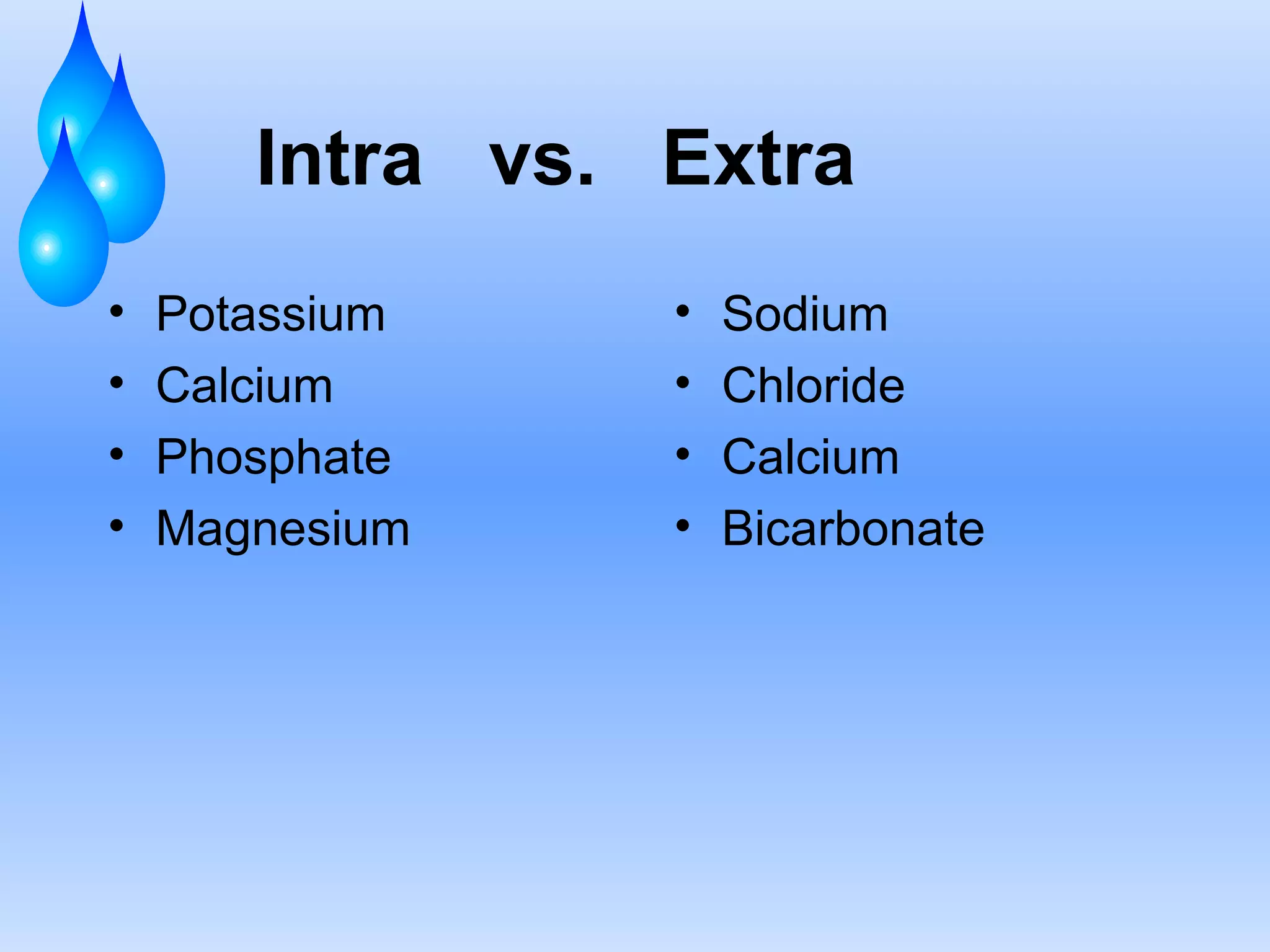
Intra  vs.  Extra Potassium  Calcium Phosphate Magnesium Sodium Chloride Calcium Bicarbonate
Nonelectrolytes Other substances that dissolve in H2O Urea, protein, glucose, creatinine, bilirubin Measured in mg/dl
Osmolality Concentration of a solution Determined by the # of particles/Kg of H2O changing osmolality of one compartment affects the osmolality of another compartment
Osmolarity The concentration of particles in a body of water Measured per liters of fluid
Fluid Regulation Kidneys control extracellular fluid by adjusting concentration of electrolytes, the osmolality of body fluids, volume of extracellular fluid, blood volume, and pH nephron is fixing unit of kidney, made of glomerulus (filtering) and tubules (reabsorption)
Kidney Controlled by hormones and processes Filtration - blood enters via renal artery. 20% because filtrate and enters the glomerular capsule, goes thru the tubules and is transformed into urine by reaborption. Other 80% leaves thru renal vein.
Kidney Reabsorption - occurs in the tubules. Important of adjusting volume and decomposition of filtrate preventing excessive fluid loss. Secretions - last phase, filtrate transformed to urine. Substances pass from blood into tubules and eliminated to maintain fluid and electrolyte balance.
Hormones Aldosterone - released by adrenal glands, increases reaborption of Na+ and decreases reaborption of K+ Antidiuretic Hormones - produced by hypothalamus and secreted by the posterior pituitary. Causes the kidney tubules to reabsorb more H2O, so urine is more concentrated and there is less fluid loss
Thirst Regulates fluid intake Increased osmolality stimulate osmoreceptors in the hypothalamus to start the sensation of thirst Kidneys are alerted to conserve H2O
Fluid Gains/Losses Healthy individuals have = I/O Urine output is 1-2L/day Seating causes H2O and electrolyte losses H2O loss in lung via evaporation approximately 300-400 ml/day GI tract loses 100-200ml/day via reabsorption in the small intestine
Age-Related Changes Kidney functioning slower Reduced sense of thirst Total body H2O declines Chronic conditions which contribute to imbalances Decreased need for fluid
Basic Principles of IV Fluid Replacement Iso-osmolar  - has the same amount of particles (sodium, glucose, urea, or protein) and water Hypo-osmolar  - has fewer particles than water Hyper-osmolar  - has more particles than water 4 major categories of IV fluid replacement crystalloids colloids lipids blood products
Crystalloids and Colloids Crystalloids  - dextrose, saline, and lactated Ringer’s solutions Used for replacement and maintenance of body fluids Colloids  - amino acids, plasmanate, and dextran solutions Used as volume expanders
Crystalloids Isotonic Solutions sodium chloride 0.9%  lactated Ringer Hypotonic Solutions (hydrating) dextrose 2.5%, 5%, 10% dextrose 2.5% in 0.45 NaCl dextrose 5% in 0.45 NaCl
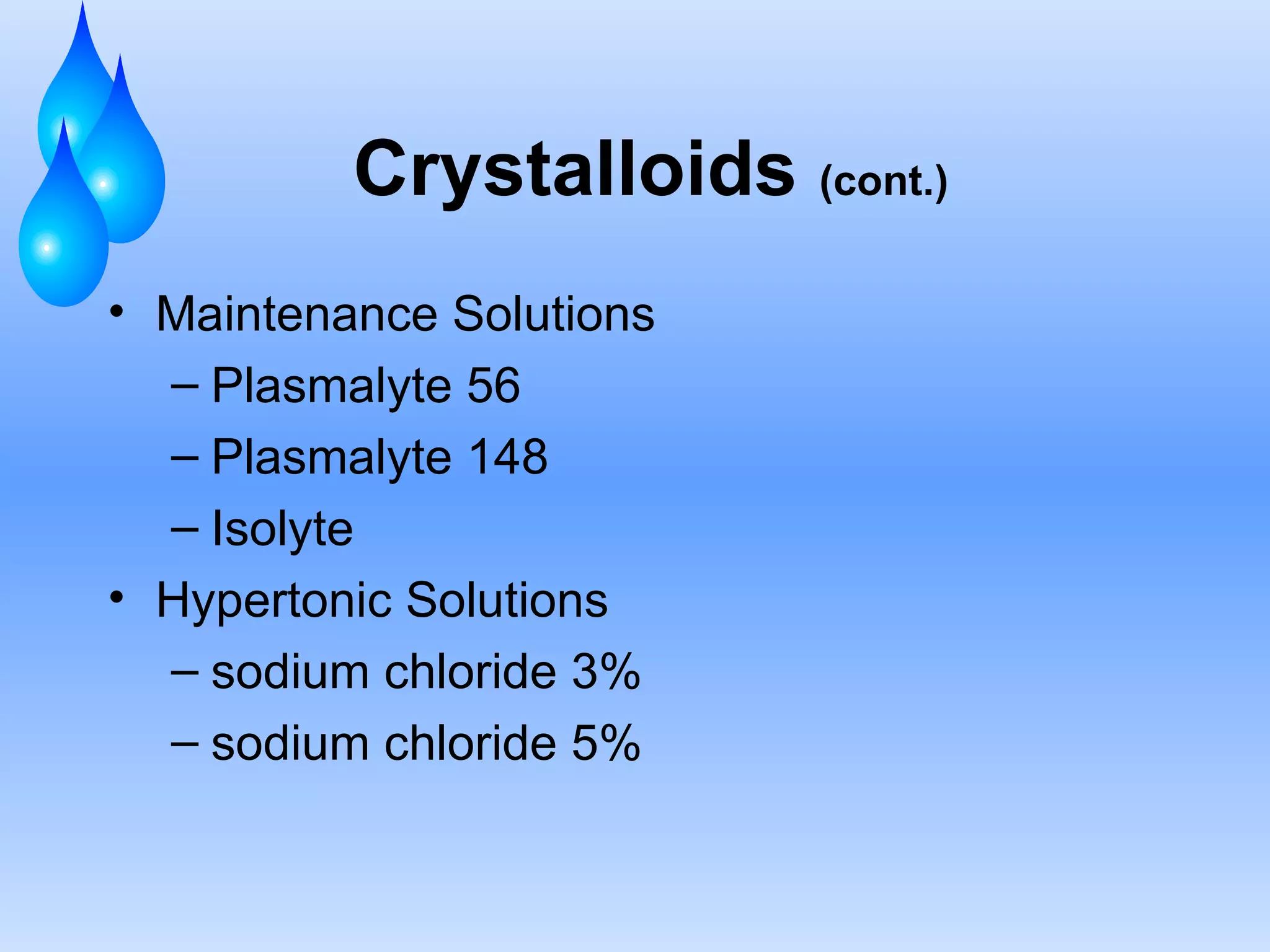
Crystalloids  (cont.) Maintenance Solutions Plasmalyte 56 Plasmalyte 148 Isolyte Hypertonic Solutions sodium chloride 3% sodium chloride 5%
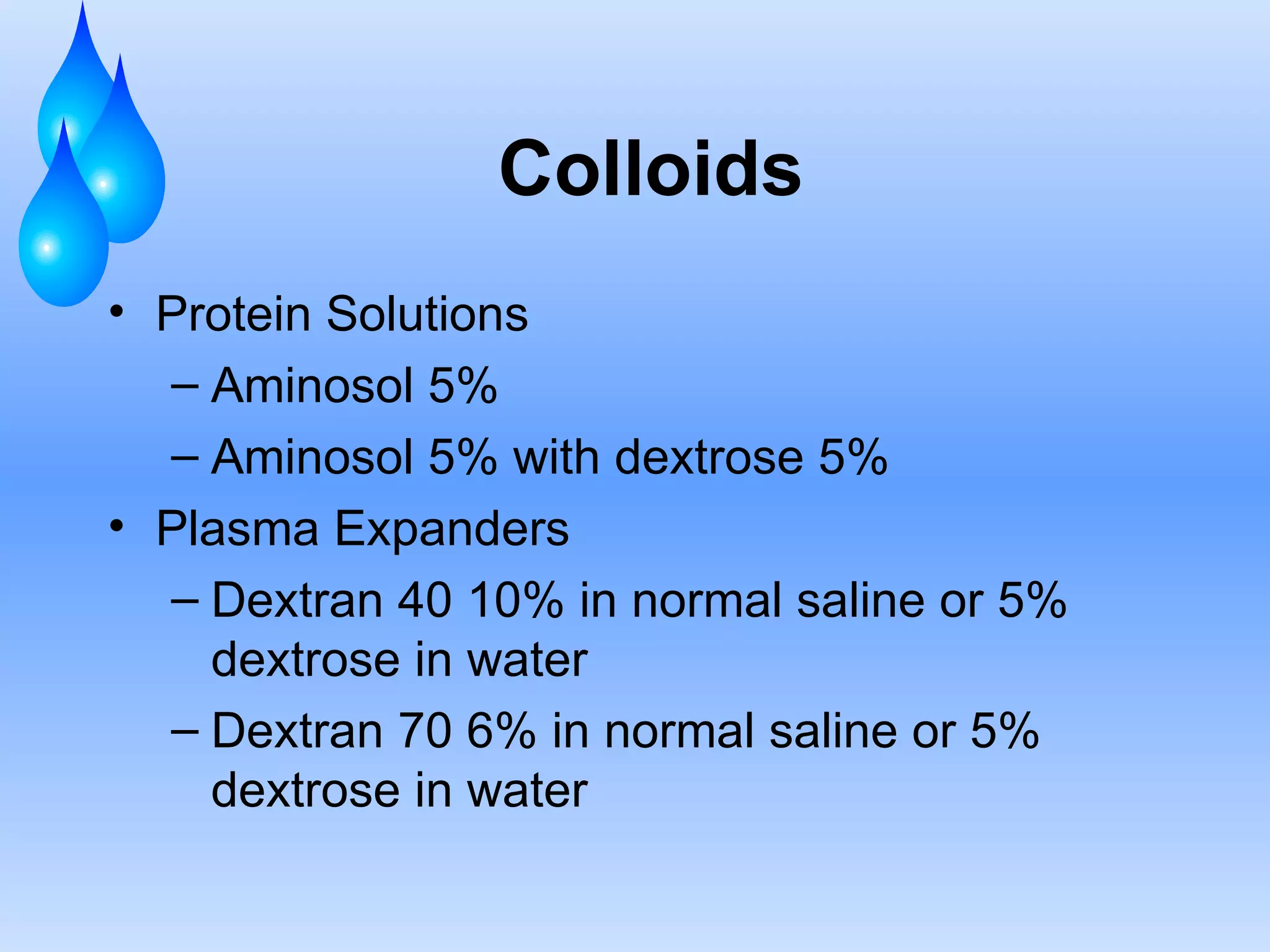
Colloids Protein Solutions Aminosol 5% Aminosol 5% with dextrose 5% Plasma Expanders Dextran 40 10% in normal saline or 5% dextrose in water Dextran 70 6% in normal saline or 5% dextrose in water
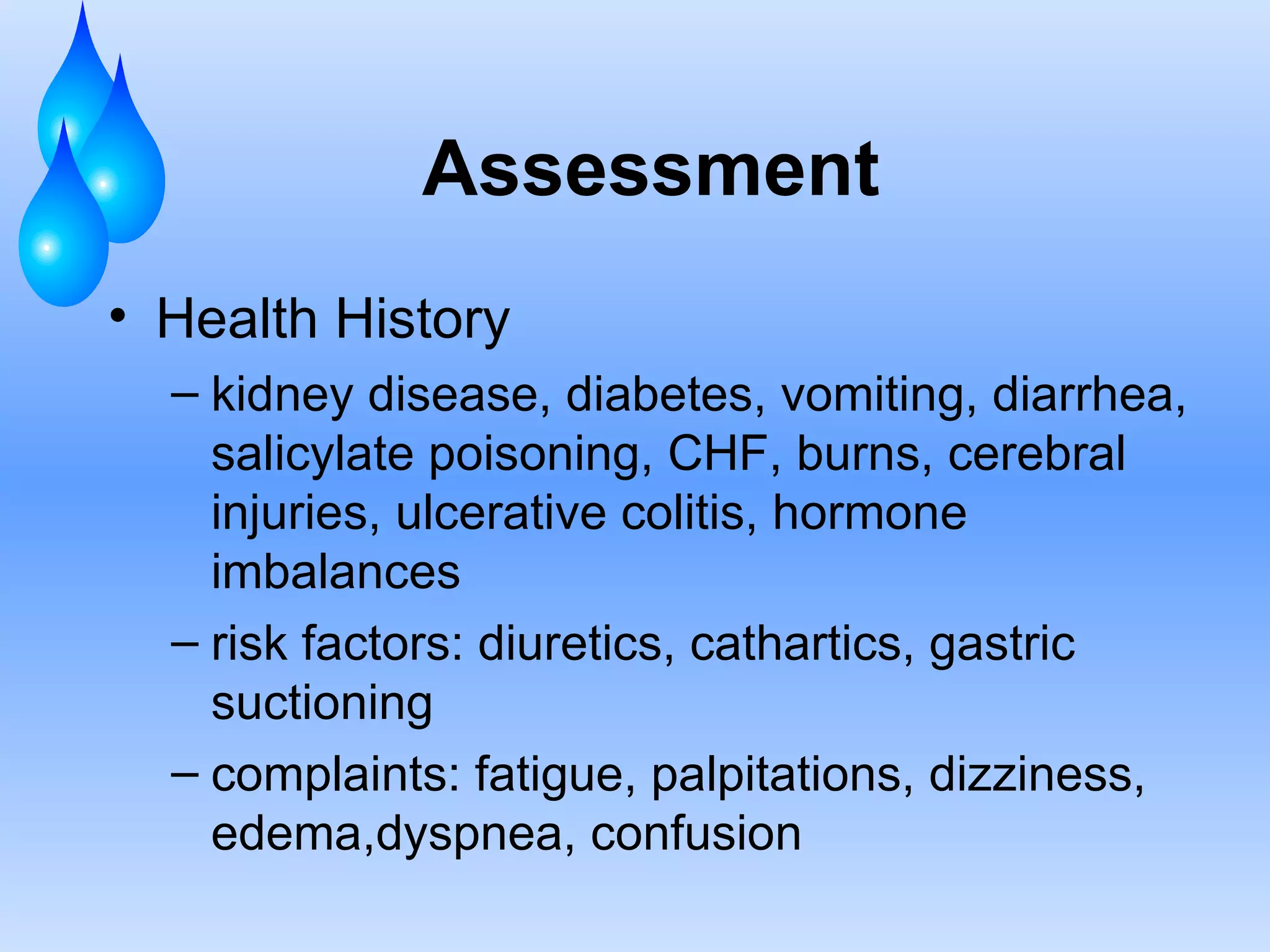
Assessment Health History kidney disease, diabetes, vomiting, diarrhea, salicylate poisoning, CHF, burns, cerebral injuries, ulcerative colitis, hormone imbalances risk factors: diuretics, cathartics, gastric suctioning complaints: fatigue, palpitations, dizziness, edema,dyspnea, confusion
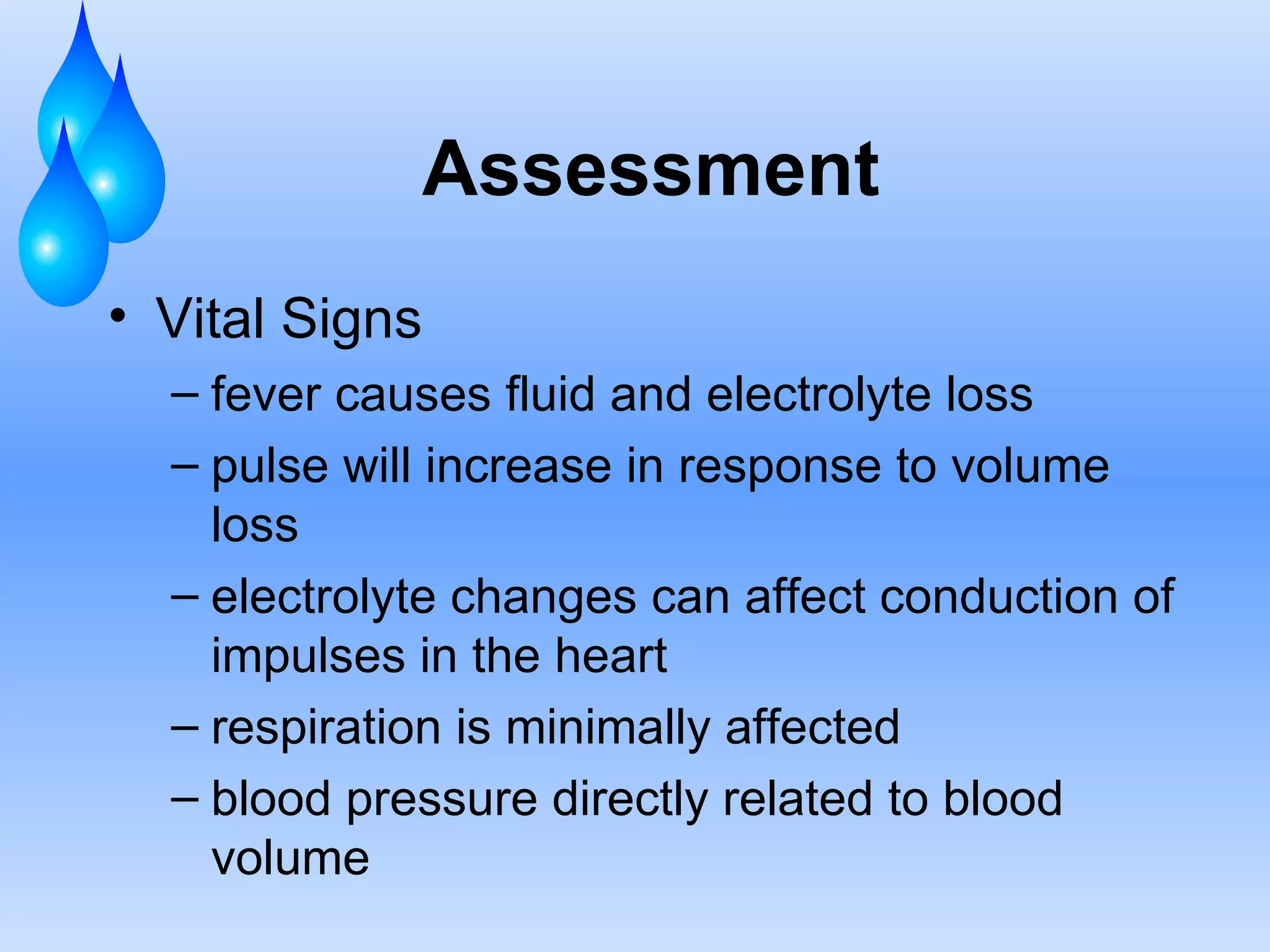
Assessment Vital Signs fever causes fluid and electrolyte loss pulse will increase in response to volume loss electrolyte changes can affect conduction of impulses in the heart respiration is minimally affected blood pressure directly related to blood volume
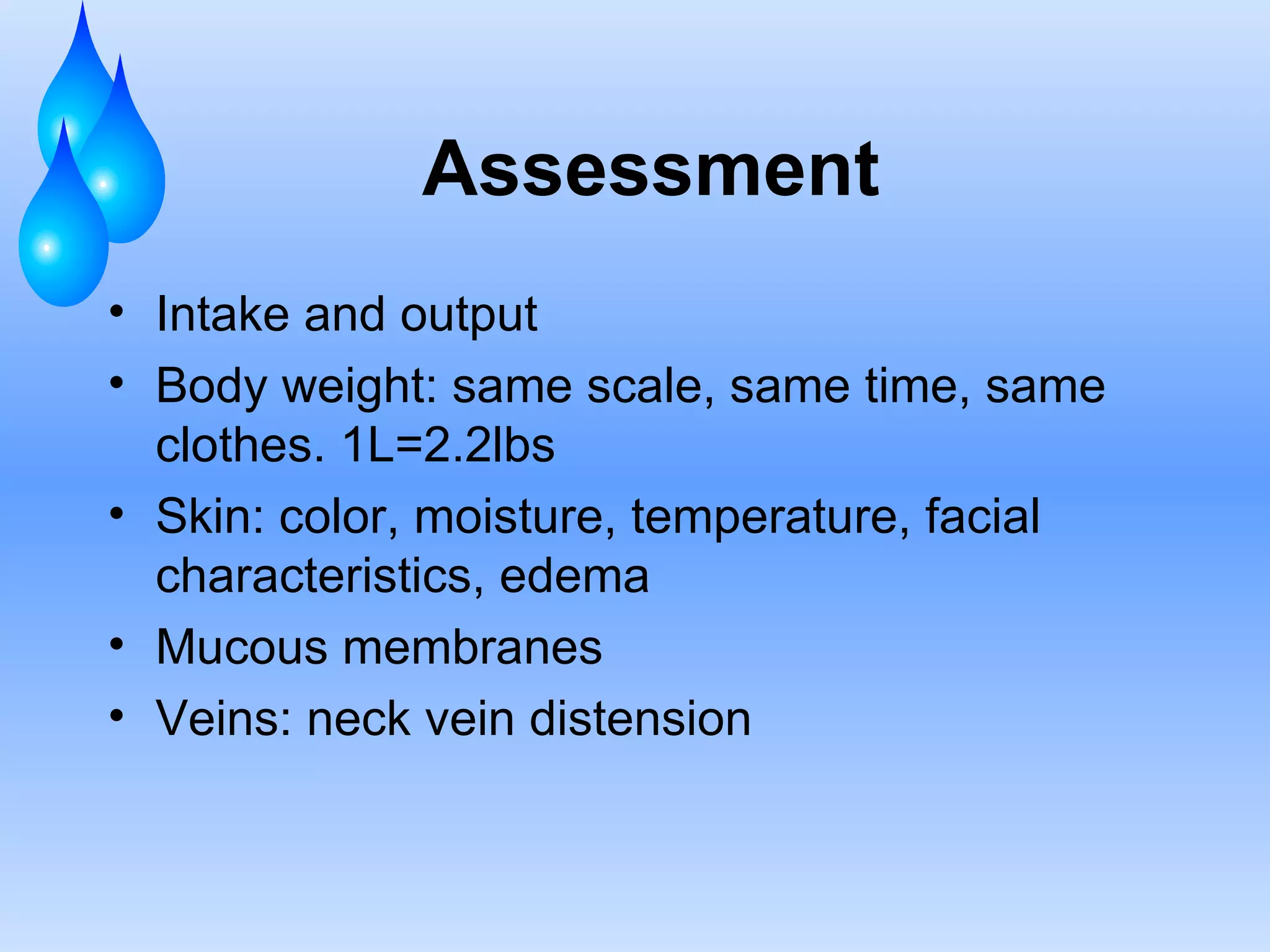
Assessment Intake and output Body weight: same scale, same time, same clothes. 1L=2.2lbs Skin: color, moisture, temperature, facial characteristics, edema Mucous membranes Veins: neck vein distension
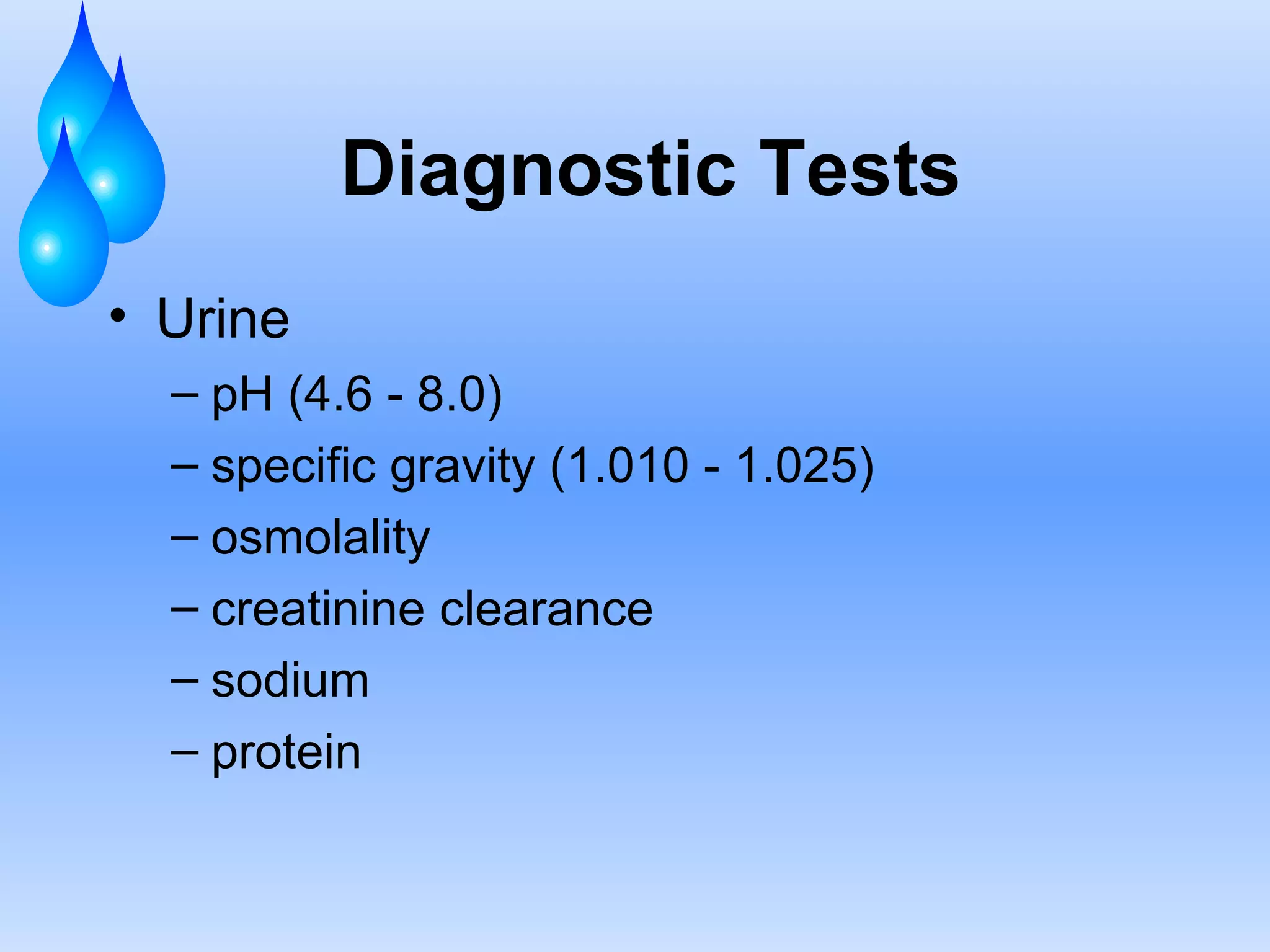
Diagnostic Tests Urine pH (4.6 - 8.0) specific gravity (1.010 - 1.025) osmolality creatinine clearance sodium protein
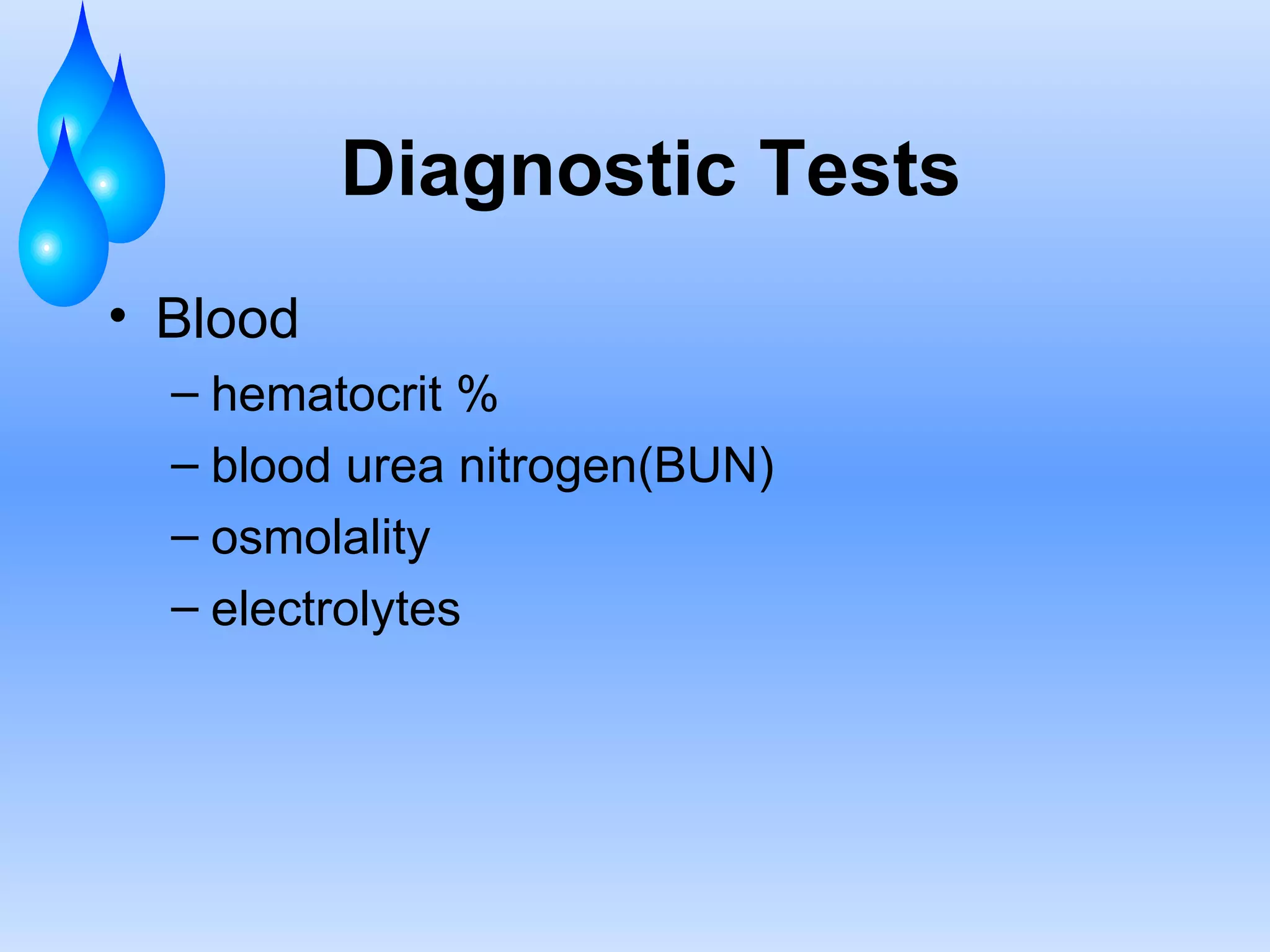
Diagnostic Tests Blood hematocrit % blood urea nitrogen(BUN) osmolality electrolytes
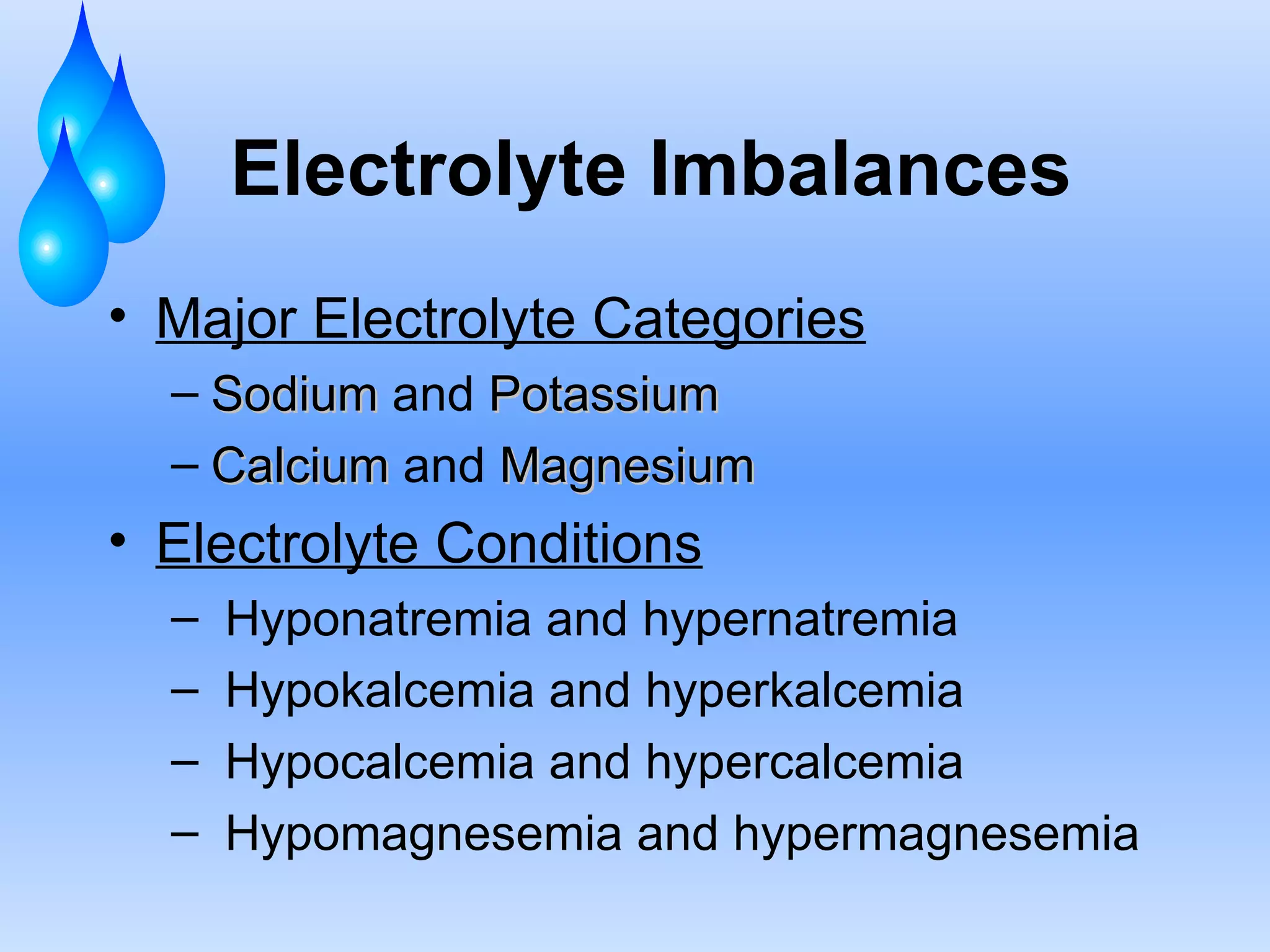
Electrolyte Imbalances Major Electrolyte Categories Sodium  and  Potassium Calcium  and  Magnesium Electrolyte Conditions Hyponatremia and hypernatremia Hypokalcemia and hyperkalcemia Hypocalcemia and hypercalcemia Hypomagnesemia and hypermagnesemia
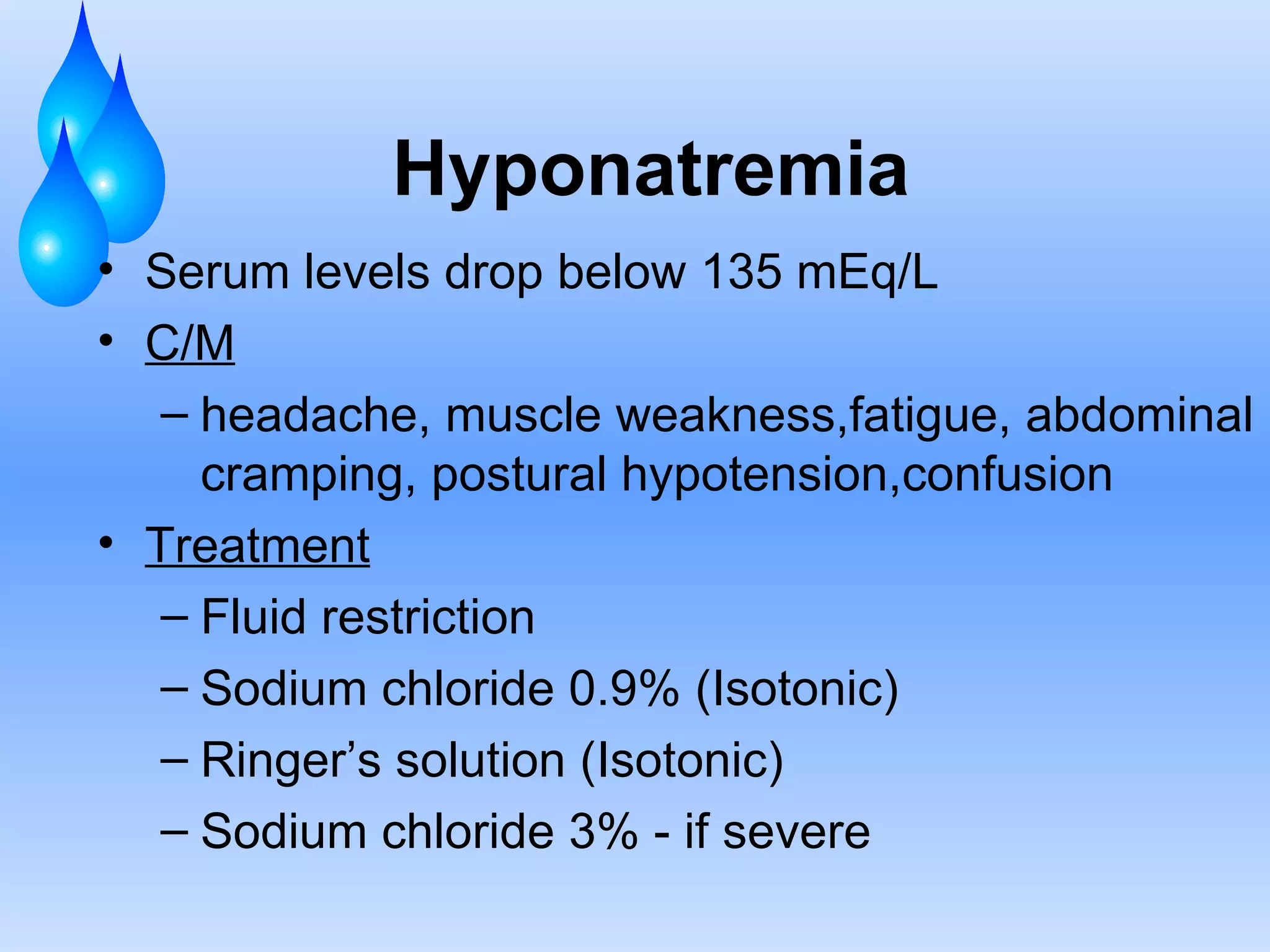
Hyponatremia Serum levels drop below 135 mEq/L C/M headache, muscle weakness,fatigue, abdominal cramping, postural hypotension,confusion Treatment Fluid restriction Sodium chloride 0.9% (Isotonic) Ringer’s solution (Isotonic) Sodium chloride 3% - if severe
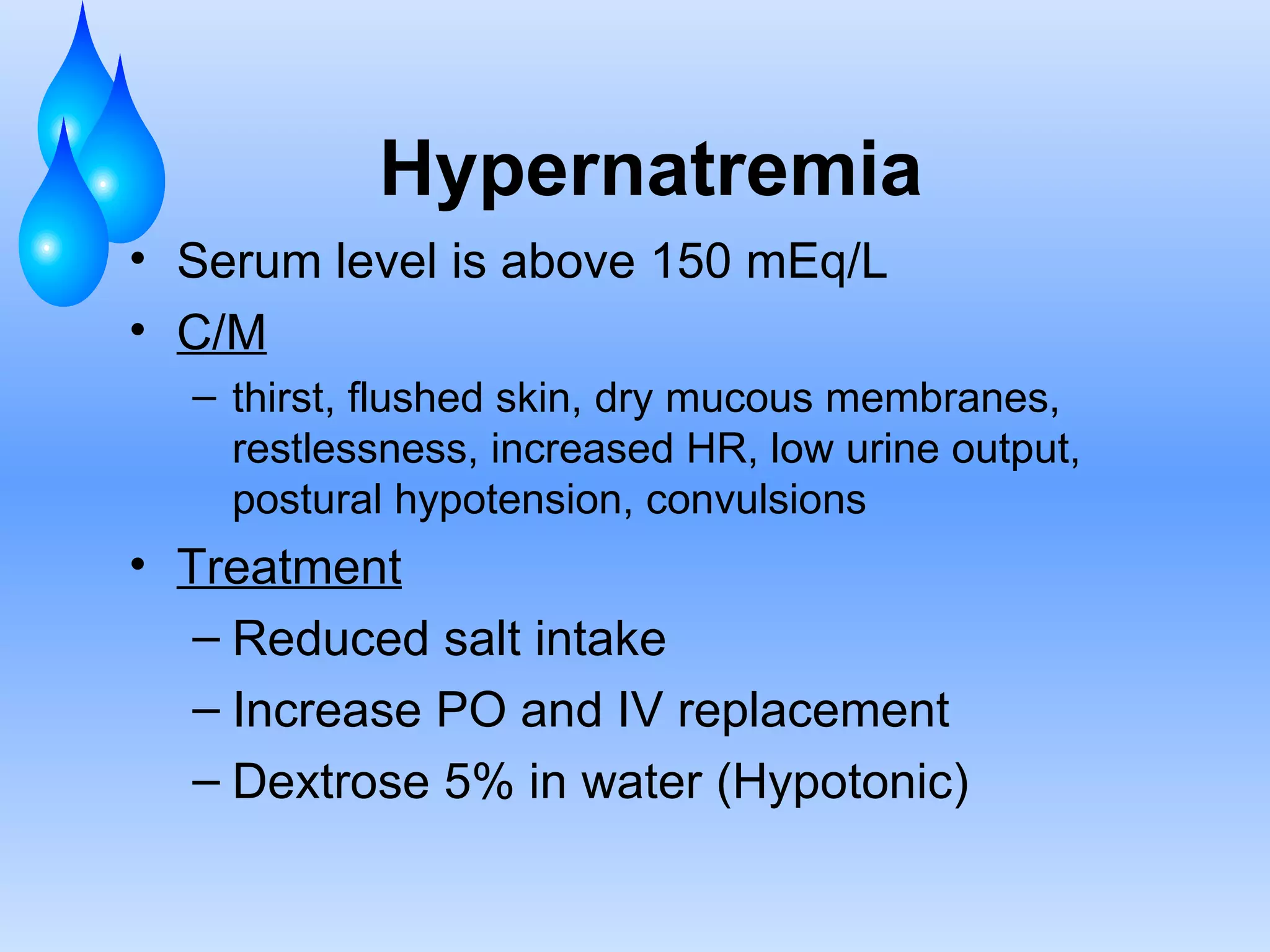
Hypernatremia Serum level is above 150 mEq/L C/M thirst, flushed skin, dry mucous membranes, restlessness, increased HR, low urine output, postural hypotension, convulsions Treatment Reduced salt intake Increase PO and IV replacement Dextrose 5% in water (Hypotonic)
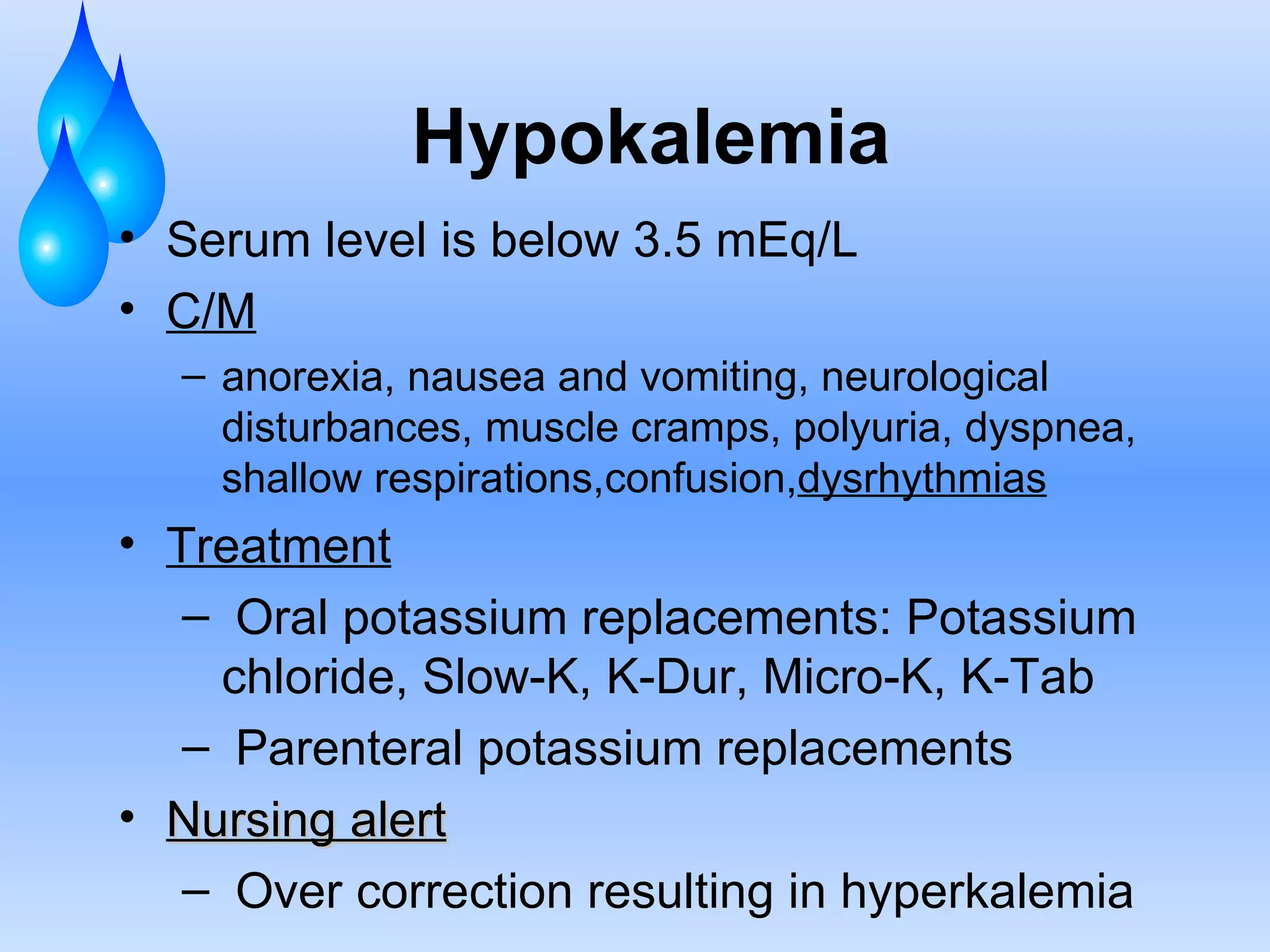
Hypokalemia Serum level is below 3.5 mEq/L C/M anorexia, nausea and vomiting, neurological disturbances, muscle cramps, polyuria, dyspnea, shallow respirations,confusion, dysrhythmias Treatment Oral potassium replacements: Potassium chloride, Slow-K, K-Dur, Micro-K, K-Tab  Parenteral potassium replacements Nursing alert Over correction resulting in hyperkalemia
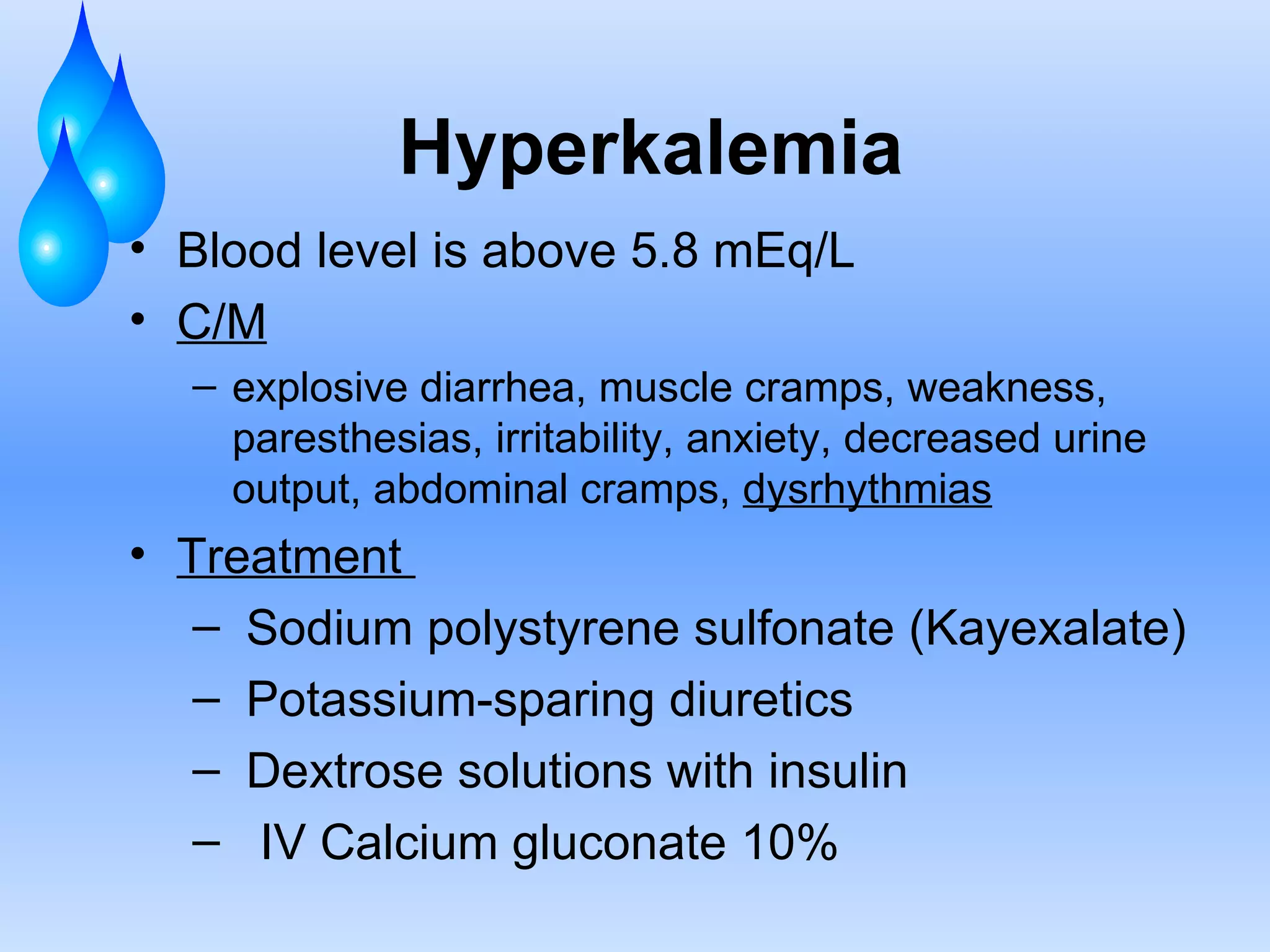
Hyperkalemia Blood level is above 5.8 mEq/L C/M explosive diarrhea, muscle cramps, weakness, paresthesias, irritability, anxiety, decreased urine output, abdominal cramps,  dysrhythmias Treatment  Sodium polystyrene sulfonate (Kayexalate) Potassium-sparing diuretics  Dextrose solutions with insulin IV Calcium gluconate 10%
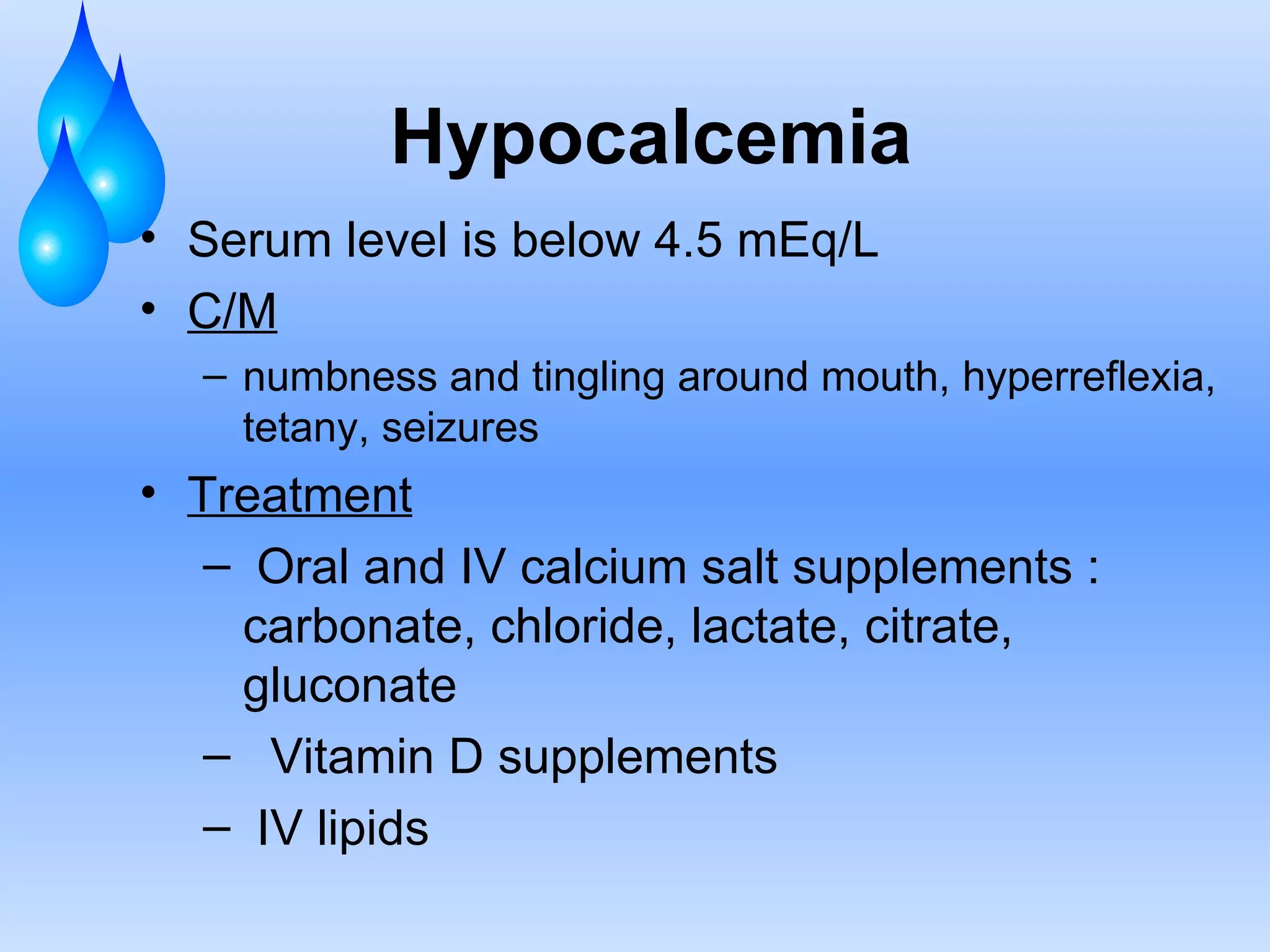
Hypocalcemia Serum level is below 4.5 mEq/L C/M numbness and tingling around mouth, hyperreflexia, tetany, seizures Treatment Oral and IV calcium salt supplements : carbonate, chloride, lactate, citrate, gluconate Vitamin D supplements IV lipids
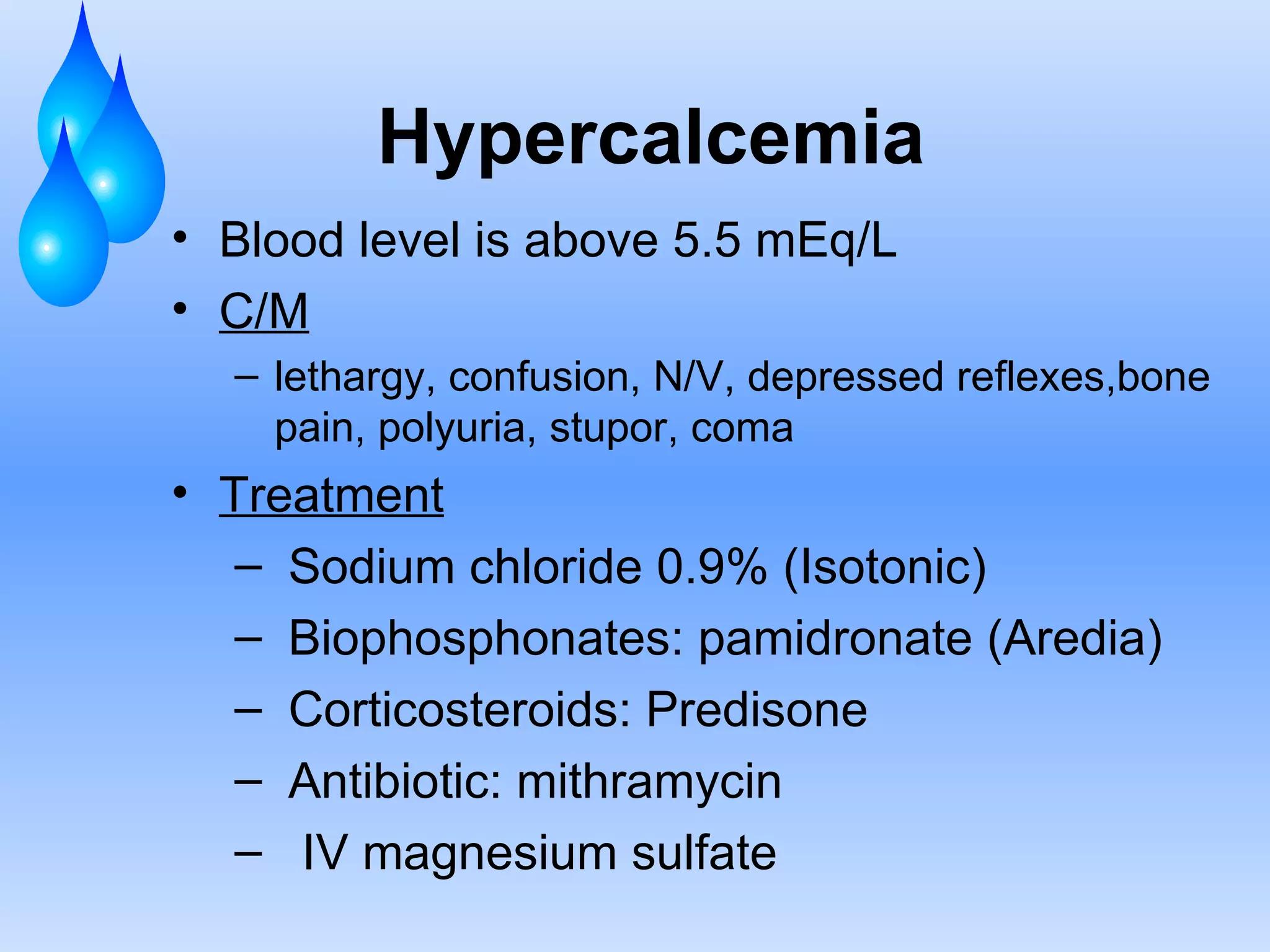
Hypercalcemia Blood level is above 5.5 mEq/L C/M lethargy, confusion, N/V, depressed reflexes,bone pain, polyuria, stupor, coma Treatment Sodium chloride 0.9% (Isotonic) Biophosphonates: pamidronate (Aredia) Corticosteroids: Predisone Antibiotic: mithramycin  IV magnesium sulfate
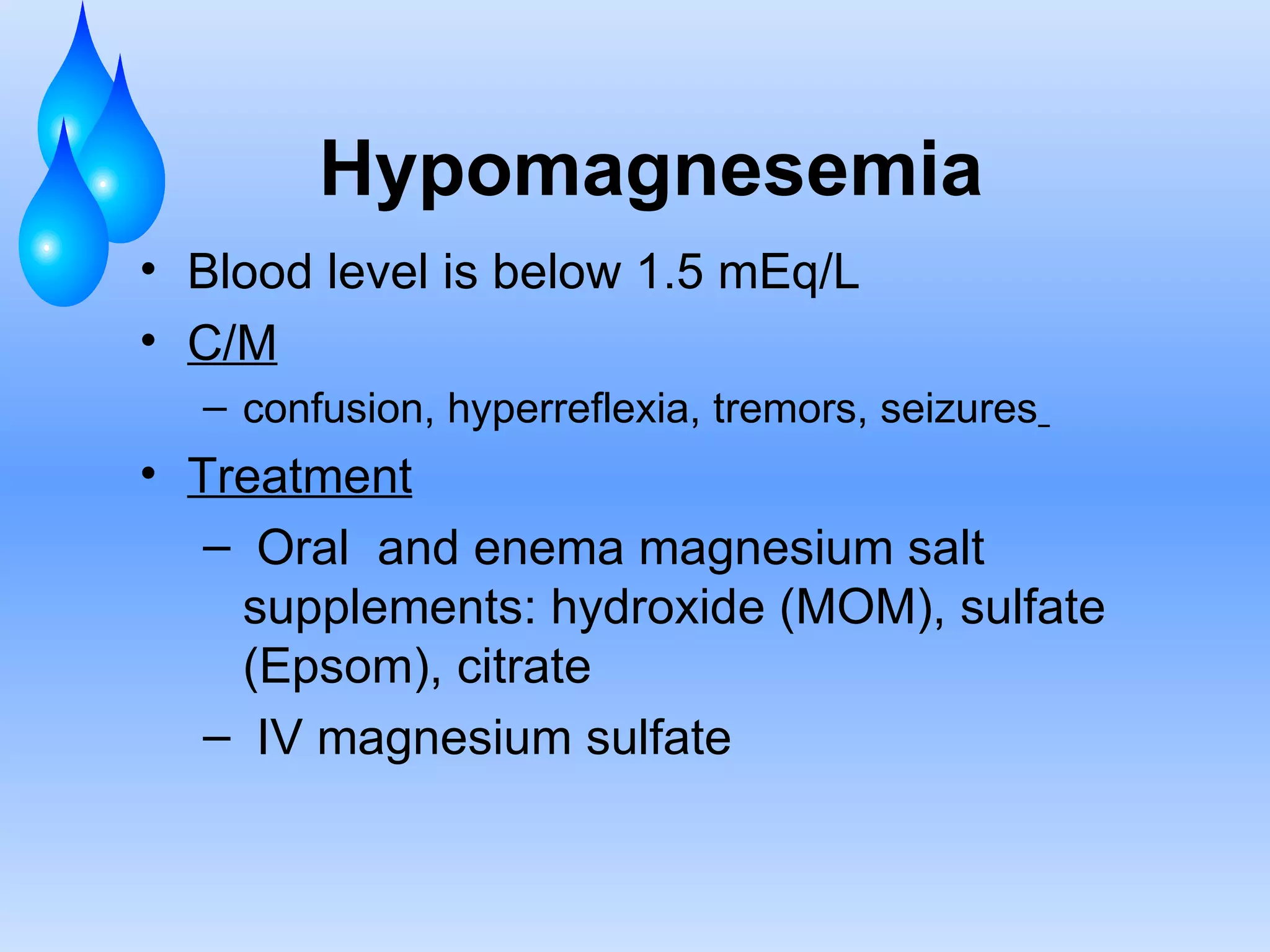
Hypomagnesemia Blood level is below 1.5 mEq/L C/M confusion, hyperreflexia, tremors, seizures   Treatment Oral  and enema magnesium salt supplements: hydroxide (MOM), sulfate (Epsom), citrate IV magnesium sulfate
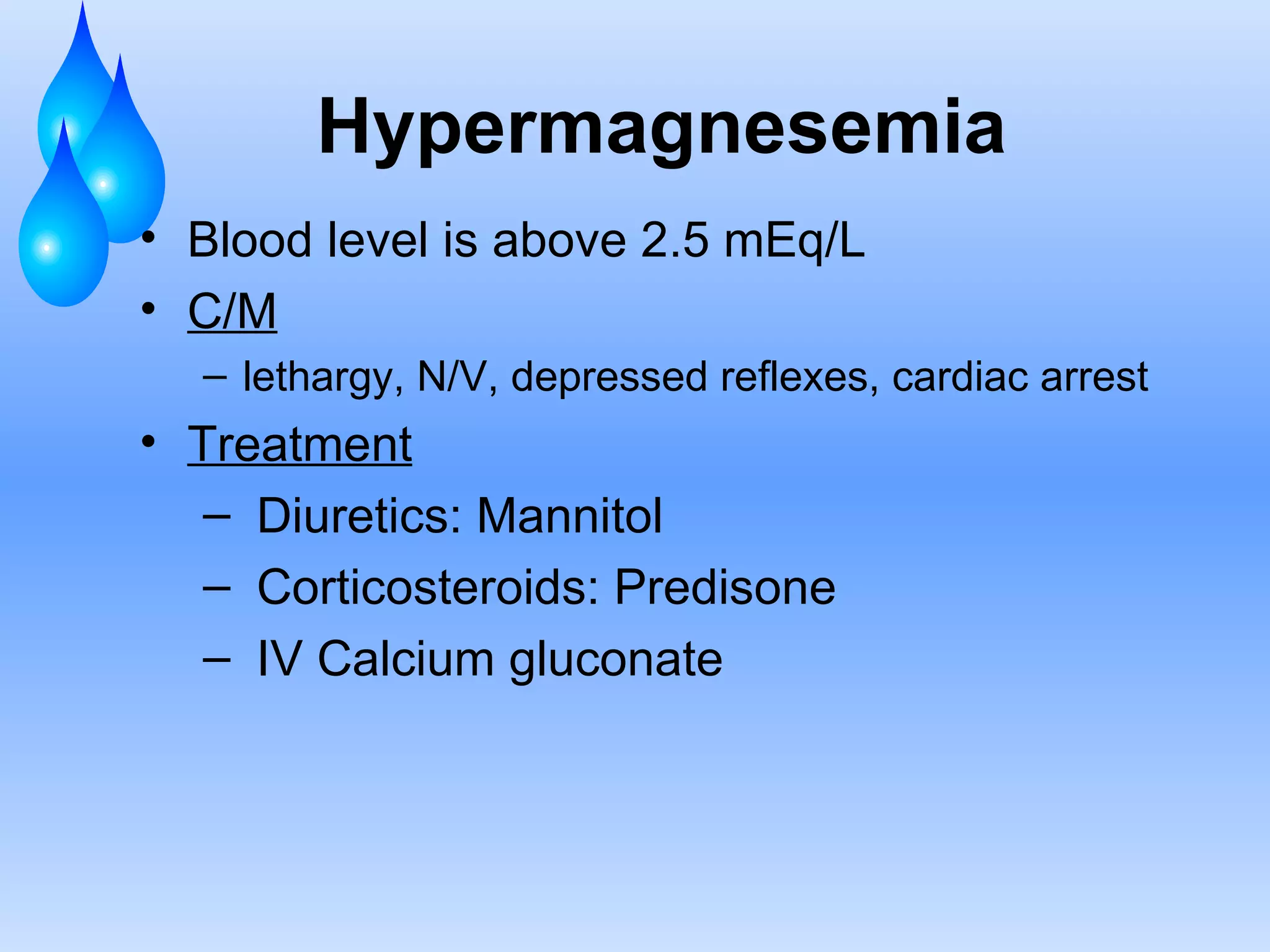
Hypermagnesemia Blood level is above 2.5 mEq/L C/M lethargy, N/V, depressed reflexes, cardiac arrest Treatment Diuretics: Mannitol Corticosteroids: Predisone IV Calcium gluconate
Complications of IV and Electrolyte Replacement Infiltration Thrombosis Thrombophlebitis Pain at insertion site Necrosis Pulmonary edema Pyrogenic reactions Air emboli

Fluid And Electrolytes

  • 1.
    Management of Fluidand Electrolyte Replacement Hartnell College Pharmacology NRN 130 Laurie Phillips RN, MSN, PHN
  • 2.
    Homeostasis Tendency tomaintain fluid in specific compartments Necessary for cells to carrying out their functions Process involves deliver of elements to the cell such as O2 and glucose and remove waste products such as CO2 When not maintained, illness will occur
  • 3.
    Body Fluid CompartmentsIntracellular (ICF) - Fluid within the cell. Most body fluid is found here. Extracellular (ECF) - fluid found outside the cell such as plasma/serum. Responsible for transport of nutrients and waste. intravascular: fluid surrounding the cells interstitial fluid: including lymph fluid other: digestive secretions, CSF, sweat
  • 4.
    Body Fluid CompositionH2O largest portion of body wt. that decreases with age women have a lower % of water storage because of increased fat cells which do not contain as much H2O as other cells Affected by age, sex, and amount of body fat
  • 5.
    Body Fluid CompositionSolutes (electrolytes and nonelectrolytes) Electrolytes - substance that contains an electrical charge when dissolved in H2O; break into ions Cations (NA+, Ca+, Mg+) Anions (Cl-, HCO3-, HPO4-)
  • 6.
    Body Fluid CompositionEvery fluid compartment contains a balance of cations and anions The concentration of an electrolyte in a solution or body compartment is measured in mEq/L Electrolytes can move from one compartment to another
  • 7.
    Intra vs. Extra Potassium Calcium Phosphate Magnesium Sodium Chloride Calcium Bicarbonate
  • 8.
    Nonelectrolytes Other substancesthat dissolve in H2O Urea, protein, glucose, creatinine, bilirubin Measured in mg/dl
  • 9.
    Osmolality Concentration ofa solution Determined by the # of particles/Kg of H2O changing osmolality of one compartment affects the osmolality of another compartment
  • 10.
    Osmolarity The concentrationof particles in a body of water Measured per liters of fluid
  • 11.
    Fluid Regulation Kidneyscontrol extracellular fluid by adjusting concentration of electrolytes, the osmolality of body fluids, volume of extracellular fluid, blood volume, and pH nephron is fixing unit of kidney, made of glomerulus (filtering) and tubules (reabsorption)
  • 12.
    Kidney Controlled byhormones and processes Filtration - blood enters via renal artery. 20% because filtrate and enters the glomerular capsule, goes thru the tubules and is transformed into urine by reaborption. Other 80% leaves thru renal vein.
  • 13.
    Kidney Reabsorption -occurs in the tubules. Important of adjusting volume and decomposition of filtrate preventing excessive fluid loss. Secretions - last phase, filtrate transformed to urine. Substances pass from blood into tubules and eliminated to maintain fluid and electrolyte balance.
  • 14.
    Hormones Aldosterone -released by adrenal glands, increases reaborption of Na+ and decreases reaborption of K+ Antidiuretic Hormones - produced by hypothalamus and secreted by the posterior pituitary. Causes the kidney tubules to reabsorb more H2O, so urine is more concentrated and there is less fluid loss
  • 15.
    Thirst Regulates fluidintake Increased osmolality stimulate osmoreceptors in the hypothalamus to start the sensation of thirst Kidneys are alerted to conserve H2O
  • 16.
    Fluid Gains/Losses Healthyindividuals have = I/O Urine output is 1-2L/day Seating causes H2O and electrolyte losses H2O loss in lung via evaporation approximately 300-400 ml/day GI tract loses 100-200ml/day via reabsorption in the small intestine
  • 17.
    Age-Related Changes Kidneyfunctioning slower Reduced sense of thirst Total body H2O declines Chronic conditions which contribute to imbalances Decreased need for fluid
  • 18.
    Basic Principles ofIV Fluid Replacement Iso-osmolar - has the same amount of particles (sodium, glucose, urea, or protein) and water Hypo-osmolar - has fewer particles than water Hyper-osmolar - has more particles than water 4 major categories of IV fluid replacement crystalloids colloids lipids blood products
  • 19.
    Crystalloids and ColloidsCrystalloids - dextrose, saline, and lactated Ringer’s solutions Used for replacement and maintenance of body fluids Colloids - amino acids, plasmanate, and dextran solutions Used as volume expanders
  • 20.
    Crystalloids Isotonic Solutionssodium chloride 0.9% lactated Ringer Hypotonic Solutions (hydrating) dextrose 2.5%, 5%, 10% dextrose 2.5% in 0.45 NaCl dextrose 5% in 0.45 NaCl
  • 21.
    Crystalloids (cont.)Maintenance Solutions Plasmalyte 56 Plasmalyte 148 Isolyte Hypertonic Solutions sodium chloride 3% sodium chloride 5%
  • 22.
    Colloids Protein SolutionsAminosol 5% Aminosol 5% with dextrose 5% Plasma Expanders Dextran 40 10% in normal saline or 5% dextrose in water Dextran 70 6% in normal saline or 5% dextrose in water
  • 23.
    Assessment Health Historykidney disease, diabetes, vomiting, diarrhea, salicylate poisoning, CHF, burns, cerebral injuries, ulcerative colitis, hormone imbalances risk factors: diuretics, cathartics, gastric suctioning complaints: fatigue, palpitations, dizziness, edema,dyspnea, confusion
  • 24.
    Assessment Vital Signsfever causes fluid and electrolyte loss pulse will increase in response to volume loss electrolyte changes can affect conduction of impulses in the heart respiration is minimally affected blood pressure directly related to blood volume
  • 25.
    Assessment Intake andoutput Body weight: same scale, same time, same clothes. 1L=2.2lbs Skin: color, moisture, temperature, facial characteristics, edema Mucous membranes Veins: neck vein distension
  • 26.
    Diagnostic Tests UrinepH (4.6 - 8.0) specific gravity (1.010 - 1.025) osmolality creatinine clearance sodium protein
  • 27.
    Diagnostic Tests Bloodhematocrit % blood urea nitrogen(BUN) osmolality electrolytes
  • 28.
    Electrolyte Imbalances MajorElectrolyte Categories Sodium and Potassium Calcium and Magnesium Electrolyte Conditions Hyponatremia and hypernatremia Hypokalcemia and hyperkalcemia Hypocalcemia and hypercalcemia Hypomagnesemia and hypermagnesemia
  • 29.
    Hyponatremia Serum levelsdrop below 135 mEq/L C/M headache, muscle weakness,fatigue, abdominal cramping, postural hypotension,confusion Treatment Fluid restriction Sodium chloride 0.9% (Isotonic) Ringer’s solution (Isotonic) Sodium chloride 3% - if severe
  • 30.
    Hypernatremia Serum levelis above 150 mEq/L C/M thirst, flushed skin, dry mucous membranes, restlessness, increased HR, low urine output, postural hypotension, convulsions Treatment Reduced salt intake Increase PO and IV replacement Dextrose 5% in water (Hypotonic)
  • 31.
    Hypokalemia Serum levelis below 3.5 mEq/L C/M anorexia, nausea and vomiting, neurological disturbances, muscle cramps, polyuria, dyspnea, shallow respirations,confusion, dysrhythmias Treatment Oral potassium replacements: Potassium chloride, Slow-K, K-Dur, Micro-K, K-Tab Parenteral potassium replacements Nursing alert Over correction resulting in hyperkalemia
  • 32.
    Hyperkalemia Blood levelis above 5.8 mEq/L C/M explosive diarrhea, muscle cramps, weakness, paresthesias, irritability, anxiety, decreased urine output, abdominal cramps, dysrhythmias Treatment Sodium polystyrene sulfonate (Kayexalate) Potassium-sparing diuretics Dextrose solutions with insulin IV Calcium gluconate 10%
  • 33.
    Hypocalcemia Serum levelis below 4.5 mEq/L C/M numbness and tingling around mouth, hyperreflexia, tetany, seizures Treatment Oral and IV calcium salt supplements : carbonate, chloride, lactate, citrate, gluconate Vitamin D supplements IV lipids
  • 34.
    Hypercalcemia Blood levelis above 5.5 mEq/L C/M lethargy, confusion, N/V, depressed reflexes,bone pain, polyuria, stupor, coma Treatment Sodium chloride 0.9% (Isotonic) Biophosphonates: pamidronate (Aredia) Corticosteroids: Predisone Antibiotic: mithramycin IV magnesium sulfate
  • 35.
    Hypomagnesemia Blood levelis below 1.5 mEq/L C/M confusion, hyperreflexia, tremors, seizures Treatment Oral and enema magnesium salt supplements: hydroxide (MOM), sulfate (Epsom), citrate IV magnesium sulfate
  • 36.
    Hypermagnesemia Blood levelis above 2.5 mEq/L C/M lethargy, N/V, depressed reflexes, cardiac arrest Treatment Diuretics: Mannitol Corticosteroids: Predisone IV Calcium gluconate
  • 37.
    Complications of IVand Electrolyte Replacement Infiltration Thrombosis Thrombophlebitis Pain at insertion site Necrosis Pulmonary edema Pyrogenic reactions Air emboli