10/5/20090FLUIDS AND ELECTROLYTESDr. Tanuj Paul BhatiaMBBS,MS
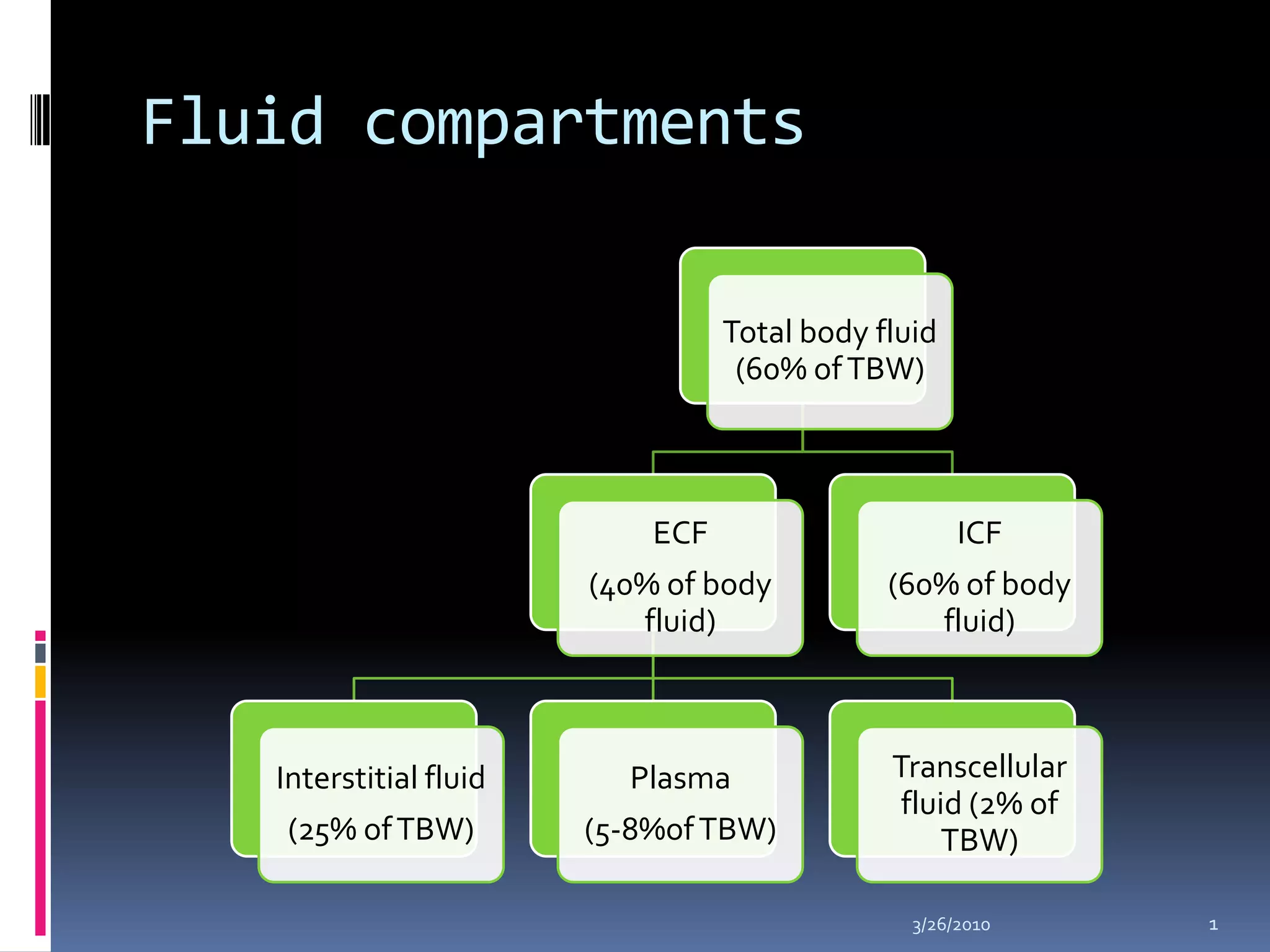
Fluid compartments10/5/20091
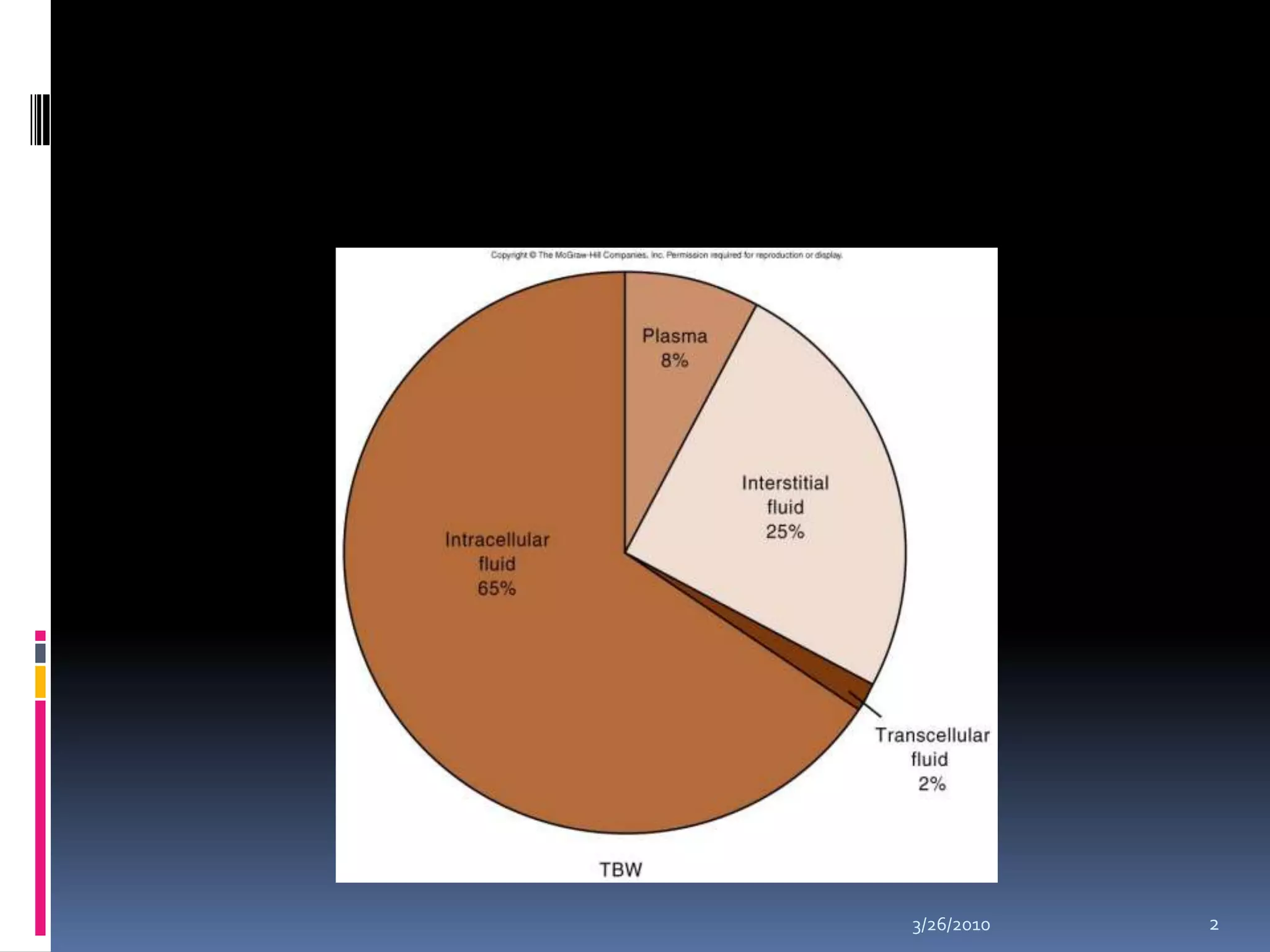
10/5/20092
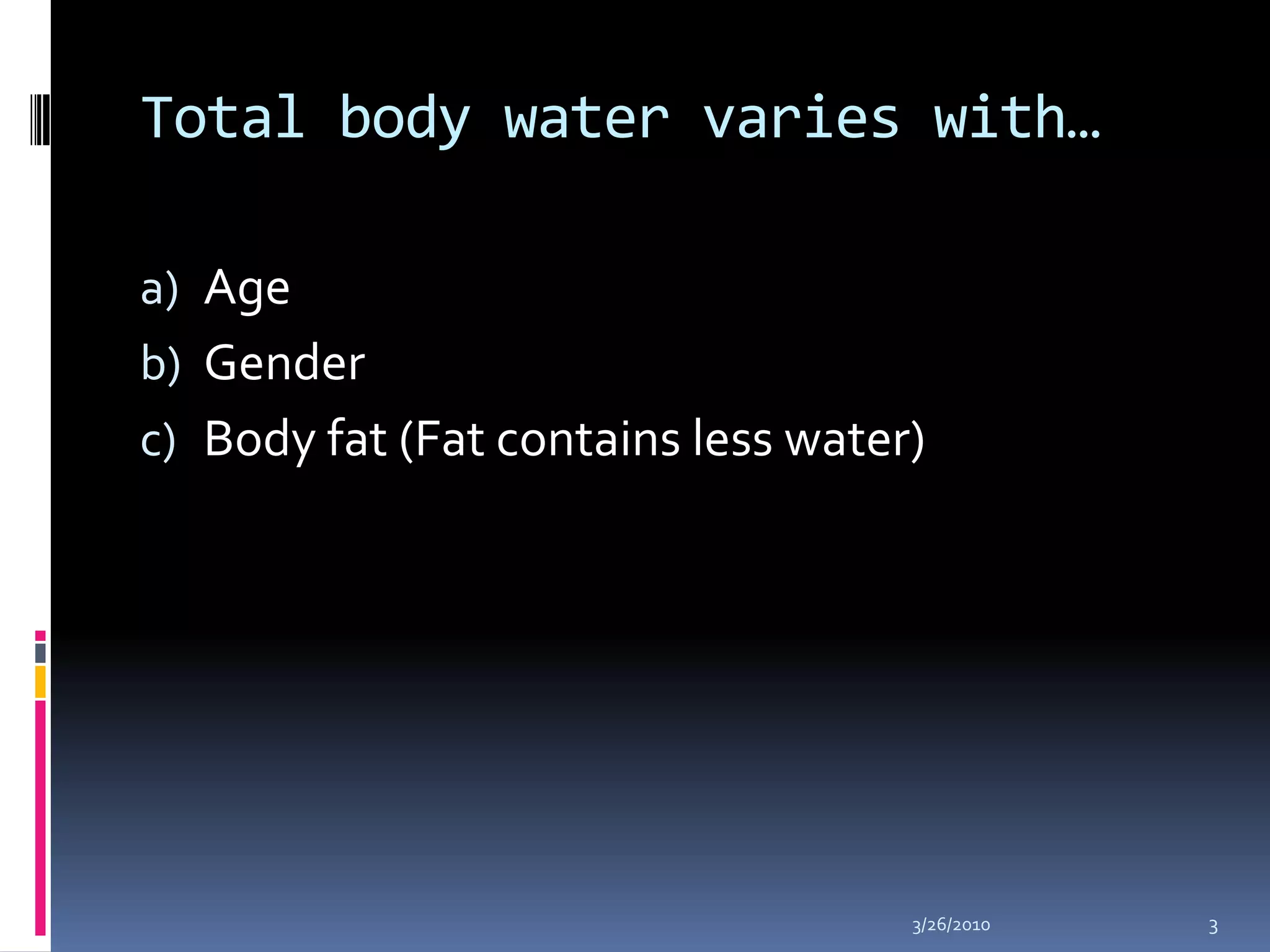
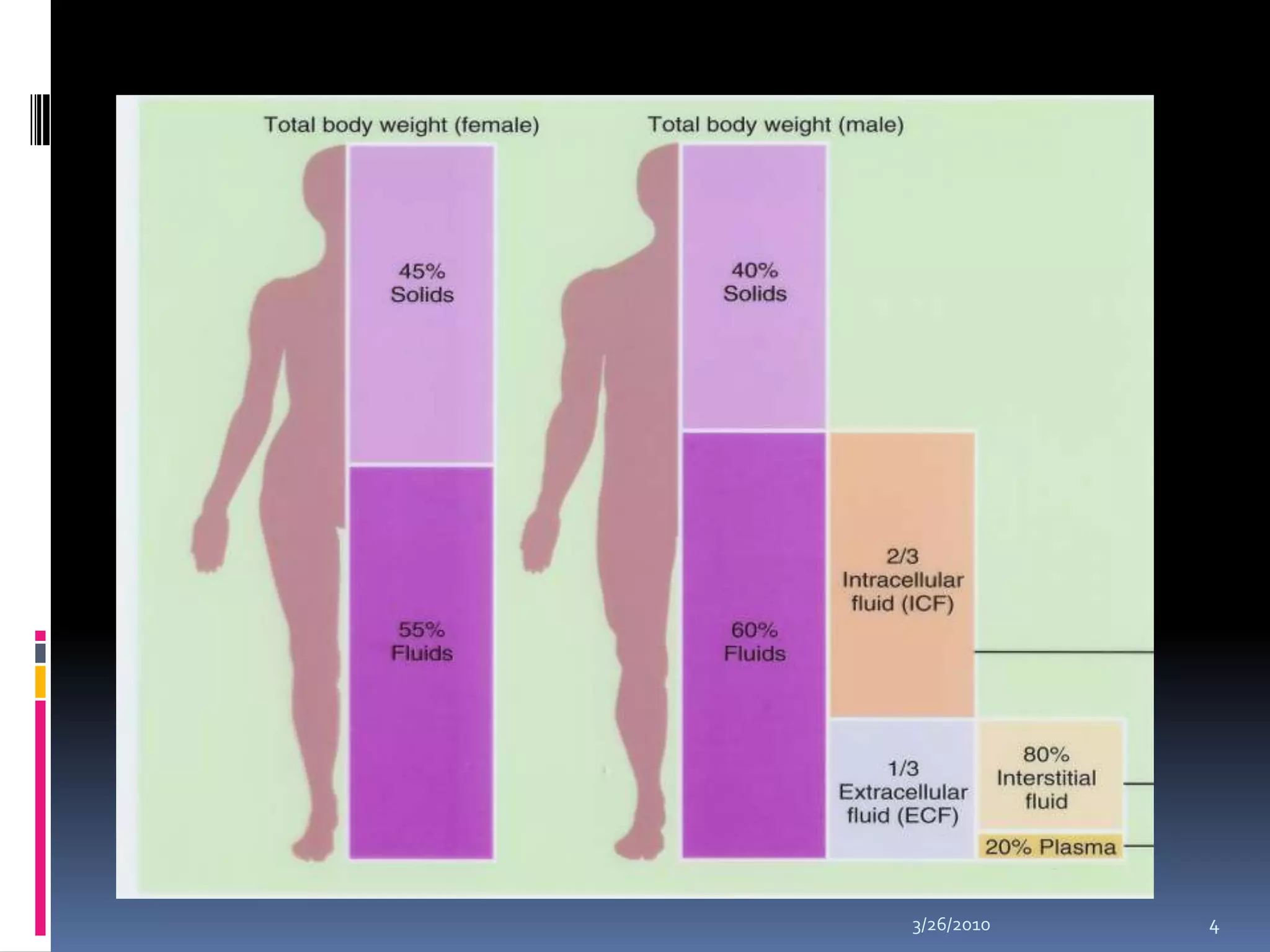
Total body water varies with…AgeGenderBody fat (Fat contains less water)10/5/20093
10/5/20094
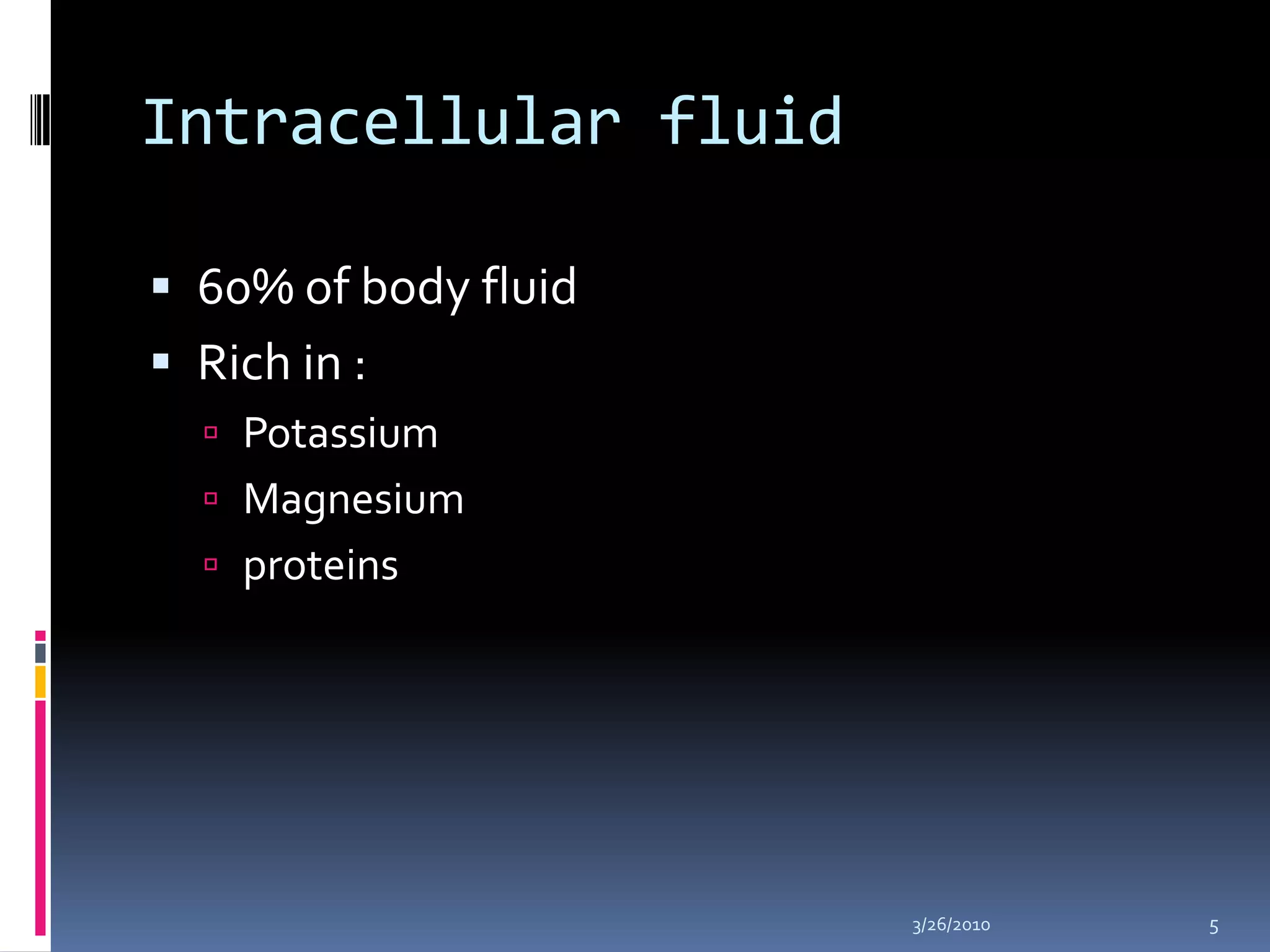
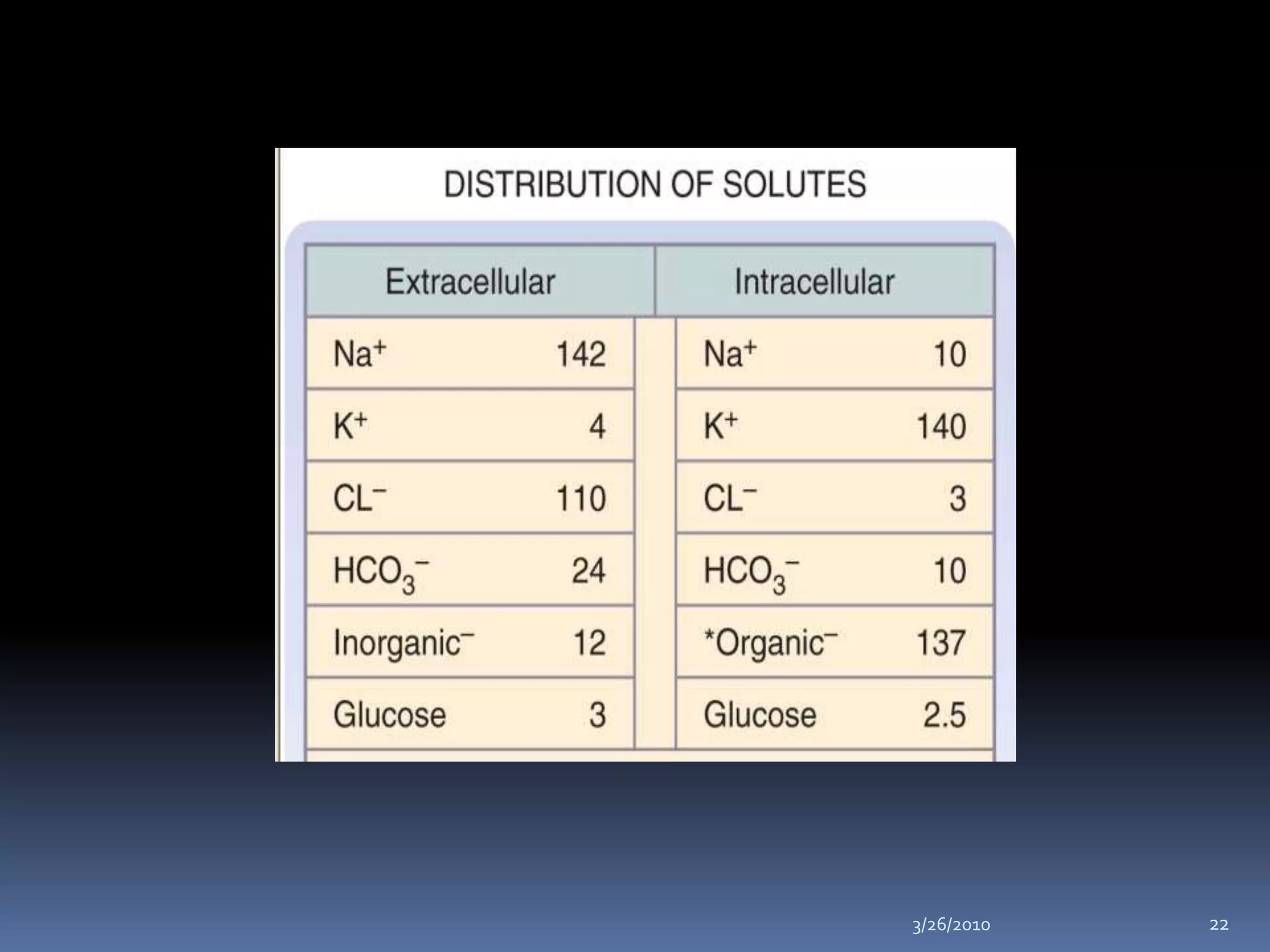
Intracellular fluid60% of body fluidRich in :PotassiumMagnesiumproteins10/5/20095
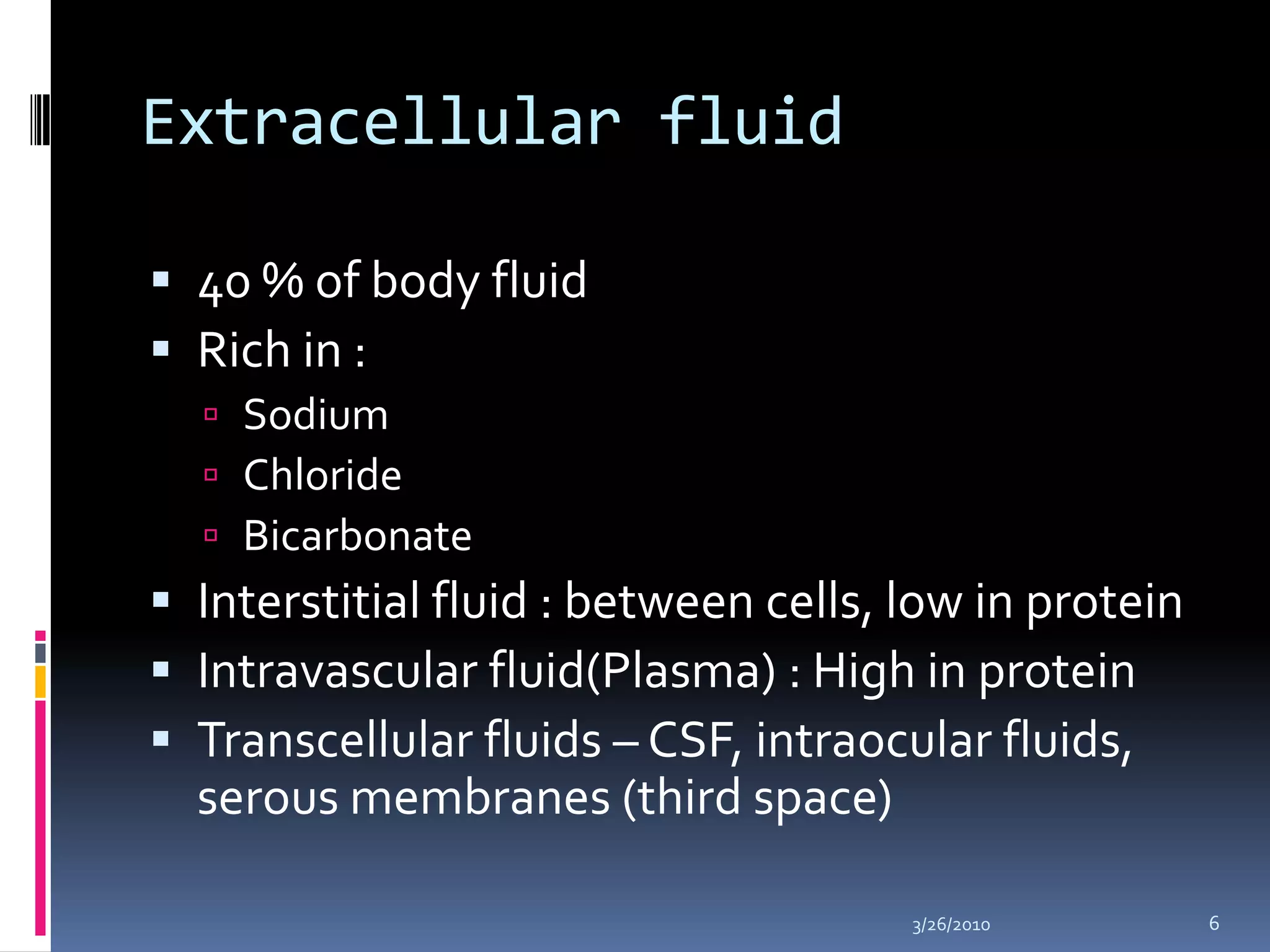
Extracellular fluid40 % of body fluidRich in :SodiumChlorideBicarbonate Interstitial fluid : between cells, low in proteinIntravascular fluid(Plasma) : High in proteinTranscellular fluids – CSF, intraocular fluids, serous membranes (third space)10/5/20096
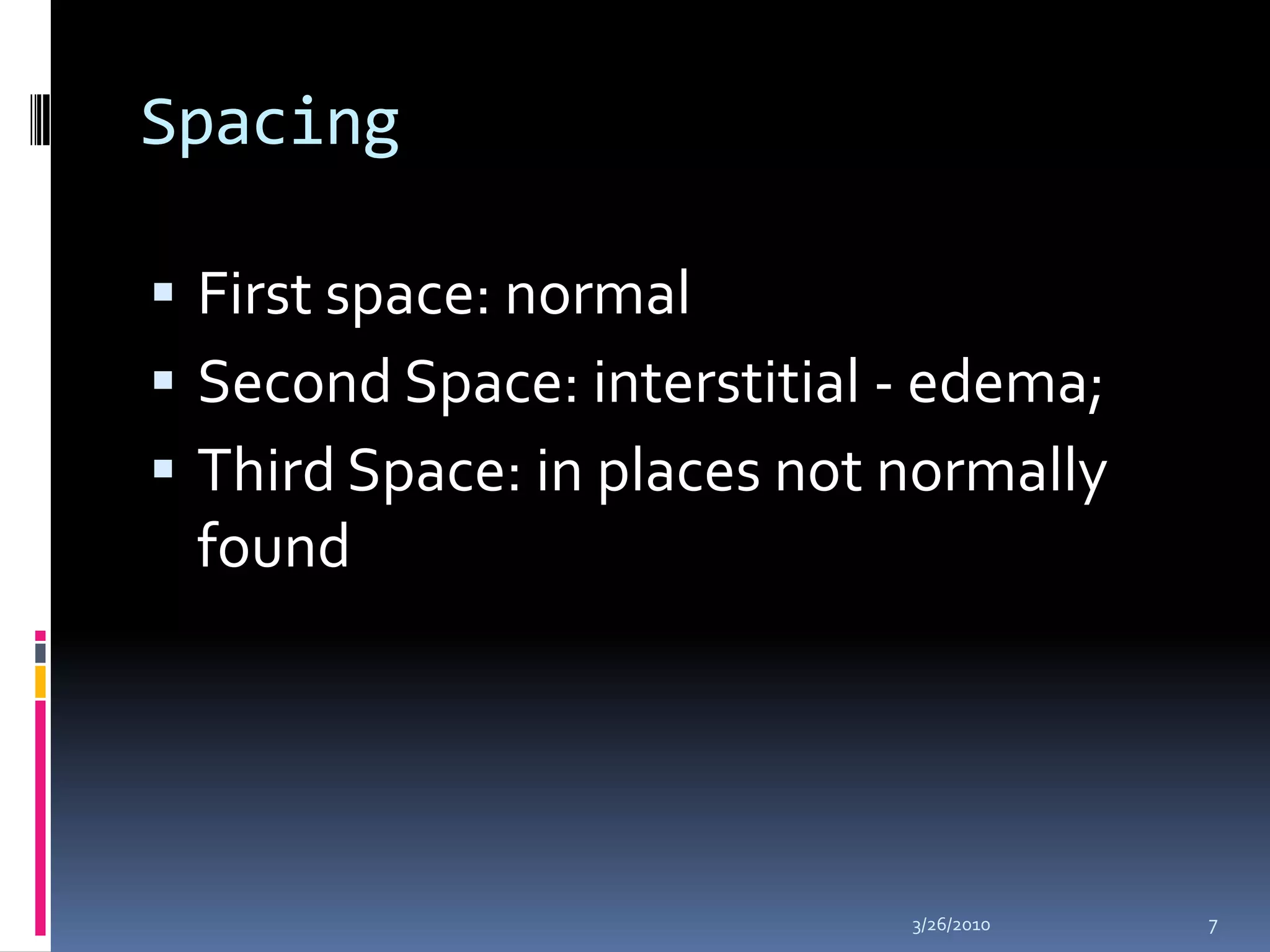
Spacing First space: normal Second Space: interstitial - edema; Third Space: in places not normally found 10/5/20097
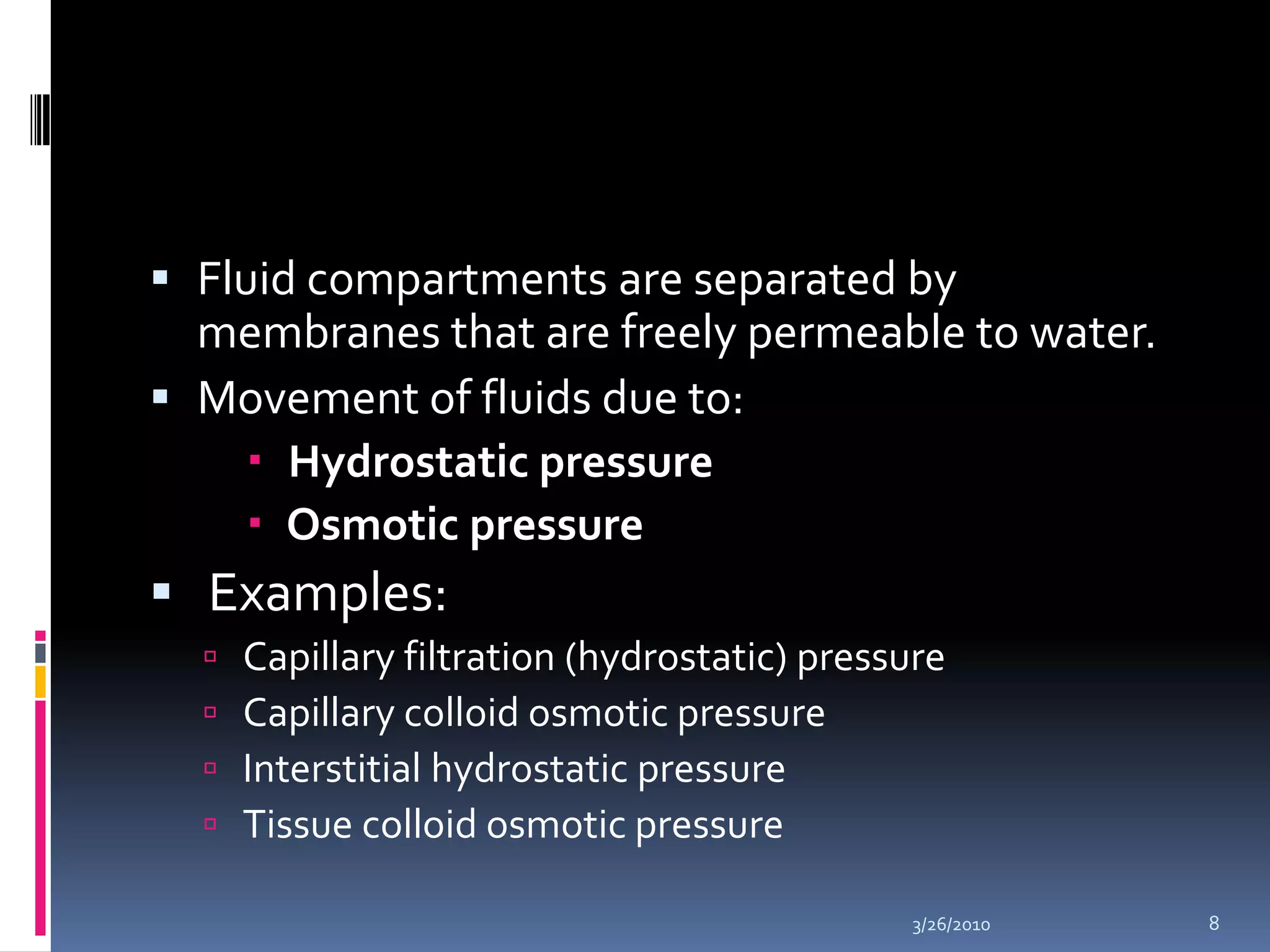
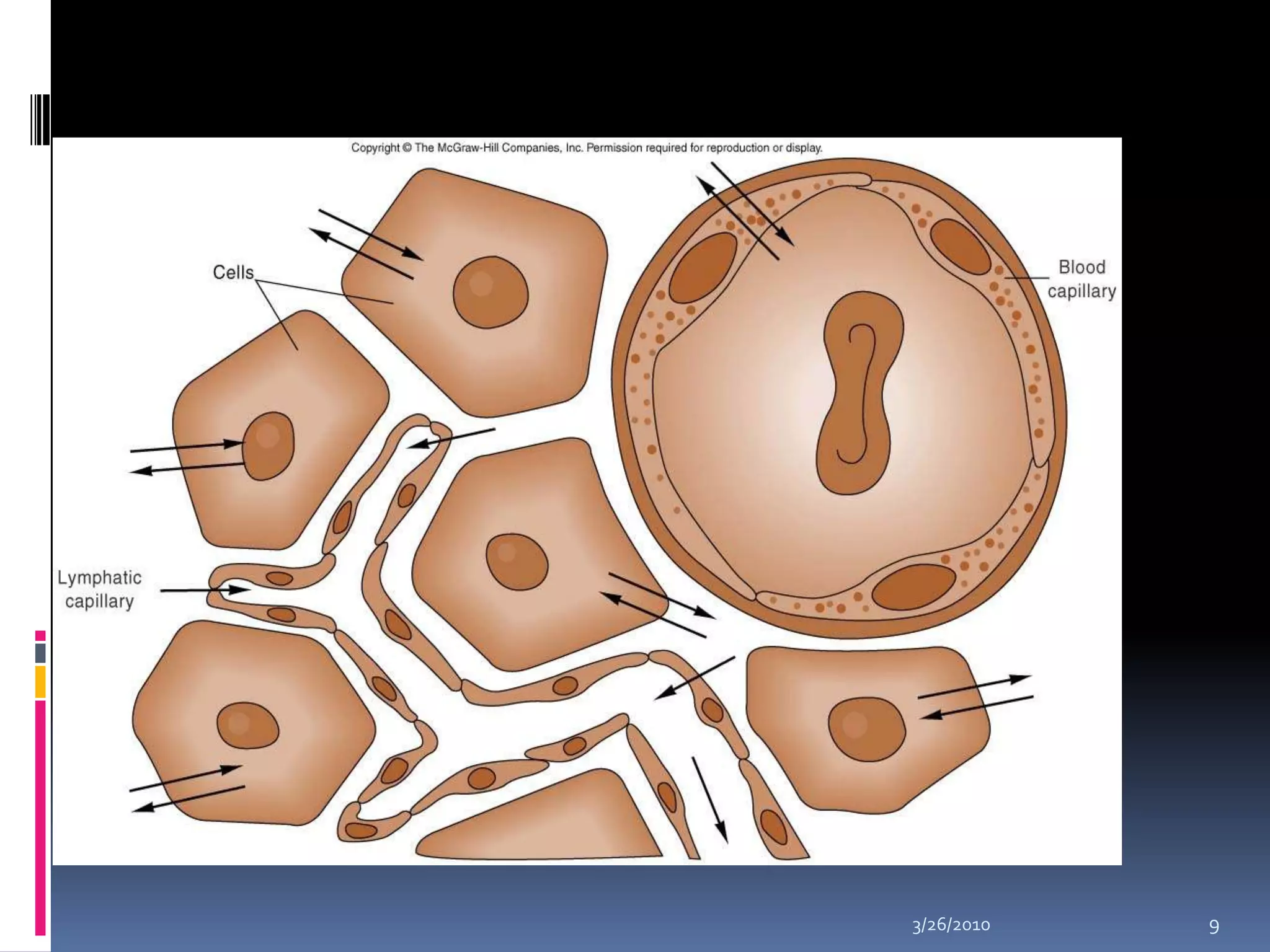
Fluid compartments are separated by membranes that are freely permeable to water.Movement of fluids due to: Hydrostatic pressure Osmotic pressure Examples:Capillary filtration (hydrostatic) pressureCapillary colloid osmotic pressureInterstitial hydrostatic pressureTissue colloid osmotic pressure10/5/20098
10/5/20099
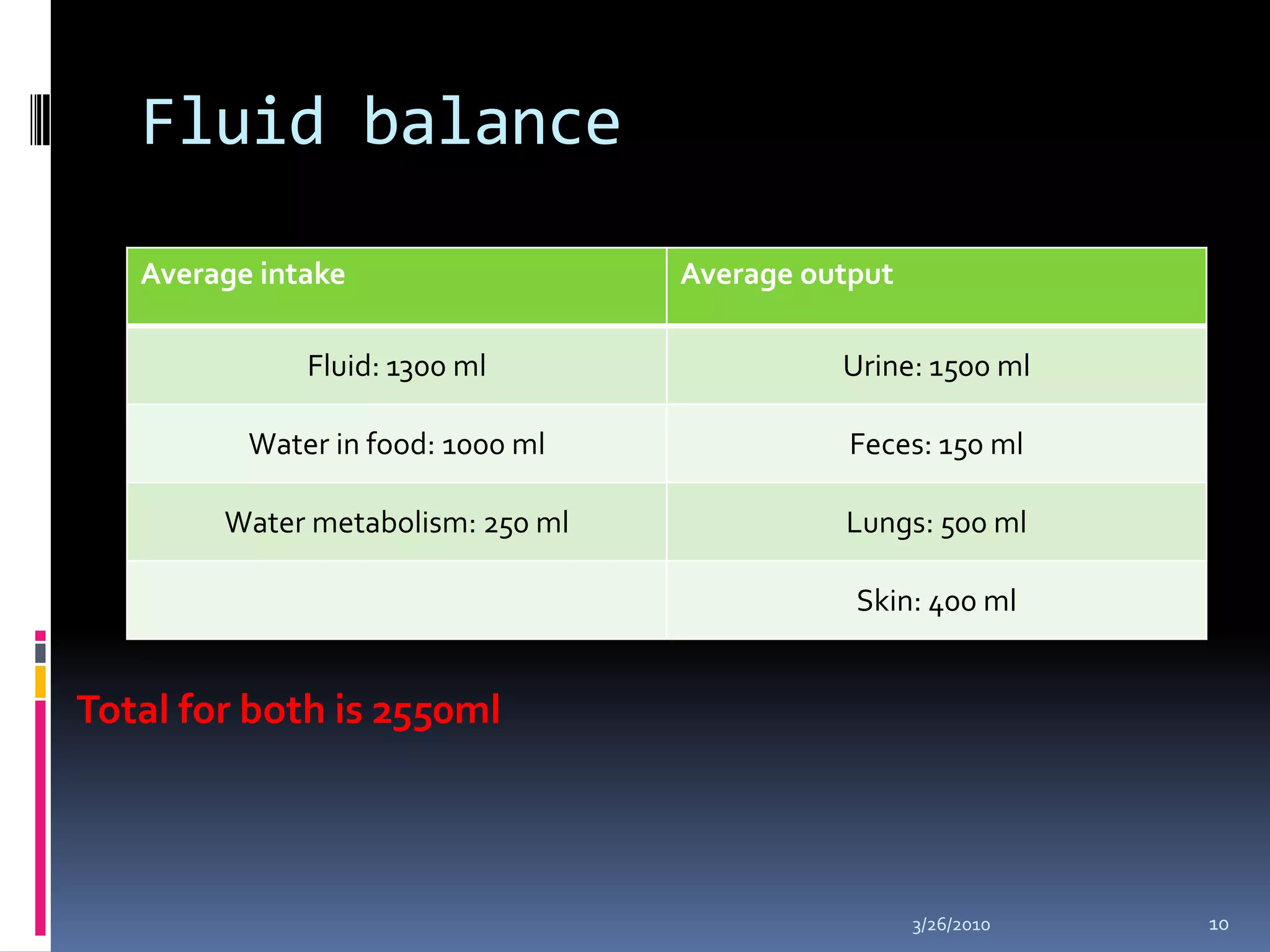
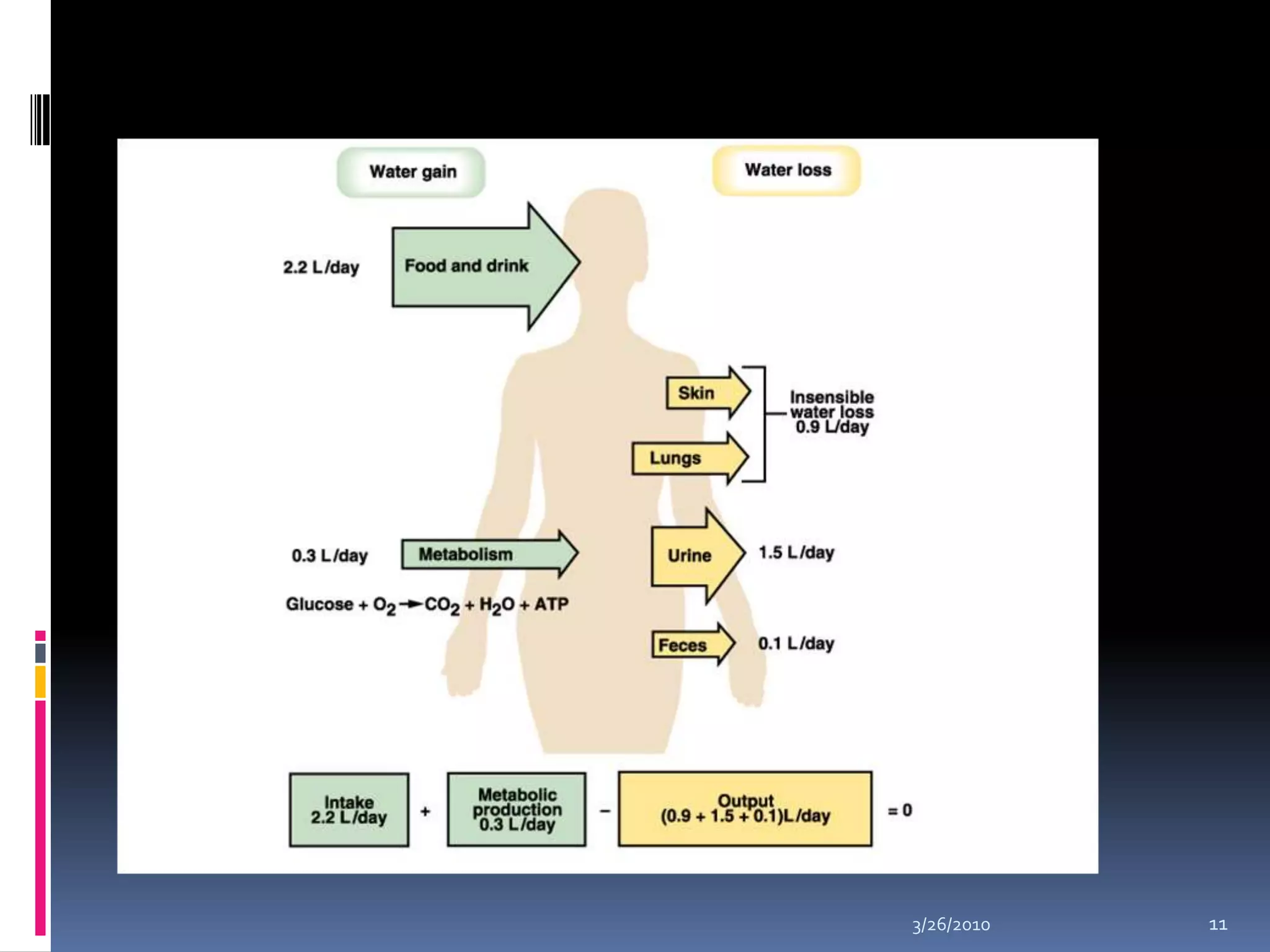
Fluid balance10/5/200910Total for both is 2550ml
10/5/200911
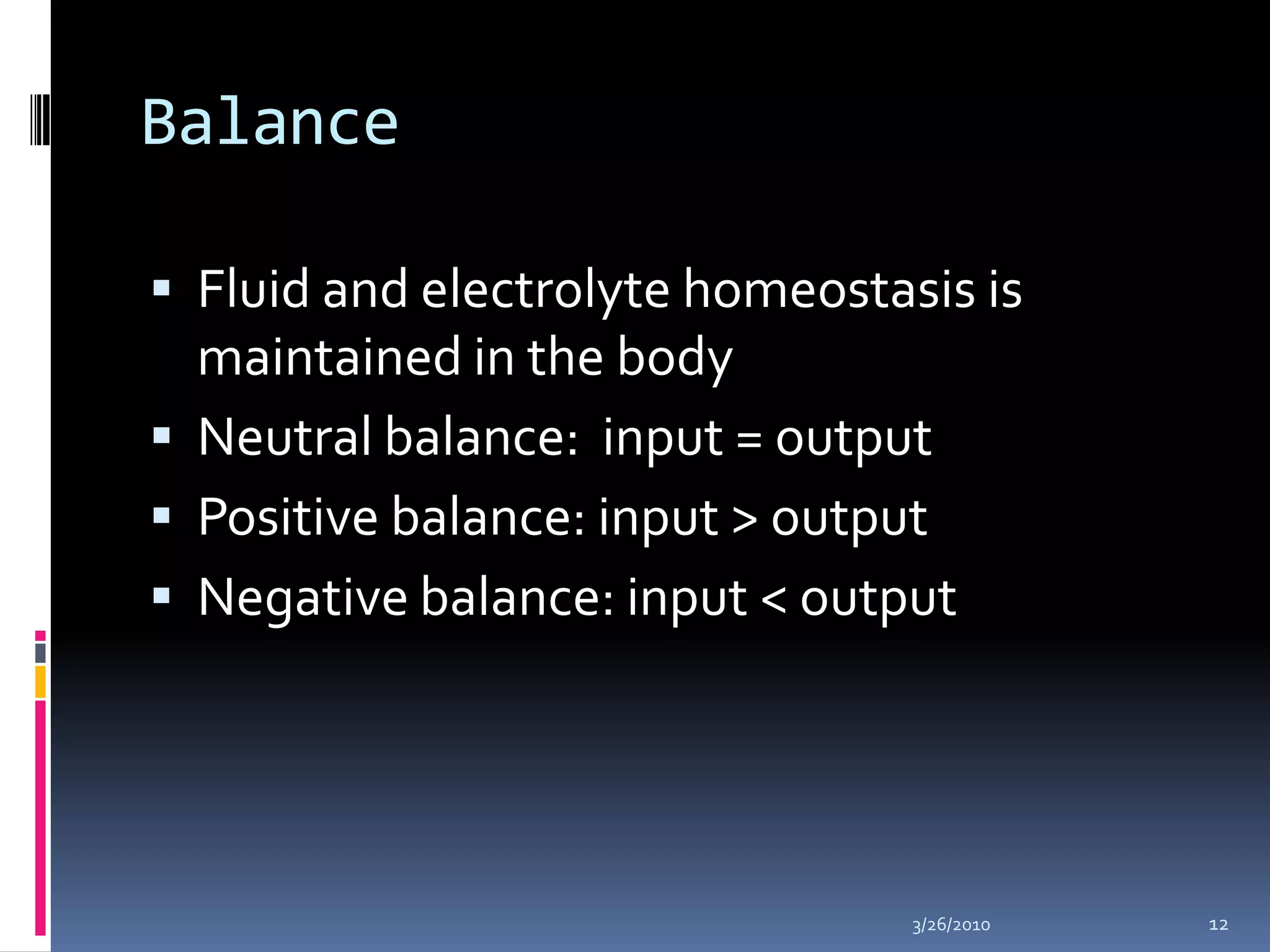
BalanceFluid and electrolyte homeostasis is maintained in the bodyNeutral balance:  input = outputPositive balance: input > outputNegative balance: input < output10/5/200912
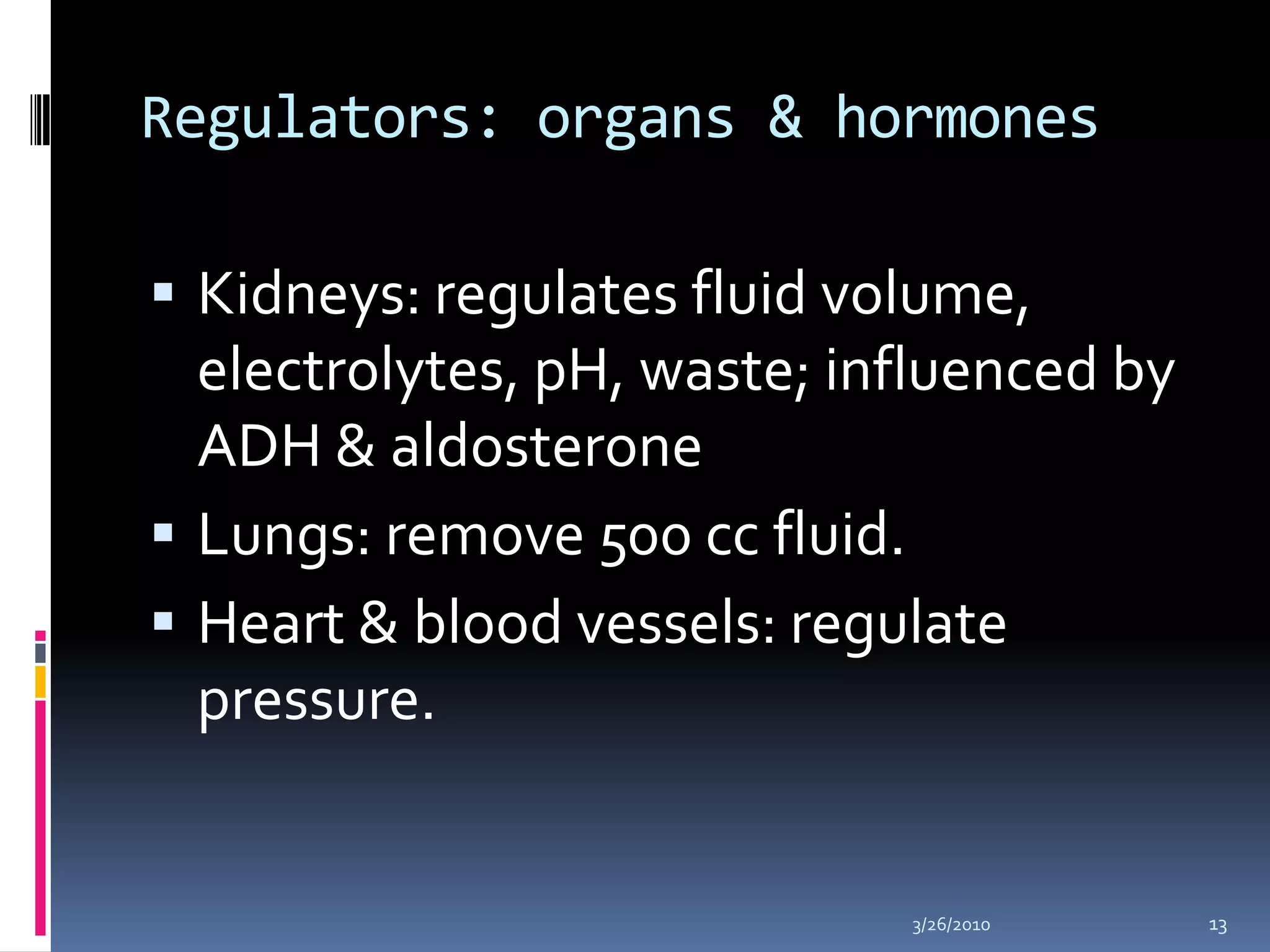
Regulators: organs & hormonesKidneys: regulates fluid volume, electrolytes, pH, waste; influenced by ADH & aldosteroneLungs: remove 500 cc fluid. Heart & blood vessels: regulate pressure. 10/5/200913
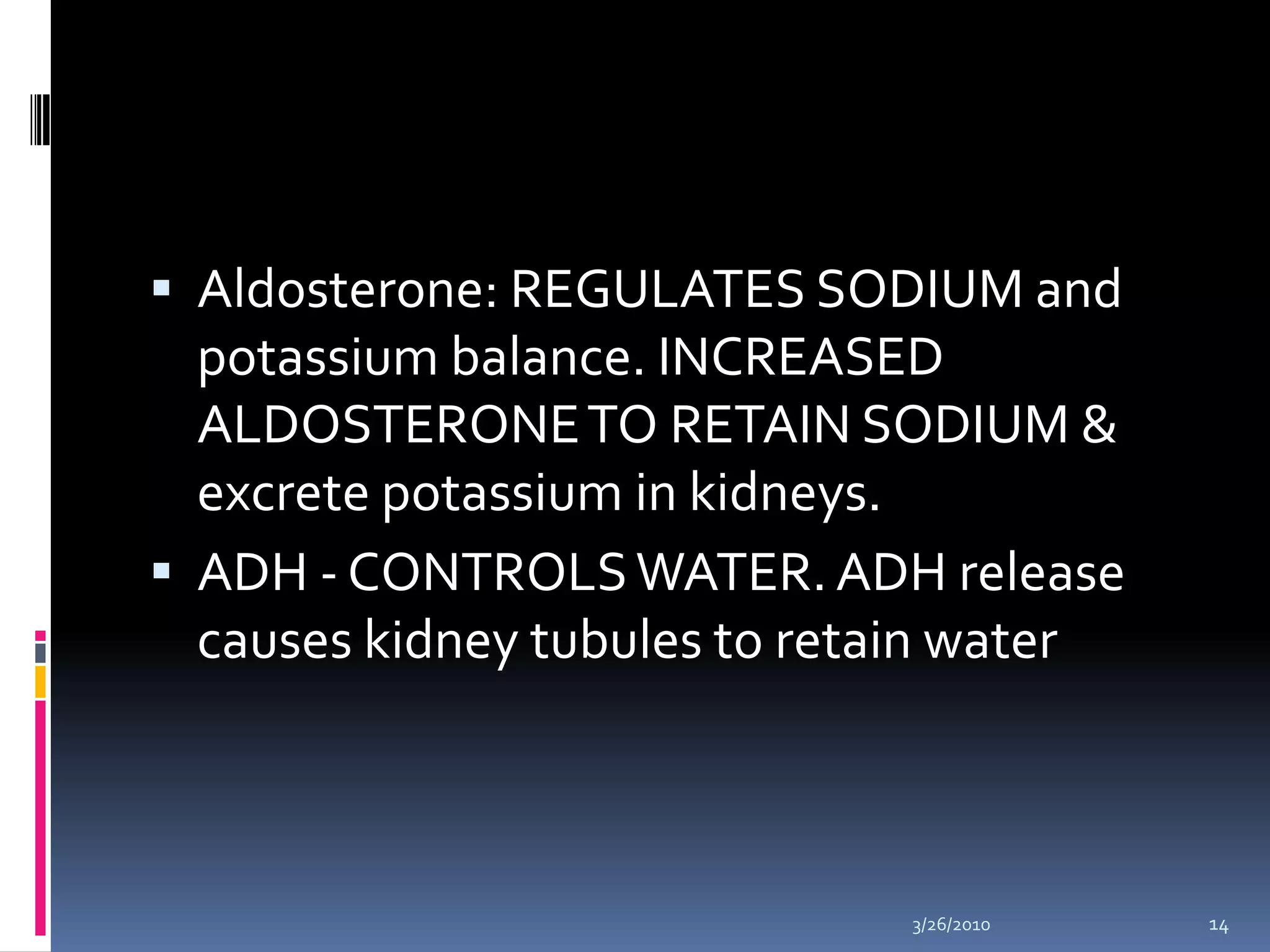
Aldosterone: REGULATES SODIUM and potassium balance. INCREASED ALDOSTERONE TO RETAIN SODIUM & excrete potassium in kidneys. ADH - CONTROLS WATER. ADH release causes kidney tubules to retain water 10/5/200914
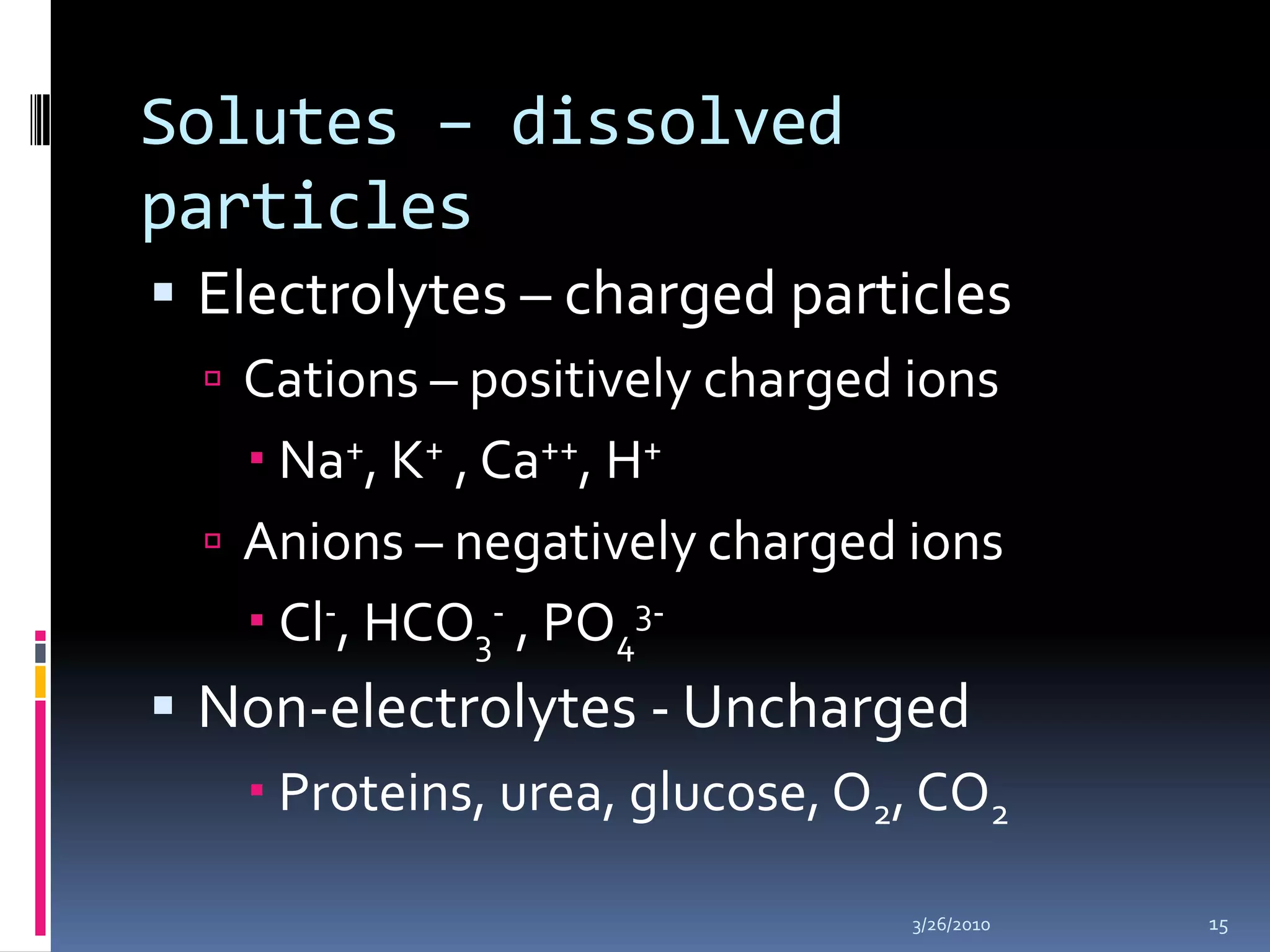
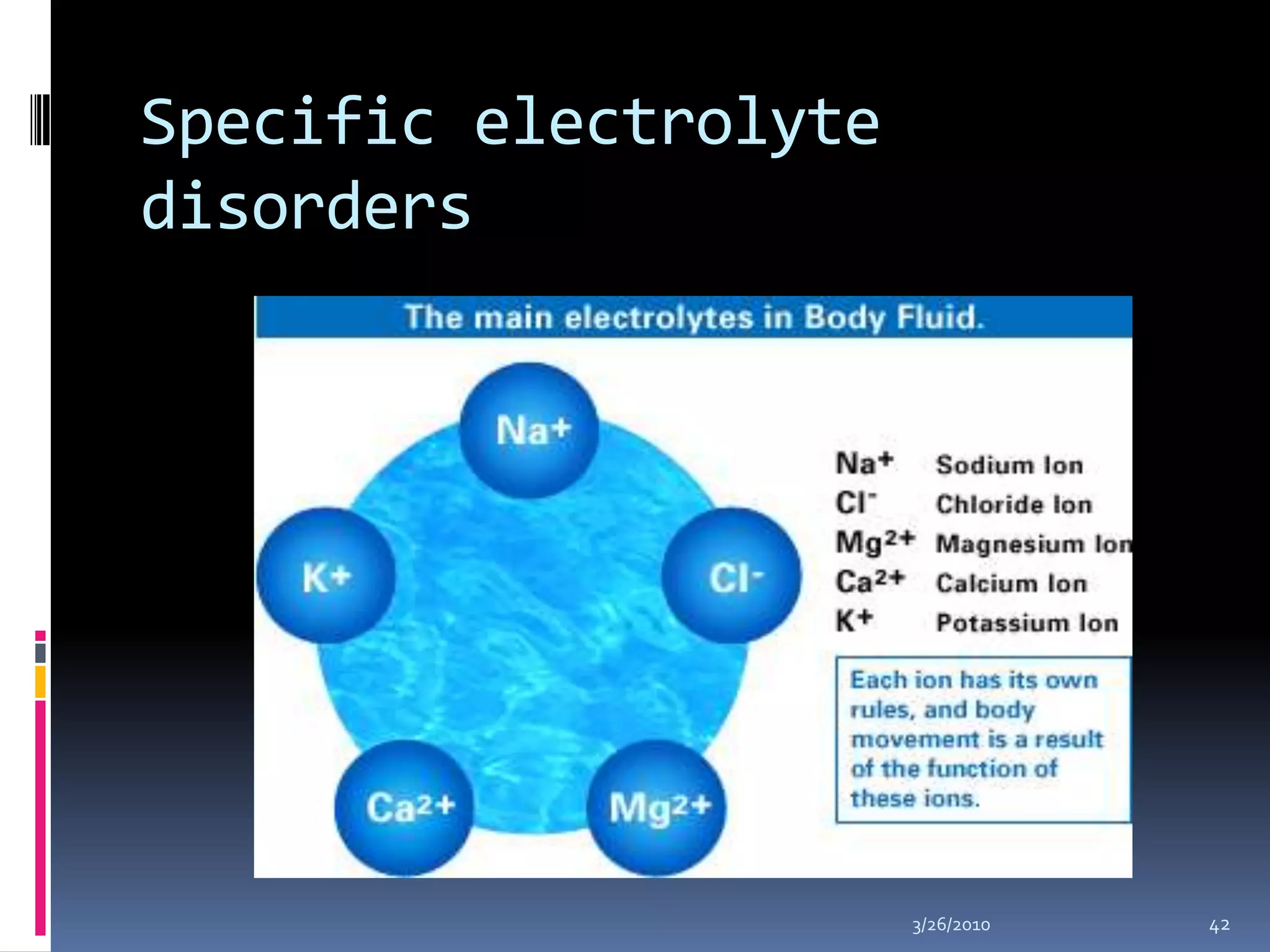
Solutes – dissolved particlesElectrolytes – charged particlesCations – positively charged ionsNa+, K+ , Ca++, H+Anions – negatively charged ionsCl-, HCO3- , PO43-Non-electrolytes - Uncharged Proteins, urea, glucose, O2, CO210/5/200915
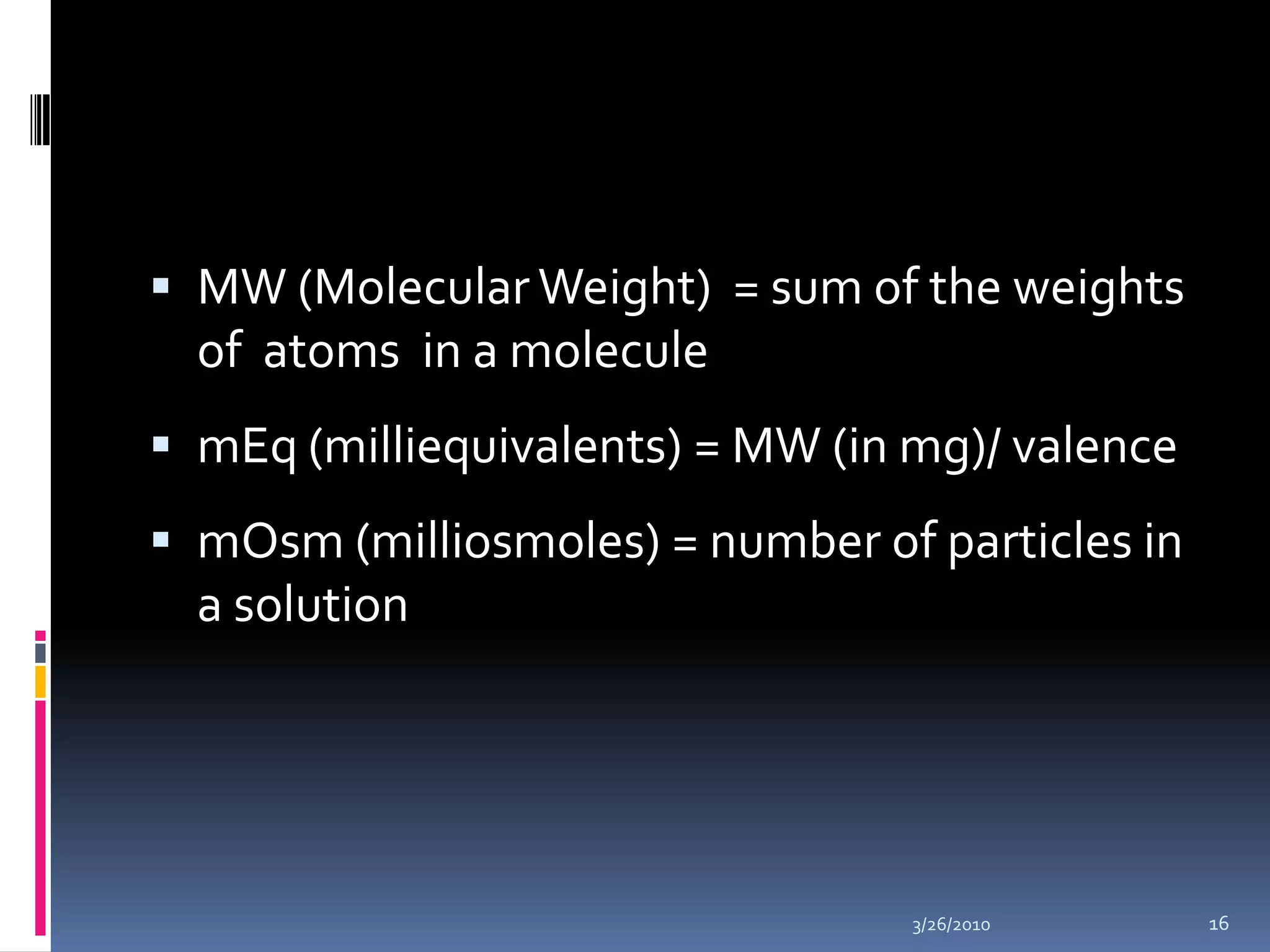
MW (Molecular Weight)  = sum of the weights                               of  atoms  in a moleculemEq (milliequivalents) = MW (in mg)/ valencemOsm (milliosmoles) = number of particles in a solution10/5/200916
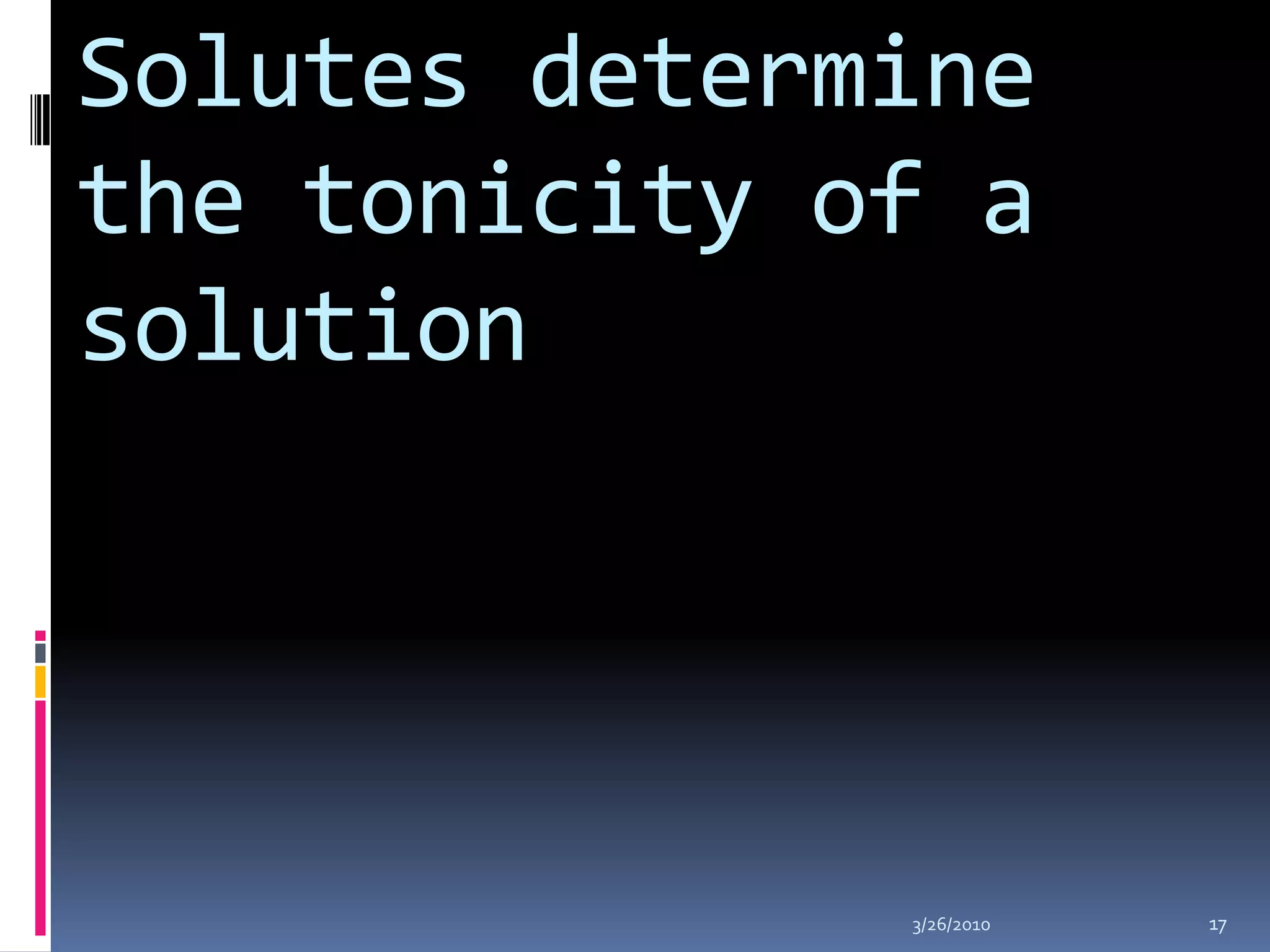
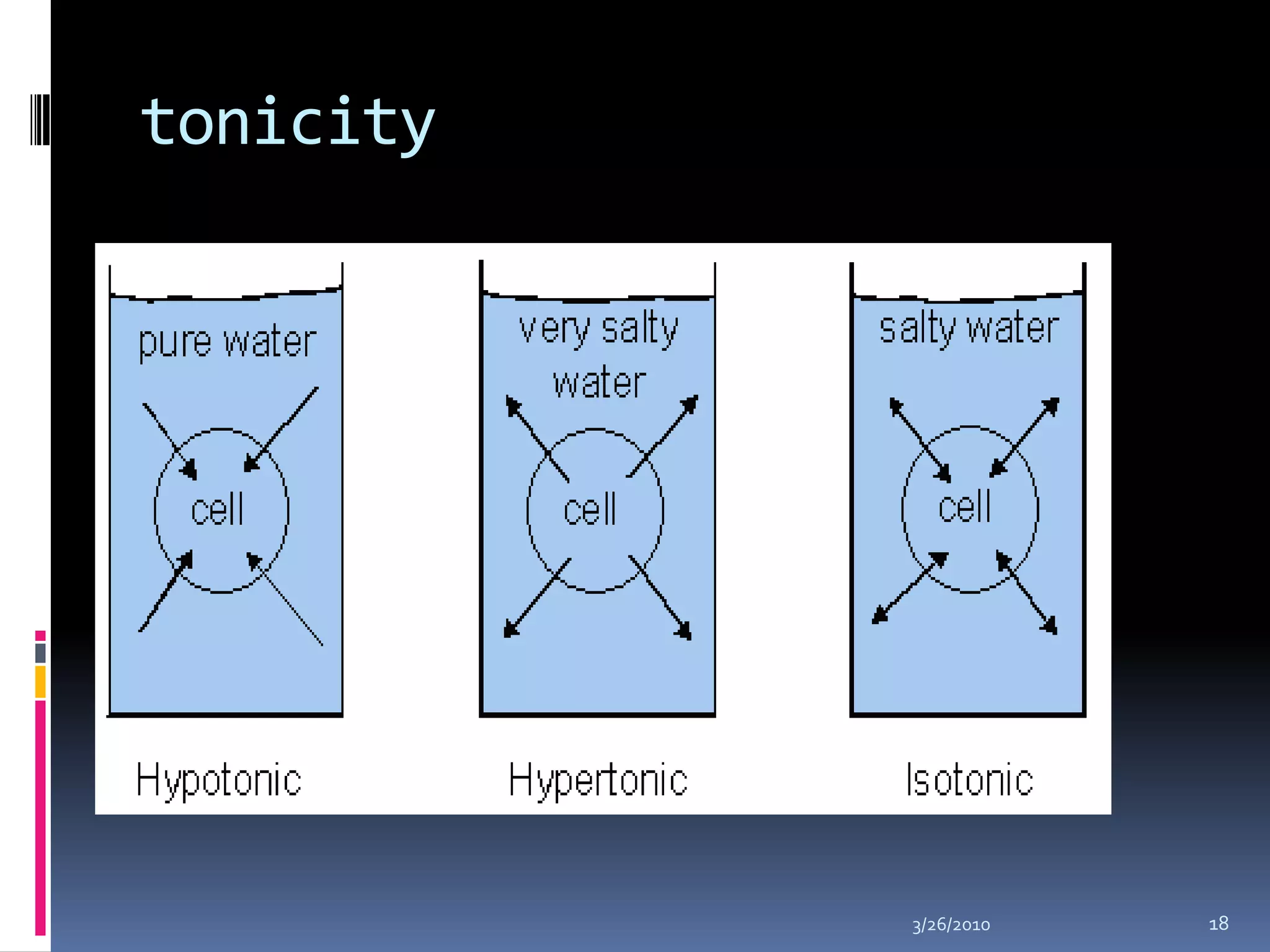
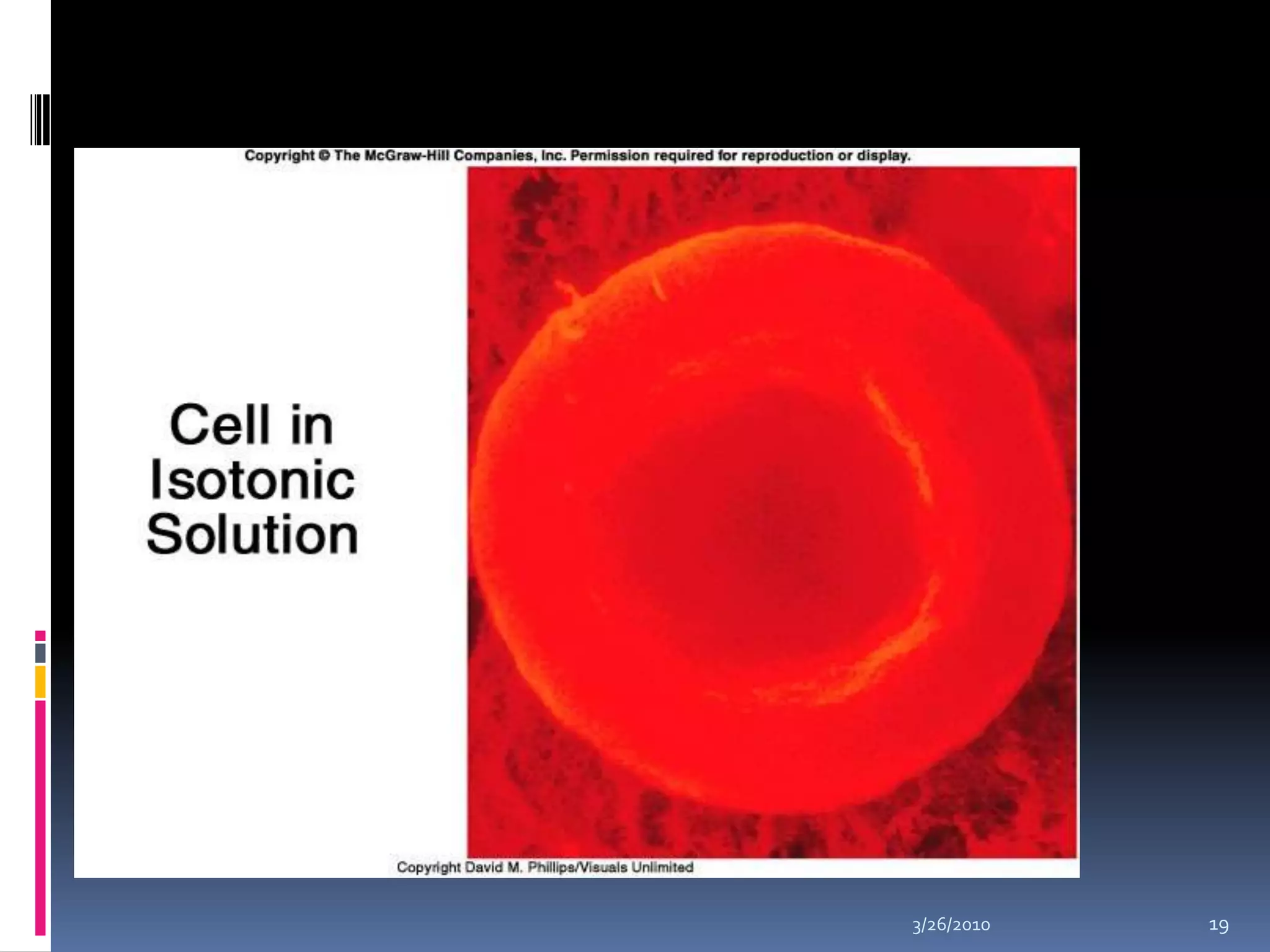
Solutes determine the tonicity of a solution10/5/200917
tonicity10/5/200918
10/5/200919
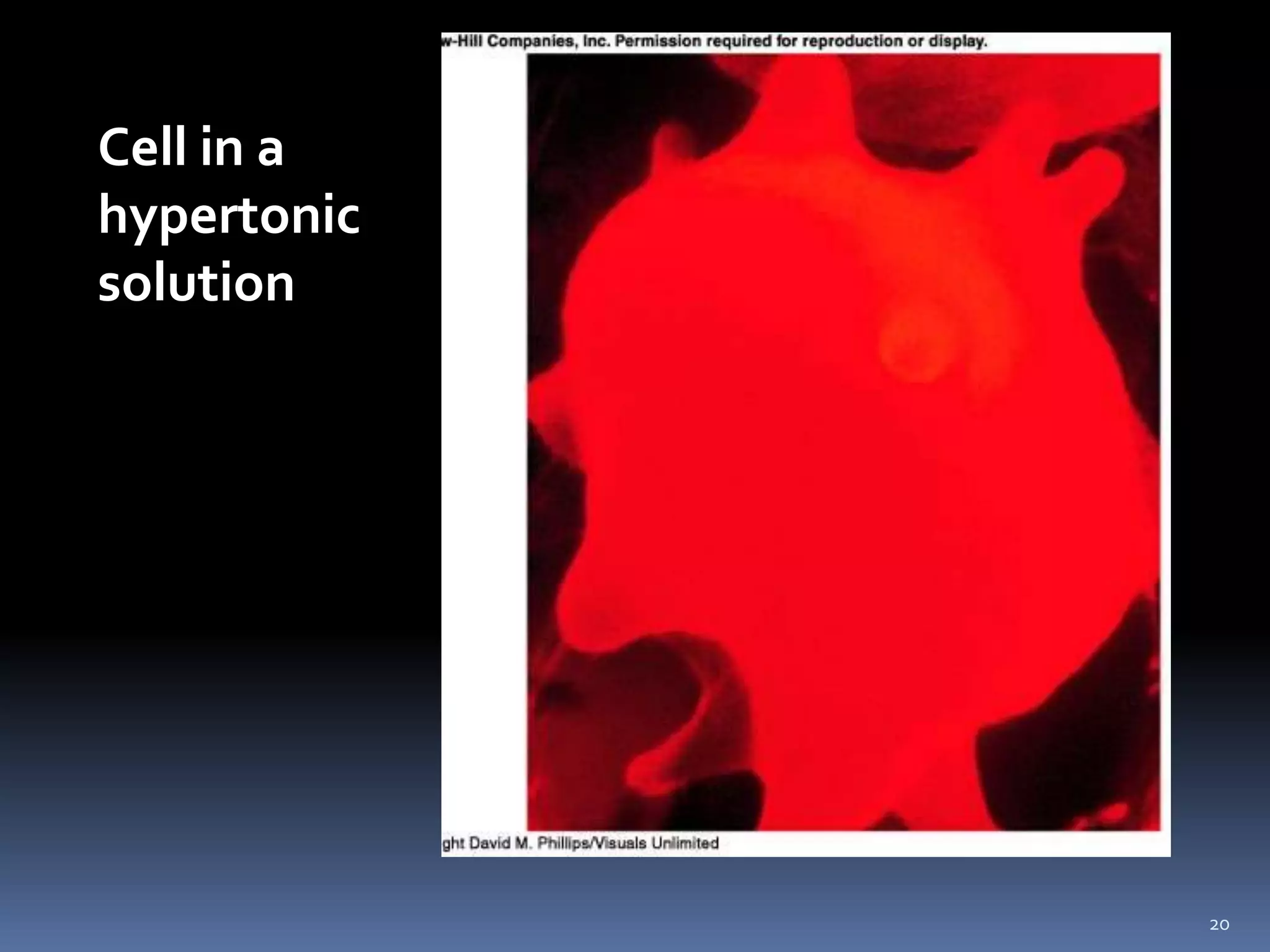
20Cell in a hypertonic solution
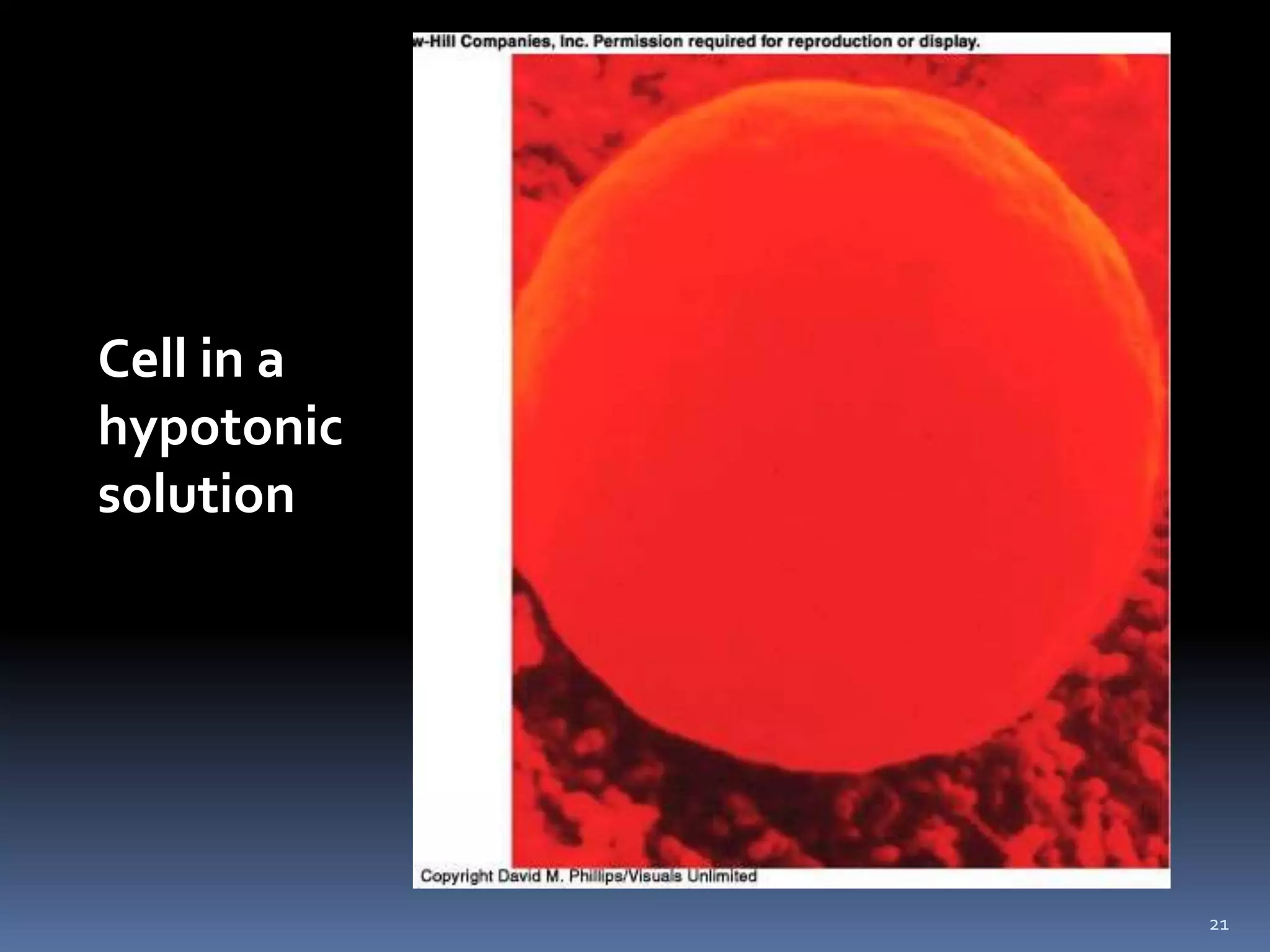
21Cell in a hypotonic solution
10/5/200922
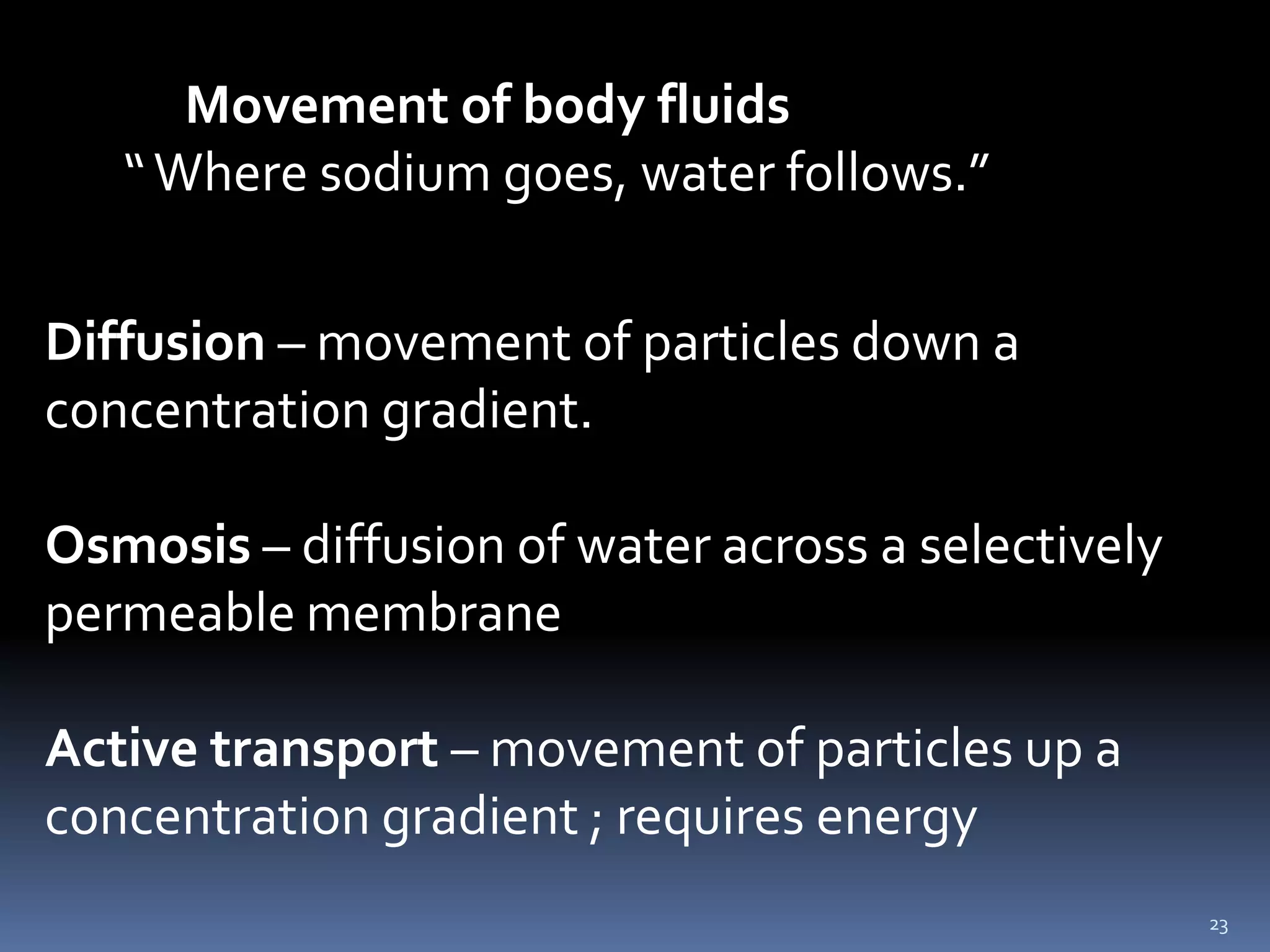
23            Movement of body fluids       “ Where sodium goes, water follows.”Diffusion – movement of particles down a concentration gradient.Osmosis – diffusion of water across a selectively permeable membraneActive transport – movement of particles up a concentration gradient ; requires energy
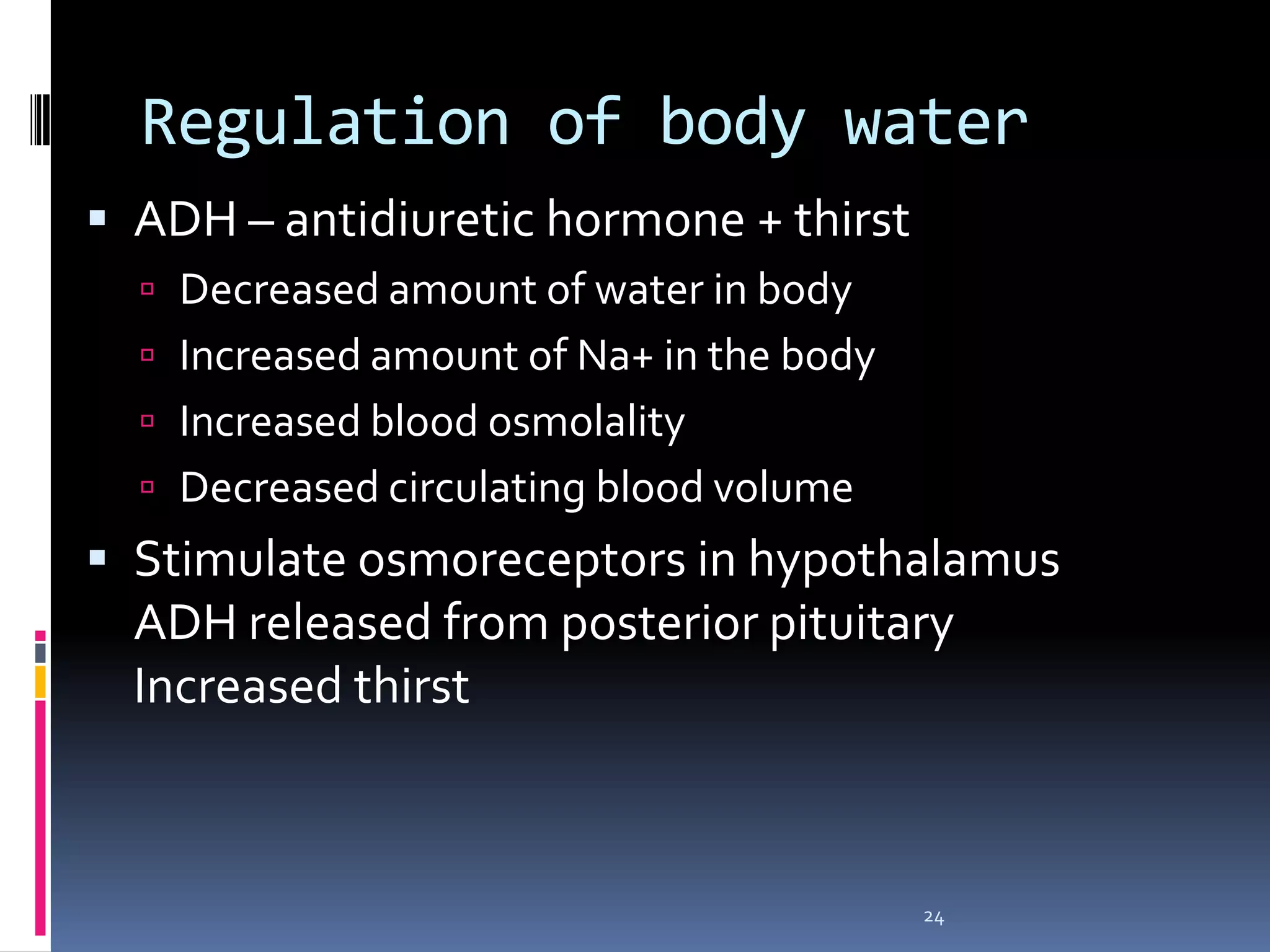
Regulation of body waterADH – antidiuretic hormone + thirstDecreased amount of water in bodyIncreased amount of Na+ in the bodyIncreased blood osmolalityDecreased circulating blood volumeStimulate osmoreceptors in hypothalamusADH released from posterior pituitaryIncreased thirst24
25Result:	increased water consumption	increased water conservation	Increased water in body, increased      	volume and decreased Na+ concentration
26
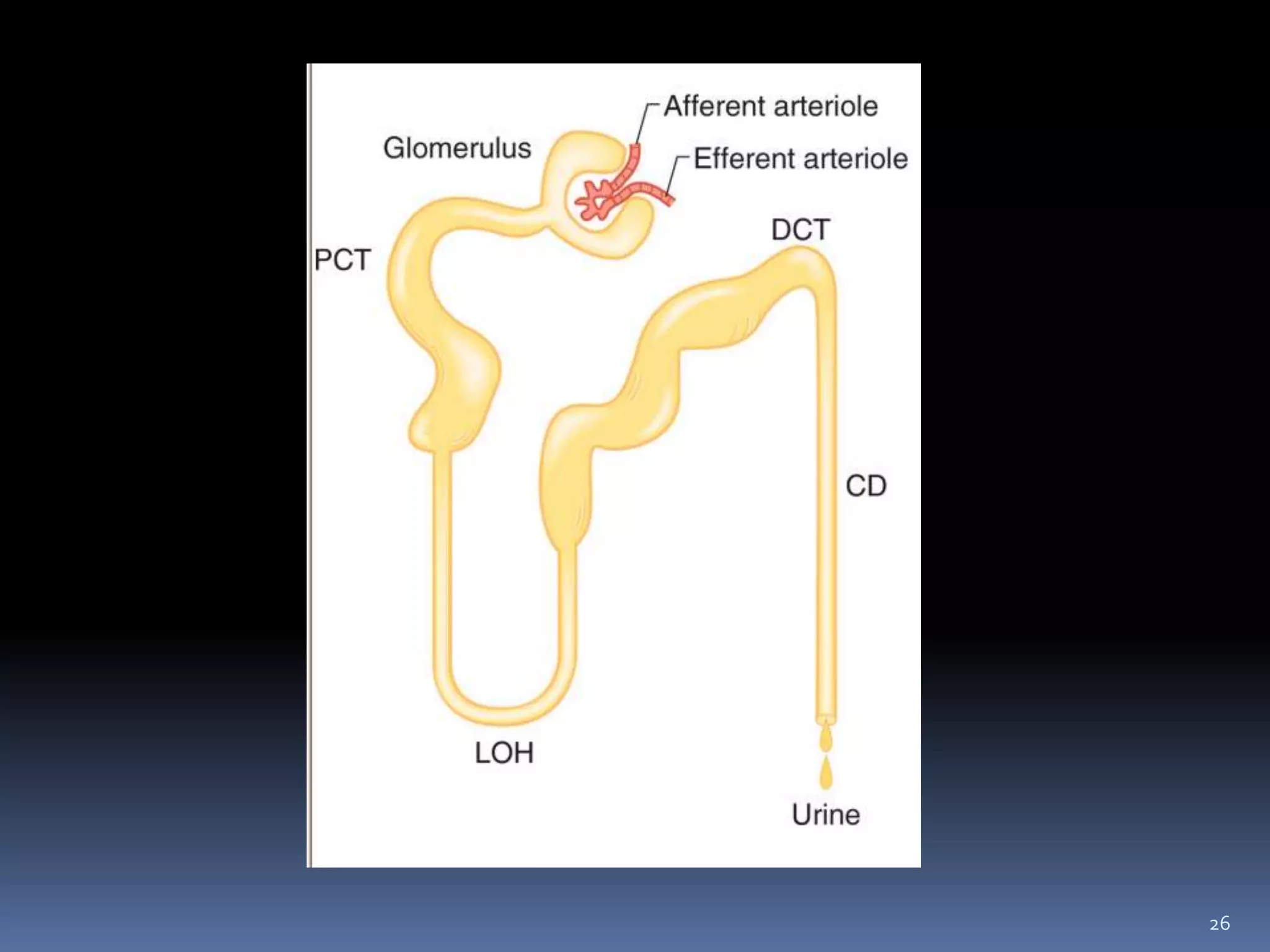
Different components of renal function occur along thenephron. A normal glomerular filtration rate of 125 mL/minwould generate 180 L/day of filtrate containing 27,000 mmolofsodium. 10/5/200927
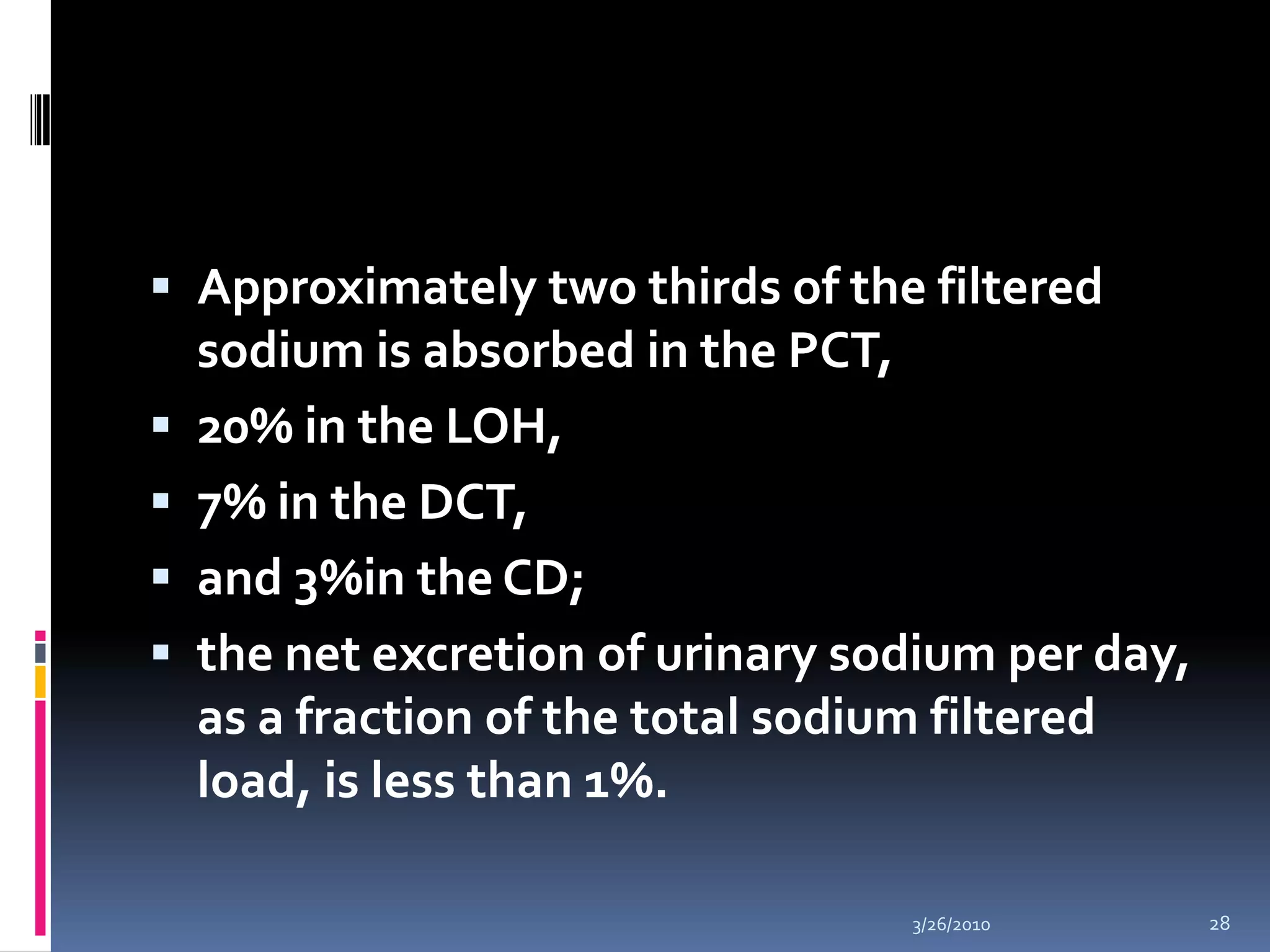
Approximately two thirds of the filtered sodium is absorbed in the PCT, 20% in the LOH, 7% in the DCT, and 3%in the CD; the net excretion of urinary sodium per day, as a fraction of the total sodium filtered load, is less than 1%.10/5/200928
Disturbances of fluid and electrolyte balance10/5/200929
Volume depletionPure volume deficits – RARECauses :    1. Comatosed patients with increased insensible loss (e.g. fever)   2. Diabetes insipdusReflected biochemicalyby hypernatremia.10/5/200930
Clinical featuresDue to depressed nervous systemLethargyMuscle rigiditySeizuresComa 10/5/200931
Treatment Replacement of adequate water by 5% Dextrose10/5/200932
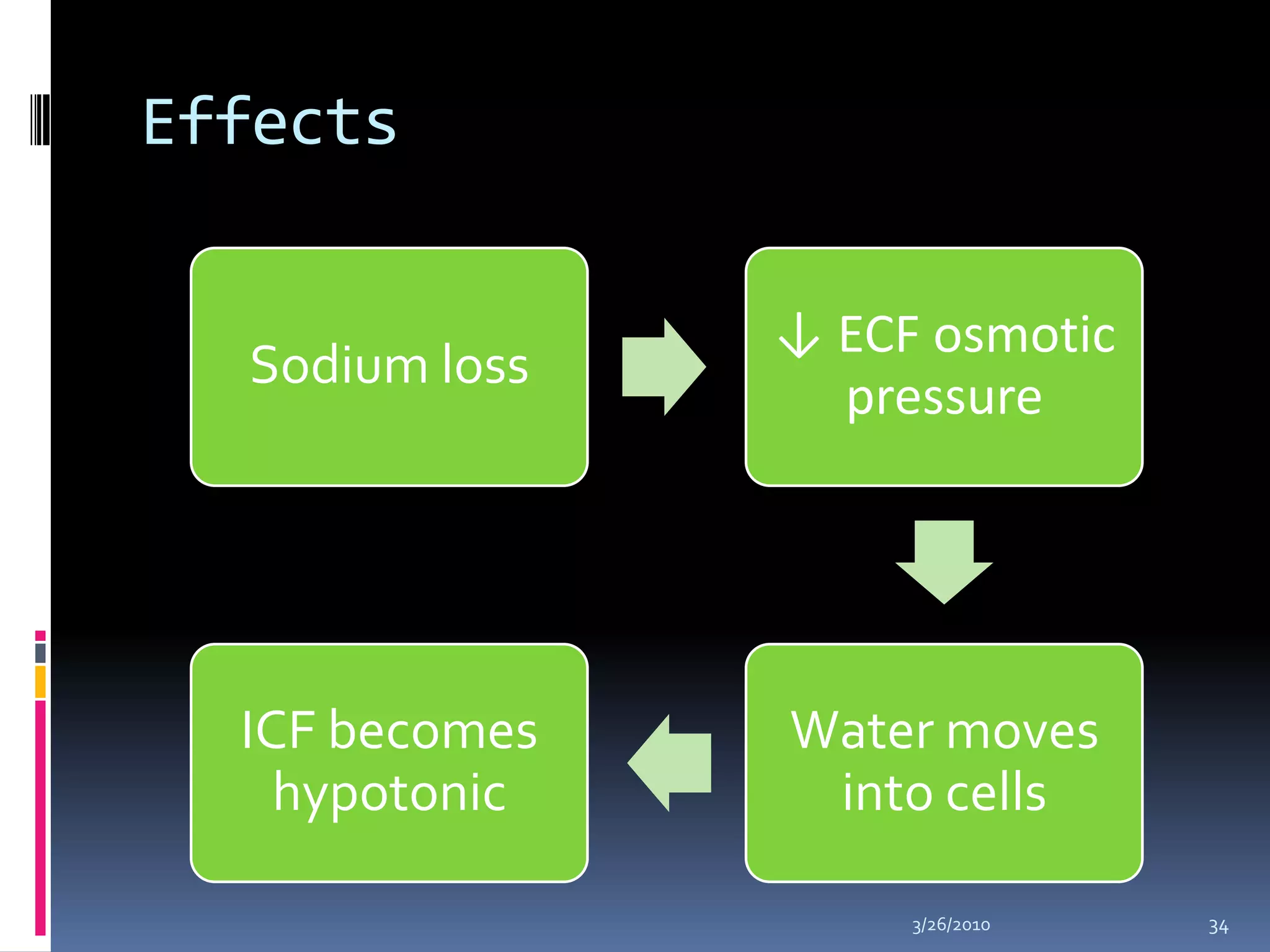
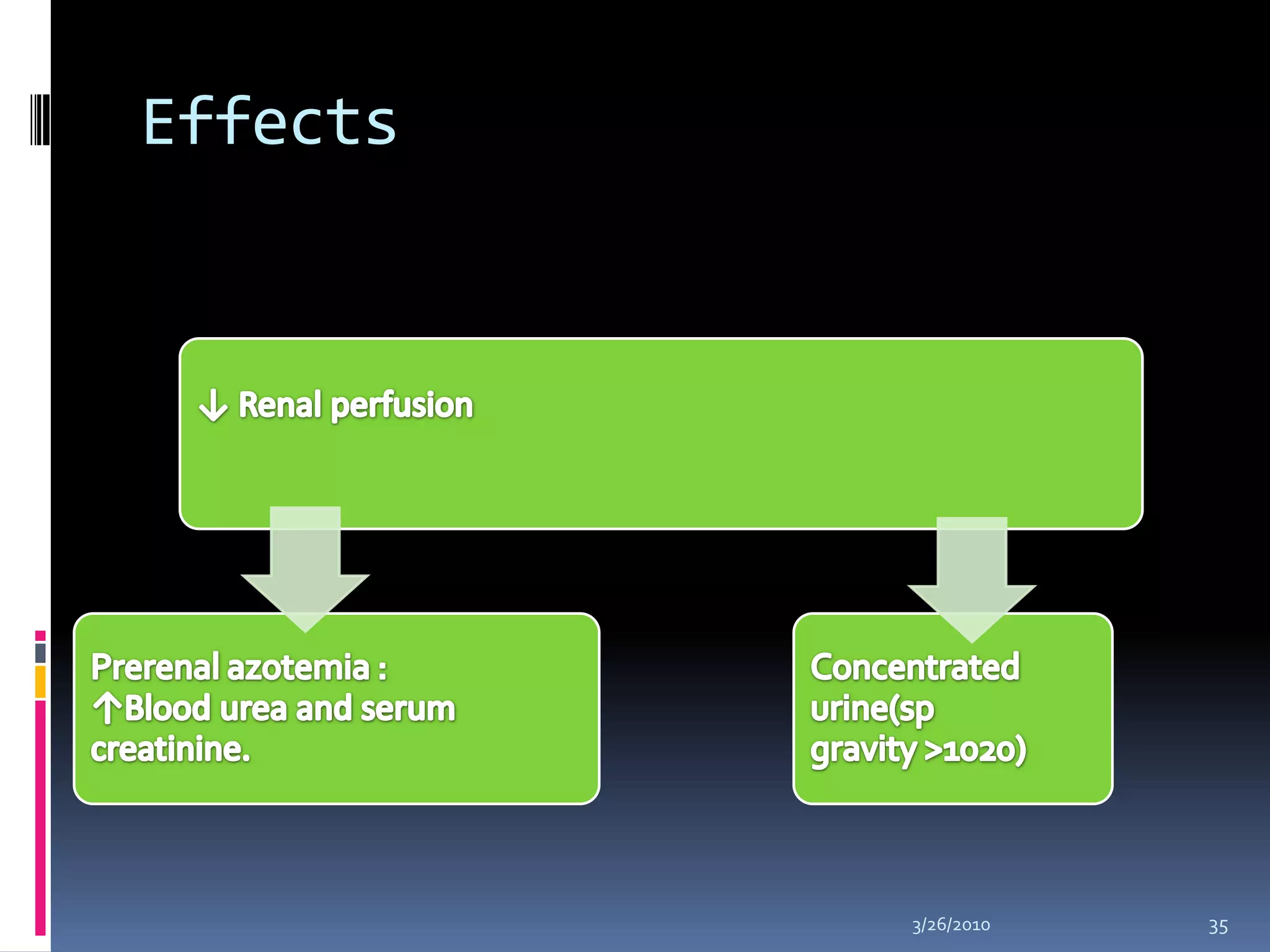
Volume and electrolyte depletionDue to extrarenal loss of body fluid Causes : VomitingDiarrohoeaNasogastric suctionIntestinal fistulaeIntestinal obstructionPeritonitis10/5/200933
Effects 10/5/200934
Effects 10/5/200935
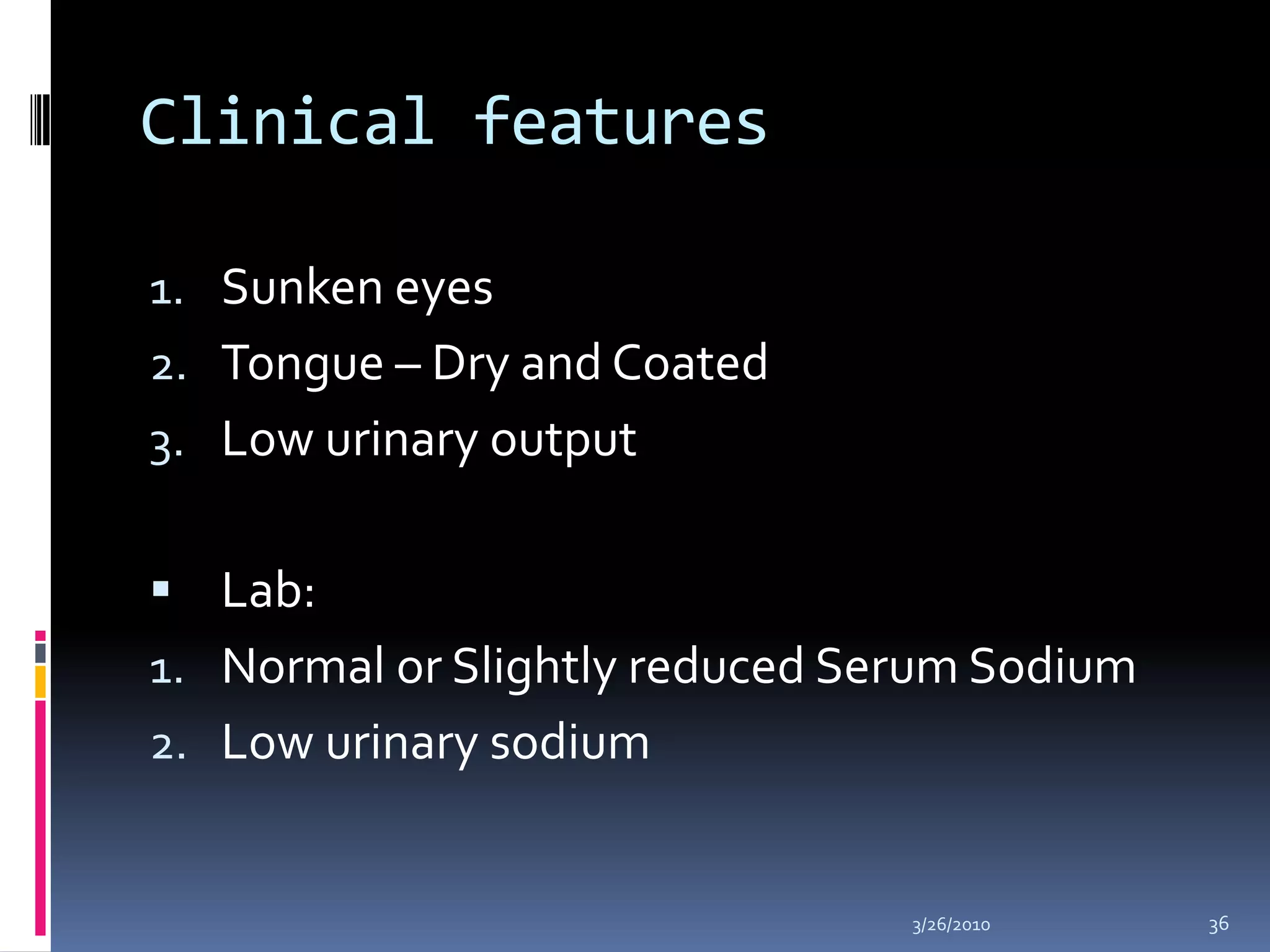
Clinical featuresSunken eyesTongue – Dry and CoatedLow urinary outputLab: Normal or Slightly reduced Serum SodiumLow urinary sodium10/5/200936
Treatment Replacement of sodium deficit in addition to volume deficit by infusion ofIsotonic saline, orRinger’s lactateDepending on the severity of hyponatremia10/5/200937
Volume overloadConservation of sodium and water following stress like surgeryIf fluid intake is excessive in immediate post op  fluid overload may occur.10/5/200938
Tendency of fluid overload increases in patients with :Heart diseaseLiver diseaseKidney disease10/5/200939
Clinical featuresPeripheral edemaJugular venous distensionTachypnoea ( due to pulmonary edema)10/5/200940
Treatment Mild overload:Restriction of sodium and waterSevere overload : Diuretics 10/5/200941
Specific electrolyte disorders10/5/200942
HyponatremiaAlways associated with volume depletionClinical features and treatment as discussed before10/5/200943
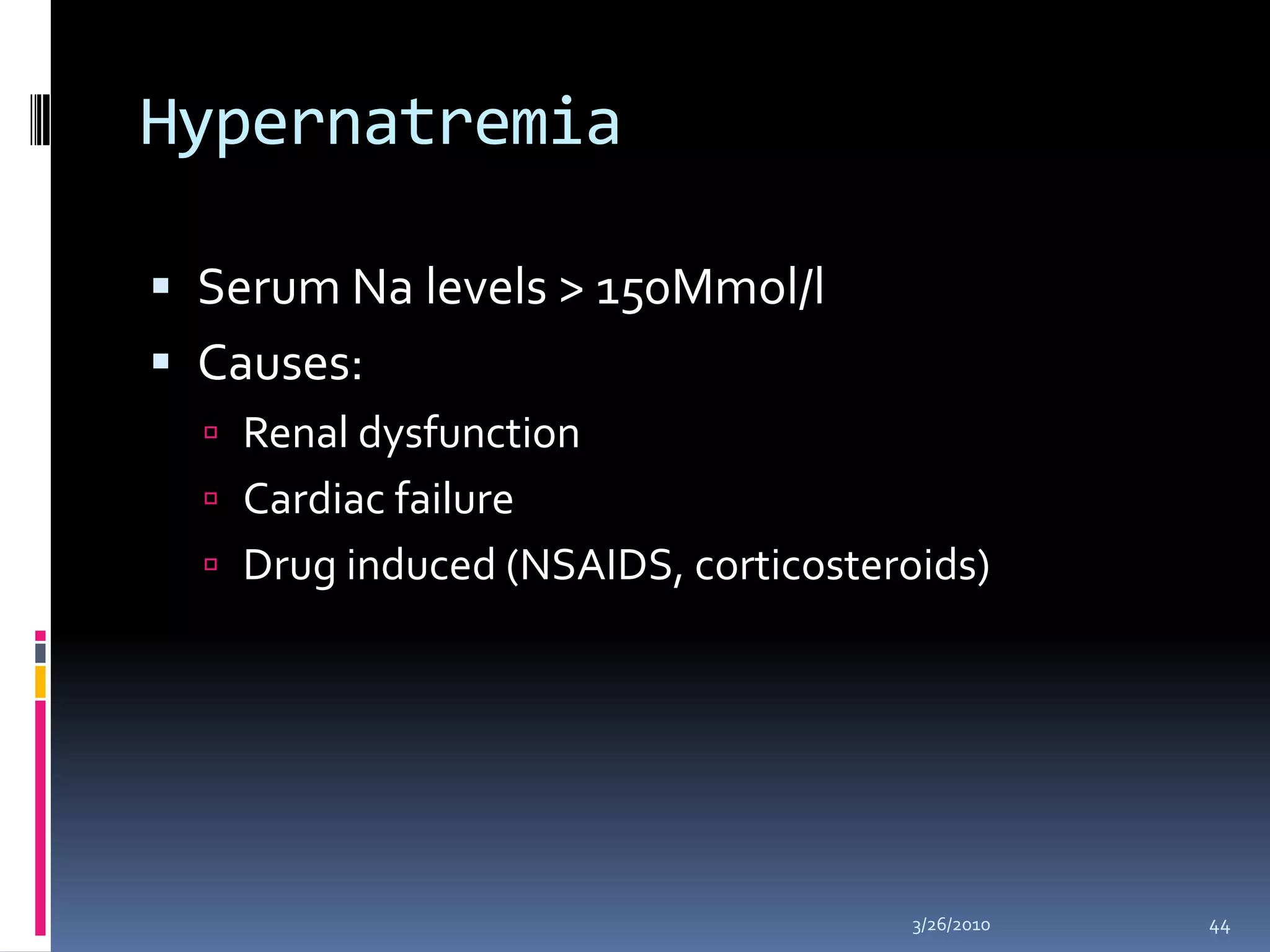
HypernatremiaSerum Na levels > 150Mmol/lCauses:Renal dysfunctionCardiac failureDrug induced (NSAIDS, corticosteroids)10/5/200944
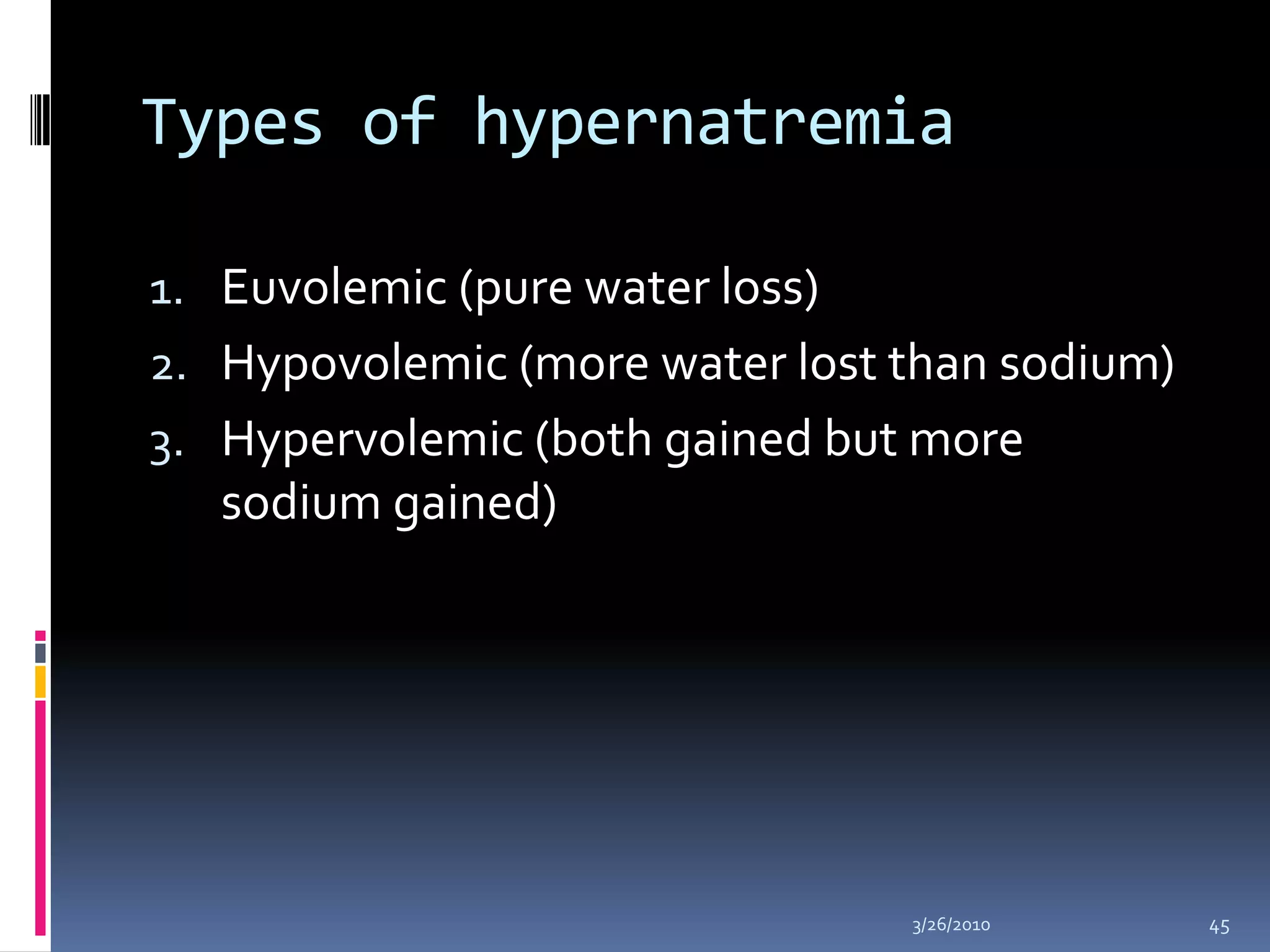
Types of hypernatremiaEuvolemic (pure water loss)Hypovolemic (more water lost than sodium)Hypervolemic (both gained but more sodium gained)10/5/200945
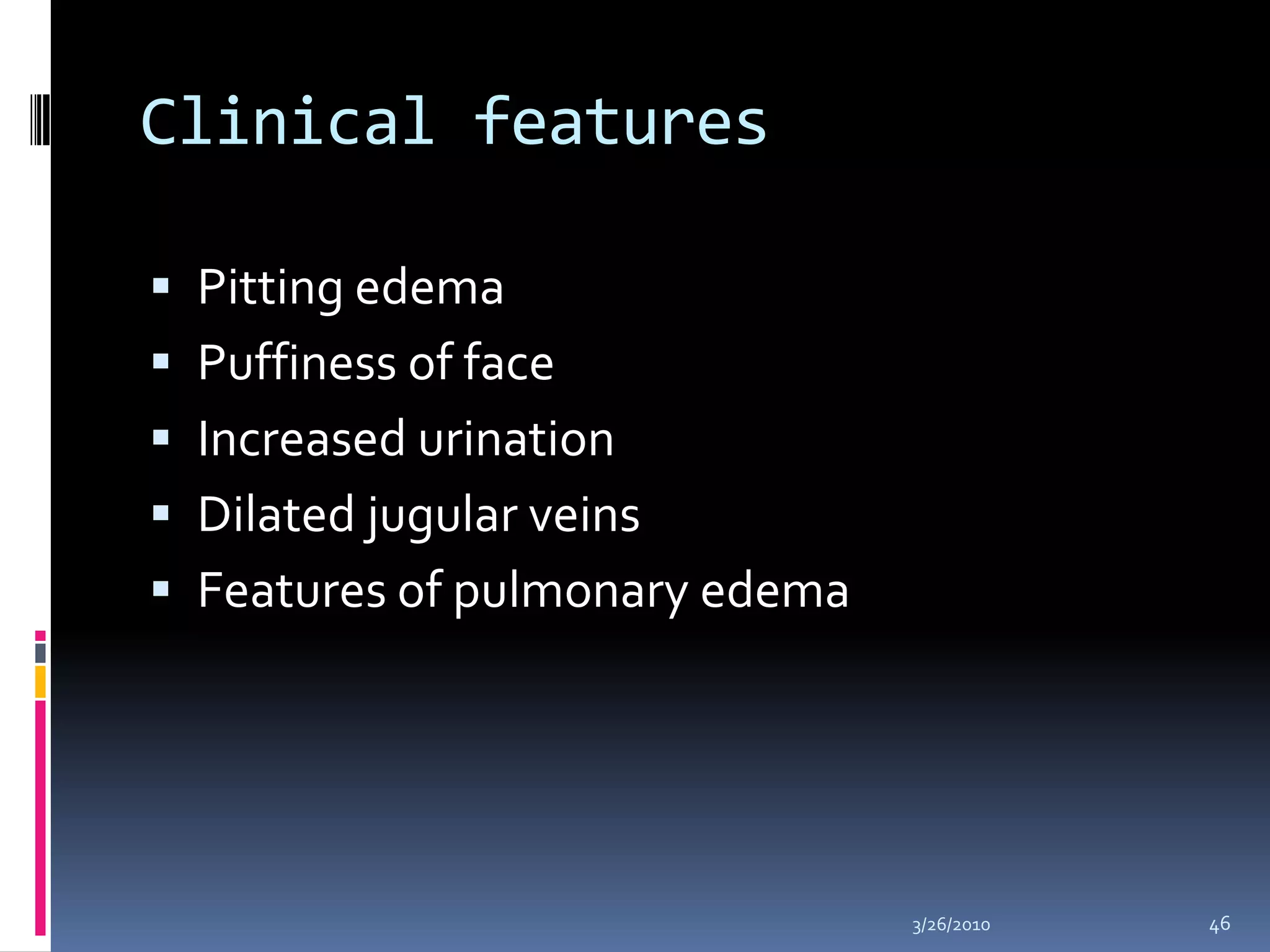
Clinical featuresPitting edemaPuffiness of faceIncreased urinationDilated jugular veinsFeatures of pulmonary edema10/5/200946
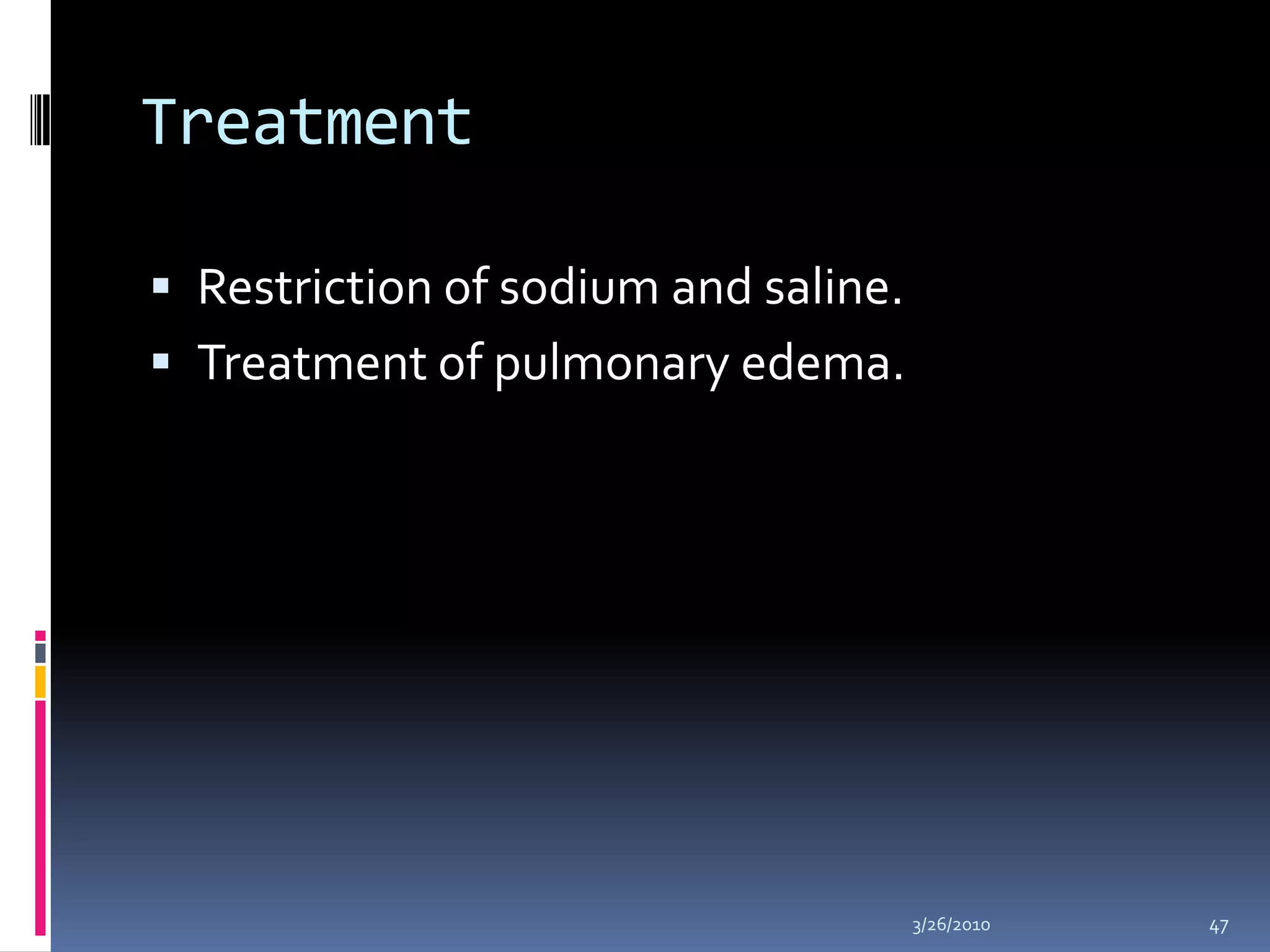
Treatment Restriction of sodium and saline.Treatment of pulmonary edema.10/5/200947
HypokalemiaSerum potassium levels <3.5 mEq/LCauses : DiarrhoeaVillous tumor of rectumAfter trauma or surgeryGastric outlet obstructionDuodenal fistula10/5/200948
Clinical features Slurred speechMuscular hypotoniaDepressed reflexesParalytic ileusWeakness of respiratory musclesCardiac arrhythmiasECG shows prolonged QT interval , depessed ST segment and inversion  of  T waves10/5/200949
TreatmentOral potassium 2g 6th hourlyIntravenous KCl 40 mmol/litre given in 5% dextrose of normal saline, under ECG monitoringMax dose per hour = 20 mmol10/5/200950
HyperkalemiaNormal range of K = 3.5-5 mEq/LHyperkalemia >6 mEq/LCausesRenal failureRapid infusion of potassiumMassive blood transfusionDiabetic ketoacidosisPotassium sparing diuretics10/5/200951
Dangerous condition, can cause sudden cardiac arrest.High serum potassium levelsPeaked ‘T’ waves in ECG10/5/200952
Treatment IV admin. Of 50 ml of 50% glucose with 10 units of soluble insulin, slowly.Hemodialysis if life threatening.Correction of acidosis.10/5/200953
HypermagnesimiaIt is rareOccurs because of renal failure or during treatment of pre eclampsia for which magnesium sulfate is given.10/5/200954
HypomagnesimiaCauses : Malnutrition Large GI fluid lossPatients on Total Parenteral Nutrition 10/5/200955
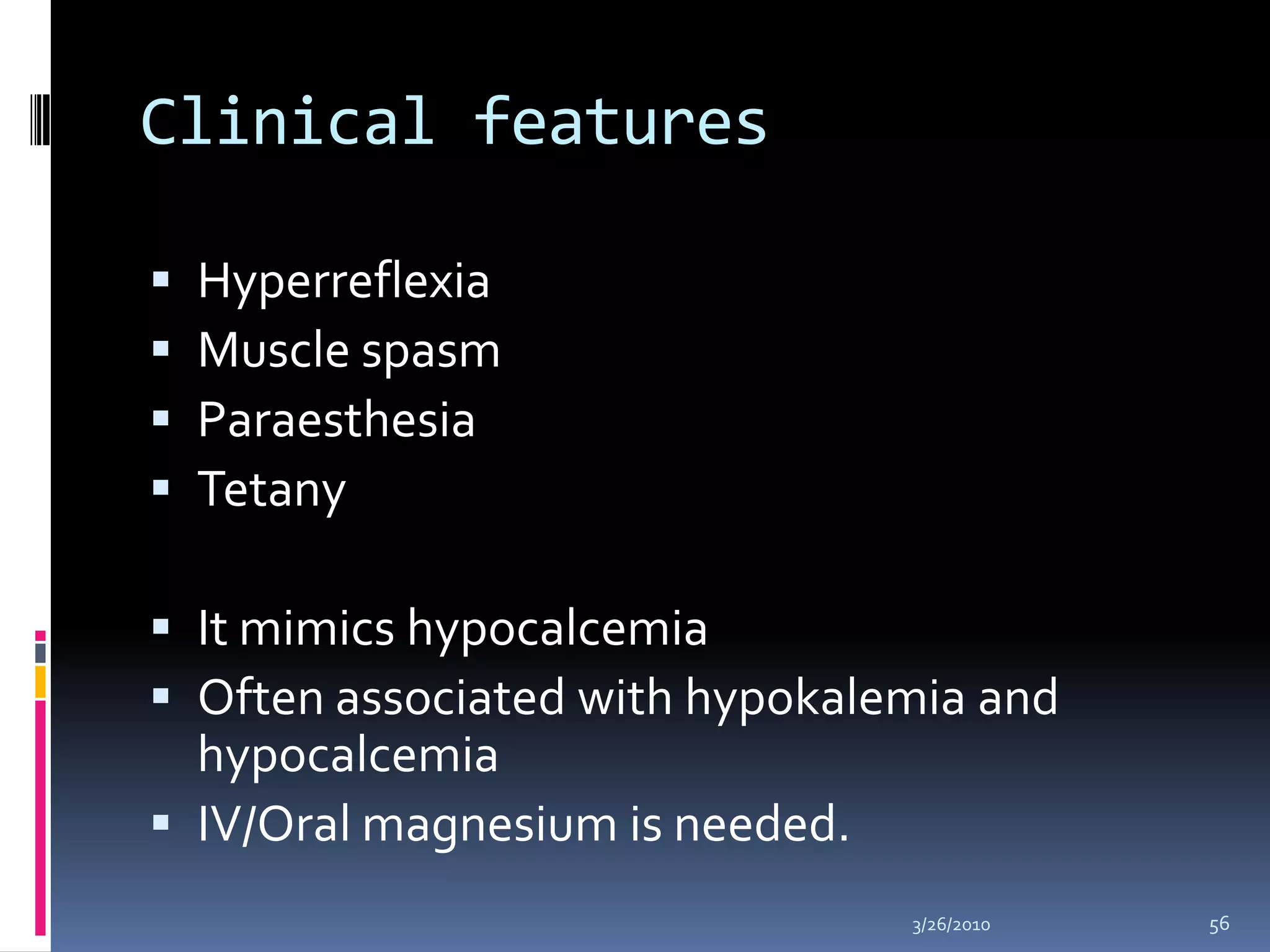
Clinical featuresHyperreflexiaMuscle spasmParaesthesiaTetanyIt mimics hypocalcemiaOften associated with hypokalemia and hypocalcemiaIV/Oral magnesium is needed.10/5/200956
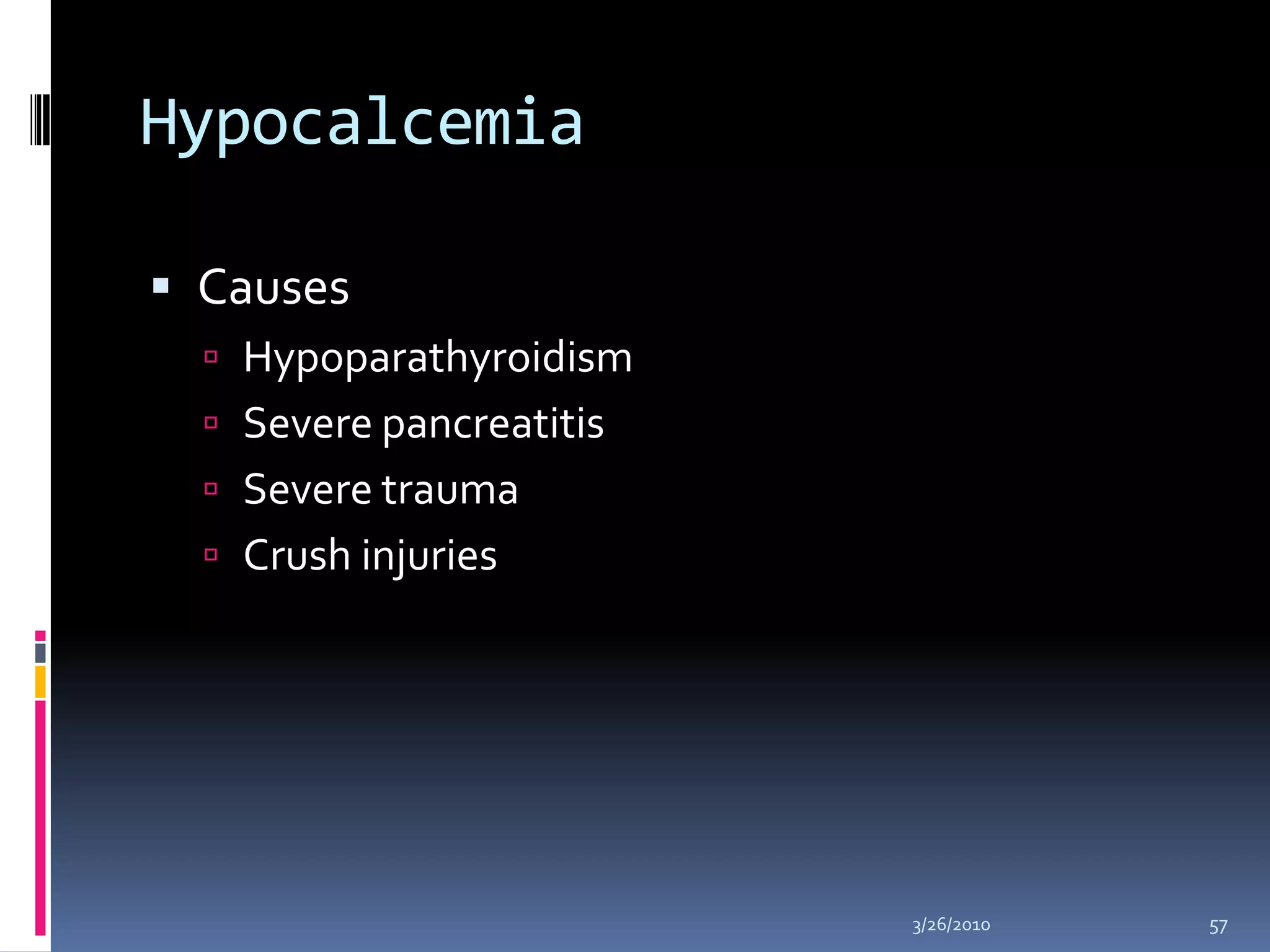
HypocalcemiaCauses HypoparathyroidismSevere pancreatitisSevere traumaCrush injuries10/5/200957
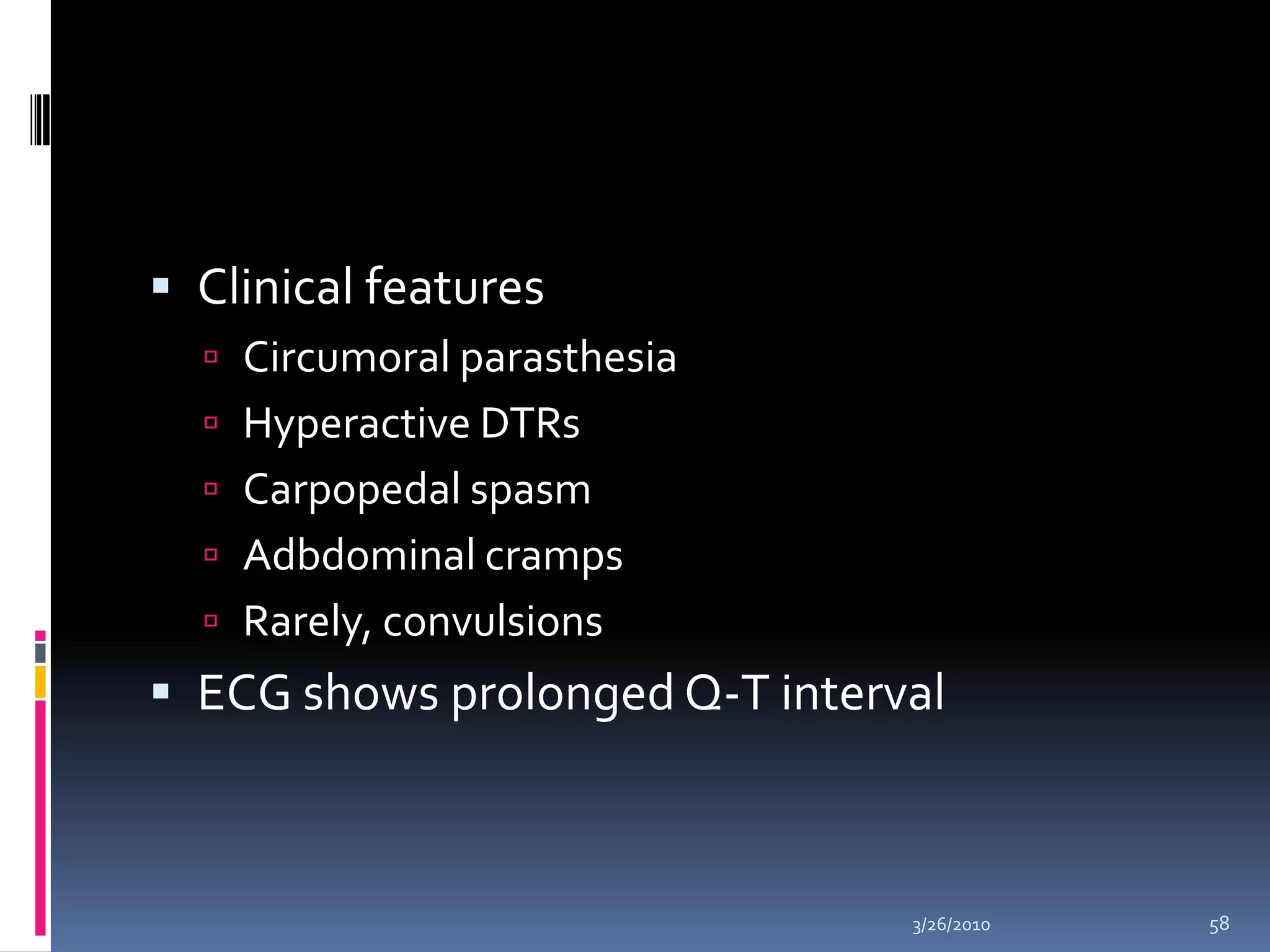
Clinical featuresCircumoralparasthesiaHyperactive DTRsCarpopedal spasm Adbdominal crampsRarely, convulsionsECG shows prolonged Q-T interval10/5/200958
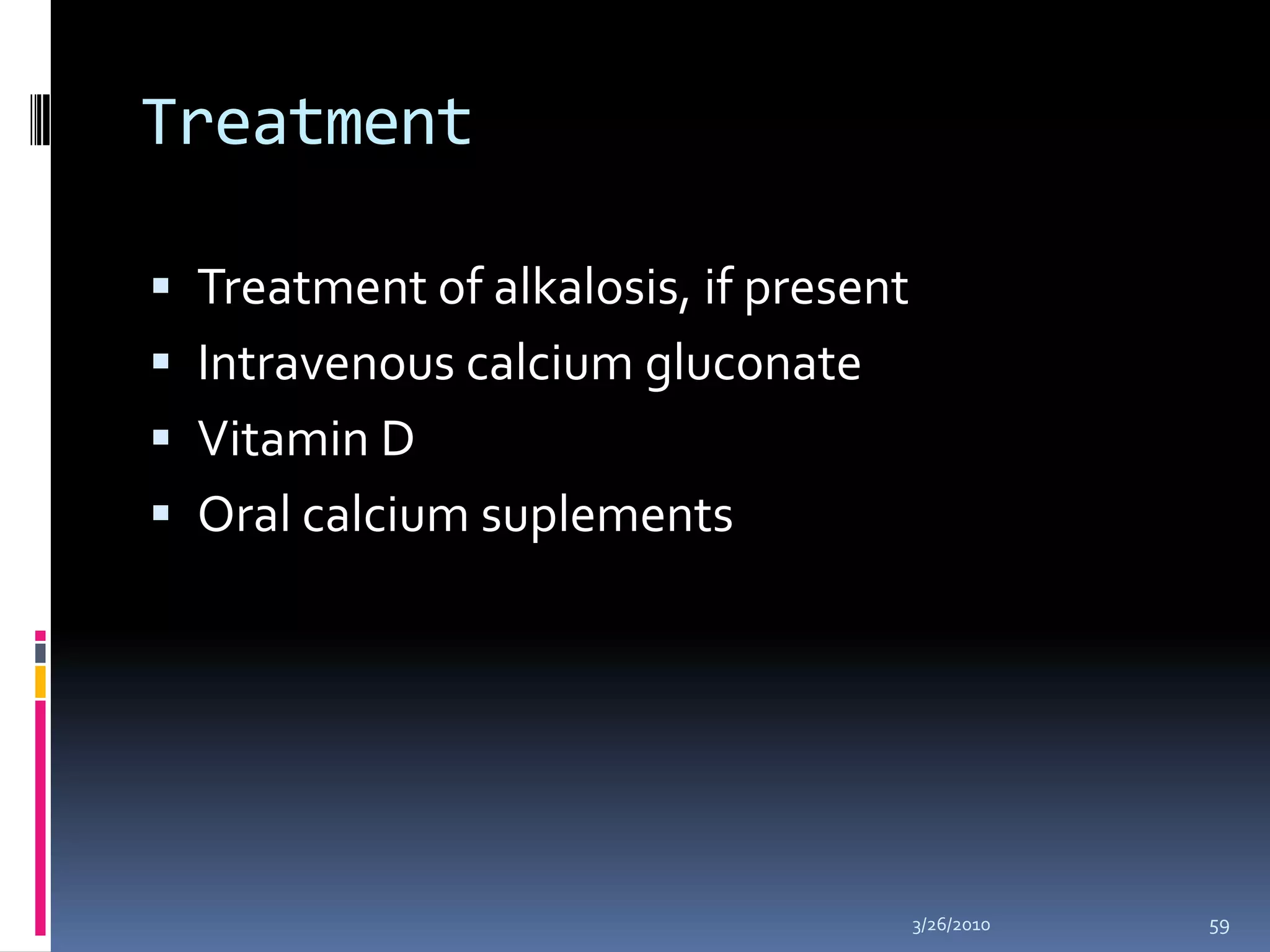
Treatment Treatment of alkalosis, if presentIntravenous calcium gluconateVitamin DOral calcium suplements10/5/200959
HypercalcemiaCauses :HyperparathyroidismCancer with bony metastasisSarcoidosisProlonged immobilization 10/5/200960
Clinical featuresFatigueMuscle weaknessDepressionAnorexiaConstipation 10/5/200961
Treatment Expand ECF by IV normal salineAlso increases urinary output  and thus increasing calcium excretion.Hemodialysis in case of renal failure.10/5/200962
THANK YOU10/5/200963

Fluids And Electrolytes