1
2
 Introduction
 Defining the Flipped Classroom
 Description of the Flipped Classroom
 Benefits
 Theoretical Frameworks
 Differences from the Traditional and Flipped
Classroom
 Advantages and Disadvantages
 Conclusion
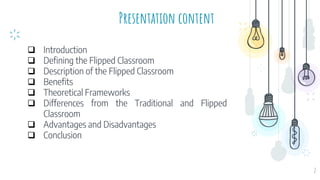
Presentation content
Introduction
Learning a language other than the mother tongue in the knowledge
society constitutes a fundamental aspect since it expands study and
work boundaries. However, there are various methodologies for its
teaching. Currently, a model used more and more is the Flipped
Classroom. In this presentation, we will have an approach to this
teaching model. In addition, we will know the definition, description,
some benefits, the theoretical framework, differences with the
traditional method, advantages, and disadvantages.
4
Defining the Flipped Classroom
Define the flipped classroom as a classroom where
what was traditionally done in class is now switched
with what was done at home. So, students prepare the
lessons at home as homework and complete in class the
practice.
Bergmann and Sams (2012):
5
Bishop and Verleger (2013):
Describe the flipped classroom as an educational technique
that comprises two parts: interactive learning tasks
conducted and monitored by the teacher in the classroom,
and direct computer based asynchronous video lectures and
close-ended problems or tests individually completed
outsidethe classroom.
6
• The student studies the content at home using resources created by the
teacher.
• he goes to face-to-face class and applies the knowledge acquired.
• The teacher's work changes, and now he must be a guide for his students.
• The teacher allows time for additional learning activities such as project-based
learning or differentiated education.
DESCRIPTION OF THE FLIPPED CLASSROOM
Benefits
⊹ Students learn how
to think and
educators learn
what the students
are struggling with.
⊹ Let students study
at their own pace
and schedule.
⊹ Large class sizes and high
student-to-teacher ratios
caused by economic forces
may become manageable and
less important.
7
⊹ It permits teachers to
be creative and to use
a variety of teaching
methodologies.
⊹ It allows the class to
move forward in
spite of student and
teacher absences.
8
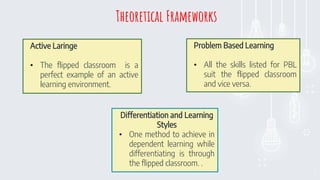
Active Laringe
• The flipped classroom is a
perfect example of an active
learning environment.
Problem Based Learning
• All the skills listed for PBL
suit the flipped classroom
and vice versa.
Differentiation and Learning
Styles
• One method to achieve in
dependent learning while
differentiating is through
the flipped classroom. .
Theoretical Frameworks
9
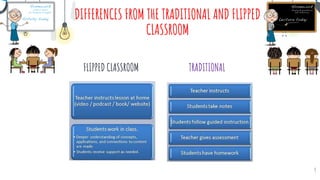
DIFFERENCES FROM THE TRADITIONAL AND FLIPPED
CLASSROOM
FLIPPED CLASSROOM TRADITIONAL
10
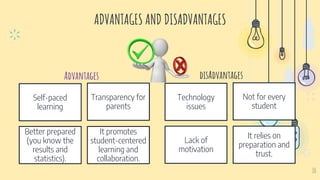
ADVANTAGES AND DISADVANTAGES
Self-paced
learning
Transparency for
parents
Better prepared
(you know the
results and
statistics).
It promotes
student-centered
learning and
collaboration.
Technology
issues
Not for every
student
Lack of
motivation
It relies on
preparation and
trust.
Advantages disAdvantages
CONCLUSION
11
In this teaching model, the events that have traditionally taken place in the
classroom, now take place outside the classroom through technological tools.
The flipped classroom is one of the new forms of blended teaching that
includes the use of the Internet and other technologies to enhance student
learning. In addition, the teacher becomes a guide and can spend more time
with his students. Also, it is a teaching model that has several advantages for
both students and teachers.
12
Thanks!

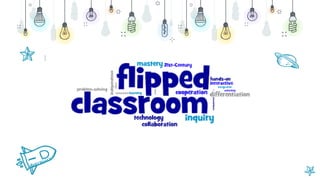
Flipped classroom

  • 1.
  • 2.
    2  Introduction  Definingthe Flipped Classroom  Description of the Flipped Classroom  Benefits  Theoretical Frameworks  Differences from the Traditional and Flipped Classroom  Advantages and Disadvantages  Conclusion Presentation content
  • 3.
    Introduction Learning a languageother than the mother tongue in the knowledge society constitutes a fundamental aspect since it expands study and work boundaries. However, there are various methodologies for its teaching. Currently, a model used more and more is the Flipped Classroom. In this presentation, we will have an approach to this teaching model. In addition, we will know the definition, description, some benefits, the theoretical framework, differences with the traditional method, advantages, and disadvantages.
  • 4.
    4 Defining the FlippedClassroom Define the flipped classroom as a classroom where what was traditionally done in class is now switched with what was done at home. So, students prepare the lessons at home as homework and complete in class the practice. Bergmann and Sams (2012):
  • 5.
    5 Bishop and Verleger(2013): Describe the flipped classroom as an educational technique that comprises two parts: interactive learning tasks conducted and monitored by the teacher in the classroom, and direct computer based asynchronous video lectures and close-ended problems or tests individually completed outsidethe classroom.
  • 6.
    6 • The studentstudies the content at home using resources created by the teacher. • he goes to face-to-face class and applies the knowledge acquired. • The teacher's work changes, and now he must be a guide for his students. • The teacher allows time for additional learning activities such as project-based learning or differentiated education. DESCRIPTION OF THE FLIPPED CLASSROOM
  • 7.
    Benefits ⊹ Students learnhow to think and educators learn what the students are struggling with. ⊹ Let students study at their own pace and schedule. ⊹ Large class sizes and high student-to-teacher ratios caused by economic forces may become manageable and less important. 7 ⊹ It permits teachers to be creative and to use a variety of teaching methodologies. ⊹ It allows the class to move forward in spite of student and teacher absences.
  • 8.
    8 Active Laringe • Theflipped classroom is a perfect example of an active learning environment. Problem Based Learning • All the skills listed for PBL suit the flipped classroom and vice versa. Differentiation and Learning Styles • One method to achieve in dependent learning while differentiating is through the flipped classroom. . Theoretical Frameworks
  • 9.
    9 DIFFERENCES FROM THETRADITIONAL AND FLIPPED CLASSROOM FLIPPED CLASSROOM TRADITIONAL
  • 10.
    10 ADVANTAGES AND DISADVANTAGES Self-paced learning Transparencyfor parents Better prepared (you know the results and statistics). It promotes student-centered learning and collaboration. Technology issues Not for every student Lack of motivation It relies on preparation and trust. Advantages disAdvantages
  • 11.
    CONCLUSION 11 In this teachingmodel, the events that have traditionally taken place in the classroom, now take place outside the classroom through technological tools. The flipped classroom is one of the new forms of blended teaching that includes the use of the Internet and other technologies to enhance student learning. In addition, the teacher becomes a guide and can spend more time with his students. Also, it is a teaching model that has several advantages for both students and teachers.
  • 12.