PRESTRESS CONCRETE DESIGN
SESSIONAL (CE-416)
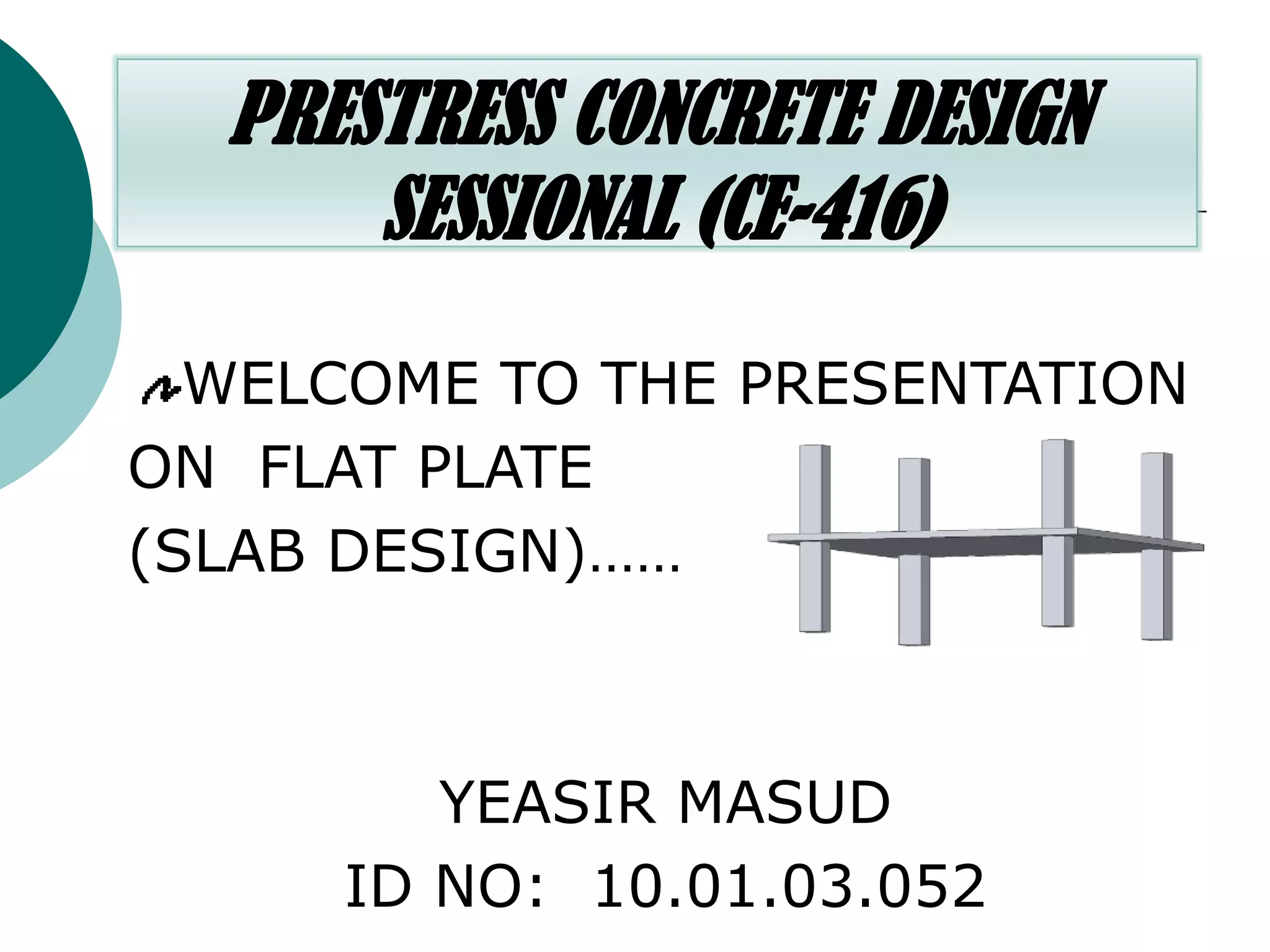
WELCOME TO THE PRESENTATION
ON FLAT PLATE
(SLAB DESIGN)……

YEASIR MASUD
ID NO: 10.01.03.052
What Is FLATE PLATES
FLATE PLATES:
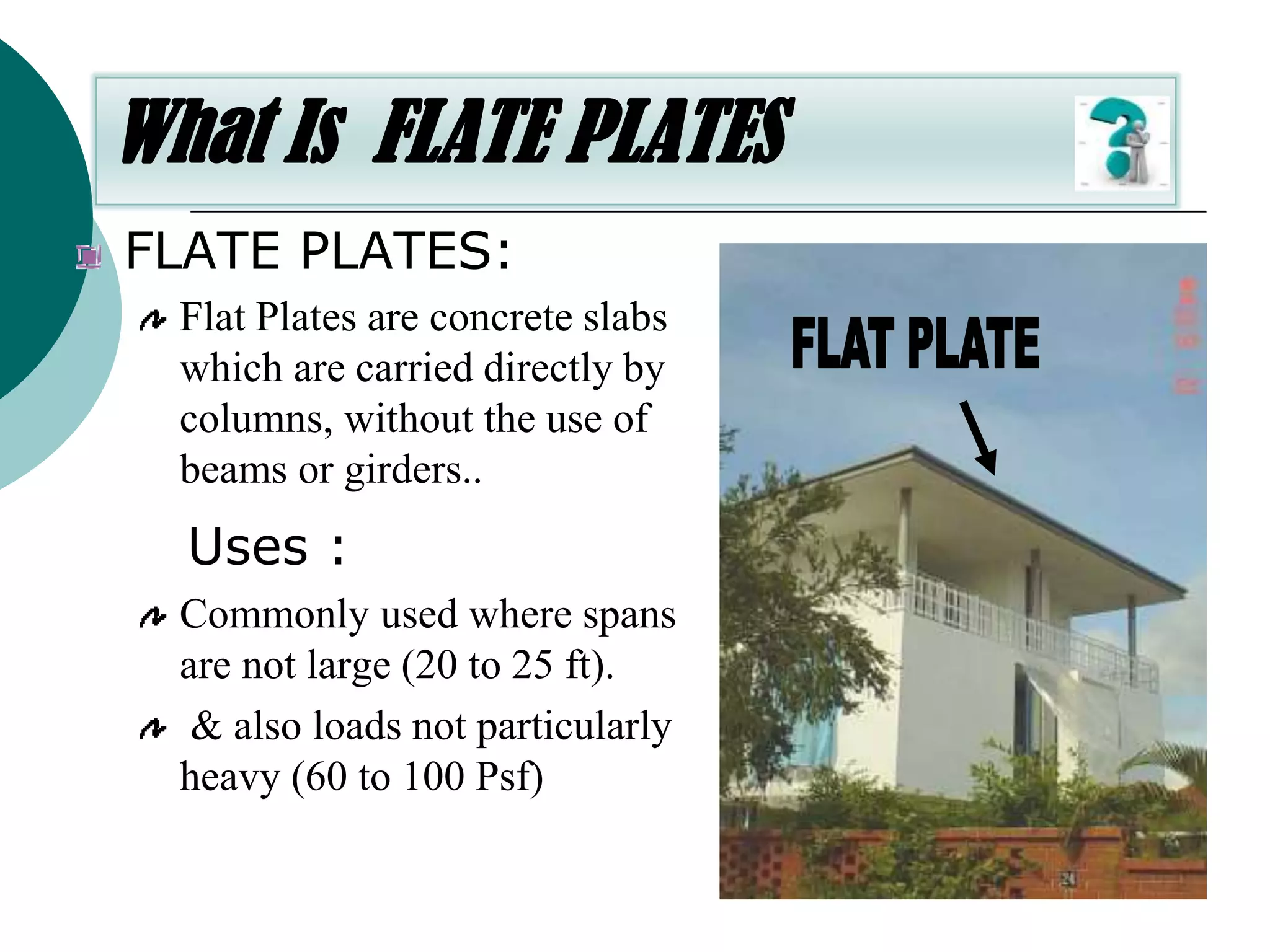
Flat Plates are concrete slabs
which are carried directly by
columns, without the use of
beams or girders..

Uses :
Commonly used where spans
are not large (20 to 25 ft).
& also loads not particularly
heavy (60 to 100 Psf)
DIFFERENCE BETWEEN
TWO WAY & FLAT PLATE
TWO WAY SLAB:
Slabs are resting on T-Beams.
Slab load transfer to the beams and then in to the
columns.

FLAT PLATE SLAB :
load is directly transferred to the columns
the shear is very critical at the area of
connection of slab with column (called punching
shear).
LITTLE CONFUSION REGARDING
FLAT PLATE & FLAT SLAB!!!!!!!!!!!!!
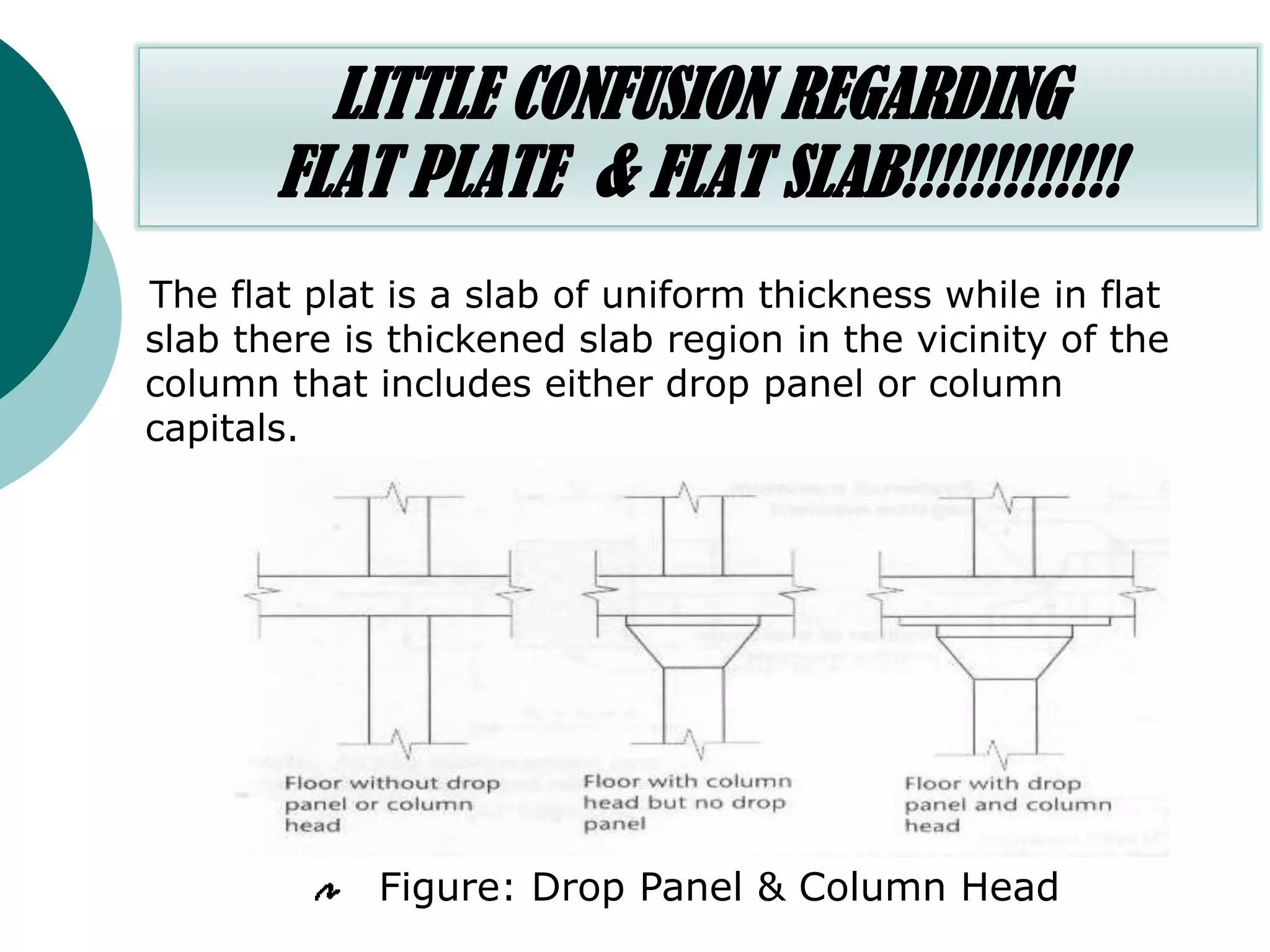
The flat plat is a slab of uniform thickness while in flat
slab there is thickened slab region in the vicinity of the
column that includes either drop panel or column
capitals.

Figure: Drop Panel & Column Head
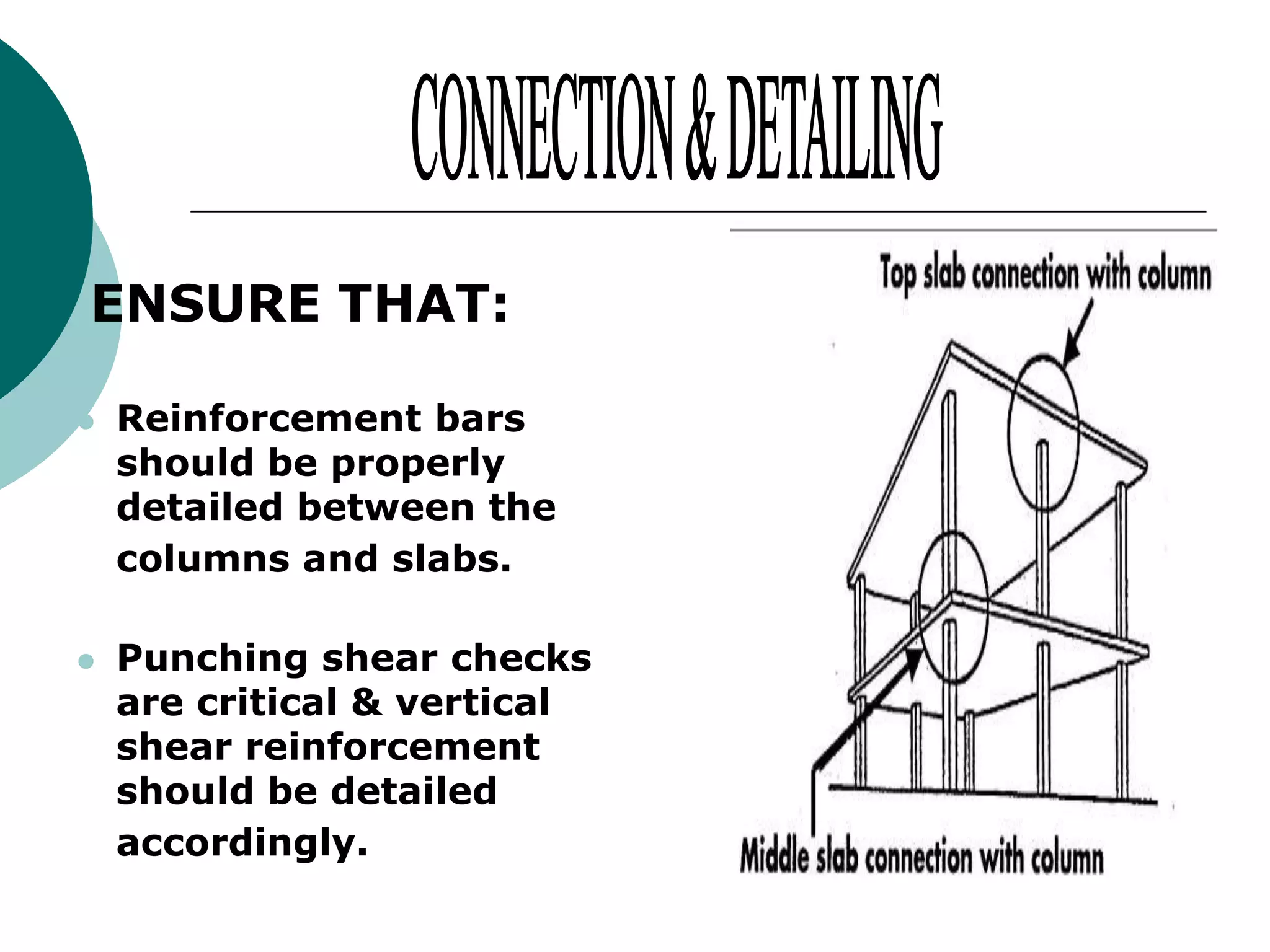
ENSURE THAT:




Reinforcement bars
should be properly
detailed between the
columns and slabs.
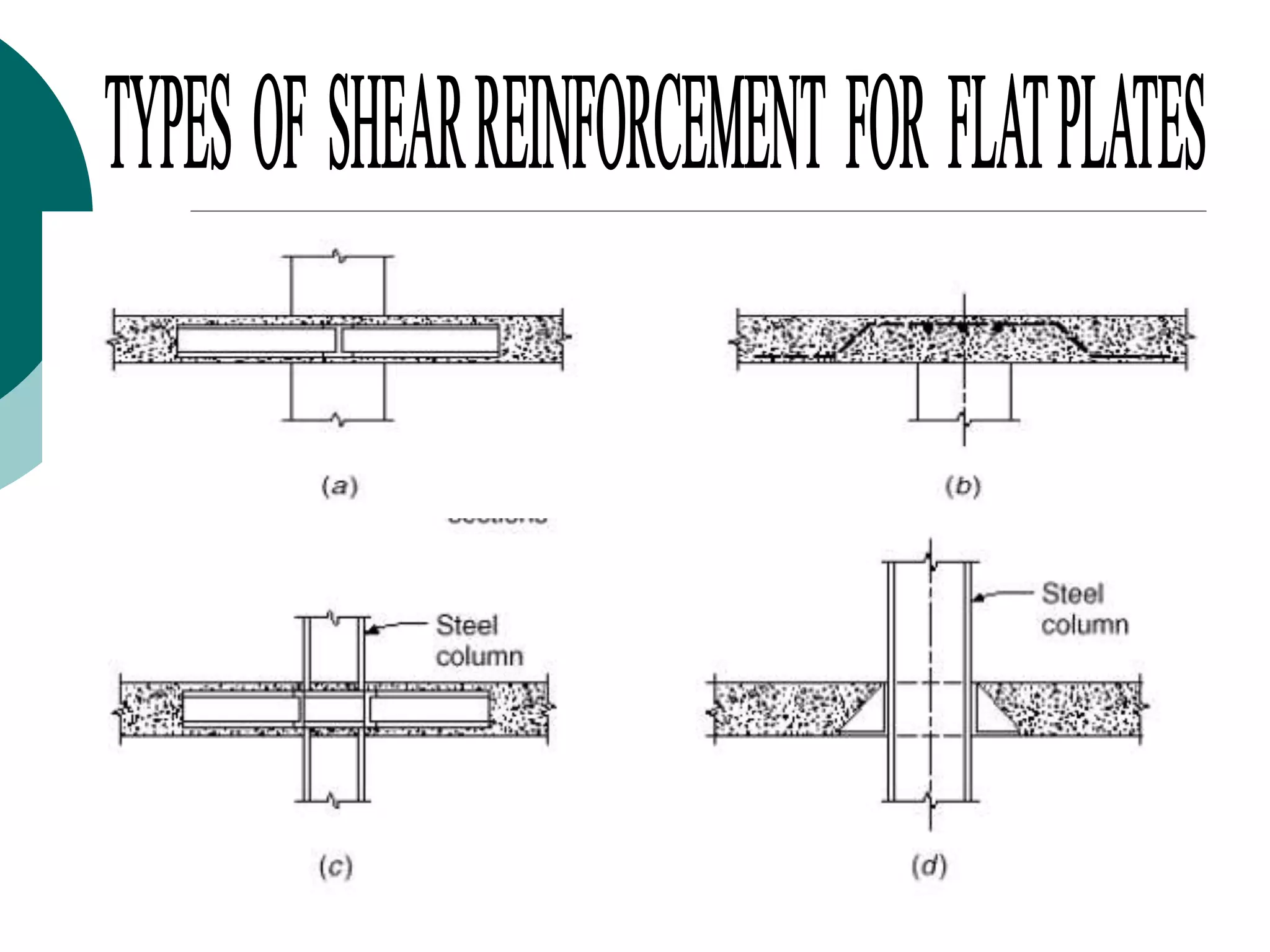
Punching shear checks
are critical & vertical
shear reinforcement
should be detailed
accordingly.
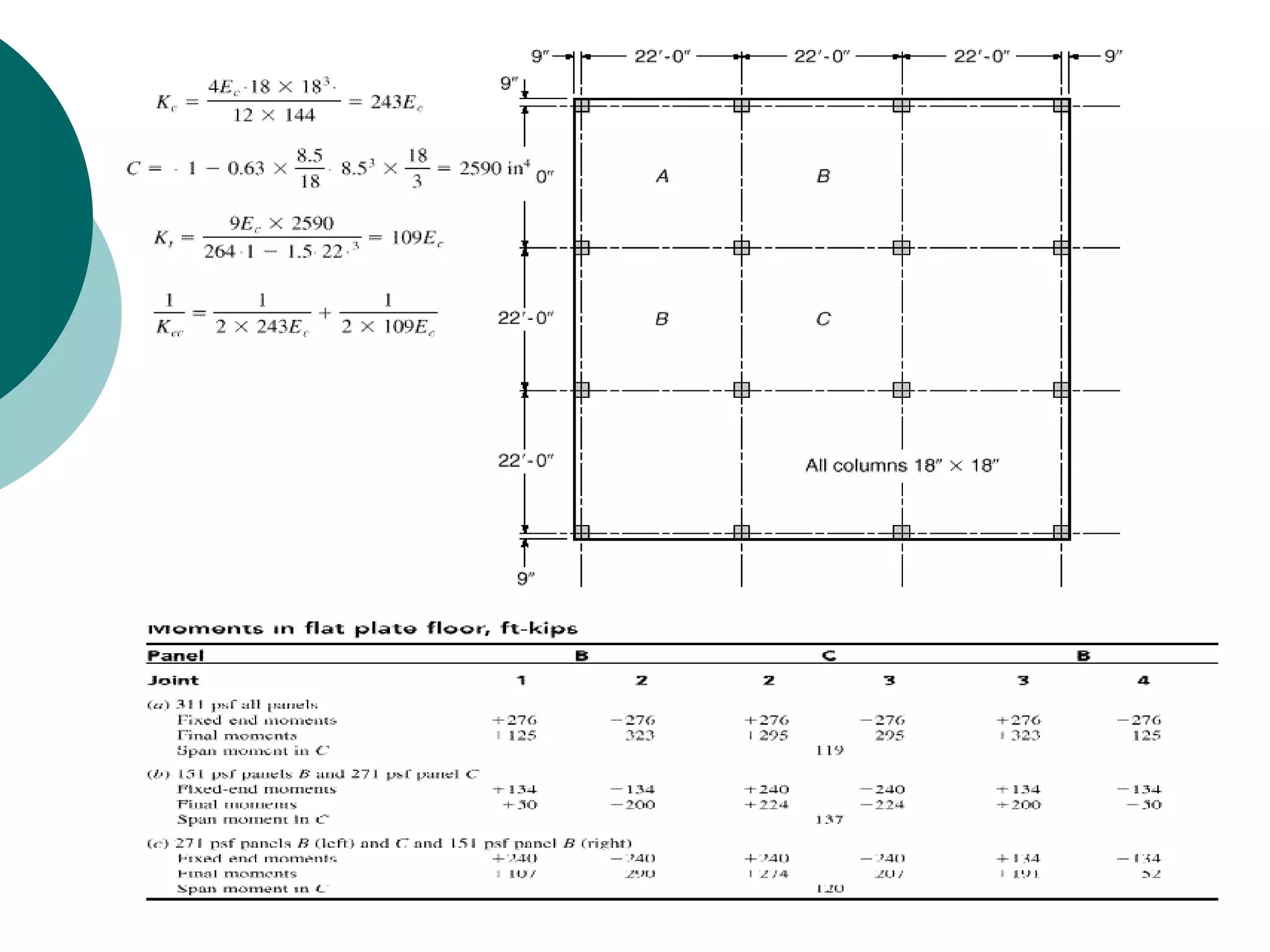
Analysis (Moment Determination):
1.

A method of frame analysis such as
moment distribution, or stiffness
method or a Computer.

2. A simplified method using the

moment & shear co-efficient Table.
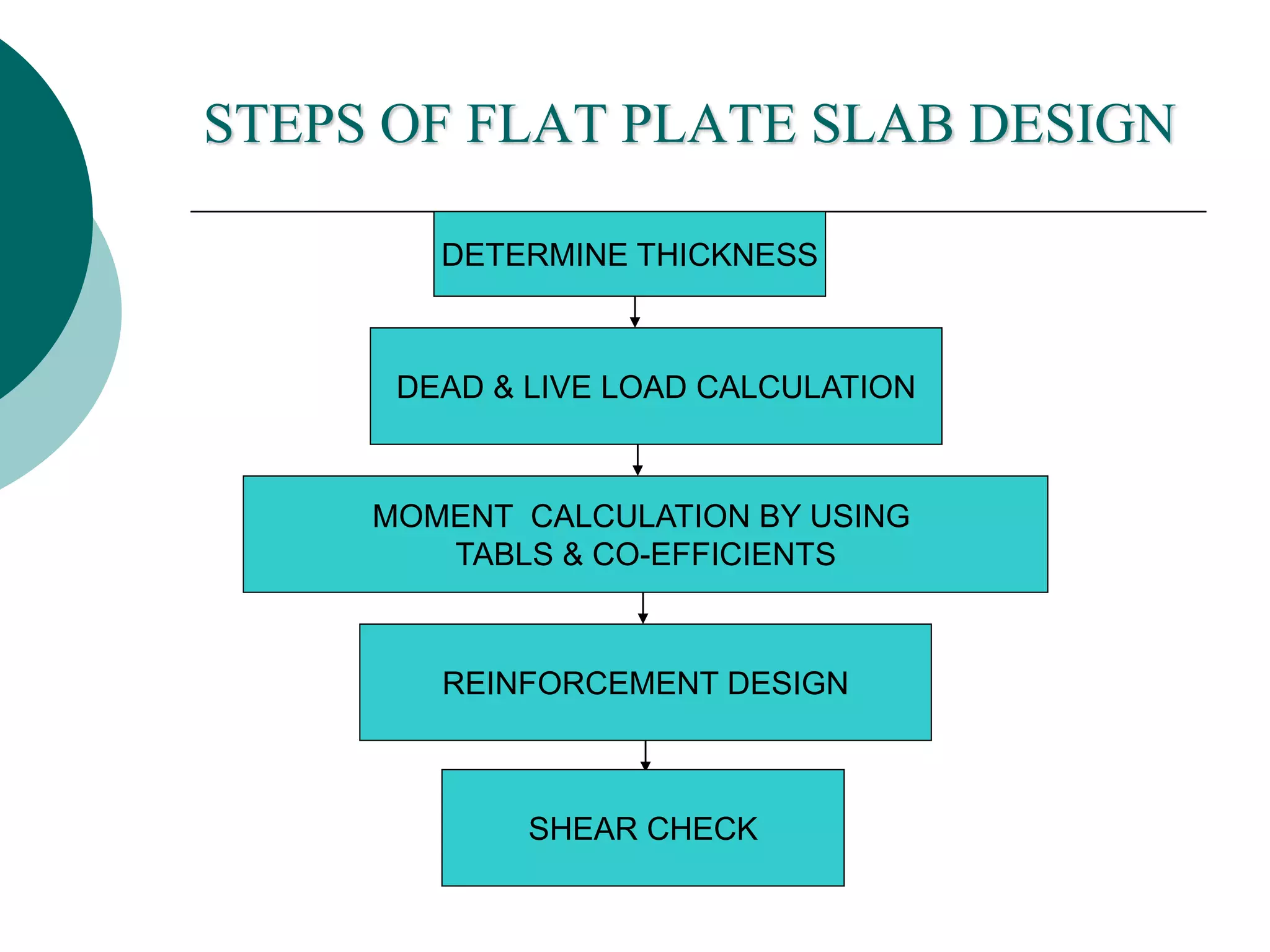
STEPS OF FLAT PLATE SLAB DESIGN
DETERMINE THICKNESS

DEAD & LIVE LOAD CALCULATION

MOMENT CALCULATION BY USING
TABLS & CO-EFFICIENTS

REINFORCEMENT DESIGN

SHEAR CHECK
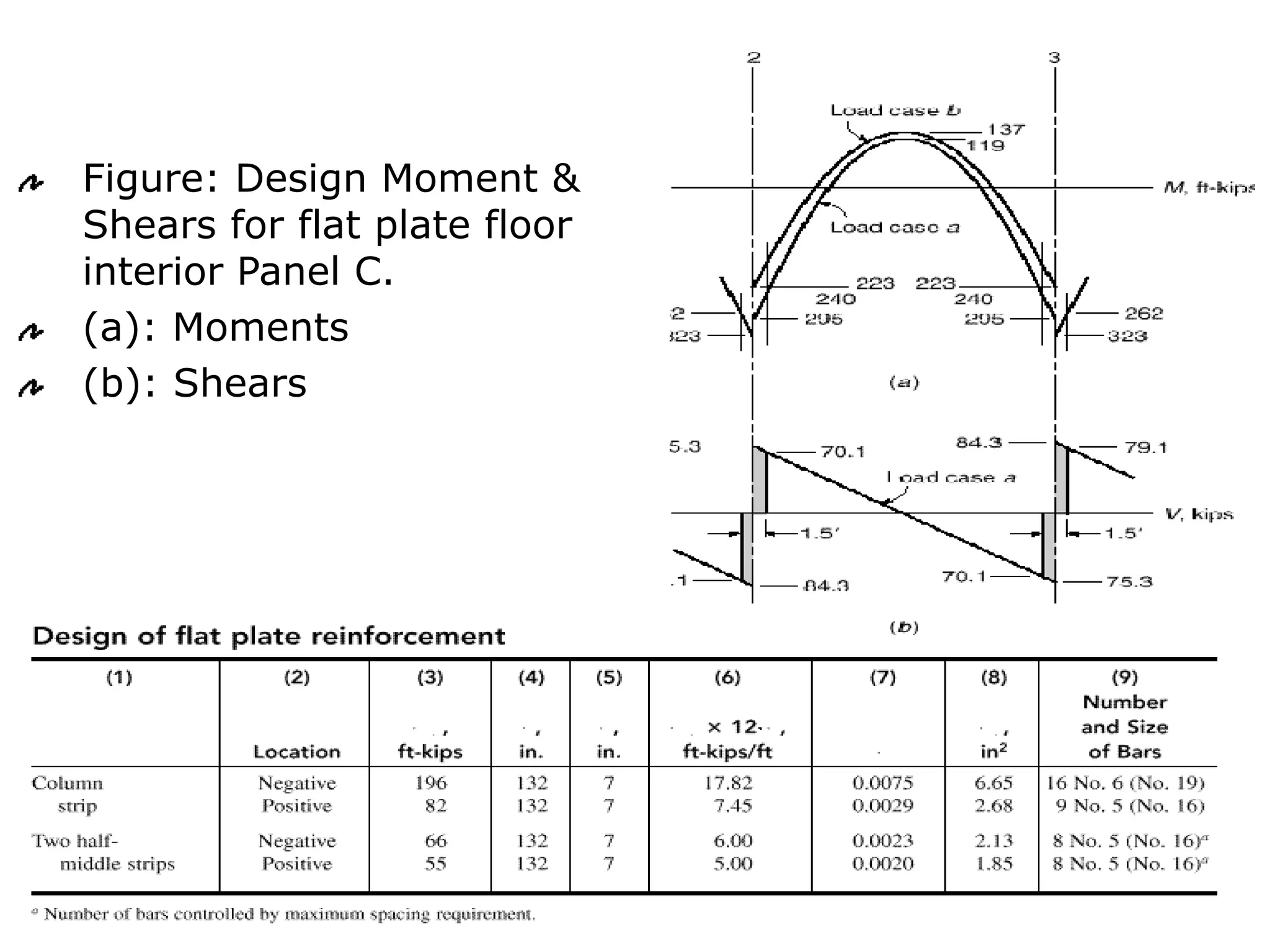
Figure: Design Moment &
Shears for flat plate floor
interior Panel C.
(a): Moments
(b): Shears


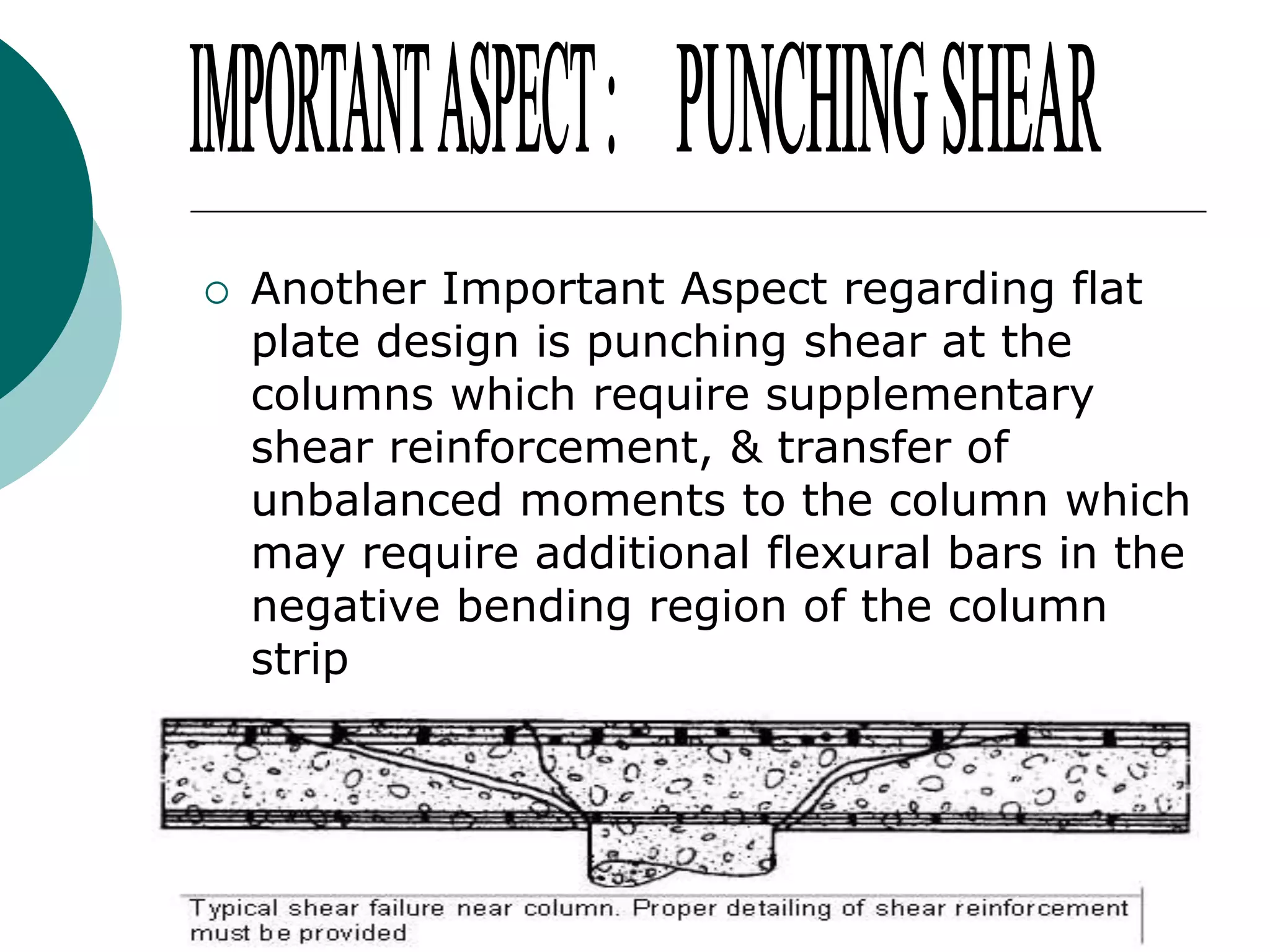
Another Important Aspect regarding flat
plate design is punching shear at the
columns which require supplementary
shear reinforcement, & transfer of
unbalanced moments to the column which
may require additional flexural bars in the
negative bending region of the column
strip


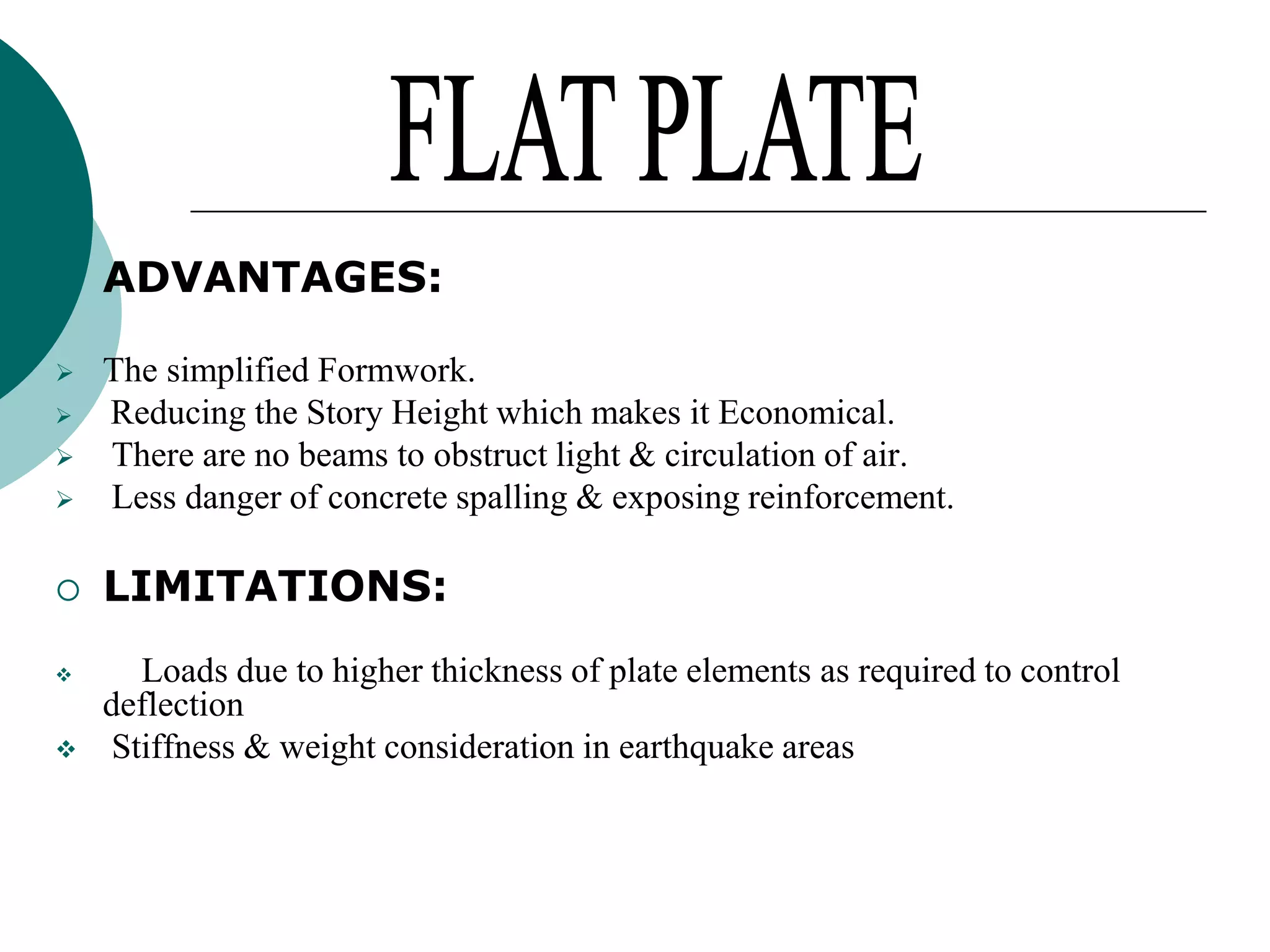
ADVANTAGES:



The simplified Formwork.
Reducing the Story Height which makes it Economical.
There are no beams to obstruct light & circulation of air.
Less danger of concrete spalling & exposing reinforcement.



LIMITATIONS:










Loads due to higher thickness of plate elements as required to control
deflection
Stiffness & weight consideration in earthquake areas
Flat plate slab design (10.01.03.052)

Flat plate slab design (10.01.03.052)

  • 1.
    PRESTRESS CONCRETE DESIGN SESSIONAL(CE-416) WELCOME TO THE PRESENTATION ON FLAT PLATE (SLAB DESIGN)…… YEASIR MASUD ID NO: 10.01.03.052
  • 2.
    What Is FLATEPLATES FLATE PLATES: Flat Plates are concrete slabs which are carried directly by columns, without the use of beams or girders.. Uses : Commonly used where spans are not large (20 to 25 ft). & also loads not particularly heavy (60 to 100 Psf)
  • 3.
    DIFFERENCE BETWEEN TWO WAY& FLAT PLATE TWO WAY SLAB: Slabs are resting on T-Beams. Slab load transfer to the beams and then in to the columns. FLAT PLATE SLAB : load is directly transferred to the columns the shear is very critical at the area of connection of slab with column (called punching shear).
  • 4.
    LITTLE CONFUSION REGARDING FLATPLATE & FLAT SLAB!!!!!!!!!!!!! The flat plat is a slab of uniform thickness while in flat slab there is thickened slab region in the vicinity of the column that includes either drop panel or column capitals. Figure: Drop Panel & Column Head
  • 5.
    ENSURE THAT:   Reinforcement bars shouldbe properly detailed between the columns and slabs. Punching shear checks are critical & vertical shear reinforcement should be detailed accordingly.
  • 6.
    Analysis (Moment Determination): 1. Amethod of frame analysis such as moment distribution, or stiffness method or a Computer. 2. A simplified method using the moment & shear co-efficient Table.
  • 7.
    STEPS OF FLATPLATE SLAB DESIGN DETERMINE THICKNESS DEAD & LIVE LOAD CALCULATION MOMENT CALCULATION BY USING TABLS & CO-EFFICIENTS REINFORCEMENT DESIGN SHEAR CHECK
  • 10.
    Figure: Design Moment& Shears for flat plate floor interior Panel C. (a): Moments (b): Shears
  • 11.
     Another Important Aspectregarding flat plate design is punching shear at the columns which require supplementary shear reinforcement, & transfer of unbalanced moments to the column which may require additional flexural bars in the negative bending region of the column strip
  • 13.
     ADVANTAGES:  The simplified Formwork. Reducingthe Story Height which makes it Economical. There are no beams to obstruct light & circulation of air. Less danger of concrete spalling & exposing reinforcement.  LIMITATIONS:      Loads due to higher thickness of plate elements as required to control deflection Stiffness & weight consideration in earthquake areas