LIFT FORM SLAB CONSTRUCTION
SUBMITTED BY
NAME- NEERU HOODA
B.ARCH- 7TH SEM
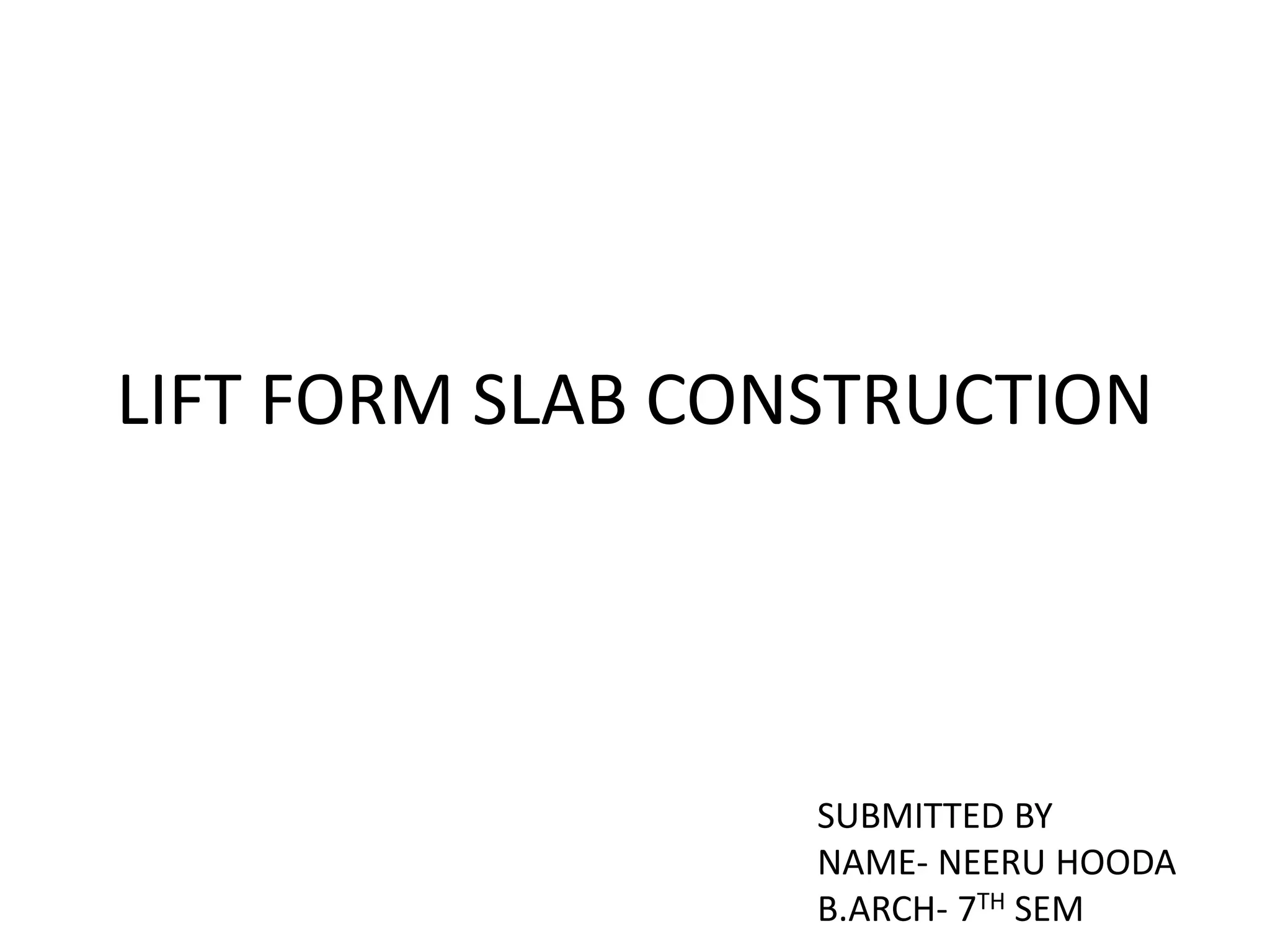
Lift slab construction is a method of constructing concrete buildings by casting the floor or roof
slab on top of the previous slab and then raising the slab up with hydraulic jacks, so
being cheaper and faster as it does not need forms & shores as it is needed for cast-in-place
slabs. Lift-slab construction can be more economic than conventional construction when the
building is vertically uniform, such as for hotels, apartment buildings, and dormitories,
and where the slab designs are repetitive.
INTRODUCTION
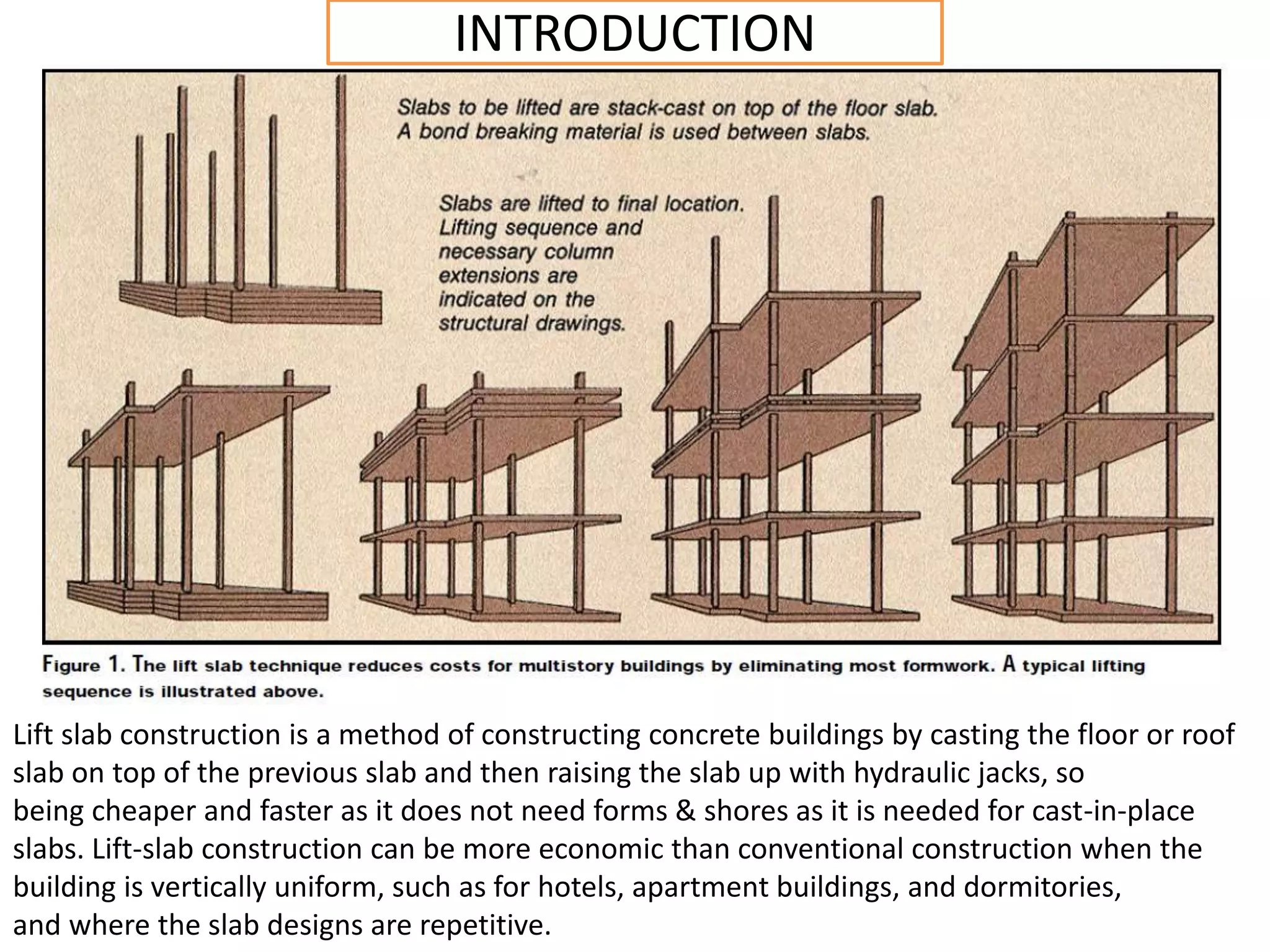
After the slabs have cured long enough to reach a prescribed strength, powerful hydraulic jacks
mounted on top of the columns lift the slabs into their respective positions.
A console connected to each hydraulic jack synchronizes the number of turns of the check nuts
to assure that the concrete slab is being raised the same amount at all points.
Lift slab can be used for heights up to about 16 stories.
Economical column spacing ranges from 22 to 32 feet.
Columns may be pipe, tubes or wide flange sections;
concrete columns may be used in 3- to 4-story buildings.
Lift-slab construction method becomes more advantageous in buildings with similar floor
plans throughout the height of the building and where flush slab may be desired.
• This method eliminates the need for redundant formwork as only shuttering required on
the edges, therefore casting concrete slabs is the simplest stage in whole constriction
process of lift-slab method.
• Lift-slab method may be employed with ribbed slabs not only flat slabs with some
compromise of the ease of casting.
Another advantage is reduced handling and hoisting of materials and supplies that can simply
be placed on top of the slabs and lifted with them.
ADVANTAGES
Major limitations
This method not to be use for multistorey building, only use for 15- 16 storey building.
No large span slab are constructed in this type of construction.
LIMITATIONS
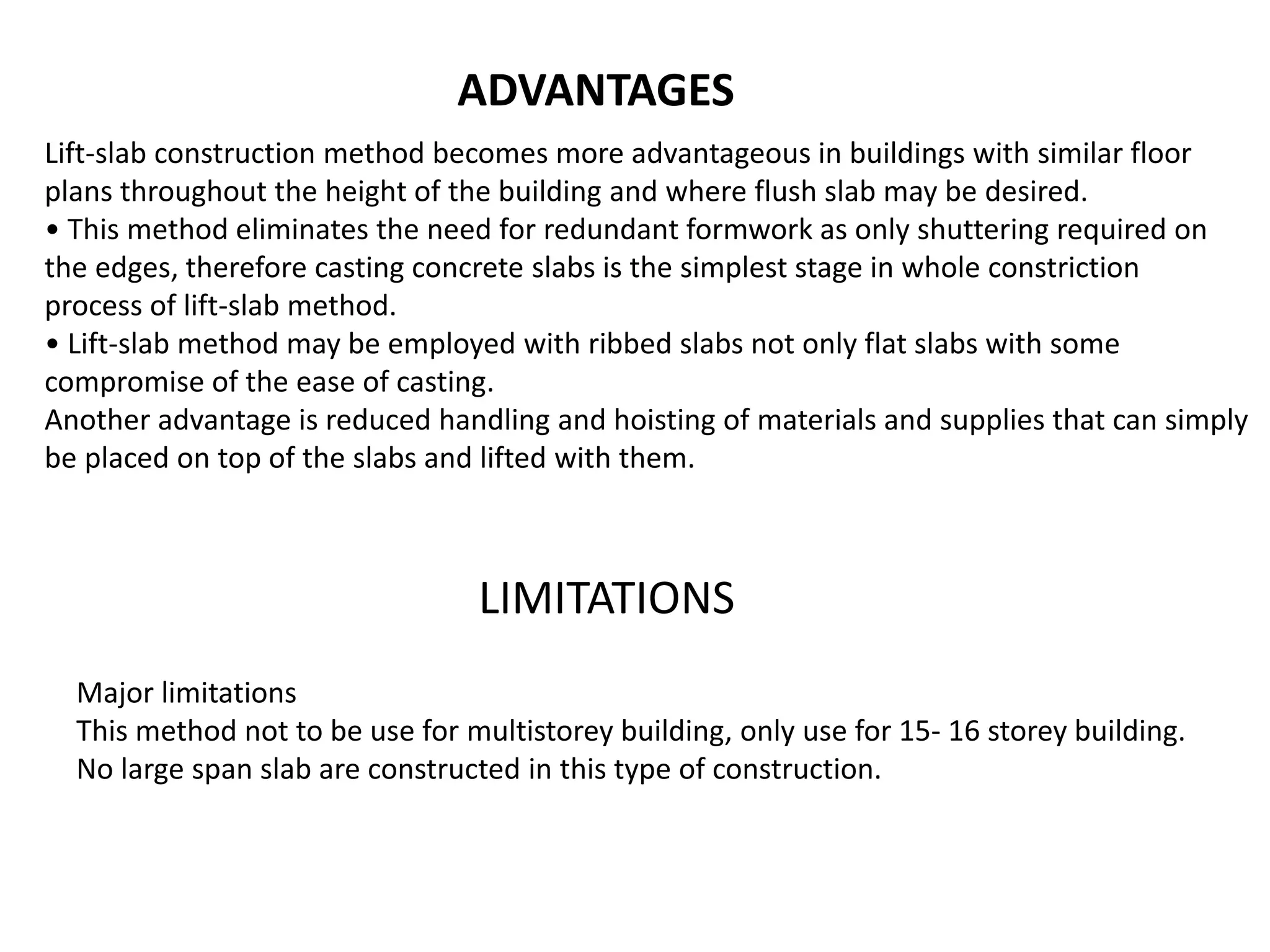
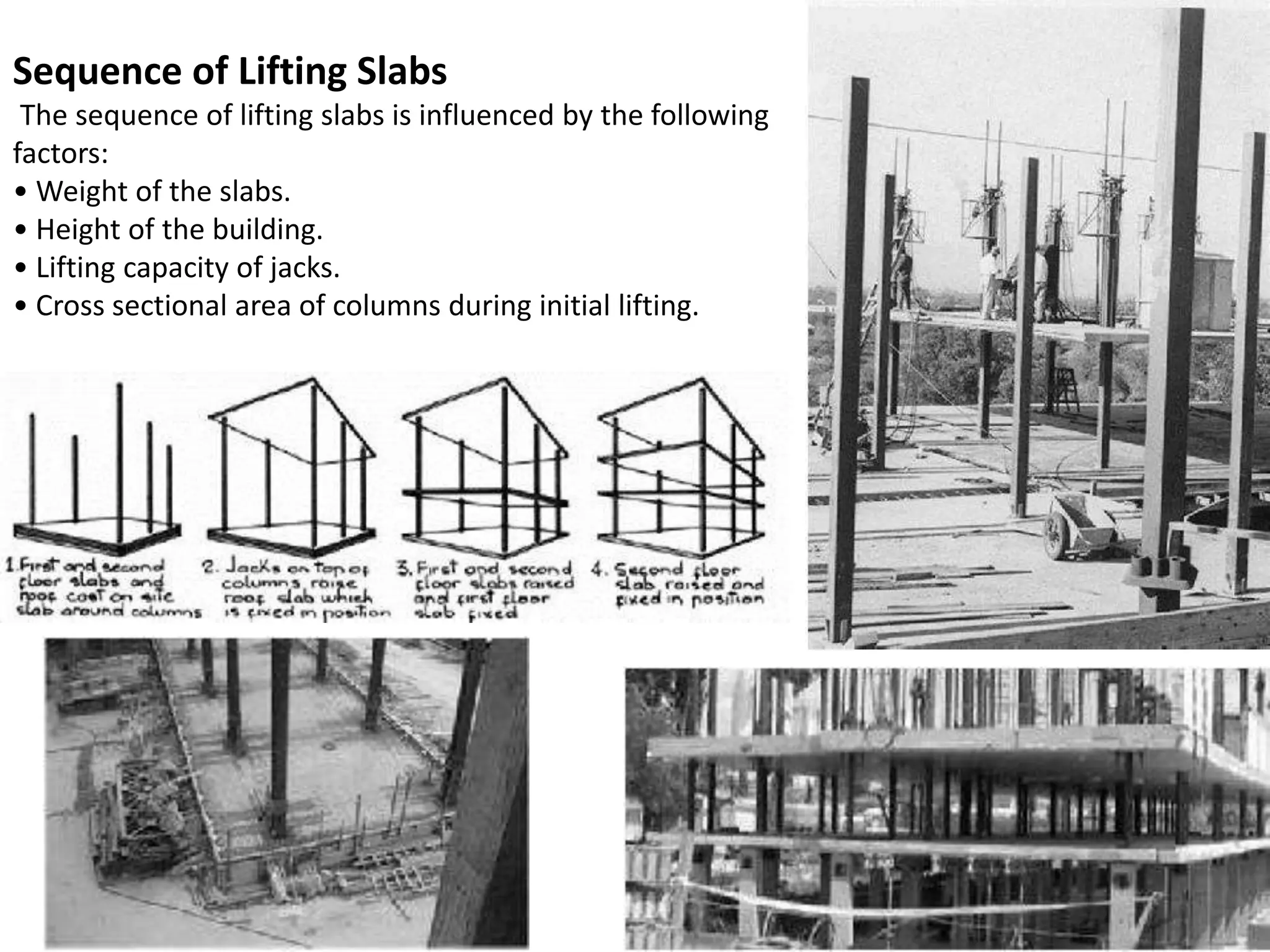
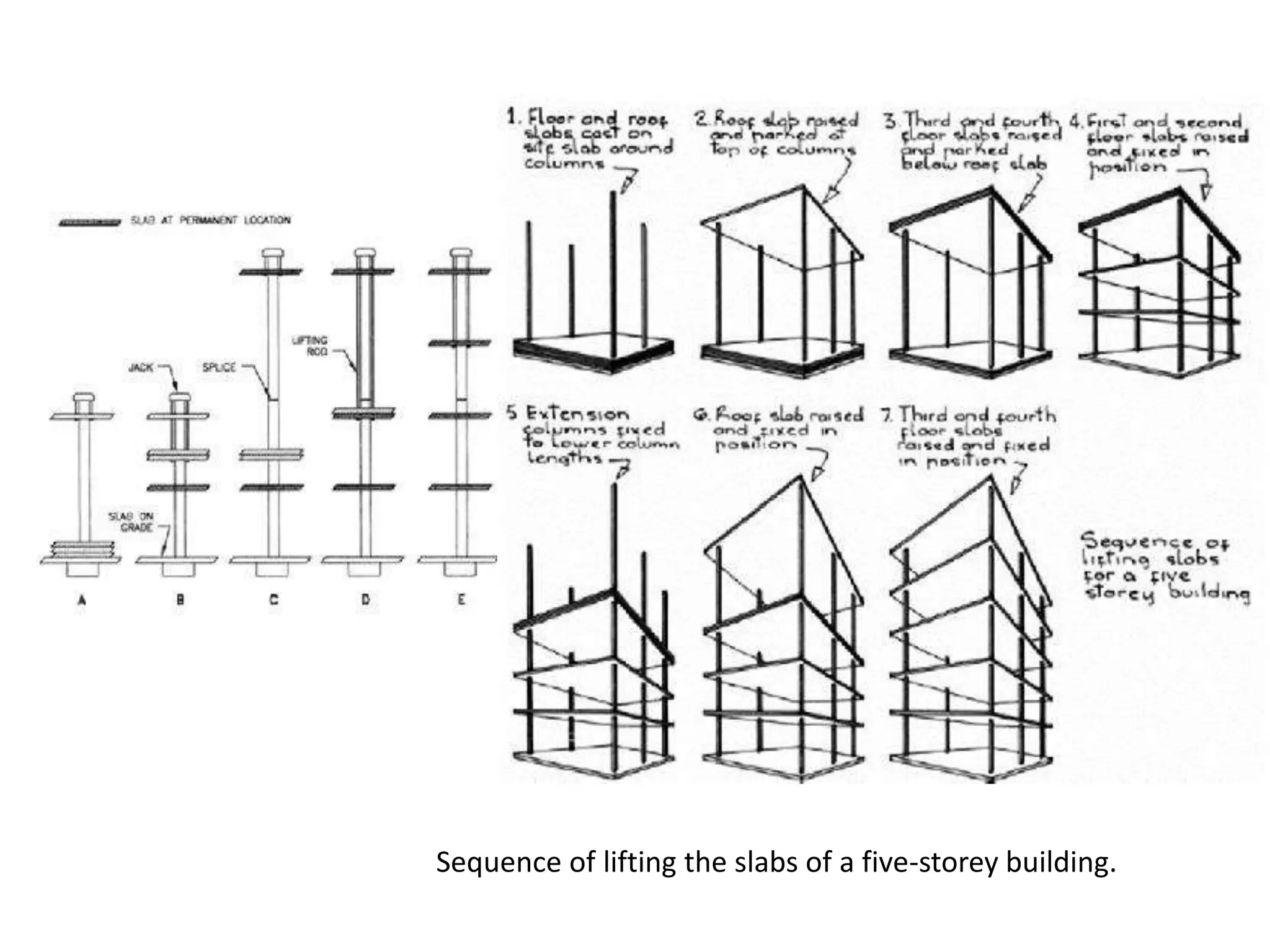
Sequence of Lifting Slabs
The sequence of lifting slabs is influenced by the following
factors:
• Weight of the slabs.
• Height of the building.
• Lifting capacity of jacks.
• Cross sectional area of columns during initial lifting.
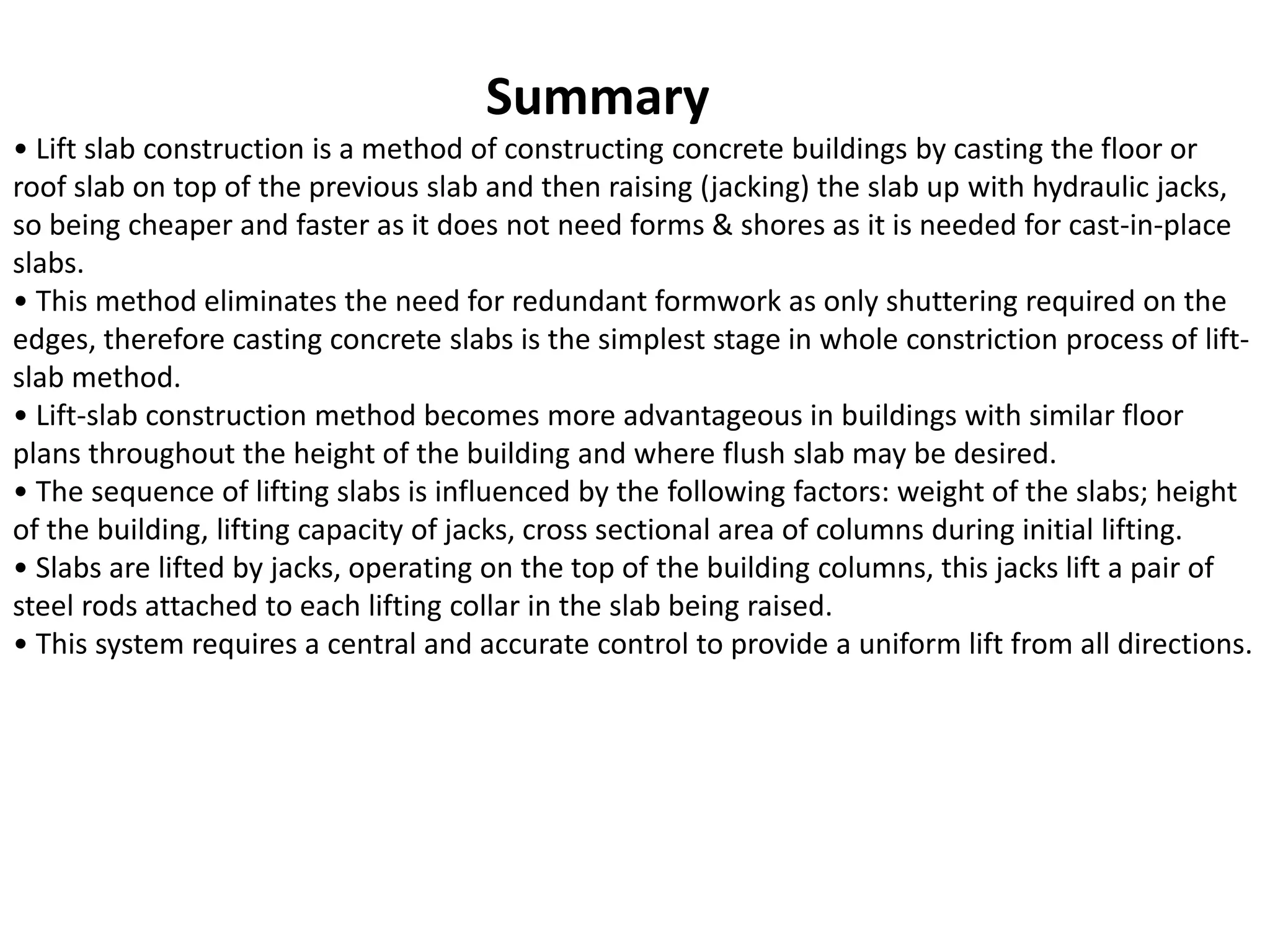
Sequence of lifting the slabs of a five-storey building.
Summary
• Lift slab construction is a method of constructing concrete buildings by casting the floor or
roof slab on top of the previous slab and then raising (jacking) the slab up with hydraulic jacks,
so being cheaper and faster as it does not need forms & shores as it is needed for cast-in-place
slabs.
• This method eliminates the need for redundant formwork as only shuttering required on the
edges, therefore casting concrete slabs is the simplest stage in whole constriction process of lift-
slab method.
• Lift-slab construction method becomes more advantageous in buildings with similar floor
plans throughout the height of the building and where flush slab may be desired.
• The sequence of lifting slabs is influenced by the following factors: weight of the slabs; height
of the building, lifting capacity of jacks, cross sectional area of columns during initial lifting.
• Slabs are lifted by jacks, operating on the top of the building columns, this jacks lift a pair of
steel rods attached to each lifting collar in the slab being raised.
• This system requires a central and accurate control to provide a uniform lift from all directions.

Lift form slab construction

  • 1.
    LIFT FORM SLABCONSTRUCTION SUBMITTED BY NAME- NEERU HOODA B.ARCH- 7TH SEM
  • 2.
    Lift slab constructionis a method of constructing concrete buildings by casting the floor or roof slab on top of the previous slab and then raising the slab up with hydraulic jacks, so being cheaper and faster as it does not need forms & shores as it is needed for cast-in-place slabs. Lift-slab construction can be more economic than conventional construction when the building is vertically uniform, such as for hotels, apartment buildings, and dormitories, and where the slab designs are repetitive. INTRODUCTION
  • 3.
    After the slabshave cured long enough to reach a prescribed strength, powerful hydraulic jacks mounted on top of the columns lift the slabs into their respective positions. A console connected to each hydraulic jack synchronizes the number of turns of the check nuts to assure that the concrete slab is being raised the same amount at all points. Lift slab can be used for heights up to about 16 stories. Economical column spacing ranges from 22 to 32 feet. Columns may be pipe, tubes or wide flange sections; concrete columns may be used in 3- to 4-story buildings.
  • 9.
    Lift-slab construction methodbecomes more advantageous in buildings with similar floor plans throughout the height of the building and where flush slab may be desired. • This method eliminates the need for redundant formwork as only shuttering required on the edges, therefore casting concrete slabs is the simplest stage in whole constriction process of lift-slab method. • Lift-slab method may be employed with ribbed slabs not only flat slabs with some compromise of the ease of casting. Another advantage is reduced handling and hoisting of materials and supplies that can simply be placed on top of the slabs and lifted with them. ADVANTAGES Major limitations This method not to be use for multistorey building, only use for 15- 16 storey building. No large span slab are constructed in this type of construction. LIMITATIONS
  • 10.
    Sequence of LiftingSlabs The sequence of lifting slabs is influenced by the following factors: • Weight of the slabs. • Height of the building. • Lifting capacity of jacks. • Cross sectional area of columns during initial lifting.
  • 11.
    Sequence of liftingthe slabs of a five-storey building.
  • 12.
    Summary • Lift slabconstruction is a method of constructing concrete buildings by casting the floor or roof slab on top of the previous slab and then raising (jacking) the slab up with hydraulic jacks, so being cheaper and faster as it does not need forms & shores as it is needed for cast-in-place slabs. • This method eliminates the need for redundant formwork as only shuttering required on the edges, therefore casting concrete slabs is the simplest stage in whole constriction process of lift- slab method. • Lift-slab construction method becomes more advantageous in buildings with similar floor plans throughout the height of the building and where flush slab may be desired. • The sequence of lifting slabs is influenced by the following factors: weight of the slabs; height of the building, lifting capacity of jacks, cross sectional area of columns during initial lifting. • Slabs are lifted by jacks, operating on the top of the building columns, this jacks lift a pair of steel rods attached to each lifting collar in the slab being raised. • This system requires a central and accurate control to provide a uniform lift from all directions.