FIVE KINGDOM 
CLASSIFICATION 
SUBMITTED TO, SUBMITTED BY, 
MS.LESHA M.S SHILPA BIJU 
LECTURER IN CHARGE NATURAL SCIENCE
WELCOME
FIVE KINGDOM 
CLASSIFICATION
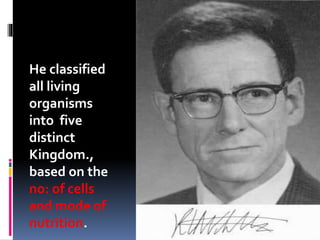
He classified 
all living 
organisms 
into five 
distinct 
Kingdom., 
based on the 
no: of cells 
and mode of 
nutrition.
FIRST KINGDOM 
KINGDOM MONERA
MONERA 
a. One celled organism or unicellular 
organism 
b. No nucleus 
c. Prokaryotic 
d. Smallest and simplest kind of 
living being 
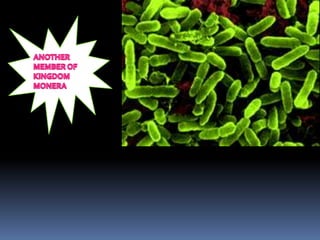
e. Members include Bacteria.
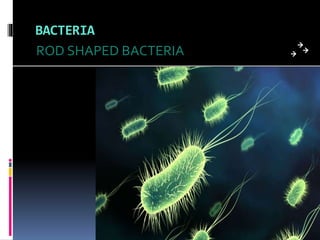
BACTERIA 
ROD SHAPED BACTERIA
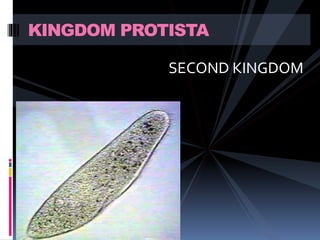
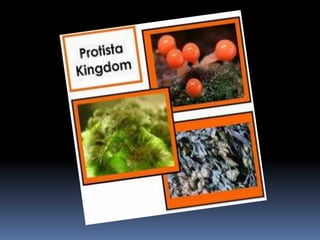
KINGDOM PROTISTA 
SECOND KINGDOM
FEATURES: 
 Most Protists are single celled but some have 
many cells 
 The cells have a membrane around the nucleus 
 Some protists get nutrients and energy by 
eating other organisms 
 Some protists get energy from the sun and 
nutrients from the water 
 Most protist reproduce by splitting into two
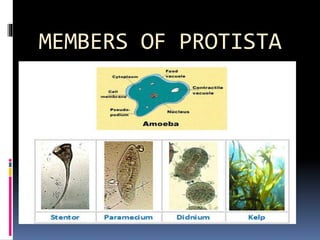
MEMBERS OF PROTISTA
THIRD KINGDOM 
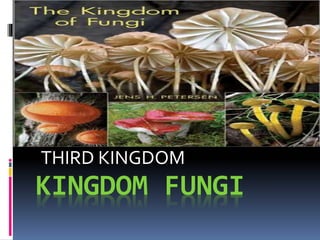
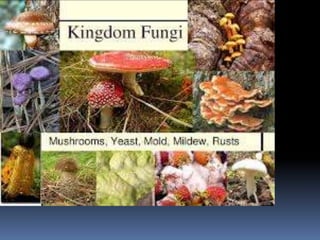
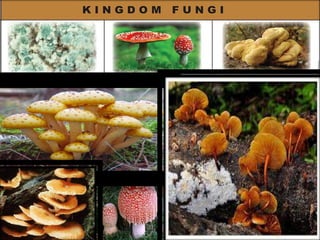
KINGDOM FUNGI
CHARACTERISTICS 
 Most fungi are many celled and some are 
one celled organisms 
 Eukaryotic 
 Cells of the fungi have a membrane around 
nucleus 
 The fungi gets energy and nutrients by 
absorbing and digesting from the surface 
they live on 
 Most fungi reproduce by spores
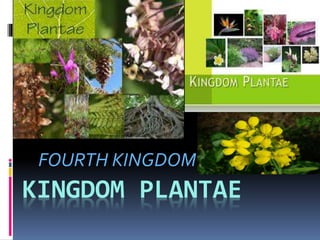
FOURTH KINGDOM 
KINGDOM PLANTAE
CHARACTERISICS 
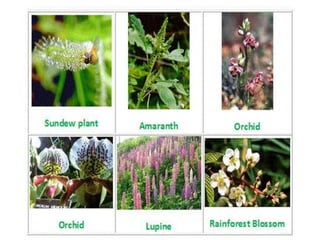
 Plants are many celled organisms 
 Plants cells have membrane around 
the nucleus, contain chlorophyll and 
have cell walls 
 Plants get energy from the un and 
nutrients from their surroundings 
 Most plants reproduce from the 
seeds
FIFTH KINGDOM 
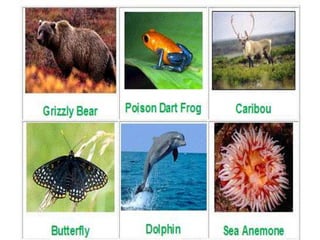
KINGDOM ANIMALIA
CHARACTERISTICS 
 Animals are many celled or multi cellular 
organisms 
 Heterotrophic organisms 
 Animals cell have a membrane around 
the nucleus 
 Animals get energy and nutrients by 
eating other organisms 
 Animals reproduce with eggs, some 
inside the mother’s body , some outside 
the mother’s body
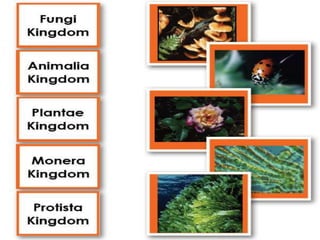
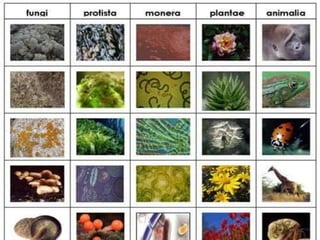
Overview of all 
the KINGDOM
REFERENCE 
1. Linnaeus, C. (1735). Systemae Naturae, sive regna tria naturae, 
systematics proposita per classes, ordines, genera & species 
2. Woese, C.R.; Kandler, O. & Wheelis, M. (1990), "Towards a natural 
system of organisms: proposal for the domains Archaea, Bacteria, 
and Eucarya", Proc Natl Acad Sci U S A
THANK YOU

Five kingdom classification

  • 1.
    FIVE KINGDOM CLASSIFICATION SUBMITTED TO, SUBMITTED BY, MS.LESHA M.S SHILPA BIJU LECTURER IN CHARGE NATURAL SCIENCE
  • 2.
  • 3.
  • 4.
    He classified allliving organisms into five distinct Kingdom., based on the no: of cells and mode of nutrition.
  • 5.
  • 6.
    MONERA a. Onecelled organism or unicellular organism b. No nucleus c. Prokaryotic d. Smallest and simplest kind of living being e. Members include Bacteria.
  • 7.
  • 9.
  • 10.
    FEATURES:  MostProtists are single celled but some have many cells  The cells have a membrane around the nucleus  Some protists get nutrients and energy by eating other organisms  Some protists get energy from the sun and nutrients from the water  Most protist reproduce by splitting into two
  • 11.
  • 13.
  • 14.
    CHARACTERISTICS  Mostfungi are many celled and some are one celled organisms  Eukaryotic  Cells of the fungi have a membrane around nucleus  The fungi gets energy and nutrients by absorbing and digesting from the surface they live on  Most fungi reproduce by spores
  • 17.
  • 18.
    CHARACTERISICS  Plantsare many celled organisms  Plants cells have membrane around the nucleus, contain chlorophyll and have cell walls  Plants get energy from the un and nutrients from their surroundings  Most plants reproduce from the seeds
  • 20.
  • 21.
    CHARACTERISTICS  Animalsare many celled or multi cellular organisms  Heterotrophic organisms  Animals cell have a membrane around the nucleus  Animals get energy and nutrients by eating other organisms  Animals reproduce with eggs, some inside the mother’s body , some outside the mother’s body
  • 25.
    Overview of all the KINGDOM
  • 27.
    REFERENCE 1. Linnaeus,C. (1735). Systemae Naturae, sive regna tria naturae, systematics proposita per classes, ordines, genera & species 2. Woese, C.R.; Kandler, O. & Wheelis, M. (1990), "Towards a natural system of organisms: proposal for the domains Archaea, Bacteria, and Eucarya", Proc Natl Acad Sci U S A
  • 28.