BIOLOGICAL
CLASSIFICATION
Systematics- studies diversity of life
study and classification of organisms with the
goal of reconstructing their evolutionary
history
Taxonomy- study of classification
science of identifying, naming and
classifying organisms into groups
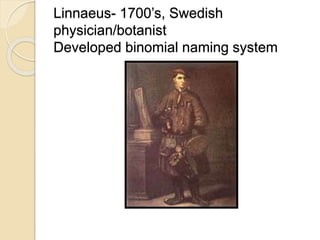
Linnaeus- 1700’s, Swedish
physician/botanist
Developed binomial naming system
Classification
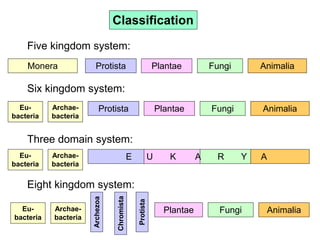
Five kingdom system:
Monera Protista FungiPlantae Animalia
Six kingdom system:
Eu-
bacteria
Protista FungiPlantae AnimaliaArchae-
bacteria
Three domain system:
Eu-
bacteria
Archae-
bacteria
E U K A R Y A
Eight kingdom system:
Eu-
bacteria
Archezoa
FungiPlantae AnimaliaArchae-
bacteria
Chromista
Protista
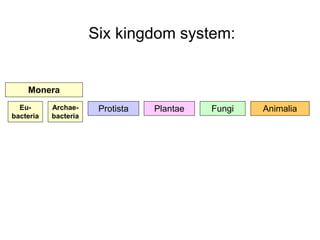
Six kingdom system:
Eu-
bacteria
Protista FungiPlantae AnimaliaArchae-
bacteria
Monera
7
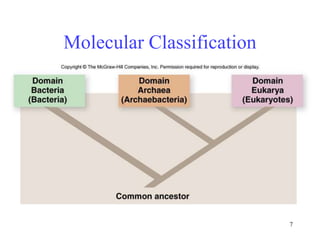
Molecular Classification
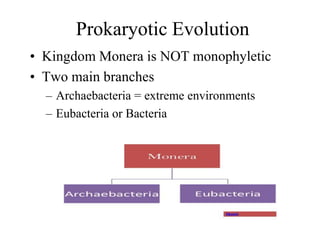
Prokaryotic Evolution
• Kingdom Monera is NOT monophyletic
• Two main branches
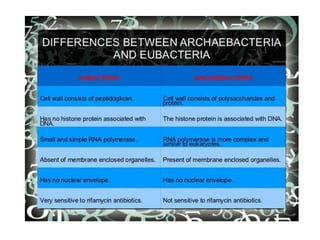
– Archaebacteria = extreme environments
– Eubacteria or Bacteria
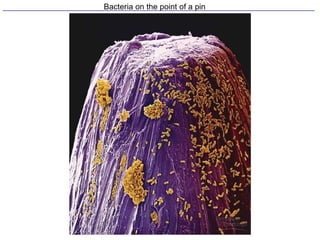
Bacteria on the point of a pin
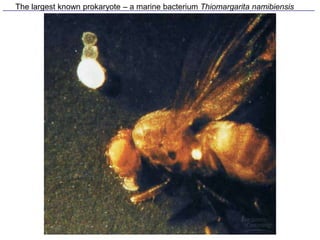
The largest known prokaryote – a marine bacterium Thiomargarita namibiensis
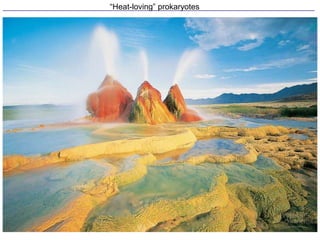
“Heat-loving” prokaryotes
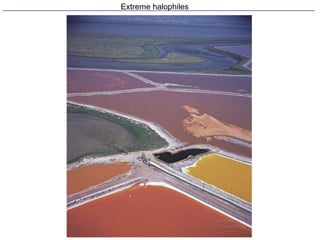
Extreme halophiles
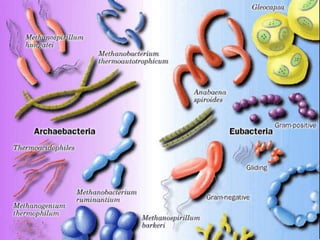
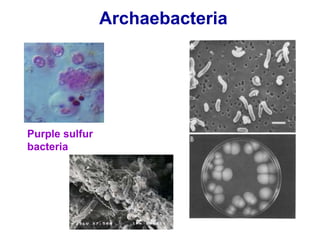
Archaebacteria
Purple sulfur
bacteria
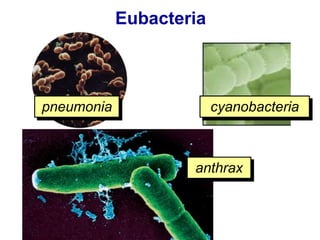
anthrax
pneumonia cyanobacteria
Eubacteria
• Types Of Archaebacteria
• Archaebacteria can classified into three
categories on the basis of home
environments:Methanogens,
Thermoacidophiles and Halophiles.
Methanogens
•Methane producing bacteria
•These bacteria convert CO2 of swampy areas into methane.
•These bacteria convert the organic substance present in cow dung into
methane by fermentation. (Gobar gas fermenter)
Example: Methanococcus.
•They are also present in the rumen of cattle, where it digests the
cellulose by fermentation and convert it into methane.
Example: Rumenococcus
Halophiles
• Halophiles means Salt loving.
• They are found in extreme salty areas such as the Great Salt Lake and
the Dead Sea.
• Halophiles are surrounded by purple membrane in which a pigment,
bacteriorhodopsin is found due to this reason membrane absorbs the
bright light and directly forms ATP i.e. they cannot prepare food like
eubacteria. Instead of it they directly form ATP. Therefore They are non
photosynthetic
Thermoacidophiles
•Thermoacidophiles means heat and acid loving.
•These archaebacteria are found at those places where
temperature is approx 80oC – 100oC and medium is
acidic.
•These are aerobic bacteria, which have the capacity to
oxidise sulphur to H2SO4 at high temperature and high
acidity.
•Some of these bacteria are able to reduce sulphur to
H2S under anerobic conditions.
•They are found in hot sulphur springs such as
Yellowstone National park.
Types of Eubacteria
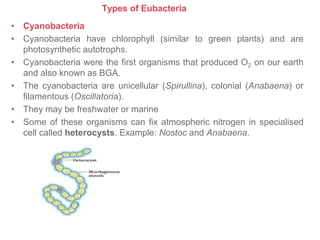
• Cyanobacteria
• Cyanobacteria have chlorophyll (similar to green plants) and are
photosynthetic autotrophs.
• Cyanobacteria were the first organisms that produced O2 on our earth
and also known as BGA.
• The cyanobacteria are unicellular (Spirullina), colonial (Anabaena) or
filamentous (Oscillatoria).
• They may be freshwater or marine
• Some of these organisms can fix atmospheric nitrogen in specialised
cell called heterocysts. Example: Nostoc and Anabaena.
Chemosynthetic Autotrophic
•These are nonphotosynthetic autotrophs. They use chemical energy instead of
light energy for food synthesis. Chemical energy is obtained from oxidation of
chemical compounds. Photolysis of water does not take place here, so hydrogen
is received from other sources like inorganic sulphur compounds (H2S) or organic
compound (Amino acids, Fatty acid etc.)
•Example: Sulphur producing bacteria.
Heterotrophic Bacteria
•These are the most abundant in nature. Many of them have a significant impact
on human affairs. They are helpful in making curd from milk, production of
antibiotics, fixing nitrogen in legume roots, etc.
•Some are pathogens causing damage to human being, crops, farm animals and
pets. Cholera diseases caused by different bacteria.
Mycoplasma
•Mycoplasma are organisms that completely lack a cell wall.
•These are the smallest living cells known and can survive without oxygen.
•Many mycoplasma are pathogenic in animals and plants.
23
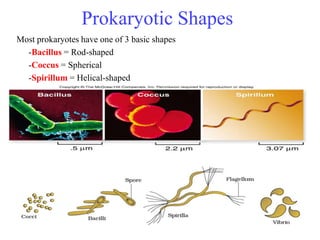
Most prokaryotes have one of 3 basic shapes
-Bacillus = Rod-shaped
-Coccus = Spherical
-Spirillum = Helical-shaped
Prokaryotic Shapes
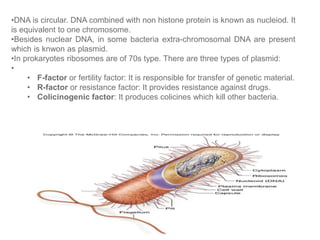
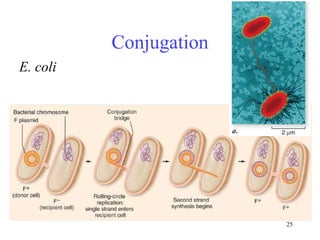
•DNA is circular. DNA combined with non histone protein is known as nucleiod. It
is equivalent to one chromosome.
•Besides nuclear DNA, in some bacteria extra-chromosomal DNA are present
which is knwon as plasmid.
•In prokaryotes ribosomes are of 70s type. There are three types of plasmid:
•
• F-factor or fertility factor: It is responsible for transfer of genetic material.
• R-factor or resistance factor: It provides resistance against drugs.
• Colicinogenic factor: It produces colicines which kill other bacteria.
25
Conjugation
E. coli
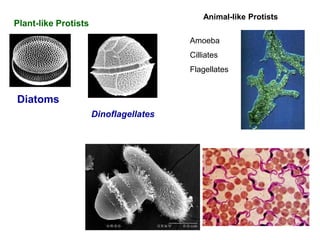
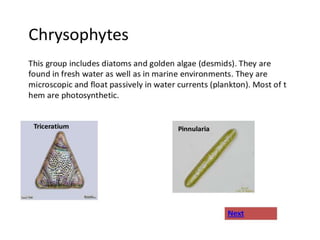
Diatoms
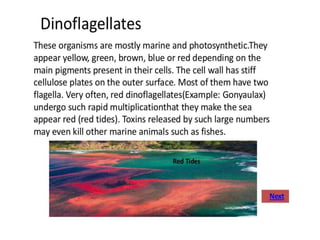
Dinoflagellates
Plant-like Protists
Animal-like Protists
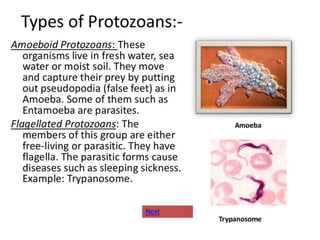
Amoeba
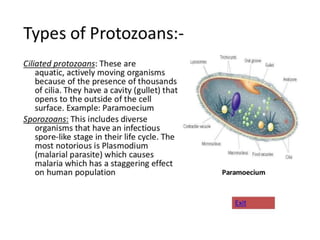
Cilliates
Flagellates
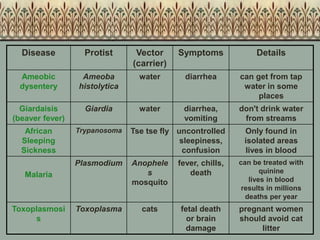
Disease Protist Vector
(carrier)
Symptoms Details
Ameobic
dysentery
Ameoba
histolytica
water diarrhea can get from tap
water in some
places
Giardaisis
(beaver fever)
Giardia water diarrhea,
vomiting
don't drink water
from streams
African
Sleeping
Sickness
Trypanosoma Tse tse fly uncontrolled
sleepiness,
confusion
Only found in
isolated areas
lives in blood
Malaria
Plasmodium Anophele
s
mosquito
fever, chills,
death
can be treated with
quinine
lives in blood
results in millions
deaths per year
Toxoplasmosi
s
Toxoplasma cats fetal death
or brain
damage
pregnant women
should avoid cat
litter
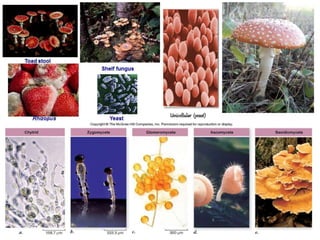
Unicellular (yeast)
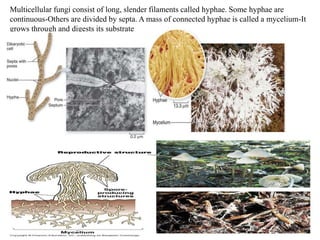
Multicellular fungi consist of long, slender filaments called hyphae. Some hyphae are
continuous-Others are divided by septa. A mass of connected hyphae is called a mycelium-It
grows through and digests its substrate
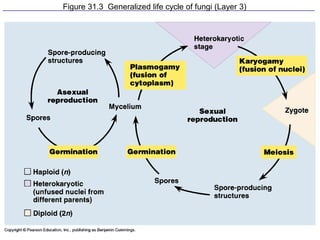
Figure 31.3 Generalized life cycle of fungi (Layer 3)
46
Fungal Parasites and Pathogens
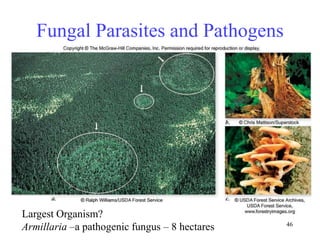
Largest Organism?
Armillaria –a pathogenic fungus – 8 hectares
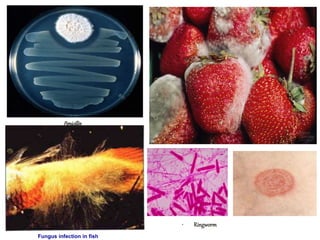
Penicillin
Fungus infection in fish
• Ringworm
48
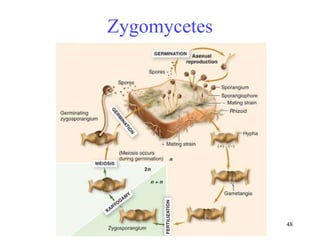
Zygomycetes
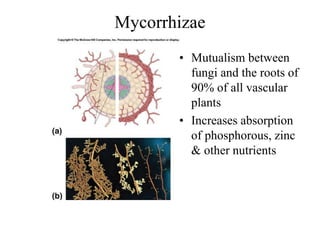
Mycorrhizae
• Mutualism between
fungi and the roots of
90% of all vascular
plants
• Increases absorption
of phosphorous, zinc
& other nutrients

Biological classification 11 biology

  • 1.
  • 2.
    Systematics- studies diversityof life study and classification of organisms with the goal of reconstructing their evolutionary history Taxonomy- study of classification science of identifying, naming and classifying organisms into groups
  • 3.
  • 5.
    Classification Five kingdom system: MoneraProtista FungiPlantae Animalia Six kingdom system: Eu- bacteria Protista FungiPlantae AnimaliaArchae- bacteria Three domain system: Eu- bacteria Archae- bacteria E U K A R Y A Eight kingdom system: Eu- bacteria Archezoa FungiPlantae AnimaliaArchae- bacteria Chromista Protista
  • 6.
    Six kingdom system: Eu- bacteria ProtistaFungiPlantae AnimaliaArchae- bacteria Monera
  • 7.
  • 9.
    Prokaryotic Evolution • KingdomMonera is NOT monophyletic • Two main branches – Archaebacteria = extreme environments – Eubacteria or Bacteria
  • 11.
    Bacteria on thepoint of a pin
  • 12.
    The largest knownprokaryote – a marine bacterium Thiomargarita namibiensis
  • 13.
  • 14.
  • 15.
  • 16.
  • 18.
    • Types OfArchaebacteria • Archaebacteria can classified into three categories on the basis of home environments:Methanogens, Thermoacidophiles and Halophiles.
  • 19.
    Methanogens •Methane producing bacteria •Thesebacteria convert CO2 of swampy areas into methane. •These bacteria convert the organic substance present in cow dung into methane by fermentation. (Gobar gas fermenter) Example: Methanococcus. •They are also present in the rumen of cattle, where it digests the cellulose by fermentation and convert it into methane. Example: Rumenococcus Halophiles • Halophiles means Salt loving. • They are found in extreme salty areas such as the Great Salt Lake and the Dead Sea. • Halophiles are surrounded by purple membrane in which a pigment, bacteriorhodopsin is found due to this reason membrane absorbs the bright light and directly forms ATP i.e. they cannot prepare food like eubacteria. Instead of it they directly form ATP. Therefore They are non photosynthetic
  • 20.
    Thermoacidophiles •Thermoacidophiles means heatand acid loving. •These archaebacteria are found at those places where temperature is approx 80oC – 100oC and medium is acidic. •These are aerobic bacteria, which have the capacity to oxidise sulphur to H2SO4 at high temperature and high acidity. •Some of these bacteria are able to reduce sulphur to H2S under anerobic conditions. •They are found in hot sulphur springs such as Yellowstone National park.
  • 21.
    Types of Eubacteria •Cyanobacteria • Cyanobacteria have chlorophyll (similar to green plants) and are photosynthetic autotrophs. • Cyanobacteria were the first organisms that produced O2 on our earth and also known as BGA. • The cyanobacteria are unicellular (Spirullina), colonial (Anabaena) or filamentous (Oscillatoria). • They may be freshwater or marine • Some of these organisms can fix atmospheric nitrogen in specialised cell called heterocysts. Example: Nostoc and Anabaena.
  • 22.
    Chemosynthetic Autotrophic •These arenonphotosynthetic autotrophs. They use chemical energy instead of light energy for food synthesis. Chemical energy is obtained from oxidation of chemical compounds. Photolysis of water does not take place here, so hydrogen is received from other sources like inorganic sulphur compounds (H2S) or organic compound (Amino acids, Fatty acid etc.) •Example: Sulphur producing bacteria. Heterotrophic Bacteria •These are the most abundant in nature. Many of them have a significant impact on human affairs. They are helpful in making curd from milk, production of antibiotics, fixing nitrogen in legume roots, etc. •Some are pathogens causing damage to human being, crops, farm animals and pets. Cholera diseases caused by different bacteria. Mycoplasma •Mycoplasma are organisms that completely lack a cell wall. •These are the smallest living cells known and can survive without oxygen. •Many mycoplasma are pathogenic in animals and plants.
  • 23.
    23 Most prokaryotes haveone of 3 basic shapes -Bacillus = Rod-shaped -Coccus = Spherical -Spirillum = Helical-shaped Prokaryotic Shapes
  • 24.
    •DNA is circular.DNA combined with non histone protein is known as nucleiod. It is equivalent to one chromosome. •Besides nuclear DNA, in some bacteria extra-chromosomal DNA are present which is knwon as plasmid. •In prokaryotes ribosomes are of 70s type. There are three types of plasmid: • • F-factor or fertility factor: It is responsible for transfer of genetic material. • R-factor or resistance factor: It provides resistance against drugs. • Colicinogenic factor: It produces colicines which kill other bacteria.
  • 25.
  • 27.
  • 28.
    Disease Protist Vector (carrier) SymptomsDetails Ameobic dysentery Ameoba histolytica water diarrhea can get from tap water in some places Giardaisis (beaver fever) Giardia water diarrhea, vomiting don't drink water from streams African Sleeping Sickness Trypanosoma Tse tse fly uncontrolled sleepiness, confusion Only found in isolated areas lives in blood Malaria Plasmodium Anophele s mosquito fever, chills, death can be treated with quinine lives in blood results in millions deaths per year Toxoplasmosi s Toxoplasma cats fetal death or brain damage pregnant women should avoid cat litter
  • 37.
  • 38.
    Multicellular fungi consistof long, slender filaments called hyphae. Some hyphae are continuous-Others are divided by septa. A mass of connected hyphae is called a mycelium-It grows through and digests its substrate
  • 45.
    Figure 31.3 Generalizedlife cycle of fungi (Layer 3)
  • 46.
    46 Fungal Parasites andPathogens Largest Organism? Armillaria –a pathogenic fungus – 8 hectares
  • 47.
  • 48.
  • 49.
    Mycorrhizae • Mutualism between fungiand the roots of 90% of all vascular plants • Increases absorption of phosphorous, zinc & other nutrients