-R.H. Whittaker in 1969
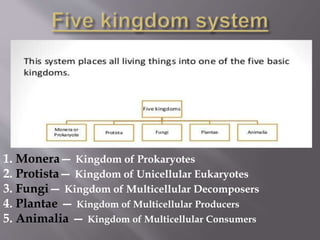
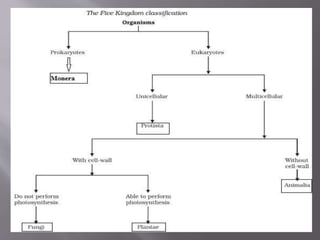
1. Monera— Kingdom of Prokaryotes
2. Protista— Kingdom of Unicellular Eukaryotes
3. Fungi— Kingdom of Multicellular Decomposers
4. Plantae — Kingdom of Multicellular Producers
5. Animalia — Kingdom of Multicellular Consumers
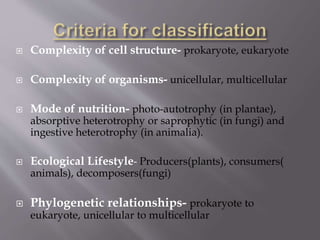
 Complexity of cell structure- prokaryote, eukaryote
 Complexity of organisms- unicellular, multicellular
 Mode of nutrition- photo-autotrophy (in plantae),
absorptive heterotrophy or saprophytic (in fungi) and
ingestive heterotrophy (in animalia).
 Ecological Lifestyle- Producers(plants), consumers(
animals), decomposers(fungi)
 Phylogenetic relationships- prokaryote to
eukaryote, unicellular to multicellular
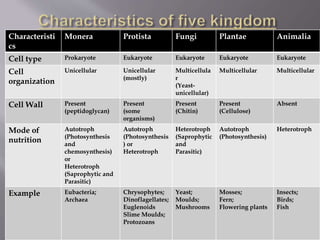
Characteristi
cs
Monera Protista Fungi Plantae Animalia
Cell type Prokaryote Eukaryote Eukaryote Eukaryote Eukaryote
Cell
organization
Unicellular Unicellular
(mostly)
Multicellula
r
(Yeast-
unicellular)
Multicellular Multicellular
Cell Wall Present
(peptidoglycan)
Present
(some
organisms)
Present
(Chitin)
Present
(Cellulose)
Absent
Mode of
nutrition
Autotroph
(Photosynthesis
and
chemosynthesis)
or
Heterotroph
(Saprophytic and
Parasitic)
Autotroph
(Photosynthesis
) or
Heterotroph
Heterotroph
(Saprophytic
and
Parasitic)
Autotroph
(Photosynthesis)
Heterotroph
Example Eubacteria;
Archaea
Chrysophytes;
Dinoflagellates;
Euglenoids
Slime Moulds;
Protozoans
Yeast;
Moulds;
Mushrooms
Mosses;
Fern;
Flowering plants
Insects;
Birds;
Fish
 1. Separation of prokaryotes in a separate
kingdom of Monera as prokaryotes differ from
all other organisms in their genetic, cellular,
reproductive and physiological organization.
 2. Fungi have never been related to plants.
They have their own biochemical, physi-
ological and structural organization. Separation
of fungi into a separate kingdom was another
advantage.
 Viruses have not been included in this system of
classification.
 Archaebacteria differ from other bacteria in structure,
composition and physiology.
 protista has so many diversities that it is difficult to keep
them together. For example, protista contain both walled and
wall-less organisms, photosynthetic and non-photosynthetic
organisms, unicellular and filamentous or mycelial
organisms.
 Unicellular algae are kept in kingdom Protista, whereas algae
like multicelluar organisms are ketp in kingdom Plantae. But
similar organisms must be put together.

5 kingdom classification | Whittaker classification

  • 1.
  • 2.
    1. Monera— Kingdomof Prokaryotes 2. Protista— Kingdom of Unicellular Eukaryotes 3. Fungi— Kingdom of Multicellular Decomposers 4. Plantae — Kingdom of Multicellular Producers 5. Animalia — Kingdom of Multicellular Consumers
  • 3.
     Complexity ofcell structure- prokaryote, eukaryote  Complexity of organisms- unicellular, multicellular  Mode of nutrition- photo-autotrophy (in plantae), absorptive heterotrophy or saprophytic (in fungi) and ingestive heterotrophy (in animalia).  Ecological Lifestyle- Producers(plants), consumers( animals), decomposers(fungi)  Phylogenetic relationships- prokaryote to eukaryote, unicellular to multicellular
  • 5.
    Characteristi cs Monera Protista FungiPlantae Animalia Cell type Prokaryote Eukaryote Eukaryote Eukaryote Eukaryote Cell organization Unicellular Unicellular (mostly) Multicellula r (Yeast- unicellular) Multicellular Multicellular Cell Wall Present (peptidoglycan) Present (some organisms) Present (Chitin) Present (Cellulose) Absent Mode of nutrition Autotroph (Photosynthesis and chemosynthesis) or Heterotroph (Saprophytic and Parasitic) Autotroph (Photosynthesis ) or Heterotroph Heterotroph (Saprophytic and Parasitic) Autotroph (Photosynthesis) Heterotroph Example Eubacteria; Archaea Chrysophytes; Dinoflagellates; Euglenoids Slime Moulds; Protozoans Yeast; Moulds; Mushrooms Mosses; Fern; Flowering plants Insects; Birds; Fish
  • 6.
     1. Separationof prokaryotes in a separate kingdom of Monera as prokaryotes differ from all other organisms in their genetic, cellular, reproductive and physiological organization.  2. Fungi have never been related to plants. They have their own biochemical, physi- ological and structural organization. Separation of fungi into a separate kingdom was another advantage.
  • 7.
     Viruses havenot been included in this system of classification.  Archaebacteria differ from other bacteria in structure, composition and physiology.  protista has so many diversities that it is difficult to keep them together. For example, protista contain both walled and wall-less organisms, photosynthetic and non-photosynthetic organisms, unicellular and filamentous or mycelial organisms.  Unicellular algae are kept in kingdom Protista, whereas algae like multicelluar organisms are ketp in kingdom Plantae. But similar organisms must be put together.