



INTRO
• PRESENTERS; ARSHAD KHAN
AND
TARIQ RAHIM
• TOPIC; PADDY PEST
CONTENTS
• SYSTEMATIC POSITION
• DISTRIBUTION
• LIFE HISTORY
• CONTROL METHOD
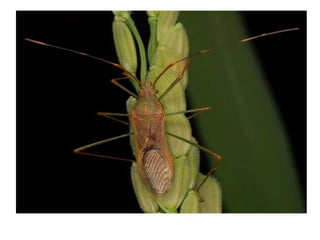
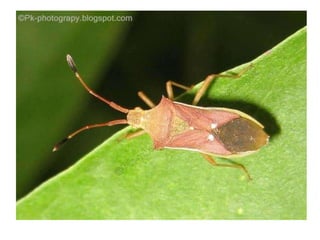
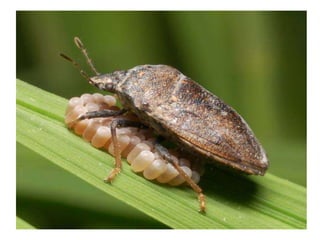
THE RICE BUG
• PHYLUM: ARTHROPODA
• CLASS: INSECTA
• ORDER: HEMIPTERA
• FAMILY: COREIDAE
• GENUS: LEPTOCORISA
• SPECIES: VARICORNIS
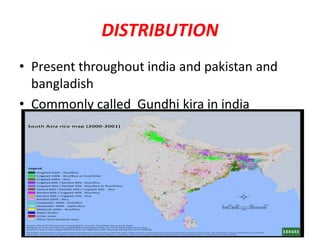
DISTRIBUTION
• Present throughout india and pakistan and
bangladish
• Commonly called Gundhi kira in india
Distribution in pakistan
NATURE OF DAMAGE
• Active insect, Long leged ,adult measures
about an inch in length
• Infect paddy plant when come to flower
• Sucking mouth parts are used to suck out milk
from grains which soon shrivel
• It caused 5 – 25% loss
Life history
• Female lay eggs symmetrically into 2 ,3 rows
• Eggs are dark coloured,oval and flattened at
top
• Eggs hatch in about a week
• Nymph have slender green body ,long legs
• 20 days to become adult
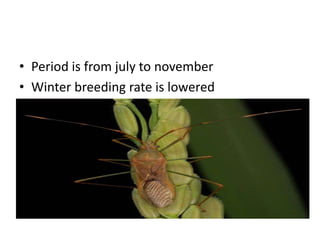
• Period is from july to november
• Winter breeding rate is lowered
Control
• Cultural method
• Remove the alternate food at off season
• Draining out water from infested field
for 3-4 days
• Crop rotation is advisible
Chemical method
• 5% BHC(benzene hexachloride) 15kg/ha
dusting is advised
• Malathion and methylparaathion dust is also
effective
• Spraying of 0.25% DDT or BHC or 0.04% endrin
atleast 2 weeks before harvesting
Mechanical control
• Collection of bugs with hand and destrication
is qa useful mechanical method
• BIOLOGICAL CONTROL
• Cicendalasixpunctata pentatumid prey upon
the adult of Leptocorisa
THANKS
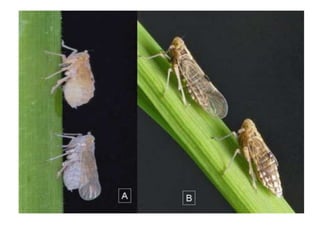
2.THE BROWN PLANT HOPPER
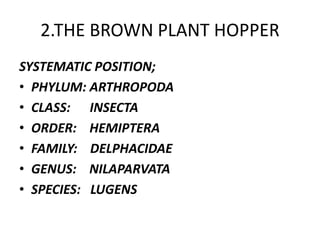
SYSTEMATIC POSITION;
• PHYLUM: ARTHROPODA
• CLASS: INSECTA
• ORDER: HEMIPTERA
• FAMILY: DELPHACIDAE
• GENUS: NILAPARVATA
• SPECIES: LUGENS
DISTRIBUTION
• Found where rice is found
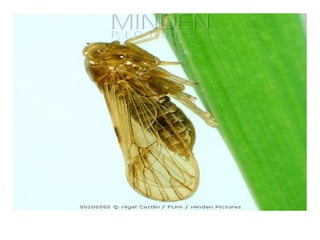
• It is brown in colour,female is larger 4-5mm
• Female are winged
NATURE OF DAMAGE
• All stages of paddy are attacked by this pest
• Cluster of pest at base of plant feed on plant
sap which lead plant to turns yellow and then
dry up
• At start of this infestation round yellow
patches appears which soon turns brownish
due to drying of plant .this is called as
hopper burn.it demage crop upto 100%
Life history
• Copulation starts as female emerges and lay
eggs from next day
• Eggs in bunches of 3-10 are thurst within the
tissue of plant along with mid region of leaf
sheath and mid rib of leaves
• Female lay average of 200-250 eggs
• Eggs are white ,elongated.hatch about 8-10
days
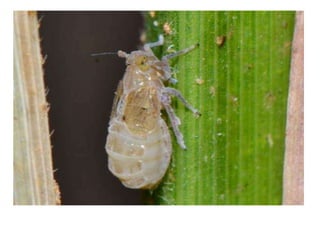
• Nymph undergoes 5 instar within period of
15-20 days
• Life cycle is completed in 20-25 days
• Male life span is 15-20 days and female
is 15-30 days
• Optimum temperature for development is 30
and humidity is 70-90%
control
• Cultural method:
• Draining of water from field
• Use of resistant varieties of crop
• CHEMICAl METHOD:
• Spray of BHC,carbaryl fenthion and
quinalphos should be made as yellow
patches are seen in field
Paddy pest
Paddy pest
Paddy pest
Paddy pest

Paddy pest

  • 1.
    INTRO • PRESENTERS; ARSHADKHAN AND TARIQ RAHIM • TOPIC; PADDY PEST
  • 2.
    CONTENTS • SYSTEMATIC POSITION •DISTRIBUTION • LIFE HISTORY • CONTROL METHOD
  • 3.
    THE RICE BUG •PHYLUM: ARTHROPODA • CLASS: INSECTA • ORDER: HEMIPTERA • FAMILY: COREIDAE • GENUS: LEPTOCORISA • SPECIES: VARICORNIS
  • 7.
    DISTRIBUTION • Present throughoutindia and pakistan and bangladish • Commonly called Gundhi kira in india
  • 8.
  • 9.
    NATURE OF DAMAGE •Active insect, Long leged ,adult measures about an inch in length • Infect paddy plant when come to flower • Sucking mouth parts are used to suck out milk from grains which soon shrivel • It caused 5 – 25% loss
  • 10.
    Life history • Femalelay eggs symmetrically into 2 ,3 rows • Eggs are dark coloured,oval and flattened at top • Eggs hatch in about a week • Nymph have slender green body ,long legs • 20 days to become adult
  • 11.
    • Period isfrom july to november • Winter breeding rate is lowered
  • 12.
    Control • Cultural method •Remove the alternate food at off season • Draining out water from infested field for 3-4 days • Crop rotation is advisible
  • 13.
    Chemical method • 5%BHC(benzene hexachloride) 15kg/ha dusting is advised • Malathion and methylparaathion dust is also effective • Spraying of 0.25% DDT or BHC or 0.04% endrin atleast 2 weeks before harvesting
  • 14.
    Mechanical control • Collectionof bugs with hand and destrication is qa useful mechanical method • BIOLOGICAL CONTROL • Cicendalasixpunctata pentatumid prey upon the adult of Leptocorisa
  • 15.
  • 16.
    2.THE BROWN PLANTHOPPER SYSTEMATIC POSITION; • PHYLUM: ARTHROPODA • CLASS: INSECTA • ORDER: HEMIPTERA • FAMILY: DELPHACIDAE • GENUS: NILAPARVATA • SPECIES: LUGENS
  • 17.
    DISTRIBUTION • Found whererice is found • It is brown in colour,female is larger 4-5mm • Female are winged
  • 18.
    NATURE OF DAMAGE •All stages of paddy are attacked by this pest • Cluster of pest at base of plant feed on plant sap which lead plant to turns yellow and then dry up • At start of this infestation round yellow patches appears which soon turns brownish due to drying of plant .this is called as hopper burn.it demage crop upto 100%
  • 19.
    Life history • Copulationstarts as female emerges and lay eggs from next day • Eggs in bunches of 3-10 are thurst within the tissue of plant along with mid region of leaf sheath and mid rib of leaves • Female lay average of 200-250 eggs • Eggs are white ,elongated.hatch about 8-10 days
  • 20.
    • Nymph undergoes5 instar within period of 15-20 days • Life cycle is completed in 20-25 days • Male life span is 15-20 days and female is 15-30 days • Optimum temperature for development is 30 and humidity is 70-90%
  • 21.
    control • Cultural method: •Draining of water from field • Use of resistant varieties of crop • CHEMICAl METHOD: • Spray of BHC,carbaryl fenthion and quinalphos should be made as yellow patches are seen in field