FIRST AID
FOR KIDS
https://www.entireweb.com/?a=earnmoneywithentireweb
Click below link to check this beautiful search engine
First aid is the first and immediate assistance given to
any person suffering from either a minor or
serious illness or injury with care provided to preserve
life, prevent the condition from worsening, or to
promote recovery.
WHAT IS FIRST AID??
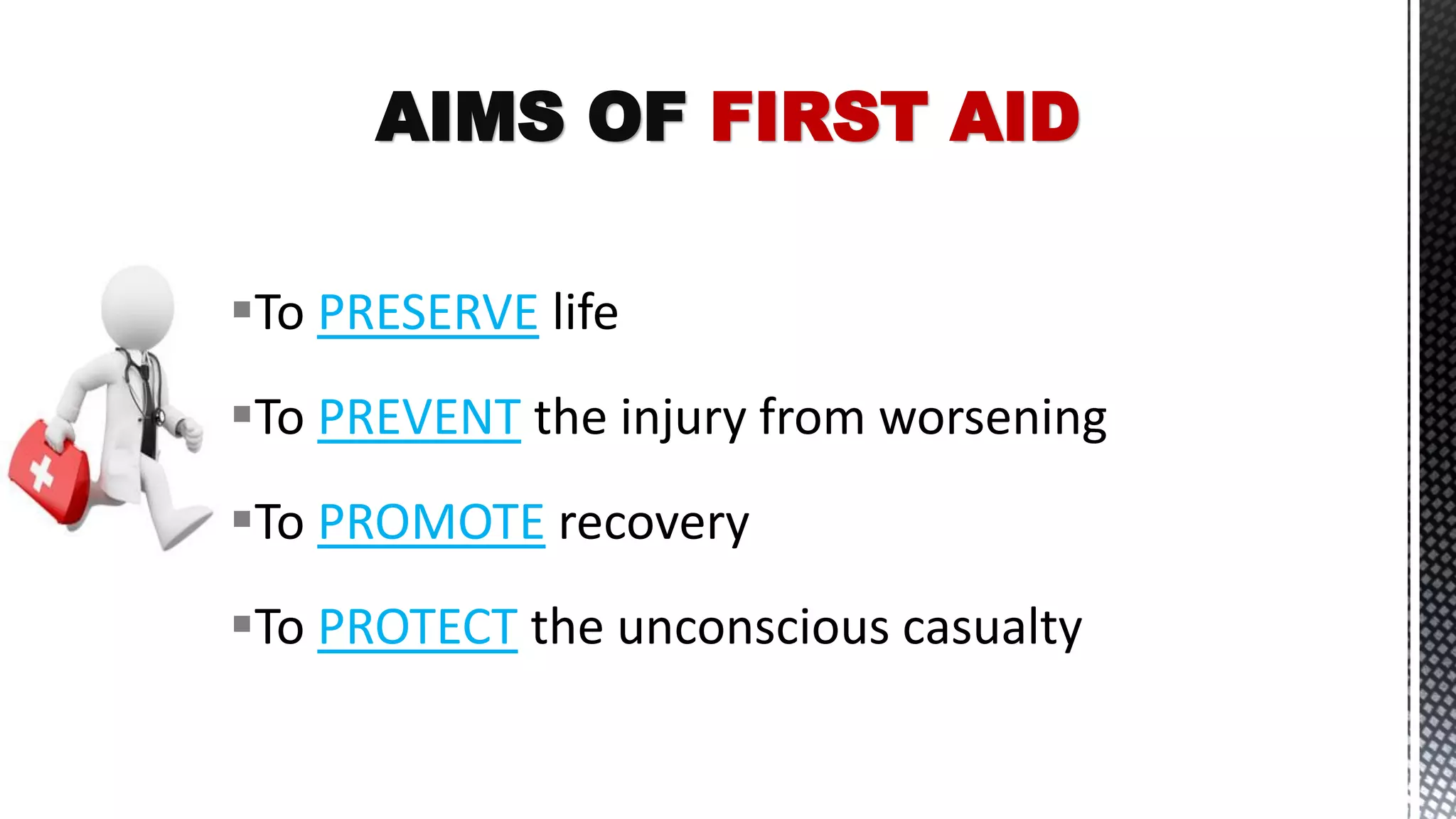
To PRESERVE life
To PREVENT the injury from worsening
To PROMOTE recovery
To PROTECT the unconscious casualty
AIMS OF FIRST AID
Things to keep in a
First Aid Box
Sterile dressing
Triangular bandage
Safety pin
bandage
Adhesive dressing
Scissor Tweezer
Gloves
Face mask
Microporous tape
Antiseptic cream
Sterile wet wipes
What are the Conditions that
require first aid?
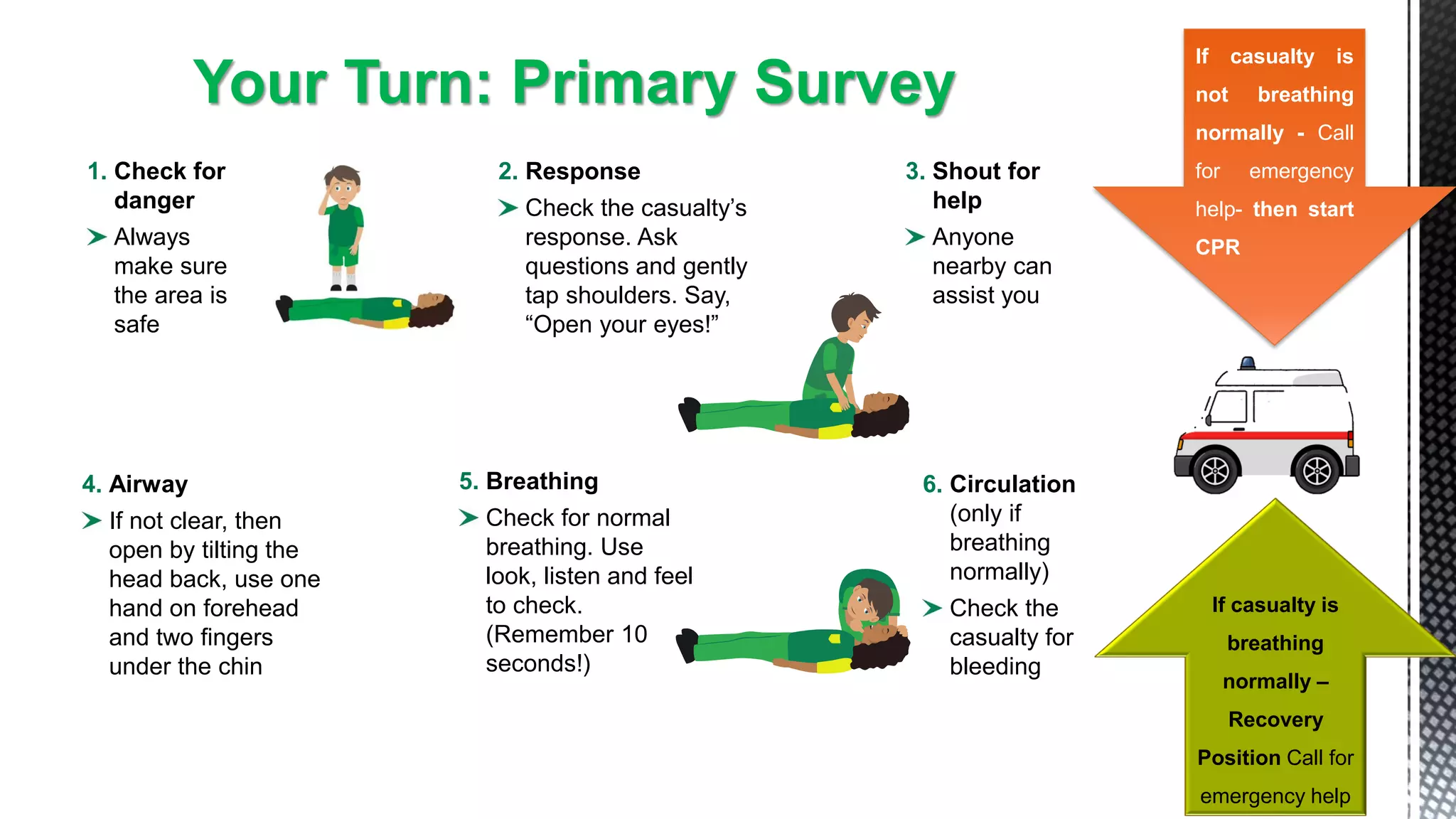
Your Turn: Primary Survey
1. Check for
danger
Always
make sure
the area is
safe
2. Response
Check the casualty‟s
response. Ask
questions and gently
tap shoulders. Say,
“Open your eyes!”
3. Shout for
help
Anyone
nearby can
assist you
4. Airway
If not clear, then
open by tilting the
head back, use one
hand on forehead
and two fingers
under the chin
5. Breathing
Check for normal
breathing. Use
look, listen and feel
to check.
(Remember 10
seconds!)
6. Circulation
(only if
breathing
normally)
Check the
casualty for
bleeding
If casualty is
not breathing
normally - Call
for emergency
help- then start
CPR
If casualty is
breathing
normally –
Recovery
Position Call for
emergency help
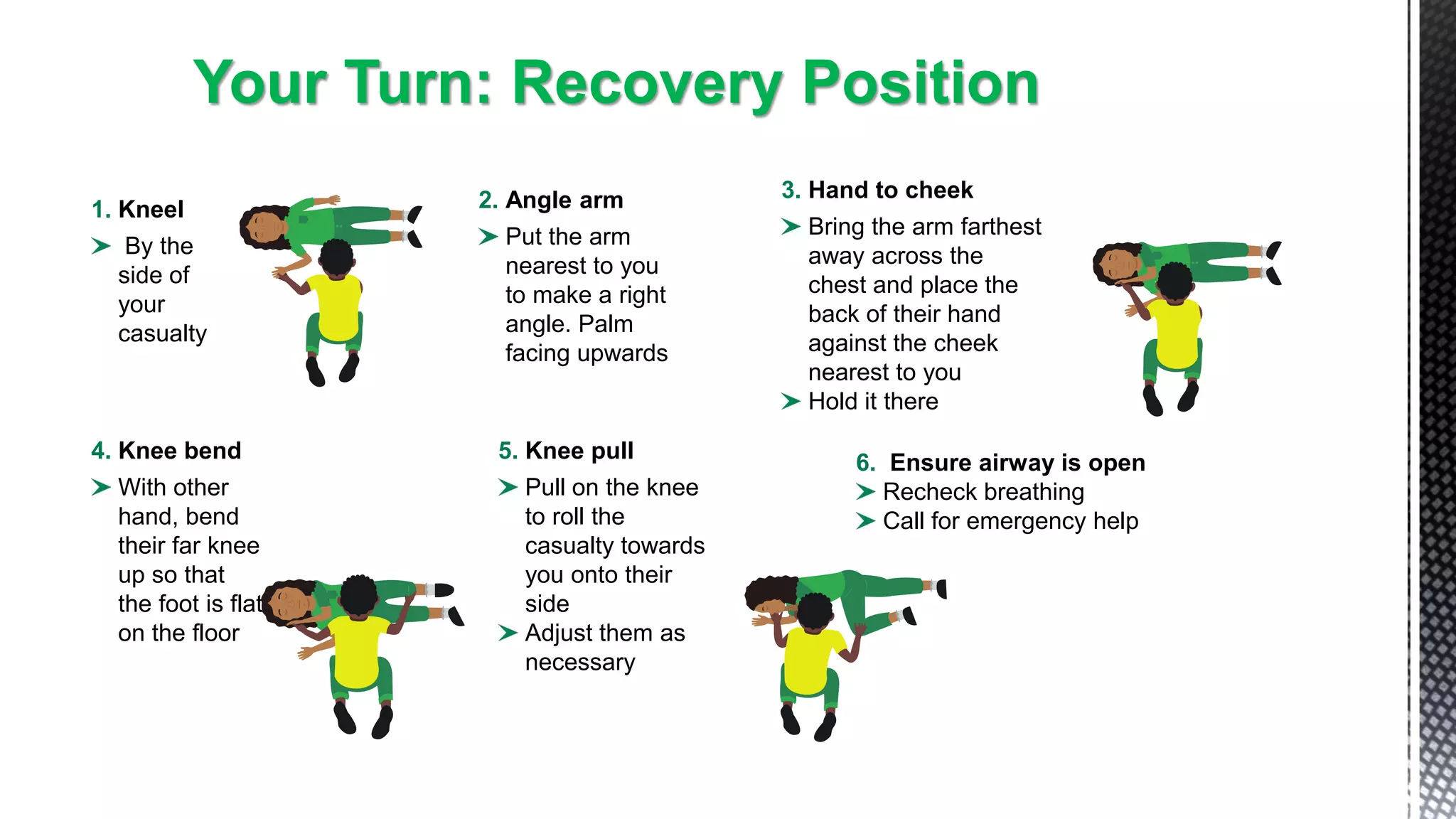
Your Turn: Recovery Position
1. Kneel
By the
side of
your
casualty
2. Angle arm
Put the arm
nearest to you
to make a right
angle. Palm
facing upwards
3. Hand to cheek
Bring the arm farthest
away across the
chest and place the
back of their hand
against the cheek
nearest to you
Hold it there
4. Knee bend
With other
hand, bend
their far knee
up so that
the foot is flat
on the floor
5. Knee pull
Pull on the knee
to roll the
casualty towards
you onto their
side
Adjust them as
necessary
6. Ensure airway is open
Recheck breathing
Call for emergency help
Your Turn: Minor Head Injury
1. Help your
casualty to
sit down
2. Apply a cold
compress to the
injured area
Treat any
wounds
3. Monitor your
casualty
Watch for
drowsiness
and vomiting
4. Get help if
necessary
Make sure a
responsible
adult stays with
the casualty
Your Turn: Sever Head Injury
1. Call for
emergency help
4. Treat
any
serious
wounds
5. Monitor
casualty until
emergency help
arrives
3. Make sure
the airway is
open
2. Do NOT move
your casualty if
you suspect they
could have a neck
injury
Your Turn: Sever bleeding
1. Put on
gloves
2. Apply
pressure to
the wound
(but only if
there is
nothing stuck
in it)
3. Apply a dressing to the
wound
the pad goes over the
injury
use bandage to secure it
in place
make sure the bandage is
not too tight
Call for emergency help
4. Apply
second
dressing, if
needed
no more than
two dressings
at a time
5. If an object is in
the wound, do
NOT remove it
put a pad on either
side of the object
bandage carefully
over the pads
without pushing the
object in any further
Signs and symptoms of someone in
shock could be:
➤ Rapid, shallow breathing
➤ Cold, clammy skin
➤ Rapid, weak pulse
➤ Dizziness or fainting
➤ Weakness
➤ Sweating
➤ Restlessness
What is shock?
➤ Shock is a life-threatening medical
condition which is caused by a lack of
blood supply to the major organs in
the body.
➤ Lack of blood supply causes a lack of
oxygen supply to the major organs. By
recognising and treating shock quickly
you can help keep the major organs
working.
SHOCK
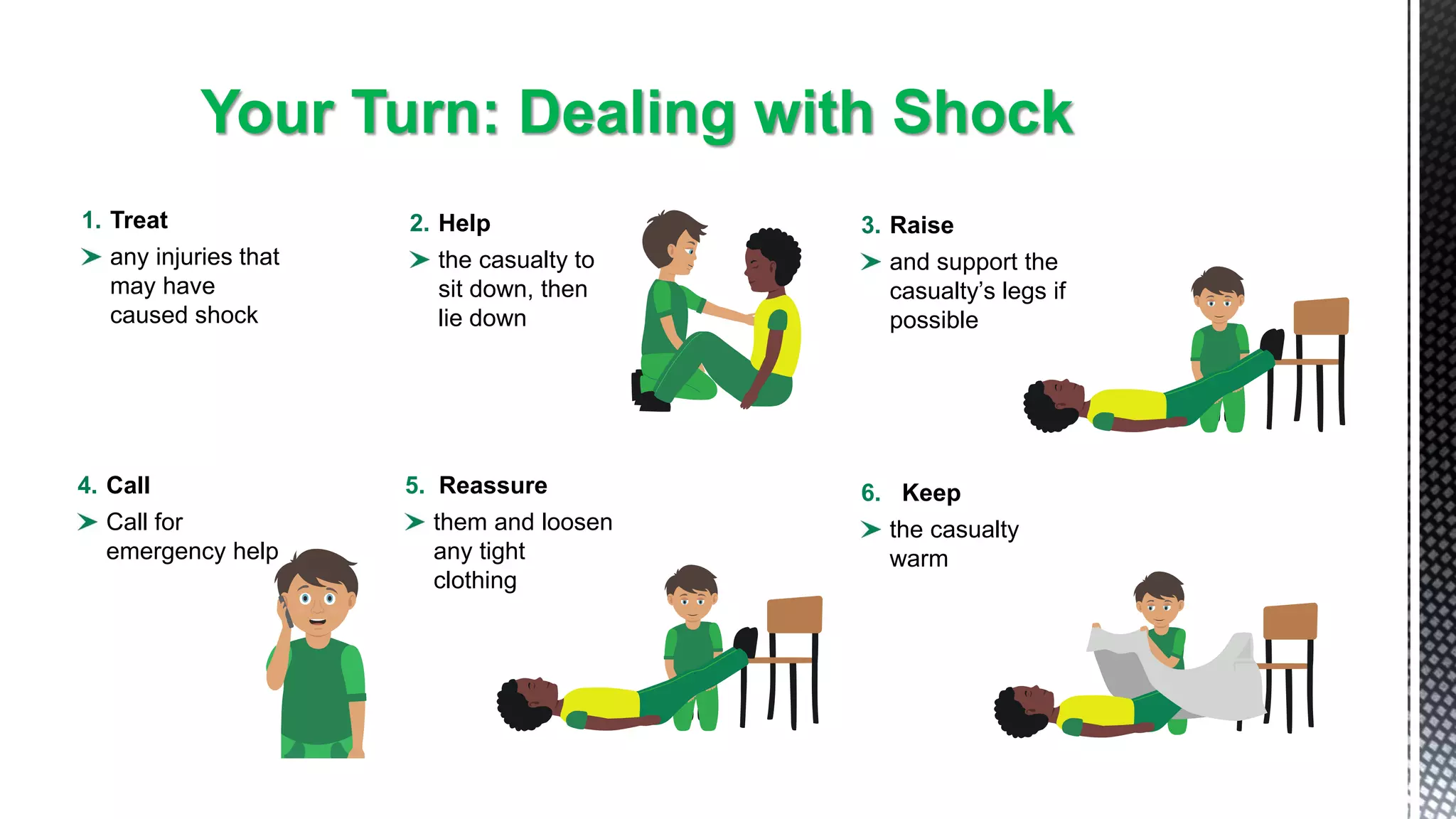
Your Turn: Dealing with Shock
1. Treat
any injuries that
may have
caused shock
2. Help
the casualty to
sit down, then
lie down
3. Raise
and support the
casualty‟s legs if
possible
4. Call
Call for
emergency help
5. Reassure
them and loosen
any tight
clothing
6. Keep
the casualty
warm
Your Turn: Choking
1. Ask
„Are you
choking?‟
2.
Encour
age
casualty to
cough
3. Give
up to 5 back
blows using the
heel of your hand
between their
shoulder blades
4. Give
up to 5 „tummy‟
thrusts
(abdominal thrusts)
5. Help
Call for
emergency help
6. Repeat the cycle if
necessary
Remember: Your casualty
could become
unresponsive. Be
prepared to perform CPR
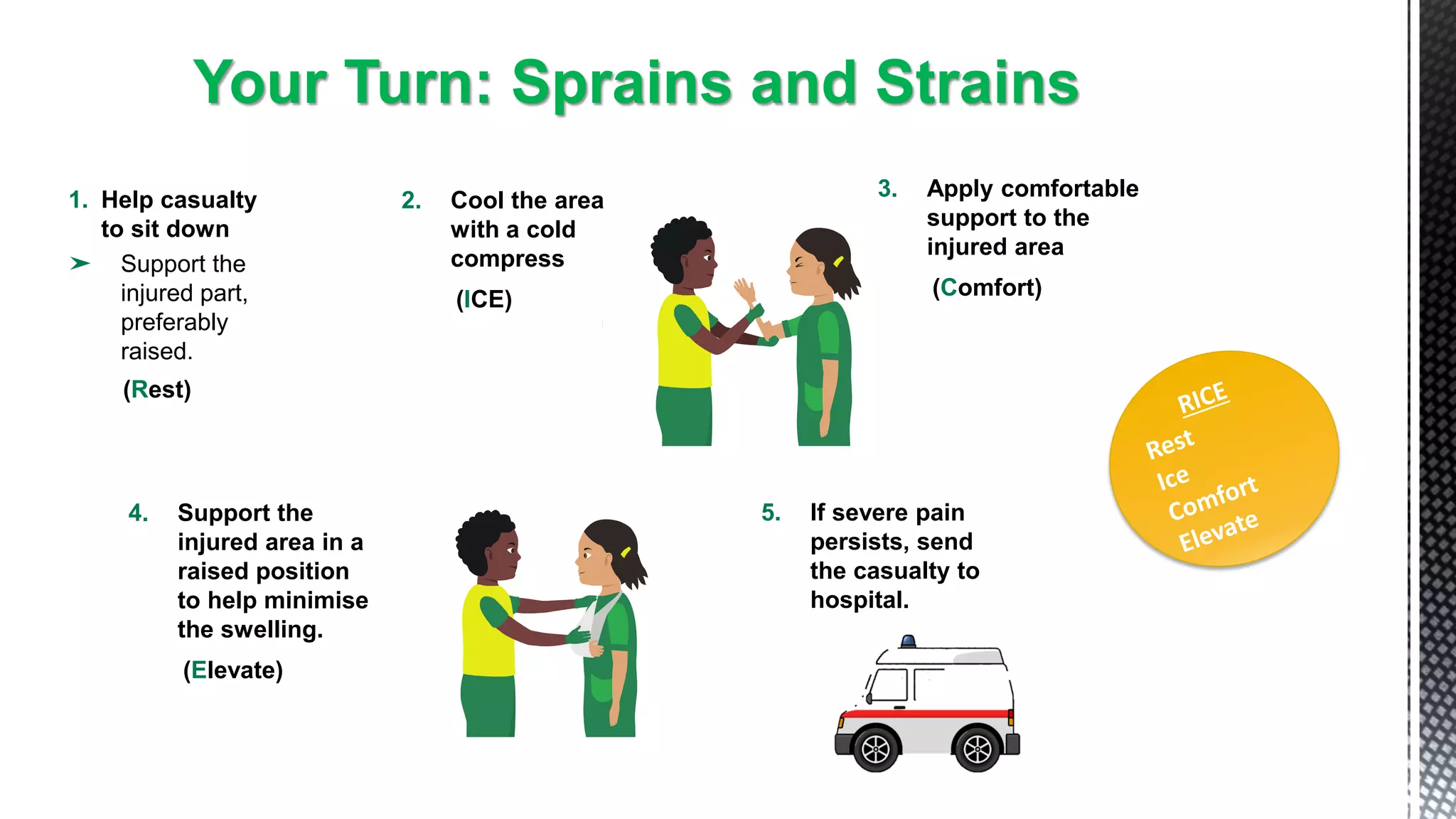
Your Turn: Sprains and Strains
1. Help casualty
to sit down
➤ Support the
injured part,
preferably
raised.
(Rest)
2. Cool the area
with a cold
compress
(ICE)
3. Apply comfortable
support to the
injured area
(Comfort)
4. Support the
injured area in a
raised position
to help minimise
the swelling.
(Elevate)
5. If severe pain
persists, send
the casualty to
hospital.
Your Turn: Treating Bites
1. Reassure the
casualty
Help them to sit
or lie down
2. Clean
Wash the wound
thoroughly with
soap and water
to minimise the
risk of infection
3. Raise and Support
the wound
Then pat dry with
clean gauze swabs
4. Cover bite
Use a sterile
wound dressing 5. Extra help
If the wound is large
or deep arrange for
the casualty to be
taken to hospital
For other bites that
pierce the skin seek
medical advice
Your Turn: Treating Stings
1. Reassure the
casualty
Help them to
sit or lie down
2. Remove the sting
If a sting is visible,
brush or scrape it
sideways with the
edge of a card or your
fingernail
3. Raise affected
area
Apply a cold
compress to
minimise swelling
4. Keep cold compress in place
for at least 10 minutes.
Monitor vital signs and watch
for signs of an allergic
reaction e.g. wheezing
and/or itchy, swollen, red
skin
5. Call for emergency help
If casualty shows signs
of severe allergic reaction
Remember: Your casualty
could become unresponsive. Be
prepared to perform CPR
DISCUSS:
➤ How do you manage a sprain?
BONUS QUESTION :
➤How do you deal faint?
QUESTION:
➤What could you do to help someone
who is having burn?
First aid for kids

First aid for kids

  • 1.
  • 2.
    First aid isthe first and immediate assistance given to any person suffering from either a minor or serious illness or injury with care provided to preserve life, prevent the condition from worsening, or to promote recovery. WHAT IS FIRST AID??
  • 3.
    To PRESERVE life ToPREVENT the injury from worsening To PROMOTE recovery To PROTECT the unconscious casualty AIMS OF FIRST AID
  • 4.
    Things to keepin a First Aid Box Sterile dressing Triangular bandage Safety pin bandage Adhesive dressing Scissor Tweezer Gloves Face mask Microporous tape Antiseptic cream Sterile wet wipes
  • 5.
    What are theConditions that require first aid?
  • 6.
    Your Turn: PrimarySurvey 1. Check for danger Always make sure the area is safe 2. Response Check the casualty‟s response. Ask questions and gently tap shoulders. Say, “Open your eyes!” 3. Shout for help Anyone nearby can assist you 4. Airway If not clear, then open by tilting the head back, use one hand on forehead and two fingers under the chin 5. Breathing Check for normal breathing. Use look, listen and feel to check. (Remember 10 seconds!) 6. Circulation (only if breathing normally) Check the casualty for bleeding If casualty is not breathing normally - Call for emergency help- then start CPR If casualty is breathing normally – Recovery Position Call for emergency help
  • 8.
    Your Turn: RecoveryPosition 1. Kneel By the side of your casualty 2. Angle arm Put the arm nearest to you to make a right angle. Palm facing upwards 3. Hand to cheek Bring the arm farthest away across the chest and place the back of their hand against the cheek nearest to you Hold it there 4. Knee bend With other hand, bend their far knee up so that the foot is flat on the floor 5. Knee pull Pull on the knee to roll the casualty towards you onto their side Adjust them as necessary 6. Ensure airway is open Recheck breathing Call for emergency help
  • 10.
    Your Turn: MinorHead Injury 1. Help your casualty to sit down 2. Apply a cold compress to the injured area Treat any wounds 3. Monitor your casualty Watch for drowsiness and vomiting 4. Get help if necessary Make sure a responsible adult stays with the casualty
  • 11.
    Your Turn: SeverHead Injury 1. Call for emergency help 4. Treat any serious wounds 5. Monitor casualty until emergency help arrives 3. Make sure the airway is open 2. Do NOT move your casualty if you suspect they could have a neck injury
  • 12.
    Your Turn: Severbleeding 1. Put on gloves 2. Apply pressure to the wound (but only if there is nothing stuck in it) 3. Apply a dressing to the wound the pad goes over the injury use bandage to secure it in place make sure the bandage is not too tight Call for emergency help 4. Apply second dressing, if needed no more than two dressings at a time 5. If an object is in the wound, do NOT remove it put a pad on either side of the object bandage carefully over the pads without pushing the object in any further
  • 13.
    Signs and symptomsof someone in shock could be: ➤ Rapid, shallow breathing ➤ Cold, clammy skin ➤ Rapid, weak pulse ➤ Dizziness or fainting ➤ Weakness ➤ Sweating ➤ Restlessness What is shock? ➤ Shock is a life-threatening medical condition which is caused by a lack of blood supply to the major organs in the body. ➤ Lack of blood supply causes a lack of oxygen supply to the major organs. By recognising and treating shock quickly you can help keep the major organs working. SHOCK
  • 14.
    Your Turn: Dealingwith Shock 1. Treat any injuries that may have caused shock 2. Help the casualty to sit down, then lie down 3. Raise and support the casualty‟s legs if possible 4. Call Call for emergency help 5. Reassure them and loosen any tight clothing 6. Keep the casualty warm
  • 15.
    Your Turn: Choking 1.Ask „Are you choking?‟ 2. Encour age casualty to cough 3. Give up to 5 back blows using the heel of your hand between their shoulder blades 4. Give up to 5 „tummy‟ thrusts (abdominal thrusts) 5. Help Call for emergency help 6. Repeat the cycle if necessary Remember: Your casualty could become unresponsive. Be prepared to perform CPR
  • 16.
    Your Turn: Sprainsand Strains 1. Help casualty to sit down ➤ Support the injured part, preferably raised. (Rest) 2. Cool the area with a cold compress (ICE) 3. Apply comfortable support to the injured area (Comfort) 4. Support the injured area in a raised position to help minimise the swelling. (Elevate) 5. If severe pain persists, send the casualty to hospital.
  • 17.
    Your Turn: TreatingBites 1. Reassure the casualty Help them to sit or lie down 2. Clean Wash the wound thoroughly with soap and water to minimise the risk of infection 3. Raise and Support the wound Then pat dry with clean gauze swabs 4. Cover bite Use a sterile wound dressing 5. Extra help If the wound is large or deep arrange for the casualty to be taken to hospital For other bites that pierce the skin seek medical advice
  • 18.
    Your Turn: TreatingStings 1. Reassure the casualty Help them to sit or lie down 2. Remove the sting If a sting is visible, brush or scrape it sideways with the edge of a card or your fingernail 3. Raise affected area Apply a cold compress to minimise swelling 4. Keep cold compress in place for at least 10 minutes. Monitor vital signs and watch for signs of an allergic reaction e.g. wheezing and/or itchy, swollen, red skin 5. Call for emergency help If casualty shows signs of severe allergic reaction Remember: Your casualty could become unresponsive. Be prepared to perform CPR
  • 19.
    DISCUSS: ➤ How doyou manage a sprain? BONUS QUESTION : ➤How do you deal faint? QUESTION: ➤What could you do to help someone who is having burn?