MR.MARKAD RAVINDRA A.
BROTHER TUTOR.
SCHOOL OF NURSING K.E.M HOSPITAL,
PAREL MUMBAI -12
INTRODUCTION
Rapid recovery and long hospitalization disability
and permanent injury. First aid involve more than
doing thing for others it also includes the thing that
people can do for themselves.
First. First, it is reasonably simple and at time does
not require ample training but can be dealt with the
basic first aid kit. Properly applied first aid may mean
the difference between life and deaths.
CONCEPT OF FIRST AID
 First aid is Immediate. Help to give one victim. Of injury or sudden illness by.
Bystander. Until appropriate medical help arrives. Or victim. Is seen by healthcare
provider.
Definition of first aid:-
 First aid is the immediate care given To those are suffering from effect of
accident. Sudden illness to prevent the life. Assist recovery and prevent
worsening of condition. Until Medical assistant obtain or casualty is taken to his
home -by Swapna Naskar & Mala Goswami.
 First aid is the provision of initial care for an illness or injury. It is usually
performed By a lay person to a sick or an injured casualty until definitive medical
treatment. Can be assessed. -from pub med
PRINCIPLES OF FIRST AID
 Acting. Quickly but stable mind.
Taking care of patient after knowing the details.
Winning confidence of affected person.
Working honestly.
Telling the truth about the seriousness of the victims condition to his
relatives.
Try to Understand the cause of Injury or disease. And prevent the
situation from worsening.
Don’t allow the crown gather around the patient.
Golden Rule’s Of First Aid :
Golden rules of first aid are described under two heading as below:-
1. what to do
Do first thing first quickly, quietly without fuss or panic.
Tactfully reassure. The casualty as this will lessen anxiety.
Avoid crowd as fresh air is essential.
Give artificial respiration. If bleeding has stopped. As every second
Count.Example ABC’s of emergencies.
Stop any bleeding (pressuring pressure points).
Ground against Or treat for shock.
Do not move the casualty Unnecessarily But handle the casualty
Gently.
Do not remove the cloth of the casualty unnecessarily.
Do not do much do minimum That essential to save life And
prevent the condition from worsen.
Give comfortable position to casualty.
Arrange removal of casualty.
2)What not to do :-
Do not let the casualty see his own injury
Do not leave the casualty alone except to get help.
Do not assure the casualty obvious injury are the only one.
CONCEPT OF EMERGENCY.
In 1970.The French began to transport wounded Soldiers So they
could be cared for by position away from the sense of battle. his is
the earliest documented emergency medical service.
Emergency medical service(EMS) during the 1960 the development
of modern emergency medical service Began. The National Registry
of Emergency medical technicians was Founded to establish
professional standards.
The concept of Ambulance 🚑 as means merely for transporting the
sick and injured passed into oblivion
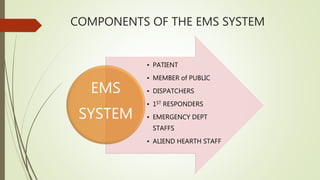
COMPONENTS OF THE EMS SYSTEM
• PATIENT
• MEMBER of PUBLIC
• DISPATCHERS
• 1ST RESPONDERS
• EMERGENCY DEPT
STAFFS
• ALIEND HEARTH STAFF
EMS
SYSTEM
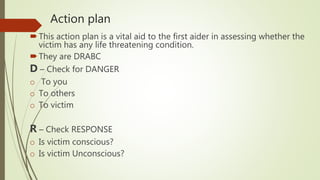
Action plan
This action plan is a vital aid to the first aider in assessing whether the
victim has any life threatening condition.
They are DRABC
D – Check for DANGER
o To you
o To others
o To victim
R – Check RESPONSE
o Is victim conscious?
o Is victim Unconscious?
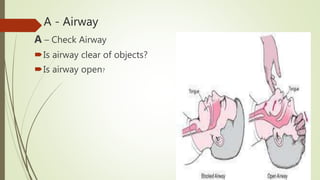
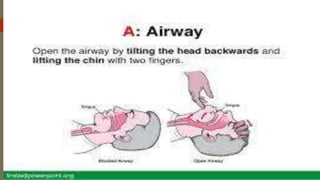
A - Airway
A – Check Airway
Is airway clear of objects?
Is airway open?
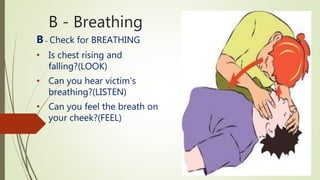
B - Breathing
B– Check for BREATHING
• Is chest rising and
falling?(LOOK)
• Can you hear victim’s
breathing?(LISTEN)
• Can you feel the breath on
your cheek?(FEEL)
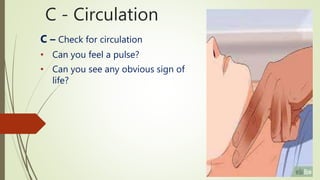
C - Circulation
C – Check for circulation
• Can you feel a pulse?
• Can you see any obvious sign of
life?
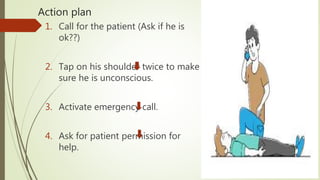
Action plan
1. Call for the patient (Ask if he is
ok??)
2. Tap on his shoulder twice to make
sure he is unconscious.
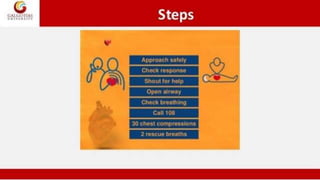
3. Activate emergency call.
4. Ask for patient permission for
help.
Principles Of Emergency Care:
Collect the detailed history of accident either from
the victim or from anyone who has witnessed the
accident.
The victim’s injury should be examined thoroughly,
taking note of every symptom, to now the correct
diagnosis.
By the help of diagnosis, treat the victim to the
hospital and aid the patient during transport.
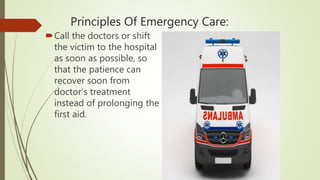
Principles Of Emergency Care:
Call the doctors or shift
the victim to the hospital
as soon as possible, so
that the patience can
recover soon from
doctor’s treatment
instead of prolonging the
first aid.
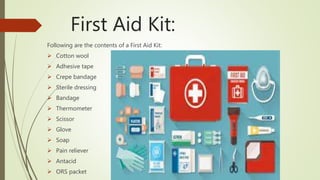
First Aid Kit:
Following are the contents of a First Aid Kit:
 Cotton wool
 Adhesive tape
 Crepe bandage
 Sterile dressing
 Bandage
 Thermometer
 Scissor
 Glove
 Soap
 Pain reliever
 Antacid
 ORS packet
FIRST AID

FIRST AID

  • 1.
    MR.MARKAD RAVINDRA A. BROTHERTUTOR. SCHOOL OF NURSING K.E.M HOSPITAL, PAREL MUMBAI -12
  • 2.
    INTRODUCTION Rapid recovery andlong hospitalization disability and permanent injury. First aid involve more than doing thing for others it also includes the thing that people can do for themselves. First. First, it is reasonably simple and at time does not require ample training but can be dealt with the basic first aid kit. Properly applied first aid may mean the difference between life and deaths.

  • 3.
    CONCEPT OF FIRSTAID  First aid is Immediate. Help to give one victim. Of injury or sudden illness by. Bystander. Until appropriate medical help arrives. Or victim. Is seen by healthcare provider. Definition of first aid:-  First aid is the immediate care given To those are suffering from effect of accident. Sudden illness to prevent the life. Assist recovery and prevent worsening of condition. Until Medical assistant obtain or casualty is taken to his home -by Swapna Naskar & Mala Goswami.  First aid is the provision of initial care for an illness or injury. It is usually performed By a lay person to a sick or an injured casualty until definitive medical treatment. Can be assessed. -from pub med
  • 5.
    PRINCIPLES OF FIRSTAID  Acting. Quickly but stable mind. Taking care of patient after knowing the details. Winning confidence of affected person. Working honestly. Telling the truth about the seriousness of the victims condition to his relatives. Try to Understand the cause of Injury or disease. And prevent the situation from worsening. Don’t allow the crown gather around the patient.
  • 6.
    Golden Rule’s OfFirst Aid : Golden rules of first aid are described under two heading as below:- 1. what to do Do first thing first quickly, quietly without fuss or panic. Tactfully reassure. The casualty as this will lessen anxiety. Avoid crowd as fresh air is essential. Give artificial respiration. If bleeding has stopped. As every second Count.Example ABC’s of emergencies. Stop any bleeding (pressuring pressure points). Ground against Or treat for shock. Do not move the casualty Unnecessarily But handle the casualty Gently.
  • 7.
    Do not removethe cloth of the casualty unnecessarily. Do not do much do minimum That essential to save life And prevent the condition from worsen. Give comfortable position to casualty. Arrange removal of casualty. 2)What not to do :- Do not let the casualty see his own injury Do not leave the casualty alone except to get help. Do not assure the casualty obvious injury are the only one.
  • 8.
    CONCEPT OF EMERGENCY. In1970.The French began to transport wounded Soldiers So they could be cared for by position away from the sense of battle. his is the earliest documented emergency medical service. Emergency medical service(EMS) during the 1960 the development of modern emergency medical service Began. The National Registry of Emergency medical technicians was Founded to establish professional standards. The concept of Ambulance 🚑 as means merely for transporting the sick and injured passed into oblivion
  • 9.
    COMPONENTS OF THEEMS SYSTEM • PATIENT • MEMBER of PUBLIC • DISPATCHERS • 1ST RESPONDERS • EMERGENCY DEPT STAFFS • ALIEND HEARTH STAFF EMS SYSTEM
  • 11.
    Action plan This actionplan is a vital aid to the first aider in assessing whether the victim has any life threatening condition. They are DRABC D – Check for DANGER o To you o To others o To victim R – Check RESPONSE o Is victim conscious? o Is victim Unconscious?
  • 12.
    A - Airway A– Check Airway Is airway clear of objects? Is airway open?
  • 14.
    B - Breathing B–Check for BREATHING • Is chest rising and falling?(LOOK) • Can you hear victim’s breathing?(LISTEN) • Can you feel the breath on your cheek?(FEEL)
  • 15.
    C - Circulation C– Check for circulation • Can you feel a pulse? • Can you see any obvious sign of life?
  • 16.
    Action plan 1. Callfor the patient (Ask if he is ok??) 2. Tap on his shoulder twice to make sure he is unconscious. 3. Activate emergency call. 4. Ask for patient permission for help.
  • 17.
    Principles Of EmergencyCare: Collect the detailed history of accident either from the victim or from anyone who has witnessed the accident. The victim’s injury should be examined thoroughly, taking note of every symptom, to now the correct diagnosis. By the help of diagnosis, treat the victim to the hospital and aid the patient during transport.
  • 18.
    Principles Of EmergencyCare: Call the doctors or shift the victim to the hospital as soon as possible, so that the patience can recover soon from doctor’s treatment instead of prolonging the first aid.
  • 19.
    First Aid Kit: Followingare the contents of a First Aid Kit:  Cotton wool  Adhesive tape  Crepe bandage  Sterile dressing  Bandage  Thermometer  Scissor  Glove  Soap  Pain reliever  Antacid  ORS packet