FOREIGN BODY IN
THE SKIN
It is usually safe to
remove a small foreign
object such as a wood
splinter, thorn, fiber
glass, or glass that's just
under the surface of the
skin.
Symptoms associated with a foreign
body in the skin
• Common symptoms involving a foreign body in the skin include
the following:
• Pain
• Inflammation
• Scarring
• Irritation
• Bleeding
• Infection
• Although most injuries seem minor, neglecting a foreign body in
the skin can cause further damage.
• The risk of infection is determined by the length of time since the
injury occurred, the type of foreign body, whether the wound was
clean or dirty, and the patient's overall health condition. Seeking
medical attention is advised in instances where the object cannot
come out easily.
FIRST AID
• Wash your hands and clean the area well with soap and water.
• Use tweezers cleaned with rubbing alcohol to remove the object.
Use a magnifying glass to help you see better.
• If the object is under the surface of the skin, sterilize a clean, sharp
needle by wiping it with rubbing alcohol. Use the needle to gently
break the skin over the object and lift the tip of the object.
• Use tweezers to grab the end of the object and remove it.
• Wash the area again and pat dry. Apply petroleum jelly or an
antibiotic ointment.
• Seek prompt medical help for a foreign object that seems to be
more deeply embedded in the skin or muscle. Follow these
precautions and steps first:.
• Do not try to remove the object. Doing so could cause further
harm.
• Bandage the wound. First, put a piece of gauze over the object.
Then, if it helps, put clean padding around the object before
binding the wound securely with a bandage or a piece of clean
cloth. Take care not to press too hard on the object.
Do not do the following
• In the event of a foreign body in the skin, the following
instructions are best recommended to be followed:
• Avoid rubbing the skin.
• Avoid using tools that have not been disinfected thoroughly.
• Avoid trying to remove the object if it causes severe pain and
looks infected..
• Avoid certain medications if you are at risk of any allergic
reactions or other complications.
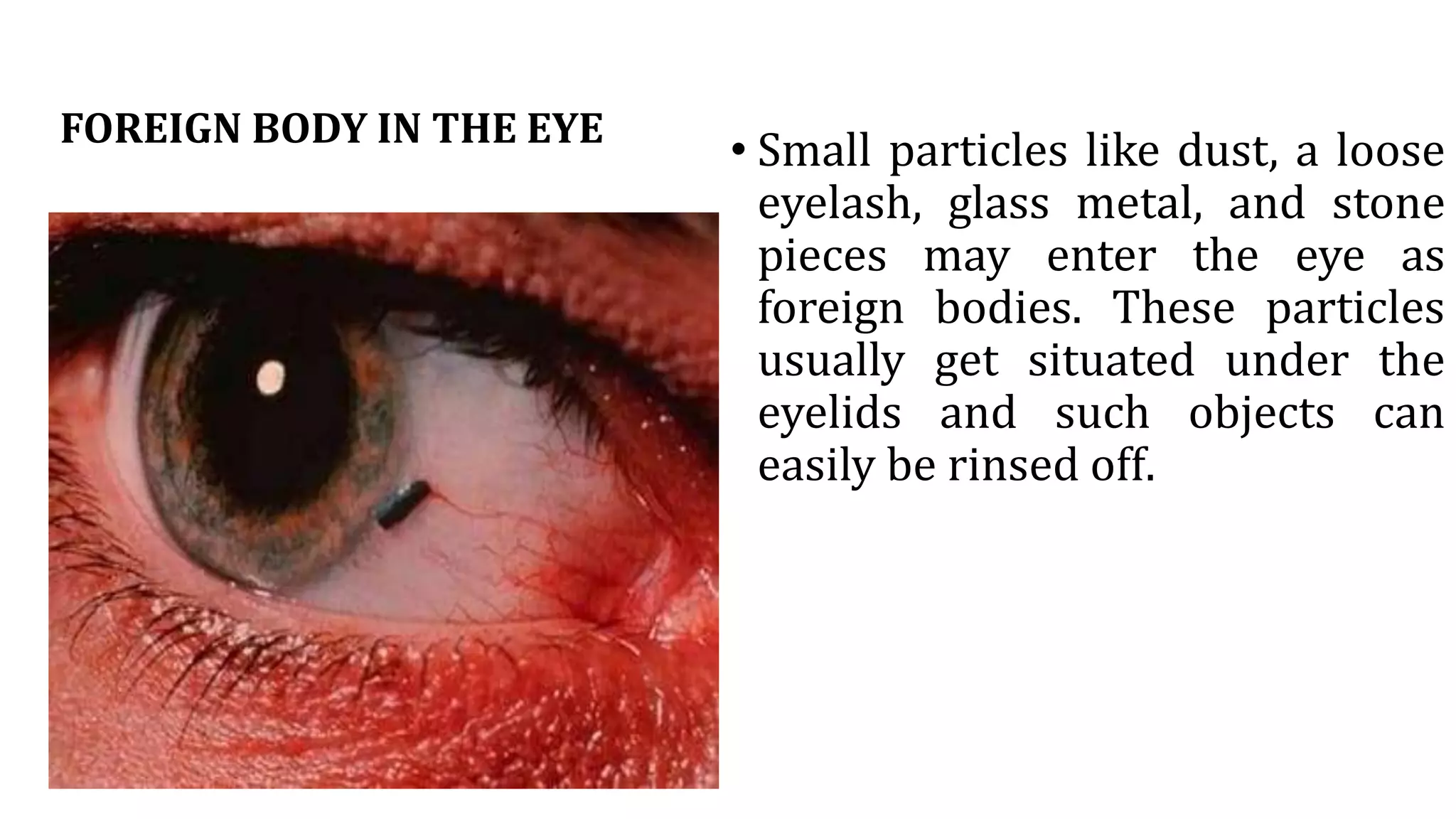
FOREIGN BODY IN THE EYE
• Small particles like dust, a loose
eyelash, glass metal, and stone
pieces may enter the eye as
foreign bodies. These particles
usually get situated under the
eyelids and such objects can
easily be rinsed off.
SIGNS AND SYMPTOMS
• Blurred vision.
• Pain or discomfort.
• Redness and watering of the eye.
CAUTION
• 1. Advice casualty not to rub the eyes because while rubbing, the
soft tissues of the eye may get scratched
• 2. Do not try to take out the embedded foreign bodies in any
condition. In such cases, the patient should be sent to the doctor or
seek medical help.
FIRST AID
• If you can see a foreign object on the white of the eye, wash it out
by pouring clean water from a glass or by using a sterile eye wash..
• If this is unsuccessful, remove the object with a moist swab or a
damp corner of a tissue or a clean handkerchief.
• If an object is under the upper eyelid, ask the casualty to grasp the
lashes and pull the upper lid over the lower lid. Blinking
underwater may help the object float off.
FOREIGN BODY IN
THE EAR
Young children may push objects
into their ears. Insects can fly or
crawl into the ear and may cause
harm. If a foreign object becomes
lodged in the ear, it may cause
temporary deafness by blocking
the ear canal. Sometimes the
foreign body may damage the
eardrum.
AIMS
• To remove trapped insect if it is moving.
• To prevent ear injury.
• To arrange for medical aid.
CAUTION
• Do not attempt to remove any object that is lodged in the ear. It may
cause serious injury and push the object in even further.
If an insect inside the ear
• Reassure the casualty and allow him to sit down. Gently flood the ear
with tepid water so that the insect floats out. If the flooding does not
remove the insect, send the victim to the hospital.
FOREIGN BODY IN THE SKIN.pptx

FOREIGN BODY IN THE SKIN.pptx

  • 1.
    FOREIGN BODY IN THESKIN It is usually safe to remove a small foreign object such as a wood splinter, thorn, fiber glass, or glass that's just under the surface of the skin.
  • 2.
    Symptoms associated witha foreign body in the skin • Common symptoms involving a foreign body in the skin include the following: • Pain • Inflammation • Scarring • Irritation • Bleeding • Infection
  • 3.
    • Although mostinjuries seem minor, neglecting a foreign body in the skin can cause further damage. • The risk of infection is determined by the length of time since the injury occurred, the type of foreign body, whether the wound was clean or dirty, and the patient's overall health condition. Seeking medical attention is advised in instances where the object cannot come out easily.
  • 4.
    FIRST AID • Washyour hands and clean the area well with soap and water. • Use tweezers cleaned with rubbing alcohol to remove the object. Use a magnifying glass to help you see better. • If the object is under the surface of the skin, sterilize a clean, sharp needle by wiping it with rubbing alcohol. Use the needle to gently break the skin over the object and lift the tip of the object. • Use tweezers to grab the end of the object and remove it. • Wash the area again and pat dry. Apply petroleum jelly or an antibiotic ointment.
  • 5.
    • Seek promptmedical help for a foreign object that seems to be more deeply embedded in the skin or muscle. Follow these precautions and steps first:. • Do not try to remove the object. Doing so could cause further harm. • Bandage the wound. First, put a piece of gauze over the object. Then, if it helps, put clean padding around the object before binding the wound securely with a bandage or a piece of clean cloth. Take care not to press too hard on the object.
  • 6.
    Do not dothe following • In the event of a foreign body in the skin, the following instructions are best recommended to be followed: • Avoid rubbing the skin. • Avoid using tools that have not been disinfected thoroughly. • Avoid trying to remove the object if it causes severe pain and looks infected.. • Avoid certain medications if you are at risk of any allergic reactions or other complications.
  • 7.
    FOREIGN BODY INTHE EYE • Small particles like dust, a loose eyelash, glass metal, and stone pieces may enter the eye as foreign bodies. These particles usually get situated under the eyelids and such objects can easily be rinsed off.
  • 8.
    SIGNS AND SYMPTOMS •Blurred vision. • Pain or discomfort. • Redness and watering of the eye.
  • 9.
    CAUTION • 1. Advicecasualty not to rub the eyes because while rubbing, the soft tissues of the eye may get scratched • 2. Do not try to take out the embedded foreign bodies in any condition. In such cases, the patient should be sent to the doctor or seek medical help.
  • 10.
    FIRST AID • Ifyou can see a foreign object on the white of the eye, wash it out by pouring clean water from a glass or by using a sterile eye wash.. • If this is unsuccessful, remove the object with a moist swab or a damp corner of a tissue or a clean handkerchief. • If an object is under the upper eyelid, ask the casualty to grasp the lashes and pull the upper lid over the lower lid. Blinking underwater may help the object float off.
  • 11.
    FOREIGN BODY IN THEEAR Young children may push objects into their ears. Insects can fly or crawl into the ear and may cause harm. If a foreign object becomes lodged in the ear, it may cause temporary deafness by blocking the ear canal. Sometimes the foreign body may damage the eardrum.
  • 12.
    AIMS • To removetrapped insect if it is moving. • To prevent ear injury. • To arrange for medical aid. CAUTION • Do not attempt to remove any object that is lodged in the ear. It may cause serious injury and push the object in even further. If an insect inside the ear • Reassure the casualty and allow him to sit down. Gently flood the ear with tepid water so that the insect floats out. If the flooding does not remove the insect, send the victim to the hospital.