Dr.Anjalatchi Muthukumaran MD(AM), Ph.D
(N) MBA (HA), MA (Soc)
Vice Principal Cum Nursing Superintendent
Era College Of Nursing , ELMCH,EU
First Aid in emergency
About your syllabus
 Introduction to several life
threatening emergencies
 Importance of first aid
 Benefit of first aid
 First aid basics
 Medical emergencies
 Injuries emergencies
 Environmental emergencies
 Dos and donts in each category
LEARNING OBJECTIVES
 Introduction
 Symbols used in different first aids
 Definition of first aid
 Who is first aider
 Qualities of first aider
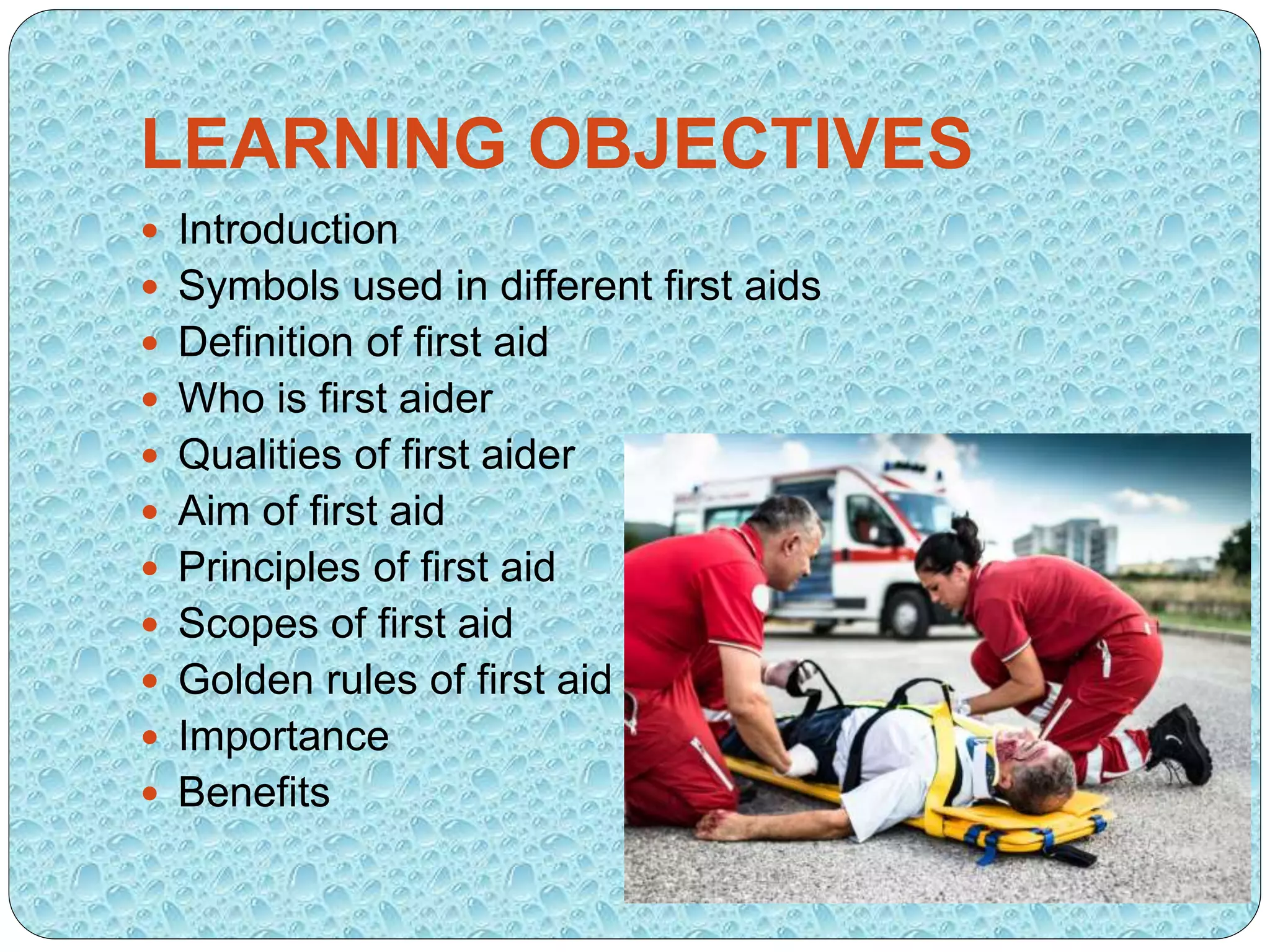
 Aim of first aid
 Principles of first aid
 Scopes of first aid
 Golden rules of first aid
 Importance
 Benefits
First Aid
 Introduction cum history
 First aid to sick and wounded has been practiced
since ancient times. But an organized world wide
effort for giving first aid came only in the year 1877
with the formation of St. John ambulance association
of England after the Great apostle of St. John.
 In 1920, Red Cross Society of India was
established. With more than 400 branches all over
India, great success has been achieved in the
improvement of health and prevention of diseases.
 Since then the universal need and utility of first aid
has been increasing in this modern mechanized
civilization.
Definition
 First aid sometimes referred to as EMERGENCY
AID is the first skilled [acceptable] assistance
given to a victim (sick or injured) on the
occurrence of accident or sudden illness in order
to preserve life, prevent further injury and relive
suffering until qualified medical care is available.
Symbol of First Aids
Definition of First aid
 First aid is simple medical treatment given the
earliest possible to a person who is injured or
who suddenly becomes ill.
 First aid is the initial assistance or treatment
given to a casualty for any injury or sudden illness
before the arrival of an ambulance, doctor or
other qualified person. First aid is not an end by
itself. It indicates that the person is in need of a
“Secondary Aid”.
Importance of First Aid
First Aider
 The person who is trained to render emergency
service on the spot until the medical aid is
obtained is called a “First Aider”.
Qualities of a First Aider.
 Calm
 Confident
 Willing to offer assistance whenever necessary
 The first actions by First Aiders: DR. CAB
 D – Danger assessment for self and victim
 R – Responsiveness of the victim
 C – Check and assess for pulse
 A – Assess and ensure clear airway
 B – Check if person is breathing
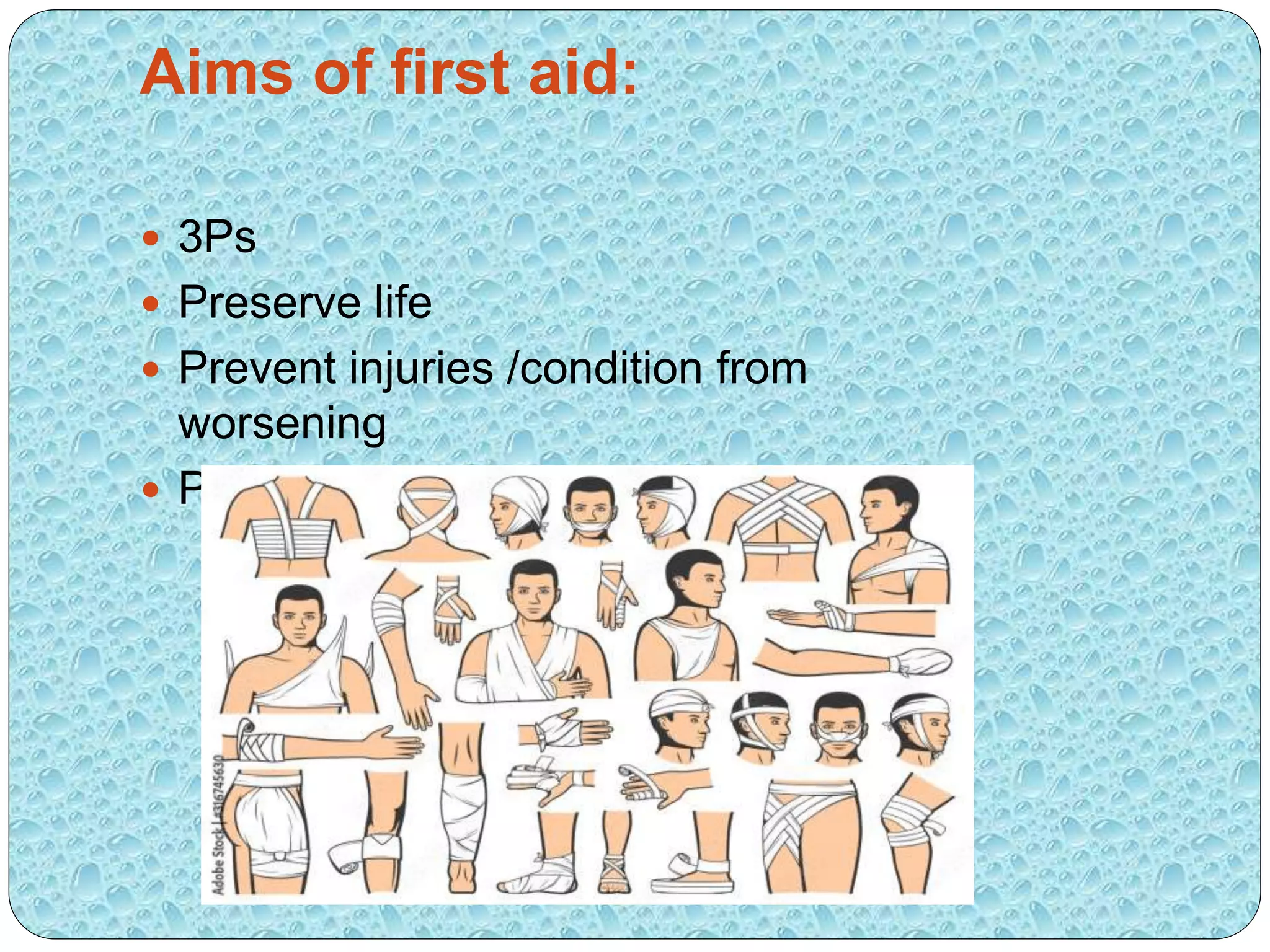
Aims of first aid:
 3Ps
 Preserve life
 Prevent injuries /condition from
worsening
 Promote Recovery
Objective of first aid
Principles of First Aid
 The key guiding principles and purpose of first aid,
is often denoted by 3 Ps.
 1. Prevent further injuries
 2. Preserve life
 3. Promote recovery
 Rapid Responses to Disasters and duties of
rescuer When disaster strikes, individuals within
the affected community and neighbouring
communities are the first to respond.
 Preparedness can make the difference between
life and death.
 A damage assessment survey should follow three
key principles:
 a. Look: Make a thorough visual inspection of the
damage-affected area;
 b. Listen to all sources of information - the
community, government records, and media
reports;
 c. Understand the gravity of the dangers and the
suffering of victims as well as the capacity to
respond.
Scope of First Aid
 The scope of first aid includes
 a) Diagnosis
 b) Treatment
 c) Disposal of the case.
(a) Diagnosis
 Know the possible cause of accident or sudden
injury.
 Gather information from casualty and bystanders.
 Watch for symptoms like faintness, bleeding,
thirst, pain or shivering
 Watch for abnormal signs like swelling, paleness
etc.
Continued
 (b) Treatment
 Remove the causative agent from the casuality eg.
falling machinery, fire, electrical wire, poision etc.
 (c) Disposal
 Arrange for the safe transportation of the casuality to
the care of a doctor or hospital as soon as possible.
 Inform the family or relatives at once.

Important Points to be
remembered by First-Aiders
 1. First-Aiders must always remain calm and assess the situation
first before rushing to help the victim.
 2. First Aiders must ensure to remove any dangers from the
casualty, or remove the casualty from dangers, and prevent the
crowding of casualties by bystanders.
 3. It is important that the First-Aiders -call for appropriate help as
per the assessment of the situation.
 4. As most first aid treatment does involve touching the victim, it
is very important that the First-Aider gains their permission, so as
to avoid causing offence or distress.
 5. It is important to understand that first aid has its limitations and
does not take the place of professional medical treatment.
 6. First Aiders should also take care to listen to any remarks or
requests a casualty makes.
 7. The First Aider’s responsibility ends when the casualty is
handed over to the care of a competent health provider.
Golden rules of first aid
1. Do first things first, quickly-quietly without fuss or panic.
2. Reassure the casualty through encouraging words.
3. Check ABC Rule. (Airway, breathing, Circulation)
4. Open the airway by tilting the head.
5. Give artificial respiration if breathing has stopped.
6. Perform chest compression if the pulse is not present
7. Stop bleeding if any by direct pressure.
8. Treat for shock.
9. Do not allow people to crowd around.
10. Don’t remove clothes unnecessarily.
11. Arrange for transportation of the casualty.
12. Casualty should be sent to a hospital or doctor by
quickest means of transport. Always inform police about
serious accidents and the relatives.
Advantages of First Aid Training
 First aid training saves lives. ...
 Reduces repeat accidents. ...
 Increases confidence and safety. ...
 People know how to use a first aid kit properly. ...
 Keeps employees safe outside of work. ...
 It's great for company morale and team-building.
...
 It's cost-effective.
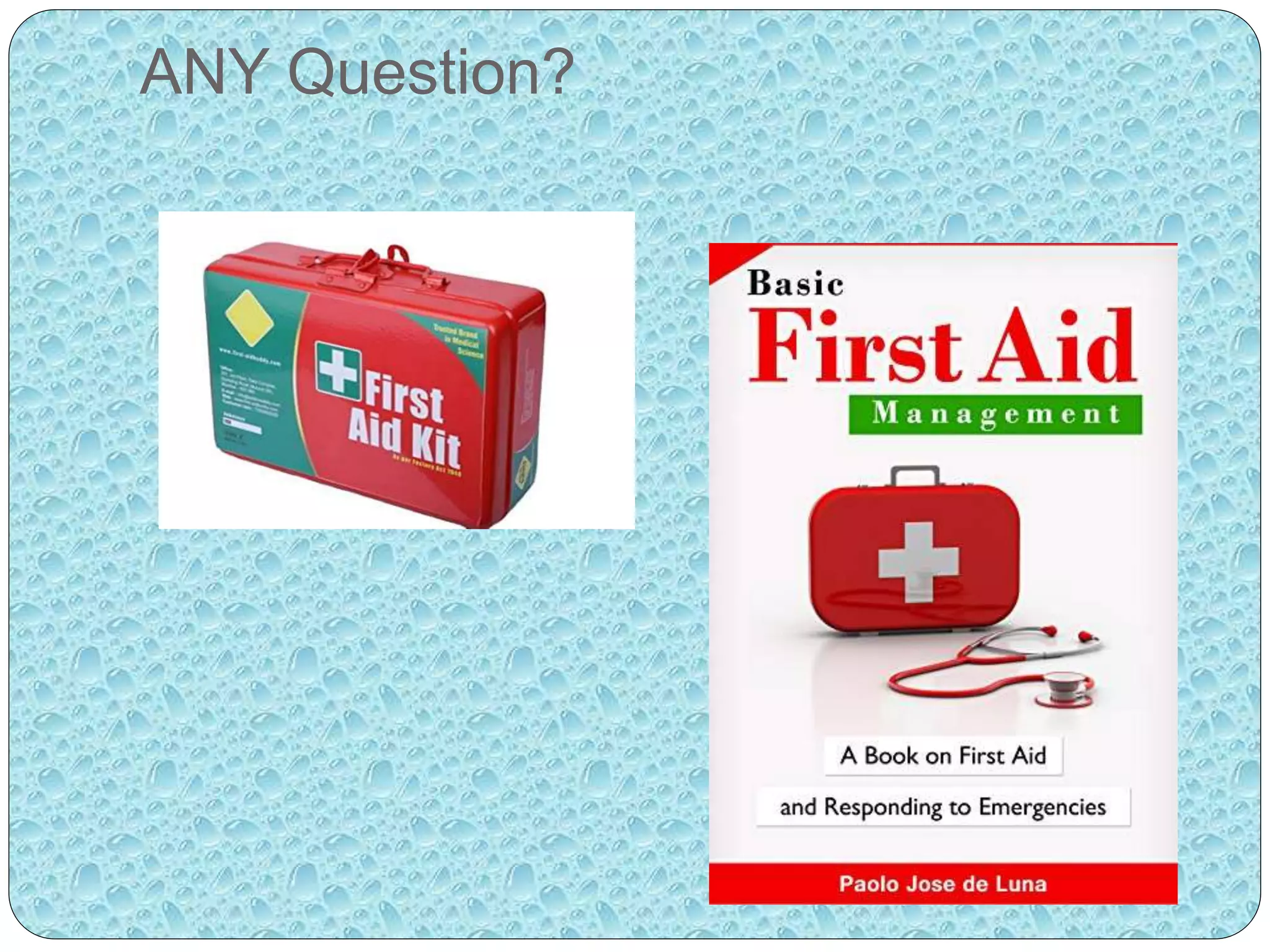
First aid kit box
List of life threatening
emergencies
 Breathing problems, Cardiac arrest ,choking ,
allergic reactions
 Chest pain , abdominal pain etc
 Burn,scald, bleeeding
 Head and spinal injuries
 Lower and upper extremities injuries
 Bites and stings are Snake bite
 Electrical injuries
 heat cramps etc
Triage
 Triage is to judge the severity of the victim’s
condition, prioritise and decide on best possible
approach beneficial to the individual within
constrains of time and professional attention at
that place.
International guidelines for Triage
(colour coded)
 RED – Immediate Care: Most urgent and high
survival if attended immediately.
 YELLOW PRIME – Beyond Care: Regardless of
urgency has poor survival rate.
 YELLOW – Urgent Not Immediate Care: Can
wait 45 to 60 minutes after stabilisation.
 GREEN – Minor Care: Can wait until others have
been attended.
 BLACK – Dead.
Continued the next session
List of medical
emergency in
environmental
situation.,
Thank you .......
References
 Module from red cross society
ANY Question?

First Aid in emergency 4.4.22 for MBBS batch.pptx

  • 1.
    Dr.Anjalatchi Muthukumaran MD(AM),Ph.D (N) MBA (HA), MA (Soc) Vice Principal Cum Nursing Superintendent Era College Of Nursing , ELMCH,EU First Aid in emergency
  • 2.
    About your syllabus Introduction to several life threatening emergencies  Importance of first aid  Benefit of first aid  First aid basics  Medical emergencies  Injuries emergencies  Environmental emergencies  Dos and donts in each category
  • 3.
    LEARNING OBJECTIVES  Introduction Symbols used in different first aids  Definition of first aid  Who is first aider  Qualities of first aider  Aim of first aid  Principles of first aid  Scopes of first aid  Golden rules of first aid  Importance  Benefits
  • 4.
    First Aid  Introductioncum history  First aid to sick and wounded has been practiced since ancient times. But an organized world wide effort for giving first aid came only in the year 1877 with the formation of St. John ambulance association of England after the Great apostle of St. John.  In 1920, Red Cross Society of India was established. With more than 400 branches all over India, great success has been achieved in the improvement of health and prevention of diseases.  Since then the universal need and utility of first aid has been increasing in this modern mechanized civilization.
  • 5.
    Definition  First aidsometimes referred to as EMERGENCY AID is the first skilled [acceptable] assistance given to a victim (sick or injured) on the occurrence of accident or sudden illness in order to preserve life, prevent further injury and relive suffering until qualified medical care is available.
  • 6.
  • 7.
    Definition of Firstaid  First aid is simple medical treatment given the earliest possible to a person who is injured or who suddenly becomes ill.  First aid is the initial assistance or treatment given to a casualty for any injury or sudden illness before the arrival of an ambulance, doctor or other qualified person. First aid is not an end by itself. It indicates that the person is in need of a “Secondary Aid”.
  • 8.
  • 9.
    First Aider  Theperson who is trained to render emergency service on the spot until the medical aid is obtained is called a “First Aider”.
  • 10.
    Qualities of aFirst Aider.  Calm  Confident  Willing to offer assistance whenever necessary  The first actions by First Aiders: DR. CAB  D – Danger assessment for self and victim  R – Responsiveness of the victim  C – Check and assess for pulse  A – Assess and ensure clear airway  B – Check if person is breathing
  • 11.
    Aims of firstaid:  3Ps  Preserve life  Prevent injuries /condition from worsening  Promote Recovery
  • 12.
  • 13.
    Principles of FirstAid  The key guiding principles and purpose of first aid, is often denoted by 3 Ps.  1. Prevent further injuries  2. Preserve life  3. Promote recovery  Rapid Responses to Disasters and duties of rescuer When disaster strikes, individuals within the affected community and neighbouring communities are the first to respond.  Preparedness can make the difference between life and death.  A damage assessment survey should follow three key principles:  a. Look: Make a thorough visual inspection of the damage-affected area;  b. Listen to all sources of information - the community, government records, and media reports;  c. Understand the gravity of the dangers and the suffering of victims as well as the capacity to respond.
  • 14.
    Scope of FirstAid  The scope of first aid includes  a) Diagnosis  b) Treatment  c) Disposal of the case.
  • 15.
    (a) Diagnosis  Knowthe possible cause of accident or sudden injury.  Gather information from casualty and bystanders.  Watch for symptoms like faintness, bleeding, thirst, pain or shivering  Watch for abnormal signs like swelling, paleness etc.
  • 16.
    Continued  (b) Treatment Remove the causative agent from the casuality eg. falling machinery, fire, electrical wire, poision etc.  (c) Disposal  Arrange for the safe transportation of the casuality to the care of a doctor or hospital as soon as possible.  Inform the family or relatives at once. 
  • 17.
    Important Points tobe remembered by First-Aiders  1. First-Aiders must always remain calm and assess the situation first before rushing to help the victim.  2. First Aiders must ensure to remove any dangers from the casualty, or remove the casualty from dangers, and prevent the crowding of casualties by bystanders.  3. It is important that the First-Aiders -call for appropriate help as per the assessment of the situation.  4. As most first aid treatment does involve touching the victim, it is very important that the First-Aider gains their permission, so as to avoid causing offence or distress.  5. It is important to understand that first aid has its limitations and does not take the place of professional medical treatment.  6. First Aiders should also take care to listen to any remarks or requests a casualty makes.  7. The First Aider’s responsibility ends when the casualty is handed over to the care of a competent health provider.
  • 18.
    Golden rules offirst aid 1. Do first things first, quickly-quietly without fuss or panic. 2. Reassure the casualty through encouraging words. 3. Check ABC Rule. (Airway, breathing, Circulation) 4. Open the airway by tilting the head. 5. Give artificial respiration if breathing has stopped. 6. Perform chest compression if the pulse is not present 7. Stop bleeding if any by direct pressure. 8. Treat for shock. 9. Do not allow people to crowd around. 10. Don’t remove clothes unnecessarily. 11. Arrange for transportation of the casualty. 12. Casualty should be sent to a hospital or doctor by quickest means of transport. Always inform police about serious accidents and the relatives.
  • 19.
    Advantages of FirstAid Training  First aid training saves lives. ...  Reduces repeat accidents. ...  Increases confidence and safety. ...  People know how to use a first aid kit properly. ...  Keeps employees safe outside of work. ...  It's great for company morale and team-building. ...  It's cost-effective.
  • 20.
  • 21.
    List of lifethreatening emergencies  Breathing problems, Cardiac arrest ,choking , allergic reactions  Chest pain , abdominal pain etc  Burn,scald, bleeeding  Head and spinal injuries  Lower and upper extremities injuries  Bites and stings are Snake bite  Electrical injuries  heat cramps etc
  • 22.
    Triage  Triage isto judge the severity of the victim’s condition, prioritise and decide on best possible approach beneficial to the individual within constrains of time and professional attention at that place.
  • 23.
    International guidelines forTriage (colour coded)  RED – Immediate Care: Most urgent and high survival if attended immediately.  YELLOW PRIME – Beyond Care: Regardless of urgency has poor survival rate.  YELLOW – Urgent Not Immediate Care: Can wait 45 to 60 minutes after stabilisation.  GREEN – Minor Care: Can wait until others have been attended.  BLACK – Dead.
  • 24.
    Continued the nextsession List of medical emergency in environmental situation., Thank you .......
  • 25.
    References  Module fromred cross society
  • 26.