GUIDELINES FOR
CHILD FRIENDLY SPACES
IN EMERGENCIES
By Kingsley Udo
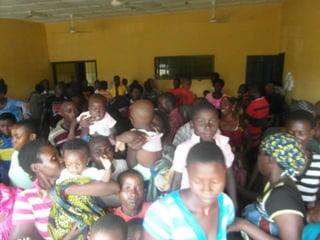
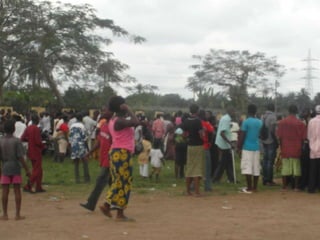
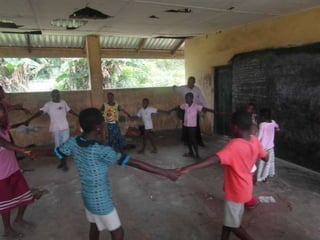
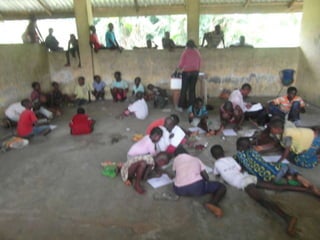
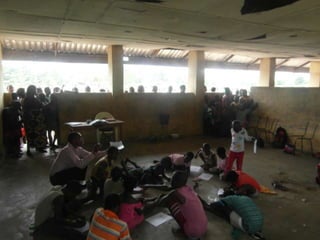
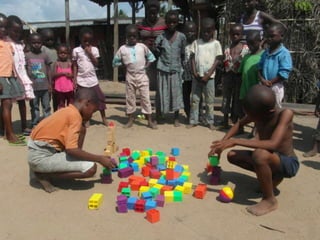
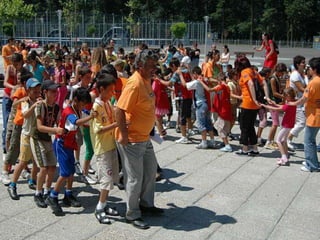
TELL ME WHAT YOU SEE….
What are CFS’s
• Child Friendly Spaces (CFSs) are widely used in
emergencies as a first response to children’s
needs and an entry point for working with
affected communities.
• Although different agencies call CFSs different
things such as (safe spaces, child centered
spaces, child protection centers or emergency
spaces for children) the interventions are all part
of a common family of supports for children and
young people.
Rationale
• Because CFSs can be established quickly and
respond to children’s rights to protection,
psychosocial well‐being, and non‐formal
education, CFSs are typically used as temporary
supports that contribute to the care and
protection of children in emergencies.
• However, they are used also as transitional
structures that serve as a bridge to early recovery
and long‐term supports for vulnerable children.
Rationale contd.
• Broadly, the purpose of CFSs is to support the
resilience and well‐being of children and
young people through community organized,
structured activities conducted in a safe, child
friendly, and stimulating environment
Beneficiaries of CFS’s
The primary participants in and beneficiaries
of CFSs are children (people under 18 years of
age), although in some contexts, CFSs may
also engage and benefit young people who
are beyond 18years of age.
Specific objectives of CFS’s
• To mobilize communities around the
protection and wellbeing of all children,
including highly vulnerable children.
• To provide opportunities for children to play,
acquire contextually relevant skills, and
receive social support.
• To offer inter‐sectoral support for all children
in the realization of their rights.
Guiding principles to setting up CFS’s
• Take a coordinated, inter‐agency, and
multi‐sectoral approach
• Use CFSs as a means of mobilizing the
community
• Make CFSs highly inclusive and
non‐discriminatory
• Ensure that CFSs are safe and secure
• Make CFSs stimulating, participatory, and
supportive environments
Guiding Actions
• Conduct an assessment
• Organize integrated supports and services
• Provide ongoing training and follow‐up
support for animators and staff
• Monitor and evaluate CFS programs
• Phase out or transition in a contextually
appropriate manner

Child friendly spaces

  • 1.
    GUIDELINES FOR CHILD FRIENDLYSPACES IN EMERGENCIES By Kingsley Udo
  • 2.
    TELL ME WHATYOU SEE….
  • 10.
    What are CFS’s •Child Friendly Spaces (CFSs) are widely used in emergencies as a first response to children’s needs and an entry point for working with affected communities. • Although different agencies call CFSs different things such as (safe spaces, child centered spaces, child protection centers or emergency spaces for children) the interventions are all part of a common family of supports for children and young people.
  • 11.
    Rationale • Because CFSscan be established quickly and respond to children’s rights to protection, psychosocial well‐being, and non‐formal education, CFSs are typically used as temporary supports that contribute to the care and protection of children in emergencies. • However, they are used also as transitional structures that serve as a bridge to early recovery and long‐term supports for vulnerable children.
  • 12.
    Rationale contd. • Broadly,the purpose of CFSs is to support the resilience and well‐being of children and young people through community organized, structured activities conducted in a safe, child friendly, and stimulating environment
  • 13.
    Beneficiaries of CFS’s Theprimary participants in and beneficiaries of CFSs are children (people under 18 years of age), although in some contexts, CFSs may also engage and benefit young people who are beyond 18years of age.
  • 14.
    Specific objectives ofCFS’s • To mobilize communities around the protection and wellbeing of all children, including highly vulnerable children. • To provide opportunities for children to play, acquire contextually relevant skills, and receive social support. • To offer inter‐sectoral support for all children in the realization of their rights.
  • 15.
    Guiding principles tosetting up CFS’s • Take a coordinated, inter‐agency, and multi‐sectoral approach • Use CFSs as a means of mobilizing the community • Make CFSs highly inclusive and non‐discriminatory • Ensure that CFSs are safe and secure • Make CFSs stimulating, participatory, and supportive environments
  • 16.
    Guiding Actions • Conductan assessment • Organize integrated supports and services • Provide ongoing training and follow‐up support for animators and staff • Monitor and evaluate CFS programs • Phase out or transition in a contextually appropriate manner