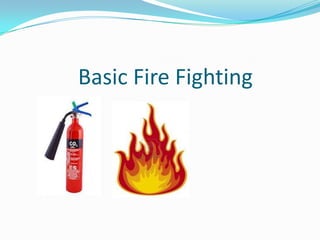
Basic Fire Fighting
Knowledge shared :
 Chemistry of fire
 Classification of fire

 Methods of fire extinguishing
 Preventive Measures
What is FIRE ?
Fire is the combination of three
elements
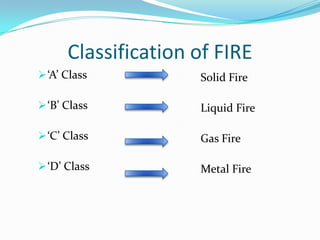
Classification of FIRE
 ‘A’ Class

Solid Fire

 ‘B’ Class

Liquid Fire

 ‘C’ Class

Gas Fire

 ‘D’ Class

Metal Fire
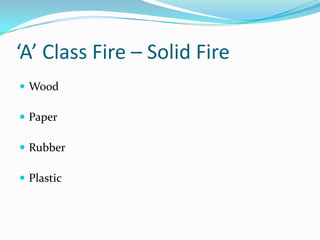
‘A’ Class Fire – Solid Fire
 Wood
 Paper

 Rubber
 Plastic
‘B’ Class Fire – Liquid Fire
 Oil
 Kerosene
 Paints
 Petrol
 Diesel
‘C’ Class Fire – Gas Fire
 LPG (Liquefied Petroleum Gas )
 Nitrogen
 Hydrogen
 Methane
‘D’ Class Fire – Metal Fire
 Magnesium
 Potassium
 Aluminum
 Zinc
 Sodium
Methods of Fire Extinguishing &
Alarms
 Fire Extinguishers

 Fire Hydrant System
 Smoke Detector System
 Sprinkler System
 Manual Call Point
Fire Extinguishers
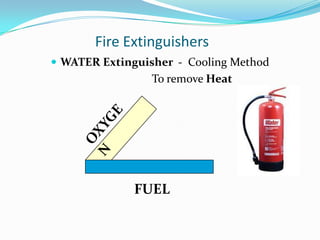
 WATER Extinguisher - Cooling Method

To remove Heat

FUEL
FOAM Extinguisher
 Blanketing Effect – Remove Oxygen

FUEL
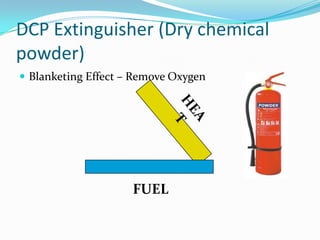
DCP Extinguisher (Dry chemical
powder)
 Blanketing Effect – Remove Oxygen

FUEL
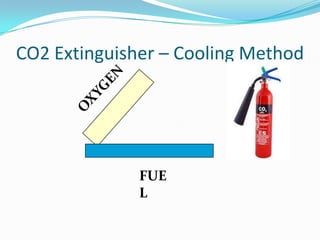
CO2 Extinguisher – Cooling Method

FUE
L
Fire Hydrant System
 Manual operation
 Consists of 2 canvas Pipes,

15mts. each
8 Kg / Cm2
7 Kg - J
5 Kg - S
4 Kg - H
3 kg - E ( Non
Power supply)
E

H

S

J
Smoke is a device that System
Detector
 A smoke detector
detects smoke
 Smoke detectors are typically

housed in a disk-shaped plastic
enclosure about 6 inches in
diameter and 1 inch thick.
Sprinkler System

 A fire sprinkler system is an active fire

protection measure, consisting of a water
supply system, providing adequate pressure
and flow rate to a water distribution piping
system, onto which fire sprinklers are
connected.
 63 degree temperature
 Covers 6Mts .
Manual Call point

 It is an active fire protection device, usually

wall-mounted.
 when activated, initiates an alarm on a fire alarm system.
 the user activates the alarm by pulling the handle down,

which completes a circuit and locks the handle in the
activated position, sending an alarm to the fire alarm
control panel
 After operation, some fire alarm pull stations must be

restored to the ready position using a special tool or key in
order to deactivate the alarm sequence and return the
system to normal
Preventive Measures
 Avoid smoking inside the office and dispose the buds

carefully.
 Do not make unauthorized electrical connections and do

not overload the electrical points.
 Do not light incense sticks (Agarbathis) near Records,

Racks and Curtains.
 Do not forget to switch off the electrical mains before

leaving the office.
Preventive Measures (contd.,)
 Periodical checking of electrical wiring & removable of

combustible & inflammable liquid articles from vicinity
of naked wires.
 Do not permit any unauthorized person from carrying

work on electrical lines.
 Good house keeping essentials to prevent fire hazards.

Every employee should consider it ones responsibility to
do their part in maintaining good house keeping at their
work place..
Topics covered in this session :
 Chemistry of fire
 Classification of fire

 Methods of fire extinguishing
 Preventive Measures
 What is Fire ?

Questionnaire

 Fire is classified into ____ types.
 What is DCP ?
 Standard length of Hose pipe in Hydrant System is

____ mts.
 A Sprinkler System covers __ distance.
Learn to save others life
Thank you for participation

Fire fighting

  • 1.
  • 2.
    Knowledge shared : Chemistry of fire  Classification of fire  Methods of fire extinguishing  Preventive Measures
  • 3.
  • 4.
    Fire is thecombination of three elements
  • 5.
    Classification of FIRE ‘A’ Class Solid Fire  ‘B’ Class Liquid Fire  ‘C’ Class Gas Fire  ‘D’ Class Metal Fire
  • 6.
    ‘A’ Class Fire– Solid Fire  Wood  Paper  Rubber  Plastic
  • 7.
    ‘B’ Class Fire– Liquid Fire  Oil  Kerosene  Paints  Petrol  Diesel
  • 8.
    ‘C’ Class Fire– Gas Fire  LPG (Liquefied Petroleum Gas )  Nitrogen  Hydrogen  Methane
  • 9.
    ‘D’ Class Fire– Metal Fire  Magnesium  Potassium  Aluminum  Zinc  Sodium
  • 10.
    Methods of FireExtinguishing & Alarms  Fire Extinguishers  Fire Hydrant System  Smoke Detector System  Sprinkler System  Manual Call Point
  • 11.
    Fire Extinguishers  WATERExtinguisher - Cooling Method To remove Heat FUEL
  • 12.
    FOAM Extinguisher  BlanketingEffect – Remove Oxygen FUEL
  • 13.
    DCP Extinguisher (Drychemical powder)  Blanketing Effect – Remove Oxygen FUEL
  • 14.
    CO2 Extinguisher –Cooling Method FUE L
  • 15.
    Fire Hydrant System Manual operation  Consists of 2 canvas Pipes, 15mts. each 8 Kg / Cm2 7 Kg - J 5 Kg - S 4 Kg - H 3 kg - E ( Non Power supply) E H S J
  • 16.
    Smoke is adevice that System Detector  A smoke detector detects smoke  Smoke detectors are typically housed in a disk-shaped plastic enclosure about 6 inches in diameter and 1 inch thick.
  • 17.
    Sprinkler System  Afire sprinkler system is an active fire protection measure, consisting of a water supply system, providing adequate pressure and flow rate to a water distribution piping system, onto which fire sprinklers are connected.  63 degree temperature  Covers 6Mts .
  • 18.
    Manual Call point It is an active fire protection device, usually wall-mounted.  when activated, initiates an alarm on a fire alarm system.  the user activates the alarm by pulling the handle down, which completes a circuit and locks the handle in the activated position, sending an alarm to the fire alarm control panel  After operation, some fire alarm pull stations must be restored to the ready position using a special tool or key in order to deactivate the alarm sequence and return the system to normal
  • 19.
    Preventive Measures  Avoidsmoking inside the office and dispose the buds carefully.  Do not make unauthorized electrical connections and do not overload the electrical points.  Do not light incense sticks (Agarbathis) near Records, Racks and Curtains.  Do not forget to switch off the electrical mains before leaving the office.
  • 20.
    Preventive Measures (contd.,) Periodical checking of electrical wiring & removable of combustible & inflammable liquid articles from vicinity of naked wires.  Do not permit any unauthorized person from carrying work on electrical lines.  Good house keeping essentials to prevent fire hazards. Every employee should consider it ones responsibility to do their part in maintaining good house keeping at their work place..
  • 21.
    Topics covered inthis session :  Chemistry of fire  Classification of fire  Methods of fire extinguishing  Preventive Measures
  • 22.
     What isFire ? Questionnaire  Fire is classified into ____ types.  What is DCP ?  Standard length of Hose pipe in Hydrant System is ____ mts.  A Sprinkler System covers __ distance.
  • 23.
    Learn to saveothers life Thank you for participation