FIRE SAFETY
&
MANAGEMENT
By:
Charlene F. Ricopuerto
MT
INTRODUCTION

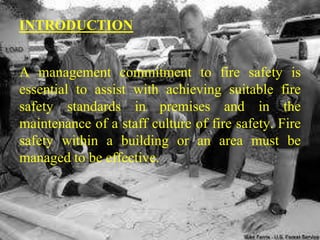
A management commitment to fire safety is
essential to assist with achieving suitable fire
safety standards in premises and in the
maintenance of a staff culture of fire safety. Fire
safety within a building or an area must be
managed to be effective.
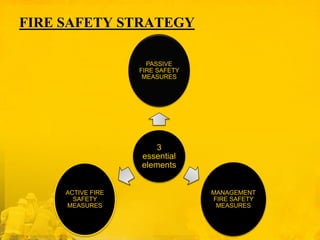
FIRE SAFETY STRATEGY
PASSIVE
FIRE SAFETY
MEASURES

3
essential
elements
ACTIVE FIRE
SAFETY
MEASURES

MANAGEMENT
FIRE SAFETY
MEASURES
PASSIVE FIRE SAFETY MEASURES

These are features which are built
into the structure of the building and
are physical features of the building.
PASSIVE FIRE SAFETY MEASURES
ACTIVE FIRE SAFETY MEASURES

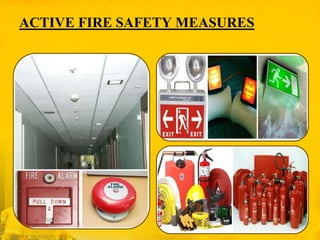
Active Fire Precaution measures are
systems which activate or are required
to be activated in the event of an
outbreak of fire.
ACTIVE FIRE SAFETY MEASURES
MANAGEMENT FIRE SAFETY MEASURES

Management Fire safety measures relate to the
day to day management of fire safety in a
building. There is a legal responsibility on
persons having control over premises to take
reasonable measures to prevent the occurrence of
a fire and to protect the lives and safety of
occupants in the event of fire.
FIRE SAFETY PROGRAM
MAIN ELEMENTS
Emergency procedures/evacuation drills
Regular fire safety inspections
Maintenance and servicing of fire equipment

Staff training
Information to occupants
Keeping of records
Emergency planning
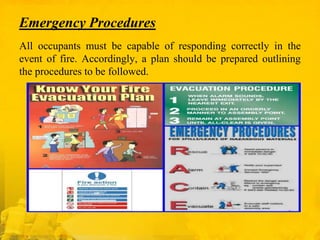
Emergency Procedures
All occupants must be capable of responding correctly in the
event of fire. Accordingly, a plan should be prepared outlining
the procedures to be followed.
Emergency Procedures
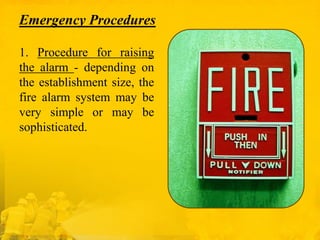
1. Procedure for raising
the alarm - depending on
the establishment size, the
fire alarm system may be
very simple or may be
sophisticated.
Emergency Procedures
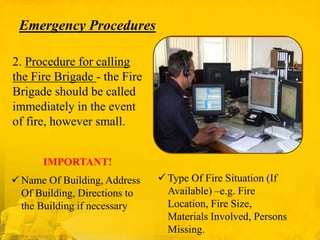
2. Procedure for calling
the Fire Brigade - the Fire
Brigade should be called
immediately in the event
of fire, however small.
IMPORTANT!

 Name Of Building, Address
Of Building, Directions to
the Building if necessary

 Type Of Fire Situation (If
Available) –e.g. Fire
Location, Fire Size,
Materials Involved, Persons
Missing.
Emergency Procedures

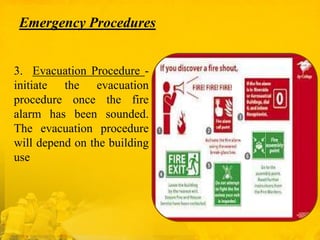
3. Evacuation Procedure initiate the evacuation
procedure once the fire
alarm has been sounded.
The evacuation procedure
will depend on the building
use
Emergency Procedures

4. Assembly Point & Roll
Call Procedure - designate
an assembly area (or
areas) clear of the
building.
Emergency Procedures
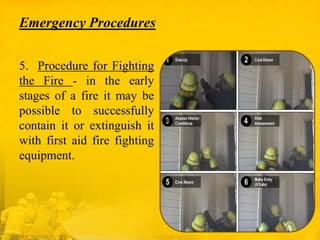
5. Procedure for Fighting
the Fire - in the early
stages of a fire it may be
possible to successfully
contain it or extinguish it
with first aid fire fighting
equipment.
Emergency Procedures
6. Procedure for Assisting
the Fire Brigade – when
the Fire Brigade arrive
they need to be given as
much information as
possible in order to take
the best course of action.
• location of the fire; materials involved; details of missing
persons; location of nearest fire hydrants; location of all
access doors to the building. location of any special risks.
• Keys for access into any locked areas.
Fire Evacuation Drills
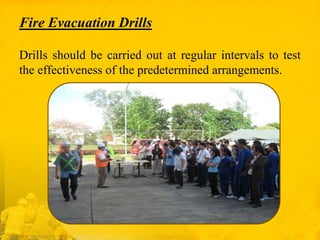
Drills should be carried out at regular intervals to test
the effectiveness of the predetermined arrangements.
Fire Evacuation Drills
The aims of fire evacuation drill are:
1. To ensure safe, orderly and efficient evacuation of
all occupants of the building to use all exit facilities
available in order that occupants are familiar with
them. to test all aspects of the emergency
procedures.
2. To achieve an attitude of mind that reacts rationally
when confronted with a fire or other emergency
situation.
Fire Evacuation Drills

REMEMBER!
• Drills will depend on the building use.
• Initially drills should be held at frequent intervals e.g. every
two months until everyone is familiar with the procedures.
• Drill should be initiated by activating the fire alarm and all
stages of the drill should be observed and a review of the drill
should be held.
• Thereafter drills should be held at least twice yearly.
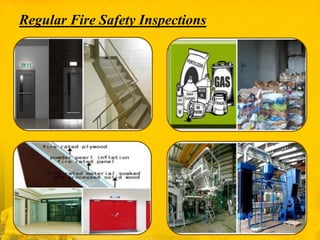
Regular Fire Safety Inspections

Regular inspections are required to
ensure the continued functioning of the
active and passive fire safety measures in
a building and to detect dangerous
practices.
Regular Fire Safety Inspections
Maintenance & Servicing of Fire Equipment
Active fire precautions systems installed in the building require
regular checking and maintenance to ensure their continued
operation and availability.
Maintenance & Servicing of Fire Equipment
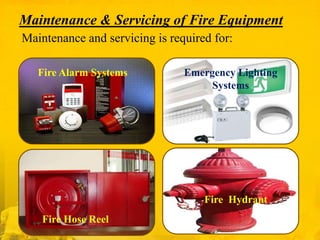
Maintenance and servicing is required for:
Fire Alarm Systems

Emergency Lighting
Systems

Fire Hydrant
Fire Hose Reel
Staff Instruction & Training
For a fire safety program to be effective, staff must be familiar
with the parts of the fire safety program which relate to them.
Comprehensive instruction and training should be given to staff
to enable them to carry out their functions under the program.
Staff Instruction & Training

All staff should receive instruction in:

• Everyday fire prevention measures emergency
procedures
• First aid fire fighting
Fire Safety Register
A Fire Safety Register is a
complete record of all fire
safety
matters
on
the
premises.
Keeping of Records
Information to Occupants
Emergency Planning
Fire may still occur in spite of good fire prevention procedures.
Advance planning should be carried out to minimize the cost and
disruption of a fire. Damage control plans should address the
procedures required before, during and after the fire.
Emergency Planning
Before the fire:
Establish the following:
• A damage control team consisting of the key
personnel from the different departments within
the organization should be established.
• A response team.
• A list of outside agencies whose services could be
required in the event of fire should be compiled
and maintained.
The building itself should be examined and modified
where necessary to mitigate the affects of a fire.
Emergency Planning
During the fire:

• Work to prevent any extension of fire/water damage
should begin as early as possible.
• Machinery and stock should be covered with plastic
sheeting.
• Drains which may become blocked with fire debris
should be cleared.
• Stock in danger from the fire may be moved from the
area if safe to do so.
Emergency Planning
After the fire:
• Temporary repairs to roofs and window openings
should be carried out to make the building weather
tight.
• Debris should be checked for any recoverable items
and then cleared away.
• Water should be pumped from basements, pits and
lift wells.
• Machinery should be cleaned, dried and coated with
oil as early as possible.
• Contaminated electronic equipment should be and
cleaned as early as possible.
8 fire safety
8 fire safety
8 fire safety
8 fire safety
8 fire safety

8 fire safety

  • 1.
  • 2.
    INTRODUCTION A management commitmentto fire safety is essential to assist with achieving suitable fire safety standards in premises and in the maintenance of a staff culture of fire safety. Fire safety within a building or an area must be managed to be effective.
  • 3.
    FIRE SAFETY STRATEGY PASSIVE FIRESAFETY MEASURES 3 essential elements ACTIVE FIRE SAFETY MEASURES MANAGEMENT FIRE SAFETY MEASURES
  • 4.
    PASSIVE FIRE SAFETYMEASURES These are features which are built into the structure of the building and are physical features of the building.
  • 5.
  • 6.
    ACTIVE FIRE SAFETYMEASURES Active Fire Precaution measures are systems which activate or are required to be activated in the event of an outbreak of fire.
  • 7.
  • 8.
    MANAGEMENT FIRE SAFETYMEASURES Management Fire safety measures relate to the day to day management of fire safety in a building. There is a legal responsibility on persons having control over premises to take reasonable measures to prevent the occurrence of a fire and to protect the lives and safety of occupants in the event of fire.
  • 9.
    FIRE SAFETY PROGRAM MAINELEMENTS Emergency procedures/evacuation drills Regular fire safety inspections Maintenance and servicing of fire equipment Staff training Information to occupants Keeping of records Emergency planning
  • 10.
    Emergency Procedures All occupantsmust be capable of responding correctly in the event of fire. Accordingly, a plan should be prepared outlining the procedures to be followed.
  • 11.
    Emergency Procedures 1. Procedurefor raising the alarm - depending on the establishment size, the fire alarm system may be very simple or may be sophisticated.
  • 12.
    Emergency Procedures 2. Procedurefor calling the Fire Brigade - the Fire Brigade should be called immediately in the event of fire, however small. IMPORTANT!  Name Of Building, Address Of Building, Directions to the Building if necessary  Type Of Fire Situation (If Available) –e.g. Fire Location, Fire Size, Materials Involved, Persons Missing.
  • 13.
    Emergency Procedures 3. EvacuationProcedure initiate the evacuation procedure once the fire alarm has been sounded. The evacuation procedure will depend on the building use
  • 14.
    Emergency Procedures 4. AssemblyPoint & Roll Call Procedure - designate an assembly area (or areas) clear of the building.
  • 15.
    Emergency Procedures 5. Procedurefor Fighting the Fire - in the early stages of a fire it may be possible to successfully contain it or extinguish it with first aid fire fighting equipment.
  • 16.
    Emergency Procedures 6. Procedurefor Assisting the Fire Brigade – when the Fire Brigade arrive they need to be given as much information as possible in order to take the best course of action. • location of the fire; materials involved; details of missing persons; location of nearest fire hydrants; location of all access doors to the building. location of any special risks. • Keys for access into any locked areas.
  • 17.
    Fire Evacuation Drills Drillsshould be carried out at regular intervals to test the effectiveness of the predetermined arrangements.
  • 18.
    Fire Evacuation Drills Theaims of fire evacuation drill are: 1. To ensure safe, orderly and efficient evacuation of all occupants of the building to use all exit facilities available in order that occupants are familiar with them. to test all aspects of the emergency procedures. 2. To achieve an attitude of mind that reacts rationally when confronted with a fire or other emergency situation.
  • 19.
    Fire Evacuation Drills REMEMBER! •Drills will depend on the building use. • Initially drills should be held at frequent intervals e.g. every two months until everyone is familiar with the procedures. • Drill should be initiated by activating the fire alarm and all stages of the drill should be observed and a review of the drill should be held. • Thereafter drills should be held at least twice yearly.
  • 20.
    Regular Fire SafetyInspections Regular inspections are required to ensure the continued functioning of the active and passive fire safety measures in a building and to detect dangerous practices.
  • 21.
  • 22.
    Maintenance & Servicingof Fire Equipment Active fire precautions systems installed in the building require regular checking and maintenance to ensure their continued operation and availability.
  • 23.
    Maintenance & Servicingof Fire Equipment Maintenance and servicing is required for: Fire Alarm Systems Emergency Lighting Systems Fire Hydrant Fire Hose Reel
  • 24.
    Staff Instruction &Training For a fire safety program to be effective, staff must be familiar with the parts of the fire safety program which relate to them. Comprehensive instruction and training should be given to staff to enable them to carry out their functions under the program.
  • 25.
    Staff Instruction &Training All staff should receive instruction in: • Everyday fire prevention measures emergency procedures • First aid fire fighting
  • 26.
    Fire Safety Register AFire Safety Register is a complete record of all fire safety matters on the premises.
  • 27.
  • 28.
  • 29.
    Emergency Planning Fire maystill occur in spite of good fire prevention procedures. Advance planning should be carried out to minimize the cost and disruption of a fire. Damage control plans should address the procedures required before, during and after the fire.
  • 30.
    Emergency Planning Before thefire: Establish the following: • A damage control team consisting of the key personnel from the different departments within the organization should be established. • A response team. • A list of outside agencies whose services could be required in the event of fire should be compiled and maintained. The building itself should be examined and modified where necessary to mitigate the affects of a fire.
  • 31.
    Emergency Planning During thefire: • Work to prevent any extension of fire/water damage should begin as early as possible. • Machinery and stock should be covered with plastic sheeting. • Drains which may become blocked with fire debris should be cleared. • Stock in danger from the fire may be moved from the area if safe to do so.
  • 32.
    Emergency Planning After thefire: • Temporary repairs to roofs and window openings should be carried out to make the building weather tight. • Debris should be checked for any recoverable items and then cleared away. • Water should be pumped from basements, pits and lift wells. • Machinery should be cleaned, dried and coated with oil as early as possible. • Contaminated electronic equipment should be and cleaned as early as possible.