Minnesota Department of Public Safety
State Fire Marshal Division
Fire Safety & Prevention
Presentation Objectives
 To educate participants on
how to avoid fires and fire
related injuries.
 To create awareness of fire
deaths and injuries and their
common causes.
 To inform participants of their
personal responsibility toward
fire safety and injury
prevention.
Introduction
There were 14,561 fires reported in
Minnesota in 2010.
39 civilian deaths
137 reported civilian injuries
$152 million in property damage
In the Home
 People feel the safest in their homes,
however residential properties are where
most fires and fire deaths occur.
 76% of all structure fires
occurred in residential properties.
 97% of structural fire deaths
occurred in residential properties.
Fire Causes
The top fire causes
include:
Cooking (49%)
Open Flame (10%)
Heating (9%)
Incendiary/Arson (8%)
Smoking (4%)
*leading cause of fire fatalities
Personal vigilance is the
best way to avoid and
survive fires!
Cooking Fires
 Pay attention to what you’re cooking.
 If you leave the room, turn off the stove.
 Don’t cook if you’re sleepy or
if you’re impaired.
Nearly half of all home
fires
originate in the kitchen.
Reduce Your Chance of a Cooking
Fire
 Keep flammable items
away from heat sources.
Curtains, potholders, towels, clothing, etc.
 Keep flammable cleaners
away
from heat sources.
 Clean your stovetop
frequently
to avoid grease build up.
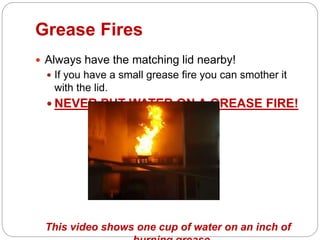
Grease Fires
 Always have the matching lid nearby!
 If you have a small grease fire you can smother it
with the lid.
 NEVER PUT WATER ON A GREASE FIRE!
This video shows one cup of water on an inch of
 Cigarettes can smolder for hours.
 Tips to avoid smoking related fires:
 Don’t smoke inside.
 Discard smoking materials in a fire safe
container.
 Use a proper, heavy ashtray which
won’t tip easily.
 Don’t improvise!
Smoking is the leading cause of fire
Smoking Related Fires
 More tips to avoid smoking
related fires:
 Don’t smoke in bed.
 Don’t smoke if you’re tired, taking
medications, or if you’ve been
drinking or are otherwise impaired.
 After a party, check indoor and
outdoor furniture and cushions for
smoldering cigarette butts.
Candles
Unattended candles are a leading fire
cause.
 Candle safety tips:
 Use flameless candles.
 When you leave the room, blow out the
candle.
 Keep anything that could burn at least a
foot away:
 curtains, clothes, paper, etc.
 Don’t set the candles on anything
combustible.
 Fires can start when the candle burns down to
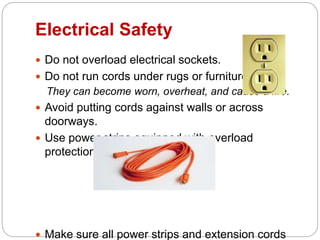
Electrical Safety
 Do not overload electrical sockets.
 Do not run cords under rugs or furniture.
They can become worn, overheat, and cause a fire.
 Avoid putting cords against walls or across
doorways.
 Use power strips equipped with overload
protection.
 Make sure all power strips and extension cords
Escape Routes
 When the smoke
alarm sounds, you
may only have
seconds or minutes to
escape safely.
 Have a meeting place
for everyone to gather
outside.
 Plan two ways out, in
case one way is filled
with smoke or fire.
Know your escape
routes and practice
them.
Important Safety Elements
 Alarms
Smoke
Carbon Monoxide
 Fire extinguishers
 Residential Fire Sprinkler Systems
Smoke Alarms
 There were 39 fire deaths in Minnesota last
year.
Only six of those deaths happened in homes
with a working smoke alarm.
 Breathing smoke can kill you!
 Smoke is toxic.
 If you must escape through
smoke,
get low and go under the
smoke.
Alarm Placement &
Maintenance
 Make sure you can hear the
alarm in every place in your
home.
 They should be loud
enough to wake you from
sleep.
Check them once a month.
Change the batteries once a
year.
Carbon Monoxide Alarms
 Carbon monoxide (CO) is an invisible,
odorless, colorless gas. There is no way
to detect it without an alarm.
 Minnesota law requires carbon
monoxide alarms in all homes, within ten
feet of all sleeping areas.
 Symptoms of CO poisoning mimic flu-like
symptoms.
 If you’re feeling symptoms, immediately
move to an open window or go outdoors.
High levels of CO can be fatal,
causing death within minutes.
Fire Extinguishers
 Know how to use
them.
 Have them mounted
in an obvious spot
near an exit.
When in doubt, get
out!
Residential Fire Sprinkler
Systems
Fire sprinkler systems save lives
and reduce damage to your
property.
 Only the sprinkler closest to the fire will
activate, spraying water directly on the
fire.
 90% of fires are contained by the
operation of just one sprinkler.
If you have a fire…
 Leave, close the door, and call 9-1-1 from
outside.
 Report ALL fires to the fire department,
even if you think you put them out!
 Don’t ignore alarms!
 Even if your building has frequent alarms, you need
to leave when they go off.
 Once you’re out, STAY OUT!
 Don’t go back inside for possessions or pets.
 Notify the fire department if anyone is unaccounted
for.
You never know when it could be a real fire.
Summary
 There are many ways to reduce your risk of fire:
 Stay focused when you’re cooking.
 Use candles responsibly, or not at all.
 Don’t overload electrical sockets or misuse
extension cords.
 If you must smoke, be responsible for your smoking
materials.
 If someone is smoking in or near your home, check
to make sure that all smoking materials are properly
disposed of.
 Have a fire safety plan and practice it!
 Have working smoke and CO alarms.
 Be responsible.

Fire.ppt

  • 1.
    Minnesota Department ofPublic Safety State Fire Marshal Division Fire Safety & Prevention
  • 2.
    Presentation Objectives  Toeducate participants on how to avoid fires and fire related injuries.  To create awareness of fire deaths and injuries and their common causes.  To inform participants of their personal responsibility toward fire safety and injury prevention.
  • 3.
    Introduction There were 14,561fires reported in Minnesota in 2010. 39 civilian deaths 137 reported civilian injuries $152 million in property damage
  • 4.
    In the Home People feel the safest in their homes, however residential properties are where most fires and fire deaths occur.  76% of all structure fires occurred in residential properties.  97% of structural fire deaths occurred in residential properties.
  • 5.
    Fire Causes The topfire causes include: Cooking (49%) Open Flame (10%) Heating (9%) Incendiary/Arson (8%) Smoking (4%) *leading cause of fire fatalities Personal vigilance is the best way to avoid and survive fires!
  • 6.
    Cooking Fires  Payattention to what you’re cooking.  If you leave the room, turn off the stove.  Don’t cook if you’re sleepy or if you’re impaired. Nearly half of all home fires originate in the kitchen.
  • 7.
    Reduce Your Chanceof a Cooking Fire  Keep flammable items away from heat sources. Curtains, potholders, towels, clothing, etc.  Keep flammable cleaners away from heat sources.  Clean your stovetop frequently to avoid grease build up.
  • 8.
    Grease Fires  Alwayshave the matching lid nearby!  If you have a small grease fire you can smother it with the lid.  NEVER PUT WATER ON A GREASE FIRE! This video shows one cup of water on an inch of
  • 9.
     Cigarettes cansmolder for hours.  Tips to avoid smoking related fires:  Don’t smoke inside.  Discard smoking materials in a fire safe container.  Use a proper, heavy ashtray which won’t tip easily.  Don’t improvise! Smoking is the leading cause of fire Smoking Related Fires
  • 10.
    Smoking Related Fires More tips to avoid smoking related fires:  Don’t smoke in bed.  Don’t smoke if you’re tired, taking medications, or if you’ve been drinking or are otherwise impaired.  After a party, check indoor and outdoor furniture and cushions for smoldering cigarette butts.
  • 11.
    Candles Unattended candles area leading fire cause.  Candle safety tips:  Use flameless candles.  When you leave the room, blow out the candle.  Keep anything that could burn at least a foot away:  curtains, clothes, paper, etc.  Don’t set the candles on anything combustible.  Fires can start when the candle burns down to
  • 12.
    Electrical Safety  Donot overload electrical sockets.  Do not run cords under rugs or furniture. They can become worn, overheat, and cause a fire.  Avoid putting cords against walls or across doorways.  Use power strips equipped with overload protection.  Make sure all power strips and extension cords
  • 13.
    Escape Routes  Whenthe smoke alarm sounds, you may only have seconds or minutes to escape safely.  Have a meeting place for everyone to gather outside.  Plan two ways out, in case one way is filled with smoke or fire. Know your escape routes and practice them.
  • 14.
    Important Safety Elements Alarms Smoke Carbon Monoxide  Fire extinguishers  Residential Fire Sprinkler Systems
  • 15.
    Smoke Alarms  Therewere 39 fire deaths in Minnesota last year. Only six of those deaths happened in homes with a working smoke alarm.  Breathing smoke can kill you!  Smoke is toxic.  If you must escape through smoke, get low and go under the smoke.
  • 16.
    Alarm Placement & Maintenance Make sure you can hear the alarm in every place in your home.  They should be loud enough to wake you from sleep. Check them once a month. Change the batteries once a year.
  • 17.
    Carbon Monoxide Alarms Carbon monoxide (CO) is an invisible, odorless, colorless gas. There is no way to detect it without an alarm.  Minnesota law requires carbon monoxide alarms in all homes, within ten feet of all sleeping areas.  Symptoms of CO poisoning mimic flu-like symptoms.  If you’re feeling symptoms, immediately move to an open window or go outdoors. High levels of CO can be fatal, causing death within minutes.
  • 18.
    Fire Extinguishers  Knowhow to use them.  Have them mounted in an obvious spot near an exit. When in doubt, get out!
  • 19.
    Residential Fire Sprinkler Systems Firesprinkler systems save lives and reduce damage to your property.  Only the sprinkler closest to the fire will activate, spraying water directly on the fire.  90% of fires are contained by the operation of just one sprinkler.
  • 20.
    If you havea fire…  Leave, close the door, and call 9-1-1 from outside.  Report ALL fires to the fire department, even if you think you put them out!  Don’t ignore alarms!  Even if your building has frequent alarms, you need to leave when they go off.  Once you’re out, STAY OUT!  Don’t go back inside for possessions or pets.  Notify the fire department if anyone is unaccounted for. You never know when it could be a real fire.
  • 21.
    Summary  There aremany ways to reduce your risk of fire:  Stay focused when you’re cooking.  Use candles responsibly, or not at all.  Don’t overload electrical sockets or misuse extension cords.  If you must smoke, be responsible for your smoking materials.  If someone is smoking in or near your home, check to make sure that all smoking materials are properly disposed of.  Have a fire safety plan and practice it!  Have working smoke and CO alarms.  Be responsible.