FIRE FIGHTING FOAM
Submitted by :-
Arpit Mathur
500034435
FOAM
“A stable aggregation of small
bubbles of lower density than oil
or water that exhibits a tenacity for
covering horizontal surfaces.”
WHY USE FOAM?
Many agents can extinguish a class “B” fire,
however, foam provides:
• Suppression of flammable vapors
• Prevention of fuel ignition, or re-ignition
• Post fire security
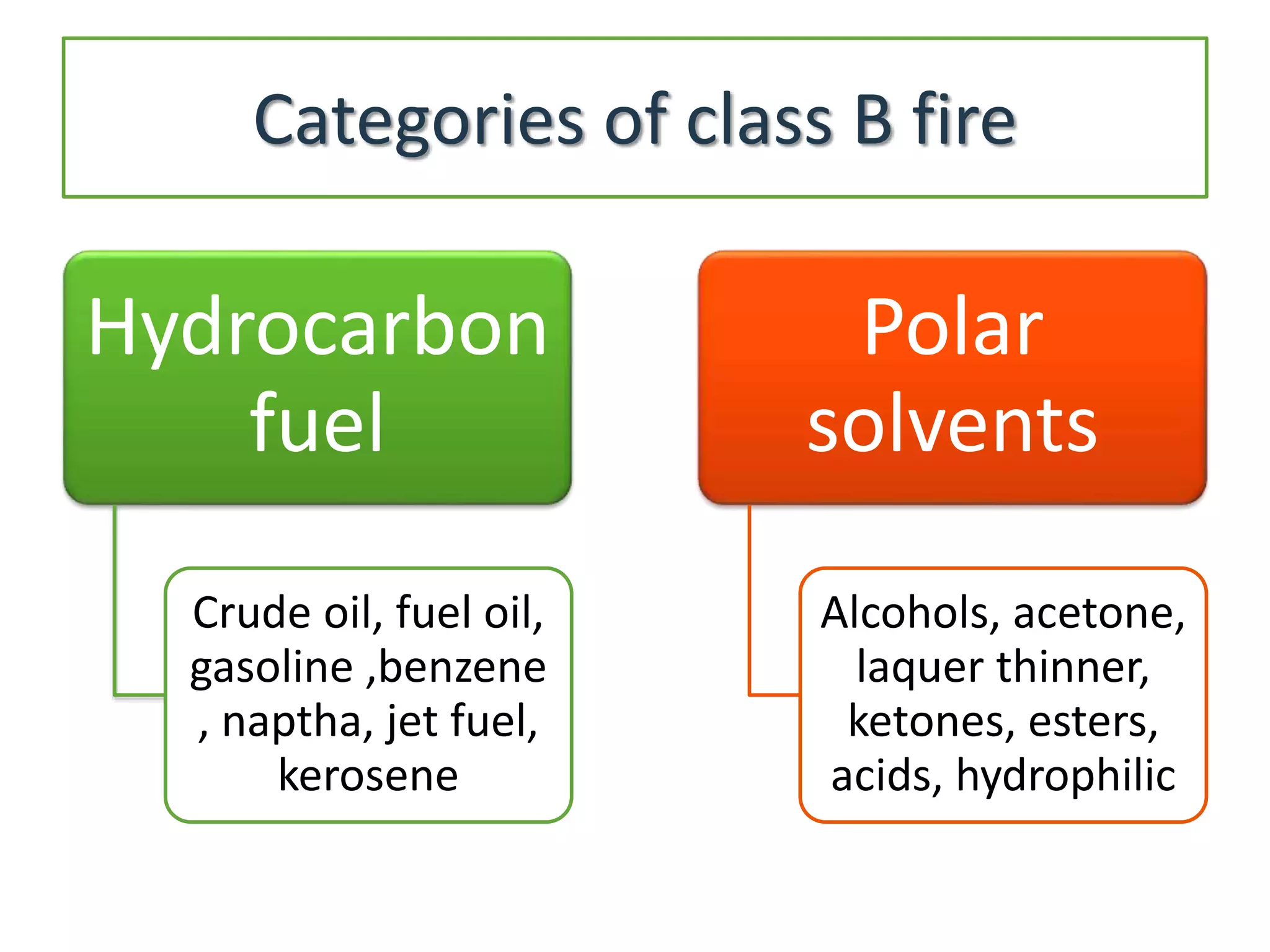
Categories of class B fire
Hydrocarbon
fuel
Crude oil, fuel oil,
gasoline ,benzene
, naptha, jet fuel,
kerosene
Polar
solvents
Alcohols, acetone,
laquer thinner,
ketones, esters,
acids, hydrophilic
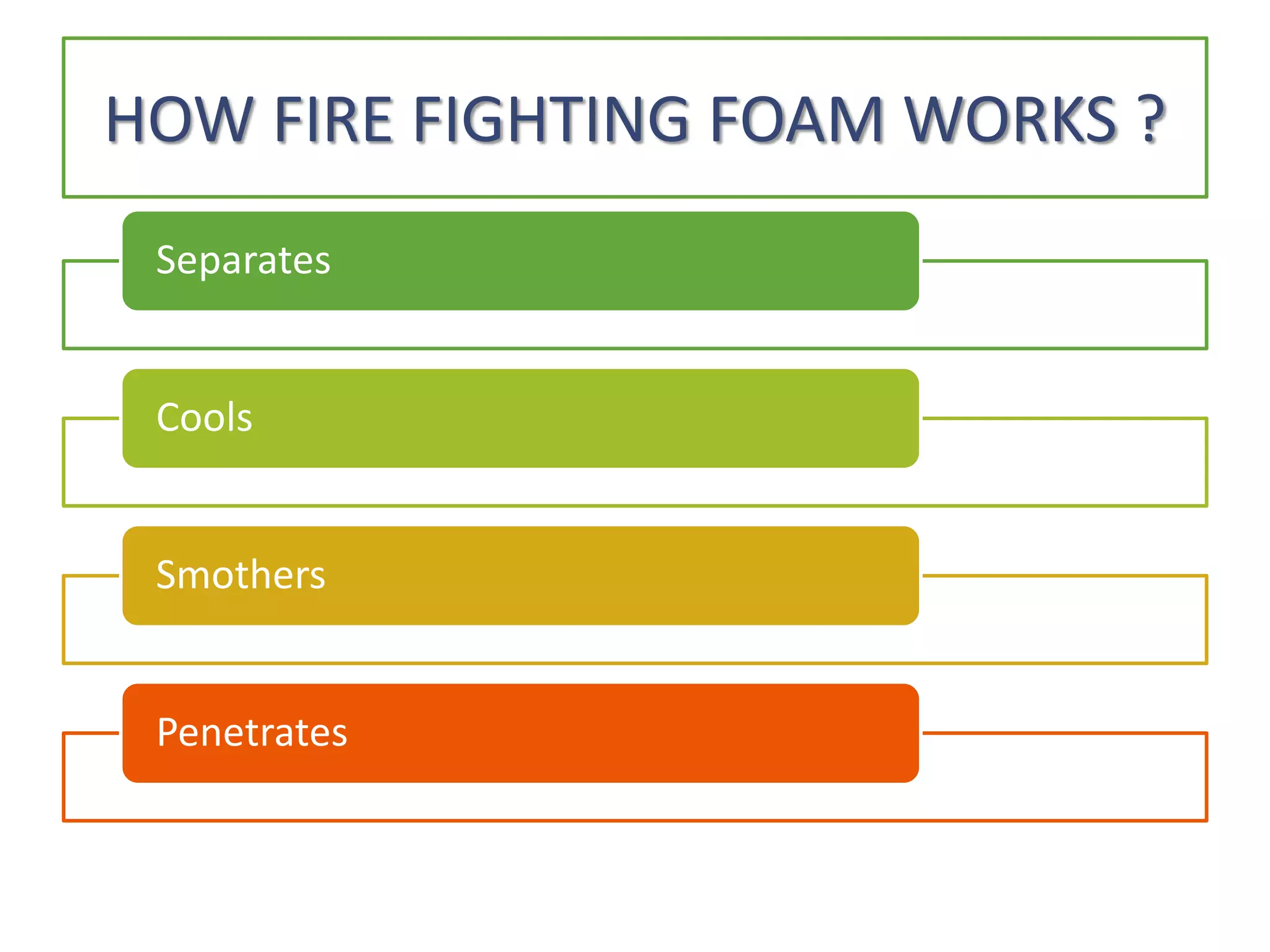
HOW FIRE FIGHTING FOAM WORKS ?
Separates
Cools
Smothers
Penetrates
HOW FOAM WORKS ?
STANDARDS
• Indian Standard
MULTIPURPOSE AQUEOUS FILM
FORMING FOAM LIQUID
CONCENTRATE FOR
EXTINGUISHING HYDROCARBON
AND POLAR SOLVENT FIRES—
SPECIFICATION
• Indian Standard
FOAM CONCENTRATE FOR
PRODUCING MECHANICAL FOAM
FOR FIRE FIGHTING—
SPECIFICATION
• IS 4989(PART 4) : 2003
REAFFIRMED 2008
• IS 4989 : 2006
[Amalgamating IS 4989 (Part 1):
1985,
IS 4989 (Part 2): 1984 and IS 4989
(Part 3): 1987]
REAFFIRMED 2012
STANDARDS
• Standard for low, medium and
high expansion foam
• Specification for low-expansion
foam concentrates for top
application to water-immiscible
liquids
• Specification for medium- and
high-expansion foam
concentrates for top application
to water-immiscible liquids
• Standard for Foam Equipment
and Liquid Concentrates
• NFPA 11:2002
• ISO 7203-1 2011
• ISO 7203-2 2011
• UL 162
TYPES OF FOAM COMPOUNDS
compound
Mechanical
Low
AFFF FFFP AR-AFFF
Medium High
Chemical
Protein Flouro
protein
Synthetic
Mechanical :- Classification based on expansion ratio
Chemical :- Classification based on composition
MECHANICAL FOAM COMPOUND
• Low expansion
• Medium expansion
• High expansion
• Foam expansion ratio may
be upto 50 : 1, but usually
between 5:1 to 15:1.
• Foam expansion ratio vary
from 51:1 to 500:1
• Foam expansion ratio vary
from 501:1 to 1500:1,
usually between 750:1 to
1000:1
TYPES OF FOAM CONCENTRATE
Type 1 : - 99% water 1% concentrate
Type 3 : - 97% water 3% concentrate
Type 6 : - 94% water 6% concentrate
FOAM CONCENTRATE
• Protein foam # (3,6)
• AFFF (Aquaeous film forming
foam) # (1,3,6)
• FFFP (film forming flouro protein)
# (3,6)
• FP (flouro protein) # (3,6)
# (type of concentrate)
• A foam concentrate that has a
hydrolyzed protein base with stabilizing
additives suitable for Class A and B
fires (only non polar solvent).
• A foam concentrate that has a
fluorinated surfactant with stabilizing
additive and synthetic surfactants
foaming agents for Class A and B fires
(only non polar solvent).
• A foam concentrate that is protein
base with one or more fluorinated
surfactant additives for Class A and B
fires
• A foam concentrate that is protein
base with one or more fluorinated
surfactant additives for Class A and B
fires
FOAM CONCENTRATE
• Alcohol resistance aqueous film
forming foam (AR-AFFF) # (3/3 &
3/6)
• Alcohol Resistance Fluoro Protein
Foam (AR-FP) # () 3/3 & 3/6
• Alcohol Resistance Film Forming
Fluoro Protein Foam (AR-FFFP)
# (3/3 & 3/6)
• Synthetic Foam (SF) # (1,3,6)
• A foam concentrate that has a
fluorinated surfactant with stabilizing
additive of Polysaccharide and
synthetic surfactants foaming agents
for Class A and B fires.
• A foam concentrate that has Protein
base with one or more fluorinated
surfactant with stabilizing additive of
Polysaccharide for Class A and B fires
• A foam concentrate that has Protein
base with one or more fluorinated
surfactant with stabilizing additive of
Polysaccharide for Class A and B fires
• A non-fluoro surfactant base
concentrate & non hydrolyzed
protein suitable only for Class A fire.
QUALITATIVE REQUIREMENT
PERFORMANCE REQUIREMENT
fire fighting foam

fire fighting foam

  • 1.
    FIRE FIGHTING FOAM Submittedby :- Arpit Mathur 500034435
  • 2.
    FOAM “A stable aggregationof small bubbles of lower density than oil or water that exhibits a tenacity for covering horizontal surfaces.”
  • 3.
    WHY USE FOAM? Manyagents can extinguish a class “B” fire, however, foam provides: • Suppression of flammable vapors • Prevention of fuel ignition, or re-ignition • Post fire security
  • 4.
    Categories of classB fire Hydrocarbon fuel Crude oil, fuel oil, gasoline ,benzene , naptha, jet fuel, kerosene Polar solvents Alcohols, acetone, laquer thinner, ketones, esters, acids, hydrophilic
  • 5.
    HOW FIRE FIGHTINGFOAM WORKS ? Separates Cools Smothers Penetrates
  • 6.
  • 7.
    STANDARDS • Indian Standard MULTIPURPOSEAQUEOUS FILM FORMING FOAM LIQUID CONCENTRATE FOR EXTINGUISHING HYDROCARBON AND POLAR SOLVENT FIRES— SPECIFICATION • Indian Standard FOAM CONCENTRATE FOR PRODUCING MECHANICAL FOAM FOR FIRE FIGHTING— SPECIFICATION • IS 4989(PART 4) : 2003 REAFFIRMED 2008 • IS 4989 : 2006 [Amalgamating IS 4989 (Part 1): 1985, IS 4989 (Part 2): 1984 and IS 4989 (Part 3): 1987] REAFFIRMED 2012
  • 8.
    STANDARDS • Standard forlow, medium and high expansion foam • Specification for low-expansion foam concentrates for top application to water-immiscible liquids • Specification for medium- and high-expansion foam concentrates for top application to water-immiscible liquids • Standard for Foam Equipment and Liquid Concentrates • NFPA 11:2002 • ISO 7203-1 2011 • ISO 7203-2 2011 • UL 162
  • 9.
    TYPES OF FOAMCOMPOUNDS compound Mechanical Low AFFF FFFP AR-AFFF Medium High Chemical Protein Flouro protein Synthetic Mechanical :- Classification based on expansion ratio Chemical :- Classification based on composition
  • 10.
    MECHANICAL FOAM COMPOUND •Low expansion • Medium expansion • High expansion • Foam expansion ratio may be upto 50 : 1, but usually between 5:1 to 15:1. • Foam expansion ratio vary from 51:1 to 500:1 • Foam expansion ratio vary from 501:1 to 1500:1, usually between 750:1 to 1000:1
  • 11.
    TYPES OF FOAMCONCENTRATE Type 1 : - 99% water 1% concentrate Type 3 : - 97% water 3% concentrate Type 6 : - 94% water 6% concentrate
  • 12.
    FOAM CONCENTRATE • Proteinfoam # (3,6) • AFFF (Aquaeous film forming foam) # (1,3,6) • FFFP (film forming flouro protein) # (3,6) • FP (flouro protein) # (3,6) # (type of concentrate) • A foam concentrate that has a hydrolyzed protein base with stabilizing additives suitable for Class A and B fires (only non polar solvent). • A foam concentrate that has a fluorinated surfactant with stabilizing additive and synthetic surfactants foaming agents for Class A and B fires (only non polar solvent). • A foam concentrate that is protein base with one or more fluorinated surfactant additives for Class A and B fires • A foam concentrate that is protein base with one or more fluorinated surfactant additives for Class A and B fires
  • 13.
    FOAM CONCENTRATE • Alcoholresistance aqueous film forming foam (AR-AFFF) # (3/3 & 3/6) • Alcohol Resistance Fluoro Protein Foam (AR-FP) # () 3/3 & 3/6 • Alcohol Resistance Film Forming Fluoro Protein Foam (AR-FFFP) # (3/3 & 3/6) • Synthetic Foam (SF) # (1,3,6) • A foam concentrate that has a fluorinated surfactant with stabilizing additive of Polysaccharide and synthetic surfactants foaming agents for Class A and B fires. • A foam concentrate that has Protein base with one or more fluorinated surfactant with stabilizing additive of Polysaccharide for Class A and B fires • A foam concentrate that has Protein base with one or more fluorinated surfactant with stabilizing additive of Polysaccharide for Class A and B fires • A non-fluoro surfactant base concentrate & non hydrolyzed protein suitable only for Class A fire.
  • 14.
  • 15.