Preventing Kitchen Accidents
Accidents Happen!
Some kitchen accidents
are due to
ignorance…
But most are due to
human carelessness!
The Kitchen
• - is a room or part of a room used for cooking and food
preparation.
• -Cooking is fun, but kitchen safety is a priority. Think
about it: Knives! Fire! Bacteria! Observing basic rules of
kitchen safety is a good habit to develop. Always pay
attention to what you’re doing in the kitchen because one
slip can cause serious injury or accidents.
• -The kitchen is a dangerous place. Not only are you
working with hot surfaces, and boiling liquid, but you're
handling sharp knives and utensils that can injure you in
a second. So let's learn how to stay safe in the kitchen.
The Basic Rule in Kitchen Safety
• Preventing Slips & Falls
•
• Wipe up spills immediately
• Ice machines can also create fall hazards
because of the large volume of water
involved.
• Employees should never carry large loads
that obstruct their vision.
• Equipment & Attire
• Long sleeves to reduce burns.
• Skid-resistant shoes to reduce falls and
injuries from hot liquids
• Never cook while wearing dangling jewelry.
The most common kitchen
accidents:
• Chemical poisonings
• Cuts
• Burns
• Fires
• Falls
Electrical shocks, choking, and other types
of injury can also occur.
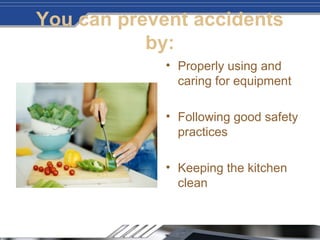
You can prevent accidents
by:
• Properly using and
caring for equipment
• Following good safety
practices
• Keeping the kitchen
clean
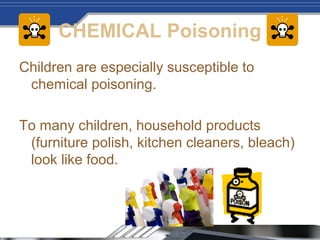
CHEMICAL Poisoning
Children are especially susceptible to
chemical poisoning.
To many children, household products
(furniture polish, kitchen cleaners, bleach)
look like food.
Prevention & Treatment of
Chemical Poisonings
PREVENT:
• Keep all products in a
safe location
– Not under the sink!
• Keep in original, labeled
containers
• Take it with you if
interrupted
• Don’t rely on safety caps!
• Wash all produce
thoroughly (pesticides)
TREAT:
• Call the nearest poison
control center
immediately
• Have the container on
hand
• If the label lists
instructions for first aid,
follow them!
Preventing Cuts
• Keep knives sharp- dull blades can slip
• Move the blade away from the body
• Don’t try to catch a falling knife!
• Only use knives to CUT
• Keep fingers away from beaters, blenders, food
processors, garbage disposals
– Disconnect and use a non-metal utensil
• Never pick up broken glass with your bare hands
To treat a cut:
• Cover the wound with a sterile cloth
• Apply firm pressure to the wound
• Wash minor cuts with soap & water, apply
antiseptic, and bandage
• Severe wounds deserve a trip to the ER or
doctor! (continue to apply pressure)
Preventing Burns & Fires
What causes most kitchen burns?
• Scalding liquids
• Spattering grease
• Hot cooking utensils
Most kitchen fires are caused by:
• Malfunctioning electric appliances
• Carelessness around hot surfaces & open
flames
• Use pot holders
• Turn all pan handles INWARD to prevent
tipping
• Open pan lids AWAY from you to prevent
steam burns
• Do not let children play near the range or cook
without help
• Disconnect small appliances when not in use
• Use caution when heating liquids in the
microwave
• Wear tight-fitting clothing and roll up long
sleeves
• Do not hang flammable materials near the range
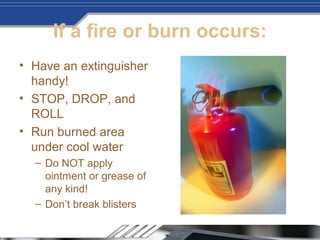
If a fire or burn occurs:
• Have an extinguisher
handy!
• STOP, DROP, and
ROLL
• Run burned area
under cool water
– Do NOT apply
ointment or grease of
any kind!
– Don’t break blisters
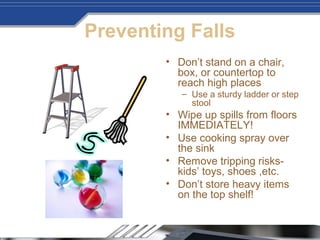
Preventing Falls
• Don’t stand on a chair,
box, or countertop to
reach high places
– Use a sturdy ladder or step
stool
• Wipe up spills from floors
IMMEDIATELY!
• Use cooking spray over
the sink
• Remove tripping risks-
kids’ toys, shoes ,etc.
• Don’t store heavy items
on the top shelf!
Preventing Electric Shock
• Never stand on a wet floor or work on a wet
counter
• Don’t touch electric items with wet hands
• Don’t run cords under rugs/carpet
• Don’t overload outlets or use extension cords if
possible
• Hold onto the PLUG, not the CORD, when
disconnecting
• Replace all cords/plugs when they become
worn
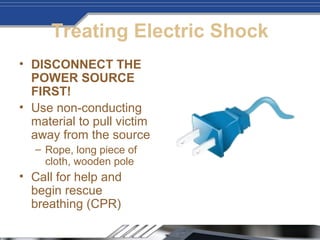
Treating Electric Shock
• DISCONNECT THE
POWER SOURCE
FIRST!
• Use non-conducting
material to pull victim
away from the source
– Rope, long piece of
cloth, wooden pole
• Call for help and
begin rescue
breathing (CPR)
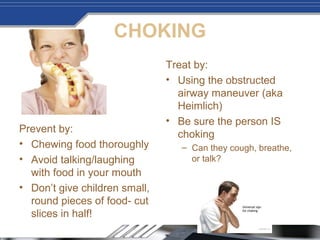
CHOKING
Prevent by:
• Chewing food thoroughly
• Avoid talking/laughing
with food in your mouth
• Don’t give children small,
round pieces of food- cut
slices in half!
Treat by:
• Using the obstructed
airway maneuver (aka
Heimlich)
• Be sure the person IS
choking
– Can they cough, breathe,
or talk?

Preventing kitchen accidents1

  • 1.
  • 2.
    Accidents Happen! Some kitchenaccidents are due to ignorance… But most are due to human carelessness!
  • 3.
    The Kitchen • -is a room or part of a room used for cooking and food preparation. • -Cooking is fun, but kitchen safety is a priority. Think about it: Knives! Fire! Bacteria! Observing basic rules of kitchen safety is a good habit to develop. Always pay attention to what you’re doing in the kitchen because one slip can cause serious injury or accidents. • -The kitchen is a dangerous place. Not only are you working with hot surfaces, and boiling liquid, but you're handling sharp knives and utensils that can injure you in a second. So let's learn how to stay safe in the kitchen.
  • 4.
    The Basic Rulein Kitchen Safety • Preventing Slips & Falls • • Wipe up spills immediately • Ice machines can also create fall hazards because of the large volume of water involved. • Employees should never carry large loads that obstruct their vision.
  • 5.
    • Equipment &Attire • Long sleeves to reduce burns. • Skid-resistant shoes to reduce falls and injuries from hot liquids • Never cook while wearing dangling jewelry.
  • 6.
    The most commonkitchen accidents: • Chemical poisonings • Cuts • Burns • Fires • Falls Electrical shocks, choking, and other types of injury can also occur.
  • 7.
    You can preventaccidents by: • Properly using and caring for equipment • Following good safety practices • Keeping the kitchen clean
  • 8.
    CHEMICAL Poisoning Children areespecially susceptible to chemical poisoning. To many children, household products (furniture polish, kitchen cleaners, bleach) look like food.
  • 9.
    Prevention & Treatmentof Chemical Poisonings PREVENT: • Keep all products in a safe location – Not under the sink! • Keep in original, labeled containers • Take it with you if interrupted • Don’t rely on safety caps! • Wash all produce thoroughly (pesticides) TREAT: • Call the nearest poison control center immediately • Have the container on hand • If the label lists instructions for first aid, follow them!
  • 10.
    Preventing Cuts • Keepknives sharp- dull blades can slip • Move the blade away from the body • Don’t try to catch a falling knife! • Only use knives to CUT • Keep fingers away from beaters, blenders, food processors, garbage disposals – Disconnect and use a non-metal utensil • Never pick up broken glass with your bare hands
  • 11.
    To treat acut: • Cover the wound with a sterile cloth • Apply firm pressure to the wound • Wash minor cuts with soap & water, apply antiseptic, and bandage • Severe wounds deserve a trip to the ER or doctor! (continue to apply pressure)
  • 12.
    Preventing Burns &Fires What causes most kitchen burns? • Scalding liquids • Spattering grease • Hot cooking utensils Most kitchen fires are caused by: • Malfunctioning electric appliances • Carelessness around hot surfaces & open flames
  • 13.
    • Use potholders • Turn all pan handles INWARD to prevent tipping • Open pan lids AWAY from you to prevent steam burns • Do not let children play near the range or cook without help • Disconnect small appliances when not in use • Use caution when heating liquids in the microwave • Wear tight-fitting clothing and roll up long sleeves • Do not hang flammable materials near the range
  • 14.
    If a fireor burn occurs: • Have an extinguisher handy! • STOP, DROP, and ROLL • Run burned area under cool water – Do NOT apply ointment or grease of any kind! – Don’t break blisters
  • 15.
    Preventing Falls • Don’tstand on a chair, box, or countertop to reach high places – Use a sturdy ladder or step stool • Wipe up spills from floors IMMEDIATELY! • Use cooking spray over the sink • Remove tripping risks- kids’ toys, shoes ,etc. • Don’t store heavy items on the top shelf!
  • 16.
    Preventing Electric Shock •Never stand on a wet floor or work on a wet counter • Don’t touch electric items with wet hands • Don’t run cords under rugs/carpet • Don’t overload outlets or use extension cords if possible • Hold onto the PLUG, not the CORD, when disconnecting • Replace all cords/plugs when they become worn
  • 17.
    Treating Electric Shock •DISCONNECT THE POWER SOURCE FIRST! • Use non-conducting material to pull victim away from the source – Rope, long piece of cloth, wooden pole • Call for help and begin rescue breathing (CPR)
  • 18.
    CHOKING Prevent by: • Chewingfood thoroughly • Avoid talking/laughing with food in your mouth • Don’t give children small, round pieces of food- cut slices in half! Treat by: • Using the obstructed airway maneuver (aka Heimlich) • Be sure the person IS choking – Can they cough, breathe, or talk?