Different finishes on
different material
Submitted by –
Darshika gupta
Submitted to –
Mr. sandeep sachan
What is a finish?????
A finish is in simple terms a coating, layer or skin applied to the material.
The finish will be applied for one or more of the following reasons: .
-To protect the material from moisture, wear, abrasion, fungus, mould or
insect attack.
-
- To change the materials appearance, its colour or texture.
- To enhance the materials durability, surface hardness or other properties.
Different finishes for wood
Finishes: provides a solution that is used
to add beauty and gives protection to the
wood.
The finishing process depends partly on
- type of wood.
- The appearance we want.
Different types of finishes are:
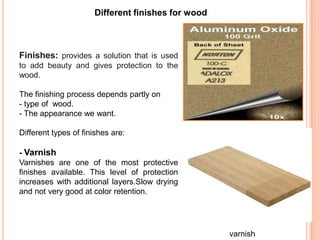
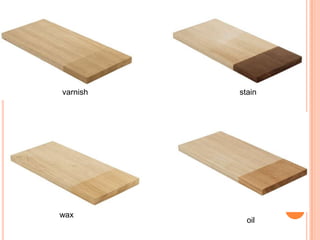
- Varnish
Varnishes are one of the most protective
finishes available. This level of protection
increases with additional layers.Slow drying
and not very good at color retention.
varnish
- Lacquer
Dries quickly.
-Penetrating Oil
Applied to give protection and adds
beauty that penetrates the wood
surface.
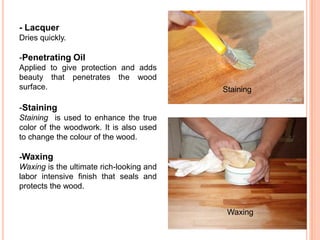
-Staining
Staining is used to enhance the true
color of the woodwork. It is also used
to change the colour of the wood.
-Waxing
Waxing is the ultimate rich-looking and
labor intensive finish that seals and
protects the wood.
Staining
Waxing
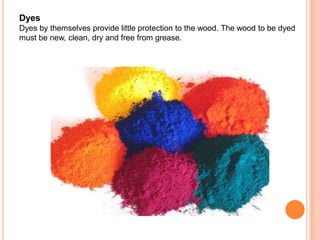
Dyes
Dyes by themselves provide little protection to the wood. The wood to be dyed
must be new, clean, dry and free from grease.
oil
wax
varnish stain
Finishes for metals
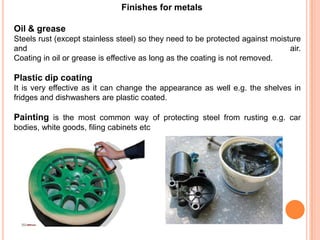
Oil & grease
Steels rust (except stainless steel) so they need to be protected against moisture
and air.
Coating in oil or grease is effective as long as the coating is not removed.
Plastic dip coating
It is very effective as it can change the appearance as well e.g. the shelves in
fridges and dishwashers are plastic coated.
Painting is the most common way of protecting steel from rusting e.g. car
bodies, white goods, filing cabinets etc
Lacquer – this a clear finish like a varnish. The surface is thoroughly polished or
patterned, degreased and then lacquered.
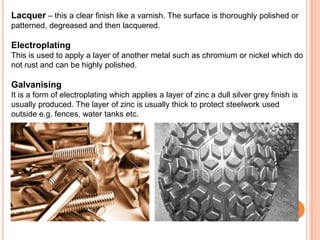
Electroplating
This is used to apply a layer of another metal such as chromium or nickel which do
not rust and can be highly polished.
Galvanising
It is a form of electroplating which applies a layer of zinc a dull silver grey finish is
usually produced. The layer of zinc is usually thick to protect steelwork used
outside e.g. fences, water tanks etc.
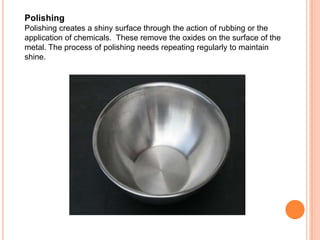
Polishing
Polishing creates a shiny surface through the action of rubbing or the
application of chemicals. These remove the oxides on the surface of the
metal. The process of polishing needs repeating regularly to maintain
shine.
WALL FINISHES
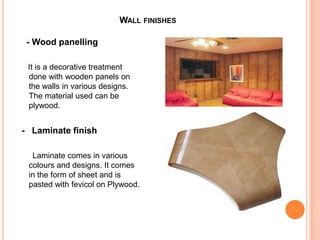
- Wood panelling
It is a decorative treatment
done with wooden panels on
the walls in various designs.
The material used can be
plywood.
- Laminate finish
Laminate comes in various
colours and designs. It comes
in the form of sheet and is
pasted with fevicol on Plywood.
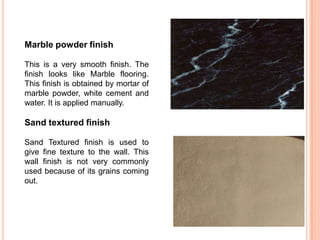
Marble powder finish
This is a very smooth finish. The
finish looks like Marble flooring.
This finish is obtained by mortar of
marble powder, white cement and
water. It is applied manually.
Sand textured finish
Sand Textured finish is used to
give fine texture to the wall. This
wall finish is not very commonly
used because of its grains coming
out.
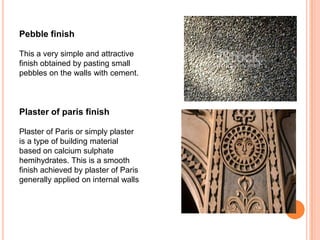
Pebble finish
This a very simple and attractive
finish obtained by pasting small
pebbles on the walls with cement.
Plaster of paris finish
Plaster of Paris or simply plaster
is a type of building material
based on calcium sulphate
hemihydrates. This is a smooth
finish achieved by plaster of Paris
generally applied on internal walls
Thank you

finishes on materials

  • 1.
    Different finishes on differentmaterial Submitted by – Darshika gupta Submitted to – Mr. sandeep sachan
  • 2.
    What is afinish????? A finish is in simple terms a coating, layer or skin applied to the material. The finish will be applied for one or more of the following reasons: . -To protect the material from moisture, wear, abrasion, fungus, mould or insect attack. - - To change the materials appearance, its colour or texture. - To enhance the materials durability, surface hardness or other properties.
  • 3.
    Different finishes forwood Finishes: provides a solution that is used to add beauty and gives protection to the wood. The finishing process depends partly on - type of wood. - The appearance we want. Different types of finishes are: - Varnish Varnishes are one of the most protective finishes available. This level of protection increases with additional layers.Slow drying and not very good at color retention. varnish
  • 4.
    - Lacquer Dries quickly. -PenetratingOil Applied to give protection and adds beauty that penetrates the wood surface. -Staining Staining is used to enhance the true color of the woodwork. It is also used to change the colour of the wood. -Waxing Waxing is the ultimate rich-looking and labor intensive finish that seals and protects the wood. Staining Waxing
  • 5.
    Dyes Dyes by themselvesprovide little protection to the wood. The wood to be dyed must be new, clean, dry and free from grease.
  • 6.
  • 7.
    Finishes for metals Oil& grease Steels rust (except stainless steel) so they need to be protected against moisture and air. Coating in oil or grease is effective as long as the coating is not removed. Plastic dip coating It is very effective as it can change the appearance as well e.g. the shelves in fridges and dishwashers are plastic coated. Painting is the most common way of protecting steel from rusting e.g. car bodies, white goods, filing cabinets etc
  • 8.
    Lacquer – thisa clear finish like a varnish. The surface is thoroughly polished or patterned, degreased and then lacquered. Electroplating This is used to apply a layer of another metal such as chromium or nickel which do not rust and can be highly polished. Galvanising It is a form of electroplating which applies a layer of zinc a dull silver grey finish is usually produced. The layer of zinc is usually thick to protect steelwork used outside e.g. fences, water tanks etc.
  • 9.
    Polishing Polishing creates ashiny surface through the action of rubbing or the application of chemicals. These remove the oxides on the surface of the metal. The process of polishing needs repeating regularly to maintain shine.
  • 10.
    WALL FINISHES - Woodpanelling It is a decorative treatment done with wooden panels on the walls in various designs. The material used can be plywood. - Laminate finish Laminate comes in various colours and designs. It comes in the form of sheet and is pasted with fevicol on Plywood.
  • 11.
    Marble powder finish Thisis a very smooth finish. The finish looks like Marble flooring. This finish is obtained by mortar of marble powder, white cement and water. It is applied manually. Sand textured finish Sand Textured finish is used to give fine texture to the wall. This wall finish is not very commonly used because of its grains coming out.
  • 12.
    Pebble finish This avery simple and attractive finish obtained by pasting small pebbles on the walls with cement. Plaster of paris finish Plaster of Paris or simply plaster is a type of building material based on calcium sulphate hemihydrates. This is a smooth finish achieved by plaster of Paris generally applied on internal walls
  • 13.