

Presented By
Content
Introduction (Fibers)
• Fibers are thread like structures from fabric and other materials which are easily
identifiable under a microscope or smallest unit of a textile material that has a
length many times greater than its diameter.
• Its source can be determined by comparing it with fiber of a controlled sample.
• Just as hair left at a crime scene can serve as identification, the same logic can
reasonably be extended to the fibers that compose our fabrics and garments.
Fig.1 Photomicrograph of cotton
Fiber (450×)
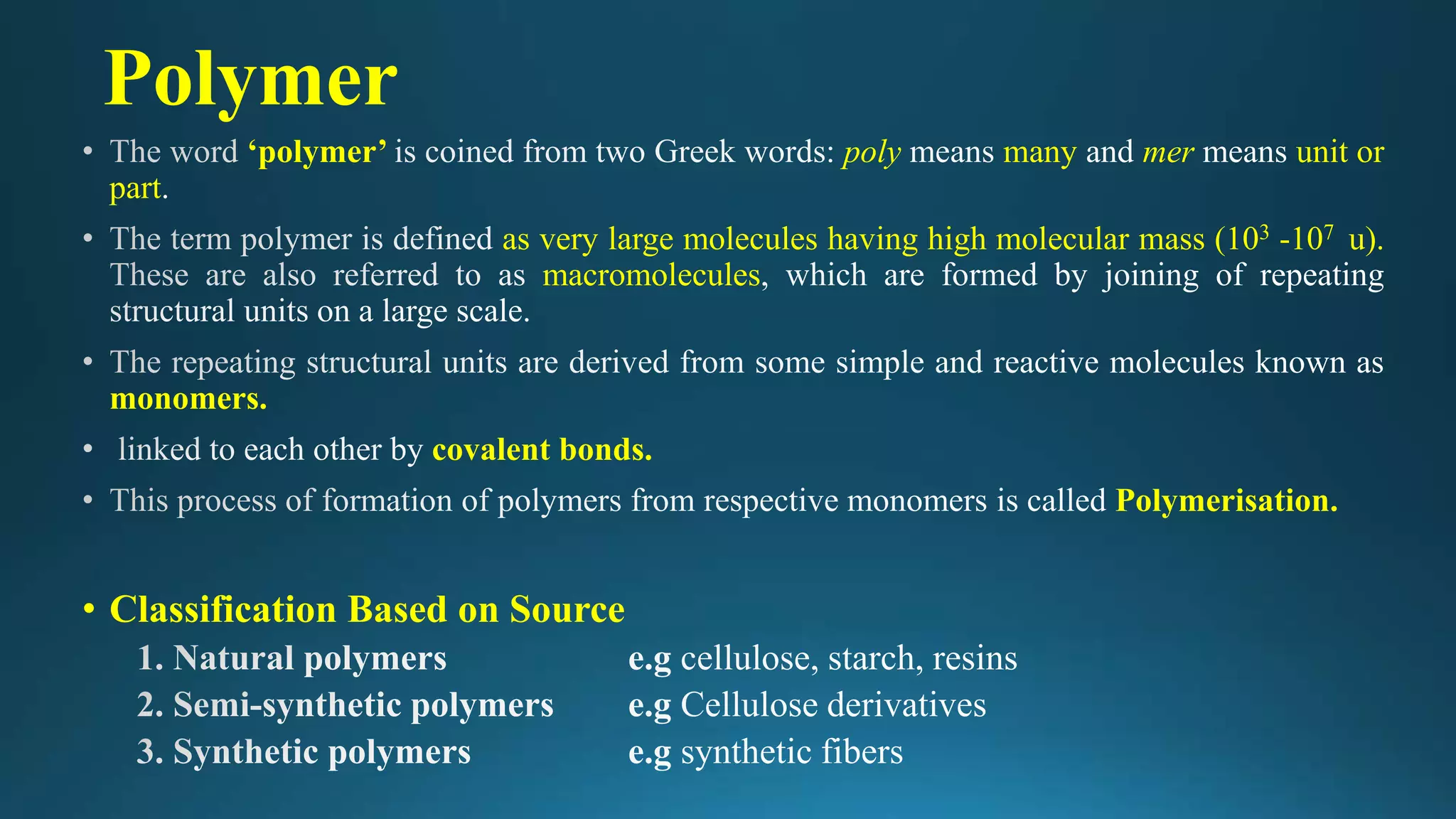
Polymer
‘polymer’ poly many mer unit or
part
as very large molecules having high molecular mass (103 -107 u).
macromolecules
monomers.
covalent bonds.
Polymerisation.
• Classification Based on Source
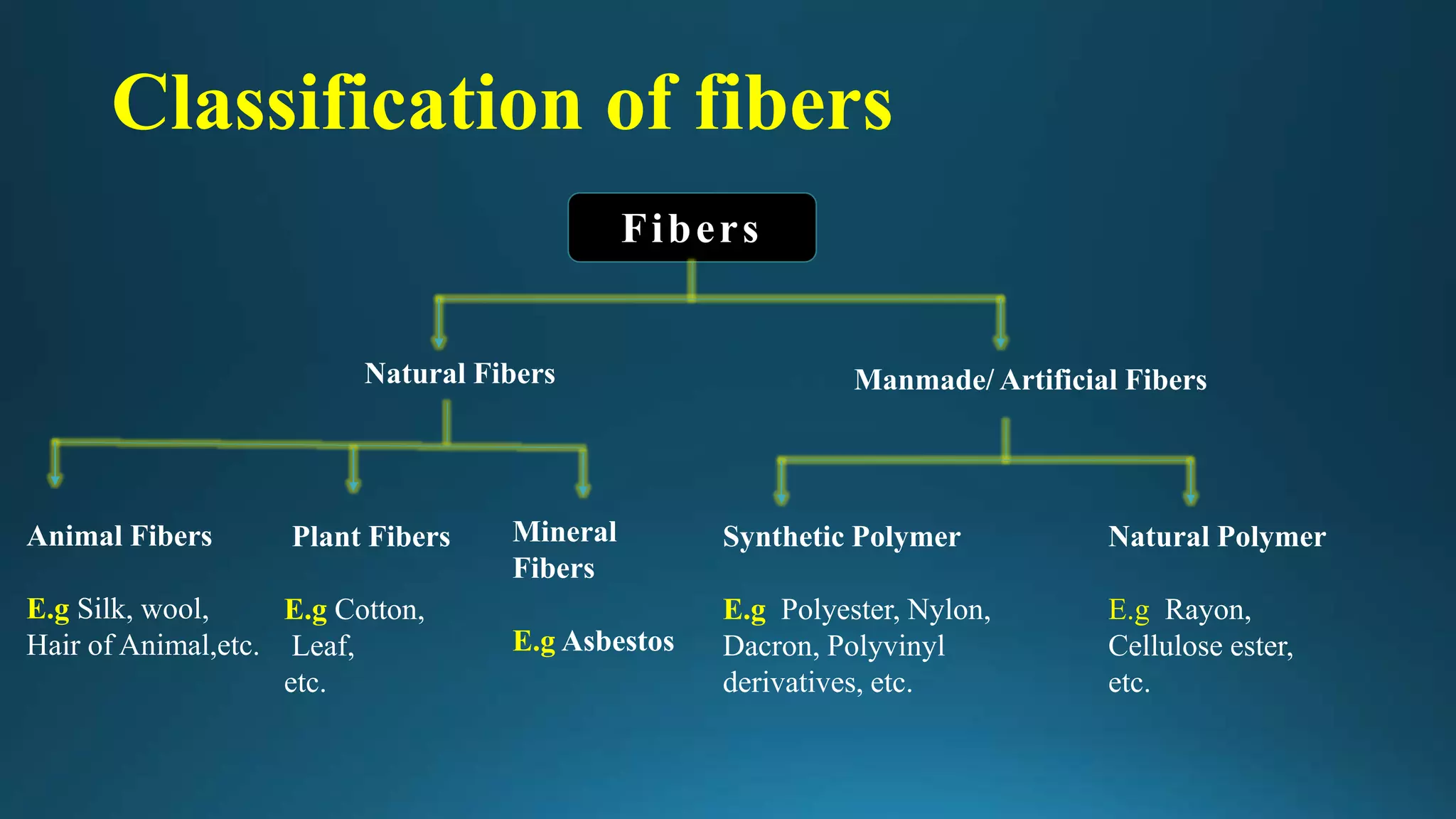
Classification of fibers
Fibers
Natural Fibers Manmade/ Artificial Fibers
Animal Fibers
E.g Silk, wool,
Hair of Animal,etc.
Plant Fibers
E.g Cotton,
Leaf,
etc.
Synthetic Polymer
E.g Polyester, Nylon,
Dacron, Polyvinyl
derivatives, etc.
Natural Polymer
E.g Rayon,
Cellulose ester,
etc.
Mineral
Fibers
E.g Asbestos
Natural Fibers
two categories:
Fibers from plant source
Natural Fibers
Fibers from Animal source
Wool FiberCotton Fiber
Wood FiberCotton Dacron Fiber
Nylon Fiber Polyester Fiber
Nylon
Fig.2 Natural Fibers Fig.3 Manmade Fibers
Manmade/ Artificial Fibers
More than 50 percent
Significance of fibers as trace evidence
easily transferred
Collection and Packaging
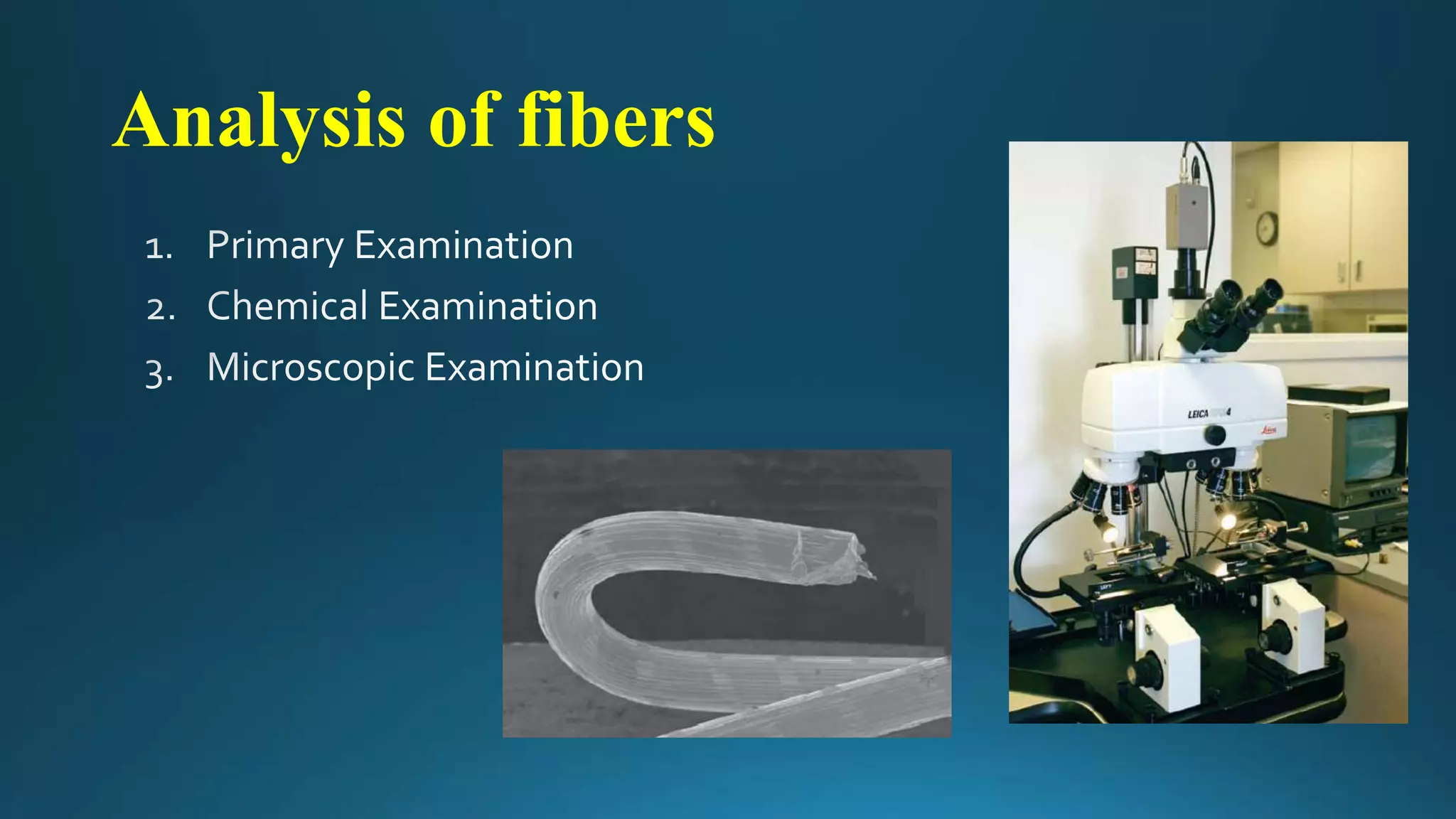
Analysis of fibers
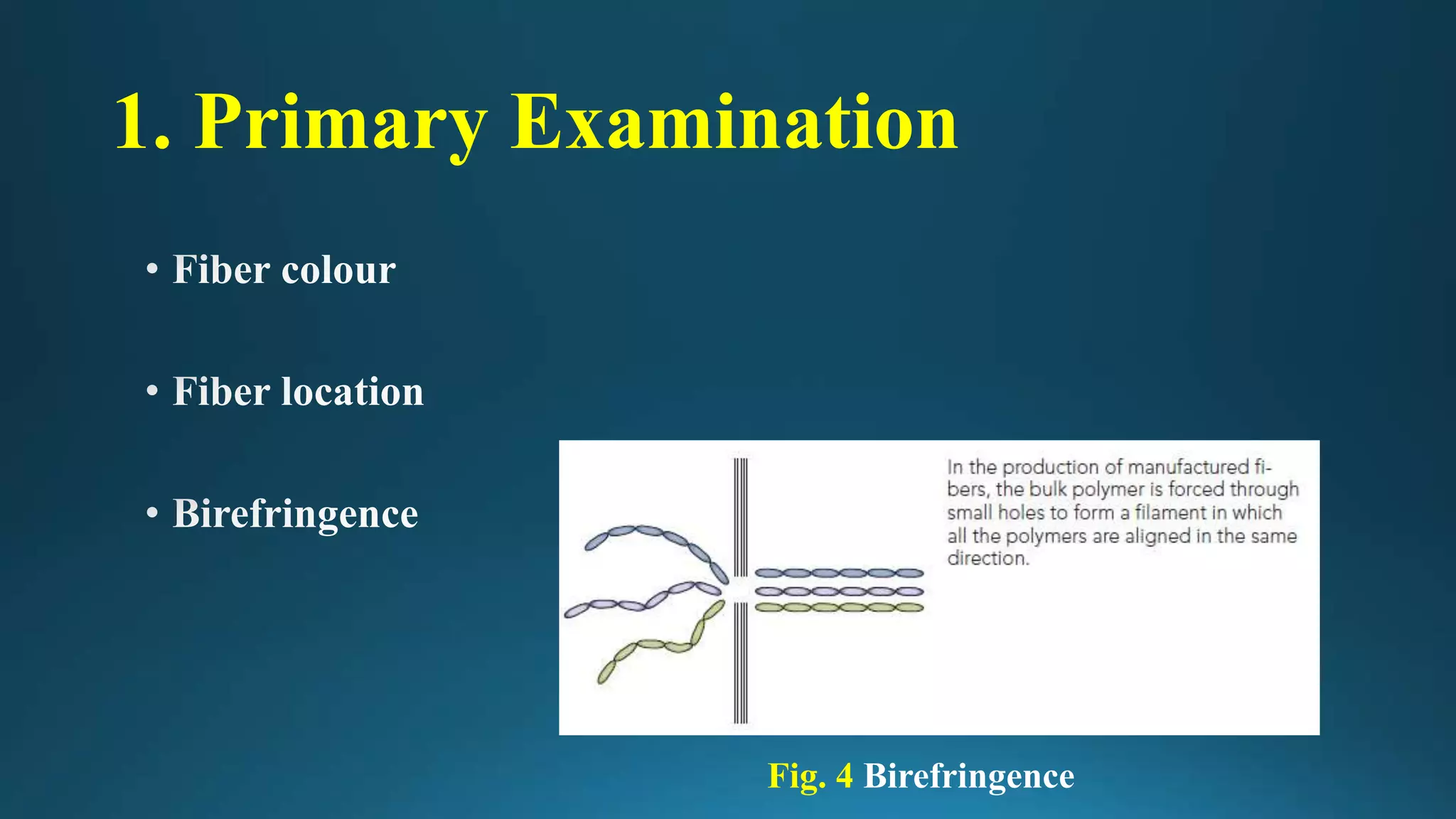
1. Primary Examination
Fig. 4 Birefringence
2. Chemical Examination
3. Microscopic Examination
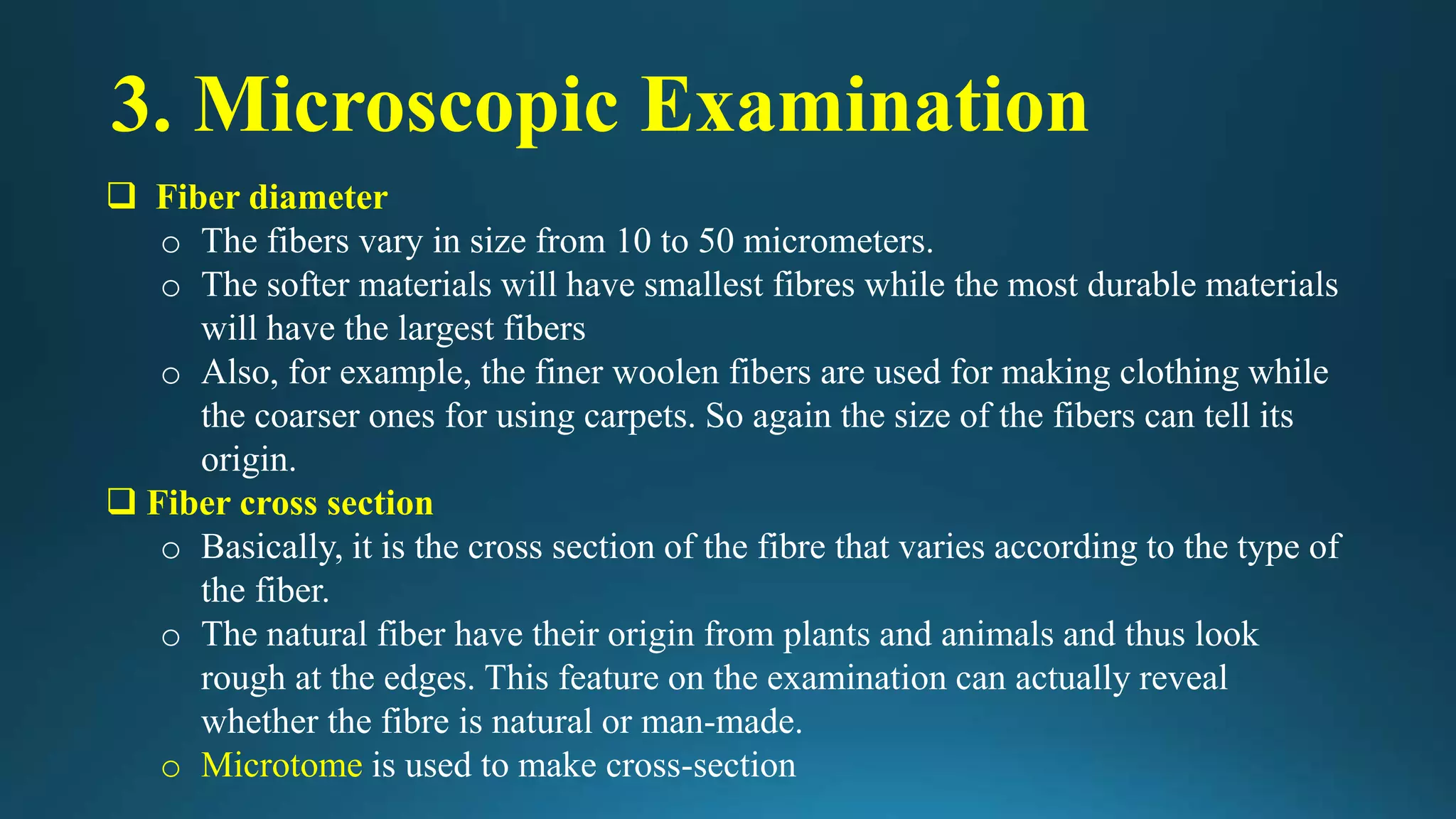
 Fiber diameter
o The fibers vary in size from 10 to 50 micrometers.
o The softer materials will have smallest fibres while the most durable materials
will have the largest fibers
o Also, for example, the finer woolen fibers are used for making clothing while
the coarser ones for using carpets. So again the size of the fibers can tell its
origin.
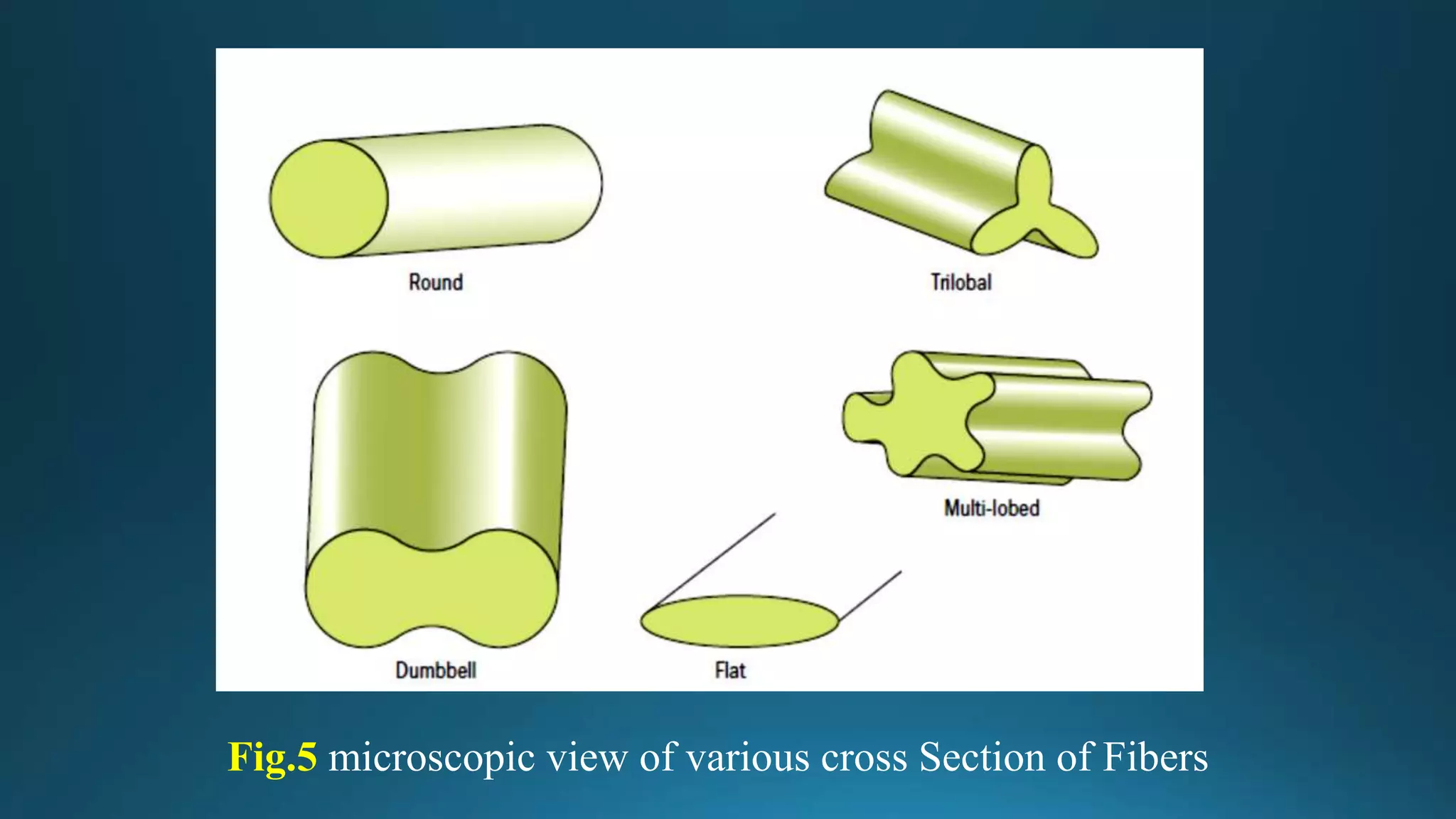
 Fiber cross section
o Basically, it is the cross section of the fibre that varies according to the type of
the fiber.
o The natural fiber have their origin from plants and animals and thus look
rough at the edges. This feature on the examination can actually reveal
whether the fibre is natural or man-made.
o Microtome is used to make cross-section
Fig.5 microscopic view of various cross Section of Fibers
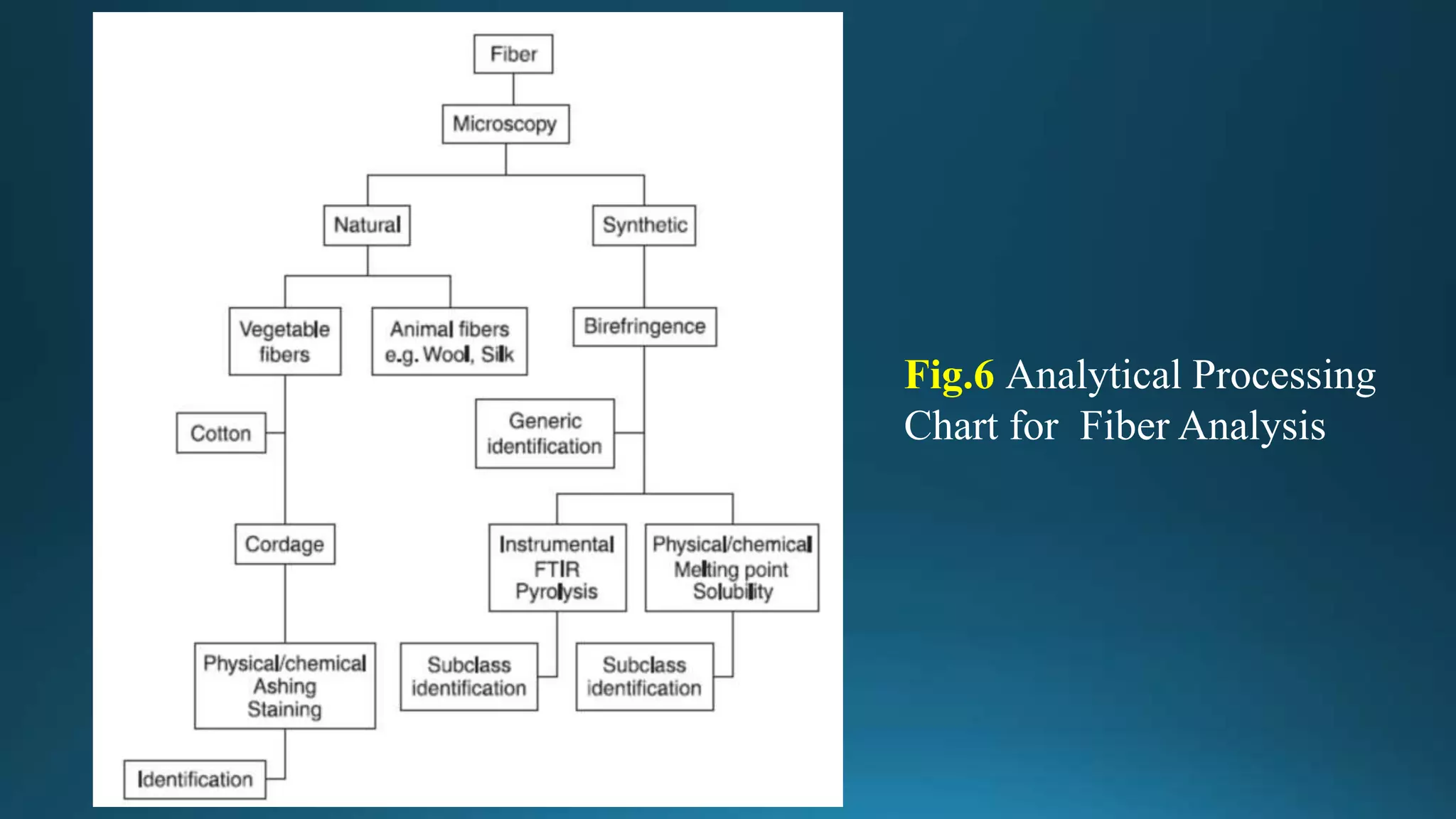
Fig.6 Analytical Processing
Chart for Fiber Analysis
3. Microscopic Examination
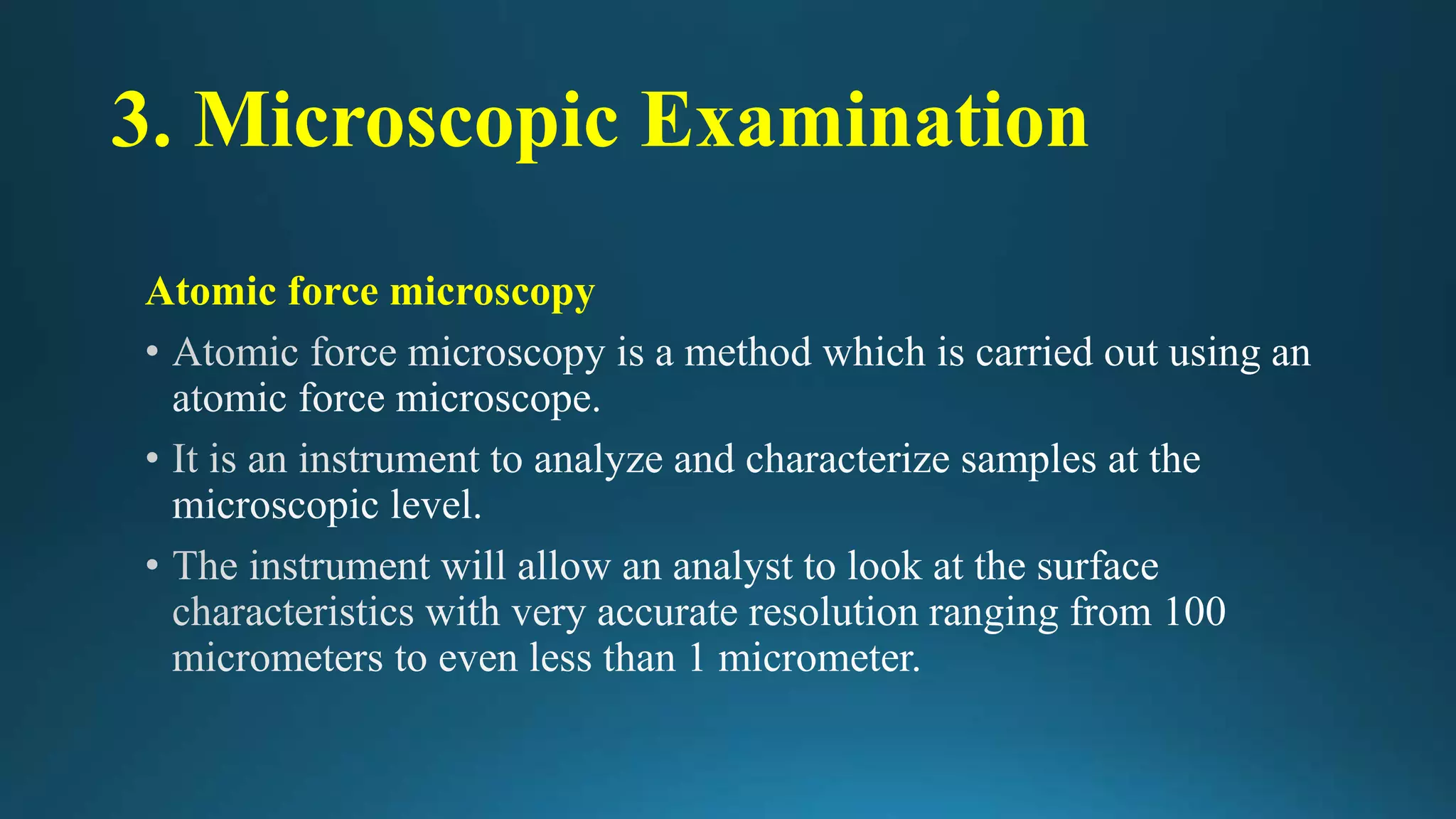
Atomic force microscopy
3. Microscopic Examination
Other Methods Used For Examination:
• Raman Spectroscopy
• IR Spectroscopy
• UV-Visible Spectroscopy
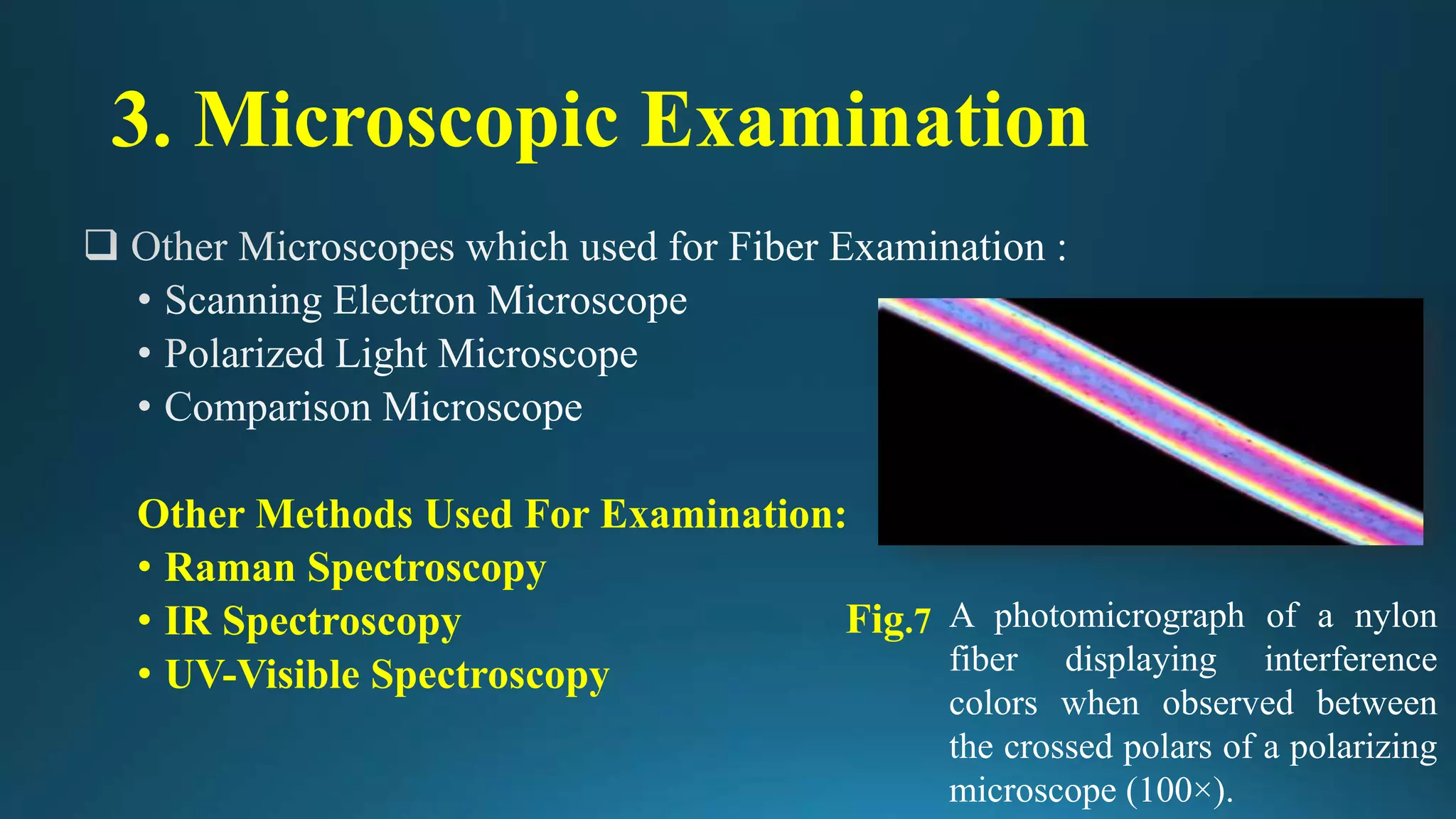
A photomicrograph of a nylon
fiber displaying interference
colors when observed between
the crossed polars of a polarizing
microscope (100×).
Fig.7
Any Questions ?
• Reference :
Thank You !!!

Forensic Fiber Analysis

  • 1.
  • 2.
  • 3.
    Introduction (Fibers) • Fibersare thread like structures from fabric and other materials which are easily identifiable under a microscope or smallest unit of a textile material that has a length many times greater than its diameter. • Its source can be determined by comparing it with fiber of a controlled sample. • Just as hair left at a crime scene can serve as identification, the same logic can reasonably be extended to the fibers that compose our fabrics and garments. Fig.1 Photomicrograph of cotton Fiber (450×)
  • 4.
    Polymer ‘polymer’ poly manymer unit or part as very large molecules having high molecular mass (103 -107 u). macromolecules monomers. covalent bonds. Polymerisation. • Classification Based on Source
  • 5.
    Classification of fibers Fibers NaturalFibers Manmade/ Artificial Fibers Animal Fibers E.g Silk, wool, Hair of Animal,etc. Plant Fibers E.g Cotton, Leaf, etc. Synthetic Polymer E.g Polyester, Nylon, Dacron, Polyvinyl derivatives, etc. Natural Polymer E.g Rayon, Cellulose ester, etc. Mineral Fibers E.g Asbestos
  • 6.
  • 7.
  • 8.
    Wool FiberCotton Fiber WoodFiberCotton Dacron Fiber Nylon Fiber Polyester Fiber Nylon Fig.2 Natural Fibers Fig.3 Manmade Fibers
  • 9.
  • 11.
    Significance of fibersas trace evidence easily transferred
  • 12.
  • 13.
  • 14.
  • 15.
  • 16.
    3. Microscopic Examination Fiber diameter o The fibers vary in size from 10 to 50 micrometers. o The softer materials will have smallest fibres while the most durable materials will have the largest fibers o Also, for example, the finer woolen fibers are used for making clothing while the coarser ones for using carpets. So again the size of the fibers can tell its origin.  Fiber cross section o Basically, it is the cross section of the fibre that varies according to the type of the fiber. o The natural fiber have their origin from plants and animals and thus look rough at the edges. This feature on the examination can actually reveal whether the fibre is natural or man-made. o Microtome is used to make cross-section
  • 17.
    Fig.5 microscopic viewof various cross Section of Fibers
  • 18.
  • 19.
  • 20.
    3. Microscopic Examination OtherMethods Used For Examination: • Raman Spectroscopy • IR Spectroscopy • UV-Visible Spectroscopy A photomicrograph of a nylon fiber displaying interference colors when observed between the crossed polars of a polarizing microscope (100×). Fig.7
  • 21.
  • 22.