FINANCING DECISIONS (CAPITAL
STRUCTURE)
Vedapradha.r
CAPITAL
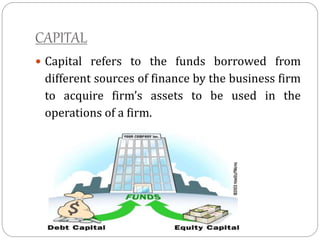
 Capital refers to the funds borrowed from
different sources of finance by the business firm
to acquire firm’s assets to be used in the
operations of a firm.
CAPITAL STRUCTURE
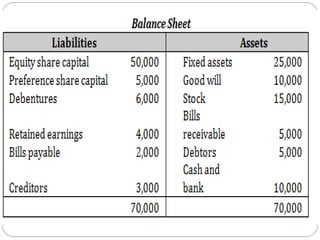
 Capital structure of a company refers to the
composition or components of its capitalisation
and it includes all long – term capital resources
(Loans, reserves, shares and bonds). It is made
up of debt and equity securities and refers to
permanent financing of a firm.
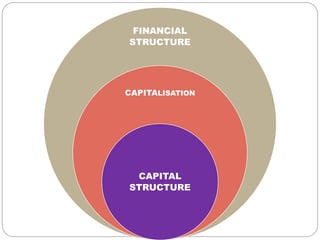
RELATIONSHIP BETWEEN CAPITAL
STRUCTURE, CAPITALISATION &
FINANCIAL STRUCTURE
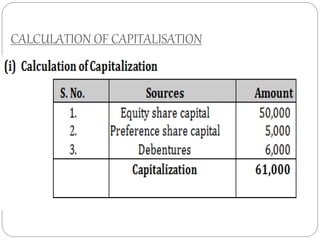
CALCULATION OF CAPITALISATION
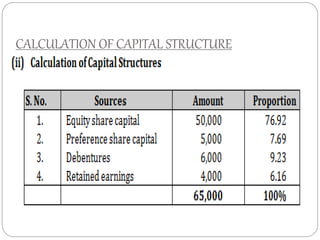
CALCULATION OF CAPITAL STRUCTURE
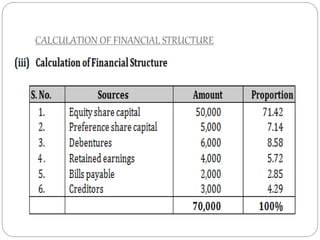
CALCULATION OF FINANCIAL STRUCTURE
FINANCIAL
STRUCTURE
CAPITALISATION
CAPITAL
STRUCTURE
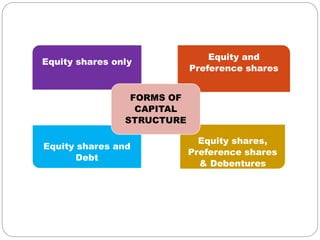
FORMS/TYPES OF CAPITAL STRUCTURE
Equity shares only
Equity and
Preference shares
Equity shares and
Debt
Equity shares,
Preference shares
& Debentures
FORMS OF
CAPITAL
STRUCTURE
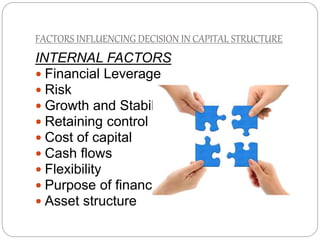
FACTORS INFLUENCING DECISION IN CAPITAL STRUCTURE
INTERNAL FACTORS
 Financial Leverage
 Risk
 Growth and Stability
 Retaining control
 Cost of capital
 Cash flows
 Flexibility
 Purpose of finance
 Asset structure
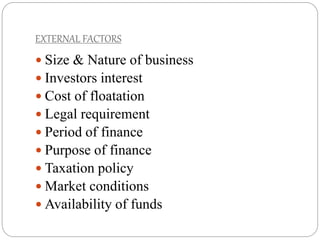
EXTERNAL FACTORS
 Size & Nature of business
 Investors interest
 Cost of floatation
 Legal requirement
 Period of finance
 Purpose of finance
 Taxation policy
 Market conditions
 Availability of funds
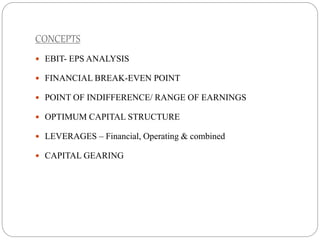
CONCEPTS
 EBIT- EPS ANALYSIS
 FINANCIAL BREAK-EVEN POINT
 POINT OF INDIFFERENCE/ RANGE OF EARNINGS
 OPTIMUM CAPITAL STRUCTURE
 LEVERAGES – Financial, Operating & combined
 CAPITAL GEARING
INVESTMENT DECISIONS
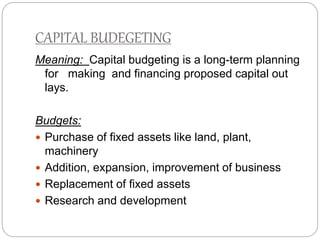
CAPITAL BUDEGETING
Meaning: Capital budgeting is a long-term planning
for making and financing proposed capital out
lays.
Budgets:
 Purchase of fixed assets like land, plant,
machinery
 Addition, expansion, improvement of business
 Replacement of fixed assets
 Research and development
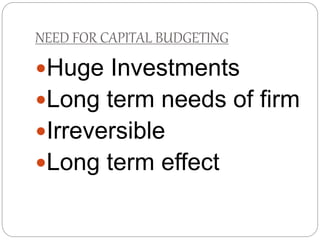
NEED FOR CAPITAL BUDGETING
Huge Investments
Long term needs of firm
Irreversible
Long term effect
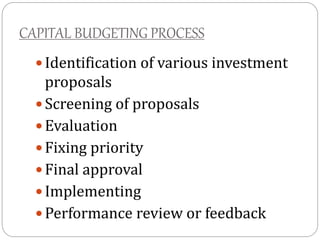
CAPITAL BUDGETING PROCESS
 Identification of various investment
proposals
 Screening of proposals
 Evaluation
 Fixing priority
 Final approval
 Implementing
 Performance review or feedback
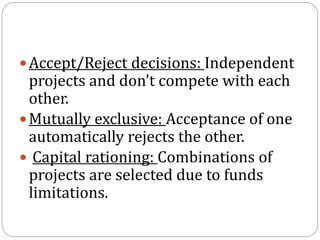
Accept/Reject decisions: Independent
projects and don’t compete with each
other.
Mutually exclusive: Acceptance of one
automatically rejects the other.
 Capital rationing: Combinations of
projects are selected due to funds
limitations.
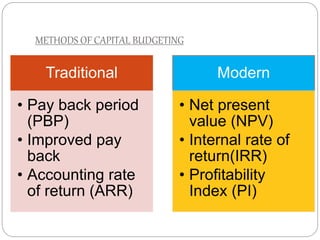
METHODS OF CAPITAL BUDGETING
Traditional
• Pay back period
(PBP)
• Improved pay
back
• Accounting rate
of return (ARR)
Modern
• Net present
value (NPV)
• Internal rate of
return(IRR)
• Profitability
Index (PI)
FINANCING DECISIONS

FINANCING DECISIONS

Editor's Notes

  • #7 Finance function refers to all the activities of a company with respect to financial management.