An Introduction
Presented By:-
Kirti Gupta
UID- 16MBA7028
Introduction
Meaning of Shares and Share Capital
Types of Shares
Advantages and Disadvantages of Shares
Issue of Shares
Meaning of Debentures
Types of Debenture
Advantages and disadvantages of Debenture
Difference Between Shares and Debenture
CONTANTS
Companies (Private and Public) need capital either to
increase their productivity or to increase their market reach
or to diversify or to purchase latest modern equipment's.
Companies go in for IPO and if they have already gone for
IPO then they go for FPO. The only thing they do in either
IPO or FPO is to sell the shares or debentures to investors
(the term investor here represents retail investors, financial
institutions, government, high net worth individuals, banks
etc.). Whether they issue shares or debentures totally
depends upon the concerned company.
INTRODUCTION
WHAT IS IPO?
An initial public offering, or IPO, is the
first sale of stock by a company to the
public. A company can raise money by
issuing either debt or equity. If the
company has never issued equity to the
public, it's known as an IPO.
IPOs are often issued by smaller,
younger companies seeking capital to
expand
FPO (Follow on Public Offer) is a process
by which a company, which is already
listed on an exchange, issues new shares to
the investors or the existing shareholders,
usually the promoters. FPO is used by
companies to diversify their equity base.
WHAT IS FPO?
Follow on Public Offer
SHARE CAPITAL
The part of the capital of a company that comes from the issue of
shares.
Authorized, registered
or nominal capital
Issued capital
Subscribed capital
Called up Capital
Paid up Capital
Reserve Capital
SHARES
One of the equal parts into
which a company's capital is
divided, entitling the holder to a
proportion of the profits. It is
divided into a 'number of
indivisible units of a fixed
amount.
The holders of these shares are
the real owners of the company.
They have a voting right in the
meetings of holders of the
company.
They have a control over the
working of the company. Equity
share holders are paid dividend
after paying it to the preference
shareholders
TYPES OF SHARES
Equity Shares
Preference
Shares
Preference shares, more commonly
referred to as preferred stock,
are shares of a company's stock
with dividends that are paid out to
shareholders before common stock
dividends are issued. If the
company enters bankruptcy, the
shareholders with preferred stock
are entitled to be paid from
company assets first.
TYPES OF EQUITY
SHARES
Rights Share: These are the shares issued to the existing
shareholders of a company. Such kind of shares is issued to
protect the ownership rights of the investors.
Bonus share: These are the type of shares given by the
company to its shareholders as a dividend.
Sweat Equity Share: These shares are issued to exceptional
employees or directors of the company for their exceptional
job in terms of providing know-how or intellectual property
rights to the company.
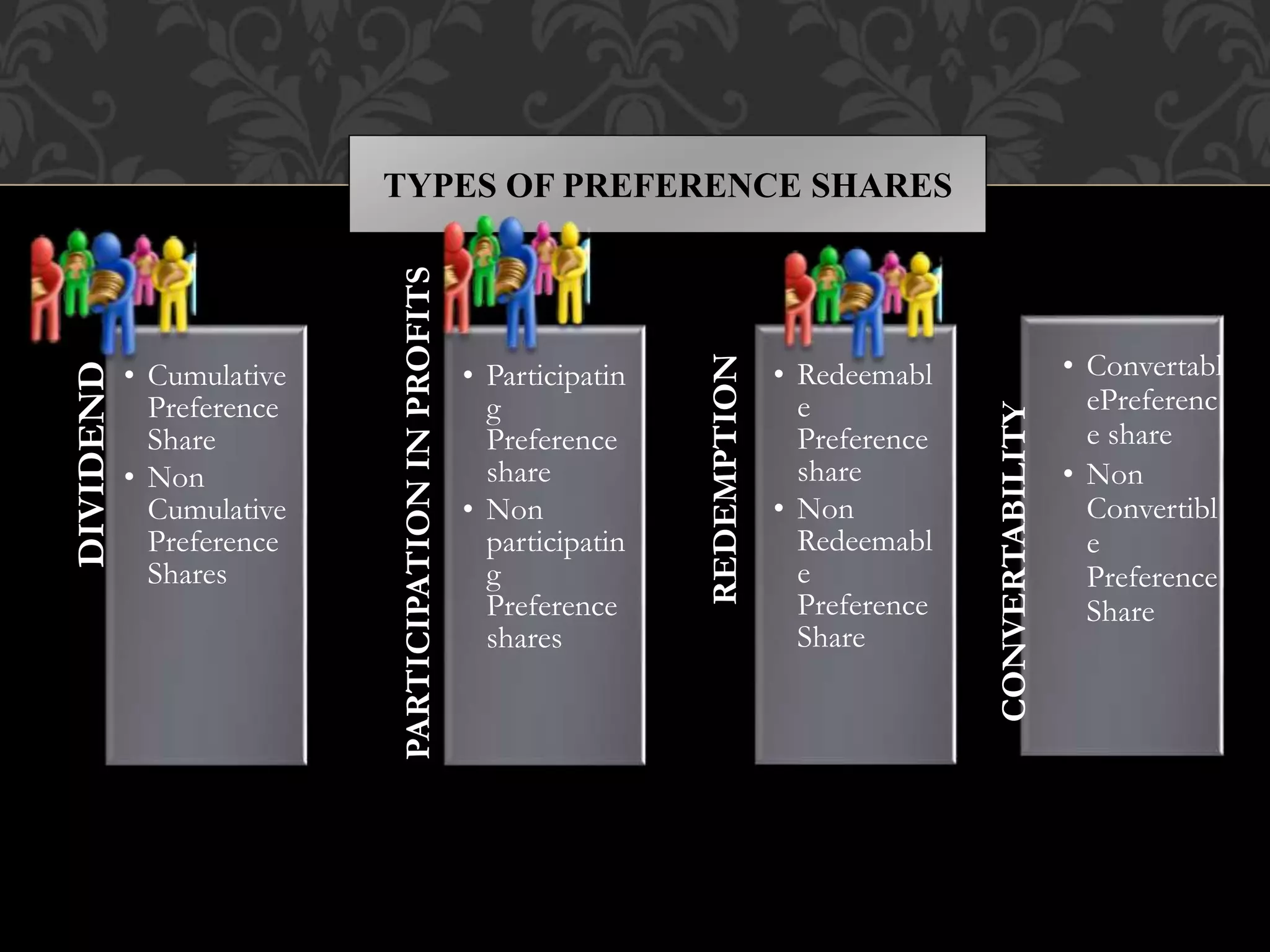
TYPES OF PREFERENCE SHARES
DIVIDEND
• Cumulative
Preference
Share
• Non
Cumulative
Preference
Shares
PARTICIPATIONINPROFITS
• Participatin
g
Preference
share
• Non
participatin
g
Preference
shares
REDEMPTION
• Redeemabl
e
Preference
share
• Non
Redeemabl
e
Preference
Share
• Convertabl
ePreferenc
e share
• Non
Convertibl
e
Preference
Share
CONVERTABILITY
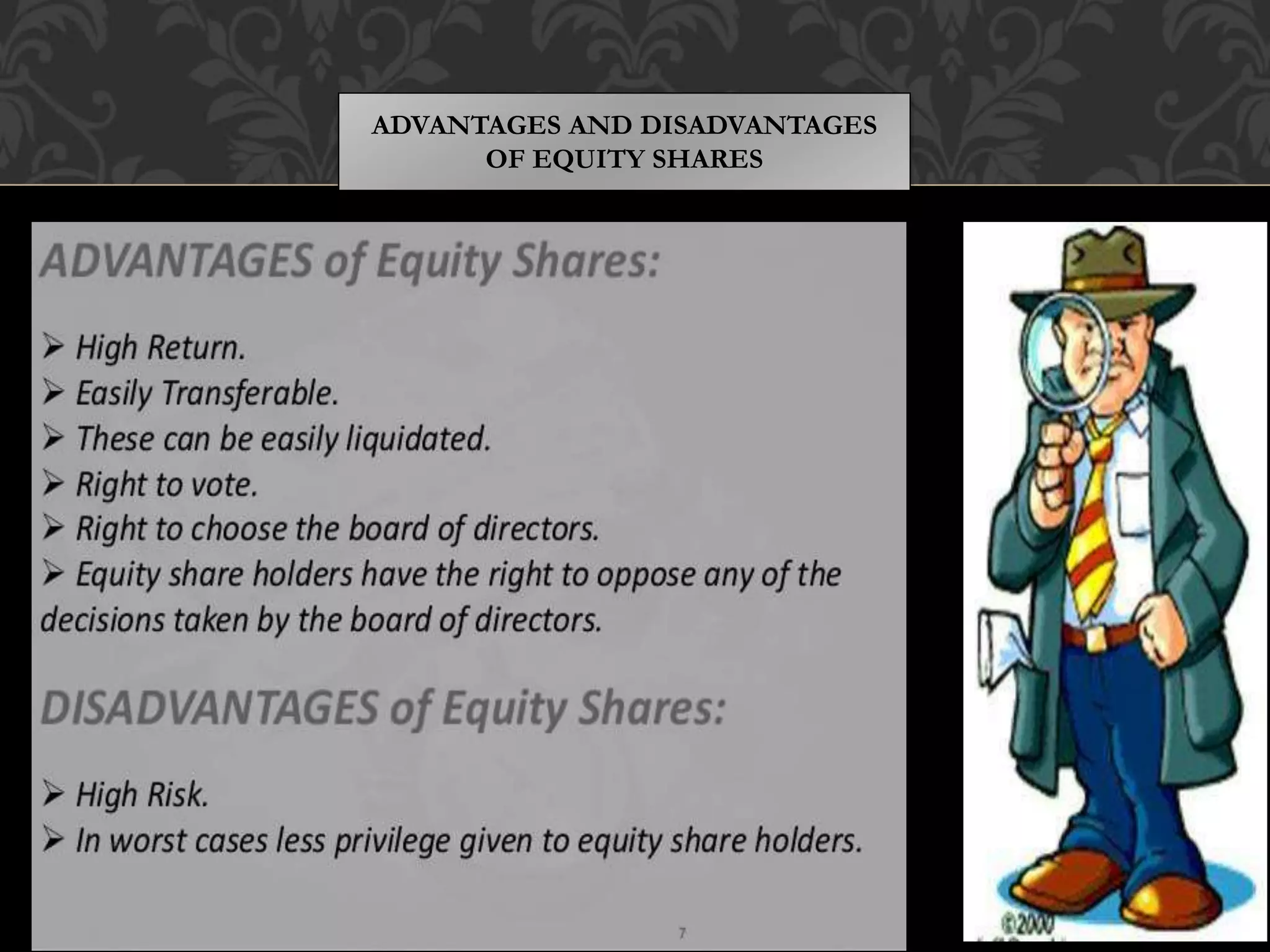
ADVANTAGES AND DISADVANTAGES
OF EQUITY SHARES
ADVANTAGES AND DISADVANTAGE OF
PREFERENCE SHARES
DIFFERENCE BETWEEN EQUITY
AND PREFERENCE SHARES
ISSUING SHARES
Call on Shares
Allotment of Shares
Application of Shares
Issuing Prospectus AT PAR
AT PREMIMUM
AT DISCOUNT
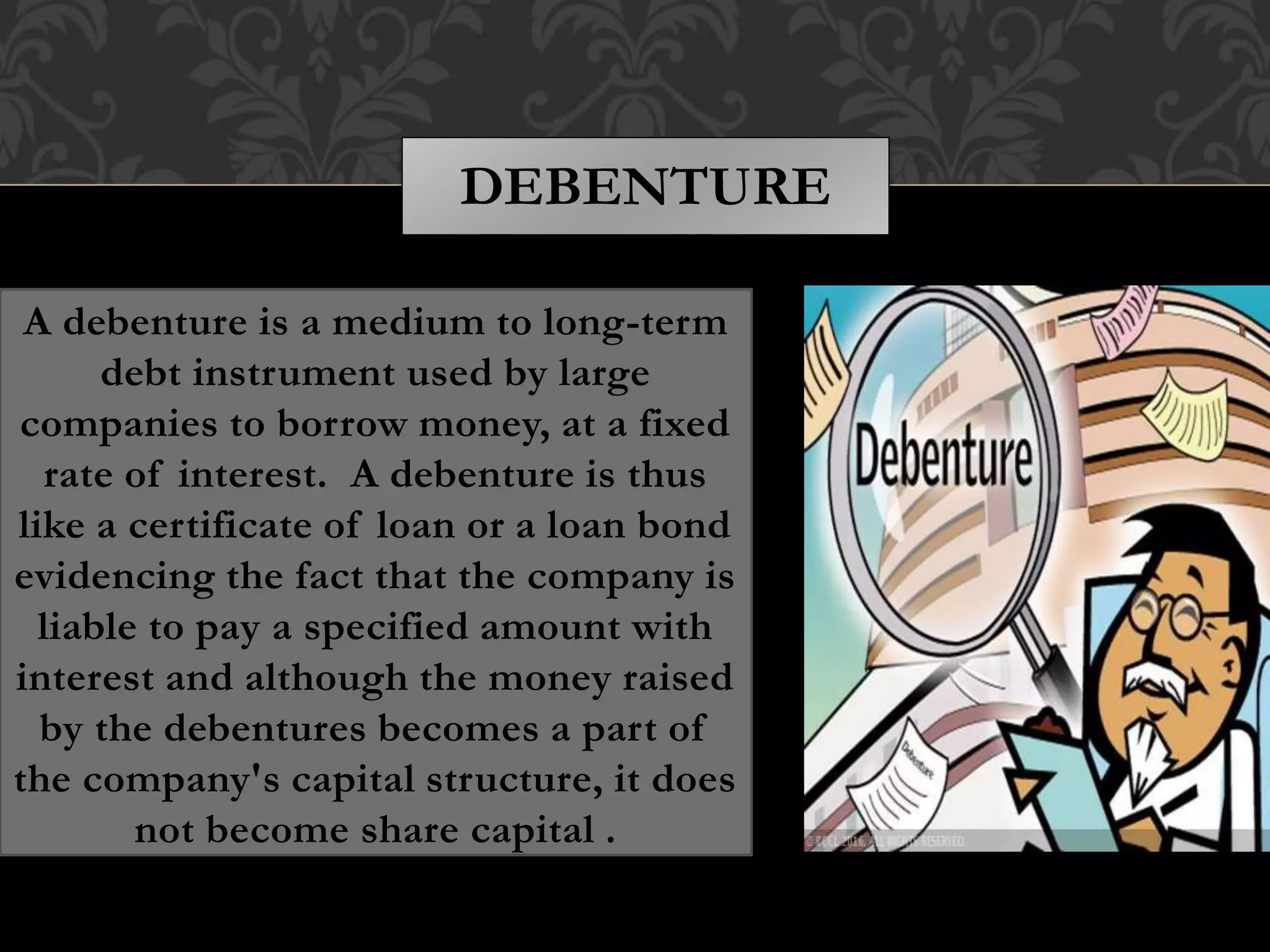
A debenture is a medium to long-term
debt instrument used by large
companies to borrow money, at a fixed
rate of interest. A debenture is thus
like a certificate of loan or a loan bond
evidencing the fact that the company is
liable to pay a specified amount with
interest and although the money raised
by the debentures becomes a part of
the company's capital structure, it does
not become share capital .
DEBENTURE
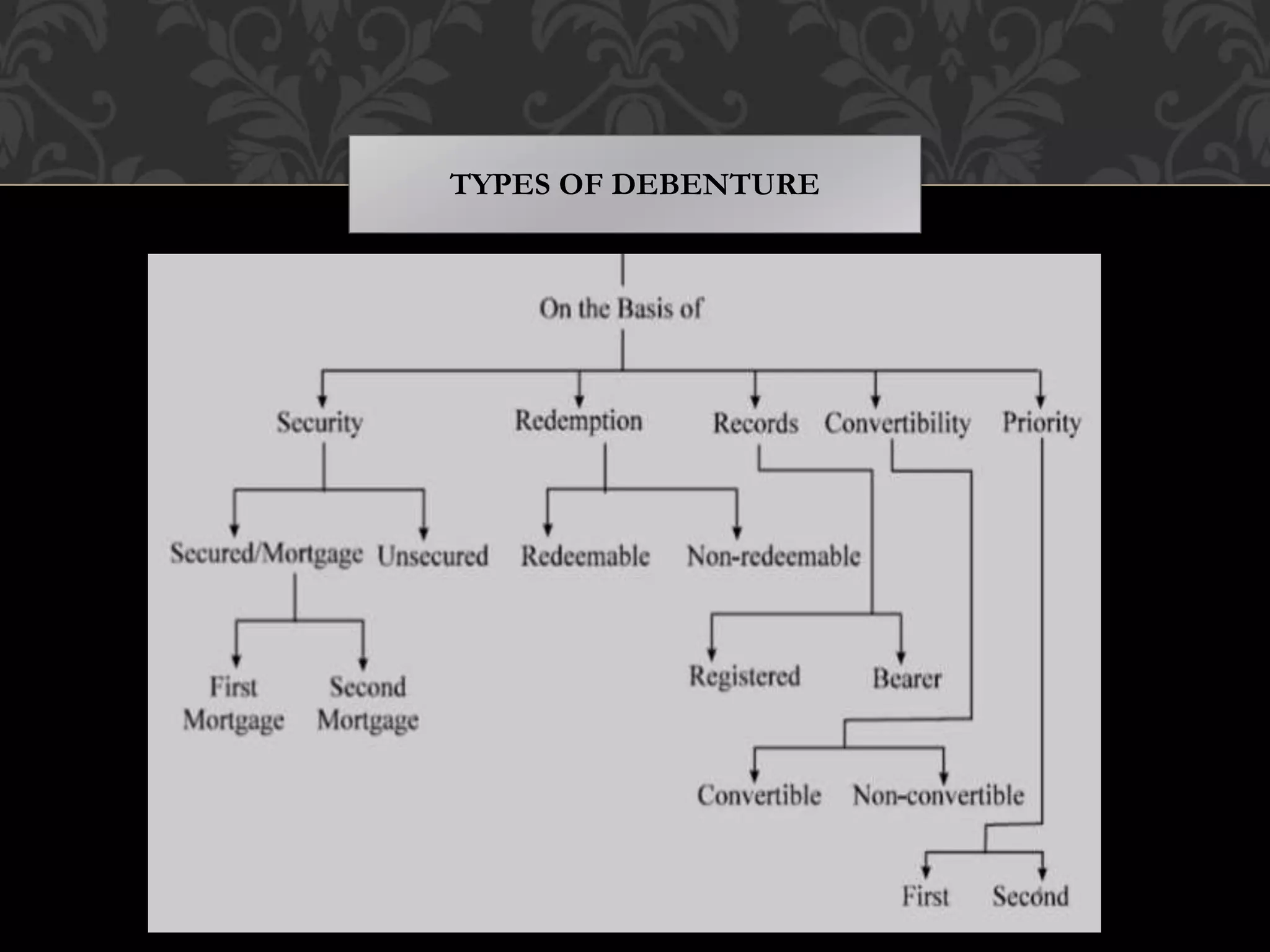
TYPES OF DEBENTURE
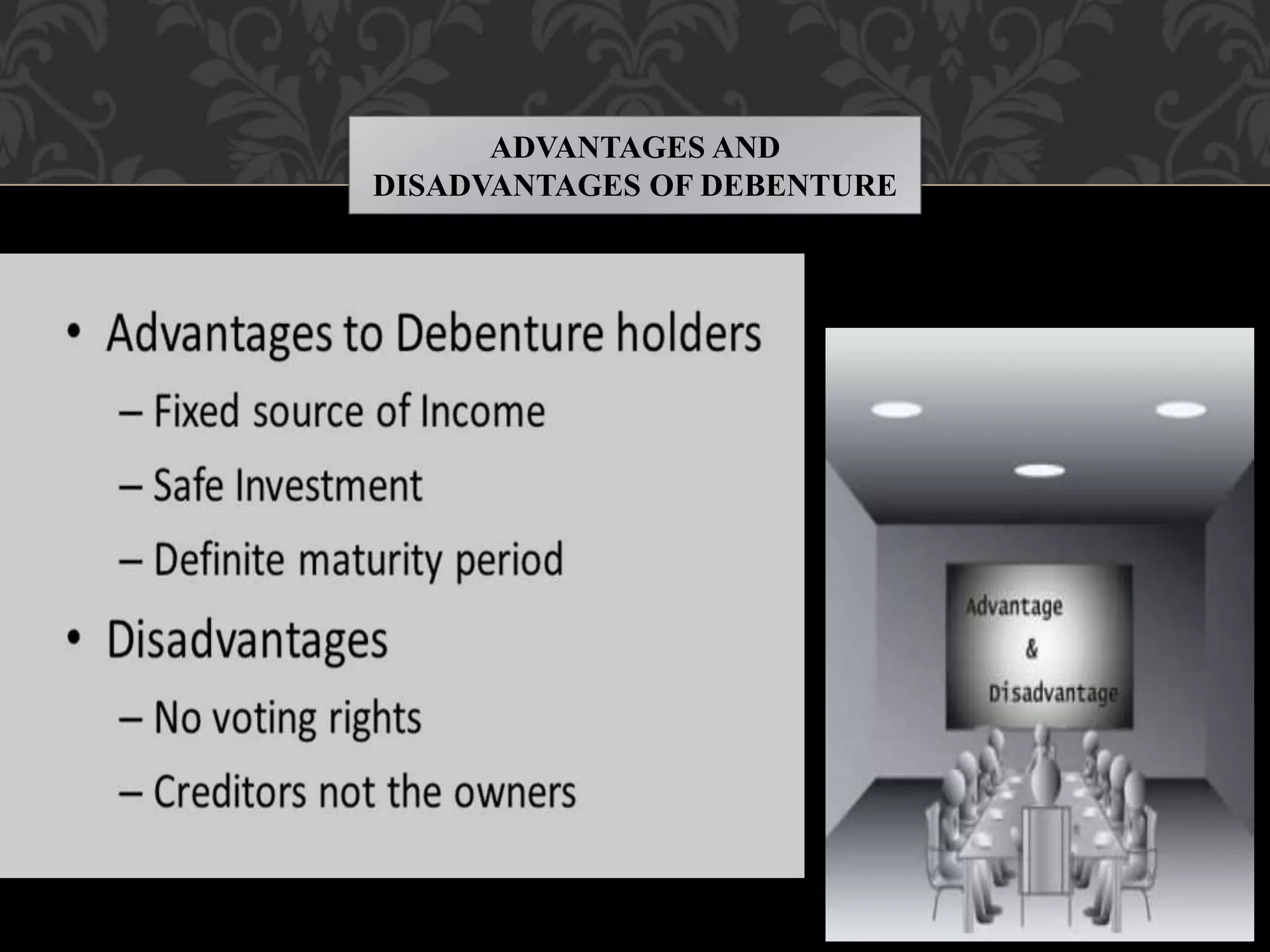
ADVANTAGES AND
DISADVANTAGES OF DEBENTURE
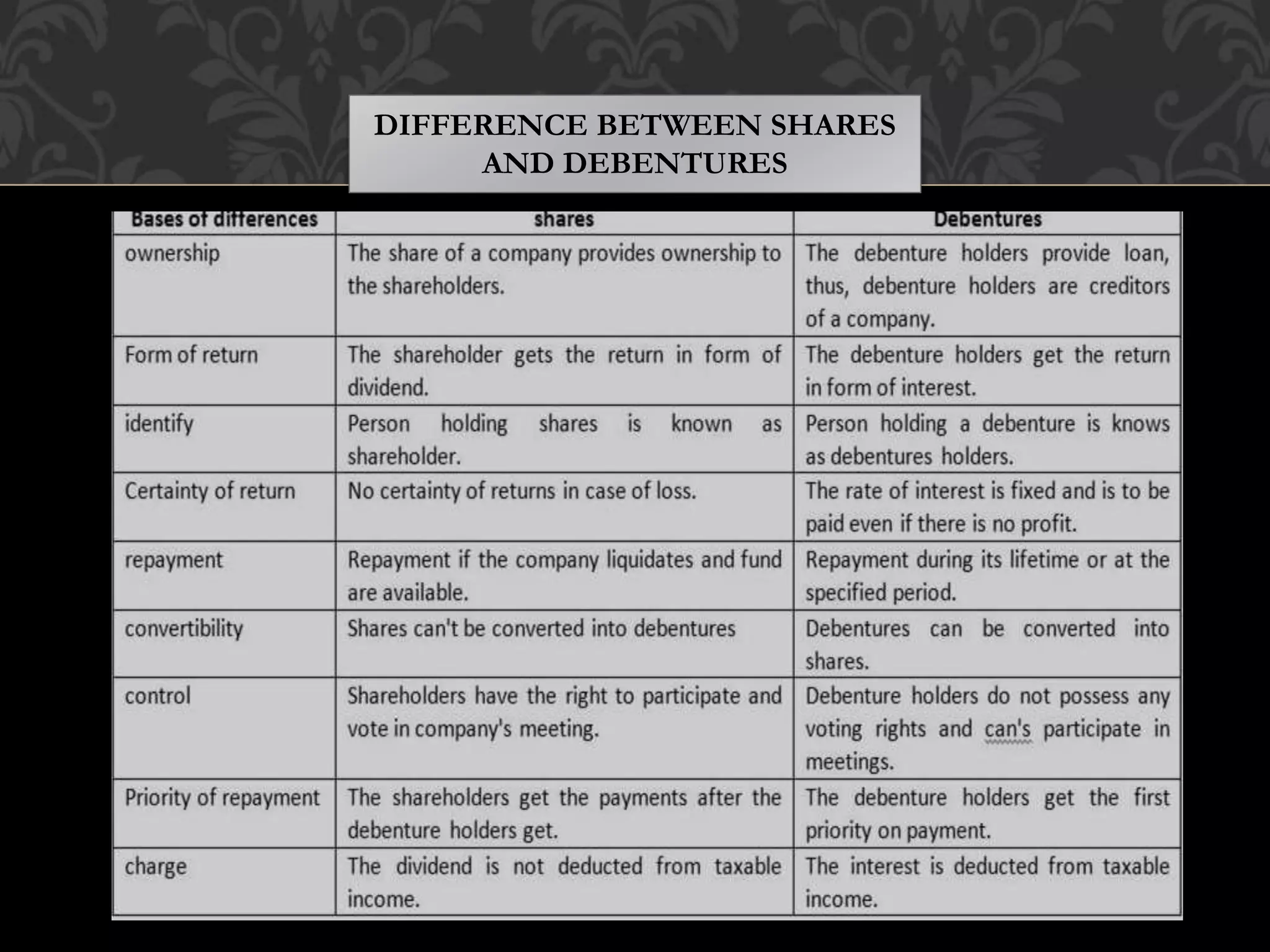
DIFFERENCE BETWEEN SHARES
AND DEBENTURES
THANK YOU..

Shares and debenture

  • 1.
  • 2.
    Introduction Meaning of Sharesand Share Capital Types of Shares Advantages and Disadvantages of Shares Issue of Shares Meaning of Debentures Types of Debenture Advantages and disadvantages of Debenture Difference Between Shares and Debenture CONTANTS
  • 3.
    Companies (Private andPublic) need capital either to increase their productivity or to increase their market reach or to diversify or to purchase latest modern equipment's. Companies go in for IPO and if they have already gone for IPO then they go for FPO. The only thing they do in either IPO or FPO is to sell the shares or debentures to investors (the term investor here represents retail investors, financial institutions, government, high net worth individuals, banks etc.). Whether they issue shares or debentures totally depends upon the concerned company. INTRODUCTION
  • 4.
    WHAT IS IPO? Aninitial public offering, or IPO, is the first sale of stock by a company to the public. A company can raise money by issuing either debt or equity. If the company has never issued equity to the public, it's known as an IPO. IPOs are often issued by smaller, younger companies seeking capital to expand
  • 5.
    FPO (Follow onPublic Offer) is a process by which a company, which is already listed on an exchange, issues new shares to the investors or the existing shareholders, usually the promoters. FPO is used by companies to diversify their equity base. WHAT IS FPO? Follow on Public Offer
  • 6.
    SHARE CAPITAL The partof the capital of a company that comes from the issue of shares. Authorized, registered or nominal capital Issued capital Subscribed capital Called up Capital Paid up Capital Reserve Capital
  • 7.
    SHARES One of theequal parts into which a company's capital is divided, entitling the holder to a proportion of the profits. It is divided into a 'number of indivisible units of a fixed amount.
  • 8.
    The holders ofthese shares are the real owners of the company. They have a voting right in the meetings of holders of the company. They have a control over the working of the company. Equity share holders are paid dividend after paying it to the preference shareholders TYPES OF SHARES Equity Shares Preference Shares Preference shares, more commonly referred to as preferred stock, are shares of a company's stock with dividends that are paid out to shareholders before common stock dividends are issued. If the company enters bankruptcy, the shareholders with preferred stock are entitled to be paid from company assets first.
  • 9.
    TYPES OF EQUITY SHARES RightsShare: These are the shares issued to the existing shareholders of a company. Such kind of shares is issued to protect the ownership rights of the investors. Bonus share: These are the type of shares given by the company to its shareholders as a dividend. Sweat Equity Share: These shares are issued to exceptional employees or directors of the company for their exceptional job in terms of providing know-how or intellectual property rights to the company.
  • 10.
    TYPES OF PREFERENCESHARES DIVIDEND • Cumulative Preference Share • Non Cumulative Preference Shares PARTICIPATIONINPROFITS • Participatin g Preference share • Non participatin g Preference shares REDEMPTION • Redeemabl e Preference share • Non Redeemabl e Preference Share • Convertabl ePreferenc e share • Non Convertibl e Preference Share CONVERTABILITY
  • 11.
  • 12.
    ADVANTAGES AND DISADVANTAGEOF PREFERENCE SHARES
  • 13.
  • 14.
    ISSUING SHARES Call onShares Allotment of Shares Application of Shares Issuing Prospectus AT PAR AT PREMIMUM AT DISCOUNT
  • 15.
    A debenture isa medium to long-term debt instrument used by large companies to borrow money, at a fixed rate of interest. A debenture is thus like a certificate of loan or a loan bond evidencing the fact that the company is liable to pay a specified amount with interest and although the money raised by the debentures becomes a part of the company's capital structure, it does not become share capital . DEBENTURE
  • 16.
  • 17.
  • 18.
  • 20.