ADVANCED CREDIT CARD FRAUD DETECTION
Presented By
K Ganesh
K Suryakumar
B Shanmuga anand
Department of MCA
Valliammai Engineering College
Introduction
• Millions of dollar get Losses in worldwide.
• $3.6 billion to $4 billion get Loss in 2008.
• $11.27 billion in 2013-2014.
• Frauders follow fraud practices to avoid
detection.
Different Types of Fraud
• Counterfeit Credit Cards.
• Lost or Stolen Cards.
• Card Not Present (CNP) Fraud.
• Phishing.
• Non-Receipt Fraud.
• Identity Theft Fraud.
• Hidden Morcov Model.
• Decision Trees.
• K-Nearest Neighbor Algorithm.
• Logistic Regression.
Datamining Techniques
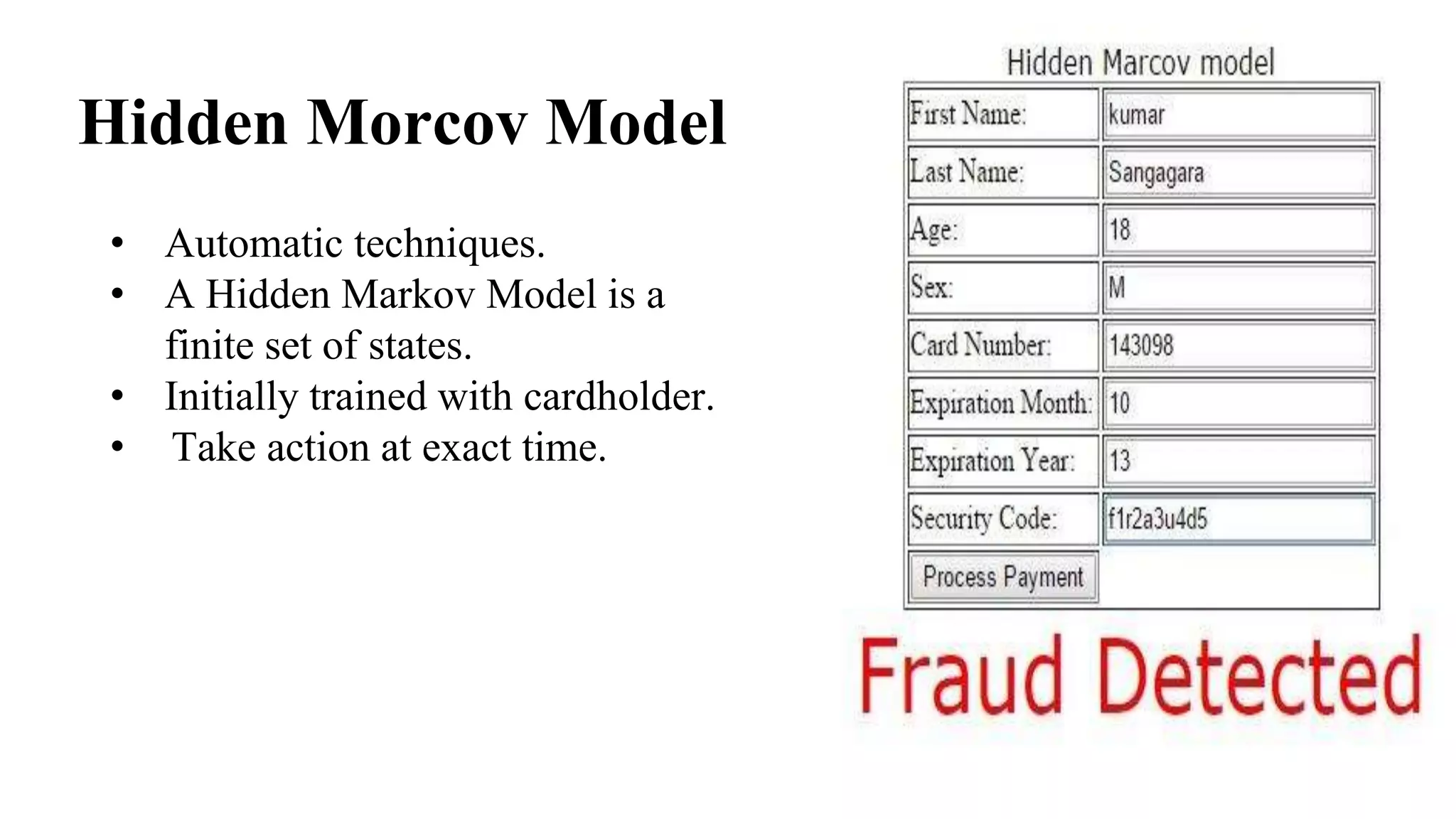
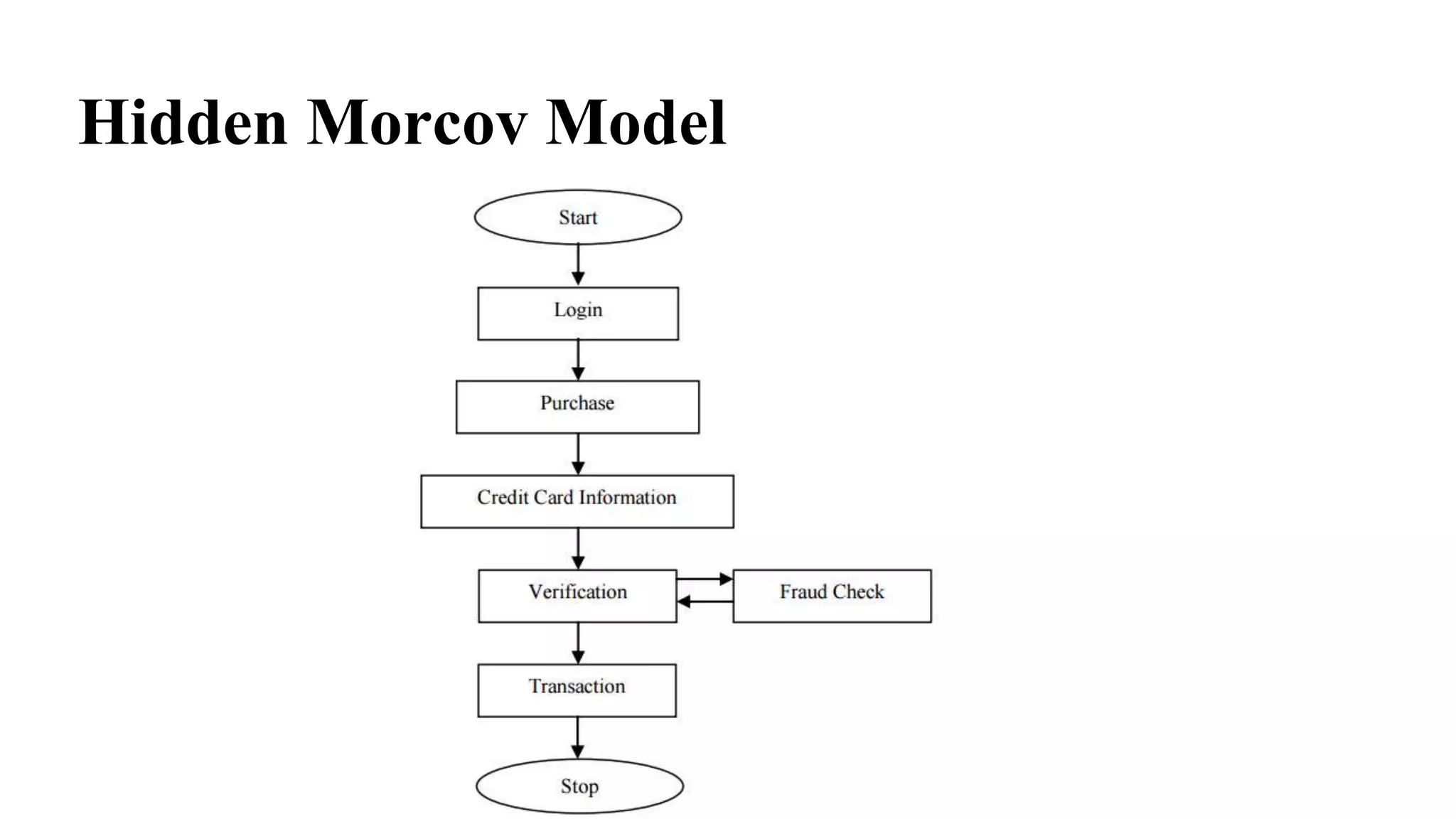
Hidden Morcov Model
• Automatic techniques.
• A Hidden Markov Model is a
finite set of states.
• Initially trained with cardholder.
• Take action at exact time.
Hidden Morcov Model
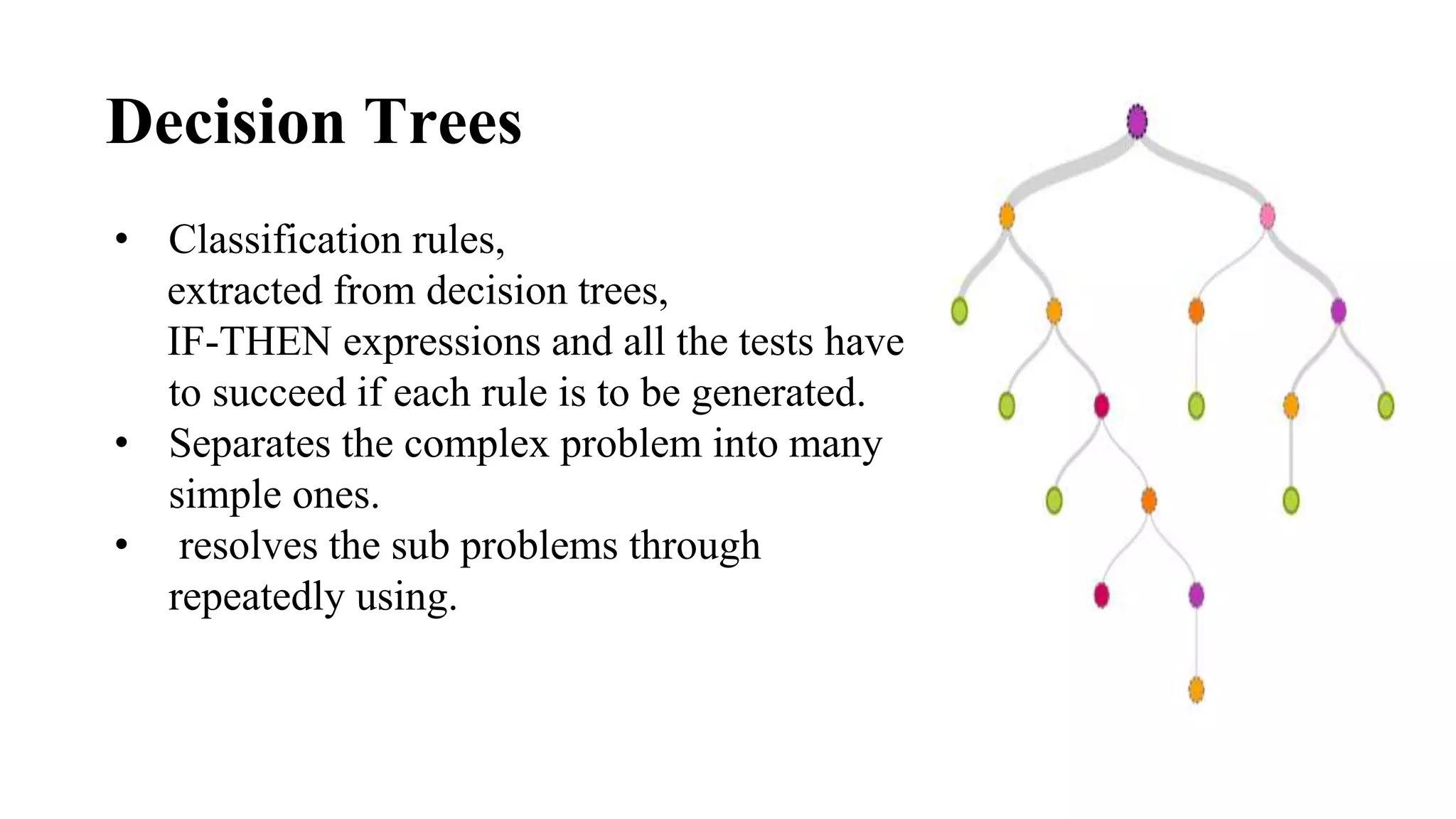
Decision Trees
• Classification rules,
extracted from decision trees,
IF-THEN expressions and all the tests have
to succeed if each rule is to be generated.
• Separates the complex problem into many
simple ones.
• resolves the sub problems through
repeatedly using.
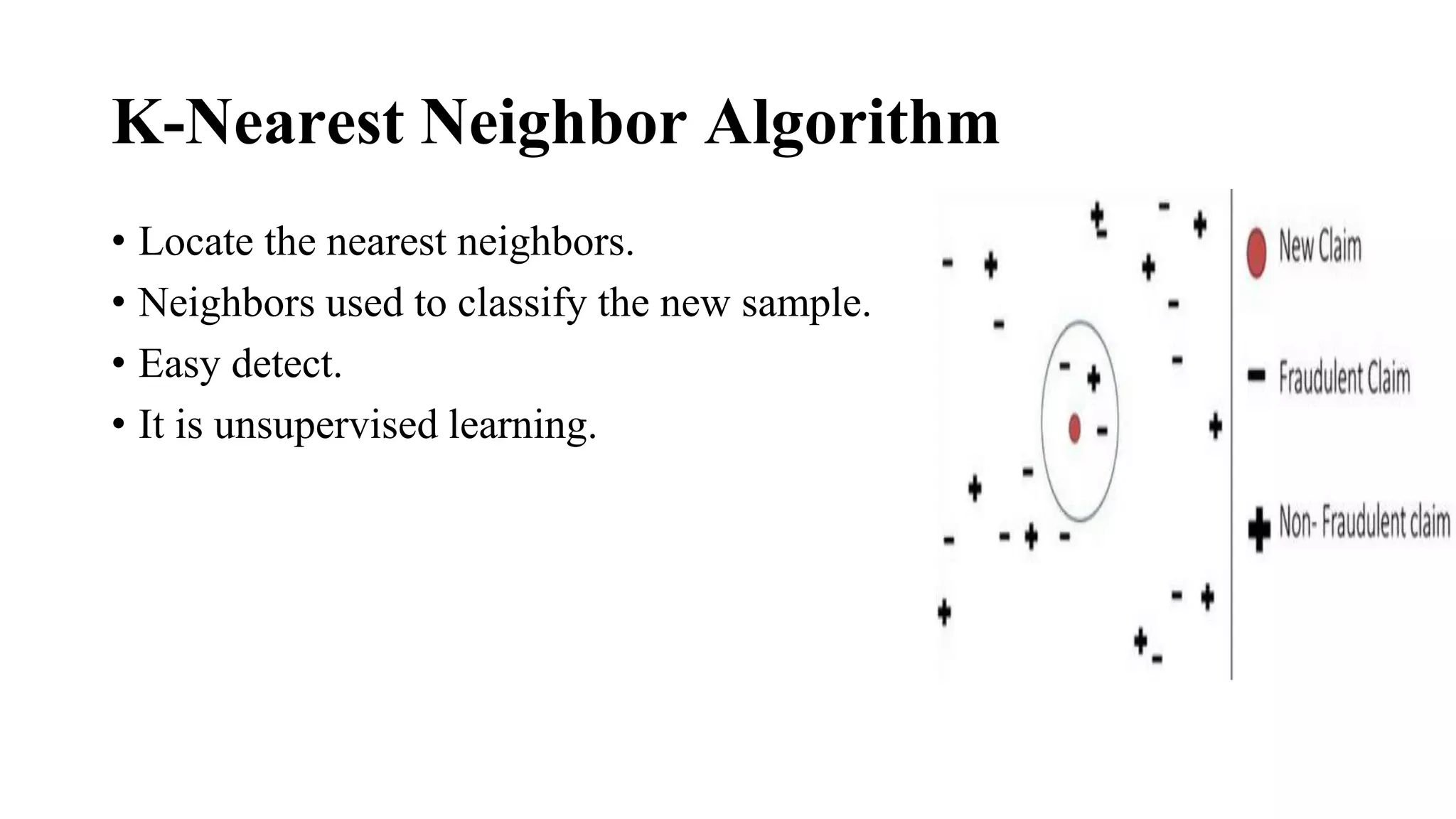
K-Nearest Neighbor Algorithm
• Locate the nearest neighbors.
• Neighbors used to classify the new sample.
• Easy detect.
• It is unsupervised learning.
Support vector machine
• Kernel representation.
• Margin optimization.
• Detect the problem.
• Best supportive technique
• Trees constructed.
• Favour for SVM.
Random forest
Logistic Regression
❖Support vector machine.
❖Random forest.
❖This two are the important techniques in
data mining which is together
called logistic regression
Conclusion
• Logistic Regression can minimize the fraud rate.
• It is easy to implement.
Reference
• C. Chen, A. Liaw, L. Breiman, Using Random Forest to Learn
Imbalanced Data,Technical Report 666, University of California at
Berkeley, Statistics Department.
• A. Srivastava, A. Kundu, S. Sural, A.Majumdar, Credit card fraud
detection using hidden Markov model, IEEE Transactions on
Dependable and Secure Computing.

Credit card fraud detection methods using Data-mining.pptx (2)

  • 1.
    ADVANCED CREDIT CARDFRAUD DETECTION Presented By K Ganesh K Suryakumar B Shanmuga anand Department of MCA Valliammai Engineering College
  • 2.
    Introduction • Millions ofdollar get Losses in worldwide. • $3.6 billion to $4 billion get Loss in 2008. • $11.27 billion in 2013-2014. • Frauders follow fraud practices to avoid detection.
  • 3.
    Different Types ofFraud • Counterfeit Credit Cards. • Lost or Stolen Cards. • Card Not Present (CNP) Fraud. • Phishing. • Non-Receipt Fraud. • Identity Theft Fraud.
  • 4.
    • Hidden MorcovModel. • Decision Trees. • K-Nearest Neighbor Algorithm. • Logistic Regression. Datamining Techniques
  • 5.
    Hidden Morcov Model •Automatic techniques. • A Hidden Markov Model is a finite set of states. • Initially trained with cardholder. • Take action at exact time.
  • 6.
  • 7.
    Decision Trees • Classificationrules, extracted from decision trees, IF-THEN expressions and all the tests have to succeed if each rule is to be generated. • Separates the complex problem into many simple ones. • resolves the sub problems through repeatedly using.
  • 8.
    K-Nearest Neighbor Algorithm •Locate the nearest neighbors. • Neighbors used to classify the new sample. • Easy detect. • It is unsupervised learning.
  • 9.
    Support vector machine •Kernel representation. • Margin optimization.
  • 10.
    • Detect theproblem. • Best supportive technique • Trees constructed. • Favour for SVM. Random forest
  • 11.
    Logistic Regression ❖Support vectormachine. ❖Random forest. ❖This two are the important techniques in data mining which is together called logistic regression
  • 12.
    Conclusion • Logistic Regressioncan minimize the fraud rate. • It is easy to implement.
  • 13.
    Reference • C. Chen,A. Liaw, L. Breiman, Using Random Forest to Learn Imbalanced Data,Technical Report 666, University of California at Berkeley, Statistics Department. • A. Srivastava, A. Kundu, S. Sural, A.Majumdar, Credit card fraud detection using hidden Markov model, IEEE Transactions on Dependable and Secure Computing.