1. There are five generations of computers defined based on the underlying hardware and software technologies used.
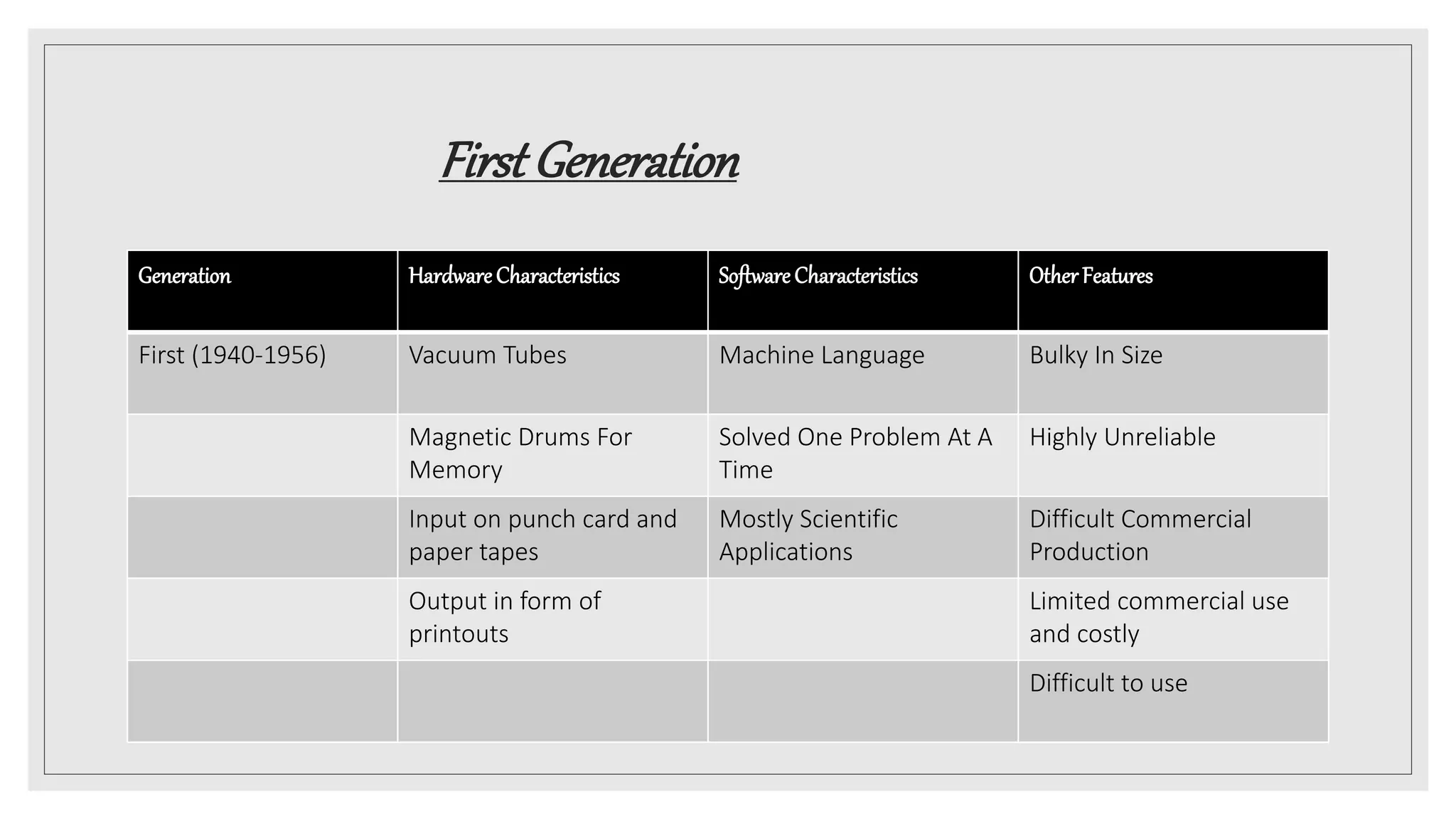
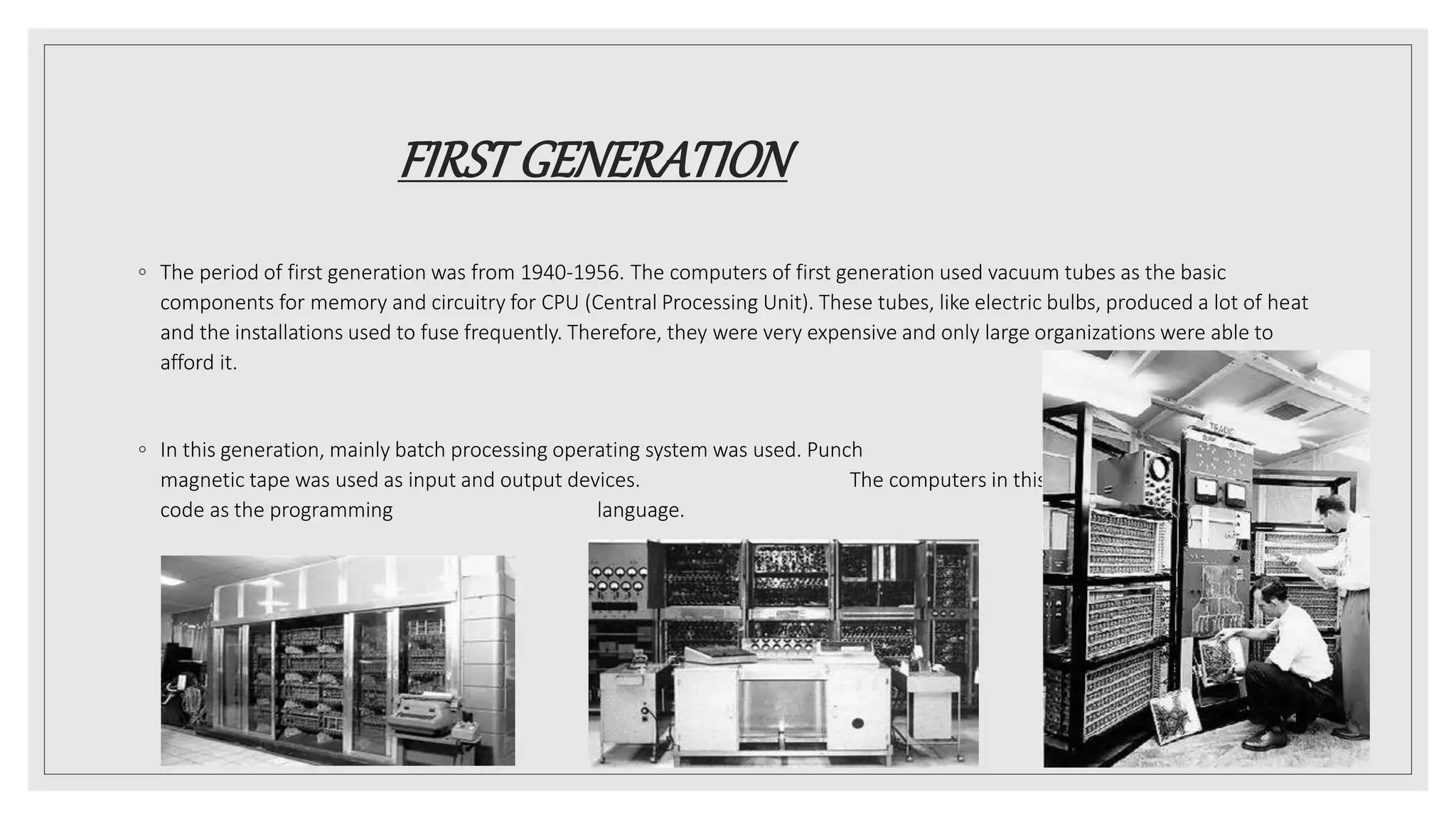
2. The first generation used vacuum tubes, magnetic drums for memory, and machine language. They were very large, consumed significant power, produced much heat, and were expensive.
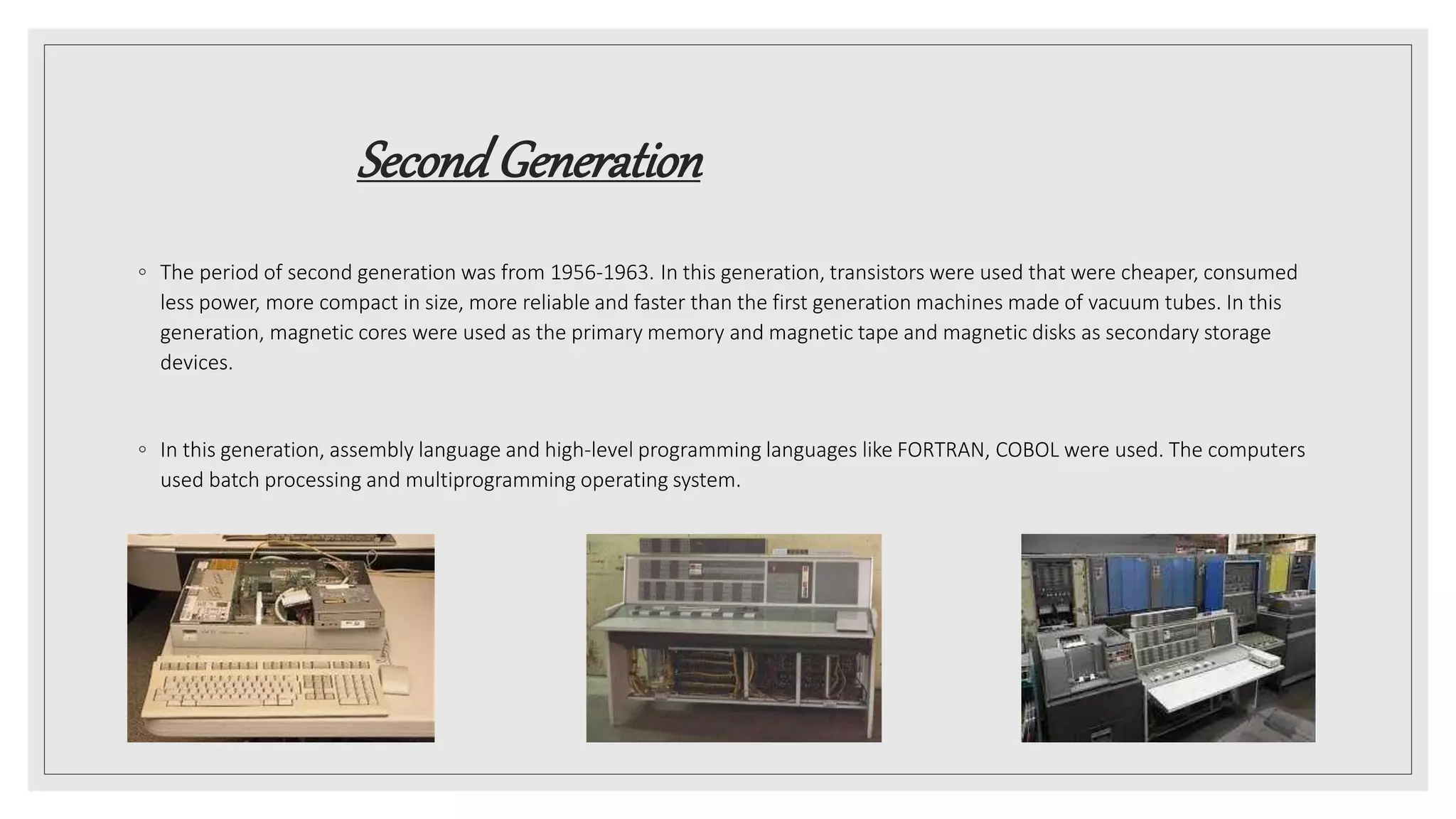
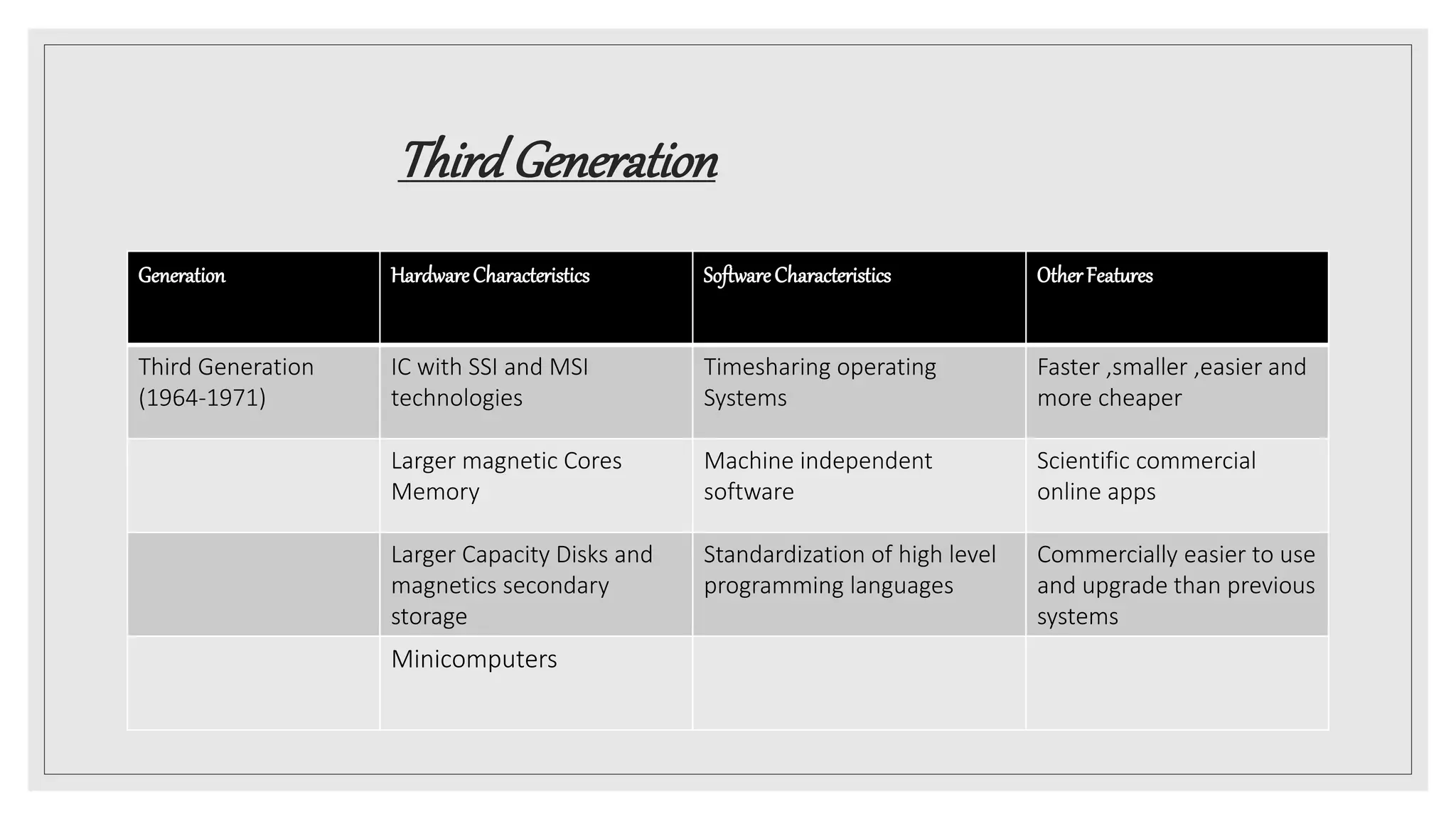
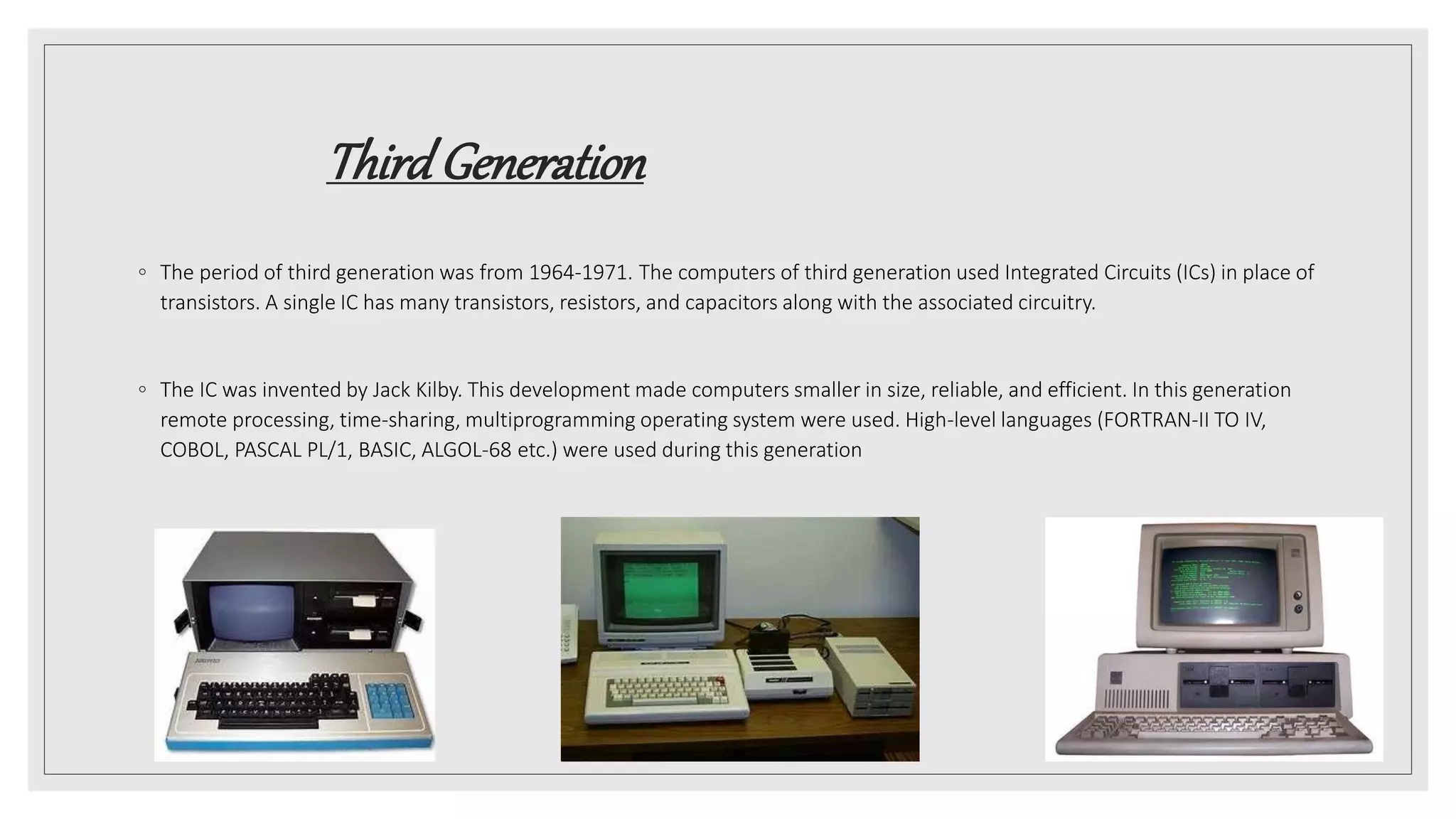
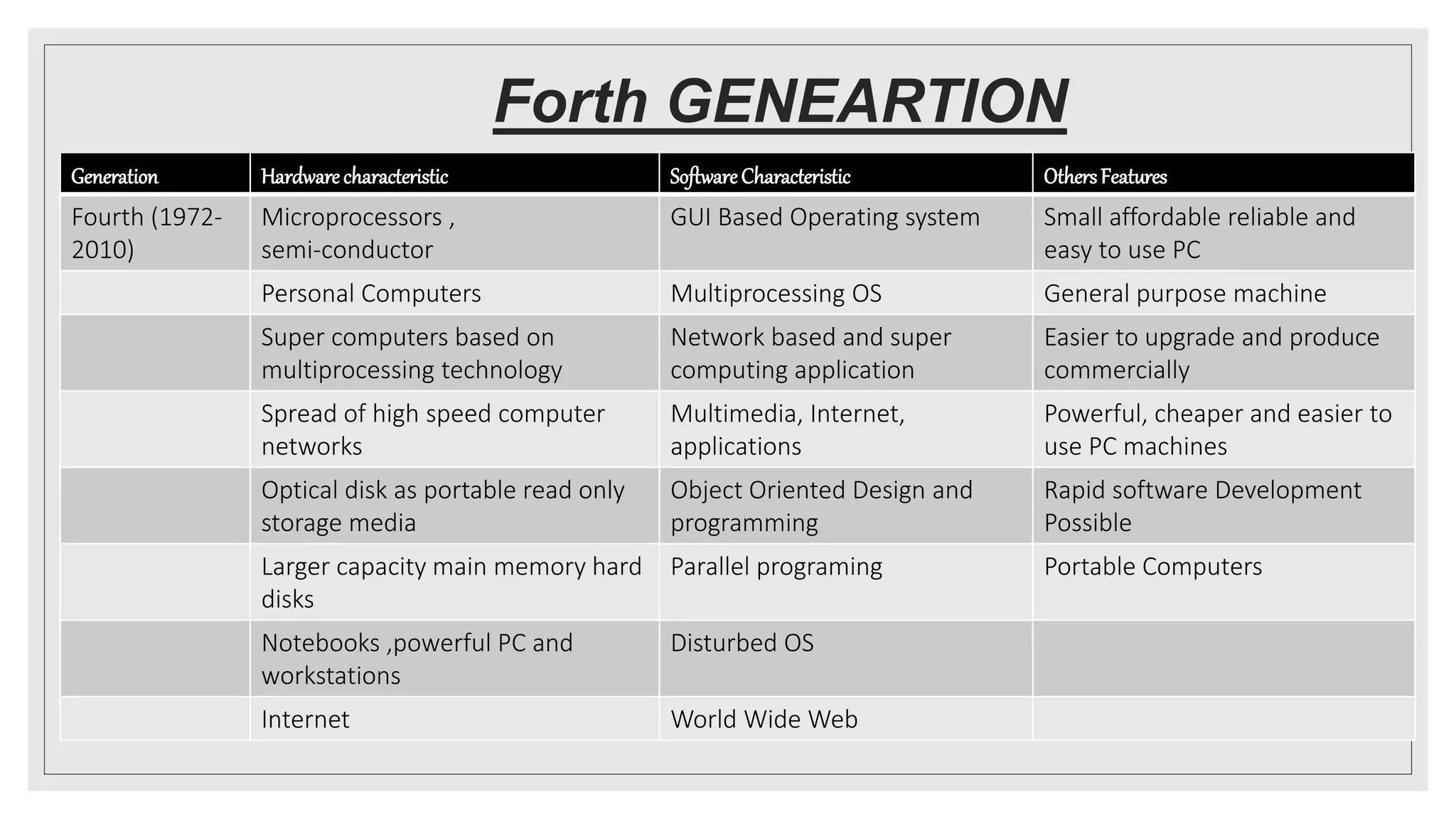
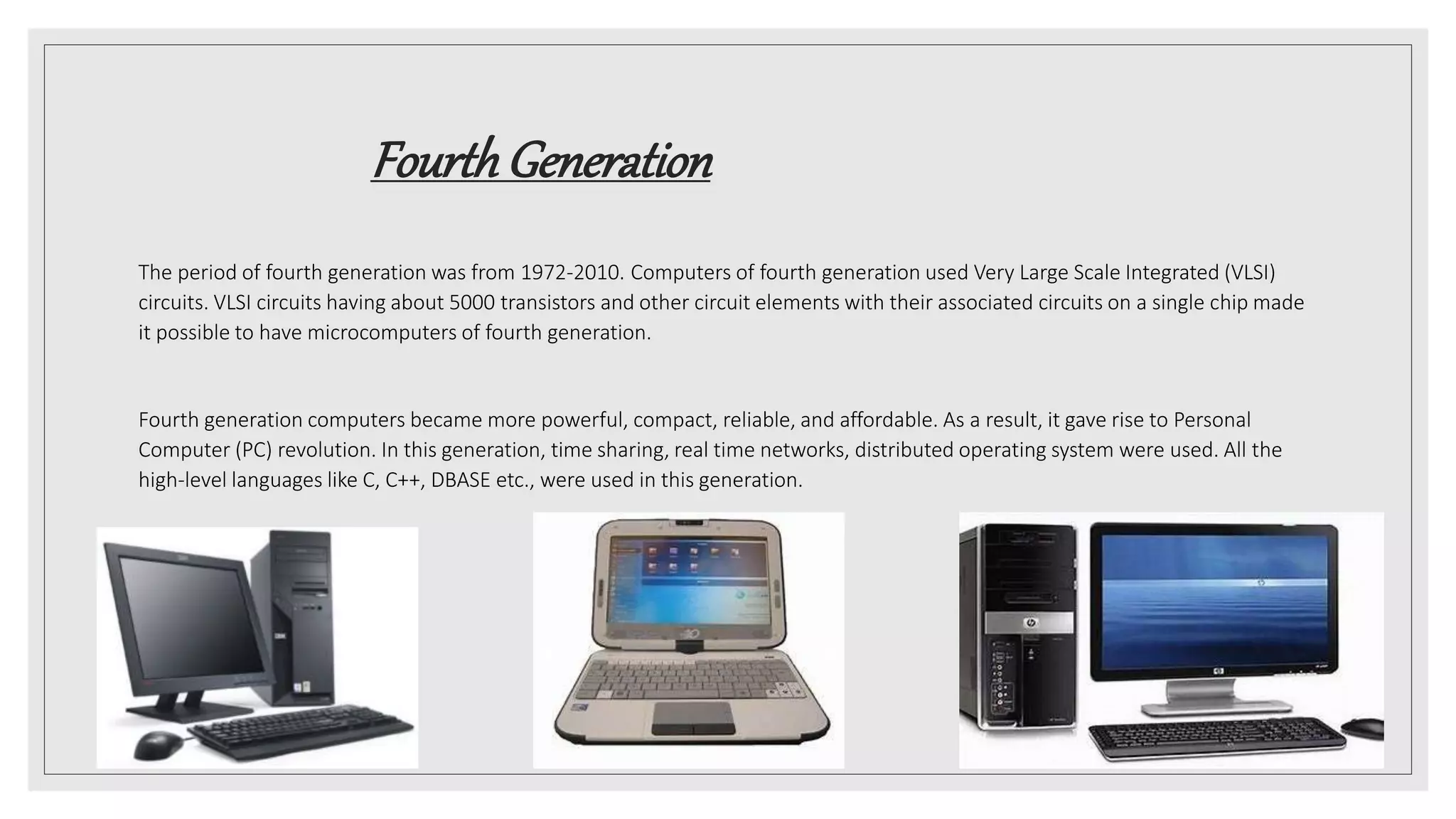
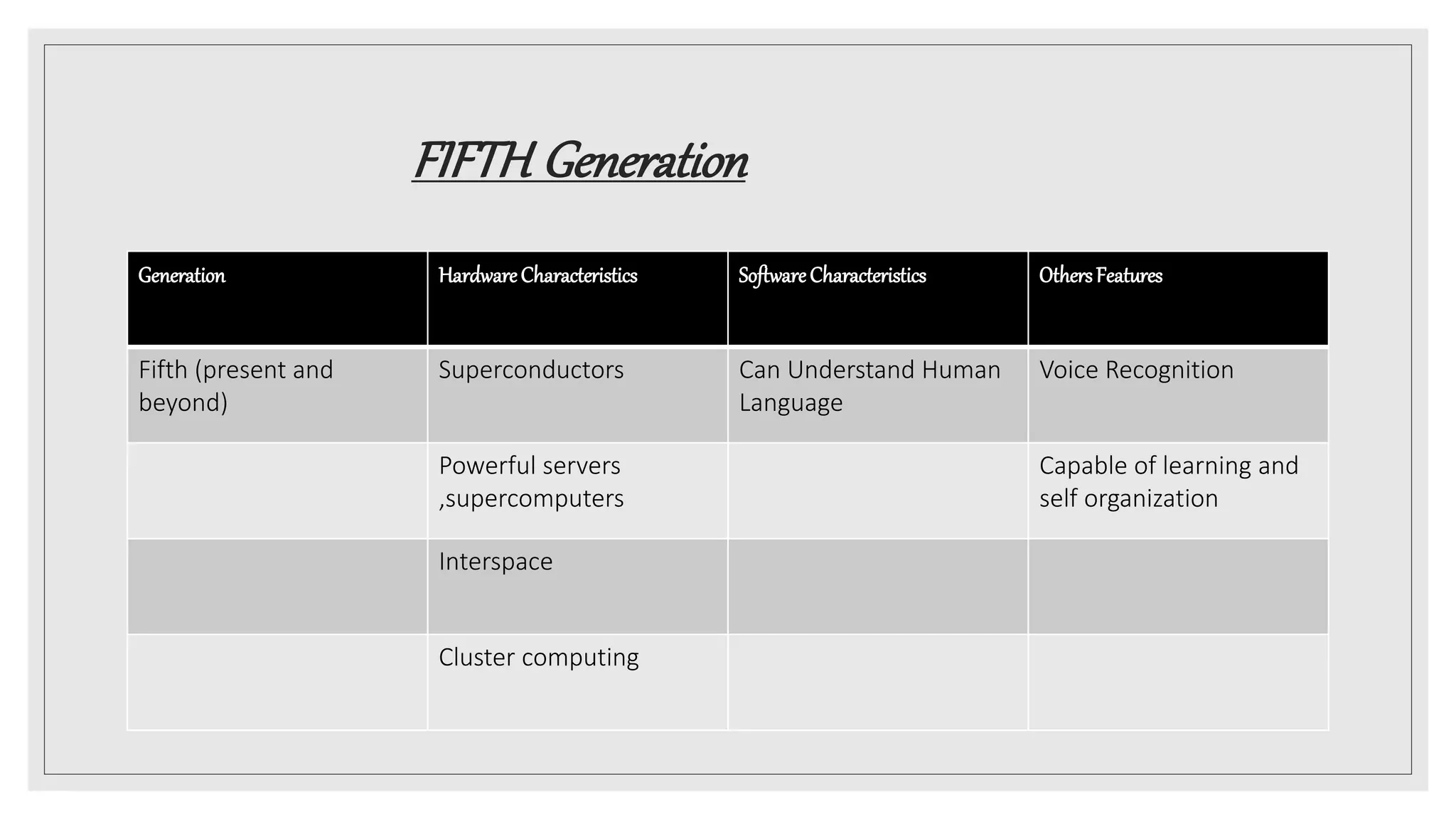
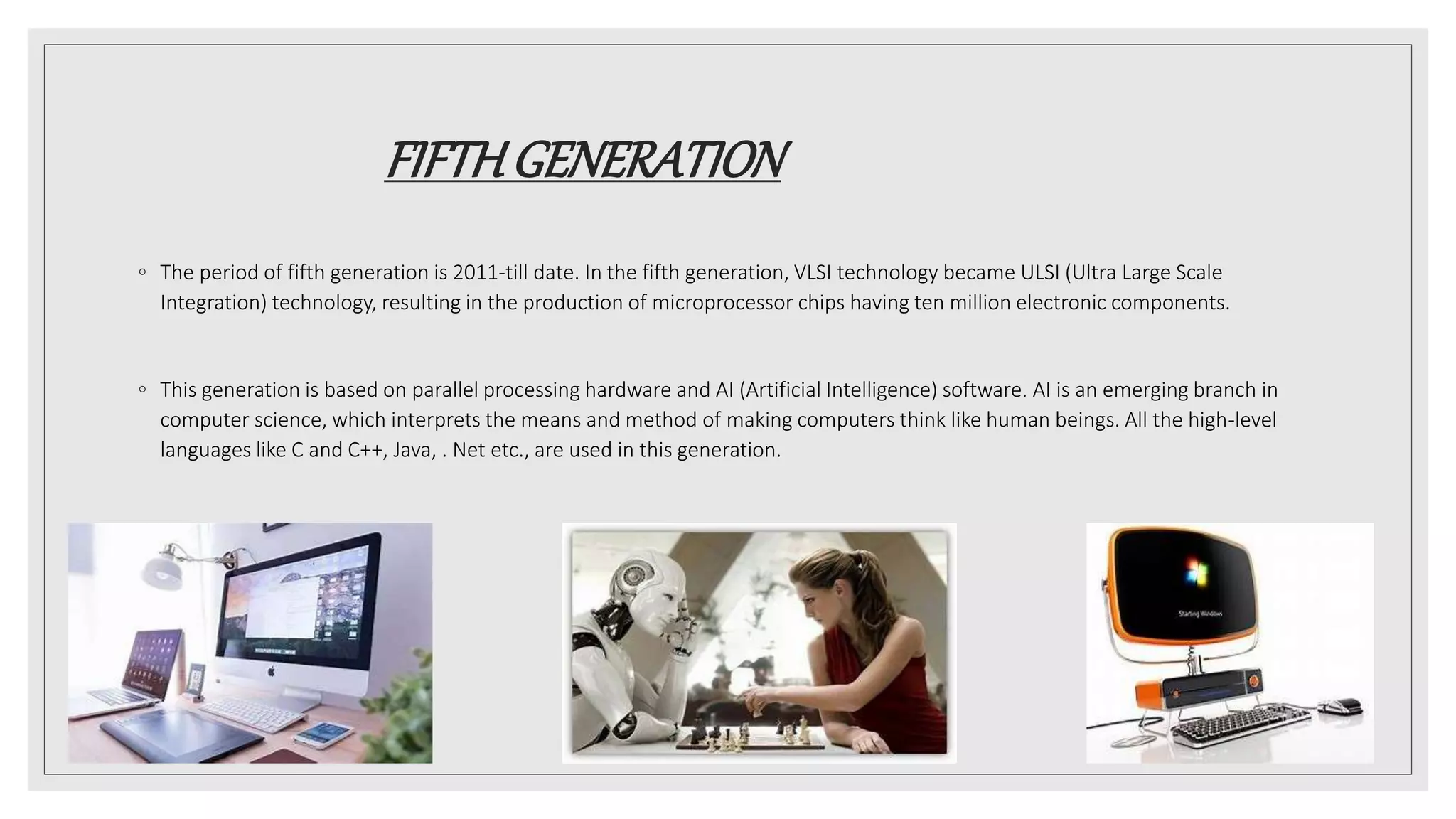
3. Subsequent generations saw the introduction of transistors, integrated circuits, microprocessors, and advances in software including high-level programming languages, time-sharing systems, and graphical user interfaces that made computers smaller, faster, more affordable and easier to use.