Febrile Illness
in
Children
Types, Clinical Features, Diagnosis
Complications, Management and Prevention
Prof. Imran Iqbal
Fellowship in Pediatric Neurology (Australia)
Prof of Paediatrics (2003-2018)
Prof of Pediatrics Emeritus, CHICH
Prof of Pediatrics, CIMS
Multan, Pakistan
(God speaking to Prophet Muhammad (PBUH)
And remember our prophet Ayub (Job), when he called his Lord:
“Indeed I have been afflicted with distress (illness),
and You are the Most merciful of all those who are kind”
Al Quran surah Al-Anbiya 21:83
Clinical Case Scenario
• An 8 year old child presents with fever for the last 5
days.
• Fever rises in the evening
• Child is not active as before
• His appetite has decreased
• On examination, his temperature is 104 F
• How will you further evaluate this child to make a
diagnosis and decide about management ?
How Body Temperature is maintained ?
CORE BODY TEMPERATURE
is regulated by
HYPOTHALAMUS
to be within the normal range
by controlling the mechanisms of
Heat production and Heat loss
Mechanisms of Regulation
Heat Production
• Body metabolism
• Muscle activity
• Shivering
• Vasoconstriction
Heat Loss
• Respiration
• Convection
• Vasodilatation
• Sweating
Pathophysiology of Fever
• Fever occurs when there is change in setting of
regulatory center or thermostat located in the
hypothalamus
(by endogenous pyrogens = IL1, IL6, TNF)
• Fever can also result from failure of regulatory
mechanisms due to very high environmental
temperatures
(Heat stroke during summer season)
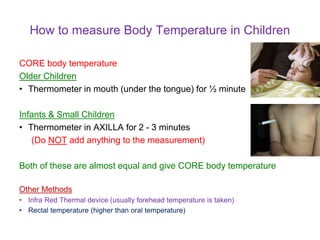
How to measure Body Temperature in Children
CORE body temperature
Older Children
• Thermometer in mouth (under the tongue) for ½ minute
Infants & Small Children
• Thermometer in AXILLA for 2 - 3 minutes
(Do NOT add anything to the measurement)
Both of these are almost equal and give CORE body temperature
Other Methods
• Infra Red Thermal device (usually forehead temperature is taken)
• Rectal temperature (higher than oral temperature)
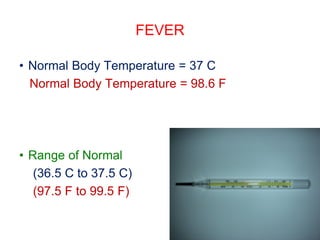
FEVER
• Normal Body Temperature = 37 C
Normal Body Temperature = 98.6 F
• Range of Normal
(36.5 C to 37.5 C)
(97.5 F to 99.5 F)
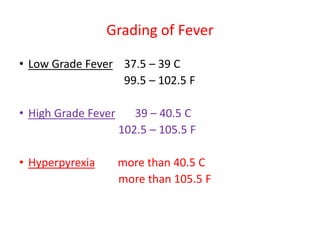
Grading of Fever
• Low Grade Fever 37.5 – 39 C
99.5 – 102.5 F
• High Grade Fever 39 – 40.5 C
102.5 – 105.5 F
• Hyperpyrexia more than 40.5 C
more than 105.5 F
Fever in Children
• During rising fever trunk will be warm and extremities
cold
• During stable fever, whole body will be warm
• Shivering accompanies rapid rise of fever
• Shivering can occur in all febrile illnesses and is not
specific for any cause or diagnosis
Is fever Beneficial for human body?
• Fever is an important clinical symptom and sign of
illness
• During fever, immune function of leukocytes is
increased
• More lymphocyte proliferation and cytokine
production
• Growth of infectious microorganisms is inhibited
(decreased)
Harmful effects of fever?
• During fever, Oxygen demand and O2 consumption is
increased
• Children are irritable and anorexic during febrile episodes
• Febrile convulsions (fits during sudden rise of fever) can occur
in children below five years of age
• Hyperpyrexia can compromise cardio-respiratory and
metabolic functions of the body and can damage the brain
How to Evaluate and Manage the child with Fever ?
• Initial assessment
• History
• Examination
• Diagnosis
• Investigations if needed
• Management
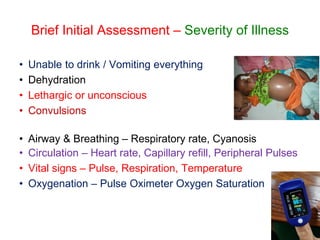
Brief Initial Assessment – Severity of Illness
• Unable to drink / Vomiting everything
• Dehydration
• Lethargic or unconscious
• Convulsions
• Airway & Breathing – Respiratory rate, Cyanosis
• Circulation – Heart rate, Capillary refill, Peripheral Pulses
• Vital signs – Pulse, Respiration, Temperature
• Oxygenation – Pulse Oximeter Oxygen Saturation
History
• How much Fever was present on day 1, day 2, day 3 ?
(gradual or sudden rise?)
• Does the child have associated symptoms of ?
- cough, breathing problem
- vomiting, diarrhea
- skin rashes
- headache, convulsions / fits
- burning micturition
- pain anywhere in the body ?
Technique of Physical Examination
• Inspection
• Auscultation
• Palpation
Physical Examination of Child
• Dehydration
• Skin rashes
• Respiration, chest indrawing
• Cardiac & chest auscultation
• Eyes – conjunctivitis, jaundice, anemia
• Oral cavity – thrush, ulcers
• Lymph nodes
• Liver, spleen
• Signs of meningeal irritation
• Throat, ears
Diagnosis
and
Differential Diagnosis
Classify differential diagnoses
10 common clinical problems
Diagnosis of Child with FEVER
(10 common clinical problems)
• URTI – Runny nose, Cough, Flu
• ENT – Sore throat, Ear pain
• Respiration – Cough, Fast breathing, Chest indrawing
• GIT – Vomiting, Diarrhea, Pain abdomen
• Liver – Pain abdomen, Vomiting, Jaundice
• CNS – Headache, Vomiting, Convulsions, SOMI
• Skin – Skin rashes, Swellings, Lymphadenopathy
• Urinary – Burning micturition
• Musculoskeletal – Pain and swelling of joints
• Systemic – No localizing signs, Splenomegaly
Fever + URTI symptoms and signs
Runny nose, Cough, Flu
• Fever (low) + Runny nose + cough =
Acute Rhino-sinusitis,
ARI (cough and cold)
• Fever (high) + Runny nose + cough = Influenza
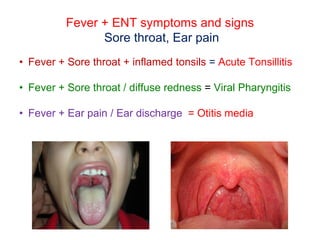
Fever + ENT symptoms and signs
Sore throat, Ear pain
• Fever + Sore throat + inflamed tonsils = Acute Tonsillitis
• Fever + Sore throat / diffuse redness = Viral Pharyngitis
• Fever + Ear pain / Ear discharge = Otitis media
Fever + Respiration symptoms and signs
Cough, Fast breathing, Chest indrawing
• Fever + Cough
AND
• Fast breathing / Chest indrawing
OR
• Inspiratory coarse crepitations
OR
• Bronchial breath sounds
Pneumonia
Fever + GIT symptoms and signs
Vomiting, Diarrhea, Pain abdomen
• Fever + Vomiting + Diarrhea = Acute Gastroenteritis
• Fever + blood in stool = Dysentry
• Fever + Pain abdomen + tenderness = Appendicitis,
= Peritonitis
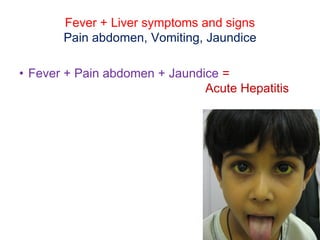
Fever + Liver symptoms and signs
Pain abdomen, Vomiting, Jaundice
• Fever + Pain abdomen + Jaundice =
Acute Hepatitis
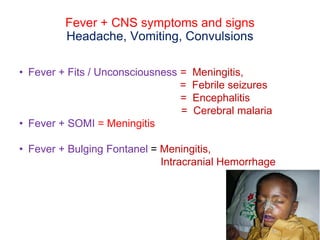
Fever + CNS symptoms and signs
Headache, Vomiting, Convulsions
• Fever + Fits / Unconsciousness = Meningitis,
= Febrile seizures
= Encephalitis
= Cerebral malaria
• Fever + SOMI = Meningitis
• Fever + Bulging Fontanel = Meningitis,
Intracranial Hemorrhage
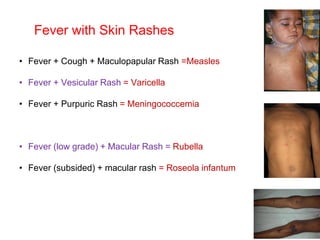
Fever with Skin Rashes
• Fever + Cough + Maculopapular Rash =Measles
• Fever + Vesicular Rash = Varicella
• Fever + Purpuric Rash = Meningococcemia
• Fever (low grade) + Macular Rash = Rubella
• Fever (subsided) + macular rash = Roseola infantum
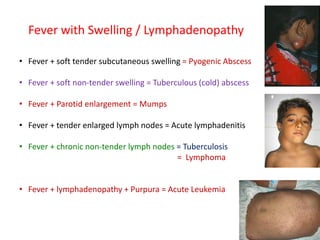
Fever with Swelling / Lymphadenopathy
• Fever + soft tender subcutaneous swelling = Pyogenic Abscess
• Fever + soft non-tender swelling = Tuberculous (cold) abscess
• Fever + Parotid enlargement = Mumps
• Fever + tender enlarged lymph nodes = Acute lymphadenitis
• Fever + chronic non-tender lymph nodes = Tuberculosis
= Lymphoma
• Fever + lymphadenopathy + Purpura = Acute Leukemia
Fever + Urinary symptoms and signs
Pain, Burning micturition
• Fever + Pain + Urine problems = UTI
Fever + Musculoskeletal symptoms and signs
Pain and swelling of joints
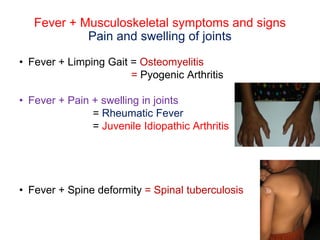
• Fever + Limping Gait = Osteomyelitis
= Pyogenic Arthritis
• Fever + Pain + swelling in joints
= Rheumatic Fever
= Juvenile Idiopathic Arthritis
• Fever + Spine deformity = Spinal tuberculosis
Fever + Systemic illness
Splenomegaly
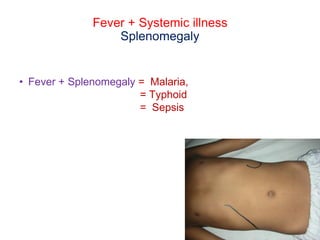
• Fever + Splenomegaly = Malaria,
= Typhoid
= Sepsis
Fever + Systemic illness
No localizing signs
• Fever + No localizing signs =
= Bacteremia, Septicemia
= Typhoid
= UTI
= Malaria
(PUO – Pyrexia of Unknown Origin)
Prolonged Fever (more than 14 days)
• Prolonged Fever (more than 14 days) =
= Typhoid
= Tuberculosis
= Rheumatic diseases / JIA
= Auto-immune diseases / SLE
= Lymphoma / Leukemia
= AIDS
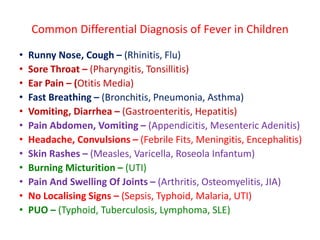
Common Differential Diagnosis of Fever in Children
• Runny Nose, Cough – (Rhinitis, Flu)
• Sore Throat – (Pharyngitis, Tonsillitis)
• Ear Pain – (Otitis Media)
• Fast Breathing – (Bronchitis, Pneumonia, Asthma)
• Vomiting, Diarrhea – (Gastroenteritis, Hepatitis)
• Pain Abdomen, Vomiting – (Appendicitis, Mesenteric Adenitis)
• Headache, Convulsions – (Febrile Fits, Meningitis, Encephalitis)
• Skin Rashes – (Measles, Varicella, Roseola Infantum)
• Burning Micturition – (UTI)
• Pain And Swelling Of Joints – (Arthritis, Osteomyelitis, JIA)
• No Localising Signs – (Sepsis, Typhoid, Malaria, UTI)
• PUO – (Typhoid, Tuberculosis, Lymphoma, SLE)
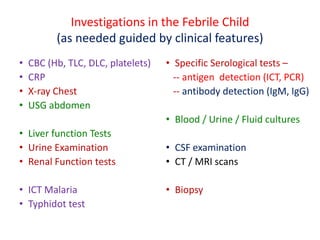
Investigations in the Febrile Child
(as needed guided by clinical features)
• CBC (Hb, TLC, DLC, platelets)
• CRP
• X-ray Chest
• USG abdomen
• Liver function Tests
• Urine Examination
• Renal Function tests
• ICT Malaria
• Typhidot test
• Specific Serological tests –
-- antigen detection (ICT, PCR)
-- antibody detection (IgM, IgG)
• Blood / Urine / Fluid cultures
• CSF examination
• CT / MRI scans
• Biopsy
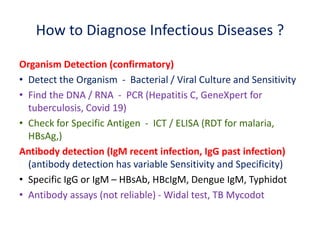
How to Diagnose Infectious Diseases ?
Organism Detection (confirmatory)
• Detect the Organism - Bacterial / Viral Culture and Sensitivity
• Find the DNA / RNA - PCR (Hepatitis C, GeneXpert for
tuberculosis, Covid 19)
• Check for Specific Antigen - ICT / ELISA (RDT for malaria,
HBsAg,)
Antibody detection (IgM recent infection, IgG past infection)
(antibody detection has variable Sensitivity and Specificity)
• Specific IgG or IgM – HBsAb, HBcIgM, Dengue IgM, Typhidot
• Antibody assays (not reliable) - Widal test, TB Mycodot
Management of the Febrile Child
• Symptomatic Management
• Supportive Management
• Specific Management
• Manage Complications
Symptomatic Management for Fever
• Do not over-wrap the child
• Antipyretics for Fever
Paracetamol = 10 – 15 mg/kg
Ibuprofen = 5 – 10 mg/kg
• Sponging with water
Nutritional Management of the Febrile Child
• Give Extra Fluids
• MAINTAIN CALORIC INTAKE
• Small frequent feeds of soft, palatable diet
• Give usual diet which the child likes. Do not restrict any food
• IV Fluids if frequent vomiting, severe anorexia or hypoglycemia
Specific Management of the Febrile Child
• Treat the cause after the clinical / laboratory diagnosis
• Follow standard treatment guidelines for different diseases
• Avoid inappropriate use of Antibiotics which is the most
important reason for anti-microbial resistance
• Viral infections, cough and cold and diarrhea do not need
antibiotics
Choice of Antibiotics for Infections
• For infections, Consider:
1. focus of infection
2. likely infecting micro-organisms at the site of infection
3. antibiotics which are effective against these micro-organisms
4. local resistance pattern of micro-organism
 Choice of Antibiotic for an infection depends upon
• Severity of illness
• Route of administration - Oral or IM or IV antibiotics
• Phamacokinetics of medicine
• Adverse effects of antibiotics
PREVENTION
Protection against Infections
• Vaccination
• Handwashing
• Use Masks
• Social distancing
• Unpolluted air
• Breastfeeding
• Adequate Nutrition
• Micronutrients
• Safe water
• Clean food and Milk
EPI Pakistan gives Protection against following
10 Diseases
• Tuberculosis
• Diphtheria
• Pertussis
• Tetanus
• Hepatitis B
• Polio
• Rota virus
• Pneumococcal diseases
• Hib
• Measles
Other Vaccines available in Pakistan
• Measles, Mumps, Rubella
• Varicella
• Hepatitis A
• Typhoid
• Meningococcal vaccine
• Influenza
• Covid 19
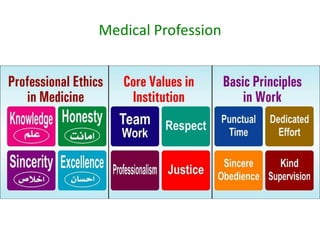
Medical Profession
Thankyou

Febrile illness in children 2021

  • 1.
    Febrile Illness in Children Types, ClinicalFeatures, Diagnosis Complications, Management and Prevention Prof. Imran Iqbal Fellowship in Pediatric Neurology (Australia) Prof of Paediatrics (2003-2018) Prof of Pediatrics Emeritus, CHICH Prof of Pediatrics, CIMS Multan, Pakistan
  • 2.
    (God speaking toProphet Muhammad (PBUH) And remember our prophet Ayub (Job), when he called his Lord: “Indeed I have been afflicted with distress (illness), and You are the Most merciful of all those who are kind” Al Quran surah Al-Anbiya 21:83
  • 3.
    Clinical Case Scenario •An 8 year old child presents with fever for the last 5 days. • Fever rises in the evening • Child is not active as before • His appetite has decreased • On examination, his temperature is 104 F • How will you further evaluate this child to make a diagnosis and decide about management ?
  • 4.
    How Body Temperatureis maintained ? CORE BODY TEMPERATURE is regulated by HYPOTHALAMUS to be within the normal range by controlling the mechanisms of Heat production and Heat loss
  • 5.
    Mechanisms of Regulation HeatProduction • Body metabolism • Muscle activity • Shivering • Vasoconstriction Heat Loss • Respiration • Convection • Vasodilatation • Sweating
  • 6.
    Pathophysiology of Fever •Fever occurs when there is change in setting of regulatory center or thermostat located in the hypothalamus (by endogenous pyrogens = IL1, IL6, TNF) • Fever can also result from failure of regulatory mechanisms due to very high environmental temperatures (Heat stroke during summer season)
  • 7.
    How to measureBody Temperature in Children CORE body temperature Older Children • Thermometer in mouth (under the tongue) for ½ minute Infants & Small Children • Thermometer in AXILLA for 2 - 3 minutes (Do NOT add anything to the measurement) Both of these are almost equal and give CORE body temperature Other Methods • Infra Red Thermal device (usually forehead temperature is taken) • Rectal temperature (higher than oral temperature)
  • 8.
    FEVER • Normal BodyTemperature = 37 C Normal Body Temperature = 98.6 F • Range of Normal (36.5 C to 37.5 C) (97.5 F to 99.5 F)
  • 9.
    Grading of Fever •Low Grade Fever 37.5 – 39 C 99.5 – 102.5 F • High Grade Fever 39 – 40.5 C 102.5 – 105.5 F • Hyperpyrexia more than 40.5 C more than 105.5 F
  • 10.
    Fever in Children •During rising fever trunk will be warm and extremities cold • During stable fever, whole body will be warm • Shivering accompanies rapid rise of fever • Shivering can occur in all febrile illnesses and is not specific for any cause or diagnosis
  • 11.
    Is fever Beneficialfor human body? • Fever is an important clinical symptom and sign of illness • During fever, immune function of leukocytes is increased • More lymphocyte proliferation and cytokine production • Growth of infectious microorganisms is inhibited (decreased)
  • 12.
    Harmful effects offever? • During fever, Oxygen demand and O2 consumption is increased • Children are irritable and anorexic during febrile episodes • Febrile convulsions (fits during sudden rise of fever) can occur in children below five years of age • Hyperpyrexia can compromise cardio-respiratory and metabolic functions of the body and can damage the brain
  • 13.
    How to Evaluateand Manage the child with Fever ? • Initial assessment • History • Examination • Diagnosis • Investigations if needed • Management
  • 14.
    Brief Initial Assessment– Severity of Illness • Unable to drink / Vomiting everything • Dehydration • Lethargic or unconscious • Convulsions • Airway & Breathing – Respiratory rate, Cyanosis • Circulation – Heart rate, Capillary refill, Peripheral Pulses • Vital signs – Pulse, Respiration, Temperature • Oxygenation – Pulse Oximeter Oxygen Saturation
  • 15.
    History • How muchFever was present on day 1, day 2, day 3 ? (gradual or sudden rise?) • Does the child have associated symptoms of ? - cough, breathing problem - vomiting, diarrhea - skin rashes - headache, convulsions / fits - burning micturition - pain anywhere in the body ?
  • 16.
    Technique of PhysicalExamination • Inspection • Auscultation • Palpation
  • 17.
    Physical Examination ofChild • Dehydration • Skin rashes • Respiration, chest indrawing • Cardiac & chest auscultation • Eyes – conjunctivitis, jaundice, anemia • Oral cavity – thrush, ulcers • Lymph nodes • Liver, spleen • Signs of meningeal irritation • Throat, ears
  • 18.
  • 19.
    Diagnosis of Childwith FEVER (10 common clinical problems) • URTI – Runny nose, Cough, Flu • ENT – Sore throat, Ear pain • Respiration – Cough, Fast breathing, Chest indrawing • GIT – Vomiting, Diarrhea, Pain abdomen • Liver – Pain abdomen, Vomiting, Jaundice • CNS – Headache, Vomiting, Convulsions, SOMI • Skin – Skin rashes, Swellings, Lymphadenopathy • Urinary – Burning micturition • Musculoskeletal – Pain and swelling of joints • Systemic – No localizing signs, Splenomegaly
  • 20.
    Fever + URTIsymptoms and signs Runny nose, Cough, Flu • Fever (low) + Runny nose + cough = Acute Rhino-sinusitis, ARI (cough and cold) • Fever (high) + Runny nose + cough = Influenza
  • 21.
    Fever + ENTsymptoms and signs Sore throat, Ear pain • Fever + Sore throat + inflamed tonsils = Acute Tonsillitis • Fever + Sore throat / diffuse redness = Viral Pharyngitis • Fever + Ear pain / Ear discharge = Otitis media
  • 22.
    Fever + Respirationsymptoms and signs Cough, Fast breathing, Chest indrawing • Fever + Cough AND • Fast breathing / Chest indrawing OR • Inspiratory coarse crepitations OR • Bronchial breath sounds Pneumonia
  • 23.
    Fever + GITsymptoms and signs Vomiting, Diarrhea, Pain abdomen • Fever + Vomiting + Diarrhea = Acute Gastroenteritis • Fever + blood in stool = Dysentry • Fever + Pain abdomen + tenderness = Appendicitis, = Peritonitis
  • 24.
    Fever + Liversymptoms and signs Pain abdomen, Vomiting, Jaundice • Fever + Pain abdomen + Jaundice = Acute Hepatitis
  • 25.
    Fever + CNSsymptoms and signs Headache, Vomiting, Convulsions • Fever + Fits / Unconsciousness = Meningitis, = Febrile seizures = Encephalitis = Cerebral malaria • Fever + SOMI = Meningitis • Fever + Bulging Fontanel = Meningitis, Intracranial Hemorrhage
  • 26.
    Fever with SkinRashes • Fever + Cough + Maculopapular Rash =Measles • Fever + Vesicular Rash = Varicella • Fever + Purpuric Rash = Meningococcemia • Fever (low grade) + Macular Rash = Rubella • Fever (subsided) + macular rash = Roseola infantum
  • 27.
    Fever with Swelling/ Lymphadenopathy • Fever + soft tender subcutaneous swelling = Pyogenic Abscess • Fever + soft non-tender swelling = Tuberculous (cold) abscess • Fever + Parotid enlargement = Mumps • Fever + tender enlarged lymph nodes = Acute lymphadenitis • Fever + chronic non-tender lymph nodes = Tuberculosis = Lymphoma • Fever + lymphadenopathy + Purpura = Acute Leukemia
  • 28.
    Fever + Urinarysymptoms and signs Pain, Burning micturition • Fever + Pain + Urine problems = UTI
  • 29.
    Fever + Musculoskeletalsymptoms and signs Pain and swelling of joints • Fever + Limping Gait = Osteomyelitis = Pyogenic Arthritis • Fever + Pain + swelling in joints = Rheumatic Fever = Juvenile Idiopathic Arthritis • Fever + Spine deformity = Spinal tuberculosis
  • 30.
    Fever + Systemicillness Splenomegaly • Fever + Splenomegaly = Malaria, = Typhoid = Sepsis
  • 31.
    Fever + Systemicillness No localizing signs • Fever + No localizing signs = = Bacteremia, Septicemia = Typhoid = UTI = Malaria
  • 32.
    (PUO – Pyrexiaof Unknown Origin) Prolonged Fever (more than 14 days) • Prolonged Fever (more than 14 days) = = Typhoid = Tuberculosis = Rheumatic diseases / JIA = Auto-immune diseases / SLE = Lymphoma / Leukemia = AIDS
  • 33.
    Common Differential Diagnosisof Fever in Children • Runny Nose, Cough – (Rhinitis, Flu) • Sore Throat – (Pharyngitis, Tonsillitis) • Ear Pain – (Otitis Media) • Fast Breathing – (Bronchitis, Pneumonia, Asthma) • Vomiting, Diarrhea – (Gastroenteritis, Hepatitis) • Pain Abdomen, Vomiting – (Appendicitis, Mesenteric Adenitis) • Headache, Convulsions – (Febrile Fits, Meningitis, Encephalitis) • Skin Rashes – (Measles, Varicella, Roseola Infantum) • Burning Micturition – (UTI) • Pain And Swelling Of Joints – (Arthritis, Osteomyelitis, JIA) • No Localising Signs – (Sepsis, Typhoid, Malaria, UTI) • PUO – (Typhoid, Tuberculosis, Lymphoma, SLE)
  • 34.
    Investigations in theFebrile Child (as needed guided by clinical features) • CBC (Hb, TLC, DLC, platelets) • CRP • X-ray Chest • USG abdomen • Liver function Tests • Urine Examination • Renal Function tests • ICT Malaria • Typhidot test • Specific Serological tests – -- antigen detection (ICT, PCR) -- antibody detection (IgM, IgG) • Blood / Urine / Fluid cultures • CSF examination • CT / MRI scans • Biopsy
  • 35.
    How to DiagnoseInfectious Diseases ? Organism Detection (confirmatory) • Detect the Organism - Bacterial / Viral Culture and Sensitivity • Find the DNA / RNA - PCR (Hepatitis C, GeneXpert for tuberculosis, Covid 19) • Check for Specific Antigen - ICT / ELISA (RDT for malaria, HBsAg,) Antibody detection (IgM recent infection, IgG past infection) (antibody detection has variable Sensitivity and Specificity) • Specific IgG or IgM – HBsAb, HBcIgM, Dengue IgM, Typhidot • Antibody assays (not reliable) - Widal test, TB Mycodot
  • 36.
    Management of theFebrile Child
  • 37.
    Management of theFebrile Child • Symptomatic Management • Supportive Management • Specific Management • Manage Complications
  • 38.
    Symptomatic Management forFever • Do not over-wrap the child • Antipyretics for Fever Paracetamol = 10 – 15 mg/kg Ibuprofen = 5 – 10 mg/kg • Sponging with water
  • 39.
    Nutritional Management ofthe Febrile Child • Give Extra Fluids • MAINTAIN CALORIC INTAKE • Small frequent feeds of soft, palatable diet • Give usual diet which the child likes. Do not restrict any food • IV Fluids if frequent vomiting, severe anorexia or hypoglycemia
  • 40.
    Specific Management ofthe Febrile Child • Treat the cause after the clinical / laboratory diagnosis • Follow standard treatment guidelines for different diseases • Avoid inappropriate use of Antibiotics which is the most important reason for anti-microbial resistance • Viral infections, cough and cold and diarrhea do not need antibiotics
  • 41.
    Choice of Antibioticsfor Infections • For infections, Consider: 1. focus of infection 2. likely infecting micro-organisms at the site of infection 3. antibiotics which are effective against these micro-organisms 4. local resistance pattern of micro-organism  Choice of Antibiotic for an infection depends upon • Severity of illness • Route of administration - Oral or IM or IV antibiotics • Phamacokinetics of medicine • Adverse effects of antibiotics
  • 42.
  • 43.
    Protection against Infections •Vaccination • Handwashing • Use Masks • Social distancing • Unpolluted air • Breastfeeding • Adequate Nutrition • Micronutrients • Safe water • Clean food and Milk
  • 44.
    EPI Pakistan givesProtection against following 10 Diseases • Tuberculosis • Diphtheria • Pertussis • Tetanus • Hepatitis B • Polio • Rota virus • Pneumococcal diseases • Hib • Measles
  • 45.
    Other Vaccines availablein Pakistan • Measles, Mumps, Rubella • Varicella • Hepatitis A • Typhoid • Meningococcal vaccine • Influenza • Covid 19
  • 46.
  • 47.