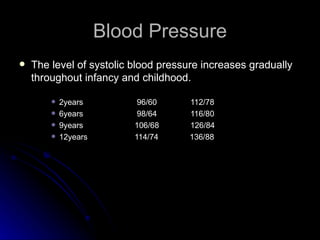
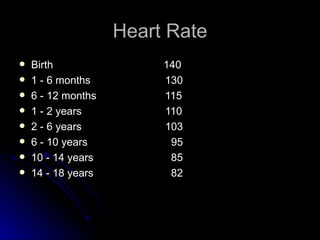
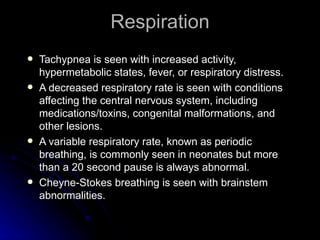
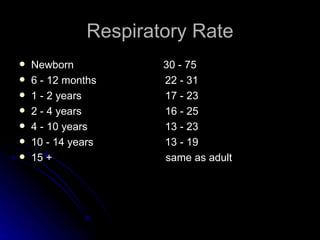
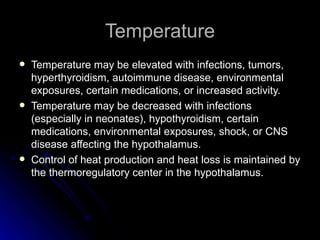
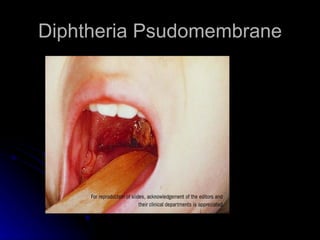
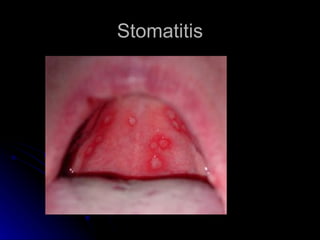
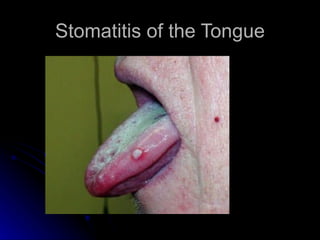
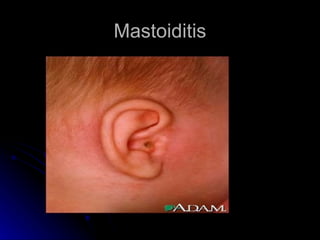
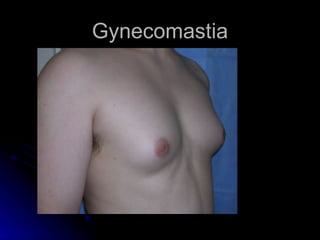
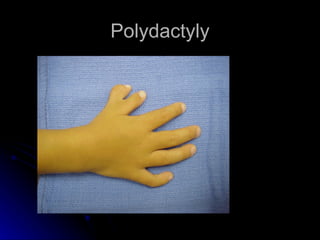
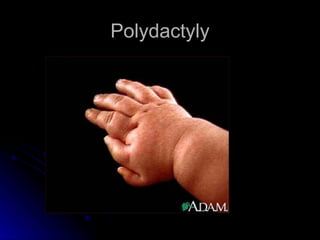
The document provides guidance on performing a physical examination on pediatric patients. Key points include examining the patient from head to toe, altering the order as needed for compliance, and having a parent present for young children. Vital signs like temperature, pulse, respiration and blood pressure should be measured and plotted on growth charts. The head, eyes, ears, nose, mouth, throat, heart, lungs and abdomen should all be carefully examined. Specific abnormalities to watch for in each area are outlined. The document emphasizes a thorough but gentle examination tailored to the child's age and cooperation level.














![[Mary sheridan] from_birth_to_five_years_children(bookos.org)[1]](https://cdn.slidesharecdn.com/ss_thumbnails/marysheridanfrombirthtofiveyearschildrenbookos-200719030205-thumbnail.jpg?width=640&height=640&fit=bounds)


![CASE_PRESENTATION_ON_subdural_hematoma(SDH)[1 FINAL PPT]-1.pptx](https://cdn.slidesharecdn.com/ss_thumbnails/casepresentationonsubduralhematomasdh1finalppt-1-260129172522-d405d375-thumbnail.jpg?width=640&height=640&fit=bounds)


