© 2013 Pearson Education, Inc.
PowerPoint®
Lecture Slides
prepared by
Meg Flemming
Austin Community College
C H A P T E R
Development
and Inheritance
20
© 2013 Pearson Education, Inc.
Chapter 20 Learning Outcomes
• 20-1
• Explain the relationship between differentiation and development,
and describe the various stages of development.
• 20-2
• Describe the process of fertilization.
• 20-3
• List the three stages of prenatal development, and describe the
major events of each.
• 20-4
• Explain how the three germ layers participate in the formation of
extraembryonic membranes, and discuss the importance of the
placenta as an endocrine organ.
© 2013 Pearson Education, Inc.
Chapter 20 Learning Outcomes
• 20-5
• Describe the interplay between maternal organ systems and the
developing fetus, and discuss the structural and functional changes
in the uterus during gestation.
• 20-6
• List and discuss the events that occur during labor and delivery.
• 20-7
• Identify the features and physiological changes of the postnatal
stages of life.
• 20-8
• Relate the basic principles of genetics to the inheritance of human
traits.
© 2013 Pearson Education, Inc.
Basics of Development (20-1)
• Differentiation is formation of different cell types
• Fertilization (or conception) is fusing of gametes
• Embryological development is first two months
• Fetal development is from the ninth week until birth
• Prenatal is both embryological and fetal development
• Postnatal continues to maturity
• Genetics is the study of mechanisms of inheritance
© 2013 Pearson Education, Inc.
Checkpoint (20-1)
1. Define differentiation.
2. What event marks the beginning of
development?
3. Define inheritance.
© 2013 Pearson Education, Inc.
Fertilization (20-2)
• Fusion of two haploid gametes each with 23
chromosomes
• Produces a zygote with 46 chromosomes
• Sperm provides paternal chromosomes
• Oocyte provides maternal chromosomes,
organelles, and nourishment to support embryo
• Occurs in upper third of uterine tube
© 2013 Pearson Education, Inc.
Fertilization (20-2)
• Sperm are motile when deposited in vagina
• Then must be exposed to peg cells in wall of uterine tube to
complete capacitation
• Requires dozens of sperm to reach oocyte
• Takes more than one to break through corona radiata around
oocyte
© 2013 Pearson Education, Inc.
Figure 20-1a Fertilization.
A secondary oocyte and
numerous sperm at the time
of fertilization. Notice the
difference in size between
the gametes.
© 2013 Pearson Education, Inc.
Figure 20-1b Fertilization. Oocyte at Ovulation
Corona
radiata
First polar
body
Zona
pellucida
Fertilization and Oocyte
Activation
Pronucleus Formation
Begins
Nucleus of
fertilizing
spermatozoon
Female
pronucleus
Cleavage Begins Amphimixis Occurs
and Cleavage Begins
Metaphase of first
cleavage division Male
pronucleus
Female
pronucleus
Blastomeres
Spindle Formation and
Cleavage Preparation
Fertilizing
spermatozoon
Second
polar body
© 2013 Pearson Education, Inc.
Ovulation (20-2)
• Results in expulsion of an immature secondary
oocyte
• Acrosomal caps of spermatozoa
• Release hyaluronidase
• Penetrate corona radiata, zona pellucida, toward oocyte
surface
© 2013 Pearson Education, Inc.
Oocyte Activation (20-2)
• Contact and fusion of cell membranes of sperm
and oocyte
• Oocyte undergoes last stages of meiosis II
• Female pronucleus
• Nuclear material remaining in ovum after oocyte activation
• Male pronucleus
• Swollen nucleus of spermatozoon
• Migrates to center of cell
© 2013 Pearson Education, Inc.
Amphimixis (20-2)
• Female pronucleus and male pronucleus fuse
• Moment of conception
• Cell becomes a zygote with 46 chromosomes
• Fertilization is finalized
© 2013 Pearson Education, Inc.
Checkpoint (20-2)
4. What two important roles do the acrosomal
enzymes of spermatozoa play in fertilization?
5. How many chromosomes are contained within a
human zygote?
© 2013 Pearson Education, Inc.
The Three Stages of Gestation (20-3)
• Also called pregnancy
• First trimester
• Embryological and early fetal development
• Basic components of organ systems appear
• Second trimester
• Organs and organ systems near completion of
development
• Third trimester
• Rapid fetal growth
• Organ systems become fully functional
© 2013 Pearson Education, Inc.
Checkpoint (20-3)
6. Define gestation.
7. Describe the key features of each trimester.
© 2013 Pearson Education, Inc.
Cleavage and Blastocyte Formation (20-4)
• Cleavage is a sequence of cell divisions
• Begins immediately after fertilization
• Daughter cells become smaller blastomeres
• Zygote becomes a pre-embryo, a morula
• Develops into multicellular blastocyst
• Outer layer is trophoblast; inner cell mass is to one side
• Ends when blastocyst contacts uterine wall
© 2013 Pearson Education, Inc.
Figure 20-2 Cleavage and Blastocyst Formation.
Blastomeres
Polar bodies
2-cell stage
4-cell stage
Early morula
Advanced
morula
Hatching
Inner cell
mass
Blastocoele
Trophoblast Blastocyst
Days 7–10:
Implantation in
uterine wall
(See Figure 20-3)
DAY 0:
Fertilization
First cleavage
division
DAY 1 DAY 2
DAY 3
DAY 4
DAY 6
© 2013 Pearson Education, Inc.
Implantation (20-4)
• Begins as blastocyst adheres to endometrium of
uterus
• Occurs in day 6–9
• Inner cell mass develops into syncytial trophoblast
• Sets stage for formation of vital embryonic structures
• Ectopic pregnancy
• Implantation occurs in site other than uterus
© 2013 Pearson Education, Inc.
Formation of the Amniotic Cavity (20-4)
• Fluid-filled cavity
• Inner cell mass separates from trophoblast
• Cavity develops by day 9
• Yolk sac forms by day 10
© 2013 Pearson Education, Inc.
Blastocoele
Lacuna
DAY 6
DAY 7
DAY 8
DAY 9
FUNCTIONAL ZONE
OF ENDOMETRIUM
UTERINE CAVITY
Blastocyst
Uterine
glands
Trophoblast
Inner cell
mass
Cellular
trophoblastSyncytial
trophoblast
Amniotic
cavity
Developing
villi
Endometrial
capillary
Figure 20-3 Events in Implantation.
© 2013 Pearson Education, Inc.
Gastrulation and Germ Layer Formation (20-4)
• By day 12
• Inner cell mass develops into germ layers
• Ectoderm
• Endoderm
• Mesoderm
© 2013 Pearson Education, Inc.
Figure 20-4 The Inner Cell Mass and Gastrulation.
Superficial layer
Deep layer
Cellular trophoblast
Amniotic cavity
Yolk sac
Blastocoele
Lacuna
Amnion
Ectoderm
Primitive
streak
Blastodisc
Yolk sac
Mesoderm
Endoderm
Embryonic
disc
Syncytial trophoblast
Day 10: Yolk Sac Formation
Day 12: Gastrulation
© 2013 Pearson Education, Inc.
Table 20-1 The Fates of the Germ Layers
© 2013 Pearson Education, Inc.
Four Extraembryonic Membranes (20-4)
1. Yolk sac
• Site of early nutrients and blood cell formation
2. Amnion
• Contains amnionic fluid
3. Allantois
• Gives rise to urinary bladder
4. Chorion
• Provides rapid transit pathway for nutrients to embryo
© 2013 Pearson Education, Inc.
Figure 20-5 Extraembryonic Membranes and Placenta Formation.
Week 2
Week 5
Amnion
Syncytial
trophoblast
Cellular
trophoblast
Mesoderm
Yolk sac
Blastocoele
Chorion
Uterus
Myometrium
Umbilical stalk
Placenta
Yolk sac
Chorionic villi
of placenta
Uterine cavity
Amniotic cavity
(containing
amniotic fluid)
Allantois
Head fold
of embryo
Chorion
Syncytial
trophoblast
Chorionic villi
of placenta
Yolk
sac
Week 4
Tail fold
Body stalk
Yolk stalk
Yolk sac
Embryonic gut
Embryonic
head fold
Umbilical cord
Placenta
Amniotic cavity
Amnion
Chorion
Week 10
Week 3
© 2013 Pearson Education, Inc.
Placentation (20-4)
• Occurs as blood vessels form in chorion around
periphery of blastocyst
• Chorionic villi form in contact with maternal tissue
• By week 4 embryo, amnion, and yolk sac are
within fluid-filled chamber
• By week 10 fetus floats in amniotic cavity
• Connected by umbilical cord
© 2013 Pearson Education, Inc.
Placental Circulation (20-4)
• By end of the first trimester circulation is
developed
• Umbilical arteries
• Take deoxygenated blood to placenta
• Umbilical vein
• Returns oxygenated blood from placenta to fetus
© 2013 Pearson Education, Inc.
First Trimester Endocrine Secretions of the
Placenta (20-4)
• Human chorionic gonadotropin (hCG)
• Maintains corpus luteum
• Results in maintenance of endometrial lining
• Presence in urine used as indicator of pregnancy
• Progesterone and estrogens
• Secreted by corpus luteum until placenta takes over
• Prevents menses
© 2013 Pearson Education, Inc.
Third Trimester Endocrine Secretions of
Placenta (20-4)
• Human placental lactogen and placental
prolactin
• Rise at end of third trimester
• Prepare mammary glands for milk production
• Relaxin
• Increases flexibility of pubis symphysis
• Causes dilation of cervix
• Suppresses secretion of oxytocin, delaying onset of labor
contractions
© 2013 Pearson Education, Inc.
Figure 20-6 The Placenta and Placental Circulation.
Chorion
Amnion
Umbilical cord (cut) Placenta
Yolk sac
Umbilical
vein
Umbilical
arteries
Chorionic
villi
Area filled with
maternal blood
Maternal
blood vessels
Syncytial trophoblast
Amnion
Cervix
Vagina
External os
Cervical (mucous)
plug in
cervical canal
Uterine cavity
Myometrium
Endometrium
© 2013 Pearson Education, Inc.
Embryogenesis (20-4)
• Formation of viable embryo
• Folding and differential growth
• By week 4 dorsal and ventral surfaces are
apparent
• Organogenesis
• Organ formation in first trimester
© 2013 Pearson Education, Inc.
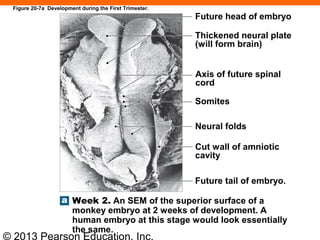
Future head of embryo
Thickened neural plate
(will form brain)
Axis of future spinal
cord
Somites
Neural folds
Cut wall of amniotic
cavity
Future tail of embryo.
Week 2. An SEM of the superior surface of a
monkey embryo at 2 weeks of development. A
human embryo at this stage would look essentially
the same.
Figure 20-7a Development during the First Trimester.
© 2013 Pearson Education, Inc.
Figure 20-7b Development during the First Trimester.
Medulla
oblongata
Ear
Forebrain
Eye
Heart
Body
stalk
Tail
Pharyngeal
arches
Somites
Arm bud
Leg bud
Week 4. Fiberoptic view of human development
at week 4.
© 2013 Pearson Education, Inc.
Figure 20-7c Development during the First Trimester.
Chorionic
villi
Amnion
Week 8. Fiberoptic view of
human development at week 8.
Umbilical
cord
Placenta
© 2013 Pearson Education, Inc.
Amnion
Umbilical
cord
Week 12. Fiberoptic view of human
development at week 12.
Figure 20-7d Development during the First Trimester.
© 2013 Pearson Education, Inc.
Checkpoint (20-4)
8. What is the developmental fate of the inner cell
mass of the blastocyst?
9. Sue's pregnancy test indicates elevated levels of
the hormone hCG (human chorionic
gonadotropin). Is she pregnant?
10. What are two important functions of the
placenta?
© 2013 Pearson Education, Inc.
Second and Third Trimester Development
(20-5)
• Second trimester
• Fetus grows faster than placenta
• Third trimester
• Basic components of organ systems appear
• Most are ready to perform functions
• Largest fetal weight gain occurs
© 2013 Pearson Education, Inc.
Figure 20-8 The Fetus during the Second and Third Trimesters.
A four-month-old fetus, seen through a fiberoptic endoscope Head of a six-month-old fetus, revealed
through ultrasound
© 2013 Pearson Education, Inc.
Table 20-2 An Overview of Prenatal and Early Postnatal Development* (1 of 4)
© 2013 Pearson Education, Inc.
Table 20-2 An Overview of Prenatal and Early Postnatal Development* (2 of 4)
© 2013 Pearson Education, Inc.
Table 20-2 An Overview of Prenatal and Early Postnatal Development* (3 of 4)
© 2013 Pearson Education, Inc.
Table 20-2 An Overview of Prenatal and Early Postnatal Development* (4 of 4)
© 2013 Pearson Education, Inc.
Figure 20-9 Changes in Body Form and Proportion during Development.
Prenatal Development
Embryological Development
4 weeks
8 weeks
Fetal Development
16 weeks
Postnatal Development
Neonatal Infancy Childhood Adolescence Maturity
5 ft
4 ft
3 ft
2 ft
1 ft
0
1 month 2 years Puberty
(between 9–14 years)
18 years
© 2013 Pearson Education, Inc.
Changes in Maternal Systems (20-5)
• Respiratory rate and tidal volume increase
• Blood volume increases
• Nutrient requirements increase
• GFR increases
• Uterus increases in size
• Mammary glands increase in size and activity
© 2013 Pearson Education, Inc.
Structural and Functional Uterine Changes
(20-5)
• At end of gestation the uterus:
• Has grown from 3 to 12 inches in length
• Contains 2 liters of fluid, fetus, and placenta
• Labor contractions
• Fetal oxytocin triggers positive feedback mechanism
• Increases myometrial contractions
© 2013 Pearson Education, Inc.
Checkpoint (20-5)
11. List the major changes that occur in maternal
systems during pregnancy.
12. Why does a woman's blood volume increase
during pregnancy?
13. By what means does the uterus greatly increase
in size and weight during pregnancy?
14. Identify three major factors opposing the
calming action of progesterone on the uterus.
© 2013 Pearson Education, Inc.
The Three Stages of Labor (20-6)
• Also called parturition
1. Dilation stage
2. Expulsion stage
3. Placental stage
© 2013 Pearson Education, Inc.
The Dilation Stage (20-6)
• Fetus shifts toward cervix
• This stage is highly variable in length, but typically
lasts 8 or more hours
• Amnion ruptures, "water breaks"
© 2013 Pearson Education, Inc.
The Expulsion Stage (20-6)
• Fetus pushed through cervix and vagina
• Referred to as delivery
• Episiotomy
• Incision in perineal musculature to enlarge birth canal
• Cesarean section
• Incision in abdominal wall to deliver fetus if vaginal delivery
not possible
© 2013 Pearson Education, Inc.
The Placental Stage (20-6)
• Uterine contractions tear connections between
endometrium and placenta
• Placenta is ejected from body as "afterbirth"
• Retained placenta can result in infection
© 2013 Pearson Education, Inc.
Figure 20-10 Factors Involved in Initiating and Sustaining Labor and Delivery.
Placental Factors Fetal Factors
Distortion of Myometrium
Prostaglandin ProductionMaternal Oxytocin Release
Increased Excitability of the Myometrium
LABOR CONTRACTIONS OCCUR
Placental estrogens increase the sensitivity of the smooth
muscle cells of the myometrium and make contractions
more likely. As delivery approaches, the production of
estrogens accelerates. Estrogens also increase the
sensitivity of smooth muscle fibers to oxytocin.
Relaxin produced
by the placenta
relaxes the pelvic
articulations and
dilates the cervix.
Growth and the
increase in fetal
weight stretch
and distort the
myometrium.
Fetal pituitary
releases
oxytocin in
response to
estrogens.
Distortion of the myometrium increases
the sensitivity of the smooth muscle
layers, promoting spontaneous contrac-
tions that get stronger and more
frequent as the pregnancy advances.
Labor contractions
move the fetus and
further distort the
myometrium. This
distortion stimulates
additional oxytocin
and prostaglandin
release. This positive
feedback continues
until delivery is
completed.
Estrogens and oxytocin stimulate the production of
prostaglandins in the endometrium. These local
hormones further stimulate smooth muscle contractions.
Maternal oxytocin release is
stimulated by high estrogen levels
and by distortion of the cervix.
Oxytocin and prostaglandins both stimulate the myometrium. In addition, the sensitivity of the uterus to oxytocin
increases dramatically; the smooth muscle in a late-term uterus is 100 times more sensitive to oxytocin than the
smooth muscle in a nonpregnant uterus.
© 2013 Pearson Education, Inc.
Fully developed fetus before labor begins The Dilation Stage
The Expulsion Stage
Pubic
symphysis
Cervical
canal
Vagina
Sacral
promontory Cervix
Umbilical
cord
Placenta
The Placental Stage
Uterus Ejection of the
placenta
Figure 20-11 The Stages of Labor.
© 2013 Pearson Education, Inc.
Premature Labor (20-6)
• Contractions occur before fetus completes development
• Miscarriage or spontaneous abortion
• Prior to end of second trimester, fetal weight under 500 g
• Immature delivery
• Fetal weight above 500 g
• Most born at 25–27 weeks of gestation die or have complications
• Premature delivery
• Birth at 28–36 weeks requires extra care, infants usually survive
© 2013 Pearson Education, Inc.
Multiple Births (20-6)
• "Fraternal" or dizygotic
• Two separate oocytes are fertilized at same time
• "Identical" or monozygotic
• Blastomeres separate early in cleavage
• Conjoined twins
• When splitting of blastomeres is incomplete
• Shared skin and organs
© 2013 Pearson Education, Inc.
Checkpoint (20-6)
15. Name the three stages of labor.
16. What is the difference between immature
delivery and premature delivery?
17. What are the biological terms for fraternal twins
and identical twins?
© 2013 Pearson Education, Inc.
Postnatal Stages (20-7)
• Life stages
• Neonatal period
• Infancy
• Childhood
• Adolescence
• Maturity
© 2013 Pearson Education, Inc.
The Neonatal Period (20-7)
• Newborn is also called a neonate
1. Filling collapsed lungs with powerful inhalation
2. Changes in blood pressure and flow rates
• Triggers separation of systemic and pulmonary circuits
3. Heart rate slows from 150 bpm to 120–140 bpm
4. Digestive system becomes active with nursing
© 2013 Pearson Education, Inc.
The Neonatal Period (20-7)
5. Kidneys eliminate urine
• Lack ability to concentrate urine
• Neonates require high fluid intake
6. Mechanisms for controlling body temperature
• Develops subcutaneous fat layer
• Increases metabolic activity
© 2013 Pearson Education, Inc.
Lactation and the Mammary Glands (20-7)
• By month 6 of gestation, mammary glands fully
developed
• Colostrum
• Early secretion includes:
• Higher proteins, lower fat than breast milk
• Proteins are mostly antibodies for short-term immunity
• Milk let-down reflex
• Initiated by suckling
• Functions until weaning
© 2013 Pearson Education, Inc.
Figure 20-12 The Milk Let-Down Reflex.
Stimulation of hypothalamic nuclei
Posterior
lobe of the
pituitary
gland
Oxytocin Release
Milk Ejected
Tactile receptors
in nipples
stimulated
Neural impulses are
propagated to the
spinal cord.
Start
© 2013 Pearson Education, Inc.
Infancy and Childhood (20-7)
• Growth
• Directed by circulating hormones
• GH, adrenal steroids, TH
• Specific effects
• Are unique from organ to organ
• Results in nonuniformity of growth patterns
© 2013 Pearson Education, Inc.
Adolescence (20-7)
• Begins at onset of puberty
• Increase in GnRH
• Increase in LH and FSH
• Gamete formation
• Secretion of sex hormones
• Development of secondary sex characteristics
• Rapid growth spurt
© 2013 Pearson Education, Inc.
Maturity (20-7)
• Often identified as starting when growth stops
• Physiological changes continue
• Menopause and male climacteric
• Senescence
• The aging process
• Ultimately leads to death
© 2013 Pearson Education, Inc.
Checkpoint (20-7)
18. Name the postnatal stages of development.
19. What is the difference between colostrum and
breast milk?
20. Increases in the blood levels of GnRH, FSH, LH,
and sex hormones mark the onset of which
stage of development?
© 2013 Pearson Education, Inc.
Genes and Chromosomes (20-8)
• DNA
• Contains chromosomes, which contain genes
• Segments of DNA with peptide synthesis information
• Genotype
• Original 46 chromosomes formed in zygote retained in every
cell
• Determine unique characteristics of your phenotype
© 2013 Pearson Education, Inc.
Patterns of Inheritance (20-8)
• Homologous chromosomes
• Members of each pair of chromosomes
• One member contributed by sperm, other by ovum
• Autosomal chromosomes
• 22 pairs of homologous chromosomes
• Affect somatic characteristics like hair color
© 2013 Pearson Education, Inc.
Patterns of Inheritance (20-8)
• Sex chromosomes
• 23rd pair of homologous chromosomes
• Determine genetic male or genetic female
• Karyotype
• Entire set of chromosomes
© 2013 Pearson Education, Inc.
Patterns of Inheritance (20-8)
• Alleles are forms of a particular gene
• Homozygous
• When both alleles are the same for a specific trait
• Heterozygous
• Alleles are not identical
• Dominant will be expressed phenotypically
• Recessive will not be expressed unless on both
chromosomes of pair
© 2013 Pearson Education, Inc.
Figure 20-13 A Human Karyotype.
© 2013 Pearson Education, Inc.
Predicting Inheritance (20-8)
• Simple inheritance
• Phenotypes determined by interactions of single pair of
alleles
• Fairly easy to predict
• Polygenic inheritance
• Phenotypes determined by interaction of multiple alleles
• Difficult to predict
© 2013 Pearson Education, Inc.
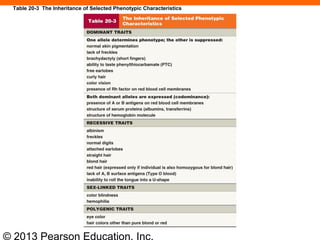
Table 20-3 The Inheritance of Selected Phenotypic Characteristics
© 2013 Pearson Education, Inc.
Predicting Inheritance (20-8)
• Genotype for specific trait indicated by letters
• Dominant trait uses capital letter
• Recessive trait uses lowercase letter
• Example: AA is homozygous dominant, Aa is heterozygous,
aa is homozygous recessive
• Combinations of parental alleles determine outcome
• Can be predicted using Punnett square
© 2013 Pearson Education, Inc.
Maternal alleles (contributed by
the ovum). Every ovum will carry
the recessive gene a.
a
Aa
All have normal skin
pigmentation
Paternal alleles
(contributed by
the spermatozoon).
Every sperm pro-
duced by a homozy-
gous dominant (AA)
father will carry the A
allele.
If the father is homozygous for normal pigmentation, all of the
children will have the genotype Aa, and all will have normal
skin pigmentation.
a
Aa
Aa Aa
A
A
Figure 20-14a Predicting Genotypes and Phenotypes with Punnett Squares.
© 2013 Pearson Education, Inc.
Maternal
alleles
50% of the children are ho-
mozygous recessive and
exhibit albinism.
Aa
50% of the children are het-
erozygous and have normal
pigmentation
a a
Aa
aa aa
A
a
If the father is heterozygous for normal skin pigmentation,
the probability that a child will have normal pigmentation is
reduced to 50%.
Half of the
sperm produced
by a heterozygous
(Aa) father will carry
the dominant allele
A, and the other half
will carry the recessive
allele a.
Figure 20-14b Predicting Genotypes and Phenotypes with Punnett Squares.
© 2013 Pearson Education, Inc.
Table 20-4 Fairly Common Inherited Disorders
© 2013 Pearson Education, Inc.
Sex-Linked Inheritance (20-8)
• X chromosome
• Larger with more genes
• Carried by all oocytes
• Y chromosome
• Includes dominant alleles for male genotype
• X-linked traits
• Alleles for somatic traits on the X chromosome
© 2013 Pearson Education, Inc.
Figure 20-15 Inheritance of an X-Linked Trait.
A man has only
one X chromo-
some, so whichever
allele that chromosome
carries determines
whether he has normal
color vision or is red–
green color-blind.
XC
XC
Normal female Normal female
(carrier)
Color-blind
male
Normal male
XC
Y XC
Y
XC
Xc
Xc
XC
XC
Y
A woman—who has two X
chromosomes—can be either ho-
mozygous dominant (XC
XC
) or
heterozygous (XC
Xc
) and still have
normal color vision. She will be
unable to distinguish reds from
greens only if she carries two
recessive alleles, Xc
Xc
.
© 2013 Pearson Education, Inc.
Human Genome Project (20-8)
• Genome is the full set of DNA in chromosomes
mapped through karyotyping
• All human chromosomes have been sequenced
• Total number of genes estimated at 20,000–25,000
• 99 percent of all nucleotide bases same in all people
• Single nucleotide polymorphisms locate disease
sequences on chromosomes
• 10,000 single-gene disorders have been described
© 2013 Pearson Education, Inc.
Figure 20-16 A Map of Human Chromosomes.
Familial Polyposis of the Colon
Abnormal tissue growths that
commonly lead to colon cancer
Huntington’s Disease
p. 295
Spinocerebellar Ataxia
Destroys neurons in the brain
and spinal cord, resulting in
loss of muscle control
Cystic Fibrosis
p. 506
Malignant Melanoma
p. 125
Multiple Endocrine Neoplasia, Type 2
Tumors in endocrine glands and
other tissues
Sickle Cell Anemia
p. 385
PKU
(phenylketonuria)
p. 587
Retinoblastoma
A relatively common tumor of the eye,
accounting for 2% of childhood malignancies
Alzheimer’s Disease
(one form) p. 294
Marfan Syndrome
p. 103
Breast Cancer
(one form)
p. 658
Familial Hypercholesterolemia
Extremely high cholesterol
Down Syndrome
p. 700
Hemophilia
p. 399
Muscular Dystrophy
p. 236
Color Blindness (multiple forms)
p. 324
Prostate Cancer
p. 667
1 2 3
4
5
6
7
8
9
10
11121314
15
16
17
18
19
20
21
22XY
CHROMOSOME
PAIRS
© 2013 Pearson Education, Inc.
Checkpoint (20-8)
21. Describe the relationship between genotype and
phenotype.
22. Curly hair is an autosomal dominant trait. What
would be the phenotype of a person who is
heterozygous for this trait?
23. Joe has three daughters and complains that it's
his wife's "fault" that he has no sons. What
would you tell him?
© 2013 Pearson Education, Inc.
Checkpoint (20-8)
24. The human genome consists of approximately
3200 Mb. What is a genome, and how many
nucleotide base pairs does 3200 Mb represent?

163 ch 20_lecture_presentation

  • 1.
    © 2013 PearsonEducation, Inc. PowerPoint® Lecture Slides prepared by Meg Flemming Austin Community College C H A P T E R Development and Inheritance 20
  • 2.
    © 2013 PearsonEducation, Inc. Chapter 20 Learning Outcomes • 20-1 • Explain the relationship between differentiation and development, and describe the various stages of development. • 20-2 • Describe the process of fertilization. • 20-3 • List the three stages of prenatal development, and describe the major events of each. • 20-4 • Explain how the three germ layers participate in the formation of extraembryonic membranes, and discuss the importance of the placenta as an endocrine organ.
  • 3.
    © 2013 PearsonEducation, Inc. Chapter 20 Learning Outcomes • 20-5 • Describe the interplay between maternal organ systems and the developing fetus, and discuss the structural and functional changes in the uterus during gestation. • 20-6 • List and discuss the events that occur during labor and delivery. • 20-7 • Identify the features and physiological changes of the postnatal stages of life. • 20-8 • Relate the basic principles of genetics to the inheritance of human traits.
  • 4.
    © 2013 PearsonEducation, Inc. Basics of Development (20-1) • Differentiation is formation of different cell types • Fertilization (or conception) is fusing of gametes • Embryological development is first two months • Fetal development is from the ninth week until birth • Prenatal is both embryological and fetal development • Postnatal continues to maturity • Genetics is the study of mechanisms of inheritance
  • 5.
    © 2013 PearsonEducation, Inc. Checkpoint (20-1) 1. Define differentiation. 2. What event marks the beginning of development? 3. Define inheritance.
  • 6.
    © 2013 PearsonEducation, Inc. Fertilization (20-2) • Fusion of two haploid gametes each with 23 chromosomes • Produces a zygote with 46 chromosomes • Sperm provides paternal chromosomes • Oocyte provides maternal chromosomes, organelles, and nourishment to support embryo • Occurs in upper third of uterine tube
  • 7.
    © 2013 PearsonEducation, Inc. Fertilization (20-2) • Sperm are motile when deposited in vagina • Then must be exposed to peg cells in wall of uterine tube to complete capacitation • Requires dozens of sperm to reach oocyte • Takes more than one to break through corona radiata around oocyte
  • 8.
    © 2013 PearsonEducation, Inc. Figure 20-1a Fertilization. A secondary oocyte and numerous sperm at the time of fertilization. Notice the difference in size between the gametes.
  • 9.
    © 2013 PearsonEducation, Inc. Figure 20-1b Fertilization. Oocyte at Ovulation Corona radiata First polar body Zona pellucida Fertilization and Oocyte Activation Pronucleus Formation Begins Nucleus of fertilizing spermatozoon Female pronucleus Cleavage Begins Amphimixis Occurs and Cleavage Begins Metaphase of first cleavage division Male pronucleus Female pronucleus Blastomeres Spindle Formation and Cleavage Preparation Fertilizing spermatozoon Second polar body
  • 10.
    © 2013 PearsonEducation, Inc. Ovulation (20-2) • Results in expulsion of an immature secondary oocyte • Acrosomal caps of spermatozoa • Release hyaluronidase • Penetrate corona radiata, zona pellucida, toward oocyte surface
  • 11.
    © 2013 PearsonEducation, Inc. Oocyte Activation (20-2) • Contact and fusion of cell membranes of sperm and oocyte • Oocyte undergoes last stages of meiosis II • Female pronucleus • Nuclear material remaining in ovum after oocyte activation • Male pronucleus • Swollen nucleus of spermatozoon • Migrates to center of cell
  • 12.
    © 2013 PearsonEducation, Inc. Amphimixis (20-2) • Female pronucleus and male pronucleus fuse • Moment of conception • Cell becomes a zygote with 46 chromosomes • Fertilization is finalized
  • 13.
    © 2013 PearsonEducation, Inc. Checkpoint (20-2) 4. What two important roles do the acrosomal enzymes of spermatozoa play in fertilization? 5. How many chromosomes are contained within a human zygote?
  • 14.
    © 2013 PearsonEducation, Inc. The Three Stages of Gestation (20-3) • Also called pregnancy • First trimester • Embryological and early fetal development • Basic components of organ systems appear • Second trimester • Organs and organ systems near completion of development • Third trimester • Rapid fetal growth • Organ systems become fully functional
  • 15.
    © 2013 PearsonEducation, Inc. Checkpoint (20-3) 6. Define gestation. 7. Describe the key features of each trimester.
  • 16.
    © 2013 PearsonEducation, Inc. Cleavage and Blastocyte Formation (20-4) • Cleavage is a sequence of cell divisions • Begins immediately after fertilization • Daughter cells become smaller blastomeres • Zygote becomes a pre-embryo, a morula • Develops into multicellular blastocyst • Outer layer is trophoblast; inner cell mass is to one side • Ends when blastocyst contacts uterine wall
  • 17.
    © 2013 PearsonEducation, Inc. Figure 20-2 Cleavage and Blastocyst Formation. Blastomeres Polar bodies 2-cell stage 4-cell stage Early morula Advanced morula Hatching Inner cell mass Blastocoele Trophoblast Blastocyst Days 7–10: Implantation in uterine wall (See Figure 20-3) DAY 0: Fertilization First cleavage division DAY 1 DAY 2 DAY 3 DAY 4 DAY 6
  • 18.
    © 2013 PearsonEducation, Inc. Implantation (20-4) • Begins as blastocyst adheres to endometrium of uterus • Occurs in day 6–9 • Inner cell mass develops into syncytial trophoblast • Sets stage for formation of vital embryonic structures • Ectopic pregnancy • Implantation occurs in site other than uterus
  • 19.
    © 2013 PearsonEducation, Inc. Formation of the Amniotic Cavity (20-4) • Fluid-filled cavity • Inner cell mass separates from trophoblast • Cavity develops by day 9 • Yolk sac forms by day 10
  • 20.
    © 2013 PearsonEducation, Inc. Blastocoele Lacuna DAY 6 DAY 7 DAY 8 DAY 9 FUNCTIONAL ZONE OF ENDOMETRIUM UTERINE CAVITY Blastocyst Uterine glands Trophoblast Inner cell mass Cellular trophoblastSyncytial trophoblast Amniotic cavity Developing villi Endometrial capillary Figure 20-3 Events in Implantation.
  • 21.
    © 2013 PearsonEducation, Inc. Gastrulation and Germ Layer Formation (20-4) • By day 12 • Inner cell mass develops into germ layers • Ectoderm • Endoderm • Mesoderm
  • 22.
    © 2013 PearsonEducation, Inc. Figure 20-4 The Inner Cell Mass and Gastrulation. Superficial layer Deep layer Cellular trophoblast Amniotic cavity Yolk sac Blastocoele Lacuna Amnion Ectoderm Primitive streak Blastodisc Yolk sac Mesoderm Endoderm Embryonic disc Syncytial trophoblast Day 10: Yolk Sac Formation Day 12: Gastrulation
  • 23.
    © 2013 PearsonEducation, Inc. Table 20-1 The Fates of the Germ Layers
  • 24.
    © 2013 PearsonEducation, Inc. Four Extraembryonic Membranes (20-4) 1. Yolk sac • Site of early nutrients and blood cell formation 2. Amnion • Contains amnionic fluid 3. Allantois • Gives rise to urinary bladder 4. Chorion • Provides rapid transit pathway for nutrients to embryo
  • 25.
    © 2013 PearsonEducation, Inc. Figure 20-5 Extraembryonic Membranes and Placenta Formation. Week 2 Week 5 Amnion Syncytial trophoblast Cellular trophoblast Mesoderm Yolk sac Blastocoele Chorion Uterus Myometrium Umbilical stalk Placenta Yolk sac Chorionic villi of placenta Uterine cavity Amniotic cavity (containing amniotic fluid) Allantois Head fold of embryo Chorion Syncytial trophoblast Chorionic villi of placenta Yolk sac Week 4 Tail fold Body stalk Yolk stalk Yolk sac Embryonic gut Embryonic head fold Umbilical cord Placenta Amniotic cavity Amnion Chorion Week 10 Week 3
  • 26.
    © 2013 PearsonEducation, Inc. Placentation (20-4) • Occurs as blood vessels form in chorion around periphery of blastocyst • Chorionic villi form in contact with maternal tissue • By week 4 embryo, amnion, and yolk sac are within fluid-filled chamber • By week 10 fetus floats in amniotic cavity • Connected by umbilical cord
  • 27.
    © 2013 PearsonEducation, Inc. Placental Circulation (20-4) • By end of the first trimester circulation is developed • Umbilical arteries • Take deoxygenated blood to placenta • Umbilical vein • Returns oxygenated blood from placenta to fetus
  • 28.
    © 2013 PearsonEducation, Inc. First Trimester Endocrine Secretions of the Placenta (20-4) • Human chorionic gonadotropin (hCG) • Maintains corpus luteum • Results in maintenance of endometrial lining • Presence in urine used as indicator of pregnancy • Progesterone and estrogens • Secreted by corpus luteum until placenta takes over • Prevents menses
  • 29.
    © 2013 PearsonEducation, Inc. Third Trimester Endocrine Secretions of Placenta (20-4) • Human placental lactogen and placental prolactin • Rise at end of third trimester • Prepare mammary glands for milk production • Relaxin • Increases flexibility of pubis symphysis • Causes dilation of cervix • Suppresses secretion of oxytocin, delaying onset of labor contractions
  • 30.
    © 2013 PearsonEducation, Inc. Figure 20-6 The Placenta and Placental Circulation. Chorion Amnion Umbilical cord (cut) Placenta Yolk sac Umbilical vein Umbilical arteries Chorionic villi Area filled with maternal blood Maternal blood vessels Syncytial trophoblast Amnion Cervix Vagina External os Cervical (mucous) plug in cervical canal Uterine cavity Myometrium Endometrium
  • 31.
    © 2013 PearsonEducation, Inc. Embryogenesis (20-4) • Formation of viable embryo • Folding and differential growth • By week 4 dorsal and ventral surfaces are apparent • Organogenesis • Organ formation in first trimester
  • 32.
    © 2013 PearsonEducation, Inc. Future head of embryo Thickened neural plate (will form brain) Axis of future spinal cord Somites Neural folds Cut wall of amniotic cavity Future tail of embryo. Week 2. An SEM of the superior surface of a monkey embryo at 2 weeks of development. A human embryo at this stage would look essentially the same. Figure 20-7a Development during the First Trimester.
  • 33.
    © 2013 PearsonEducation, Inc. Figure 20-7b Development during the First Trimester. Medulla oblongata Ear Forebrain Eye Heart Body stalk Tail Pharyngeal arches Somites Arm bud Leg bud Week 4. Fiberoptic view of human development at week 4.
  • 34.
    © 2013 PearsonEducation, Inc. Figure 20-7c Development during the First Trimester. Chorionic villi Amnion Week 8. Fiberoptic view of human development at week 8. Umbilical cord Placenta
  • 35.
    © 2013 PearsonEducation, Inc. Amnion Umbilical cord Week 12. Fiberoptic view of human development at week 12. Figure 20-7d Development during the First Trimester.
  • 36.
    © 2013 PearsonEducation, Inc. Checkpoint (20-4) 8. What is the developmental fate of the inner cell mass of the blastocyst? 9. Sue's pregnancy test indicates elevated levels of the hormone hCG (human chorionic gonadotropin). Is she pregnant? 10. What are two important functions of the placenta?
  • 37.
    © 2013 PearsonEducation, Inc. Second and Third Trimester Development (20-5) • Second trimester • Fetus grows faster than placenta • Third trimester • Basic components of organ systems appear • Most are ready to perform functions • Largest fetal weight gain occurs
  • 38.
    © 2013 PearsonEducation, Inc. Figure 20-8 The Fetus during the Second and Third Trimesters. A four-month-old fetus, seen through a fiberoptic endoscope Head of a six-month-old fetus, revealed through ultrasound
  • 39.
    © 2013 PearsonEducation, Inc. Table 20-2 An Overview of Prenatal and Early Postnatal Development* (1 of 4)
  • 40.
    © 2013 PearsonEducation, Inc. Table 20-2 An Overview of Prenatal and Early Postnatal Development* (2 of 4)
  • 41.
    © 2013 PearsonEducation, Inc. Table 20-2 An Overview of Prenatal and Early Postnatal Development* (3 of 4)
  • 42.
    © 2013 PearsonEducation, Inc. Table 20-2 An Overview of Prenatal and Early Postnatal Development* (4 of 4)
  • 43.
    © 2013 PearsonEducation, Inc. Figure 20-9 Changes in Body Form and Proportion during Development. Prenatal Development Embryological Development 4 weeks 8 weeks Fetal Development 16 weeks Postnatal Development Neonatal Infancy Childhood Adolescence Maturity 5 ft 4 ft 3 ft 2 ft 1 ft 0 1 month 2 years Puberty (between 9–14 years) 18 years
  • 44.
    © 2013 PearsonEducation, Inc. Changes in Maternal Systems (20-5) • Respiratory rate and tidal volume increase • Blood volume increases • Nutrient requirements increase • GFR increases • Uterus increases in size • Mammary glands increase in size and activity
  • 45.
    © 2013 PearsonEducation, Inc. Structural and Functional Uterine Changes (20-5) • At end of gestation the uterus: • Has grown from 3 to 12 inches in length • Contains 2 liters of fluid, fetus, and placenta • Labor contractions • Fetal oxytocin triggers positive feedback mechanism • Increases myometrial contractions
  • 46.
    © 2013 PearsonEducation, Inc. Checkpoint (20-5) 11. List the major changes that occur in maternal systems during pregnancy. 12. Why does a woman's blood volume increase during pregnancy? 13. By what means does the uterus greatly increase in size and weight during pregnancy? 14. Identify three major factors opposing the calming action of progesterone on the uterus.
  • 47.
    © 2013 PearsonEducation, Inc. The Three Stages of Labor (20-6) • Also called parturition 1. Dilation stage 2. Expulsion stage 3. Placental stage
  • 48.
    © 2013 PearsonEducation, Inc. The Dilation Stage (20-6) • Fetus shifts toward cervix • This stage is highly variable in length, but typically lasts 8 or more hours • Amnion ruptures, "water breaks"
  • 49.
    © 2013 PearsonEducation, Inc. The Expulsion Stage (20-6) • Fetus pushed through cervix and vagina • Referred to as delivery • Episiotomy • Incision in perineal musculature to enlarge birth canal • Cesarean section • Incision in abdominal wall to deliver fetus if vaginal delivery not possible
  • 50.
    © 2013 PearsonEducation, Inc. The Placental Stage (20-6) • Uterine contractions tear connections between endometrium and placenta • Placenta is ejected from body as "afterbirth" • Retained placenta can result in infection
  • 51.
    © 2013 PearsonEducation, Inc. Figure 20-10 Factors Involved in Initiating and Sustaining Labor and Delivery. Placental Factors Fetal Factors Distortion of Myometrium Prostaglandin ProductionMaternal Oxytocin Release Increased Excitability of the Myometrium LABOR CONTRACTIONS OCCUR Placental estrogens increase the sensitivity of the smooth muscle cells of the myometrium and make contractions more likely. As delivery approaches, the production of estrogens accelerates. Estrogens also increase the sensitivity of smooth muscle fibers to oxytocin. Relaxin produced by the placenta relaxes the pelvic articulations and dilates the cervix. Growth and the increase in fetal weight stretch and distort the myometrium. Fetal pituitary releases oxytocin in response to estrogens. Distortion of the myometrium increases the sensitivity of the smooth muscle layers, promoting spontaneous contrac- tions that get stronger and more frequent as the pregnancy advances. Labor contractions move the fetus and further distort the myometrium. This distortion stimulates additional oxytocin and prostaglandin release. This positive feedback continues until delivery is completed. Estrogens and oxytocin stimulate the production of prostaglandins in the endometrium. These local hormones further stimulate smooth muscle contractions. Maternal oxytocin release is stimulated by high estrogen levels and by distortion of the cervix. Oxytocin and prostaglandins both stimulate the myometrium. In addition, the sensitivity of the uterus to oxytocin increases dramatically; the smooth muscle in a late-term uterus is 100 times more sensitive to oxytocin than the smooth muscle in a nonpregnant uterus.
  • 52.
    © 2013 PearsonEducation, Inc. Fully developed fetus before labor begins The Dilation Stage The Expulsion Stage Pubic symphysis Cervical canal Vagina Sacral promontory Cervix Umbilical cord Placenta The Placental Stage Uterus Ejection of the placenta Figure 20-11 The Stages of Labor.
  • 53.
    © 2013 PearsonEducation, Inc. Premature Labor (20-6) • Contractions occur before fetus completes development • Miscarriage or spontaneous abortion • Prior to end of second trimester, fetal weight under 500 g • Immature delivery • Fetal weight above 500 g • Most born at 25–27 weeks of gestation die or have complications • Premature delivery • Birth at 28–36 weeks requires extra care, infants usually survive
  • 54.
    © 2013 PearsonEducation, Inc. Multiple Births (20-6) • "Fraternal" or dizygotic • Two separate oocytes are fertilized at same time • "Identical" or monozygotic • Blastomeres separate early in cleavage • Conjoined twins • When splitting of blastomeres is incomplete • Shared skin and organs
  • 55.
    © 2013 PearsonEducation, Inc. Checkpoint (20-6) 15. Name the three stages of labor. 16. What is the difference between immature delivery and premature delivery? 17. What are the biological terms for fraternal twins and identical twins?
  • 56.
    © 2013 PearsonEducation, Inc. Postnatal Stages (20-7) • Life stages • Neonatal period • Infancy • Childhood • Adolescence • Maturity
  • 57.
    © 2013 PearsonEducation, Inc. The Neonatal Period (20-7) • Newborn is also called a neonate 1. Filling collapsed lungs with powerful inhalation 2. Changes in blood pressure and flow rates • Triggers separation of systemic and pulmonary circuits 3. Heart rate slows from 150 bpm to 120–140 bpm 4. Digestive system becomes active with nursing
  • 58.
    © 2013 PearsonEducation, Inc. The Neonatal Period (20-7) 5. Kidneys eliminate urine • Lack ability to concentrate urine • Neonates require high fluid intake 6. Mechanisms for controlling body temperature • Develops subcutaneous fat layer • Increases metabolic activity
  • 59.
    © 2013 PearsonEducation, Inc. Lactation and the Mammary Glands (20-7) • By month 6 of gestation, mammary glands fully developed • Colostrum • Early secretion includes: • Higher proteins, lower fat than breast milk • Proteins are mostly antibodies for short-term immunity • Milk let-down reflex • Initiated by suckling • Functions until weaning
  • 60.
    © 2013 PearsonEducation, Inc. Figure 20-12 The Milk Let-Down Reflex. Stimulation of hypothalamic nuclei Posterior lobe of the pituitary gland Oxytocin Release Milk Ejected Tactile receptors in nipples stimulated Neural impulses are propagated to the spinal cord. Start
  • 61.
    © 2013 PearsonEducation, Inc. Infancy and Childhood (20-7) • Growth • Directed by circulating hormones • GH, adrenal steroids, TH • Specific effects • Are unique from organ to organ • Results in nonuniformity of growth patterns
  • 62.
    © 2013 PearsonEducation, Inc. Adolescence (20-7) • Begins at onset of puberty • Increase in GnRH • Increase in LH and FSH • Gamete formation • Secretion of sex hormones • Development of secondary sex characteristics • Rapid growth spurt
  • 63.
    © 2013 PearsonEducation, Inc. Maturity (20-7) • Often identified as starting when growth stops • Physiological changes continue • Menopause and male climacteric • Senescence • The aging process • Ultimately leads to death
  • 64.
    © 2013 PearsonEducation, Inc. Checkpoint (20-7) 18. Name the postnatal stages of development. 19. What is the difference between colostrum and breast milk? 20. Increases in the blood levels of GnRH, FSH, LH, and sex hormones mark the onset of which stage of development?
  • 65.
    © 2013 PearsonEducation, Inc. Genes and Chromosomes (20-8) • DNA • Contains chromosomes, which contain genes • Segments of DNA with peptide synthesis information • Genotype • Original 46 chromosomes formed in zygote retained in every cell • Determine unique characteristics of your phenotype
  • 66.
    © 2013 PearsonEducation, Inc. Patterns of Inheritance (20-8) • Homologous chromosomes • Members of each pair of chromosomes • One member contributed by sperm, other by ovum • Autosomal chromosomes • 22 pairs of homologous chromosomes • Affect somatic characteristics like hair color
  • 67.
    © 2013 PearsonEducation, Inc. Patterns of Inheritance (20-8) • Sex chromosomes • 23rd pair of homologous chromosomes • Determine genetic male or genetic female • Karyotype • Entire set of chromosomes
  • 68.
    © 2013 PearsonEducation, Inc. Patterns of Inheritance (20-8) • Alleles are forms of a particular gene • Homozygous • When both alleles are the same for a specific trait • Heterozygous • Alleles are not identical • Dominant will be expressed phenotypically • Recessive will not be expressed unless on both chromosomes of pair
  • 69.
    © 2013 PearsonEducation, Inc. Figure 20-13 A Human Karyotype.
  • 70.
    © 2013 PearsonEducation, Inc. Predicting Inheritance (20-8) • Simple inheritance • Phenotypes determined by interactions of single pair of alleles • Fairly easy to predict • Polygenic inheritance • Phenotypes determined by interaction of multiple alleles • Difficult to predict
  • 71.
    © 2013 PearsonEducation, Inc. Table 20-3 The Inheritance of Selected Phenotypic Characteristics
  • 72.
    © 2013 PearsonEducation, Inc. Predicting Inheritance (20-8) • Genotype for specific trait indicated by letters • Dominant trait uses capital letter • Recessive trait uses lowercase letter • Example: AA is homozygous dominant, Aa is heterozygous, aa is homozygous recessive • Combinations of parental alleles determine outcome • Can be predicted using Punnett square
  • 73.
    © 2013 PearsonEducation, Inc. Maternal alleles (contributed by the ovum). Every ovum will carry the recessive gene a. a Aa All have normal skin pigmentation Paternal alleles (contributed by the spermatozoon). Every sperm pro- duced by a homozy- gous dominant (AA) father will carry the A allele. If the father is homozygous for normal pigmentation, all of the children will have the genotype Aa, and all will have normal skin pigmentation. a Aa Aa Aa A A Figure 20-14a Predicting Genotypes and Phenotypes with Punnett Squares.
  • 74.
    © 2013 PearsonEducation, Inc. Maternal alleles 50% of the children are ho- mozygous recessive and exhibit albinism. Aa 50% of the children are het- erozygous and have normal pigmentation a a Aa aa aa A a If the father is heterozygous for normal skin pigmentation, the probability that a child will have normal pigmentation is reduced to 50%. Half of the sperm produced by a heterozygous (Aa) father will carry the dominant allele A, and the other half will carry the recessive allele a. Figure 20-14b Predicting Genotypes and Phenotypes with Punnett Squares.
  • 75.
    © 2013 PearsonEducation, Inc. Table 20-4 Fairly Common Inherited Disorders
  • 76.
    © 2013 PearsonEducation, Inc. Sex-Linked Inheritance (20-8) • X chromosome • Larger with more genes • Carried by all oocytes • Y chromosome • Includes dominant alleles for male genotype • X-linked traits • Alleles for somatic traits on the X chromosome
  • 77.
    © 2013 PearsonEducation, Inc. Figure 20-15 Inheritance of an X-Linked Trait. A man has only one X chromo- some, so whichever allele that chromosome carries determines whether he has normal color vision or is red– green color-blind. XC XC Normal female Normal female (carrier) Color-blind male Normal male XC Y XC Y XC Xc Xc XC XC Y A woman—who has two X chromosomes—can be either ho- mozygous dominant (XC XC ) or heterozygous (XC Xc ) and still have normal color vision. She will be unable to distinguish reds from greens only if she carries two recessive alleles, Xc Xc .
  • 78.
    © 2013 PearsonEducation, Inc. Human Genome Project (20-8) • Genome is the full set of DNA in chromosomes mapped through karyotyping • All human chromosomes have been sequenced • Total number of genes estimated at 20,000–25,000 • 99 percent of all nucleotide bases same in all people • Single nucleotide polymorphisms locate disease sequences on chromosomes • 10,000 single-gene disorders have been described
  • 79.
    © 2013 PearsonEducation, Inc. Figure 20-16 A Map of Human Chromosomes. Familial Polyposis of the Colon Abnormal tissue growths that commonly lead to colon cancer Huntington’s Disease p. 295 Spinocerebellar Ataxia Destroys neurons in the brain and spinal cord, resulting in loss of muscle control Cystic Fibrosis p. 506 Malignant Melanoma p. 125 Multiple Endocrine Neoplasia, Type 2 Tumors in endocrine glands and other tissues Sickle Cell Anemia p. 385 PKU (phenylketonuria) p. 587 Retinoblastoma A relatively common tumor of the eye, accounting for 2% of childhood malignancies Alzheimer’s Disease (one form) p. 294 Marfan Syndrome p. 103 Breast Cancer (one form) p. 658 Familial Hypercholesterolemia Extremely high cholesterol Down Syndrome p. 700 Hemophilia p. 399 Muscular Dystrophy p. 236 Color Blindness (multiple forms) p. 324 Prostate Cancer p. 667 1 2 3 4 5 6 7 8 9 10 11121314 15 16 17 18 19 20 21 22XY CHROMOSOME PAIRS
  • 80.
    © 2013 PearsonEducation, Inc. Checkpoint (20-8) 21. Describe the relationship between genotype and phenotype. 22. Curly hair is an autosomal dominant trait. What would be the phenotype of a person who is heterozygous for this trait? 23. Joe has three daughters and complains that it's his wife's "fault" that he has no sons. What would you tell him?
  • 81.
    © 2013 PearsonEducation, Inc. Checkpoint (20-8) 24. The human genome consists of approximately 3200 Mb. What is a genome, and how many nucleotide base pairs does 3200 Mb represent?