FEASIBILITY STUDYFEASIBILITY STUDY
FEASIBILITY- the possibility that
can be made, done, or achieved, or
is reasonable.
FEASIBILITY- the possibility that
can be made, done, or achieved, or
is reasonable.
A feasibility study includes an
estimate of the level of expertise
required for a project and who can
provide it, quantitative and
qualitative assessments of other
essential resources, identification
of critical points, a general
timetable, and a general cost
estimate.
A feasibility study includes an
estimate of the level of expertise
required for a project and who can
provide it, quantitative and
qualitative assessments of other
essential resources, identification
of critical points, a general
timetable, and a general cost
estimate.
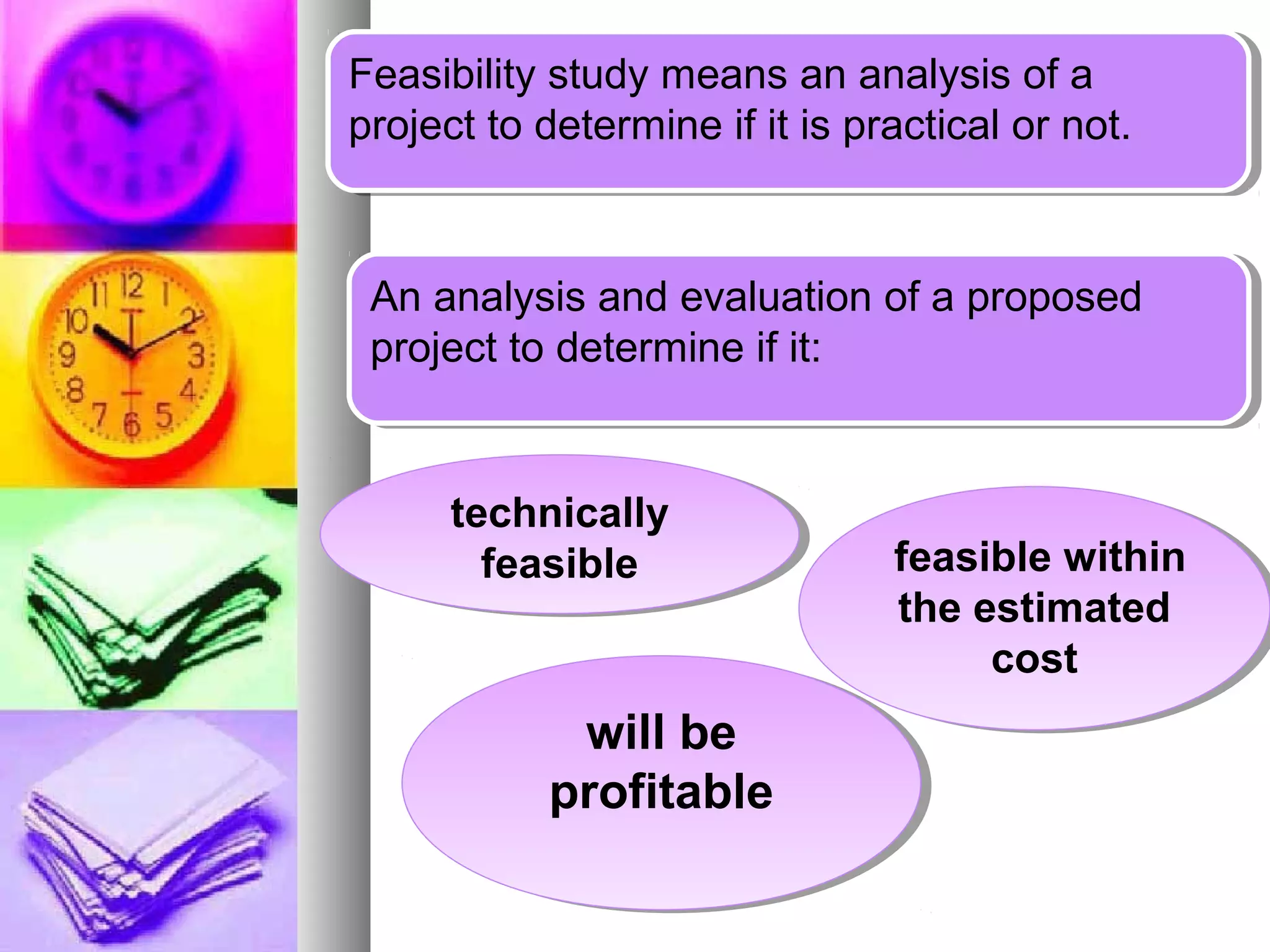
Feasibility study means an analysis of a
project to determine if it is practical or not.
Feasibility study means an analysis of a
project to determine if it is practical or not.
An analysis and evaluation of a proposed
project to determine if it:
An analysis and evaluation of a proposed
project to determine if it:
technically
feasible
technically
feasible feasible within
the estimated
cost
feasible within
the estimated
cost
will be
profitable
will be
profitable
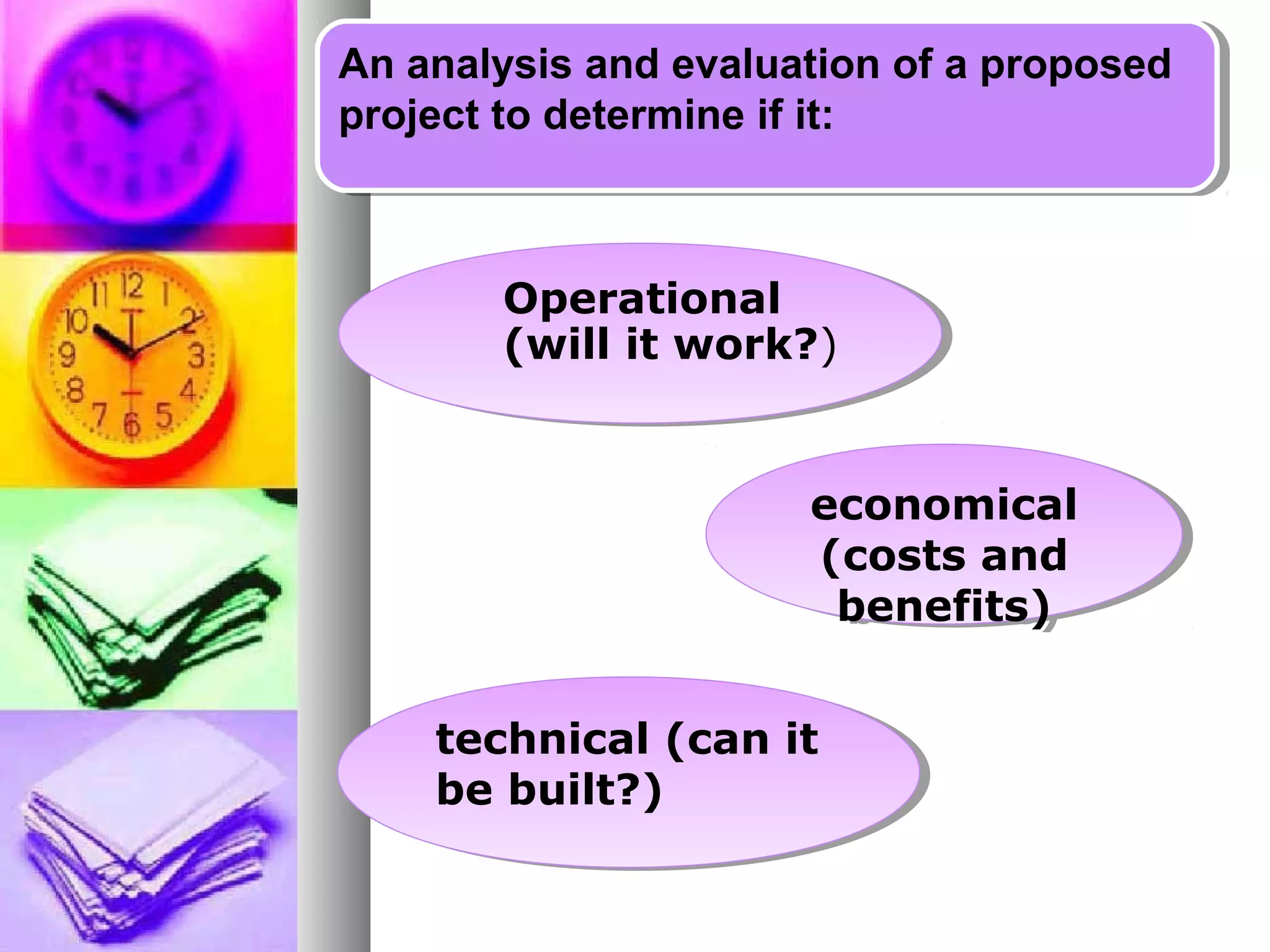
An analysis and evaluation of a proposed
project to determine if it:
An analysis and evaluation of a proposed
project to determine if it:
Operational
(will it work?)
Operational
(will it work?)
economical
(costs and
benefits)
economical
(costs and
benefits)
technical (can it
be built?)
technical (can it
be built?)
IMPORTANCE OF
A FEASIBILITY
STUDY
IMPORTANCE OF
A FEASIBILITY
STUDY
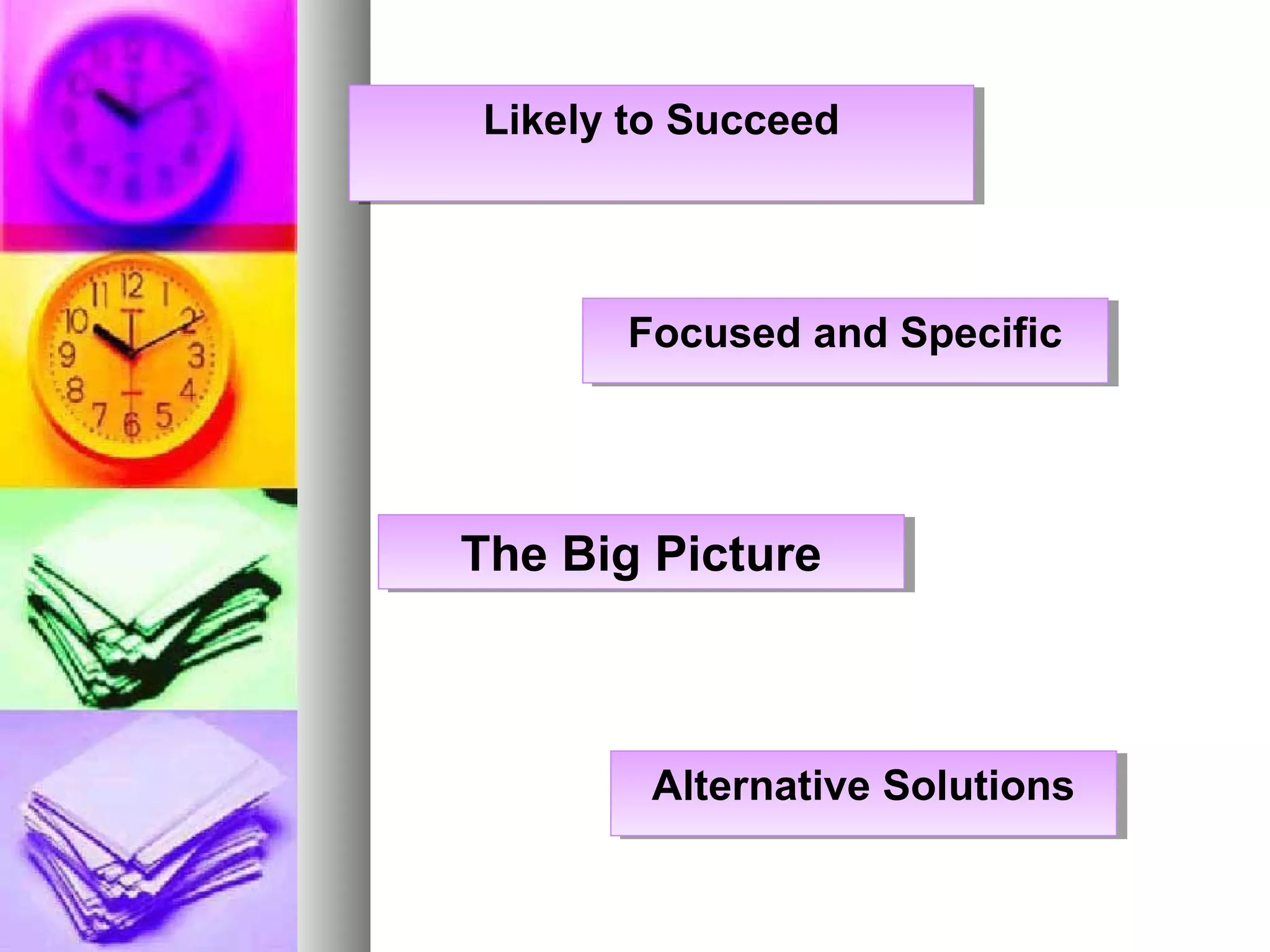
Likely to SucceedLikely to Succeed
Focused and SpecificFocused and Specific
The Big PictureThe Big Picture
Alternative SolutionsAlternative Solutions
A feasibility study involves these
steps:
1. Stating the purpose
and the scope of the
study
1. Stating the purpose
and the scope of the
study
2. Gathering and
checking information
2. Gathering and
checking information
3. Analyzing data3. Analyzing data
4. Reaching conclusions4. Reaching conclusions
5. Arriving at decision or
recommendation
5. Arriving at decision or
recommendation
There are basically six parts to any
effective Feasibility Study
2. The Current Analysis2. The Current Analysis
1. The Project Scope1. The Project Scope
3. Requirements3. Requirements
4. The Approach4. The Approach
5. Evaluation5. Evaluation
6. Review6. Review
FEASIBILITY
STUDY EXAMPLES
FEASIBILITY
STUDY EXAMPLES
FEASIBLITY REPORTS DO NOT HAVE DEFINITE
FORMATS. THEY MAY INCLUDE ALL OR SOME OF
THE FOLLOWING ELEMENTS:
• LETTER OR TRANSMITTAL/PREFACE
• TITLE PAGE
• ABSTRACT
• TABLE OF CONTENTS
• LIST OF ILLUSTRATIONS
• GLOSSARY OF ITEMS
• INTRODUCTION
• DISCUSSION
• FACTUAL SUMMARY
• CONCLUSIONS
• RECOMMENDATIONS
• REFRENCES
• APPENDIXES
FEASIBLITY REPORTS ARE EXECUTIVE REPORTS ,
AND EXECUTIVES GENERALLY LIKE THE KEY DATA,
CONCLUSIONS AND RECOMMENDATIONS EARLY.
THUS, MANY FEASIBILITY REPORT WRITERS THESE
DAYS PRESENT THIS REPORT IN THIS ORDER:
1. INTRODUCTION
2. FACTUAL SUMMARY
3. CONCLUSIONS
4. RECOMMENDATIONS
5. DISCUSSION
Feasibility Report

Feasibility Report

  • 1.
  • 2.
    FEASIBILITY- the possibilitythat can be made, done, or achieved, or is reasonable. FEASIBILITY- the possibility that can be made, done, or achieved, or is reasonable. A feasibility study includes an estimate of the level of expertise required for a project and who can provide it, quantitative and qualitative assessments of other essential resources, identification of critical points, a general timetable, and a general cost estimate. A feasibility study includes an estimate of the level of expertise required for a project and who can provide it, quantitative and qualitative assessments of other essential resources, identification of critical points, a general timetable, and a general cost estimate.
  • 3.
    Feasibility study meansan analysis of a project to determine if it is practical or not. Feasibility study means an analysis of a project to determine if it is practical or not. An analysis and evaluation of a proposed project to determine if it: An analysis and evaluation of a proposed project to determine if it: technically feasible technically feasible feasible within the estimated cost feasible within the estimated cost will be profitable will be profitable
  • 4.
    An analysis andevaluation of a proposed project to determine if it: An analysis and evaluation of a proposed project to determine if it: Operational (will it work?) Operational (will it work?) economical (costs and benefits) economical (costs and benefits) technical (can it be built?) technical (can it be built?)
  • 5.
  • 6.
    Likely to SucceedLikelyto Succeed Focused and SpecificFocused and Specific The Big PictureThe Big Picture Alternative SolutionsAlternative Solutions
  • 7.
    A feasibility studyinvolves these steps: 1. Stating the purpose and the scope of the study 1. Stating the purpose and the scope of the study 2. Gathering and checking information 2. Gathering and checking information 3. Analyzing data3. Analyzing data 4. Reaching conclusions4. Reaching conclusions 5. Arriving at decision or recommendation 5. Arriving at decision or recommendation
  • 8.
    There are basicallysix parts to any effective Feasibility Study 2. The Current Analysis2. The Current Analysis 1. The Project Scope1. The Project Scope 3. Requirements3. Requirements 4. The Approach4. The Approach 5. Evaluation5. Evaluation 6. Review6. Review
  • 9.
  • 21.
    FEASIBLITY REPORTS DONOT HAVE DEFINITE FORMATS. THEY MAY INCLUDE ALL OR SOME OF THE FOLLOWING ELEMENTS: • LETTER OR TRANSMITTAL/PREFACE • TITLE PAGE • ABSTRACT • TABLE OF CONTENTS • LIST OF ILLUSTRATIONS • GLOSSARY OF ITEMS • INTRODUCTION • DISCUSSION • FACTUAL SUMMARY • CONCLUSIONS • RECOMMENDATIONS • REFRENCES • APPENDIXES
  • 22.
    FEASIBLITY REPORTS AREEXECUTIVE REPORTS , AND EXECUTIVES GENERALLY LIKE THE KEY DATA, CONCLUSIONS AND RECOMMENDATIONS EARLY. THUS, MANY FEASIBILITY REPORT WRITERS THESE DAYS PRESENT THIS REPORT IN THIS ORDER: 1. INTRODUCTION 2. FACTUAL SUMMARY 3. CONCLUSIONS 4. RECOMMENDATIONS 5. DISCUSSION