
SUBJECT: CONTRACT
MANAGEMENT
Lecture By:
Akshatha B A BE, M. Tech, MISTE
Assistant Professor
Department of Civil Engineering
Topic: TENDER
TENDER
It is an invitation from the owner to the contractor to execute some work at
specified cost in specified time.
It is published in the form of tender notice in news papers, notice boards,
gussets, etc. According to the cost of works.
TYPES OF TENDER
1. SINGLE TENDER: When only one source of supply is available
then single tender is addressed to the selected supplier.
2. LIMITED TENDER: This type of tender is addressed toa limited
number of suppliers, who are the reliable source of supply.
3. OPEN TENDER: Is open to all the suppliers within the country who
can supply the required quantity and quality of materials. Such
invitation is made by advertising in newspapers, journals etc.,
4. GLOBAL TENDER: Is open to anybody from any part of the world
to supply the required quantity and quality of materials.
PURPOSE OF TENDERING
1. Procurement option: Procurement option is the process by which a
contractor is selected to construct the building with regard to the
contractual arrangement between the parties.
2. Contract option: The contract option is the contractual arrangement
that will exist between the client and the main contractor.
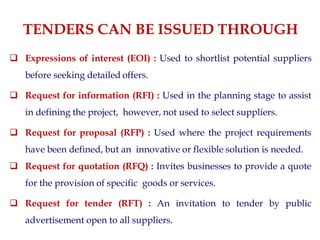
TENDERS CAN BE ISSUED THROUGH
 Expressions of interest (EOI) : Used to shortlist potential suppliers
before seeking detailed offers.
 Request for information (RFI) : Used in the planning stage to assist
in defining the project, however, not used to select suppliers.
 Request for proposal (RFP) : Used where the project requirements
have been defined, but an innovative or flexible solution is needed.
 Request for quotation (RFQ) : Invites businesses to provide a quote
for the provision of specific goods or services.
 Request for tender (RFT) : An invitation to tender by public
advertisement open to all suppliers.
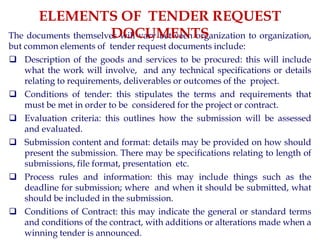
The documents themselves will vary between organization to organization,
but common elements of tender request documents include:
 Description of the goods and services to be procured: this will include
what the work will involve, and any technical specifications or details
relating to requirements, deliverables or outcomes of the project.
 Conditions of tender: this stipulates the terms and requirements that
must be met in order to be considered for the project or contract.
 Evaluation criteria: this outlines how the submission will be assessed
and evaluated.
 Submission content and format: details may be provided on how should
present the submission. There may be specifications relating to length of
submissions, file format, presentation etc.
 Process rules and information: this may include things such as the
deadline for submission; where and when it should be submitted, what
should be included in the submission.
 Conditions of Contract: this may indicate the general or standard terms
and conditions of the contract, with additions or alterations made when a
winning tender is announced.
ELEMENTS OF TENDER REQUEST
DOCUMENTS
TENDER PROCESS
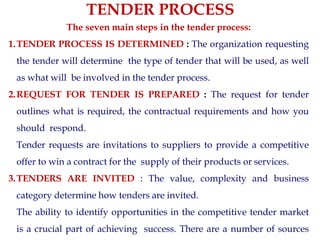
The seven main steps in the tender process:
1.TENDER PROCESS IS DETERMINED : The organization requesting
the tender will determine the type of tender that will be used, as well
as what will be involved in the tender process.
2.REQUEST FOR TENDER IS PREPARED : The request for tender
outlines what is required, the contractual requirements and how you
should respond.
Tender requests are invitations to suppliers to provide a competitive
offer to win a contract for the supply of their products or services.
3.TENDERS ARE INVITED : The value, complexity and business
category determine how tenders are invited.
The ability to identify opportunities in the competitive tender market
is a crucial part of achieving success. There are a number of sources
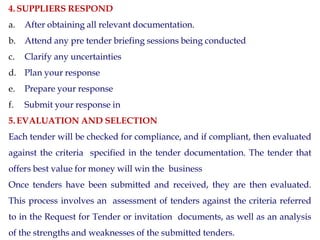
4. SUPPLIERS RESPOND
a. After obtaining all relevant documentation.
b. Attend any pre tender briefing sessions being conducted
c. Clarify any uncertainties
d. Plan your response
e. Prepare your response
f. Submit your response in
5. EVALUATION AND SELECTION
Each tender will be checked for compliance, and if compliant, then evaluated
against the criteria specified in the tender documentation. The tender that
offers best value for money will win the business
Once tenders have been submitted and received, they are then evaluated.
This process involves an assessment of tenders against the criteria referred
to in the Request for Tender or invitation documents, as well as an analysis
of the strengths and weaknesses of the submitted tenders.
The selection criteria that your tender will be evaluated on may include
a. The technical merit of your proposal,
b. The capability of your business to fulfil the requirement including
technical and management competence, financial viability and relevant
experience,
c. The relevant skills, experience and availability of key personnel,
d. Quality assurance requirements, and
e. The risks or constraints associated with your offer.
6. NOTIFICATION AND DEBRIEFING:
When a contract has been awarded, the successful tenderer will be advised in
writing of the outcome. Unsuccessful tenderers are also advised and offered a
debriefing interview.
7. CONTRACTS ESTABLISHED AND MANAGED:
A formal agreement will be required between the successful tenderer and the
relevant agency. Once if notified that tender is successful and have been
awarded the contract, it is important to meet all requirements and manage the
Tender

Tender

  • 1.
    SUBJECT: CONTRACT MANAGEMENT Lecture By: AkshathaB A BE, M. Tech, MISTE Assistant Professor Department of Civil Engineering Topic: TENDER
  • 2.
    TENDER It is aninvitation from the owner to the contractor to execute some work at specified cost in specified time. It is published in the form of tender notice in news papers, notice boards, gussets, etc. According to the cost of works.
  • 3.
    TYPES OF TENDER 1.SINGLE TENDER: When only one source of supply is available then single tender is addressed to the selected supplier. 2. LIMITED TENDER: This type of tender is addressed toa limited number of suppliers, who are the reliable source of supply. 3. OPEN TENDER: Is open to all the suppliers within the country who can supply the required quantity and quality of materials. Such invitation is made by advertising in newspapers, journals etc., 4. GLOBAL TENDER: Is open to anybody from any part of the world to supply the required quantity and quality of materials.
  • 4.
    PURPOSE OF TENDERING 1.Procurement option: Procurement option is the process by which a contractor is selected to construct the building with regard to the contractual arrangement between the parties. 2. Contract option: The contract option is the contractual arrangement that will exist between the client and the main contractor.
  • 5.
    TENDERS CAN BEISSUED THROUGH  Expressions of interest (EOI) : Used to shortlist potential suppliers before seeking detailed offers.  Request for information (RFI) : Used in the planning stage to assist in defining the project, however, not used to select suppliers.  Request for proposal (RFP) : Used where the project requirements have been defined, but an innovative or flexible solution is needed.  Request for quotation (RFQ) : Invites businesses to provide a quote for the provision of specific goods or services.  Request for tender (RFT) : An invitation to tender by public advertisement open to all suppliers.
  • 6.
    The documents themselveswill vary between organization to organization, but common elements of tender request documents include:  Description of the goods and services to be procured: this will include what the work will involve, and any technical specifications or details relating to requirements, deliverables or outcomes of the project.  Conditions of tender: this stipulates the terms and requirements that must be met in order to be considered for the project or contract.  Evaluation criteria: this outlines how the submission will be assessed and evaluated.  Submission content and format: details may be provided on how should present the submission. There may be specifications relating to length of submissions, file format, presentation etc.  Process rules and information: this may include things such as the deadline for submission; where and when it should be submitted, what should be included in the submission.  Conditions of Contract: this may indicate the general or standard terms and conditions of the contract, with additions or alterations made when a winning tender is announced. ELEMENTS OF TENDER REQUEST DOCUMENTS
  • 7.
    TENDER PROCESS The sevenmain steps in the tender process: 1.TENDER PROCESS IS DETERMINED : The organization requesting the tender will determine the type of tender that will be used, as well as what will be involved in the tender process. 2.REQUEST FOR TENDER IS PREPARED : The request for tender outlines what is required, the contractual requirements and how you should respond. Tender requests are invitations to suppliers to provide a competitive offer to win a contract for the supply of their products or services. 3.TENDERS ARE INVITED : The value, complexity and business category determine how tenders are invited. The ability to identify opportunities in the competitive tender market is a crucial part of achieving success. There are a number of sources
  • 8.
    4. SUPPLIERS RESPOND a.After obtaining all relevant documentation. b. Attend any pre tender briefing sessions being conducted c. Clarify any uncertainties d. Plan your response e. Prepare your response f. Submit your response in 5. EVALUATION AND SELECTION Each tender will be checked for compliance, and if compliant, then evaluated against the criteria specified in the tender documentation. The tender that offers best value for money will win the business Once tenders have been submitted and received, they are then evaluated. This process involves an assessment of tenders against the criteria referred to in the Request for Tender or invitation documents, as well as an analysis of the strengths and weaknesses of the submitted tenders.
  • 9.
    The selection criteriathat your tender will be evaluated on may include a. The technical merit of your proposal, b. The capability of your business to fulfil the requirement including technical and management competence, financial viability and relevant experience, c. The relevant skills, experience and availability of key personnel, d. Quality assurance requirements, and e. The risks or constraints associated with your offer. 6. NOTIFICATION AND DEBRIEFING: When a contract has been awarded, the successful tenderer will be advised in writing of the outcome. Unsuccessful tenderers are also advised and offered a debriefing interview. 7. CONTRACTS ESTABLISHED AND MANAGED: A formal agreement will be required between the successful tenderer and the relevant agency. Once if notified that tender is successful and have been awarded the contract, it is important to meet all requirements and manage the