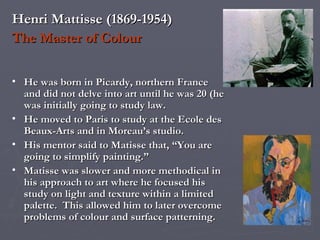
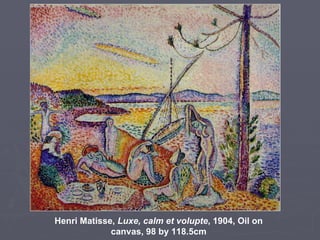
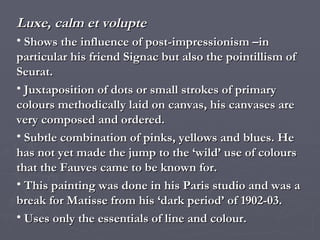
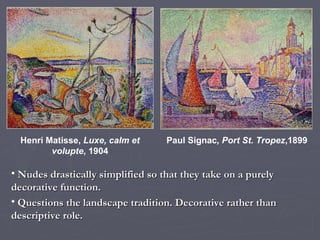
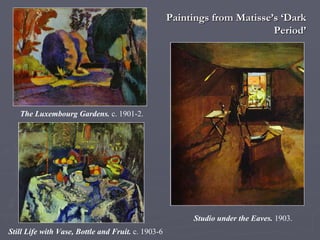
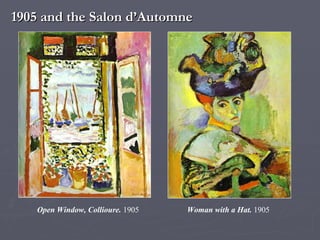
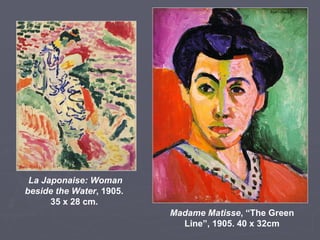
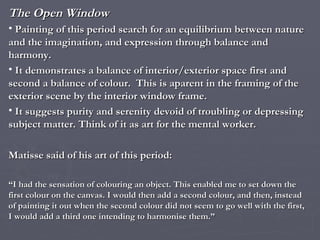
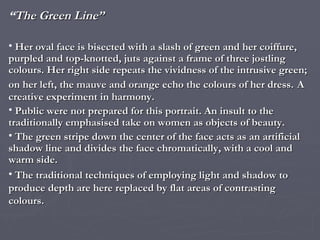
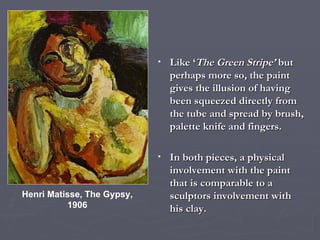
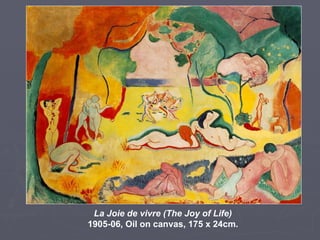
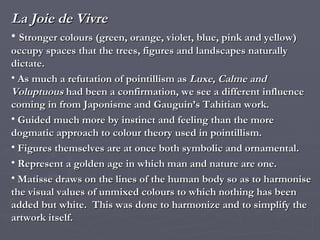
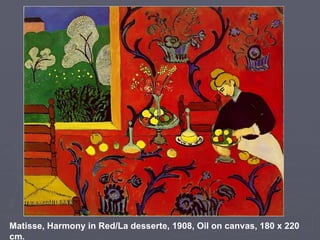
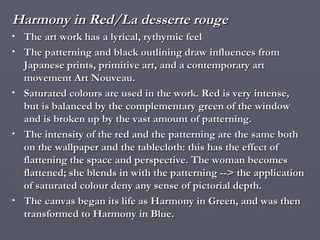
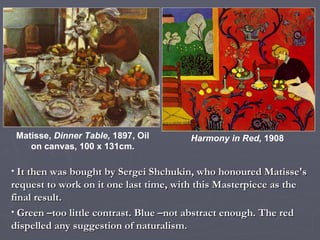
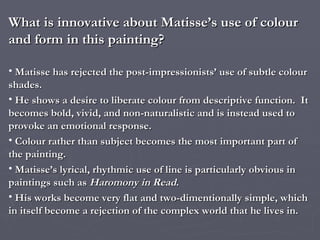
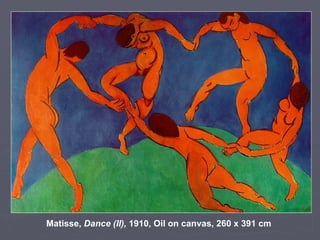
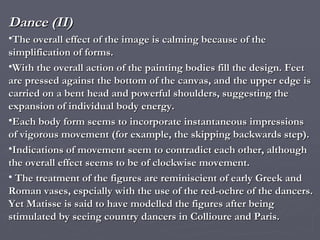
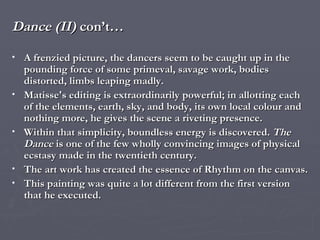
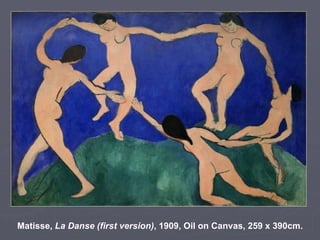
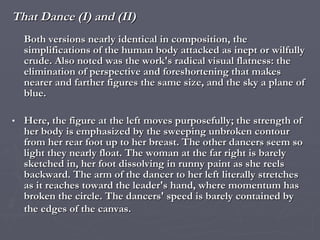
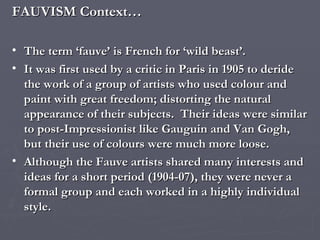
Fauvism was an early 20th century art movement known for bold, vibrant colors and loose brushwork. Henri Matisse was a leading Fauvist painter who rejected realistic color usage in favor of expressing emotion through color. His works like Luxe, Calm and Volupté (1904) showed this new approach through simplified forms and bright hues. Later paintings like Dance (1910) further flattened forms and used intense colors to depict movement in a simplified, rhythmic style that was radical for the time. Matisse's experimentation with color played a key role in developing Fauvism's distinctive style.
![FAUVISM Context… 1905 was the year that the Salon d’Automne happened. Critics saw the canvases in front of them not as art, but rather as an ‘explosion of violence’ on the canvas. As one critic, Camille Mauclair, said “[It is] a pot of colours flung in the face of the public.” Fauvism came via three principal groups: Students of Moreau’s studio and the Académie Carrière (Matisse, Camoin, Manguin, Puy). Two from Chatou: Vlamich and Derain. Three from Le Harve: Friesz, Dufy, Braque. Matisse became the leader of these young artists because of his prestige, outgoingness, and age.](https://image.slidesharecdn.com/fauvismandmatisse-090504235358-phpapp02/85/Fauvism-And-Matisse-3-320.jpg)