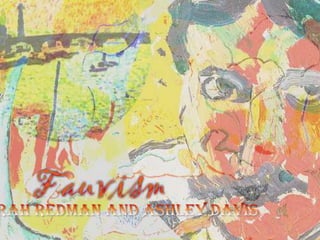
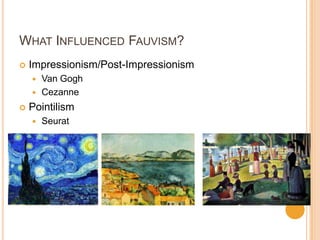
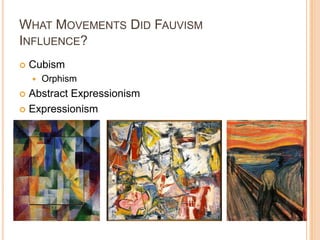
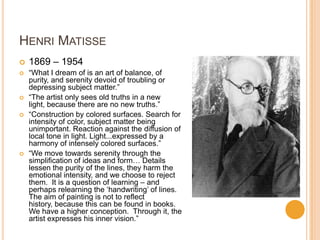
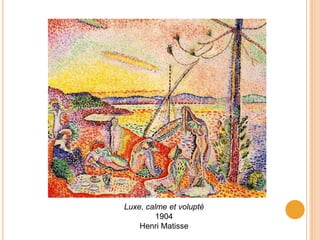
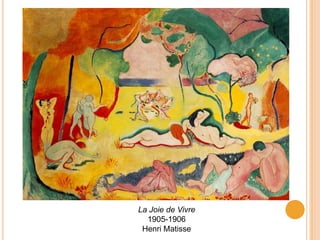
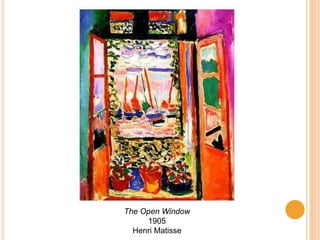
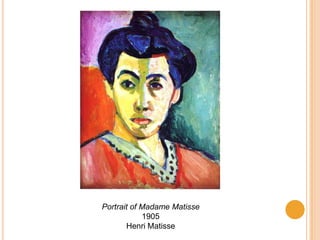
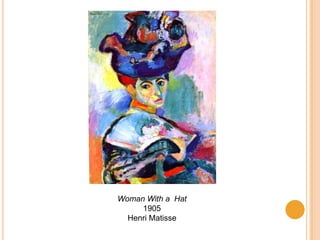
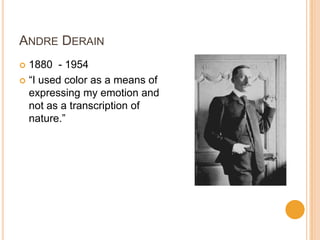
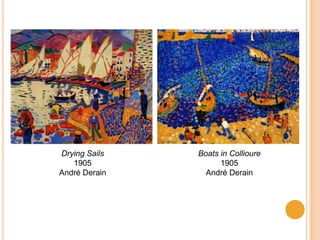
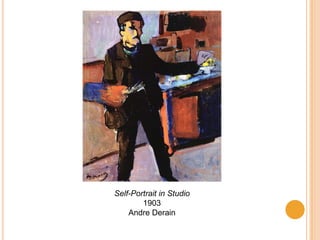
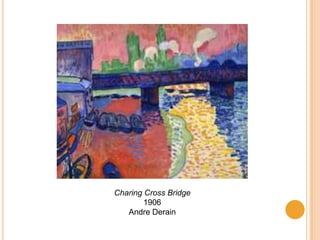
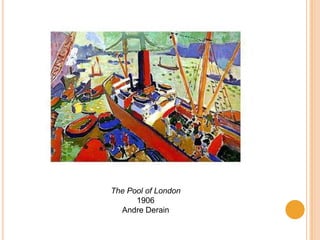
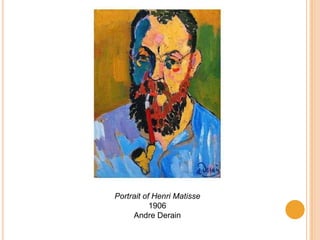
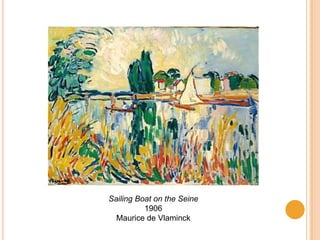
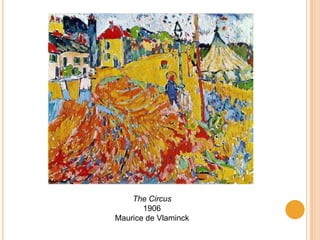
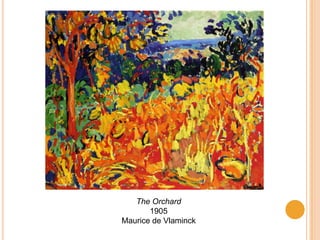
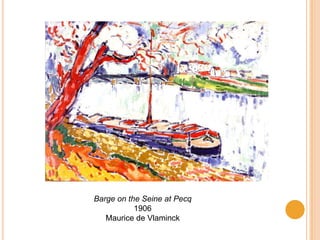
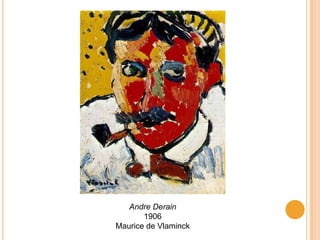
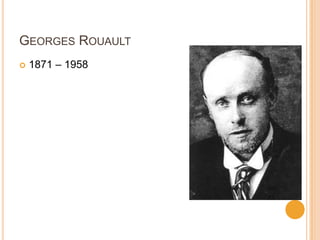
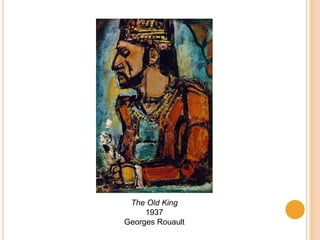
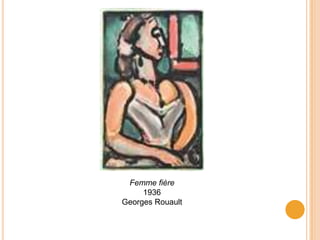
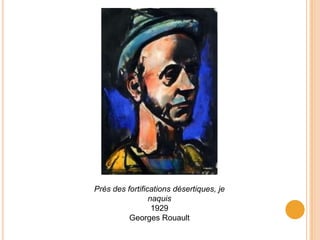
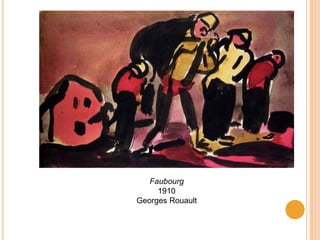
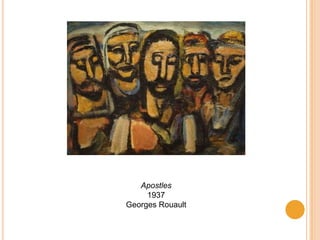
Fauvism was an early 20th century avant-garde art movement known for its use of bright, unblended colors and simplified shapes. It originated in France around 1905 and lasted for about three years. Fauvism was influenced by Impressionism and Post-Impressionism and emphasized intense color over realistic representations. The movement included artists Henri Matisse, Andre Derain, Maurice de Vlaminck, and Georges Rouault, who used expressive brushwork and distorted figures to convey emotion through color. Fauvism helped pave the way for later movements like Cubism and Abstract Expressionism by liberating color from realistic constraints.



![Fauvism2[1]](https://cdn.slidesharecdn.com/ss_thumbnails/fauvism21-130522152912-phpapp01-thumbnail.jpg?width=640&height=640&fit=bounds)


