FAILURES IN RIGID PAVEMENT
PESENTED BY
GAYATHRY SATHEESAN
TYPESOFFAILURESINRIGIDPAVEMENTS
1
FAILURES OF RIGID PAVEMENT
 Failure in rigid pavement (or cement concrete pavement)
can be identified by formation of cracks on the pavement
surface.
 The two prime factors responsible for rigid pavement
failure are
1. Use of poor quality material
2. Inadequate stability of the pavement structure
2
TYPESOFFAILURESINRIGID
PAVEMENTS
1. Poor quality of material consist of following items
 Using soft aggregate
 Poor quality of sub-grade soil
 Poor joint filler R sealer materials
2. Inadequate stability of the pavement structure can be due to
following reason
 Inadequate pavement thickness
 Lack of sub-grade support
 Improper compaction of sub-grade
 Improper spacing of joints
3
TYPESOFFAILURESINRIGID
PAVEMENTS
TYPES OF FAILURE IN RIGID PAVEMENT
 Scaling of cement concrete
 Shrinkage cracks
 Joint spalling
 Warping cracks
 Pumping
4
TYPESOFFAILURESINRIGID
PAVEMENTS
1. SCALING OF CEMENT CONCRETE
 It is the peeling off or flaking off of the top layer or skin of the
concrete surface.
This may be due to the following reasons
 Improper mix design
 Excessive vibration during compaction of concrete
 Laitance of concrete
 Performing finishing operation while bleed water is on surface
5
TYPESOFFAILURESINRIGID
PAVEMENTS
TYPESOFFAILURESINRIGID
PAVEMENTS
6
Fig;scaling of cement concrete
Source;https://i1.wp.com/civilblog.org/wpc
ontent/uploads/2016/01/Scaling.jpg
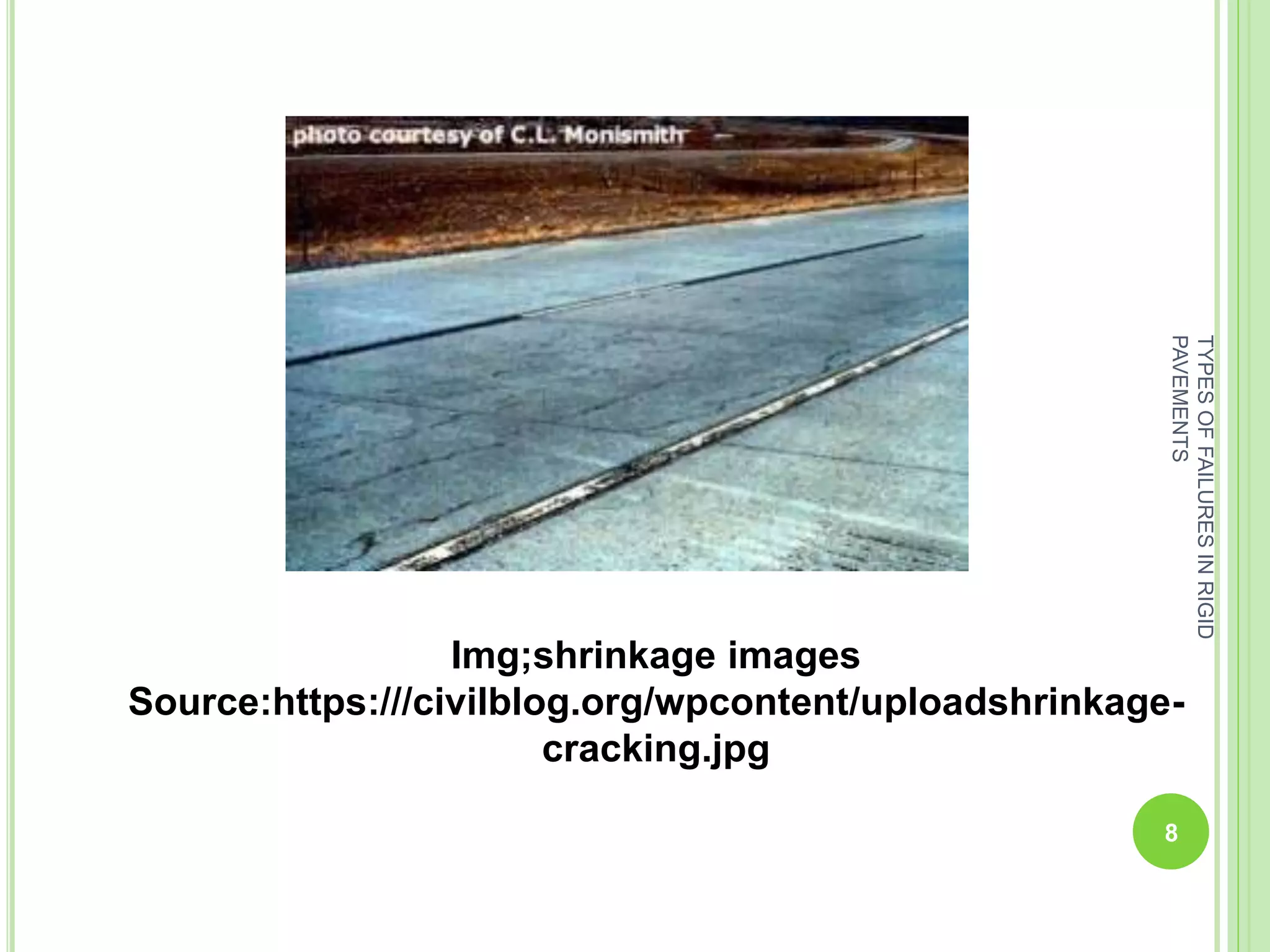
2. SHRINKAGE CRACKS
 Formation of hairline shallow cracks on concrete slab is the
indication of shrinkage cracks.
 Shrinkage cracks develop on concrete surface during the
setting & curing operation. These cracks may form in
longitudinal as well as in transverse direction.
7
TYPESOFFAILURESINRIGID
PAVEMENTS
TYPESOFFAILURESINRIGID
PAVEMENTS
8
Img;shrinkage images
Source:https:///civilblog.org/wpcontent/uploadshrinkage-
cracking.jpg
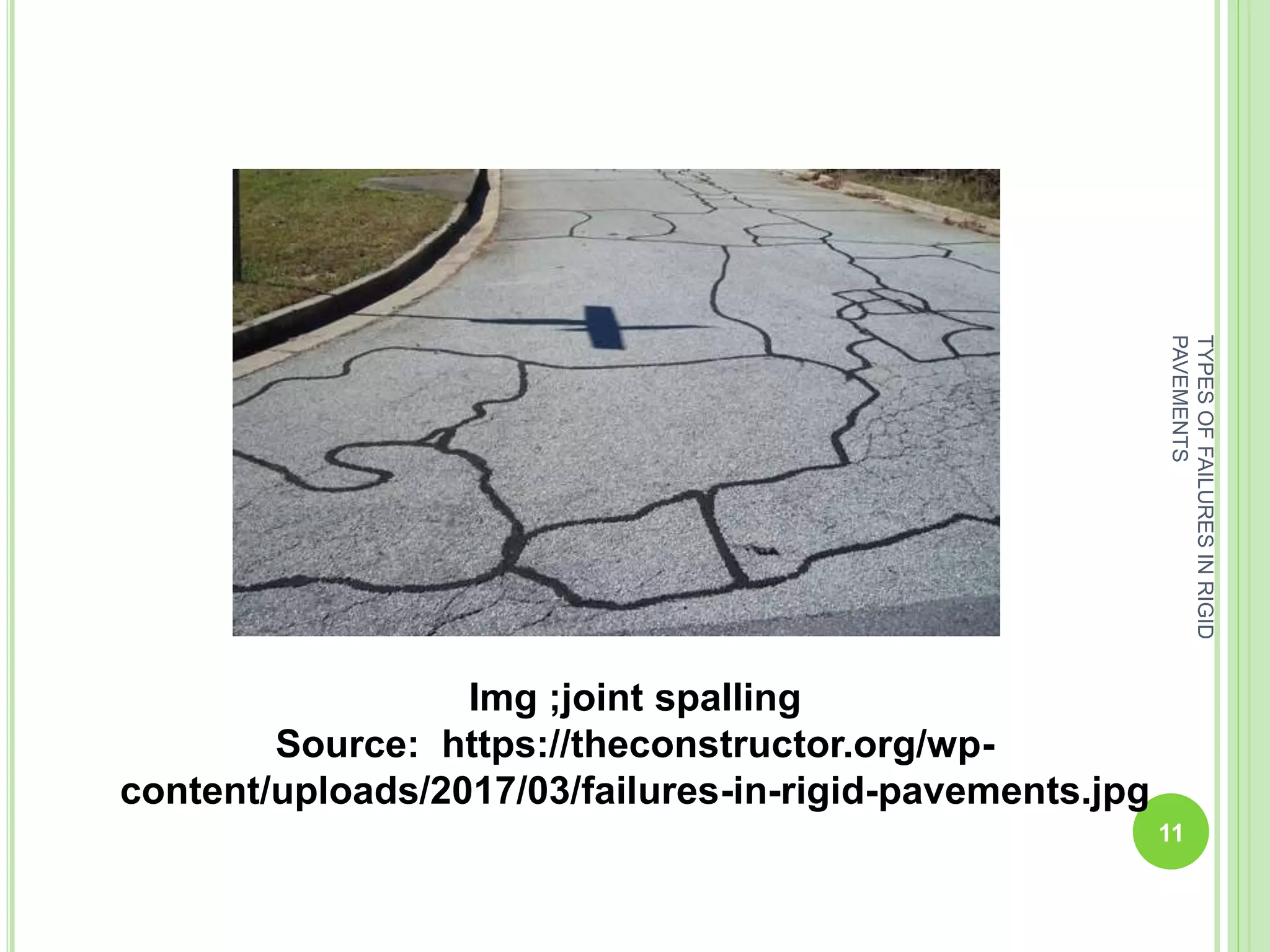
3. JOINT SPALLING
 It is the breakdown of the slab near edge of the joint.
 Normally it occurs within 0.5 m of the joints.
The common reasons for this defect are
 Faulty alignment of incompressible material below concrete
slab.
 Insufficient strength of concrete slab near joints.
 Freeze-thaw cycle.
 Excessive stress at joint due to wheel load.
9
TYPESOFFAILURESINRIGID
PAVEMENTS
TYPESOFFAILURESINRIGID
PAVEMENTS
10
Fig.: Joint Spalling in Rigid Pavement Slabs
https://theconstructor.org/wpcontent/uploads/2017/03/joint-
spalling-rigid-pavementa.jpg
TYPESOFFAILURESINRIGID
PAVEMENTS
11
Img ;joint spalling
Source: https://theconstructor.org/wp-
content/uploads/2017/03/failures-in-rigid-pavements.jpg
4. WARPING CRACKS
 When joints are not designed properly against hot weather, it
prevents expansion of concrete slab and therefore results in
development of excessive stress.
 This stress cause formation of warping cracks of the concrete slab
near the joint edge.
 This type of crack can be prevented by providing proper
reinforcement at the longitudinal and transverse joints.
 Hinge joints are generally used to relieve the stress due to
warping
12
TYPESOFFAILURESINRIGID
PAVEMENTS
TYPESOFFAILURESINRIGID
PAVEMENTS
13
Img: warping cracks
Source: https://theconstructor.org/wp-
content/uploads/2017/03/durability-cracking-failure-in-rigid-
pavements.jpg
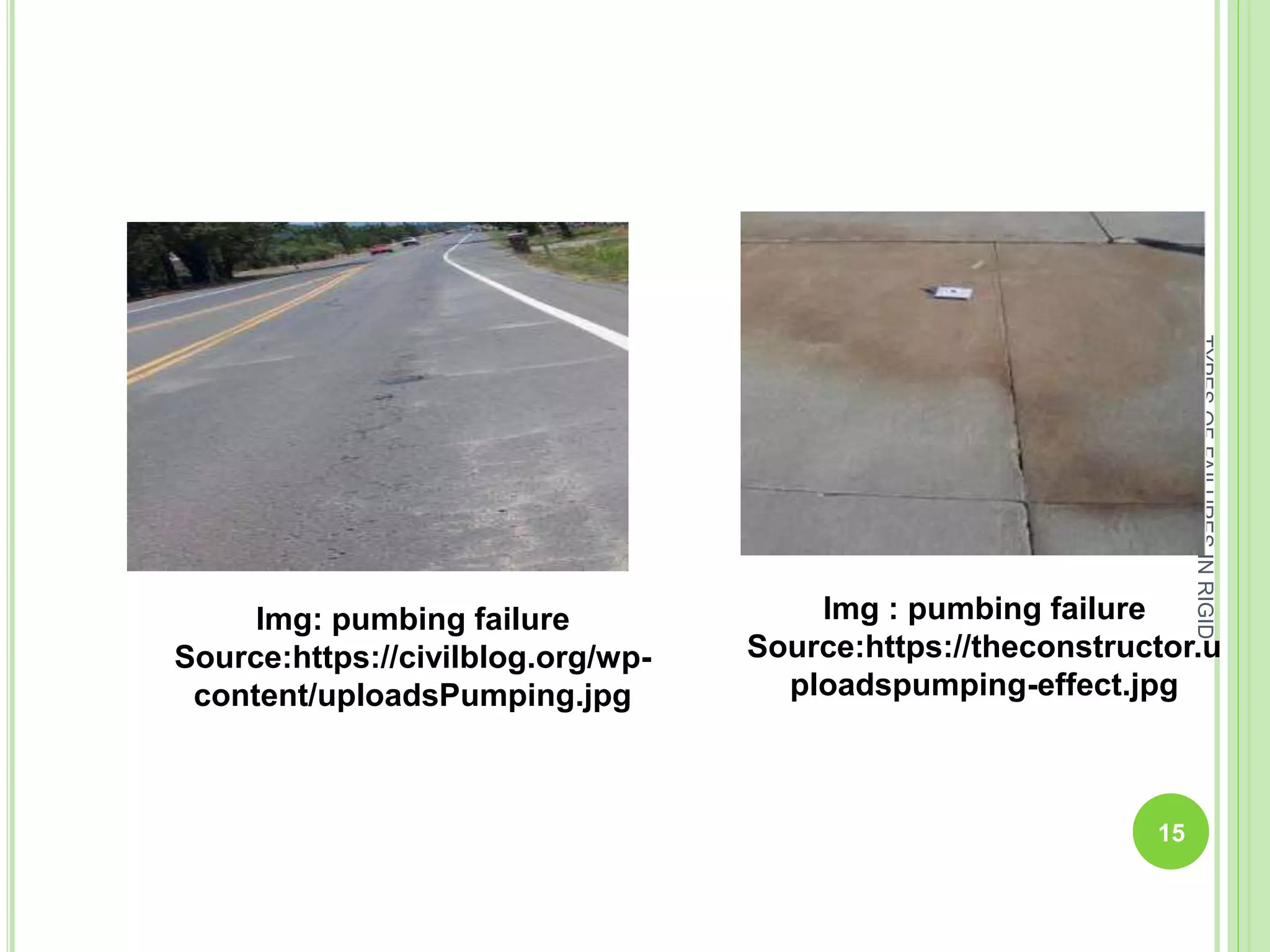
5. PUMPING
 When material present below the road slab ejects out through the
joints or cracks, it is called pumping.
 When soil slurry comes out it is called mud pumping.
The common reasons for this defect are
 Infiltration of water through the joints, cracks or edge of the
pavement forms soil slurry
 When there is void space between slab and the underlying base
of sub-grade layer.
 Poor joint sealer allowing infiltration of water
 Repeated wheel loading causing erosion of underlying material14
TYPESOFFAILURESINRIGID
PAVEMENTS
TYPESOFFAILURESINRIGID
PAVEMENTS
15
Img : pumbing failure
Source:https://theconstructor.u
ploadspumping-effect.jpg
Img: pumbing failure
Source:https://civilblog.org/wp-
content/uploadsPumping.jpg
THANK YOU 
16
TYPESOFFAILURESINRIGID
PAVEMENTS

Failures in rigid pavement

  • 1.
    FAILURES IN RIGIDPAVEMENT PESENTED BY GAYATHRY SATHEESAN TYPESOFFAILURESINRIGIDPAVEMENTS 1
  • 2.
    FAILURES OF RIGIDPAVEMENT  Failure in rigid pavement (or cement concrete pavement) can be identified by formation of cracks on the pavement surface.  The two prime factors responsible for rigid pavement failure are 1. Use of poor quality material 2. Inadequate stability of the pavement structure 2 TYPESOFFAILURESINRIGID PAVEMENTS
  • 3.
    1. Poor qualityof material consist of following items  Using soft aggregate  Poor quality of sub-grade soil  Poor joint filler R sealer materials 2. Inadequate stability of the pavement structure can be due to following reason  Inadequate pavement thickness  Lack of sub-grade support  Improper compaction of sub-grade  Improper spacing of joints 3 TYPESOFFAILURESINRIGID PAVEMENTS
  • 4.
    TYPES OF FAILUREIN RIGID PAVEMENT  Scaling of cement concrete  Shrinkage cracks  Joint spalling  Warping cracks  Pumping 4 TYPESOFFAILURESINRIGID PAVEMENTS
  • 5.
    1. SCALING OFCEMENT CONCRETE  It is the peeling off or flaking off of the top layer or skin of the concrete surface. This may be due to the following reasons  Improper mix design  Excessive vibration during compaction of concrete  Laitance of concrete  Performing finishing operation while bleed water is on surface 5 TYPESOFFAILURESINRIGID PAVEMENTS
  • 6.
    TYPESOFFAILURESINRIGID PAVEMENTS 6 Fig;scaling of cementconcrete Source;https://i1.wp.com/civilblog.org/wpc ontent/uploads/2016/01/Scaling.jpg
  • 7.
    2. SHRINKAGE CRACKS Formation of hairline shallow cracks on concrete slab is the indication of shrinkage cracks.  Shrinkage cracks develop on concrete surface during the setting & curing operation. These cracks may form in longitudinal as well as in transverse direction. 7 TYPESOFFAILURESINRIGID PAVEMENTS
  • 8.
  • 9.
    3. JOINT SPALLING It is the breakdown of the slab near edge of the joint.  Normally it occurs within 0.5 m of the joints. The common reasons for this defect are  Faulty alignment of incompressible material below concrete slab.  Insufficient strength of concrete slab near joints.  Freeze-thaw cycle.  Excessive stress at joint due to wheel load. 9 TYPESOFFAILURESINRIGID PAVEMENTS
  • 10.
    TYPESOFFAILURESINRIGID PAVEMENTS 10 Fig.: Joint Spallingin Rigid Pavement Slabs https://theconstructor.org/wpcontent/uploads/2017/03/joint- spalling-rigid-pavementa.jpg
  • 11.
    TYPESOFFAILURESINRIGID PAVEMENTS 11 Img ;joint spalling Source:https://theconstructor.org/wp- content/uploads/2017/03/failures-in-rigid-pavements.jpg
  • 12.
    4. WARPING CRACKS When joints are not designed properly against hot weather, it prevents expansion of concrete slab and therefore results in development of excessive stress.  This stress cause formation of warping cracks of the concrete slab near the joint edge.  This type of crack can be prevented by providing proper reinforcement at the longitudinal and transverse joints.  Hinge joints are generally used to relieve the stress due to warping 12 TYPESOFFAILURESINRIGID PAVEMENTS
  • 13.
    TYPESOFFAILURESINRIGID PAVEMENTS 13 Img: warping cracks Source:https://theconstructor.org/wp- content/uploads/2017/03/durability-cracking-failure-in-rigid- pavements.jpg
  • 14.
    5. PUMPING  Whenmaterial present below the road slab ejects out through the joints or cracks, it is called pumping.  When soil slurry comes out it is called mud pumping. The common reasons for this defect are  Infiltration of water through the joints, cracks or edge of the pavement forms soil slurry  When there is void space between slab and the underlying base of sub-grade layer.  Poor joint sealer allowing infiltration of water  Repeated wheel loading causing erosion of underlying material14 TYPESOFFAILURESINRIGID PAVEMENTS
  • 15.
    TYPESOFFAILURESINRIGID PAVEMENTS 15 Img : pumbingfailure Source:https://theconstructor.u ploadspumping-effect.jpg Img: pumbing failure Source:https://civilblog.org/wp- content/uploadsPumping.jpg
  • 16.