

Failure Mode & Effect Analysis


PHILIPPINES   ::   MALAYSIA   ::   VIETNAM   ::   INDONESIA   ::   INDIA   ::   CHINA
Learning Bites
  •   Understand the concept of FMEA
  •   Identify the terminologies of FMEA
  •   Determine steps in measuring and analyzing the potential failure modes
  •   Define steps in measuring the critical points of failure.
  •   Deploy the concept in your workplace to reduce the potential failures.
What is FMEA
•   FMEA stands for Failure Mode & Effect Analysis.

•   An Advanced Quality Planning Tool used to evaluate Potential Failure Modes and
    their Causes.

•   Prioritizes potential failures according to their risk and drives action to eliminate or
    reduce their likelihood of occurrence

•   Provides a disciplined methodology for documenting this analysis for future use and
    continuous process improvement

•   By itself, an FMEA is NOT a problem solver. It is used in combination with other
    problem solving tools.
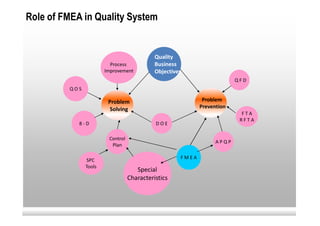
Role of FMEA in Quality System


                                            Quality
                         Process            Business
                       Improvement          Objectives
                                                                         QFD
         QOS

                        Problem                              Problem
                         Solving                            Prevention
                                                                           FTA
                                                                          RFTA
            8-D                             DOE

                        Control
                                                                  APQP
                         Plan

                                                     FMEA
               SPC
               Tools
                                     Special
                                  Characteristics
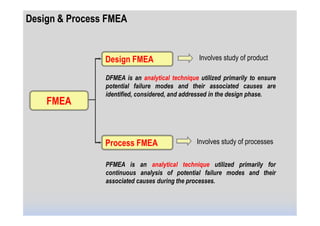
Design & Process FMEA


                Design FMEA                      Involves study of product

                DFMEA is an analytical technique utilized primarily to ensure
                potential failure modes and their associated causes are
                identified, considered, and addressed in the design phase.
    FMEA


                Process FMEA                    Involves study of processes


                PFMEA is an analytical technique utilized primarily for
                continuous analysis of potential failure modes and their
                associated causes during the processes.
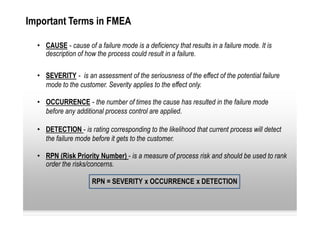
Important Terms in FMEA

  • CAUSE - cause of a failure mode is a deficiency that results in a failure mode. It is
    description of how the process could result in a failure.

  • SEVERITY - is an assessment of the seriousness of the effect of the potential failure
    mode to the customer. Severity applies to the effect only.

  • OCCURRENCE - the number of times the cause has resulted in the failure mode
    before any additional process control are applied.

  • DETECTION - is rating corresponding to the likelihood that current process will detect
    the failure mode before it gets to the customer.

  • RPN (Risk Priority Number) - is a measure of process risk and should be used to rank
    order the risks/concerns.

                      RPN = SEVERITY x OCCURRENCE x DETECTION
FMEA Roadmap


   POTENTIAL FAILURE MODE


   EFFECT                   DETERMINE SEVERITY


   CAUSE                    DETERMINE OCCURRENCE


   CURRENT CONTROLS         DETERMINE DETECTABILITY


   ACTIONS LEADING TO
                            DETERMINE RPN
   CONTINUOUS IMPROVEMENT
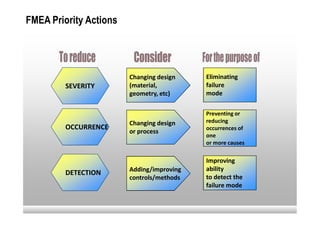
FMEA Priority Actions


                        Changing design    Eliminating
         SEVERITY       (material,         failure
                        geometry, etc)     mode

                                           Preventing or
                        Changing design    reducing
         OCCURRENCE                        occurrences of
                        or process
                                           one
                                           or more causes

                                           Improving
                        Adding/improving   ability
         DETECTION
                        controls/methods   to detect the
                                           failure mode
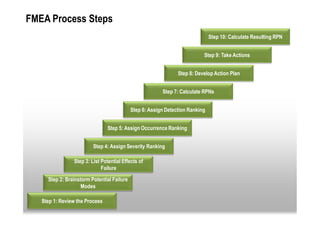
FMEA Process Steps
                                                                               Step 10: Calculate Resulting RPN


                                                                           Step 9: Take Actions


                                                                Step 8: Develop Action Plan


                                                         Step 7: Calculate RPNs


                                            Step 6: Assign Detection Ranking


                                Step 5: Assign Occurrence Ranking


                         Step 4: Assign Severity Ranking

                Step 3: List Potential Effects of
                             Failure
     Step 2: Brainstorm Potential Failure
                    Modes

   Step 1: Review the Process
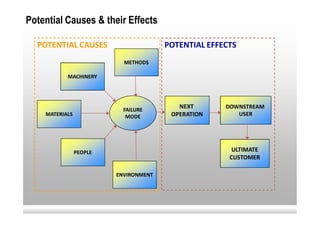
Potential Causes & their Effects

  POTENTIAL CAUSES                     POTENTIAL EFFECTS
                           METHODS

           MACHINERY


                           FAILURE
                                          NEXT       DOWNSTREAM
    MATERIALS               MODE        OPERATION       USER


                PEOPLE                                 ULTIMATE
                                                      CUSTOMER

                         ENVIRONMENT
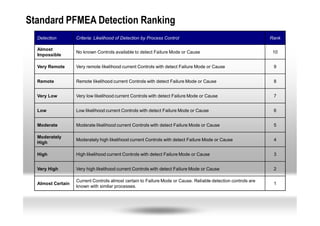
Standard PFMEA Detection Ranking
  Detection        Criteria: Likelihood of Detection by Process Control                                        Rank

  Almost
                   No known Controls available to detect Failure Mode or Cause                                  10
  Impossible

  Very Remote      Very remote likelihood current Controls with detect Failure Mode or Cause                    9


  Remote           Remote likelihood current Controls with detect Failure Mode or Cause                         8


  Very Low         Very low likelihood current Controls with detect Failure Mode or Cause                       7


  Low              Low likelihood current Controls with detect Failure Mode or Cause                            6


  Moderate         Moderate likelihood current Controls with detect Failure Mode or Cause                       5

  Moderately
                   Moderately high likelihood current Controls with detect Failure Mode or Cause                4
  High

  High             High likelihood current Controls with detect Failure Mode or Cause                           3


  Very High        Very high likelihood current Controls with detect Failure Mode or Cause                      2

                   Current Controls almost certain to Failure Mode or Cause. Reliable detection controls are
  Almost Certain                                                                                                1
                   known with similar processes.
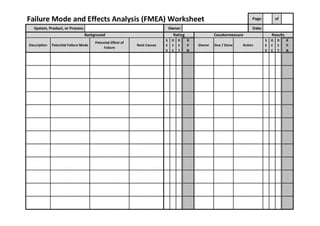
FMEA Worksheet
Summary


  •   FMEA is created to satisfy a customer or third party requirement, NOT to improve
      the process.

  •   FMEA is developed too late in the process and does not improved the
      product/process development cycle.

  •   The FMEA is perceived either as too complicated or as taking too much time.
Thank you very much!


 facebook.com/eccinternational
 linkedin.com/company/ecc-international
 eccinternational.wordpress.com

Failure Mode & Effect Analysis

  • 1.
    Failure Mode &Effect Analysis PHILIPPINES :: MALAYSIA :: VIETNAM :: INDONESIA :: INDIA :: CHINA
  • 2.
    Learning Bites • Understand the concept of FMEA • Identify the terminologies of FMEA • Determine steps in measuring and analyzing the potential failure modes • Define steps in measuring the critical points of failure. • Deploy the concept in your workplace to reduce the potential failures.
  • 3.
    What is FMEA • FMEA stands for Failure Mode & Effect Analysis. • An Advanced Quality Planning Tool used to evaluate Potential Failure Modes and their Causes. • Prioritizes potential failures according to their risk and drives action to eliminate or reduce their likelihood of occurrence • Provides a disciplined methodology for documenting this analysis for future use and continuous process improvement • By itself, an FMEA is NOT a problem solver. It is used in combination with other problem solving tools.
  • 4.
    Role of FMEAin Quality System Quality Process Business Improvement Objectives QFD QOS Problem Problem Solving Prevention FTA RFTA 8-D DOE Control APQP Plan FMEA SPC Tools Special Characteristics
  • 5.
    Design & ProcessFMEA Design FMEA Involves study of product DFMEA is an analytical technique utilized primarily to ensure potential failure modes and their associated causes are identified, considered, and addressed in the design phase. FMEA Process FMEA Involves study of processes PFMEA is an analytical technique utilized primarily for continuous analysis of potential failure modes and their associated causes during the processes.
  • 6.
    Important Terms inFMEA • CAUSE - cause of a failure mode is a deficiency that results in a failure mode. It is description of how the process could result in a failure. • SEVERITY - is an assessment of the seriousness of the effect of the potential failure mode to the customer. Severity applies to the effect only. • OCCURRENCE - the number of times the cause has resulted in the failure mode before any additional process control are applied. • DETECTION - is rating corresponding to the likelihood that current process will detect the failure mode before it gets to the customer. • RPN (Risk Priority Number) - is a measure of process risk and should be used to rank order the risks/concerns. RPN = SEVERITY x OCCURRENCE x DETECTION
  • 7.
    FMEA Roadmap POTENTIAL FAILURE MODE EFFECT DETERMINE SEVERITY CAUSE DETERMINE OCCURRENCE CURRENT CONTROLS DETERMINE DETECTABILITY ACTIONS LEADING TO DETERMINE RPN CONTINUOUS IMPROVEMENT
  • 8.
    FMEA Priority Actions Changing design Eliminating SEVERITY (material, failure geometry, etc) mode Preventing or Changing design reducing OCCURRENCE occurrences of or process one or more causes Improving Adding/improving ability DETECTION controls/methods to detect the failure mode
  • 9.
    FMEA Process Steps Step 10: Calculate Resulting RPN Step 9: Take Actions Step 8: Develop Action Plan Step 7: Calculate RPNs Step 6: Assign Detection Ranking Step 5: Assign Occurrence Ranking Step 4: Assign Severity Ranking Step 3: List Potential Effects of Failure Step 2: Brainstorm Potential Failure Modes Step 1: Review the Process
  • 10.
    Potential Causes &their Effects POTENTIAL CAUSES POTENTIAL EFFECTS METHODS MACHINERY FAILURE NEXT DOWNSTREAM MATERIALS MODE OPERATION USER PEOPLE ULTIMATE CUSTOMER ENVIRONMENT
  • 11.
    Standard PFMEA DetectionRanking Detection Criteria: Likelihood of Detection by Process Control Rank Almost No known Controls available to detect Failure Mode or Cause 10 Impossible Very Remote Very remote likelihood current Controls with detect Failure Mode or Cause 9 Remote Remote likelihood current Controls with detect Failure Mode or Cause 8 Very Low Very low likelihood current Controls with detect Failure Mode or Cause 7 Low Low likelihood current Controls with detect Failure Mode or Cause 6 Moderate Moderate likelihood current Controls with detect Failure Mode or Cause 5 Moderately Moderately high likelihood current Controls with detect Failure Mode or Cause 4 High High High likelihood current Controls with detect Failure Mode or Cause 3 Very High Very high likelihood current Controls with detect Failure Mode or Cause 2 Current Controls almost certain to Failure Mode or Cause. Reliable detection controls are Almost Certain 1 known with similar processes.
  • 12.
  • 13.
    Summary • FMEA is created to satisfy a customer or third party requirement, NOT to improve the process. • FMEA is developed too late in the process and does not improved the product/process development cycle. • The FMEA is perceived either as too complicated or as taking too much time.
  • 15.
    Thank you verymuch! facebook.com/eccinternational linkedin.com/company/ecc-international eccinternational.wordpress.com