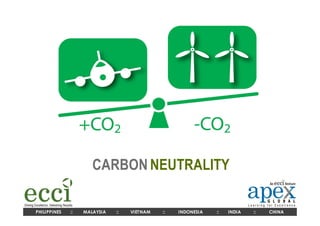
CARBON NEUTRALITY

PHILIPPINES   ::   MALAYSIA   ::   VIETNAM   ::   INDONESIA   ::   INDIA   ::   CHINA
Learning Bites

  •   Understand the concept of Carbon Neutrality
  •   Measure the Carbon Footprint of your operations
  •   Identify ways to reduce / neutralize carbon Footprint
  •   Understand Steps of achieving Carbon Neutrality
  •   Implement Carbon Neutrality measure in your workplace
Carbon Cycle
In order to become Carbon Neutral, we need to first
  measure the Carbon Footprint of our operations.
What is CARBON FOOTPRINT


   Total amount of CO2 and other
   greenhouse gas emissions by an
   organization.

   Measure the impact of activities on the
   environment, in particular climate change.

   Relates to the amount of greenhouse
   gases produced through burning fossil
   fuels for electricity, heating and
   transportation etc.

   Units -­ tonnes (or kg) of carbon dioxide.
Scope of Carbon Footprint
Now getting into CARBON NEUTRAL
What does the term "Carbon Neutral” means?


      “Carbon Neutral means that – through a transparent process of
      calculating emissions, reducing those emissions and offsetting
      residual emissions – net carbon emissions equal zero.”


100 Tonnes             50 Tonnes
                                             50 Tonnes          Carbon
     of                    of
Emissions             Reductions             of Offsets        Neutrality
Mechanism of Carbon Neutrality

                                                     Steps in becoming Carbon Neutral

  Carbon Neutrality is a mechanism where
  greenhouse emissions are reduced or                         Calculate
  offset by taking reduction measure and
  emission reductions.
                                                                 Avoid


                                           NEUTRAL
  These emission reductions are achieved
  by preventing emissions that would


                                           CARBON
  otherwise have been released in a                             Reduce
  ‘business as usual’ scenario.


                                                                 Offset
Step 1 – Calculate Carbon Footprint

Total Carbon Footprint = Emissions by Activities from Scope 1 + Scope 2 + Scope 3


    The calculation itself simply involves multiplying the activity data by the appropriate
    emission factors:

    Carbon footprint of a given activity =       Activity data       x     Emission factor
                                             (mass/volume/kWh/km)            (CO2e per unit)
Step 2 – Avoid Emissions

• Once you know the size of your carbon
   footprint you can begin to take action on CO2.

• Many emissions can be avoided in the first
   place for example by finding alternatives to
   travelling or turning off equipment when it is
   not in use.
Tips to Avoid Emissions

 • Using Public Transport while travelling

 • More & more use of bicycle for moving around.

 • Encourage on Sharing vehicles among employees

 • Promoting Video Conferencing to avoid air travel

 • Double Side Printing of Paper

 • Reuse of materials such as plastics, sponges etc.
Step 3 – Reduce Emissions

• Once all reasonable actions have
   been taken to avoid emissions,
   you should take action to reduce
   your remaining emissions through
   efficiency measures, such as
   using low-­energy light bulbs or
   installing better insulation.
Tips to Reduce Emissions

• Power saving initiatives like using Energy saving bulbs, Efficient use of
   air conditioning etc.

• Using hybrid vehicles

• Using Renewable sources of Energy like wind, solar, water etc.

• Reducing use of fossil fuels for power generation

• Using more recyclables materials like paper, packaging items etc.

• Using more of locally available items to reduce emissions by courier.

• Use proper insulation methods for your building to reduce the use of
   air conditioning.
Measures to Reduce Emissions


    Carbon emissions can be reduced by using more renewable /
                  alternatives sources of energy.
Step 4 – Offset Emissions

What emissions to Offset


• Once the emissions are avoided and reduced, still most of the emissions
   cannot be avoided or reduced due to organizations necessary operations.

• Those emissions which cannot be avoided or reduced shall be
   considered for offsetting.

• Carbon offsetting compensates for your unavoidable emissions by
   allowing you to fund an equivalent carbon dioxide saving elsewhere in the
   world.


                                                                        16
Carbon Footprint Offsetting Mechanism
Tips to Offset Emissions

• Investing in Emission Reduction Projects

• Buying carbon credits

• Participating / Volunteering in Tree Plantation activities

• Encouraging & Investing in Various Reforestation programs

• Investing in development of renewable sources of power generation.
Summary

•   Carbon Neutrality is the phenomenon of
    offsetting the carbon emissions.
•   Measure Carbon Footprint to know how
    much to offset.
•   The steps to offset carbon emissions are:
     – Calculate Emissions
     – Avoid Emissions
     – Reduce Emissions
     – Offset Emissions
•   Emissions can be offset by sponsoring /
    investing in carbon reductions programs or
    by Carbon Emissions Reduction (CER).
Thank you very much!


 facebook.com/eccinternational
 linkedin.com/company/ecc-­‐international
 eccinternational.wordpress.com

Carbon Neutrality

  • 1.
    CARBON NEUTRALITY PHILIPPINES :: MALAYSIA :: VIETNAM :: INDONESIA :: INDIA :: CHINA
  • 2.
    Learning Bites • Understand the concept of Carbon Neutrality • Measure the Carbon Footprint of your operations • Identify ways to reduce / neutralize carbon Footprint • Understand Steps of achieving Carbon Neutrality • Implement Carbon Neutrality measure in your workplace
  • 3.
  • 4.
    In order tobecome Carbon Neutral, we need to first measure the Carbon Footprint of our operations.
  • 5.
    What is CARBONFOOTPRINT Total amount of CO2 and other greenhouse gas emissions by an organization. Measure the impact of activities on the environment, in particular climate change. Relates to the amount of greenhouse gases produced through burning fossil fuels for electricity, heating and transportation etc. Units -­ tonnes (or kg) of carbon dioxide.
  • 6.
    Scope of CarbonFootprint
  • 7.
    Now getting intoCARBON NEUTRAL
  • 8.
    What does theterm "Carbon Neutral” means? “Carbon Neutral means that – through a transparent process of calculating emissions, reducing those emissions and offsetting residual emissions – net carbon emissions equal zero.” 100 Tonnes 50 Tonnes 50 Tonnes Carbon of of Emissions Reductions of Offsets Neutrality
  • 9.
    Mechanism of CarbonNeutrality Steps in becoming Carbon Neutral Carbon Neutrality is a mechanism where greenhouse emissions are reduced or Calculate offset by taking reduction measure and emission reductions. Avoid NEUTRAL These emission reductions are achieved by preventing emissions that would CARBON otherwise have been released in a Reduce ‘business as usual’ scenario. Offset
  • 10.
    Step 1 –Calculate Carbon Footprint Total Carbon Footprint = Emissions by Activities from Scope 1 + Scope 2 + Scope 3 The calculation itself simply involves multiplying the activity data by the appropriate emission factors: Carbon footprint of a given activity = Activity data x Emission factor (mass/volume/kWh/km) (CO2e per unit)
  • 11.
    Step 2 –Avoid Emissions • Once you know the size of your carbon footprint you can begin to take action on CO2. • Many emissions can be avoided in the first place for example by finding alternatives to travelling or turning off equipment when it is not in use.
  • 12.
    Tips to AvoidEmissions • Using Public Transport while travelling • More & more use of bicycle for moving around. • Encourage on Sharing vehicles among employees • Promoting Video Conferencing to avoid air travel • Double Side Printing of Paper • Reuse of materials such as plastics, sponges etc.
  • 13.
    Step 3 –Reduce Emissions • Once all reasonable actions have been taken to avoid emissions, you should take action to reduce your remaining emissions through efficiency measures, such as using low-­energy light bulbs or installing better insulation.
  • 14.
    Tips to ReduceEmissions • Power saving initiatives like using Energy saving bulbs, Efficient use of air conditioning etc. • Using hybrid vehicles • Using Renewable sources of Energy like wind, solar, water etc. • Reducing use of fossil fuels for power generation • Using more recyclables materials like paper, packaging items etc. • Using more of locally available items to reduce emissions by courier. • Use proper insulation methods for your building to reduce the use of air conditioning.
  • 15.
    Measures to ReduceEmissions Carbon emissions can be reduced by using more renewable / alternatives sources of energy.
  • 16.
    Step 4 –Offset Emissions What emissions to Offset • Once the emissions are avoided and reduced, still most of the emissions cannot be avoided or reduced due to organizations necessary operations. • Those emissions which cannot be avoided or reduced shall be considered for offsetting. • Carbon offsetting compensates for your unavoidable emissions by allowing you to fund an equivalent carbon dioxide saving elsewhere in the world. 16
  • 17.
  • 18.
    Tips to OffsetEmissions • Investing in Emission Reduction Projects • Buying carbon credits • Participating / Volunteering in Tree Plantation activities • Encouraging & Investing in Various Reforestation programs • Investing in development of renewable sources of power generation.
  • 19.
    Summary • Carbon Neutrality is the phenomenon of offsetting the carbon emissions. • Measure Carbon Footprint to know how much to offset. • The steps to offset carbon emissions are: – Calculate Emissions – Avoid Emissions – Reduce Emissions – Offset Emissions • Emissions can be offset by sponsoring / investing in carbon reductions programs or by Carbon Emissions Reduction (CER).
  • 21.
    Thank you verymuch! facebook.com/eccinternational linkedin.com/company/ecc-­‐international eccinternational.wordpress.com