FMEA and FMECA Failure Mode and Effects Analysis (FMEA)  and  Failure Modes, Effects and Criticality Analysis (FMECA)  are methodologies designed to identify potential failure modes for a product or process, to assess the risk associated with those failure modes, to rank the issues in terms of importance and to identify and carry out corrective actions to address the most serious concerns. source : http:// www.weibull.com / basics / fmea.htm
FMEA / FMECA Overview  Basic information: Item(s)  Function(s)  Failure(s)  Effect(s) of Failure  Cause(s) of Failure  Current Control(s)  Recommended Action(s)  Plus other relevant details  Methods to assess risk: Risk Priority Numbers (RPNs) Criticality Analysis (FMEA with Criticality Analysis = FMECA)
Published Standards and Guidelines Some examples: SAE J1739 AIAG FMEA-3  MIL-STD-1629A DNV-RP-A203
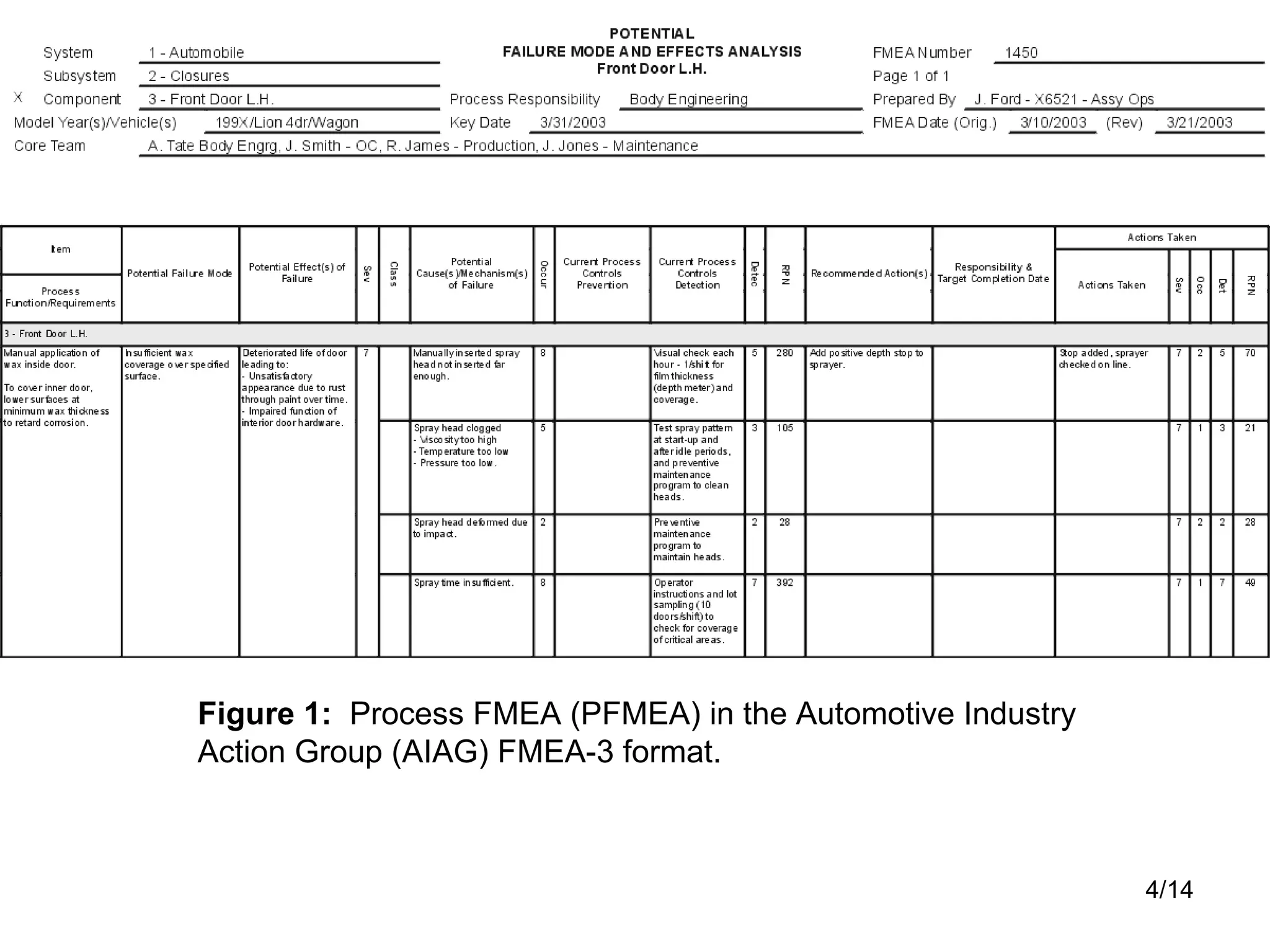
Figure 1:   Process FMEA (PFMEA) in the Automotive Industry Action Group (AIAG) FMEA-3 format.
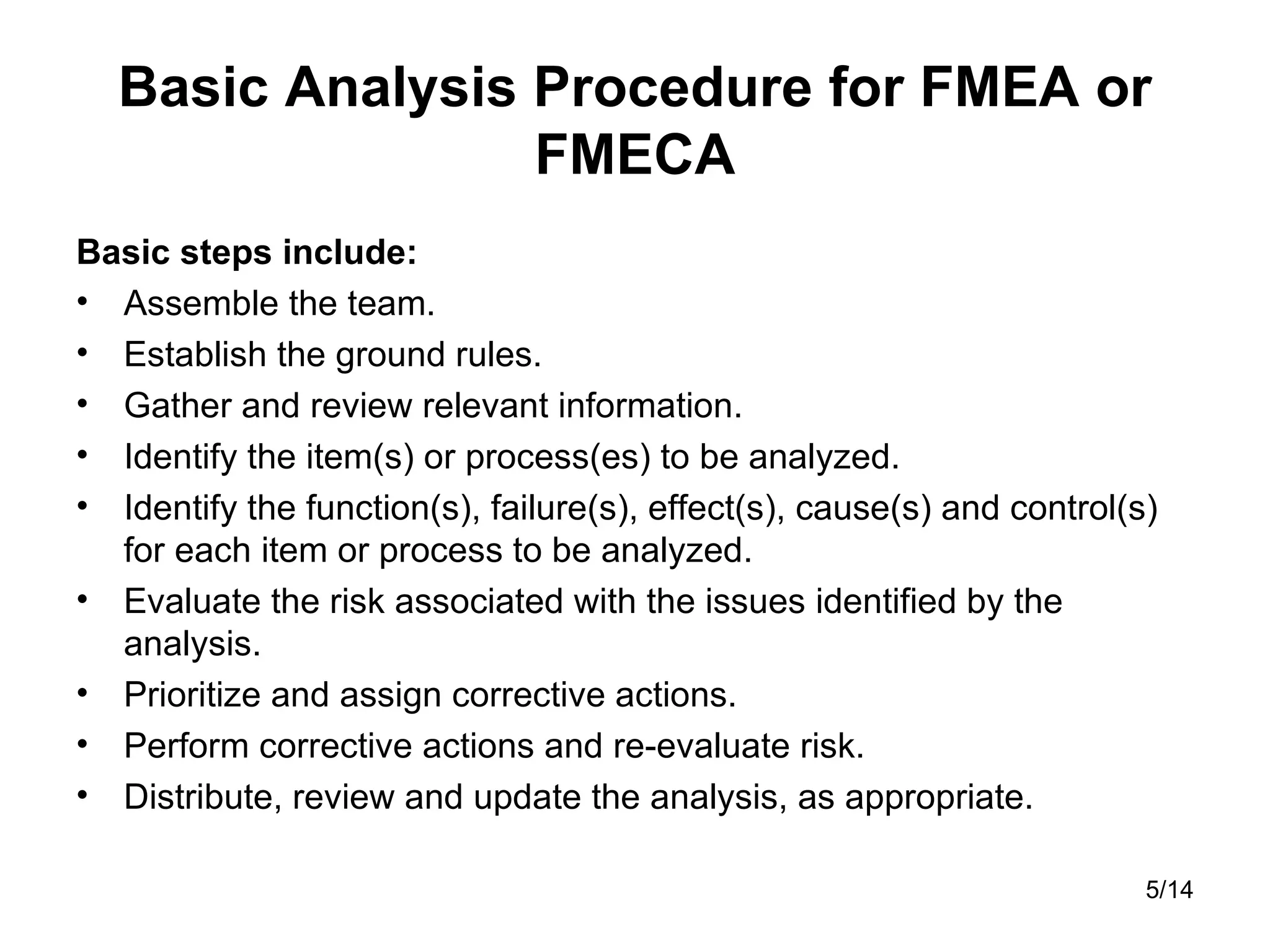
Basic Analysis Procedure for FMEA or FMECA Basic steps include: Assemble the team. Establish the ground rules. Gather and review relevant information. Identify the item(s) or process(es) to be analyzed. Identify the function(s), failure(s), effect(s), cause(s) and control(s) for each item or process to be analyzed. Evaluate the risk associated with the issues identified by the analysis. Prioritize and assign corrective actions. Perform corrective actions and re-evaluate risk. Distribute, review and update the analysis, as appropriate.
Risk Evaluation Methods Two most common methods are: Risk Priority Numbers (RPNs), which is associated with FMEA Criticality Analysis, which is associated with FMECA Quantitative Qualitative Severity Occurrences Risk
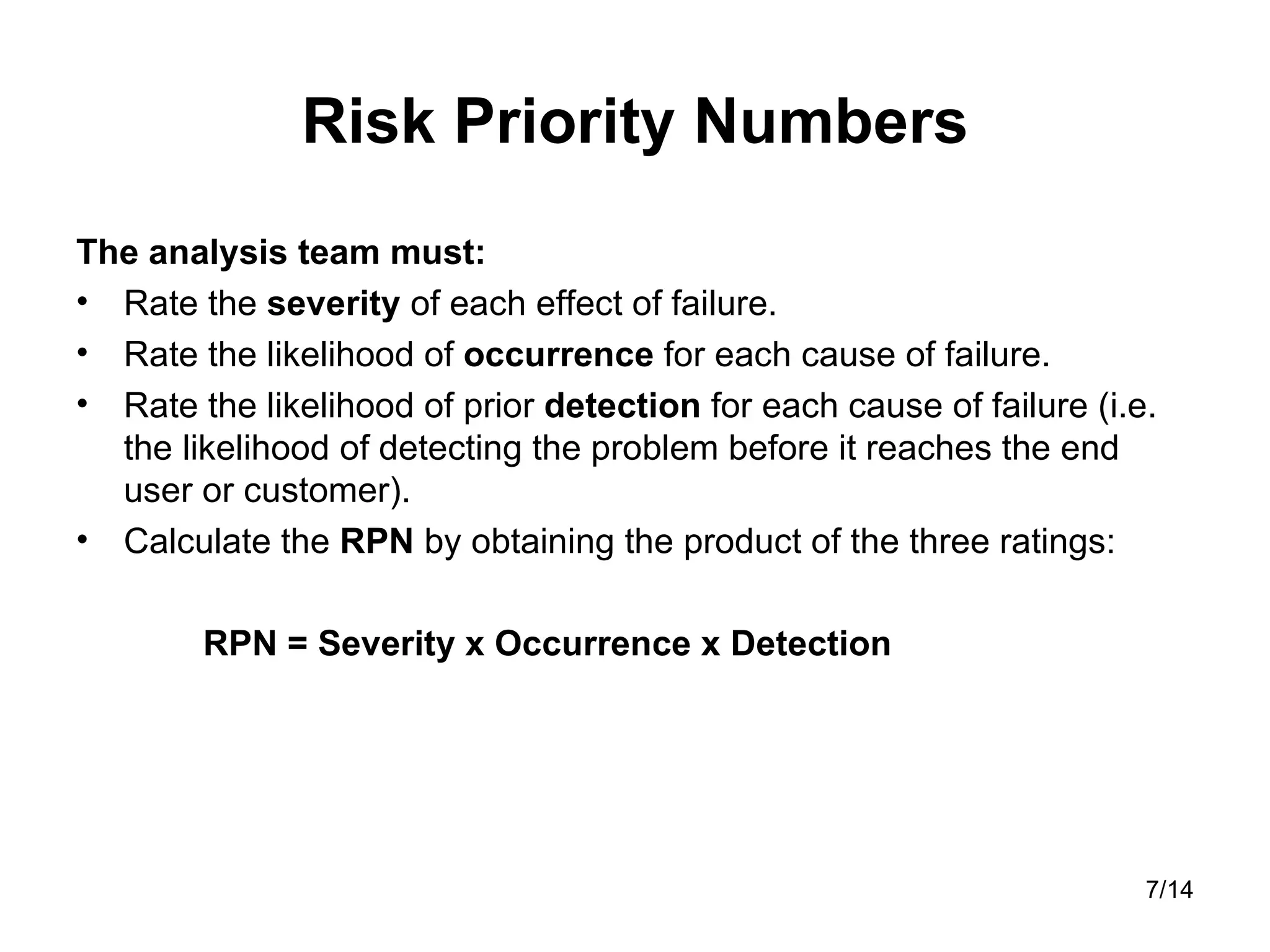
Risk Priority Numbers The analysis team must: Rate the  severity  of each effect of failure.  Rate the likelihood of  occurrence  for each cause of failure.  Rate the likelihood of prior  detection  for each cause of failure (i.e. the likelihood of detecting the problem before it reaches the end user or customer).  Calculate the  RPN  by obtaining the product of the three ratings: RPN = Severity x Occurrence x Detection
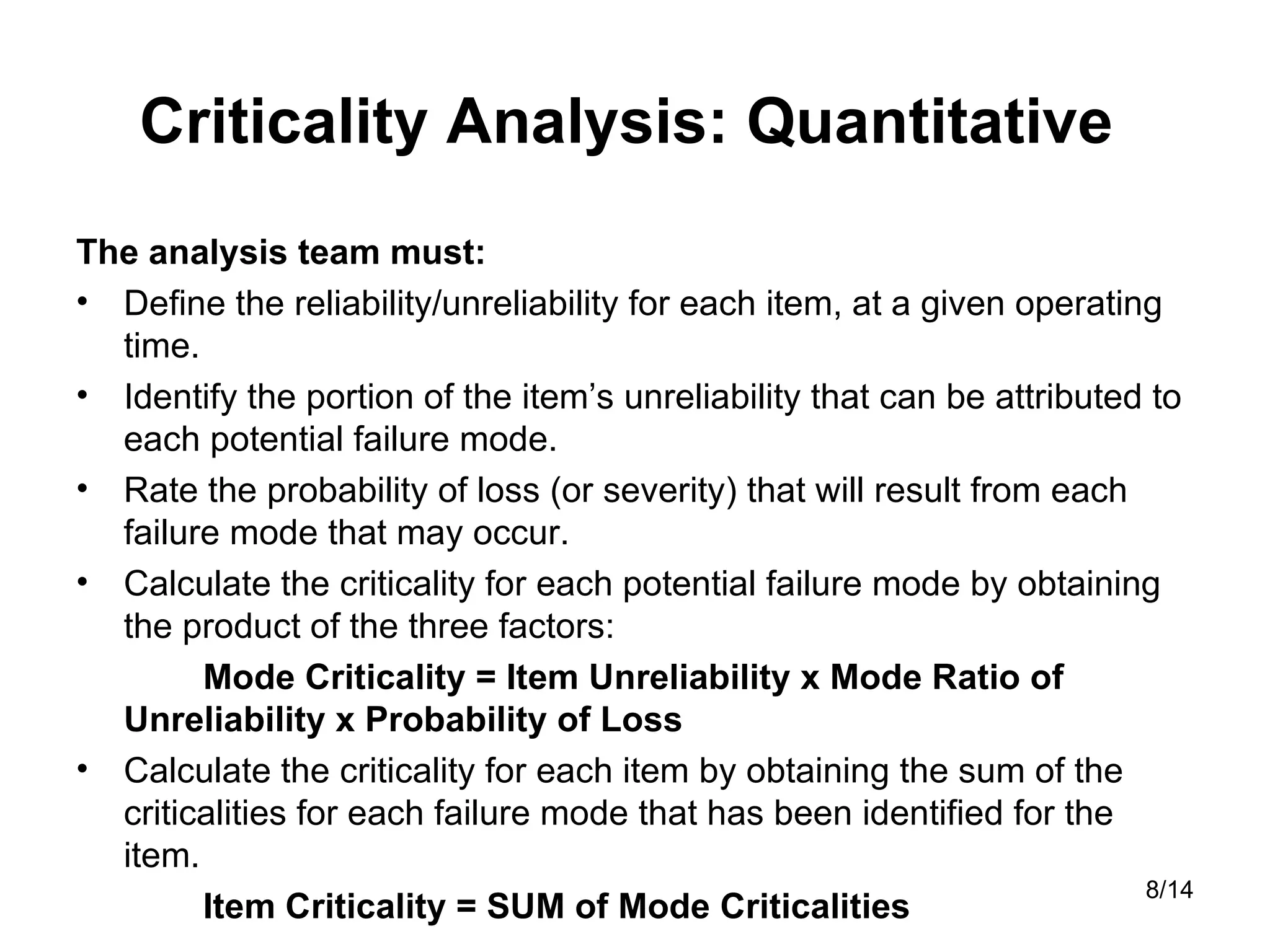
Criticality Analysis:  Quantitative  The analysis team must: Define the reliability/unreliability for each item, at a given operating time.  Identify the portion of the item’s unreliability that can be attributed to each potential failure mode.  Rate the probability of loss (or severity) that will result from each failure mode that may occur.  Calculate the criticality for each potential failure mode by obtaining the product of the three factors: Mode Criticality = Item Unreliability x Mode Ratio of Unreliability x Probability of Loss Calculate the criticality for each item by obtaining the sum of the criticalities for each failure mode that has been identified for the item.  Item Criticality = SUM of Mode Criticalities
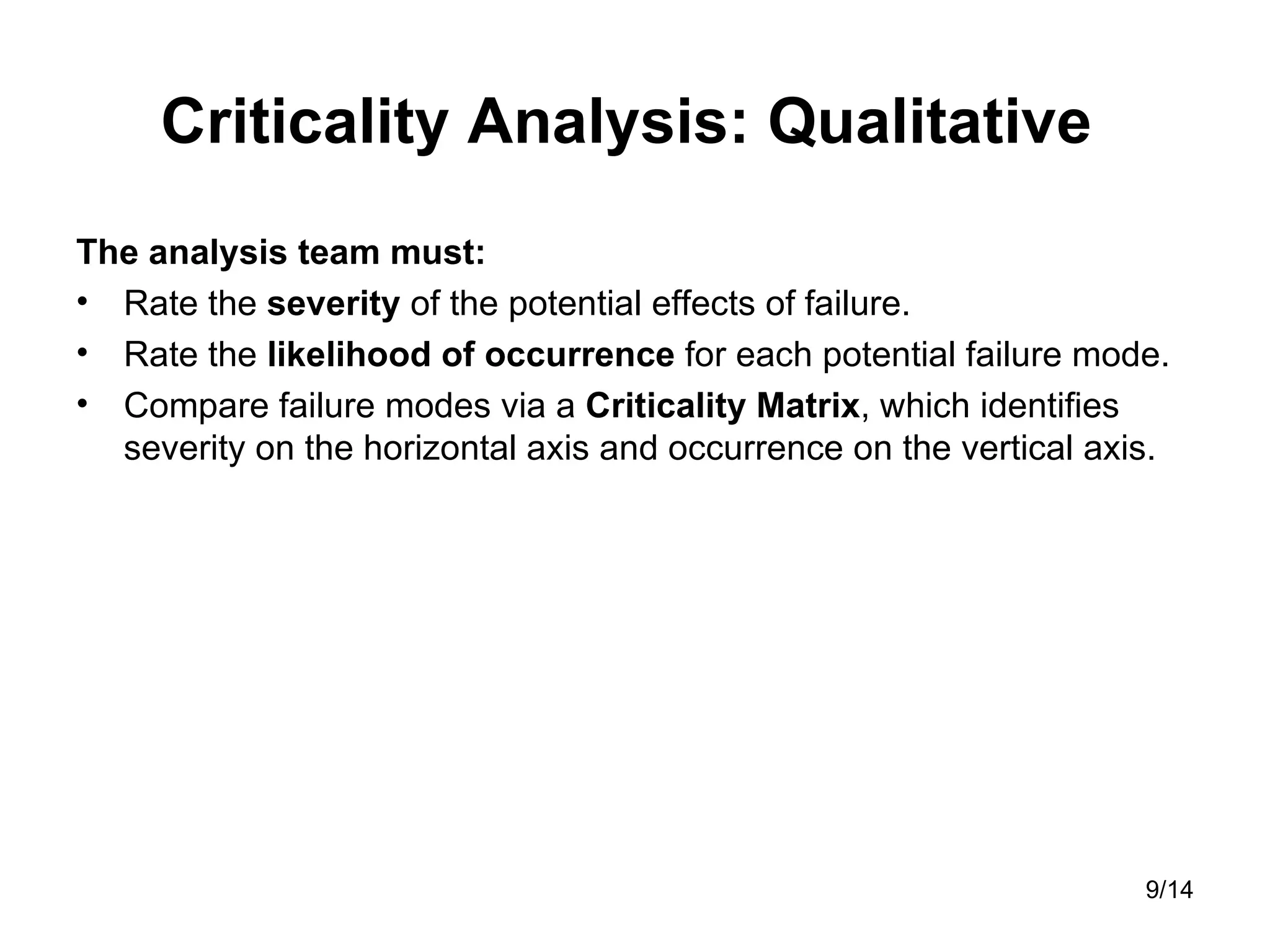
Criticality Analysis:  Qualitative  The analysis team must: Rate the  severity  of the potential effects of failure.  Rate the  likelihood of occurrence  for each potential failure mode.  Compare failure modes via a  Criticality Matrix , which identifies severity on the horizontal axis and occurrence on the vertical axis.
Applications Used to: Establish and optimize maintenance and control plans Establish knowledge base of failure mode and corrective action information Comply with safety and quality requirements (ISO 9001 etc.)
Benefits Contribute to: Improved design  Higher reliability.  Better quality Increased safety Enhanced customer satisfaction Reduced costs
Summary System Sub-system Item/component Funtion Failure Effect Cause Action
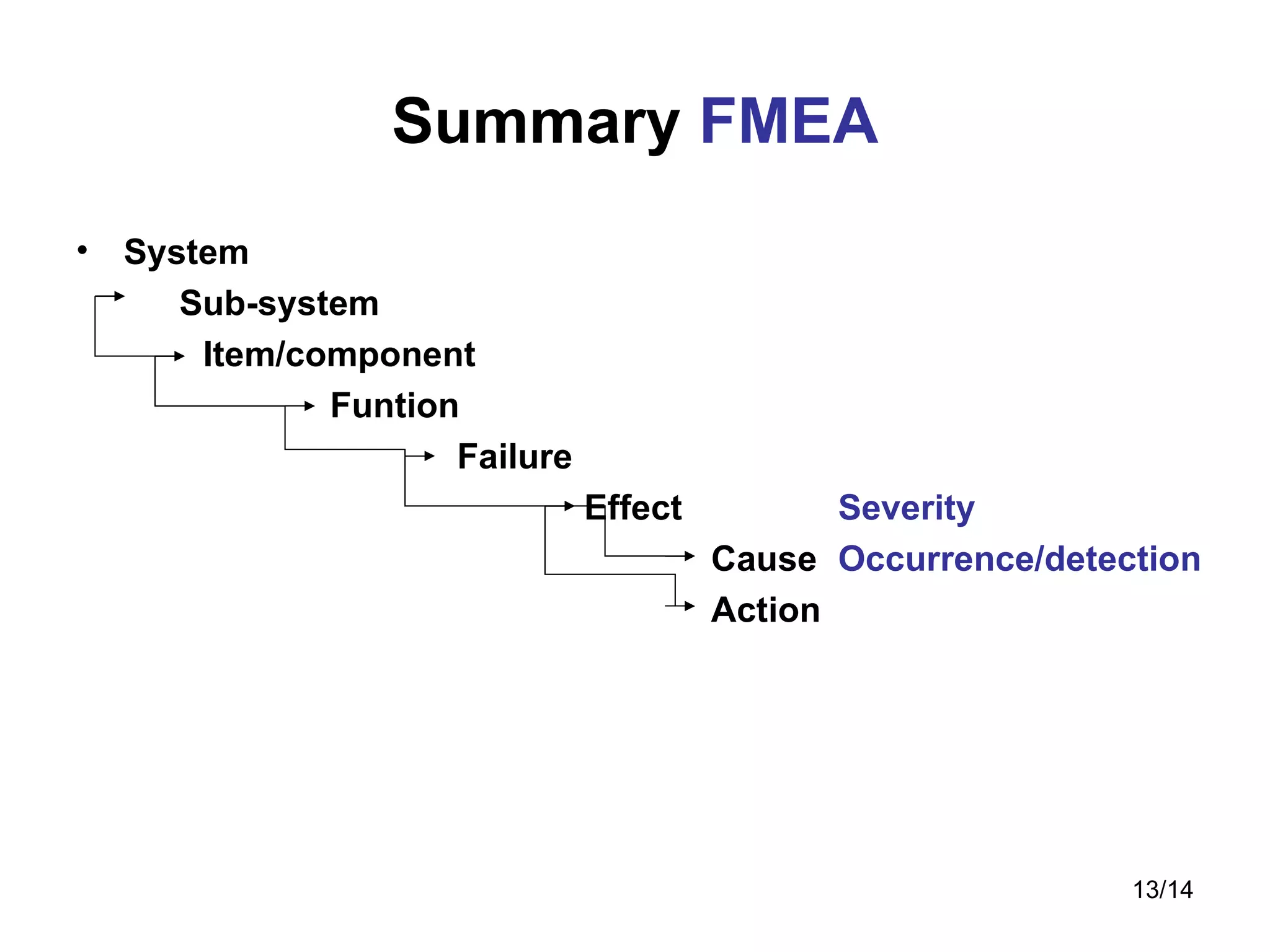
Summary  FMEA System Sub-system Item/component Funtion Failure Effect Severity Cause Occurrence/detection Action
Summary  FMECA Quantitative System Sub-system Item/component Reliability   Funtion Failure Criticality Analysis Factors Effect Cause Action

FMEA and FMECA

  • 1.
    FMEA and FMECAFailure Mode and Effects Analysis (FMEA) and Failure Modes, Effects and Criticality Analysis (FMECA) are methodologies designed to identify potential failure modes for a product or process, to assess the risk associated with those failure modes, to rank the issues in terms of importance and to identify and carry out corrective actions to address the most serious concerns. source : http:// www.weibull.com / basics / fmea.htm
  • 2.
    FMEA / FMECAOverview Basic information: Item(s) Function(s) Failure(s) Effect(s) of Failure Cause(s) of Failure Current Control(s) Recommended Action(s) Plus other relevant details Methods to assess risk: Risk Priority Numbers (RPNs) Criticality Analysis (FMEA with Criticality Analysis = FMECA)
  • 3.
    Published Standards andGuidelines Some examples: SAE J1739 AIAG FMEA-3 MIL-STD-1629A DNV-RP-A203
  • 4.
    Figure 1: Process FMEA (PFMEA) in the Automotive Industry Action Group (AIAG) FMEA-3 format.
  • 5.
    Basic Analysis Procedurefor FMEA or FMECA Basic steps include: Assemble the team. Establish the ground rules. Gather and review relevant information. Identify the item(s) or process(es) to be analyzed. Identify the function(s), failure(s), effect(s), cause(s) and control(s) for each item or process to be analyzed. Evaluate the risk associated with the issues identified by the analysis. Prioritize and assign corrective actions. Perform corrective actions and re-evaluate risk. Distribute, review and update the analysis, as appropriate.
  • 6.
    Risk Evaluation MethodsTwo most common methods are: Risk Priority Numbers (RPNs), which is associated with FMEA Criticality Analysis, which is associated with FMECA Quantitative Qualitative Severity Occurrences Risk
  • 7.
    Risk Priority NumbersThe analysis team must: Rate the severity of each effect of failure. Rate the likelihood of occurrence for each cause of failure. Rate the likelihood of prior detection for each cause of failure (i.e. the likelihood of detecting the problem before it reaches the end user or customer). Calculate the RPN by obtaining the product of the three ratings: RPN = Severity x Occurrence x Detection
  • 8.
    Criticality Analysis: Quantitative The analysis team must: Define the reliability/unreliability for each item, at a given operating time. Identify the portion of the item’s unreliability that can be attributed to each potential failure mode. Rate the probability of loss (or severity) that will result from each failure mode that may occur. Calculate the criticality for each potential failure mode by obtaining the product of the three factors: Mode Criticality = Item Unreliability x Mode Ratio of Unreliability x Probability of Loss Calculate the criticality for each item by obtaining the sum of the criticalities for each failure mode that has been identified for the item.  Item Criticality = SUM of Mode Criticalities
  • 9.
    Criticality Analysis: Qualitative The analysis team must: Rate the severity of the potential effects of failure. Rate the likelihood of occurrence for each potential failure mode. Compare failure modes via a Criticality Matrix , which identifies severity on the horizontal axis and occurrence on the vertical axis.
  • 10.
    Applications Used to:Establish and optimize maintenance and control plans Establish knowledge base of failure mode and corrective action information Comply with safety and quality requirements (ISO 9001 etc.)
  • 11.
    Benefits Contribute to:Improved design Higher reliability. Better quality Increased safety Enhanced customer satisfaction Reduced costs
  • 12.
    Summary System Sub-systemItem/component Funtion Failure Effect Cause Action
  • 13.
    Summary FMEASystem Sub-system Item/component Funtion Failure Effect Severity Cause Occurrence/detection Action
  • 14.
    Summary FMECAQuantitative System Sub-system Item/component Reliability Funtion Failure Criticality Analysis Factors Effect Cause Action

Editor's Notes

  • #2 Although the purpose, terminology and other details can vary according to type ( e.g. Process FMEA, Design FMEA, etc.), the basic methodology is similar for all. This document presents a brief general overview of FMEA / FMECA analysis techniques and requirements.