BY
SUNIL G
QA
8105269302
Welcome TO All
KEEP YOUR
MOBILE
PHONES
IN
SILENT
MODE
PLEASE……
Prepared By : SUNIL G
Today’s Agenda
What is FMEA
History of FMEA
Definition
Why FMEA
When FMEA
Types of FMEA
How to do Process FMEA
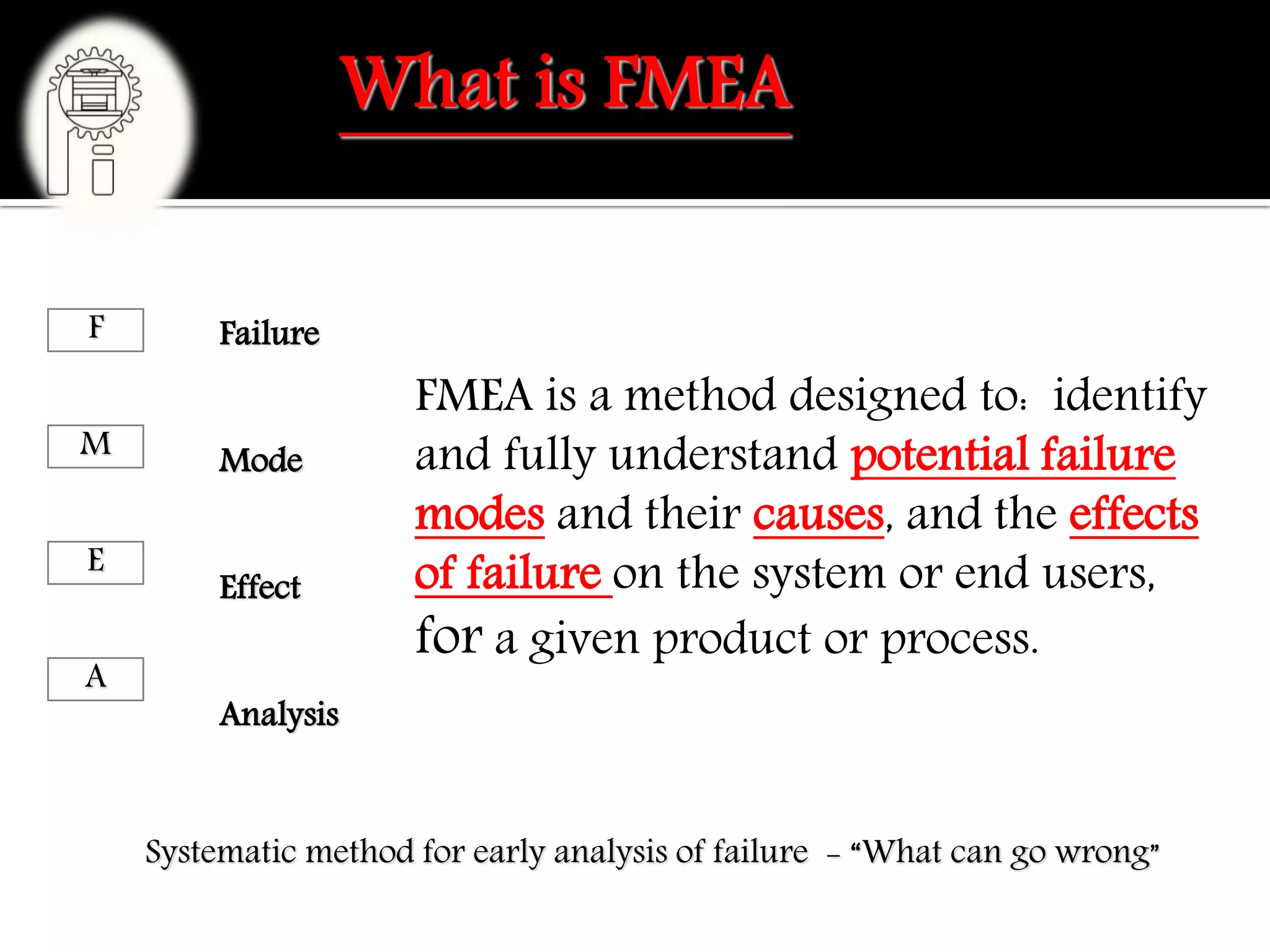
What is FMEA
FMEA is a method designed to: identify
and fully understand potential failure
modes and their causes, and the effects
of failure on the system or end users,
for a given product or process.
F
M
E
A
Failure
Mode
Effect
Analysis
Systematic method for early analysis of failure - “What can go wrong”
History of FMEA
 1955 Spread of “ Analysis of Potential Problems(APP)” by
Kepner –Tregoe
 1963 Development and use of FMEA by NASA for Apollo Project
 1965 Use of FMEA for aircraft and aerospace technology
 1975 Use of FMEA in Nuclear technologies
 1977 Use of FMEA in Automotive Industry
 1980 Widespread use of FMEA in USA, JAPAN, Europe
 1990 Additional use of the FMEA in
• Medical Technology
• Communications Technology
• Household appliance technology
Types of FMEA
System
Design
Process
FMEA
When it is applied to interaction of
parts
Applied to a product
Applied to a process
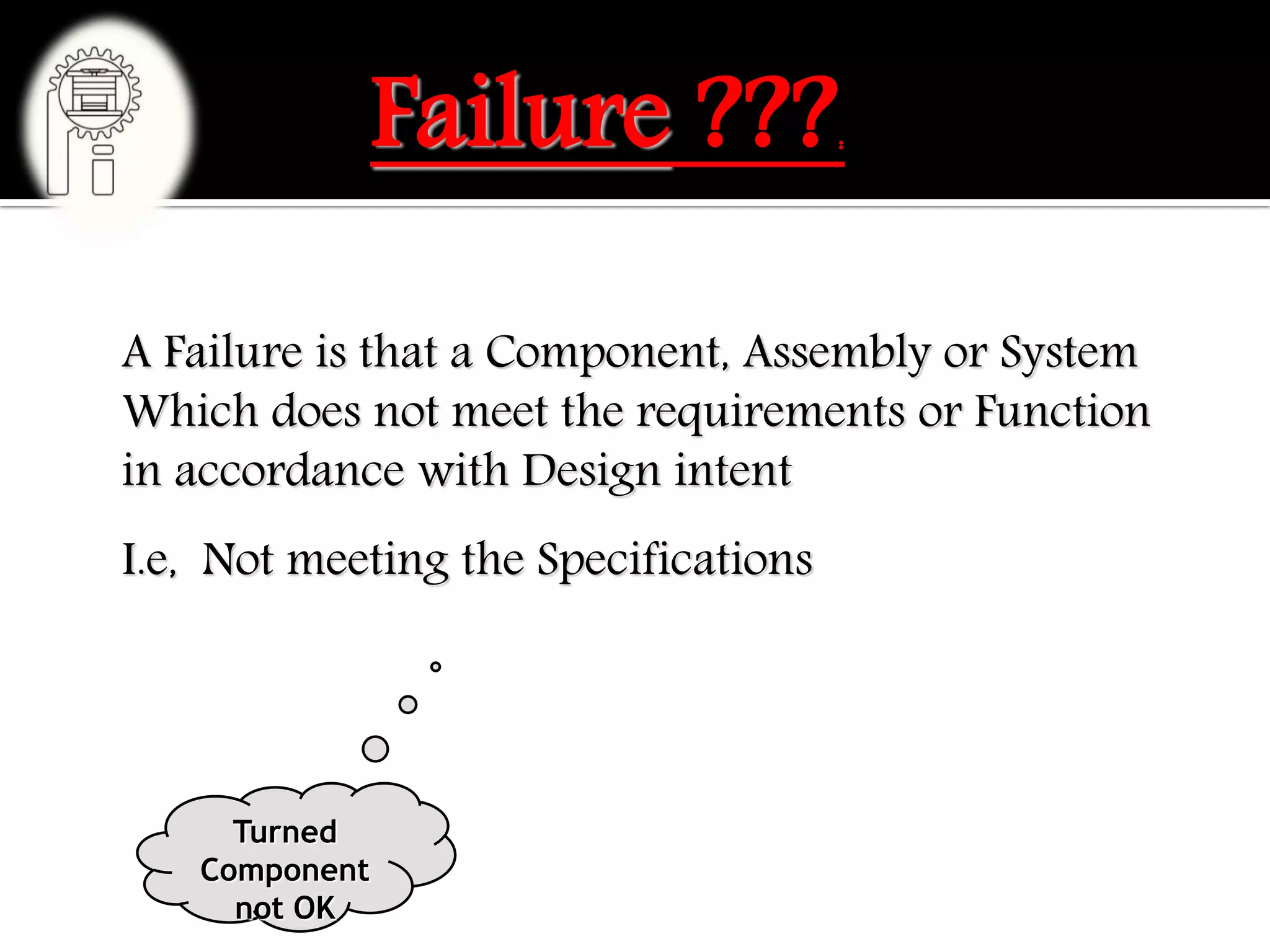
A Failure is that a Component, Assembly or System
Which does not meet the requirements or Function
in accordance with Design intent
I.e, Not meeting the Specifications
Turned
Component
not OK
Failure ???:
A Failure mode is the manner in which a
component,assembly or System failure occurs
I.e., How the Component Could not meet the
Specifications
OD Over
Size / Under
size
Length
Variation
Failure Mode :
An Effect is an adverse consequence
that the Customer might experience.
For each failure mode as exactly as
possible, describe all different failure
effects on the end customer.
Cannot Fit
or assemble
Poor
Appearance
Effect:
Potential Cause(s) Of Failure:-
list down all the possible causes
for Failure Mode. Use Cause &
Effect Diagram / Why-Why
Analysis.
 A “cause” is the specific reason for
the failure, preferably found by
asking “why” until the root cause
is determined.
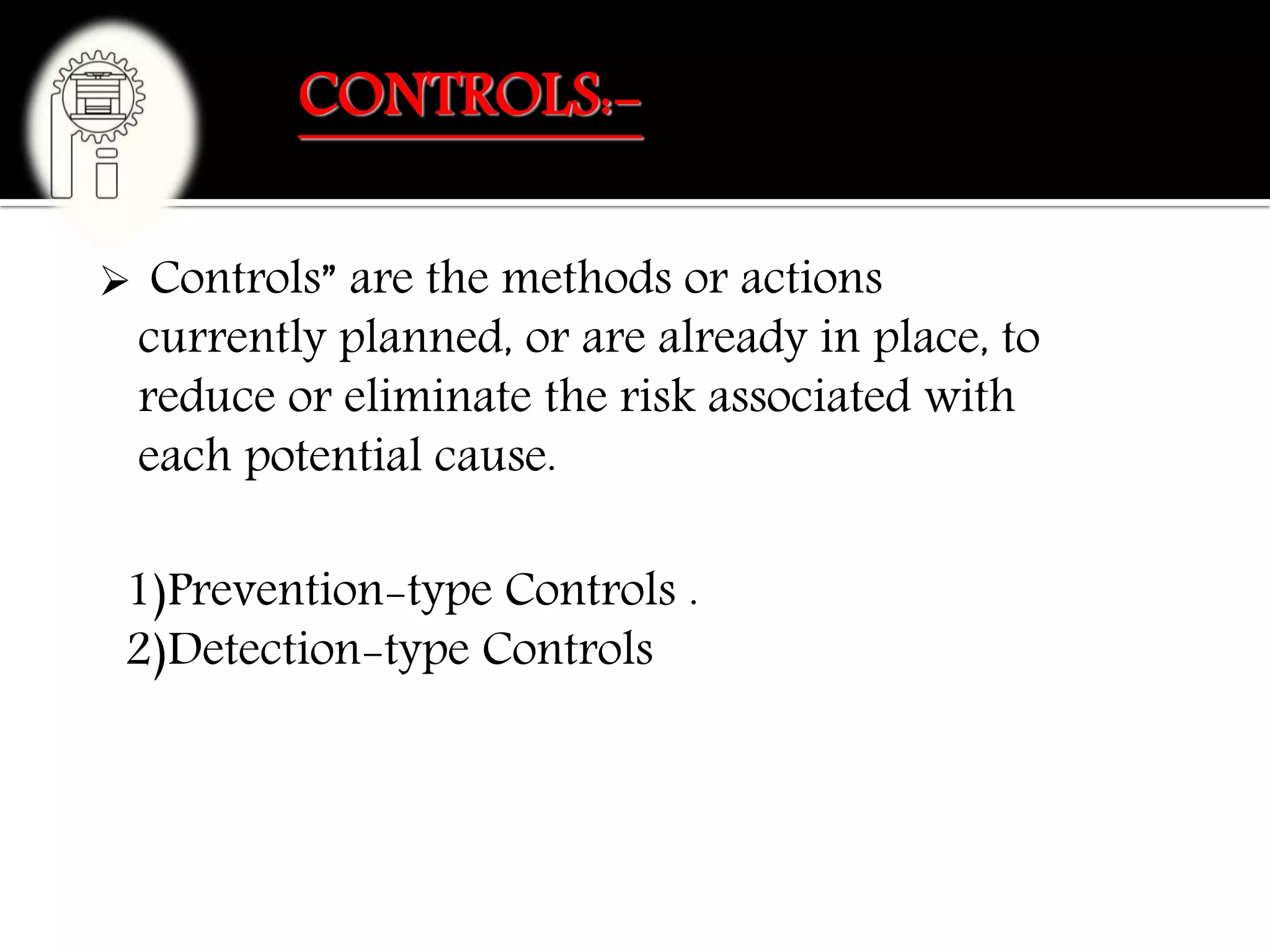
CONTROLS:-
1)Prevention-type Controls .
2)Detection-type Controls
 Controls” are the methods or actions
currently planned, or are already in place, to
reduce or eliminate the risk associated with
each potential cause.
 Is the rank associated with most serious
effect for a given failure mode.
 Requires Customer involvement while
assessing the severity.
 Reduction in Severity ranking requires
change in design.
 (10 high -1 low , Higher Value = Higher
Severity)
Severity(Sev.): -
occurrence
the occurrence reflects the probability that the
failure mode, as a result of the failure cause being
considered (probability of failure occurrence
during process)
(10 high -1 low ,Higher Value = Higher
Probability of Occurrence)
Is the rank associated with the best detection
control listed in current Design control
column
 10 low- 1 high ,
 Higher Value = Lower Ability to Detect
Detection
 Is the Product of Severity(S),
Occurrence(O) & Detection(D)
 RPN = S * O * D.
 Is used to rank order the concerns in the
process.
Risk Priority Number(RPN):-
 “Recommended actions” are the tasks recommended
by the FMEA team to reduce or eliminate the risk
associated with potential causes of failure
 Recommend the actions based on High RPN & High
Severity
 Give special attention, if severity ranking is 9 or 10.
 Actions should lead to reduction in RPN.
Recommended Actions:-
PFMEA
Process S C Potential
O
D Recommended Responsibilty
Function Potential Potential e l Cause (s) / c Current e R. Action (s) & Target Actions S O D R.
Failure Effect (s) of v a Mechanism (s) c Process t P. Completion Date Taken e c e P.
Requirements Mode Failure s of Failure u Controls e N. v c t N.
s r Detection / Prevention c
Item Key Date: Process Resp: FMEA No.
Model / Year Core team Date of Orig Date of Rev
Prepared By:
Why FMEA
• To minimize the Late Changes in
Product /Process
• Legal & qms Requirements
• Increased customer expectations
• Shorter Development time
• Early detection & identification of
potential failure in product & process
• Enhancing safety
Why FMEA
Origin of
Failure
Product Development
Concept Product Process Mfg Sample Testing Production Despatch
Design Design
Time
Failure
rate in %
Solving of
Failures
FMEA helps to solve the failures at the
Origin Phase itself !!
When FMEA
A new product is under development
A product & process changes significantly
Customer demands
Changes to product or process ,operating conditions
Processing of 8D (Fmea updation after corrective
action )
After Implementing recommended actions.
FMICA ppt

FMICA ppt

  • 1.
  • 2.
  • 3.
  • 4.
  • 5.
    Today’s Agenda What isFMEA History of FMEA Definition Why FMEA When FMEA Types of FMEA How to do Process FMEA
  • 6.
    What is FMEA FMEAis a method designed to: identify and fully understand potential failure modes and their causes, and the effects of failure on the system or end users, for a given product or process. F M E A Failure Mode Effect Analysis Systematic method for early analysis of failure - “What can go wrong”
  • 7.
    History of FMEA 1955 Spread of “ Analysis of Potential Problems(APP)” by Kepner –Tregoe  1963 Development and use of FMEA by NASA for Apollo Project  1965 Use of FMEA for aircraft and aerospace technology  1975 Use of FMEA in Nuclear technologies  1977 Use of FMEA in Automotive Industry  1980 Widespread use of FMEA in USA, JAPAN, Europe  1990 Additional use of the FMEA in • Medical Technology • Communications Technology • Household appliance technology
  • 8.
    Types of FMEA System Design Process FMEA Whenit is applied to interaction of parts Applied to a product Applied to a process
  • 9.
    A Failure isthat a Component, Assembly or System Which does not meet the requirements or Function in accordance with Design intent I.e, Not meeting the Specifications Turned Component not OK Failure ???:
  • 10.
    A Failure modeis the manner in which a component,assembly or System failure occurs I.e., How the Component Could not meet the Specifications OD Over Size / Under size Length Variation Failure Mode :
  • 11.
    An Effect isan adverse consequence that the Customer might experience. For each failure mode as exactly as possible, describe all different failure effects on the end customer. Cannot Fit or assemble Poor Appearance Effect:
  • 12.
    Potential Cause(s) OfFailure:- list down all the possible causes for Failure Mode. Use Cause & Effect Diagram / Why-Why Analysis.  A “cause” is the specific reason for the failure, preferably found by asking “why” until the root cause is determined.
  • 13.
    CONTROLS:- 1)Prevention-type Controls . 2)Detection-typeControls  Controls” are the methods or actions currently planned, or are already in place, to reduce or eliminate the risk associated with each potential cause.
  • 14.
     Is therank associated with most serious effect for a given failure mode.  Requires Customer involvement while assessing the severity.  Reduction in Severity ranking requires change in design.  (10 high -1 low , Higher Value = Higher Severity) Severity(Sev.): -
  • 15.
    occurrence the occurrence reflectsthe probability that the failure mode, as a result of the failure cause being considered (probability of failure occurrence during process) (10 high -1 low ,Higher Value = Higher Probability of Occurrence)
  • 16.
    Is the rankassociated with the best detection control listed in current Design control column  10 low- 1 high ,  Higher Value = Lower Ability to Detect Detection
  • 17.
     Is theProduct of Severity(S), Occurrence(O) & Detection(D)  RPN = S * O * D.  Is used to rank order the concerns in the process. Risk Priority Number(RPN):-
  • 18.
     “Recommended actions”are the tasks recommended by the FMEA team to reduce or eliminate the risk associated with potential causes of failure  Recommend the actions based on High RPN & High Severity  Give special attention, if severity ranking is 9 or 10.  Actions should lead to reduction in RPN. Recommended Actions:-
  • 19.
    PFMEA Process S CPotential O D Recommended Responsibilty Function Potential Potential e l Cause (s) / c Current e R. Action (s) & Target Actions S O D R. Failure Effect (s) of v a Mechanism (s) c Process t P. Completion Date Taken e c e P. Requirements Mode Failure s of Failure u Controls e N. v c t N. s r Detection / Prevention c Item Key Date: Process Resp: FMEA No. Model / Year Core team Date of Orig Date of Rev Prepared By:
  • 20.
    Why FMEA • Tominimize the Late Changes in Product /Process • Legal & qms Requirements • Increased customer expectations • Shorter Development time • Early detection & identification of potential failure in product & process • Enhancing safety
  • 21.
    Why FMEA Origin of Failure ProductDevelopment Concept Product Process Mfg Sample Testing Production Despatch Design Design Time Failure rate in % Solving of Failures FMEA helps to solve the failures at the Origin Phase itself !!
  • 22.
    When FMEA A newproduct is under development A product & process changes significantly Customer demands Changes to product or process ,operating conditions Processing of 8D (Fmea updation after corrective action ) After Implementing recommended actions.