Submitted By
Hassan Noorani
BAgF14M064 (2014-2018)
University College of Agriculture,
University Of Sargodha
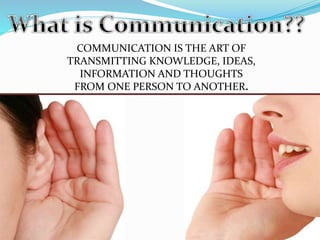
COMMUNICATION IS THE ART OF
TRANSMITTING KNOWLEDGE, IDEAS,
INFORMATION AND THOUGHTS
FROM ONE PERSON TO ANOTHER.
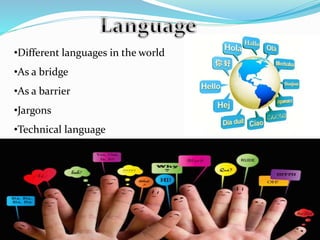
•Different languages in the world
•As a bridge
•As a barrier
•Jargons
•Technical language
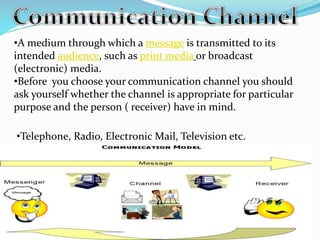
•A medium through which a message is transmitted to its
intended audience, such as print media or broadcast
(electronic) media.
•Before you choose your communication channel you should
ask yourself whether the channel is appropriate for particular
purpose and the person ( receiver) have in mind.
•Telephone, Radio, Electronic Mail, Television etc.
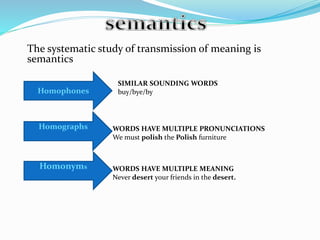
Homophones
Homographs
Homonyms
SIMILAR SOUNDING WORDS
buy/bye/by
WORDS HAVE MULTIPLE PRONUNCIATIONS
We must polish the Polish furniture
WORDS HAVE MULTIPLE MEANING
Never desert your friends in the desert.
The systematic study of transmission of meaning is
semantics
• Perceived credibility of the source by the receiver may
be a serious barrier to effective communication.
• An incredible source is unlikely to be listened to.
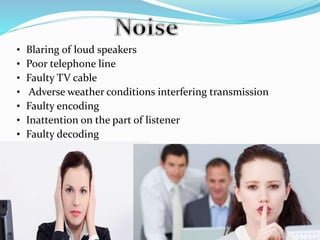
• Blaring of loud speakers
• Poor telephone line
• Faulty TV cable
• Adverse weather conditions interfering transmission
• Faulty encoding
• Inattention on the part of listener
• Faulty decoding
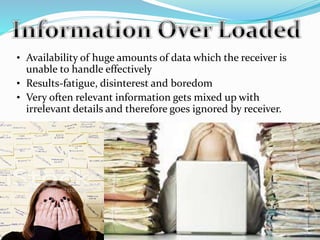
• Availability of huge amounts of data which the receiver is
unable to handle effectively
• Results-fatigue, disinterest and boredom
• Very often relevant information gets mixed up with
irrelevant details and therefore goes ignored by receiver.
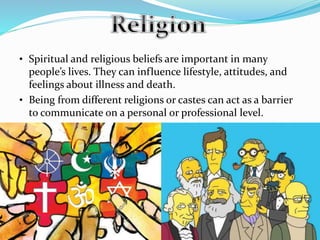
• Spiritual and religious beliefs are important in many
people’s lives. They can influence lifestyle, attitudes, and
feelings about illness and death.
• Being from different religions or castes can act as a barrier
to communicate on a personal or professional level.
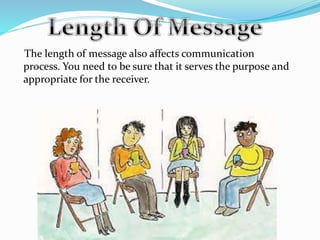
The length of message also affects communication
process. You need to be sure that it serves the purpose and
appropriate for the receiver.
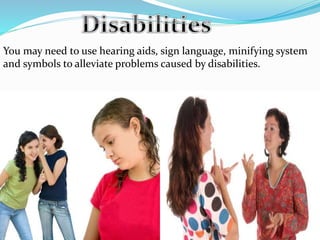
You may need to use hearing aids, sign language, minifying system
and symbols to alleviate problems caused by disabilities.
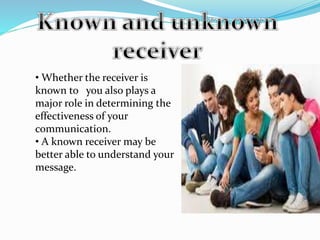
• Whether the receiver is
known to you also plays a
major role in determining the
effectiveness of your
communication.
• A known receiver may be
better able to understand your
message.
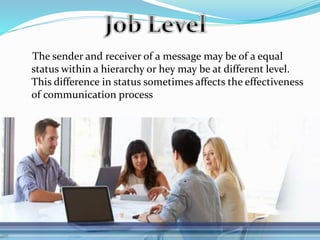
The sender and receiver of a message may be of a equal
status within a hierarchy or hey may be at different level.
This difference in status sometimes affects the effectiveness
of communication process
• Effective communication requires a high level attention
• People may not attentive to massage
• Good communicator tries to keep active your audience
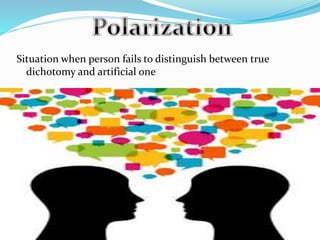
Situation when person fails to distinguish between true
dichotomy and artificial one
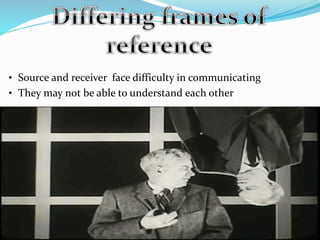
• Source and receiver face difficulty in communicating
• They may not be able to understand each other
Can convey caring, understanding, encouragement,
warmth, reassurance and affection.
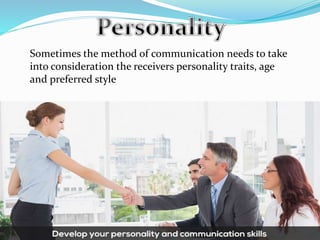
Sometimes the method of communication needs to take
into consideration the receivers personality traits, age
and preferred style
Generally interpreted as indicating
interest and attention.
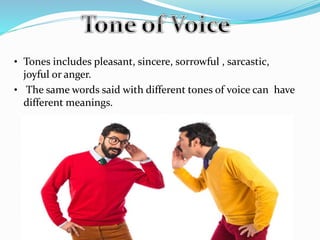
• Tones includes pleasant, sincere, sorrowful , sarcastic,
joyful or anger.
• The same words said with different tones of voice can have
different meanings.
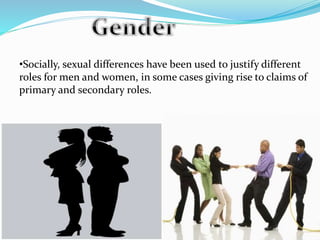
•Socially, sexual differences have been used to justify different
roles for men and women, in some cases giving rise to claims of
primary and secondary roles.
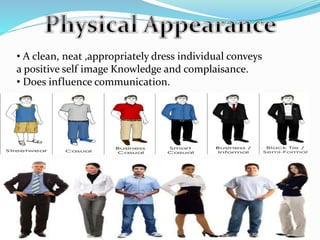
• A clean, neat ,appropriately dress individual conveys
a positive self image Knowledge and complaisance.
• Does influence communication.
We communicate the way we do because we are raised in particular
culture and learn its language, rules, and norms. Different cultures
(and sub cultures)may have different rules and norms.
Understanding the other's culture facilitates cross-cultural
communication
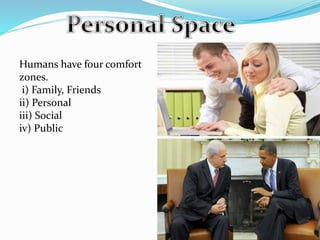
Humans have four comfort
zones.
i) Family, Friends
ii) Personal
iii) Social
iv) Public
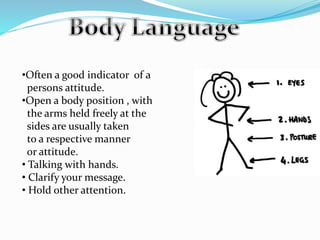
•Often a good indicator of a
persons attitude.
•Open a body position , with
the arms held freely at the
sides are usually taken
to a respective manner
or attitude.
• Talking with hands.
• Clarify your message.
• Hold other attention.
• Lack of Subject Matter
• Improper Listening Skills
• Lack of Proper Vocabulary
• Anxiety
• Strong and Quick Learners Domination in the Class
• Lack of Proper Orientation
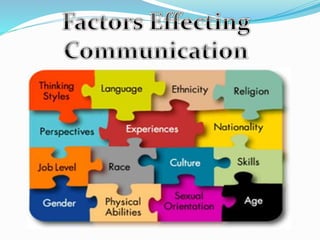
Factors affecting communication

Factors affecting communication

  • 2.
    Submitted By Hassan Noorani BAgF14M064(2014-2018) University College of Agriculture, University Of Sargodha
  • 3.
    COMMUNICATION IS THEART OF TRANSMITTING KNOWLEDGE, IDEAS, INFORMATION AND THOUGHTS FROM ONE PERSON TO ANOTHER.
  • 5.
    •Different languages inthe world •As a bridge •As a barrier •Jargons •Technical language
  • 6.
    •A medium throughwhich a message is transmitted to its intended audience, such as print media or broadcast (electronic) media. •Before you choose your communication channel you should ask yourself whether the channel is appropriate for particular purpose and the person ( receiver) have in mind. •Telephone, Radio, Electronic Mail, Television etc.
  • 7.
    Homophones Homographs Homonyms SIMILAR SOUNDING WORDS buy/bye/by WORDSHAVE MULTIPLE PRONUNCIATIONS We must polish the Polish furniture WORDS HAVE MULTIPLE MEANING Never desert your friends in the desert. The systematic study of transmission of meaning is semantics
  • 8.
    • Perceived credibilityof the source by the receiver may be a serious barrier to effective communication. • An incredible source is unlikely to be listened to.
  • 9.
    • Blaring ofloud speakers • Poor telephone line • Faulty TV cable • Adverse weather conditions interfering transmission • Faulty encoding • Inattention on the part of listener • Faulty decoding
  • 10.
    • Availability ofhuge amounts of data which the receiver is unable to handle effectively • Results-fatigue, disinterest and boredom • Very often relevant information gets mixed up with irrelevant details and therefore goes ignored by receiver.
  • 11.
    • Spiritual andreligious beliefs are important in many people’s lives. They can influence lifestyle, attitudes, and feelings about illness and death. • Being from different religions or castes can act as a barrier to communicate on a personal or professional level.
  • 12.
    The length ofmessage also affects communication process. You need to be sure that it serves the purpose and appropriate for the receiver.
  • 13.
    You may needto use hearing aids, sign language, minifying system and symbols to alleviate problems caused by disabilities.
  • 14.
    • Whether thereceiver is known to you also plays a major role in determining the effectiveness of your communication. • A known receiver may be better able to understand your message.
  • 15.
    The sender andreceiver of a message may be of a equal status within a hierarchy or hey may be at different level. This difference in status sometimes affects the effectiveness of communication process
  • 16.
    • Effective communicationrequires a high level attention • People may not attentive to massage • Good communicator tries to keep active your audience
  • 17.
    Situation when personfails to distinguish between true dichotomy and artificial one
  • 18.
    • Source andreceiver face difficulty in communicating • They may not be able to understand each other
  • 19.
    Can convey caring,understanding, encouragement, warmth, reassurance and affection.
  • 20.
    Sometimes the methodof communication needs to take into consideration the receivers personality traits, age and preferred style
  • 21.
    Generally interpreted asindicating interest and attention.
  • 22.
    • Tones includespleasant, sincere, sorrowful , sarcastic, joyful or anger. • The same words said with different tones of voice can have different meanings.
  • 23.
    •Socially, sexual differenceshave been used to justify different roles for men and women, in some cases giving rise to claims of primary and secondary roles.
  • 24.
    • A clean,neat ,appropriately dress individual conveys a positive self image Knowledge and complaisance. • Does influence communication.
  • 25.
    We communicate theway we do because we are raised in particular culture and learn its language, rules, and norms. Different cultures (and sub cultures)may have different rules and norms. Understanding the other's culture facilitates cross-cultural communication
  • 26.
    Humans have fourcomfort zones. i) Family, Friends ii) Personal iii) Social iv) Public
  • 27.
    •Often a goodindicator of a persons attitude. •Open a body position , with the arms held freely at the sides are usually taken to a respective manner or attitude. • Talking with hands. • Clarify your message. • Hold other attention.
  • 28.
    • Lack ofSubject Matter • Improper Listening Skills • Lack of Proper Vocabulary • Anxiety • Strong and Quick Learners Domination in the Class • Lack of Proper Orientation