Welcome!
to
Competency Based Training
NORTHPROF TRAINING AND ASSESSMENT
CENTER Inc.
Qualification Title:
HILOT (WELLNESS MASSAGE) NCII
DARELLE O. LUMBOY
Trainer
NORTHPROF TRAINING AND ASSESSMENT
CENTER Inc.
 CBT
 PRINCIPLES OF CBT
 CBT PROCESS FLOW
 CBLM
 QUALIFICATION
 ROLE OF CBT TRAINER AND TRAINEE
 MONITORING TOOLS
 ASSESSMENT METHOD
 TRAINING WORKSHOPS AND STATIONS
What is CBT?
is a training delivery approach that
focuses on the competency development
of the learner as a result of the training.
Principles of CBT
1. The training is based on curriculum
developed from the competency
standards.
2. Learning is competency- based or
modular in structure.
Principles of CBT
3. Training delivery is individualized
and self- paced.
4. Training is based on work that must
be performed.
Principles of CBT
5. Training materials are directly related to
the competency standards and the
curriculum.
6. Assessment of learners is based in the
collection of evidences of work performance
based on industry or organizational required
standards.
Principles of CBT
7. Training is based both on and off
the job components.
8. The system allows Recognition of
Prior Learning (RPL)
Principles of CBT
9. The system allows for learners to enter
and exit programs at different times and
levels and to receive an award for
competencies attained at any point.
10. Training programs are registered within
the UTPRAS.
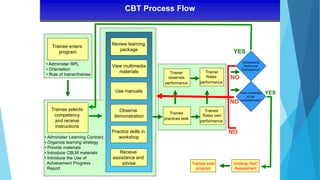
CBT Process Flow
YES
Trainer
observes
performance
Trainee
practices task
Trainee
Rates own
performance
Trainer
Rates
performance
Trainee enters
program
• Administer RPL
• Orientation
• Role of trainer/trainee
Trainee selects
competency
and receive
instructions
• Administer Learning Contract
• Organize learning strategy
• Provide materials
• Introduce CBLM materials
• Introduce the Use of
Achievement Progress
Report
Review learning
package
View multimedia
materials
Use manuals
Observe
demonstration
Practice skills in
workshop
Receive
assistance and
advise
YES
Trainee exits
program
Have completed
all the
competencies?
Satisfactorily
Performed
Competency?
Undergo Nat’l
Assessment
NO
NO
NO
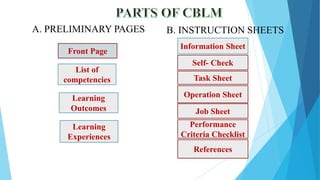
Information Sheet
Learning
Experiences
Learning
Outcomes
List of
competencies
Front Page
A. PRELIMINARY PAGES B. INSTRUCTION SHEETS
Operation Sheet
Job Sheet
Task Sheet
Self- Check
Performance
Criteria Checklist
References
BASIC COMPETENCY
(18 hours)
1.Participate in workplace
communication.
2.Work in team environment.
3.Practice career
professionalism.
4.Practice occupational health
and safety procedures.
COMMON COMPETENCY
(22 hours)
1.Maintain an effective
relationship with
clients/customers.
2.Manage own performance.
3.Apply quality standards.
4.Maintain a safe, clean, and
effective work environment.
CORE COMPETENCIES (80 hours)
Provide pre-service to clients
Apply hilot wellness techniques
Provide advice on post hilot wellness services
A person who has achieved this
qualification is competent to be:
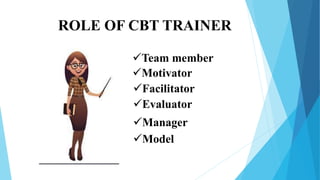
ROLE OF CBT TRAINER
Team member
Motivator
Manager
Evaluator
Model
Facilitator
ROLE OF THE CBT TRAINEE
Trainees may select what they
want to learn and when they
want to learn it, with a reason.
Trainees learn at their own rate
within program guidelines.
Trainees may choose how they
want to learn.
Trainees decide when they are
ready to perform each task.
Trainees evaluate their own
progress to see how well they are
doing.
Trainees move freely in the
workshop or training center
workshop or training center.
Trainees are responsible for
what they learn and when they
learn it.
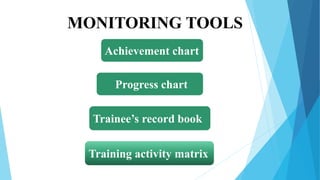
MONITORING TOOLS
Achievement chart
Trainee’s record book
Training activity matrix
Progress chart
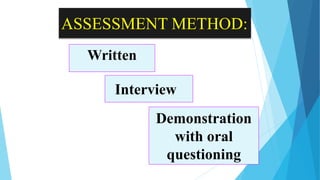
Interview
ASSESSMENT METHOD:
Demonstration
with oral
questioning
Written
Training
workshops
and stations

FACILITATE-LEARNING-SESSION-DARELLE.pptx

  • 2.
    Welcome! to Competency Based Training NORTHPROFTRAINING AND ASSESSMENT CENTER Inc.
  • 4.
    Qualification Title: HILOT (WELLNESSMASSAGE) NCII DARELLE O. LUMBOY Trainer NORTHPROF TRAINING AND ASSESSMENT CENTER Inc.
  • 5.
     CBT  PRINCIPLESOF CBT  CBT PROCESS FLOW  CBLM  QUALIFICATION  ROLE OF CBT TRAINER AND TRAINEE  MONITORING TOOLS  ASSESSMENT METHOD  TRAINING WORKSHOPS AND STATIONS
  • 6.
  • 7.
    is a trainingdelivery approach that focuses on the competency development of the learner as a result of the training.
  • 8.
    Principles of CBT 1.The training is based on curriculum developed from the competency standards. 2. Learning is competency- based or modular in structure.
  • 9.
    Principles of CBT 3.Training delivery is individualized and self- paced. 4. Training is based on work that must be performed.
  • 10.
    Principles of CBT 5.Training materials are directly related to the competency standards and the curriculum. 6. Assessment of learners is based in the collection of evidences of work performance based on industry or organizational required standards.
  • 11.
    Principles of CBT 7.Training is based both on and off the job components. 8. The system allows Recognition of Prior Learning (RPL)
  • 12.
    Principles of CBT 9.The system allows for learners to enter and exit programs at different times and levels and to receive an award for competencies attained at any point. 10. Training programs are registered within the UTPRAS.
  • 13.
    CBT Process Flow YES Trainer observes performance Trainee practicestask Trainee Rates own performance Trainer Rates performance Trainee enters program • Administer RPL • Orientation • Role of trainer/trainee Trainee selects competency and receive instructions • Administer Learning Contract • Organize learning strategy • Provide materials • Introduce CBLM materials • Introduce the Use of Achievement Progress Report Review learning package View multimedia materials Use manuals Observe demonstration Practice skills in workshop Receive assistance and advise YES Trainee exits program Have completed all the competencies? Satisfactorily Performed Competency? Undergo Nat’l Assessment NO NO NO
  • 16.
    Information Sheet Learning Experiences Learning Outcomes List of competencies FrontPage A. PRELIMINARY PAGES B. INSTRUCTION SHEETS Operation Sheet Job Sheet Task Sheet Self- Check Performance Criteria Checklist References
  • 18.
    BASIC COMPETENCY (18 hours) 1.Participatein workplace communication. 2.Work in team environment. 3.Practice career professionalism. 4.Practice occupational health and safety procedures.
  • 19.
    COMMON COMPETENCY (22 hours) 1.Maintainan effective relationship with clients/customers. 2.Manage own performance. 3.Apply quality standards. 4.Maintain a safe, clean, and effective work environment.
  • 20.
  • 21.
  • 22.
  • 23.
    Provide advice onpost hilot wellness services
  • 24.
    A person whohas achieved this qualification is competent to be:
  • 25.
    ROLE OF CBTTRAINER Team member Motivator Manager Evaluator Model Facilitator
  • 26.
    ROLE OF THECBT TRAINEE Trainees may select what they want to learn and when they want to learn it, with a reason. Trainees learn at their own rate within program guidelines. Trainees may choose how they want to learn.
  • 27.
    Trainees decide whenthey are ready to perform each task. Trainees evaluate their own progress to see how well they are doing. Trainees move freely in the workshop or training center workshop or training center. Trainees are responsible for what they learn and when they learn it.
  • 28.
    MONITORING TOOLS Achievement chart Trainee’srecord book Training activity matrix Progress chart
  • 29.
  • 30.