Sibugay Technical Institute Inc.
Lower taway, Ipil, ZSP
Prepared by:
JHON MAR MONTUNO
Objectives:
This are the objectives of the training:
 To understand the roles of the trainees
 To understand the meaning and principles
of CBT
CBT CBT stands for Competency Based Training. It is a
training delivery approach that focuses on competency
development of the learner as a result of the training.
Roles of CBT Trainer
 Serves as a team member to determine what is to be learned
Roles of CBT Trainees
 Trainees may choose how they want to learn-individually, on a one to
one basis, in small group, in large groups, or with audio visuals.
other definition of CBT:
 Emphasizes most on what the learner can actually do
 Focuses on outcomes rather than the learning process within
specified time
Competency standard:
BASIC CORE
COMMON
HANDLE BREEDERS
HANDLE FARROWING AND
SUCKLINGS
RAISE WEANLINGS
PRODUCE FINISHERS
MAINTAIN HEALTHY ANIMAL
ENVIRONMENT
APPLY BIO-SECURITY MEASURES
10 principles of CBT
1.The training is based on curriculum developed
from the competency standards.
2.Learning is competency-based on modular in
structure.
3.Training delivery is individualized and self-
paced.
4.Training is based on work that must be
performed.
5. Training materials are directly related to the
competency standards and curriculum.
6. Assessment of learners is based in the collection
of evidences of work performance based on
industry or organizational required standards.
7. Training is based on and off the job components.
8. The system allows Recognition of Prior
Learning.
9. The system allows multiple entry and exit.
10. Approved training programs are nationally
accredited.
Comparison between
Traditional Approach and CBT Approach
Traditional Approach CBT Approach
 Focuses on managing
instructions
 Rating system is in
numerical such as 95 or
85 as long as number
Trainers focused on
managing learning
There are only outcome:
it’s either you are
Competent or Not Yet
Component
CBLM
stands for Competency Based Learning
Materials. It consist training materials
activities for you to complete the training. Is
simply a well designed and carefully
developed learning material that give
trainees detailed instructions to guide them
through the learning process.
Methods of Evaluation:
 Written Test
 Demonstration
 Interview
These are the Monitoring tools:
 Achievement Chart
Progress Chart
Trainee’s Record Book/TRB
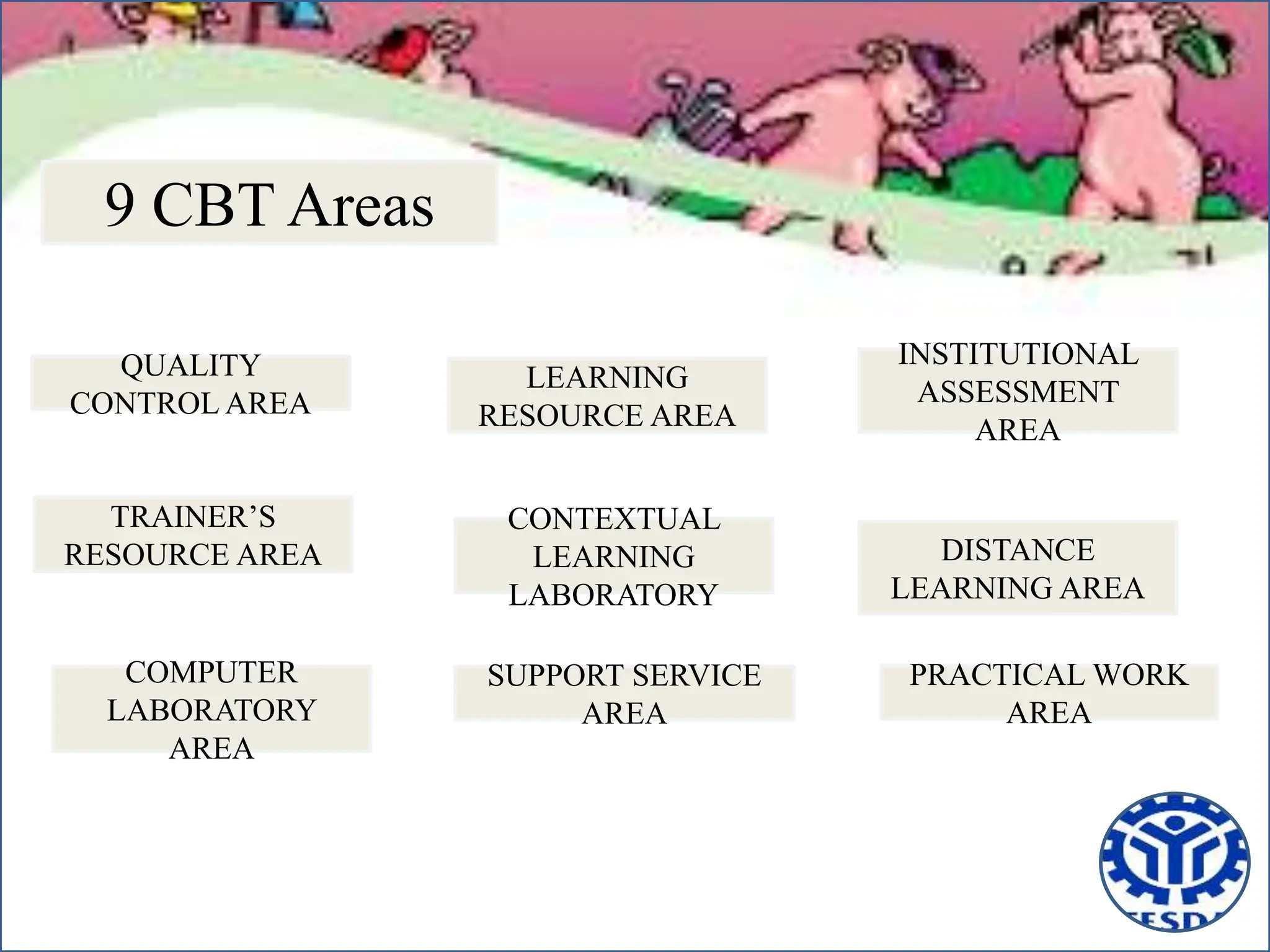
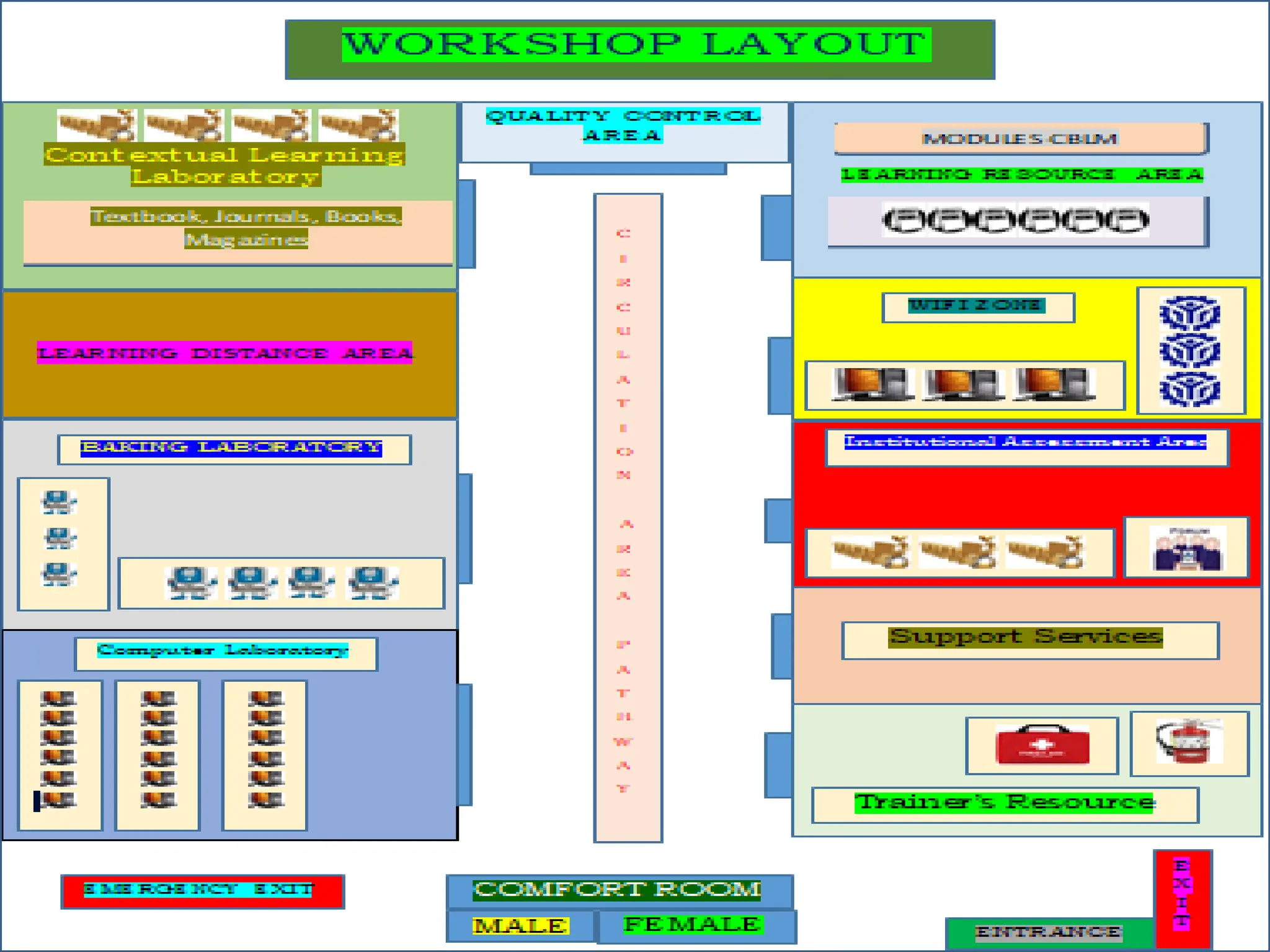
9 CBT Areas
QUALITY
CONTROL AREA
TRAINER’S
RESOURCE AREA
COMPUTER
LABORATORY
AREA
LEARNING
RESOURCE AREA
INSTITUTIONAL
ASSESSMENT
AREA
CONTEXTUAL
LEARNING
LABORATORY
SUPPORT SERVICE
AREA
DISTANCE
LEARNING AREA
PRACTICAL WORK
AREA
facilitate Learning session in TMC demonstration

facilitate Learning session in TMC demonstration

  • 1.
    Sibugay Technical InstituteInc. Lower taway, Ipil, ZSP Prepared by: JHON MAR MONTUNO
  • 2.
    Objectives: This are theobjectives of the training:  To understand the roles of the trainees  To understand the meaning and principles of CBT
  • 3.
    CBT CBT standsfor Competency Based Training. It is a training delivery approach that focuses on competency development of the learner as a result of the training. Roles of CBT Trainer  Serves as a team member to determine what is to be learned Roles of CBT Trainees  Trainees may choose how they want to learn-individually, on a one to one basis, in small group, in large groups, or with audio visuals. other definition of CBT:  Emphasizes most on what the learner can actually do  Focuses on outcomes rather than the learning process within specified time
  • 4.
    Competency standard: BASIC CORE COMMON HANDLEBREEDERS HANDLE FARROWING AND SUCKLINGS RAISE WEANLINGS PRODUCE FINISHERS MAINTAIN HEALTHY ANIMAL ENVIRONMENT APPLY BIO-SECURITY MEASURES
  • 5.
    10 principles ofCBT 1.The training is based on curriculum developed from the competency standards. 2.Learning is competency-based on modular in structure. 3.Training delivery is individualized and self- paced. 4.Training is based on work that must be performed. 5. Training materials are directly related to the competency standards and curriculum.
  • 6.
    6. Assessment oflearners is based in the collection of evidences of work performance based on industry or organizational required standards. 7. Training is based on and off the job components. 8. The system allows Recognition of Prior Learning. 9. The system allows multiple entry and exit. 10. Approved training programs are nationally accredited.
  • 7.
    Comparison between Traditional Approachand CBT Approach Traditional Approach CBT Approach  Focuses on managing instructions  Rating system is in numerical such as 95 or 85 as long as number Trainers focused on managing learning There are only outcome: it’s either you are Competent or Not Yet Component
  • 8.
    CBLM stands for CompetencyBased Learning Materials. It consist training materials activities for you to complete the training. Is simply a well designed and carefully developed learning material that give trainees detailed instructions to guide them through the learning process.
  • 9.
    Methods of Evaluation: Written Test  Demonstration  Interview These are the Monitoring tools:  Achievement Chart Progress Chart Trainee’s Record Book/TRB
  • 10.
    9 CBT Areas QUALITY CONTROLAREA TRAINER’S RESOURCE AREA COMPUTER LABORATORY AREA LEARNING RESOURCE AREA INSTITUTIONAL ASSESSMENT AREA CONTEXTUAL LEARNING LABORATORY SUPPORT SERVICE AREA DISTANCE LEARNING AREA PRACTICAL WORK AREA